Michela Benente, Gianluca D'Agostino, Valeria Minucciani (2022). Contents accessibility in archaeological museums and sites: a proposal for a neuropsychological approach. In: Design for Inclusion. AHFE Open Access, vol. 45, pp. 159–165. https://doi.org/10.54941/ahfe1001881
With specific reference to the issue of accessibility to cultural content and the inclusion of different audiences, the Authors point out an overview where museums usually tend to create educational activities and support assistive devices dedicated to specific audiences, rather than integrated solutions, that can “be usable by all people, to the greatest extent possible", as stated in the United Nations Convention on the Rights of Persons with Disabilities (2006).On the basis of previous studies on cultural accessibility and emotional appropriation, the Authors have recently carried out a survey focused in particular on archaeological museums audiences, considering their expectations, their reactions, and their prejudices. At the same time, they have conducted an extensive series of online interviews with Curators and Directors of many archaeological museums and sites in Europe and worldwide, including some in-depth site visits too. The investigations and surveys carried out have strengthened the awareness that museum spaces generate not only cognitive, but also physical and emotional reactions, and that the various publics react to cultural stimuli in very different ways. Therefore it is necessary, in designing museum communication, a disciplinary contamination involving in particular the field of neuropsychology. Such involvement would provide scientific support for the critical assessment of the effects that the environment and the cultural mediation trigger on the different publics.In particular, the Authors believe that the physical arrangement and the atmosphere are usually underestimated in the overall design of museums: on the contrary these two elements combined would allow each visitor to grasp the signals that best suit him or her, according to his/her senses and understanding. In other words, the atmosphere can play a key role in being an immersive communicative medium, in a truly inclusive way where everyone has the opportunity to "feel" and learn something.The Authors are developing a series of experiments that will be carried out first in the laboratory and then in some archaeological museums, in collaboration with a team of Neuropsychologists from the University of Turin and with the support of archaeological consultants and communication experts. By illustrating the current research and describing a series of examples (including best practices, problematic cases, ongoing projects), the paper aims at highlighting how the "design for all" in museums is a field in continuous development. Requiring an evolution in its approach, it also, and above all, represents a challenge in relation to the communication of particularly difficult cultural content, such as those related to the archaeological heritage.
The focus on accessibility to cultural heritage often leads to planning acti- ons aimed at the inclusion of people with disabilities, diverting attention from a broader vision that values individual specificities. The enjoyment of cultural heritage in general, and of museums in particular, increasingly requi- res considering the multiplicity of publics and “non-publics” with specific needs, representing an opportunity to apply the “design for all” principles. The Authors have carried out an investigation with specific reference to the archaeological heritage, which is often fragmented and decontextualized, and particularly difficult to explain and communicate. The display solutions and the communication apparatuses usually seem to be addressed to an expert public: consequently, a general public may have difficulties in understanding, appreciating and relating to this kind of heritage. Based on previous research
on the topic of accessibility to cultural heritage (Benente, Minucciani, 2020), the Authors therefore explored accessibility in several museums and archa- eological sites in a predominantly European context, with some cases from other continents. Using a multi-thematic and interdisciplinary approach, the different ways of displaying, communicating, and mediating archaeologi- cal heritage and their effectiveness in terms of inclusion were examined and evaluated.
EUROPEAN CONTEXT The research framework refers to the European context and policies imple- mented to foster greater inclusion, starting from the actions and strategies promulgated in the field of disability since the early 2000s, when a new approach to disability began to develop in Europe, recognizing the need of equal rights to people with disabilities and promoting their involvement and participation in the society. The European Commission has therefore committed itself to “enhance respect for diversity through individual rights, make the environment more accessible through the elimination of barriers, encourage inclusion through employment, and foster social integration and fighting against marginalization” (EU Commission, 2003), through several action plans and strategies in the following decades. So, the attention to the issue of accessibility to public places increased, including cultural servi- ces, to promote integration of people with disabilities, improve their quality of life and support their increasing participation in social and cultural life, making the removal of architectural barriers in public places urgent. In paral- lel, the content of the Faro Convention (2005) has been developed, leading to a paradigm shift where accessibility to cultural heritage is not an issue reserved to the public with disabilities, but involves “all” users. The access to cultural heritage is recognized as a right of every person and needs to be improved “especially among young people and the disadvantaged, in order to raise awareness about its value, the need to maintain and prese- rve it, and the benefits which may be derived from it.” (Council of Europe, 2005). A growing interest in accessibility and cultural heritage led in 2018 to the European Year of Cultural Heritage, whose framework recognized the potential role of cultural heritage in contributing positively in people’s lives. To make the most of this potential, as stated by the European Commission, “we need to ensure the widest possible access to cultural heritage, in all its forms, for all people”, including who is economically disadvantaged, socially disadvantaged or people with reduced mobility or disabilities, but also local communities, children and young people (EU Commission, 2019). In this regard the European Commission has made resources available for cultural heritage projects through several EU funding programs, encouraging people- centered, inclusive and sustainable approaches, like the new Horizon Europe program 2021-2027 that recognizes cultural heritage as a strategic area of European research and innovation including a Cluster (“Culture, Creativity and Inclusive Society”) aiming to “strengthen European democratic values, safeguard our cultural heritage and promote socio-economic transformations contributing to inclusion and growth” (EU Commission, 2021).
Contents Accessibility in Archaeological Museums and Sites 161
European projects have been a preliminary but relevant starting point for the research. Thanks to their objectives related to accessibility and museums, especially related to archaeological heritage, two cases have been selected. The COME-IN! project aimed at valorizing the cultural heritage of Central Europe by making museums more accessible to a broader public, including those users who are not currently able to enjoy it. The project focused on accessibility to cultural sites and museums for people with permanent and temporary disabilities. Through a “joint promotional approach”, the project aimed at improving the accessibility of museums through the engagement of people with disabilities to identify issues and problems related to the accessibility of museums and test the solutions proposed, to define common accessibility standards. The second case is the ARCHES project: bringing together disabled people, technology companies, universities and museums, it aimed at making museums more accessible to all using new technologies, such as tactile reliefs, barrier-free apps and games, sign-language avatars, etc.
Cases Study Research The survey carried out on archaeological museums and sites was focused on European countries but including other international examples, starting from cases already known by the Authors and from online websites, essen- tial to get in contact with the staff of museums. The very first case studies were also identified among the partners involved in the European projects mentioned above, despite being mainly targeted only to publics with disabi- lities and not including other categories of audience. A first online enquiry based on some keywords was made, but without satisfactory results. Signifi- cant case studies were also found thanks to articles and monographs about archaeological sites and museums, with further online research, and through word of mouth during the online interviews carried out from July 2020 to July 2021. Indeed, since the research started in conjunction with the advent of the COVID-19 pandemic, much of the work was done remotely: Authors have conducted an extensive series of virtual meetings with Curators and Directors of archaeological museums and sites in Europe and worldwide. In the last phase, they were able to carry out some in-depth site visits too. The issues raised during the interviews were modified and enriched as the research progressed, also because for some museums the concept “for all” refers to people with disabilities, for others it also includes other groups of the public, like the “non-users”. The interview activity required considerable effort. Difficulties and critical issues can be summarized as follows: people contacted do not always respond; they do not always understand the mea- ning attributed to the term “accessibility”; competences in large museums are often fragmented; there is hardly ever an architect on staff; the staff in charge of accessibility actually deal with “disabilities”; in some cases, the staff does not speak English easily; the difficulties resulting from the pandemic, while making staff more available for online meetings, have in some cases led to the interruption of contacts. The cases collected show quite different approaches, initiatives and projects aimed at improving the accessibility in its various dimensions and expanding their publics. Despite many museums
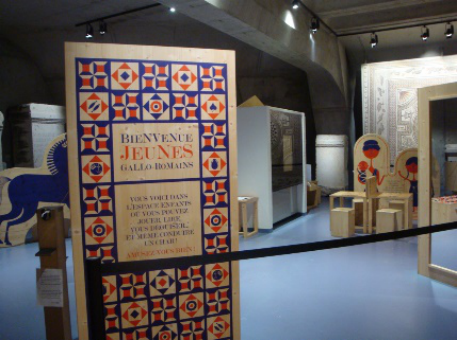
Figure 1: Lugdunum Museum, Lyon. The children sections use shapes, colors, and graphics highlighting that the devices are reserved for children, although the games and related information may also be engaging for all other visitors.
have shown interest and willingness in considering accessibility in an integra- ted and wider approach, many obstacles (as human and economic resources) made putting these intentions into practice difficult. Museums usually tend to create educational activities and support assistive devices dedicated to specific audiences, rather than integrated solutions, that can “be usable by all people, to the greatest extent possible”, as stated in the Convention on the Rights of Persons with Disabilities (ONU, 2006). Many archaeological museums are still very focused on the educational perspective, which may not be the only dimension to consider when referring to the experience of a museum. Some museums are already working to become more “people-oriented”, increasing the involvement of visitors, also in a psychological and emotional way. For instance, storytelling is an increasingly appreciated tool in museums, being able to connect people, creating a relationship between the artefacts and the public. For some museums, visits must be exclusively accompanied (e.g., Lascaux IV - Centre International de l’Art Pariétal), others focus on autono- mous visits. Some address the problem of the disaffected public (e.g., Musée gallo-romain Vesunna in Perigueux, and Montreal Museum of Archaeology and History in Pointe-à-Callière), others explicitly declare an elitist character (as the Musée Départemental Arles Antique). Many museums upgrade an established set-up by adding “targeted” devices, others (such as the Louvre Museum of Paris) interpret the concept of “design for all” in an integrated way. Several museums recognize the relevance of collaborating with social cooperatives and local associations to go beyond the walls of museums and reach new audiences. Indeed, there are still many social categories who are often excluded and disaffected from museums.
During the interviews, Curators and Directors highlighted various groups on which they are working to improve participation and involvement in their museums: teenagers are a very tough category for archaeological museums, as mentioned by the Israel Museum of Jerusalem, the Louvre, the Museum in Pointe-à-Callière and the Lugdunum-Musée & théâtres romains in Lyon;
Contents Accessibility in Archaeological Museums and Sites 163
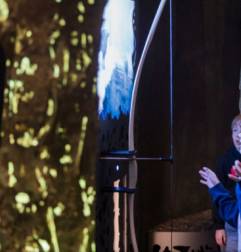
Figure 2: (left). Moesgaard Museum, Aarhus: an interactive arch, with different types of arrows and the effect on different types of prey, is not reserved for a very young audience, but it is as popular with children and adults. (right) Archaeological Museum, Xanten: with a special focus on high school students, but of great interest to all visitors, visitors pass through a gallery with two monitors where two soldiers speak to each other in Latin. Public can hear the pronunciation of a language that is no longer spoken by anyone and has only been studied in books.
the elderly and people living in hospitals are the main targets of activities organized by the Archaeological Museum of Udine (Italy) and the Kunsth- istorisches Museum in Vienna; refugees and migrants have been mentioned by the Archaeological Museum of Thessaloniki and the Vesunna Museum. These examples are only a few of an interesting and wide panorama of acti- vities and programs aimed at involving and reaching people “out of the box”. During the pandemic, museums had the chance to use technologies to keep in touch with the public and, maybe, reach new audiences. An interesting case is the Thessaloniki Museum which organized in March 2020 the cam- paign “Poetry in the shape of things”: using calligrams, i.e., poems that form a drawing, a very traditional component of the ancient Greek literature and culture, the museum invited the online public to draw their own calligrams and send them via web to the museum to realize an online collection. The Museum gathered the works of more than 200 people, including children, adults, scholars, and seniors, from Greece and other parts of the world. In summary, other key aspects emerged from the interviews as follows: arch- aeological museums often tend to have a very didactic approach, aiming at knowledge rather than at the experience itself; accessibility is rarely desi- gned in an “integrated” whole; some museums are willing to change course a little, trying to generate greater involvement, including emotional involve- ment; activities and collaborations “outside the museum”are increasing, with local associations and social cooperatives, in order to reach distant public and enlarge the audience; the centrality of an inclusive approach is fairly widely recognized. Nevertheless, the visits obviously revealed other, someti- mes surprising, aspects: they allowed to personally experience the interactive equipment, putting in the shoes of the visitors and directly experiencing the effectiveness of museum communication.
The influence of the physical place where the visit takes place is always, as architects know, crucial. The museum experience is constantly influenced by spatial aspects, exhibition solutions and emotional atmosphere. The research
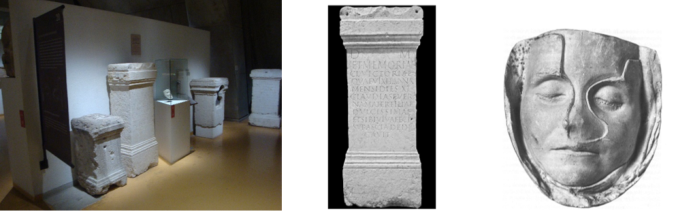
Figure 3: Lugdunum, Lyon: the importance of emotional involvement. As the curators themselves say, the display of this mining mask is not attractive at all, not only because it is placed at the end of the route. The space does not create any emotion and the atmosphere is far and cold. On the contrary, the emotional content of these pieces is very high. As the gravestone says, the mother ‘Claudia Severina raised this tomb to her beloved daughter (...) Claudia Vittoria, who died at the age of ten years, one month and eleven days’. She did this for her daughter but also ‘for herself, still alive’. Not only the visitor fails to grasp this poignant glimpse of the past, but there is nothing in the display that makes him suspect it.
team selected, also with reference to geographical representativeness, a num- ber of cases that deserved a real visit. As soon as the pandemic gave a break, most of the planned visits were carried out, in addition to those already accomplished before the health emergency. With their peculiar characteri- stics the sites visited were quite different: from museums where accessibility is mainly focused on visitors with disabilities (such as the Valley of the Temples in Sicily) to sites and museums that have been updated over time (the Lugdu- num in Lyon) rather than completely renovated (such as the Muséoparc in Alésia); museums designed by so-called “archistars” were visited too (such as the Vesunna Museum designed by Jean Nouvel or the Romanité Museum of Nimes by Elizabeth de Portzamparc), and museums that focus primarily on the visit as an emotional experience for “all” (such as the Moesagaard Museum in Aarhus) or on the re-enactment of a past experience (such as the Xanten Archaeological Park near Düsseldorf).
Ongoing Research The Authors, who have long been dealing with the concept of accessibility and inclusion with reference to cultural heritage and museums in particu- lar, are currently focusing their attention on the concept of appropriation, where the emotional aspect is crucial. They argue that if the communica- tion of heritage focuses only on intellectual content, this requires to visitor a strong effort of concentration, understanding, selection and memorization. If, on the other hand, the contents are also intended as generating emotions, these efforts will be much lighter and above all the intellectual engagement will be accompanied by a psychological involvement, able to transform both the visitor and the cultural content at the same time. At that moment, the visi- tor takes over the heritage, feels it as part of his being and is really enriched by it in a lasting way.
Contents Accessibility in Archaeological Museums and Sites 165
Some considerations have to be added: first of all, emotion is a phy- siological and largely involuntary phenomenon, due to the environmental atmosphere and the way the content is presented. Secondly, the spatial and communicative atmosphere can reduce the differences between the audience: being multisensory and complex, it will be grasped by everyone, each with his difficulties and potential. Space is grasped with the eyes, but also with touch and hearing, and in general with all the senses. Furthermore, the same object (and the same speech) can generate very different emotions and intere- sts, as well as communicate very different messages, depending on the spatial and communicative atmosphere within which it is presented. These consi- derations led the research team to intertwine this study with the field of neuroscience: to explore the neurophysiological reactions of the public in a museum environment. First, simple experiments have already been carried out and further tests with a higher degree of complexity are planned: it is very important to be able to understand how much of the museum content is received intellectually (by asking the visitor directly for feedback) and how much is received emotionally (this investigation is based on the measurement of neurophysiological parameters during the visit).
CONCLUSION
This experimentation will also make it possible to verify the reactions of the visitors under different spatial and expositive solutions, thanks to virtual rea- lity, while the psycho-cognitive aspect will be tested through questionnaires. The combination of the unconscious aspects (emotions) and conscious ones (intellectual understanding) will therefore be able to provide useful informa- tion on the effectiveness of the solutions, cross-referencing the data with the different profiles of the visitors participating in the experiment, and therefore with their difficulties.
REFERENCES
Benente, M., Minucciani, V. (2020) Inclusive museums: from physical accessibility to cultural appropriation. In: Proceedings of the AHFE 2020 Virtual Conferences on Design for Inclusion. Springer, Switzerland. https://doi.org/10.1007/978-3-030- 51194-4_25 European Commission. (2003) Equal opportunities for people with disabilities: A
European Action Plan, Publications Office. https://op.europa.eu/s/vNaH European Commission, Directorate-General for Research and Innovation. (2021) Horizon Europe: strategic plan 2021-2024, Publications Office. https://data.eur opa.eu/doi/10.2777/083753 European Commission, Directorate-General for Education, Youth, Sport and Cul-
ture. (2019) European framework for action on cultural heritage, Publications Office. https://data.europa.eu/doi/10.2766/949707 Council of Europe. (2005) Convention on the Value of Cultural Heritage for Society, Treaty Series - No. 199 United Nations. (2006) Convention on the Rights of Persons with Disabilities, Treaty
Series, vol. 2515. The COME-IN! project: https://www.interreg-central.eu/Content.Node/COME-IN .html. Accessed on 1 February 2022 The ARCHES project: https://www.arches-project.eu/. Accessed on 1 February 2022
LISTED IN THE AHFE DIGITAL BOOKSTORE CATALOGUE
Explore the complete digital volume
Design for Inclusion
Read this individual research paper free through the original publisher, or explore the full digital proceedings book.
ISBN 978-1-958651-21-6
Explore this ISBN in the AHFE Bookstore ↗Listed in the July 2026 bookstore catalogue; search by ISBN to confirm current availability · Digital book purchase optional