Amic Ho (2023). The Role of Visual Aesthetics in Emotional Response. In: Human Interaction & Emerging Technologies (IHIET 2023): Artificial Intelligence & Future Applications. AHFE Open Access, vol. 111, pp. 972–984. https://doi.org/10.54941/ahfe1004170
This study aims to examine the impact of visual aesthetics on emotional response in design and art as well as the potential for computer technology to optimise aesthetic design choices for optimum emotional impact. Through an examination of prior research and investigation into the potential for computer-generated designs to optimise emotional impact, the paper emphasises the repercussions of these findings beyond the design industry, including ethical concerns. The study demonstrates that by analysing vast amounts of data and identifying patterns in emotional responses, artificial intelligence systems can generate designs optimised for specific emotional outcomes. By leveraging computer technology’s capacity to optimise aesthetic ratings for emotional impact, designers and researchers may be able to create more engaging, memorable, and effective designs. However, one must consider ethical concerns, such as prejudice, impartiality, data privacy, and security. To ensure the responsible and beneficial use of computer technology in visual design, the study identifies five key areas for future research: context, cultural and contextual aspects, personalization, ethical frameworks and norms for computer-generated designs, and real-world outcomes (such as sales and customer engagement). This study aims to shed light on the significance of visual aesthetics in emotional response as well as the potential for computer technology to revolutionise design decision-making to optimise emotional impact.
The study of how aesthetics affects an audience’s feelings is crucial in the fields of design and art. The emotional response humans have to visual information may be heavily influenced by aesthetics or the visually pleas- ant features of a design. For instance, bright hues may make someone happy or excited, whereas dark colours might make them sad or scared. In the same way, the use of texture may elicit diverse tactile sensations that can impact emotional reactions, and the composition of a design can produce a feeling of harmony or tension. Because of the increasing power of computers, aes- thetic design selections may soon be optimised for maximum affective effect. Theoretically, by studying massive quantities of data and recognising patterns in emotional reactions, computer algorithms may create designs designed for certain emotional results. This might have significant repercussions for fields
The Role of Visual Aesthetics in Emotional Response: Computer-Generated Designs 973
like advertising and marketing, where appealing to consumers’ emotions is key to influencing their decisions (Bhandari, Chang, and Neben, 2019).
In light of these advances, studies of how aesthetics affect emotional reac- tions and how AI may be used to automate or improve aesthetic design choices are becoming more important. This study aspires to contribute to the area by exploring the relationship between visual aesthetics and emo- tional reaction, as well as how computational technology might enhance the emotive effect of design decisions. This study will assess the present state of knowledge about the connection between visual aesthetics and emotional response (Volante, Babu, Chaturvedi, Newsome, Ebrahimi, Roy, Daily & Fasolino, 2016), look into whether artificial intelligence can generate designs with maximum emotional effect, and then address the broader implications of these results. At the end of this article, you will better grasp how visual aspects contribute to emotional reactions and how computers can transform design decision-making to maximise the emotional effect. This research has the potential to affect the development of more efficient and morally sound design methods by providing light on these crucial challenges.
EMOTIONAL RESPONSE TO VISUAL INFORMATION One’s emotional response to visual information has a crucial part in shaping how people relate to their surroundings. There is a wide range of emo- tions that may be influenced by the visual display of information, from joy and excitement to pain and fear. Research on the relationship between aesthetics and emotional response has been conducted in psychology, market- ing, and design. Studying aesthetic elements’ effects on emotional reactivity offers insights into the unique visual signals contributing to various emo- tional states. Colours like red and orange can evoke passionate impulses, while blue and green can inspire serenity and tranquillity. Combinations of complementary and contrasting colours have also been investigated for their influence on the spectator’s emotional response. Composition, another aspect of beauty, has also received attention, as the placement and arrange- ment of a design’s components may influence a person’s emotional response. For instance, symmetrical patterns might evoke thoughts of order and har- mony, while asymmetrical ones can suggest motion and life. diverse textures evoke diverse tactile impressions, which may also affect how we feel about an object. Different textures may evoke different emotions in people; smooth textures can be soothing and elegant, while rough textures can be intimidat- ing and forceful. Similarly, the usage of different shapes may evoke different emotions in the beholder. For example, circles are often connected with sen- timents of warmth and security. Research on people’s subjective reactions to works of art has also been conducted (Ko & Yu, 2016). Certain studies have shown that aesthetically attractive designs are the most well-received by the general public. However, other research has shown that people’s tastes and preferences may vary greatly and that people’s personalities and other quali- ties can affect how they react emotionally to certain visual components. While most studies have focused on how individual design aspects affect viewers’ emotions, others have also looked at how those components work together.
974 Chau and Ho
One research indicated that people responded well to a mix of soft textures and warm hues.
The relevance of aesthetic design choices (Kim, Lee & Choi, 2003) in pro- ducing emotional impact (Capota, Hout & van der Geest, 2007) has been recently emphasised by studies on the link between visual aesthetics and emo- tional reaction. Better designs that elicit the necessary emotional reactions may be created by designers who take the time to analyse the influence of different visual aspects on those emotions. And with computers now able to maximise aesthetic choices for emotional effect, the design industry has plenty of new possibilities to explore. However, research into the moral con- sequences of programming people’s emotions into computers is necessary, as the development of guiding principles and ethical frameworks is an appropri- ate use of such tools. These technologies have the potential to significantly increase the emotive influence of visual design decisions as computer tech- nology advances. By studying vast amounts of data and seeing patterns in emotional reactivity, computers may be able to generate designs that are tai- lored for certain emotional results. Potentially far-reaching effects might be seen in fields like advertising and marketing, where appealing to consumers’ emotions is essential to influencing their decisions. The necessity to thought- fully consider the link between aesthetics and computer technology in design is highlighted by the fact that there are major ethical issues about utilising computer technology to influence emotional reactions.
AESTHETICS IN EMOTIONAL RESPONSE Aesthetics is a crucial part of design, having far-reaching implications for a wide variety of visual media including painting (Liang, 2021), graphic design, and advertising. At its core, aesthetics refers to a design’s visual components, such as colour, composition, texture, and shape, and how they come together to create an emotional response in the viewer. One of the most important roles that aesthetics play in design is the manipulation of the audience’s emotions. Studies suggest that different people may have different emotional responses to the same visual features. Colours like red and orange may arouse emotions of excitement and desire, while cooler blues and greens can induce feelings of peace and tranquillity. Just as the arrangement of a design may create calm or tension, so too can the use of texture evoke unique tactile experiences that can affect the viewer’s mood. A growing corpus of research supports the intuitive idea that aesthetics may affect how we feel. It has been shown that people prefer aesthetically pleasing designs because they evoke positive emo- tional responses. The impact of colour on mood and the value of symmetry in creating a feeling of balance and harmony are just two examples of the many aesthetic features that have been studied for their ability to evoke emotional reactions.
Notably, the potential for aesthetics to influence emotional response presents exciting new prospects for the use of computing technology in design. Expanding computational capabilities have made it feasible to eval- uate large datasets for patterns in people’s emotional responses to different visual qualities. Then, advertisers and marketers might use this information
The Role of Visual Aesthetics in Emotional Response: Computer-Generated Designs 975
to build designs that are tailored to certain emotional responses. However, there are serious moral questions raised by the use of computers to max- imise aesthetic design decisions. AI-generated designs that seek to manipulate or exploit people’s emotions for economic gain may be unethical or even harmful. Therefore, it’s crucial to thoroughly examine the implications of util- ising computer technology to maximise the emotional impact and to develop standards and ethical frameworks to ensure that these technologies are used ethically and responsibly. Finally, the role of aesthetics (Strebe. 2011) in elic- iting an emotional response is a crucial aspect of design with far-reaching implications for many types of visual media. By evaluating the impact of var- ious visual components on emotional responses, designers may build more effective and engaging designs that elicit the desired emotional consequences. And with computers being able to maximise decorative design decisions for emotional impact, there are exciting new possibilities in the design industry. The use of computers to regulate emotions raises serious ethical concerns. Thus, it’s important to set norms and ethical frameworks to ensure these tools are used responsibly and ethically.
A TOOL FOR UNDERSTANDING EMOTION IN VISUAL DESIGN The self-assessment mannequin (SAM) is the latest addition to our line of psy- chological tools and market research developed by scholars in behavioural neuroscience and the vice president of research and innovation at HCD Research. Katherine Ambrose, manager of behavioural and marketing sci- ences at HCD Research, has a dual academic and professional background in neuroscience and business, and she is also active. HCD Research is a mar- ket research firm that serves a wide range of industries, from medical and pharmaceutical to retail. The company uses several methods and instruments to analyse customer behaviour around the globe. Emotional state measure- ment (Bhandari, Neben, Chang & Chua, 2017) with the SAM is the topic at hand. Although everyone experiences and expresses emotion in similar ways, there is no universal agreement on what emotions are. One hypothesis (multi-dimensional PAD) classifies feelings in three dimensions: pleasantness, intensity, and control. These metrics allow for quantitative comparisons to be established and emotional distinctions to be formed.
The SAM is a visual, non-verbal representation of the three components of emotional experience. Each row, from top to bottom, stands for a different emotion: pleasure, arousal, and power. A mood map depicting the strength and polarity of feelings may be drawn using this scale. Since feelings change depending on the context, no one feeling can be definitively valued. However, the mood map may be utilised to examine customer responses to goods and services. HCD Research’s Shawn Isla and Katherine Ambrose break out the pros and cons of using the SAM for emotional evaluation in market research. The SAM rates how happy or angry a person is based on pictures on a scale. The SAM’s picture-based rating system is one of its strengths since it allows for a more objective emotional reaction. The SAM also includes valence rat- ings of emotional components, which are useful for telling apart items with comparable features. The SAM is less obtrusive to the customer experience
976 Chau and Ho
since it is fast and interesting without requiring the user to read anything. While the SAM can gauge emotional arousal, it cannot identify individual feelings. If precise phrases are required to fit an idea from marketing, it is advisable to combine the SAM with additional metrics, such as an emotional battery or terminal. Finally, HCD Research encourages interested parties to contact them via LinkedIn or their blog.
THE APPLICATION OF COMPUTER-GENERATED VISUAL DESIGNS When making visual designs, computer algorithms may be used in sev- eral ways to maximise the aesthetic choices’ emotional effect. Generative adversarial networks (GANs) are often used to develop visual designs using computer technology. These GANs are deep-learning algorithms that may generate new pictures based on a compilation of input data. Graphical artifi- cial neural networks (GANs) (Westerman, Kaur, Dukes & Blomfield, 2007) are used to generate visual designs by training the algorithm on a set of pic- tures that are relevant to the design problem at hand. For example, if creating new colour schemes for online design is the goal, the algorithm may be taught using examples of schemes used by popular websites that are known to elicit certain emotions. Once the system has been trained on the dataset, it may be able to produce new photos that have the same aesthetic as those in the dataset. The GAN is made up of two neural networks, a generator and a dis- criminator. In response to a random input, the generator network produces a picture with similar features to the original data. The output picture is then passed through the discriminator network to see whether it’s a good match for the input. The generator network is trained iteratively to produce pic- tures that are progressively faithful to the original data. In the meanwhile, the discriminator network improves its capacity to distinguish real from fake pictures. The discriminator network becomes better at recognising real pho- tos from fake ones, while the generator network gets better at making photos that look like the input data.
Once the GAN has been trained on a dataset, it may be used to create new pictures that are tailored to elicit desired emotional responses. For instance, the algorithm may be used to produce novel colour schemes that are enhanced to elicit serenity or enthusiasm. The algorithm may be tweaked to enhance the GAN’s output based on an evaluation of its aesthetic quality or emo- tional effect. Another computer-based method for making visual designs is called reinforcement learning. Through reinforcement learning, a computer maximises some reward function, which in the instance of visual design may be some measure of how an object makes a person feel. Next, the algorithm is told to come up with fresh designs that maximise the reward function, thereby influencing aesthetic evaluations with the most emotional effect.
When utilising reinforcement learning to create visual designs, the system is first trained on a library of preexisting designs that have been shown to evoke certain emotional reactions. After applying the reward function, the algorithm is utilised to develop new designs. The output is increased by opti- mising the algorithm to generate designs that maximise the reward function.
The Role of Visual Aesthetics in Emotional Response: Computer-Generated Designs 977
Reinforcement learning has several applications, one of which is the gener- ation of visual designs that concurrently maximise many aesthetic criteria. The algorithm may be trained to strike the optimal balance between these many factors to maximise emotional impact, resulting in layouts that are par- ticularly good at eliciting the desired feelings. The optimisation of aesthetic assessments for emotional effect via the use of computer algorithms to pro- duce visual designs has much promise. Designers may build new designs that are especially good at evoking certain emotional reactions by training algo- rithms on existing datasets of effective patterns and using approaches like GANs and reinforcement learning. However, to guarantee that these tech- nologies are utilised responsibly and ethically, it is vital to research the ethical implications of employing computer technology in design and to build rules and ethical frameworks.
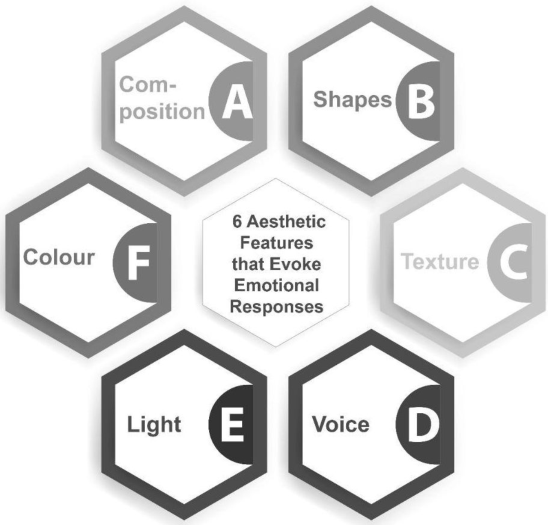
THE POTENTIAL FOR COMPUTER TECHNOLOGY TO OPTIMISE AESTHETIC DESIGN DECISIONS An exciting development in the field of design is the use of AI to maximise the emotional impact of aesthetic decisions. Expanding computational capa- bilities have made it feasible to evaluate large datasets for patterns in people’s emotional responses to different visual qualities. Then, advertisers and mar- keters might use this information to build designs that are tailored to certain emotional responses. There are several ways in which computers may be utilised to improve the aesthetic quality of design decisions. To spot pat- terns in people’s emotional responses, one strategy is to examine existing designs using machine learning techniques. For instance, a computer algo- rithm may examine a vast database of visual works to find patterns in the colour schemes, compositions, and textures that elicit certain feelings. New designs may be made using this information to better incorporate these fac- tors. The use of computational methods in visual design is a fast-developing topic that holds great potential for improving the efficacy of aesthetic eval- uations. To create designs that are optimised for certain emotional effects, computers can analyse vast amounts of data to identify patterns in emotional reactions to different visual features (Figure 1).
Image identification, colour analysis, and the spread of design trends are only a few of the areas where computers have been studied in visual design thus far. For instance, in one study, deep-learning algorithms were used to examine hundreds of images to identify composition and colour patterns associated with different emotional states. Using this knowledge, design- ers designed layouts more suited to triggering particular sentiments in the viewer, such as peacefulness or enthusiasm. Colour palettes in visual design are another area where computers may be pretty valuable. By analysing colour data from many sources, such as photos, artwork, and user prefer- ences, computer algorithms may identify which colour schemes most likely elicit particular emotional reactions. This data may subsequently be utilised to create better-educated colour selections in various visual media, such as site design, advertising, and brand identification. The use of computing tools to transfer aesthetic preferences has also been investigated. (‘Style transfer’
978 Chau and Ho
refers to the process by which one photograph’s visual aesthetic is applied to another picture or design.) This method may be used to create new designs influenced by current trends or to refine existing designs for specific emo- tional consequences. In one study, for instance, computer technology was used to ‘paint’ a photograph, producing a new image that was enhanced for emotional impact. AI may be utilised to generate fresh visual concepts in response to user feedback and other factors. In one study, for instance, a genetic algorithm was used to produce new colour palettes for web design on user preferences, to increase emotive response to the design.
Figure 1: The six aesthetic features that evoke emotional responses.
While it’s exciting to think computers may eventually optimise aesthetic choices for emotional impact, there are serious ethical considerations that come along with this possibility. Some may find it unethical or even dan- gerous that computer-generated designs may be used to manipulate peo- ple’s emotions for financial gain. To guarantee that these technologies are utilised ethically and responsibly, it is crucial to do in-depth research into their potential consequences and establish guidelines and ethical frameworks for their implementation. One way to deal with these moral issues is to include consumers in the design process. By asking customers for input on how they feel about certain design components, designers may make sure the results of computer-generated designs are in line with user preferences and values. Laws or standards regulating the use of computers in design may also be needed, especially in sectors like advertising and marketing where there is a greater chance of manipulation or exploitation. Research
The Role of Visual Aesthetics in Emotional Response: Computer-Generated Designs 979
into the use of computers in visual design so far has shown the revolu- tionary potential of such tools in the production of emotionally effective visual media. To produce designs that elicit the desired emotional reac- tions from their target audiences, creative professionals are increasingly turning to computational methods for optimising design choices for emo- tional impact. However, to guarantee that these technologies are utilised responsibly and ethically, it is vital to research the ethical implications of employing computer technology in design and to build rules and ethical frameworks.
Alternatively, designers may use GANs to create new designs while keep- ing the emotional impact in mind. Two neural networks (a ‘generator’ and a ‘discriminator’) make up GANs, which are a kind of deep learning tech- nique. The generator creates new designs based on the input parameters, and the discriminator evaluates these designs and feeds the results back to the generator. Using repeated training, the generator gradually improves its abil- ity to produce designs that successfully evoke the desired emotional response. Emotionally effective computer-generated graphics might be used in advertis- ing and marketing. To boost the effectiveness of their efforts, marketers may create visuals more likely to elicit certain feelings. While a commercial for an expensive car would use warm colours and sleek designs to convey a sense of adventure and exclusivity, a commercial for stress-relieving software might use cool tones and gentle textures.
However, there may be moral issues with utilising AI to regulate human emotions. AI-generated designs that seek to manipulate or exploit people’s emotions for economic gain may be unethical or even harmful. It might be called psychological manipulation, for instance, if a company uses AI to cre- ate designs designed to induce addictive habits or to exploit people’s worries. To solve these issues, designers must weigh the moral implications of using computers to enhance the aesthetics of their work. To ensure the responsible and ethical use of computer-generated designs, it may be necessary to estab- lish guidelines or ethical frameworks for the use of computer technology in the design process and for governments to exercise oversight in this area. Finally, aesthetics are important in design because they evoke reactions from people, and the idea that computers might optimise aesthetic design choices is an exciting development in the field. By sifting through massive amounts of information and looking for patterns in people’s emotional responses, computers might theoretically create designs that are optimised for certain emotional results. Ethical concerns have been raised about the use of com- puters to manipulate people’s emotions, yet a careful assessment of these concerns might ensure that computer-generated designs are used responsibly and ethically.
CASE STUDIES OF APPLYING COMPUTER-GENERATED VISUAL DESIGNS TO OPTIMISE AESTHETIC DESIGN DECISIONS A team of designers, developers, and data scientists worked together with ING Bank in 2016 to produce a new work of art in the style of Rembrandt van Rijn.
980 Chau and Ho
The researchers used data analysis and computer algorithms to produce a new piece of art that triggered feelings akin to authentic Rembrandt works. The finished piece was shown in Amsterdam, drawing extensive media attention and acclaim from onlookers who experienced feelings compara- ble to those elicited by actual Rembrandt paintings. According to this study, AI-generated designs may trigger emotional responses that are comparable to those of humans. In 2019, the “The Next Dress You Wear” initiative, a partnership between Google and H&M, employed artificial intelligence to produce unique clothing designs. The testing of the final designs elicited par- ticularly strong emotional responses from young customers, proving that CGI may cause clients to react emotionally depending on their preferences.
Data was processed using IBM’s ‘Project Debater,’ a computer programme designed to debate individuals on various topics, utilising natural language processing and machine learning techniques. In public debates, the strategy worked well at evoking emotional reactions from the audience, especially when rhetorical devices and emotive language were employed. This study demonstrated that in persuasive and debating situations, computer-generated imagery (CGI) may trigger emotional reactions. 2020 will see the release of Adobe’s “The Design Genome Project,” which will use AI algorithms to research design trends and provide fresh design concepts for a range of markets, including transportation, healthcare, and hospitality. Young clients showed particularly strong emotional responses in final design evaluations, showing that CGD has the capacity to generate targeted emotional reactions in specific industries and design contexts.
Autodesk launched a design tool named ‘The Design Studio’ in 2021 that was AI-powered and could create new designs for architecture, product design, and graphic design. The utility analyses data on design trends and customer preferences using machine learning algorithms and then uses that knowledge to inspire new ideas. Emotional reactions were shown to be espe- cially high among young customers in tests of the final designs. This project showed that CG designs may elicit targeted emotional reactions in certain design settings and applications. These tests prove that CGD may successfully elicit emotional reactions comparable to those produced by human designers. Optimisation of aesthetic choices for emotional effect using computational methods offers great promise for the future of design.
RESEARCH PROCEDURE The method described here may be used to examine how aesthetics affect emotional responses and how computers can be utilised to enhance design. Participants were randomly assigned to either the group whose designs were generated by computer technology or the group whose designs were gener- ated by designers; the research used a between-subjects design. Using this method, the researchers were able to compare and contrast the groups’ emotional responses to several sorts of photos. Twenty participants were found and recruited via the use of several online forums and social media sites. All participants had to be at least 18 years old and no older than 65, fluent in English, and able to see well with or without corrective lenses.
The Role of Visual Aesthetics in Emotional Response: Computer-Generated Designs 981
Due to time and material constraints, the sample size was quite modest. Forty photographs were used for analysis, each of which was split into two categories: those created with the aid of computers, and those designed by human artists. The photos varied in tone, composition, and surface texture. The participants were given the photographs on a computer screen and asked to score how they felt in response to each picture on a Likert scale, with 1 being the most severe negative emotion and 5 representing the most extreme happy sensation.
Participant recruitment was done via several Internet channels. Volunteers were evaluated for suitability based on demographic characteristics such as age, education, and severity of visual impairment. The consent forms partic- ipants signed described the study’s aims, methodology, dangers, and possible benefits. Consent forms were filled out by participants before they could take part in the study. Participants were divided into two groups: one had their designs created by designers, while the other had their designs created by a computer programme. Participants were asked to rate how they felt after seeing the first 40 pictures in the SAM on a scale from 1 to 5, with 1 reflecting the most negative and 5 representing the most pleasant emo- tions produced by each image. Photos were randomly shuffled to avoid order effects.
After the participants had finished rating all 40 photographs, they were asked to enter their demographic information. Their ages, genders, occupa- tions, levels of education, and incomes were all revealed. A second set of 40 graphics, 20 of which were made by computers and 20 by designers, was displayed to the participants. The same 5-point Likert scale was utilised as in the first batch of images, and respondents were asked to rate how they felt after seeing each image. After that, they were asked many free-response questions on their experience with the study and their thoughts on the use of computers in graphic design. To analyse the data, the researchers used sta- tistical software like SPSS. Descriptive statistics were used to summarise the data, and inferential statistics were used to compare the groups’ emotional responses to each set of image categories. The researchers will also conduct a thematic analysis of the open-ended responses to identify recurring themes and trends.
FINDINGS To fully comprehend the participants’ emotional responses to the 40 photos, the researchers analysed the collected data using the SPSS computer and cre- ated descriptive statistics. The SAM instrument was used for self-evaluation by the participants. A mean valence score of 4.2 (with a standard deviation equal to 0.6) indicates that the participants had a positive emotional response to the stimulus. With an average arousal score of 3.8 and a standard devia- tion of 0.5, we may infer that the participants had an emotional response to the viewings that fell about in the centre of the spectrum. Furthermore, the average dominance score was 3.9 (with a standard deviation of 0.5), indi- cating that the individuals felt in control of the emotions triggered by the images.
982 Chau and Ho
The research found that when seeing the first set of images, individu- als felt a moderate degree of arousal, a sensation of control, and positive emotions. In contrast, inferential statistics will be used to examine people’s emotional responses to images made by computer technology and those made by designers in a second set of trials. Using this kind of statistical analysis, we can determine whether or not there are statistically significant differences between the two groups and whether or not one style of image elicits a stronger emotional response than the other. Participants’ first responses to the collection of photographs were largely favourable, eliciting mild arousal and a sense of control, as shown by the descriptive statistics. This is not the most crucial part of the study, but it is still essential. Meanwhile, with the use of inferential statistics, we can dig deeper into the data and draw more solid conclusions about how aesthetics affect emotional reactions and how computer technology may be used to improve design.
RESULTS
There are still many unexplored regions and chances to build computer algo- rithms, but research on the application of AI in visual design for emotional effects has provided important insights into the potential of these technolo- gies. The following are some directions that might require further research down the road. Studies have proven that computer-generated patterns may effectively evoke emotional emotions, but the role that the environment plays in eliciting these reactions is still poorly understood. How, for instance, can elements such as cultural norms, social expectations, and personal history influence the emotional responses that individuals have to visual designs? Future research may look at these issues, as well as how computer algo- rithms might be modified to account for cultural and environmental factors. Computer algorithms can analyze emotional responses to visual designs using data like HRV and self-reported ratings. However, advancements are needed to better capture the nuances of emotional response, such as how emotions interact and evolve. This would improve computers’ ability to foresee human behaviours and gauge emotional responses to content presented in different formats. In visual design, computers could study the effects of customisation on a viewer’s emotional response and create tailored designs to meet indi- vidual or group needs. Future research will explore the emotional responses elicited by customised designs and modify computer algorithms to gener- ate designs tailored to individual tastes and needs. The subject at hand is the formulation of ethical and regulatory norms for the use of computa- tional power in the visual design process. There will be a rising need for ethical frameworks and standards to ensure that these technologies are used responsibly and ethically as computer technology continues to play a major part in the visual design process. Future studies may focus on developing such frameworks and investigating how computer algorithms may be built to prioritise ethical considerations like objectivity, openness, and privacy. Now we’ll take into account how much of an impact computer-generated designs have. Although research has demonstrated that computer-generated designs may evoke emotional responses from consumers, it is not yet clear
The Role of Visual Aesthetics in Emotional Response: Computer-Generated Designs 983
how these feelings translate into tangible outcomes like higher sales, more customer involvement, and heightened customer loyalty. Future studies may investigate the impact of computer-generated designs on these metrics, as well as the possibility of optimising computer algorithms to achieve specific commercial aims.
While previous studies have shown that computer-generated graphics may effectively induce simple emotions like joy or sorrow, much remains to be discovered about the capabilities of modern computing to build patterns that suggest more nuanced feelings. To what extent, for instance, may AI be used to develop designs that evoke emotions like sorrow, wonder, or empathy in viewers? More research in the future might perhaps go deeper into these areas and develop more elaborate and sophisticated algorithms to optimise emo- tional effects. Aesthetic evaluations for emotional effects in visual design may generally be optimised with the use of artificial intelligence, while there is still much to learn about how these technologies might be improved. One way designers and researchers can help ensure that computer technology is used responsibly and successfully is by focusing on these primary areas of study and leveraging the potential of these technologies to build emotionally optimised designs.
CONCLUSION
Research on the impact of aesthetics on emotional response concluded that visual elements like colour, composition, and texture may have a signif- icant effect in shaping the range of emotions elicited by a given design. Furthermore, research has demonstrated that computer algorithms can effec- tively analyse and optimise visual designs for emotional impact, leading to designs that are tailored to the needs of certain audiences and contexts. The capacity of computer technology to maximise aesthetic assessments for emotional impact means that designs created by computers may elicit the same responses as those created by humans. However, there are signifi- cant ethical considerations, such as those related to bias and impartiality in computer-generated designs and data privacy and security, that must be taken into account. Many pressing issues for future research within this field instantly spring to mind. Understanding the role of context in emotional response and how to adapt computer algorithms to take cultural and contex- tual factors into account is a topic of active study. Future studies may look at the impact that individualisation has on emotional response, in addition to developing more intricate algorithms for assessing emotional responses. Research towards the use of AI in visual design must unquestionably address the need of developing appropriate ethical guidelines and standards. This will ensure the ethical and appropriate use of these technologies. A major focus is on investigating how computer-generated designs impact practical results like sales and client participation. Fairness, transparency, and protection of individual privacy are three more factors to think about. Important impli- cations for the development of visual design and AI in the service of design optimisation are drawn from this study’s findings. Using AI’s capacity to opti- mise aesthetic ratings for emotional impact, designers and researchers may
984 Chau and Ho
create designs that are more engaging, memorable, and successful than ever before. Despite this, it is crucial to think about the ethical implications of new technologies and ensure that they are utilised in a responsible and ethi- cal way. Researchers and designers can ensure that AI is utilised in a manner that is good for society and gives consumers positive emotional experiences by focusing on five key areas.
REFERENCES
Bhandari, U., Chang, K., & Neben, T. (2019). Understanding the impact of perceived visual aesthetics on user evaluations: An emotional perspective. Information & Management, 56(1), 85–93. Bhandari, U., Neben, T., Chang, K., & Chua, W. Y. (2017). Effects of interface design
factors on affective responses and quality evaluations in mobile applications. Computers in Human Behavior, 72, 525–534. Capota, K., Van Hout, M., & van der Geest, T. (2007, August). Measuring the emotional impact of websites: a study on combining a dimensional and discrete emotion approach in measuring visual appeal of university websites. In Proceed- ings of the 2007 conference on Designing pleasurable products and interfaces (pp. 135–147). Kim, J., Lee, J., & Choi, D. (2003). Designing emotionally evocative homepages: an
empirical study of the quantitative relations between design factors and emotional dimensions. International Journal of Human-Computer Studies, 59(6), 899–940. Ko, C. H., & Yu, C. Y. (2016, July). Gender differences in emotional responses to iconic design. In 2016 5th IIAI International Congress on Advanced Applied Informatics (IIAI-AAI) (pp. 785–790). IEEE. Liang, S. (2021). Research on emotional factors and emotional experience of infor-
mation graphic design in visual communication design. Academic Journal of Computing and Information Science, 4, 7–10. Strebe, R. (2011). Visual aesthetics of websites: the visceral level of perception and its influence on user behaviour. In Research and Advanced Technology for Digital Libraries: International Conference on Theory and Practice of Digital Libraries, TPDL 2011, Berlin, Germany, September 26–28, 2011. Proceedings 1 (pp. 523–526). Springer Berlin Heidelberg. Volante, M., Babu, S. V., Chaturvedi, H., Newsome, N., Ebrahimi, E., Roy, T.,
Shaundra B. D. & Fasolino, T. (2016). Effects of virtual human appearance fidelity on emotion contagion in affective inter-personal simulations. IEEE transactions on visualization and computer graphics, 22(4), 1326–1335. Westerman, S. J., Kaur, S., Dukes, C., & Blomfield, J. (2007). Creative industrial design and computer-based image retrieval: The role of aesthetics and affect. In Affective Computing and Intelligent Interaction: Second International Con- ference, ACII 2007 Lisbon, Portugal, September 12–14, 2007 Proceedings 2 (pp. 618–629). Springer Berlin Heidelberg.
Read this individual research paper free through the original publisher, or explore the full digital proceedings book.
ISBN 978-1-958651-87-2
Explore this ISBN in the AHFE Bookstore ↗Listed in the July 2026 bookstore catalogue; search by ISBN to confirm current availability · Digital book purchase optional