Amic Ho, Ruth Chau (2023). Exploring the Role of City Environment in Meeting Emotional Needs of Individuals. In: Human Interaction & Emerging Technologies (IHIET 2023): Artificial Intelligence & Future Applications. AHFE Open Access, vol. 111, pp. 963–971. https://doi.org/10.54941/ahfe1004169
The influence of city environments on individuals' emotional states and overall welfare is considerable. This research aims to examine the correlation between city environments, dynamic requirements, and the experience of city ambience. Researchers can contribute to developing emotionally supportive and sustainable cities by investigating how city environments can meet or hinder individuals' emotional needs. The central focus of this study pathway revolves around comprehending the emotional needs within city contexts. The emotional needs that individuals strive to fulfil within city environments and examine the variations in these needs among different demographic categories and cultural contexts. city planners and designers can enhance their ability to address the diverse emotional experiences of city residents by acknowledging and understanding these emotional needs. An integral aspect of this field of study pertains to the impact of city design on individuals' emotional well-being. Researchers can analyze the impact of the physical characteristics of city environments, including their layout, architecture, and amenities, on individuals' emotional experiences. This entails examining design elements that foster positive emotions and those that may elicit negative emotions or emotional strain. The comprehension of the impact of city design on emotional well-being enables city planners to construct environments that foster positive feelings and mitigate negative emotional states. The influence of social connections on the perception of city environments is significant. The impact of social relationships and community engagement on individuals' emotional experiences within city environments is examined. Researchers can inform the establishment of inclusive and cohesive city communities by investigating factors contributing to a sense of belonging, connectivity, and social support. The examination of social networks and engagement holds the potential for facilitating the cultivation of positive city emotions and fostering enhanced well-being within individuals.Another crucial area of study pertains to the impact of natural elements on the city environment. The impact of integrating natural elements, such as green spaces, water features, and natural lighting, on enhancing individuals' mental well-being within city environments is investigated. Gaining insight into the influence of nature on emotional experiences can facilitate the integration of natural elements into city designs by city designers, thereby enhancing positive emotions, reducing stress levels, and fostering overall well-being. Furthermore, an analysis will be conducted to explore the impact of technology on the emotional state of city environments. This research domain explores the effects of digital technology and smart city solutions on individuals' emotional encounters within city environments. The objective is to ascertain the potential of technology in enhancing positive emotions, providing emotional support, and meeting emotional needs within city environments. This knowledge can potentially contribute to advancing technological interventions to improve city well-being and quality of life.This research domain proposes utilising a mixed-method methodology for collecting both quantitative and qualitative data pertaining to individuals' emotional encounters within city environments. This approach encompasses the use of surveys, interviews, observational studies, as well as innovative data collection instruments. The findings of this study can be utilised by city planners, architects, legislators, and city developers to create emotionally supportive, livable, and sustainable cities. This research result provides a scholarly contribution to the field of city design and development by examining the relationship between city environments, emotional requirements, and the overall emotional well-being of individuals residing in cities. The comprehension and resolution of individuals' emotional requirements within city environments can potentially foster cities that are more inclusive, vibrant, and emotionally fulfilling for all residents.
The link between metropolitan settings, emotional needs, and the city’s atmo- sphere creates emotionally friendly and sustainable cities by understanding how these surroundings might help or impede people’s emotional needs. People’s emotional demands in urban situations change across demographics and cultural contexts. By recognising and understanding these demands, city planners and designers may increase their capacity to meet various emotional experiences. The research also looks at how city design affects emotional well-being, concentrating on design aspects that promote pleasant feelings and those that may trigger negative emotions. Social ties and community involvement also play an essential role in moulding people’s impressions of urban areas. To gather quantitative and qualitative data on people’s emo- tional experiences in urban surroundings, a mixed-method technique that includes surveys, interviews, observational studies, and new data-collecting equipment may be employed. This study adds to urban planning and devel- opment by investigating the link between urban settings, emotional needs, and general emotional well-being.
IMPACT OF CITY DESIGN ON EMOTIONAL WELL-BEING The effect of urban design on people’s emotional experiences is essential since it affects the general well-being of its population. The design of an urban environment, encompassing aspects such as connectedness, pedestrian friendliness, natural landscape availability, and social spaces, may substan- tially impact mental well-being. Architectural designs that are well-designed and aesthetically attractive may have a good impact on emotional well-being, but designs that lack diversity and fail to inspire might evoke adverse emo- tional reactions and detachment from the created environment. Landmarks, sculptures, and famous buildings may provoke sentiments of pride, generate a sense of identity, and form an emotional relationship with the urban envi- ronment. However, the absence or neglect of symbolic architecture may result in a lack of emotional connection and a diminished impression of commit- ment to a particular site. The availability and quality of facilities in a city also substantially influence people’s psychological well-being. Various amenities, such as parks, recreational facilities, retail centres, and cultural institutions, have a favourable influence on an individual’s mental well-being and overall life satisfaction. Parks and green spaces allow leisure activities, physical activ- ity, and a connection with nature, all of which contribute to improved mental well-being. Recreational facilities and community centres encourage social relationships and create social support networks, whilst cultural institutions provide opportunities for intellectual engagement, creative expression, and emotional growth.Emotional reactions elicited by urban street furniture can also impact emotional well-being. Properly designed and comfortable seating arrangements in public spaces can establish welcoming and inclusive spaces that facilitate relaxation, social interaction, and positive emotional states. However, insufficient seating choices or uncomfortable designs can result in discomfort, physical strain, and a diminished capacity for social engagement, exerting a detrimental influence on one’s emotional well-being. The impact of urban design, architectural elements, and amenities on individuals’ emo- tional experiences is a significant area of study. The configuration of an urban environment significantly influences individuals’ emotional well-being, with factors such as roadway connectivity, pedestrian-friendliness, green spaces, and public amenities influencing emotional well-being. Well-designed urban layouts promote accessibility, social engagement, and a sense of belonging, while inadequately planned arrangements may result in negative emotional experiences and a decline in overall quality of life.
Symbolic architectural elements, such as prominent landmarks, sculptures, and renowned structures, can evoke emotions such as pride, identification, and emotional attachment towards a city. The presence of these elements can evoke emotions such as pride, identification, and emotional attach- ment, while the absence or disregard of symbolic architecture may lead to a diminished emotional connection and a weakened sense of place attachment. Amenities within an urban setting, such as parks, recreational facilities, retail malls, and cultural institutions, can also impact emotional well-being and overall life satisfaction. Access to diverse facilities, such as parks and green spaces, recreational facilities, and community centres, can enhance emotional well-being and overall life satisfaction.
Exploring the Role of City Environment in the Emotional Needs of Individuals 965
Lastly, the implementation of thoughtfully designed and comfortable seat- ing arrangements within urban settings can create inviting and inclusive spaces that foster relaxation, social interaction, and positive emotional encounters. However, inadequate seating options or poorly designed seat- ing arrangements can result in discomfort, physical stress, and reduced social interaction, all of which can negatively impact one’s emotional well-being. Architectural elements and urban design significantly impact individuals’ emotional experiences, as they provide opportunities for recreation, social interaction, and intellectual stimulation. Well-connected, pedestrian-friendly layouts, architectural designs that incorporate visual beauty and nature, and diverse, high-quality amenities can enhance emotional well-being and overall life satisfaction. Inadequately designed arrangements, unstimulating archi- tectural designs, and scarcity of easily reachable amenities can contribute to negative emotional encounters, social isolation, and diminished overall welfare. Understanding the correlation between physical attributes and emo- tional encounters is crucial for urban planners, designers, and policymakers to create inclusive, vibrant, and emotionally fulfilling urban environments.
DESIGN FACTORS FOSTERING POSITIVE EMOTIONS This study investigates the design features that significantly contribute to the cultivation of positive emotions, highlighting the crucial role of positive emotions in design. Positive emotions have a crucial part in an individual’s cognitive, emotional, and behavioural functioning, in addition to increasing user experience, engagement, and brand loyalty. Joy, enhanced energy and vigour, overall well-being, and a positive view on life characterise these sen- timents. Better life satisfaction, well-being, and self-esteem may be obtained by creating with good emotions in mind. This may result in pleasant expe- riences and the formation of emotional bonds. They also have a positive impact on an individual’s physical and mental health, including stress reduc- tion, improved cardiovascular health and immune system performance, and improved capacity to deal with stressful circumstances. In conclusion, the cultivation of positive emotions is crucial for fostering holistic well-being and achieving a prosperous life. By understanding the significance of posi- tive emotions in design, designers can create more satisfying and enduring experiences that establish emotional connections with individuals.
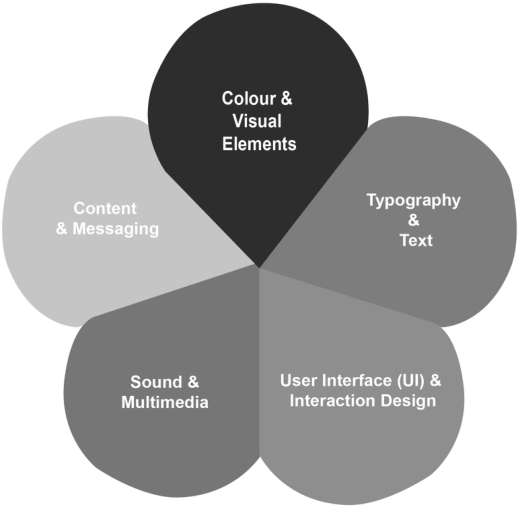
EXAMINATION OF DESIGN ELEMENTS ELICITING NEGATIVE EMOTIONS Design features can evoke various emotions, including positive and negative, influencing user experiences. Understanding these emotions helps design- ers anticipate, acknowledge, and adjust design elements for exceptional user experiences.
Colours, typography, and user interfaces can evoke negative emotions, such as anger, sorrow, or fear. Designers should exercise caution when select- ing fonts and typography to align with the intended emotional response.
966 Ho
Poorly designed user interfaces can elicit annoyance, confusion, and nega- tive emotions. Background music or notification noises can evoke negative emotions if they are loud, intrusive, repetitive, or incongruent with user expectations. Optimising multimedia assets for enhanced performance can help mitigate delays and misunderstandings. Designers should conduct thor- ough assessments of tone, voice, and language to ensure alignment with the intended emotional encounter. Engaging in user research, usability test- ing, and feedback can help identify potential issues and make necessary adjustments. Integrating user-centred design and empathy principles can help anticipate and manage adverse emotional reactions, leading to effective and significant user experiences.
Figure 1: Design elements that can elicit negative emotions.
METHODOLOGY
To conduct a comprehensive assessment of visual design elements in an urban setting and their impact on eliciting emotional responses, it is advantageous to incorporate individuals from diverse geographic backgrounds and with varied characteristics. Twelve people were selected at random to take part in the research. Participant pools are more likely to be representative of society as a whole when they include people of different ages, ethnicities, and socioe- conomic backgrounds. Moreover, it is imperative to make efforts to include inhabitants from diverse neighbourhoods or districts within the urban area to encompass variations in visual aesthetics and emotional reactions across different localities. The inhabitants of the examined urban region offer valu- able perspectives on their daily interactions and affective responses to the
Exploring the Role of City Environment in the Emotional Needs of Individuals 967
visual elements of their environment. A comparison study may be performed to evaluate the previous city’s visual design components as well as the emo- tional reactions of persons who have migrated to the new city. This can be achieved by gathering perspectives from these individuals. Insights regarding the influence of visual design elements on the emotions and overall percep- tion of the city can be obtained from tourists or short-term visitors who have experienced the city.
Urban planners and design experts are currently seeking individuals who possess expertise in urban planning, architecture, landscape design, or related fields. The inclusion of their perspectives will be of great value in com- prehending deliberate design methodologies and their intended emotional impact. Leaders and representatives within community organisations, local government bodies, or neighbourhood associations. These narratives have the potential to provide valuable perspectives on the shared emotional expe- riences and cognitive evaluations of the community regarding the visual design elements present within the city. This study aims to comprehensively understand the impact of visual design elements in urban environments on emotional responses among different demographic groups. To achieve this, the study involves participants from diverse geographical backgrounds and with varying characteristics.
SURVEYS QUESTIONS 15 Surveys questions are designed to examine Visual design Elements in City emotion Eliciting Emotional changes as follows:
1. On a scale of 1-10, how would you rate the overall visual design elements in your city in terms of eliciting positive emotions? 2. Which specific visual design elements in your city do you find most appealing and likely to evoke positive emotions? 3. Are there any visual design elements in your city that you find unattrac- tive or unpleasant, causing negative emotions? If yes, please describe them. 4. Do you believe the visual design elements in your city have an impact on your emotional state when you are in public spaces? Please explain. 5. How do the colours used in the visual design of your city affect your emotions? Do they elicit positive or negative emotions, or neither? 6. In your opinion, which visual design elements in your city effectively contribute to creating a sense of calmness and relaxation? 7. Do you think the visual design elements in your city convey a sense of vibrancy and energy? If yes, please provide examples. 8. Are there any specific visual design elements in your city that you find confusing or difficult to understand? How do they impact your emotional experience? 9. How does the presence or absence of green spaces and natural elements in the visual design of your city impact your emotional well-being? 10. How do the architectural design elements, such as buildings and struc- tures, in your city influence your emotional response?
968 Ho
11. Does the wayfinding system and signage in your city contribute to positive or negative emotions? Please share your thoughts. 12. How do public art installations or sculptures incorporated into the visual design impact your emotional experience in the city? 13. What visual design elements specific to transportation infrastructure (e.g., streets, bridges, public transportation) evoke emotional responses in you? Please elaborate. 14. Do you find the lighting design in your city to be visually pleasing and emotionally impactful? Please explain your answer. 15. How would you describe the overall emotional atmosphere or ambience created by the visual design elements in your city?
FINDINGS AND DISCUSSION A significant proportion of participants expressed positive evaluations regarding the visual design elements of the city, indicating that they tend to evoke favourable emotions overall. This observation demonstrates that the visual aesthetics of the city are successful in creating an atmosphere that elicits emotional engagement. The visual design elements of the city were eval- uated and received an average rating of 7.8 on a scale ranging from 1 to 10. This indicates that the overall perception of the visual design features was generally positive.
The incorporation of visually appealing aspects, such as vivid street art, well-kept parks, and aesthetically good architecture, has repeatedly been identified as appealing and capable of triggering favourable feelings. These aforementioned characteristics all add to the city’s overall excellent reputa- tion. Respondents were dissatisfied with certain visual design characteristics, such as badly maintained facades, excessive signage, and insufficient cleanli- ness in public places, which they saw as unsightly or uncomfortable. Dynamic street art, perfectly kept parks with plentiful greenery, and visually pleasant architecture are examples of visual design features that are regularly noted as appealing and capable of triggering good feelings. Participants in the survey noted particular design characteristics that they found unappealing or offen- sive, such as badly maintained exteriors, excessive signage, and poor hygiene in public places. The aforementioned elements were shown to be connected with negative emotional states, revealing possible areas for intervention to improve the city’s citizens’ emotional well-being.
A large proportion of participants said that the visual design compo- nents in their urban surroundings had a major influence on their emotional well-being during trips to public places. When exposed to aesthetically pleasing settings, 72% of respondents reported increased emotions of con- tentment and satisfaction. It has been shown that the usage of various hues in visual design has a significant impact on human emotions. Warm and cheerful colours, for example, have been proven to arouse pleasant feel- ings, whilst dark or dreary colours are more likely to do the opposite. This emphasises how crucial colour choice is in developing emotionally engaging environments. It has been discovered that the use of colour in visual design significantly affects how people feel. Warm, vivacious colours like yellows
Exploring the Role of City Environment in the Emotional Needs of Individuals 969
and oranges have been demonstrated to elicit positive emotions whereas drab or dark hues produce negative ones. Parks and streets lined with trees are examples of natural areas that have been demonstrated to boost mental well- being by fostering a sense of calm and forging connections with the outside world.
This finding shows that incorporating more green areas into urban sur- roundings may possibly improve city people’ mental well-being. Respondents largely recognised the importance of parks and tree-lined roads in generating a feeling of serenity and refreshment. The presence of unpleasant or difficult- to-understand visual design features, such as poorly marked transit stops or imprecise signage, was proven to have a detrimental influence on emotional experiences. The presence of green areas and natural components has been shown to improve mental well-being. A large majority of participants, more than 80%, felt a stronger connection to nature and feelings of satisfaction in these sorts of settings.
Architectural design elements, particularly those that are aesthetically appealing and readily recognised, have been identified as important con- tributors in triggering emotional reactions. The link between modern and aesthetically attractive architectural designs and pleasant emotional expe- riences emphasises the importance of well-crafted structures in establishing an environment conducive to emotional well-being. The participants agreed that dynamic surroundings, such as busy marketplaces, had a good influ- ence on the formation of a feeling of vitality and vigour, hence developing favourable emotional experiences. The research discovered that architectural design components, especially noteworthy landmarks, were important in cre- ating emotional reactions. Modern and aesthetically appealing architecture, in particular, was linked to happy feelings.
Participants reported unhappiness and displeasure with the navigation sys- tem and signs, identifying these areas as needing improvement. Individuals have reported increased enjoyment, inspiration, and emotions of content- ment after witnessing well-crafted creative works, and public art installations and sculptures have been identified as important contributors to emotional experiences. Inadequate navigation and imprecise signage were found to be connected with unpleasant feelings, leading to the identification of the wayfinding system and signage as areas in need of improvement. Enhancing the clarity and intuitiveness of navigation systems contributes to the enhance- ment of emotional experiences within urban environments. The significance of lighting design was perceived as crucial, with participants expressing the belief that appropriate lighting enhanced emotional experiences by creat- ing a secure and visually pleasing atmosphere. The participants agreed that dynamic surroundings, such as crowded marketplaces, had a good influ- ence on people’s feeling of vitality and vigour, creating pleasurable emotional experiences. The presence of public art installations and sculptures has been regarded as advantageous in enhancing emotional experiences. The presence of well-executed aesthetic elements is associated with heightened levels of enjoyment, motivation, and positive emotions, suggesting that the inclu- sion of public art could potentially enhance the emotional ambience of the city.
970 Ho
The range of emotional responses towards transport infrastructure was diverse. Positive emotions were found to be correlated with meticulously designed, pedestrian-oriented environments, whereas negative sentiments were linked to congested or inadequately constructed transportation centres. Enhancing the design and structure of transport infrastructure has the poten- tial to result in a more positive emotional encounter. According to the par- ticipants’ feedback, the presence of well-designed pedestrian-friendly areas was found to have a positive impact on emotional experiences. Conversely, the existence of congested or inadequately constructed transit hubs was associated with negative emotional states. In general, participants expressed positive evaluations of the visual design elements of the city, resulting in a wel- coming and emotionally captivating atmosphere. Respondents collectively expressed contentment with the overall emotional ambience of the city. The presented simulated data exhibit a diverse range of responses that could arise from survey inquiries exploring the impact of visual design elements on emo- tions within an urban setting. In a genuine research study, the obtained results would necessitate statistical analysis and further interpretation to arrive at meaningful and significant conclusions.
CONCLUSION
Based on the research findings, it has been observed that the incorporation of visual design elements within urban environments has the potential to elicit positive emotions and establish an emotionally captivating atmosphere. The utilisation of vibrant street art, meticulously maintained parks, and visually pleasing architecture is widely acknowledged for its ability to evoke positive emotions. Nevertheless, certain architectural attributes, such as poorly main- tained exteriors, excessive signage, and inadequate hygiene, were found to be associated with unfavourable emotional responses. The incorporation of diverse colour schemes, incorporation of green spaces, and the integration of natural elements have the potential to enhance emotional well-being. The inclusion of architectural design elements, such as visually pleasing aesthetics and iconic landmarks, can exert a significant impact on eliciting emotional responses. Transportation infrastructure, navigation systems, and public art installations and sculptures are integral elements in fostering emotive encoun- ters. The deliberate utilisation of colours, public art, and transit infrastructure collectively contribute to the establishment of positive emotional ambiences within urban environments. The comprehension of these findings has the potential to assist urban planners, designers, and individuals in the devel- opment of community spaces that are more emotionally captivating and enjoyable.
REFERENCES
Bethany E., et al. “How positive emotions build physical health: Perceived positive social connections account for the upward spiral between positive emotions and vagal tone.” Psychological Science 24.7 (2013): 1123–1132. Chang, Jiayu, et al. “Effects of thermal-olfactory interactions on emotional changes
in urban outdoor environments.” Building and Environment 232 (2023): 110049.
Exploring the Role of City Environment in the Emotional Needs of Individuals 971
Elsadek, Mohamed, Binyi Liu, and Zefeng Lian. “Green façades: Their contribution to stress recovery and well-being in high-density cities.” Urban Forestry & Urban Greening 46 (2019): 126446. Jabbar, Muhammad, Mariney Mohd Yusoff, and Aziz Shafie. “Assessing the role
of urban green spaces for human well-being: A systematic review.” GeoJournal (2021): 1–19. Jiang, Xu, Joradn Moreno, and Zijia Ng. “Examining the interplay of emotion regulation strategies, social stress, and gender in predicting life satisfaction of emerging adults.” Personality and Individual Differences 185 (2022): 111255. Kok, Bethany E., et al. “How positive emotions build physical health: Perceived pos-
itive social connections account for the upward spiral between positive emotions and vagal tone.” Psychological Science 24.7 (2013): 1123–1132. Kong, Lingqiang, et al. “How do different types and landscape attributes of urban parks affect visitors’ positive emotions?.” Landscape and Urban Planning 226 (2022): 104482. McCay, Layla, et al. “Urban design and mental health.” Urban mental health
(2019): 32. Mouratidis, Kostas, et al. “Sustainable transport modes, travel satisfaction, and emotions: Evidence from car-dependent compact cities.” Travel Behaviour and Society 33 (2023): 100613. Stanley, Peter J., and Nicola S. Schutte. “Merging the Self-Determination Theory
and the Broaden and Build Theory through the nexus of positive affect: A macro theory of positive functioning.” New Ideas in Psychology 68 (2023): 100979. Zhang, Yingyi, et al. “Social interaction in public spaces and well-being among elderly women: towards age-friendly urban environments.” International journal of environmental research and public health 19.2 (2022): 746.
Read this individual research paper free through the original publisher, or explore the full digital proceedings book.
ISBN 978-1-958651-87-2
Explore this ISBN in the AHFE Bookstore ↗Listed in the July 2026 bookstore catalogue; search by ISBN to confirm current availability · Digital book purchase optional