Tarika Kumar, Xinyi Tu, Matteo Zallio (2025). How generative AI is reshaping UI/UX design workflows: A systematic review. In: Human Factors in Design, Engineering, and Computing. AHFE Open Access, vol. 199, pp. 2438–2452. https://doi.org/10.54941/ahfe1007056
As GenAI technologies such as large language models, diffusion models, and multimodal generative systems increasingly permeate design workflows, their implications for creativity, methodology, ethics, and collaboration demand critical scholarly attention. This paper presents a systematic literature review of generative artificial intelligence (GenAI) in user interface (UI) and user experience (UX) design, drawing on fifty peer-reviewed and preprint articles published between 2020 and 2025. The review is structured around five research questions, addressing: (1) the stages of the UI/UX design process where GenAI tools are most actively applied, (2) the methodological approaches used to evaluate their integration, (3) the ethical considerations arising from their use, (4) models of human-AI collaboration in design practice, and (5) the research gaps that shape the future trajectory of this field. Findings indicate that while GenAI tools are widely adopted in prototyping and visual asset generation, their use in early-stage conceptualization and UX evaluation remains limited. The literature also reveals methodological fragmentation and a lack of standardized evaluation frameworks. Ethical concerns surrounding bias, transparency, and privacy are underexplored, and few studies provide robust models for collaborative work between humans and AI. This review identifies the need for longitudinal research, structured participatory frameworks, and ethically grounded design methodologies. The paper contributes a comprehensive synthesis of current knowledge and outlines directions for future inquiry at the intersection of generative AI and human-computer interaction.
Generative AI (GenAI), a subset of artificial intelligence characterized by its ability to generate new data based on learned patterns, has recently emerged as a transformative tool in UI/UX design. This class of AI includes large language models (LLMs) such as OpenAI’s GPT-4, image-generation systems like DALL-E, and innovative platforms like Midjourney. These technologies, trained on expansive datasets of text, images, and user interaction data, allow designers to automate previously manual tasks, enabling rapid prototyping, ideation, and iterative refinement of digital interfaces (Schneider, 2024; Brown et al., 2020; Saharia et al., 2022). See also early UX-specific evaluations (Al-sa’di & Miller, 2023).
UI/UX design has traditionally relied on iterative, human-centered processes, often involving direct user research, participatory methods, and collaborative ideation (Norman, 2013). The recent influx of GenAI into this space presents a shift not only in design tools, but also in the underlying epistemologies that guide creative decision-making. Rather than relying solely on experience or user insights, designers are now increasingly interacting with generative systems that can propose layouts, generate user flows, and provide copywriting support in real time (Lee et al., 2023). Survey work suggests designers increasingly rely on generative aids for prompts and inspiration (Kim & Maher, 2023; Shi et al., 2023).
Historically, AI's integration into UI/UX design has evolved significantly. Early interactions between AI and UI/UX were limited to basic automation and pattern recognition, assisting primarily in usability testing and analytics (Holzinger, 2016). However, over the course of the past 5 years, significant advancements in deep learning, especially in neural architectures, have drastically amplified the capability and application range of AI in design processes. The emergence of tools such as ChatGPT, DALL·E, Midjourney, and a range of AI-powered plugins in platforms such as Figma and Webflow has led to a surge in adoption and experimentation (Brown et. al, 2020; Saharia et. al, 2022). Organizational adoption and design strategy perspectives are also emerging (Holmström & Carroll, 2024; Verganti et al., 2020). Early use cases demonstrate a high degree of promise, particularly in prototyping and visual generation, while other areas such as ideation and evaluation remain underexplored (Holzinger, 2016). This period, from 2020 to 2025, marks an era of accelerated adoption and integration of GenAI within the broader field of human-computer interaction (HCI), signifying a turning point in both theoretical and practical aspects of UI/UX design.
To better understand the current state of the field, this study systematically reviews fifty peer-reviewed and preprint articles published between 2020 and 2025. Our aim is to identify the key stages in which GenAI is applied in UI/UX workflows, the methodological frameworks used to evaluate its integration, the ethical issues raised by its adoption, and the models of collaboration that emerge when humans work with generative tools. Specifically, we address the following research questions (RQs):
RQ1: Which stages of UI/UX design are predominantly leveraging GenAI tools?
RQ2: What methodological practices and evaluation frameworks are being adopted to integrate GenAI into UI/UX workflows?
How Generative AI is reshaping UI/UX Design Workflows: A Systematic Review 2440
RQ3: What are the ethical challenges associated with the use of GenAI in UI/UX design?
RQ4: How are current human-AI collaboration frameworks structured within UI/UX processes?
RQ5: What critical research gaps exist, and what directions should future research pursue?
The remainder of this paper is structured as follows: Section 2 provides the necessary background and context. Section 3 details the systematic methodology employed. Section 4 presents the findings structured around the five research questions. Section 5 provides a critical discussion of these findings in relation to HCI, design theory, and industry practice. Section 6 concludes with implications for research, design education, and the development of responsible AI systems..
BACKGROUND & CONTEXT Generative AI and Large Language Models
GenAI encompasses technologies capable of autonomously producing outputs such as text, images, or interactions from learned data patterns (Goodfellow et al., 2014). LLMs, a core component, employ deep neural network architectures to generate coherent, contextually relevant outputs based on extensive pre-trained data (Brown et al., 2020). Recent studies emphasize multimodal stimuli generation for ideation (Li et al., 2025; Xu et al., 2024). GenAI’s generative potential and adaptability have made it particularly appealing for various stages of UI/UX design.
Creative outputs from these tools may result from capabilities such as image generation, ideation, and user-generated text, among others, enabled by technologies such as DALL·E 2 (Saharia et al., 2022), Midjourney, and Stable Diffusion (Rombach et al., 2022). For structured concept generation pipelines, see Zhu & Luo (2023). These models for image generation leverage diffusion techniques and latent space manipulation to produce visual content based on natural language input. Increasingly, researchers are developing multimodal systems that integrate visual, textual, and auditory input to perform complex creative functions across media. Together, these tools represent a shift from prescriptive computing toward systems capable of dynamic and contextually informed output generation (Zhang et al., 2023).
2441 Kumar et. al
The UX/UI Design Lifecycle UI/UX design involves multiple iterative stages: conceptualization, prototyping, implementation, and evaluation.
Conceptualization: During this stage, designers identify user needs, conduct exploratory research, and define project goals. Tools such as personas, journey maps, and early sketching are often used (Cooper et al., 2014, Chandrasekera et al., 2024).
Prototyping: Designers translate ideas into wireframes or mockups. Interactive components may be included, and visual elements are refined for consistency and usability (Al-sa’di & Miller, 2023, Barbieri & Muzzupappa, 2024).
Implementation: This involves the translation of designs into code. Designers often work closely with developers to ensure accurate execution.
Evaluation: Usability testing, A/B testing, and analytics are employed to assess how users engage with the interface and to identify opportunities for improvement (Nielsen, 1993).
GenAI introduces new possibilities in each of these stages. For example, during conceptualization, designers may use LLMs to brainstorm features or conduct rapid user research synthesis (Lee et al., 2023). In prototyping, state-of-the-art text-to-image diffusion models can generate photorealistic visual assets from simple textual prompts, outperforming prior models in both fidelity and prompt alignment (Saharia et al., 2022). In implementation, designers are now experimenting with generative tools for development, particularly of low-fidelity clickable concept prototypes (Subramonyam et al, 2025). For evaluation, automated sentiment analysis or AI-powered testing frameworks offer new ways to assess user feedback (Holzinger, 2016).
Prior Reviews and Limitations Despite substantial literature on AI's integration into software engineering broadly, previous systematic reviews have only superficially addressed UI/UX-specific applications. Studies like Holzinger (2016) provided foundational insights into human-centered AI but lacked depth on recent generative capabilities. Zhang et al. (2023) conducted a review of AI in co-creative systems, while Tao et al. (2024) examined computational support in creative collaboration. However, these reviews typically overlook the specifics of design tools, design workflows, or the structure of UI/UX teams. Thus, this review uniquely fills a critical gap by systematically analyzing literature explicitly focused on GenAI’s role within UI/UX between 2020 and 2025.
How Generative AI is reshaping UI/UX Design Workflows: A Systematic Review 2442
Prior work has tended to focus either on technical performance or high-level philosophical implications, leaving a gap in understanding how GenAI tools are used day-to-day in design practice (Takaffoli & Mäkelä, 2024). Other reviews also highlight AI-augmented design support and team collaboration (Liao et al., 2020; Shi et al., 2023; Sreenivasan & Suresh, 2024), while organizational perspectives examine adoption at scale (Holmström & Carroll, 2024). This paper contributes to closing that gap by systematically examining recent literature through the lens of workflow integration, collaboration, ethics, and design methodology. By grounding our review in the stages of design practice and by attending to both theoretical and applied research, we aim to provide a clear picture of where the field stands and where further investigation is most needed.
METHODOLOGY
This review followed a systematic approach informed by the PRISMA (Preferred Reporting Items for Systematic Reviews and Meta-Analyses) guidelines to ensure transparency, replicability, and methodological rigor. The goal was to identify, screen, and analyze recent literature on the application of generative AI in UI/UX design processes, published between January 2020 and April 2025. In addition to peer-reviewed publications, preprints were included to capture emerging research in this rapidly evolving field. Given the fast pace of development in generative AI, preprints often represent cutting-edge work that has not yet progressed through lengthy peer-review cycles but is widely cited and discussed within the HCI and design research communities Database Selection and Rationale
Databases selected for this review included ScienceDirect and Directory of Open Access Journals (DOAJ) complemented by scholarly aggregators such as Google Scholar and Semantic Scholar. These databases provided comprehensive coverage of research across interdisciplinary fields relevant to HCI and computer science.
Search Strategy A structured search was performed using Boolean logic to capture a broad range of relevant literature. Search terms were selected to reflect the intersection of generative AI and UI/UX design. A representative search string was: (“Generative AI” OR “large language model” OR GPT OR DALL-E ) AND (“UI design” OR “UX design” OR “user interface” OR “user experience” OR “interaction design”). The search covered papers published between January 2020 and April 2025, and was conducted in June 2025.
Inclusion/Exclusion Criteria Studies were included if they (1) explicitly addressed GenAI tools within UI/UX, (2) were peer-reviewed or reputable preprints, (3) published between 2020-2025, (4) presented empirical findings, prototype descriptions, or theoretical models relevant to design workflows and processes, (5) and written in English. Exclusions
2443 Kumar et. al
applied to opinion pieces, studies outside the UI/UX domain (e.g., graphic design, architecture, illustration, urban studies, industrial design, and physical products), studies without empirical evidence, and unrelated AI applications.
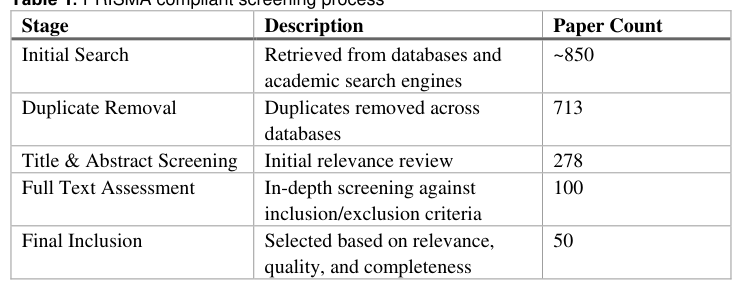
Screening and Reliability A multi-stage PRISMA-compliant screening process reduced the initial pool from approximately 800 articles to 50 (see Table 1). Initial screening involved titles and abstracts, followed by detailed full-text assessments.
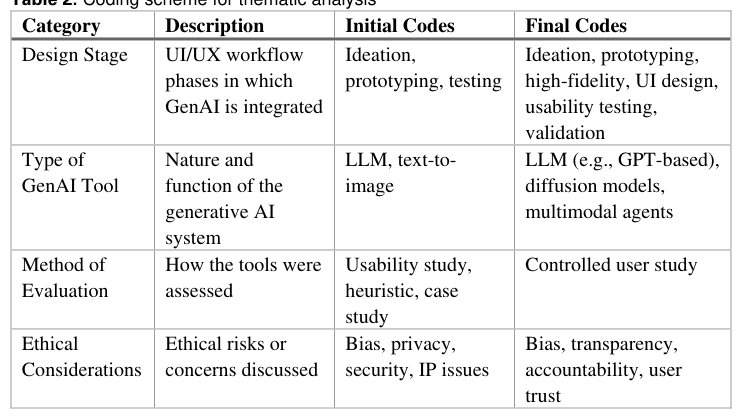
Table 1. PRISMA compliant screening processTable 2. Coding scheme for thematic analysis Ideation, prototyping, testing Category Description Initial Codes Final Codes Design Stage UI/UX workflow phases in which GenAI is integrated Ideation, prototyping, high-fidelity, UI design, usability testing, validation Type of GenAI Tool
How Generative AI is reshaping UI/UX Design Workflows: A Systematic Review 2444
FINDINGS RQ1: Stages of UI/UX Leveraging GenAI
GenAI tools have become integral across various stages of the UI/UX design process, although their adoption varies significantly by stage. During the conceptualization phase, despite widespread acknowledgment of GenAI’s potential, particularly in prompt-based brainstorming and early-stage ideation, practical exploration and empirical validation remain sparse (Kim & Maher 2023; Chandrasekera 2024; Li 2025).
In contrast, the image generation and prototyping stages have experienced substantial and widespread integration of GenAI tools, with numerous studies underscoring the effectiveness of systems like DALL-E and Midjourney (Kim & Maher, 2023; Chandrasekera et al., 2024; Li et al., 2025). Studies provide compelling evidence of GenAI’s capacity to automate and significantly accelerate the creation of visual assets and iterative prototyping processes (Balasubramanian & Periyaswamy, 2024; Rombach et al., 2022; Saharia et al., 2022). The rapid experimentation facilitated by these tools is shown to enhance creative exploration and drastically reduce traditional design timelines. Industry perspectives further highlight enterprise UX applications (Zhu et al., 2024; Durgam et al., 2025) Similarly, the interface design phase has seen notable GenAI utilization. Research increasingly highlights the capabilities of AI-driven adaptive interfaces that dynamically respond to user interactions. Several innovative studies have explored adaptive adjustments and personalized interfaces that significantly enhance user experience by improving usability and aligning designs more closely with individual user needs and preferences. Exploratory frameworks also investigate character-space and creative form exploration (Sano & Yamada, 2022; Barbieri & Muzzupappa, 2024)
The UX evaluation stage has moderately integrated GenAI, particularly in automating qualitative analysis of user feedback and usability testing. Foundational work by Holzinger (2016) and subsequent studies illustrate successful applications of GenAI in analyzing sentiment and thematic content from user feedback, streamlining the traditionally resource-intensive evaluation processes and effectively identifying critical usability issues.
RQ2: Methodological Practices The reviewed literature reveals a diverse methodological landscape predominantly characterized by mixed-method approaches. Quantitative methods frequently assess the efficacy of GenAI tools by measuring performance metrics such as task completion time, error rates, and user satisfaction scores. These quantitative validations are crucial in establishing objective benchmarks for performance and
2445 Kumar et. al
practical utility. Controlled experiments show measurable impacts on divergent and convergent thinking (Kumar et al., 2025).
Conversely, qualitative methodologies, including thematic analyses and case studies, offer deeper insights into user perceptions, design rationales, and contextual nuances of GenAI usage. Such qualitative explorations are particularly valuable in identifying subtle acceptance issues and usability barriers that quantitative measures alone might overlook.
Mixed-method and participatory design frameworks integrate quantitative and qualitative methods to yield comprehensive and nuanced insights. Holzinger (2016) notably emphasizes that actively involving end-users through participatory methods substantially enhances the alignment of GenAI tools with user expectations, leading to improved design outcomes and higher acceptance rates among target user populations.
RQ3: Ethical Considerations Integrating GenAI into UI/UX design introduces significant ethical challenges that are multifaceted and complex. Foremost among these concerns is algorithmic bias (Binns, 2018). Biases embedded within training datasets have been shown to perpetuate inequities, disproportionately impacting diverse user populations and raising serious ethical and equity concerns. GenAI can also boost individual creativity while narrowing collective diversity, raising equity concerns (Doshi & Hauser, 2024)
Transparency and explainability of AI-generated decisions present additional ethical challenges. Studies have highlighted instances where opaque algorithmic processes negatively affected user trust and autonomy, underscoring the critical need for transparency in AI operations and clear, understandable communication with end-users (Binns, 2018).
Privacy concerns are consistently raised regarding GenAI applications, particularly involving data collection, storage, and utilization practices during both AI training and real-time operations. This indicates an urgent need for clear guidelines and robust privacy-preserving technologies to mitigate risks and protect user data effectively.
RQ4: Human-AI Collaboration The literature reveals diverse but often fragmented practices in human-AI collaboration within UI/UX design processes. Generally, human roles are defined around strategic oversight, creative inputs, ethical decision-making, and final approval of designs, whereas AI is typically deployed to handle repetitive and computationally intensive tasks. Lee (2025) provides a detailed analysis of various degrees of automation, ranging from minimal AI assistance to substantial autonomous generation, contingent upon the complexity and creativity required for specific tasks.
How Generative AI is reshaping UI/UX Design Workflows: A Systematic Review 2446
Despite evident potentials, clearly articulated and systematically structured collaboration frameworks remain sparse. Notable exceptions in the literature, such as studies by Holzinger (2016) and Lee (2025), suggest models where human roles are explicitly delineated, and AI interventions are systematically structured. Such frameworks aim to effectively balance AI’s computational efficiency with human judgment and creativity, yet these models require further empirical validation and refinement. Broader reviews underscore how AI shapes creativity and collaboration in design teams (Figoli et al., 2022; Shi et al., 2023) RQ5: Research Gaps and Future Directions
Several critical research gaps emerge prominently from this systematic review, clearly outlining avenues for future investigation. Foremost, the limited exploration of text-based generative prompts during early conceptualization stages indicates significant potential for research into structured ideation methodologies and comparative effectiveness assessments between AI-assisted and traditional conceptualization processes (Chen et al, 2025). This includes evaluating multimodal generative stimuli for early ideation (Li et al., 2025; Xu et al., 2024).
Additionally, inconsistencies and underutilization of automated UX evaluation methodologies highlight the urgent need for standardized approaches (Ramamoorthy, 2025). Future research should rigorously compare automated GenAI-driven evaluations against traditional methods to identify optimal practices and methodological frameworks.
The lack of comprehensive, structured human-AI collaborative frameworks further underscores a crucial research gap (Tugarin, et al. 2025). Future efforts should systematically explore and empirically validate structured collaboration models, clearly defining roles, responsibilities, and mechanisms for effective human-AI interaction.
Lastly, the literature strongly signals a need for comprehensive ethical frameworks explicitly tailored to GenAI-driven UI/UX contexts. Systematic empirical evaluations of current ethical practices and the development of robust new guidelines are essential to address these urgent ethical challenges comprehensively (Sánchez Chamorro et al., 2023).
Collectively addressing these gaps through targeted research endeavors could significantly advance the effectiveness, ethical standards, and overall integrity of GenAI applications within the field of UI/UX design.
DISCUSSION AND CONCLUSION The findings of this review underscore a field in rapid transition. While the use of generative AI in UI/UX design is expanding, its integration remains uneven across stages of the design process and across practitioner communities. The review reveals that most applications of GenAI remain exploratory, bounded by the
2447 Kumar et. al
capabilities and limitations of commercially available tools, and constrained by a lack of cohesive frameworks to guide design teams in incorporating AI ethically and effectively. This section synthesizes these patterns and reflects on their broader implications for theory, practice, and future directions in human-computer interaction (HCI).
GenAI has found a foothold in mid- and late-stage design activities such as prototyping and asset generation. These applications align with the strengths of current models-particularly diffusion models and transformer-based LLMs-which excel in generating visual content and structured text from prompts (Zhang et al., 2023). However, in early-stage design, including conceptual framing and problem discovery, GenAI tools remain underutilized (Lee et al., 2023). This asymmetry raises concerns about how designers can develop new ideas while being guided by tools that primarily recombine existing patterns and datasets. It also highlights an opportunity for designing GenAI systems that better support ambiguity, divergent thinking, and critical questioning-qualities central to creative exploration (Buçinca et al., 2021). Cognitive creativity frameworks further inform how GenAI might augment or constrain human ideation (DiPaola et al., 2018).
The methodological diversity across studies also reflects a fragmented research landscape. While qualitative methods dominate, they often lack triangulation or theoretical anchoring. Very few studies adopt comparative experimental methods or longitudinal approaches, which limits our understanding of how GenAI tools impact workflows and outcomes over time (Zhang et al., 2023). Additionally, inconsistent success metrics, ranging from designer satisfaction to speed of production, complicate efforts to benchmark tools or develop best practices. This calls for a concerted effort to develop standardized, theory-informed evaluation frameworks, potentially drawing from established HCI paradigms such as activity theory or the situated action model (Suchman, 1987). Potential limitations include publication bias, database selection constraints, and subjective interpretation risks. Strategies such as cross-validation and inter-rater reliability checks mitigated these limitations. Despite these limitations, the methodology employed provides a rigorous foundation for understanding the current landscape of GenAI in UI/UX design and supports the reliability of the findings presented in the following sections.
Ethical considerations remain largely speculative or surface-level in the reviewed literature. Despite the clear risks of algorithmic bias, data opacity, and user privacy breaches, few studies propose actionable strategies for mitigating harm or ensuring transparency (Binns, 2018; Holzinger, 2016). Where ethics are addressed, they often appear in discussion sections rather than in the methodology or design stages. Embedding ethics into the design process, from dataset curation to interface presentation, is a key challenge for future research and practice. This may require closer collaboration between designers, ethicists, and policy-makers, as well as the creation of tools that make ethical dimensions of AI systems legible and actionable.
A central theoretical concern is the changing nature of authorship and agency in design practice. The reviewed studies show that GenAI tools are often framed as
How Generative AI is reshaping UI/UX Design Workflows: A Systematic Review 2448
assistive, but this framing obscures the epistemological shift in how design decisions are made. For example, designers may accept AI-generated outputs without fully understanding their internal logic, especially when those outputs appear polished or convincing (Raji et al., 2020). Conceptualizing AI as a design material reframes accountability and authorship in design practice (Yu, 2025). This can reinforce a false sense of objectivity or neutrality in the design process, even when outputs are shaped by training data that embed cultural or ideological biases. Critical HCI must interrogate how GenAI systems reshape creative labor, distribute authority, and influence the tacit norms of design professionalism.
At a practical level, the formal deployed integration of GenAI into real-world design teams remains nascent. Most tools are optimized for individual use, offering little support for collaborative workflows, version control, or documentation of rationale. Yet UI/UX design is fundamentally collaborative, requiring negotiation among designers, developers, product managers, and users. Future GenAI systems must be designed not only as intelligent agents but also as social actors embedded within multi-stakeholder design ecologies (Suchman, 2007). Case studies also show enterprise adoption of GenAI in UX workflows (Zhu et al., 2024) and broader organizational strategies (Holmström & Carroll, 2024) Finally, the review underscores a pressing need for longitudinal studies. Without sustained observation and data collection over time, it is difficult to determine how GenAI tools evolve within organizations, shape team dynamics, or alter user expectations. Current studies tend to offer snapshots of usage rather than sustained engagements. Longitudinal research would provide insights into issues such as design drift, tool obsolescence, or evolving ethical concerns, helping to inform more resilient and adaptable design practices (Polyportis et al., 2024). See also Van Der Maden et al. (2024) for provocative reflections on shifting roles of researchers in AI-augmented design.
In summary, the integration of GenAI into UI/UX design represents a paradigm shift that is still unfolding. While current tools offer unprecedented affordances, their long-term implications for creativity, ethics, and professional identity remain underexplored. Addressing these challenges will require interdisciplinary research, inclusive design practices, and a deeper engagement with the social and cultural dimensions of design work.
ACKNOWLEDGMENT
The authors would like to acknowledge the University of Cambridge for supporting and enabling this work to occur. Author TK led the literature review and initial drafting of the paper, with contribution of authors MZ and XT throughout.
REFERENCES
1. Al-sa’di, A., Miller, D. Exploring the Impact of Artificial Intelligence language model ChatGPT on the User Experience. (2023). International Journal of
2449 Kumar et. al
Technology Innovation and Management (IJTIM), 3(1), 1-8. https://doi.org/10.54489/ijtim.v3i1.195 2. Balasubramanian, M., & Periyaswamy, T. (2024). Rapid design prototyping using generative artificial intelligence: A case study comparing DALL-E, Midjourney and Firefly. ITAA Proceedings (#81). 3. Barbieri, L., & Muzzupappa, M. (2024). Form innovation: investigating the use of generative design tools to encourage creativity in product design. International Journal of Design Creativity and Innovation, 12(3), 163–182. https://doi.org/10.1080/21650349.2024.2336972 4. Binns, R. (2018). Fairness in machine learning: Lessons from political philosophy. Proceedings of the 2018 Conference on Fairness, Accountability, and Transparency, 149–159. https://doi.org/10.1145/3287560.3287598 5. Brown, T. B., Mann, B., Ryder, N., Subbiah, M., Kaplan, J., Dhariwal, P., … Amodei, D. (2020). Language models are few-shot learners. Advances in Neural Information Processing Systems, 33, 1877–1901. 6. Buçinca, Z., Malaya, M. B., & Gajos, K. Z. (2021). To trust or to think: Cognitive forcing functions can reduce overreliance on AI in AI-assisted decision-making. Proceedings of the 2021 CHI Conference on Human Factors in Computing Systems, 1–13. https://doi.org/10.1145/3411764.3445511 7. Chandrasekera, T., Hosseini, Z., & Perera, U. (2024). Can artificial intelligence support creativity in early design processes? International Journal of Architectural Computing, 23(1), 122–136. https://doi.org/10.1177/14780771241254637 8. Chen, L., Song, Y., Guo, J., Sun, L., Childs, P., & Yin, Y. (2025). How generative AI supports human in conceptual design. Design Science, 11, e9. doi:10.1017/dsj.2025.2 9. Cooper, A., Reimann, R., & Cronin, D. (2014). About face: The essentials of interaction design (4th ed.). Wiley. 10. DiPaola, S., Gabora, L., & McCaig, G. (2018). Informing artificial intelligence generative techniques using cognitive theories of human creativity. Procedia Computer Science, 145, 158–168. https://doi.org/10.1016/j.procs.2018.11.024 11. Doshi, A. R., & Hauser, O. P. (2024). Generative AI enhances individual creativity but reduces the collective diversity of novel content. Science advances, 10(28), eadn5290. 12. Durgam, D., Anandhan, N., & Pathak, R. (2025). AI image generation: Emerging trends and its impact on UI/UX design. International Journal of Scientific and Advanced Technology, 16(2), 1–10. https://doi.org/10.71097/IJSAT.v16.i2.4136 13. Figoli, F. A., Mattioli, F., & Rampino, L. (2022). Artificial intelligence in the design process: The Impact on Creativity and Team Collaboration (p. 106). FrancoAngeli. 14. Goodfellow, I., Pouget-Abadie, J., Mirza, M., Xu, B., Warde-Farley, D., Ozair, S., … Bengio, Y. (2014). Generative adversarial nets. Advances in Neural Information Processing Systems, 27, 2672–2680. 15. Holmström, J., & Carroll, N. (2024). How organizations can innovate with generative AI. Business Horizons. 16. Holzinger, A. (2016). Interactive machine learning for health informatics: When do we need the human-in-the-loop? Brain Informatics, 3(2), 119–131. https://doi.org/10.1007/s40708-016-0042-6 17. Li, J., Cao, H., Lin, L., Hou, Y., Zhu, R., & El Ali, A. 2024. User Experience Design Professionals’ Perceptions of Generative Artificial Intelligence. Proceedings of the 2024 CHI Conference on Human Factors in Computing Systems (CHI '24). Association for Computing Machinery, New York, NY, USA, Article 381, 1–18. https://doi.org/10.1145/3613904.3642114
How Generative AI is reshaping UI/UX Design Workflows: A Systematic Review 2450
18. Li, Z., Chen, P., Wu, Y., Yao, J., Zhang, H., Liu, X., & Sun, L. (2025). Investigating intelligent generation of multimodal creative stimuli in conceptual design: strategies and implications. Journal of Engineering Design, 1–38. https://doi.org/10.1080/09544828.2025.2527517 19. Lee, J., Chen, J., & Zhang, X. (2023). Creative prompting in design teams: A field study on AI-augmented ideation. Proceedings of the ACM Conference on Designing Interactive Systems (DIS), 1–15. https://doi.org/[placeholder] 20. Lee, K. (2025). Human–AI collaboration in interface design: Frameworks and empirical insights. Journal of Interaction Design and Architecture, 54, 22–39. 21. Liao, J., Hansen, P., & Chai, C. (2020). A framework of artificial intelligence augmented design support. Human–Computer Interaction, 35(5-6), 511-544. 22. Kim, J., & Maher, M. L. (2023). The effect of AI-based inspiration on human design ideation. International Journal of Design Creativity and Innovation, 11(2), 81–98. https://doi.org/10.1080/21650349.2023.2167124 23. Kumar, H., Vincentius, J., Jordan, E., & Anderson, A. (2025). Human creativity in the age of LLMs: Randomized experiments on divergent and convergent thinking. In Proceedings of the 2025 CHI Conference on Human Factors in Computing Systems (Article 23, pp. 1–18). Association for Computing Machinery. https://doi.org/10.1145/3706598.3714198 24. Nielsen, J. (1993). Usability engineering. Morgan Kaufmann. 25. Norman, D. A. (2013). The design of everyday things (Revised and expanded ed.). Basic Books. 26. Polyportis, A. (2024). A longitudinal study on artificial intelligence adoption. Frontiers in Artificial Intelligence. https://doi.org/10.3389/frai.2023.1324398 27. Raji, I. D., Smart, A., White, R. N., Mitchell, M., Gebru, T., Hutchinson, B., … Denton, E. (2020). Closing the AI accountability gap: Defining an end-to-end framework for internal algorithmic auditing. Proceedings of the 2020 Conference on Fairness, Accountability, and Transparency, 33–44. https://doi.org/10.1145/3351095.3372873 28. Ramamoorthy, L. (2025, February 20). Evaluating generative AI: Challenges, methods, and future directions. International Journal For Multidisciplinary Research, 7(1). https://doi.org/10.36948/ijfmr.2025.v07i01.37182 29. Rombach, R., Blattmann, A., Lorenz, D., Esser, P., & Ommer, B. (2022). High- resolution image synthesis with latent diffusion models. Proceedings of the IEEE/CVF Conference on Computer Vision and Pattern Recognition (CVPR), 10684–10695. https://doi.org/10.1109/CVPR52688.2022.01038 30. Saharia, C., Chan, W., Saxena, S., Li, L., Whang, J., Denton, E., … Norouzi, M. (2022). Photorealistic text-to-image diffusion models with deep language understanding. In Advances in Neural Information Processing Systems 35 (NeurIPS 2022). 31. Sánchez Chamorro, L., Bongard-Blanchy, K., & Koenig, V. (2023). Ethical tensions in UX design practice: Exploring the fine line between persuasion and manipulation in online interfaces. In Proceedings of the 2023 ACM Designing Interactive Systems Conference (DIS ’23) (pp. 2408–2422). Association for Computing Machinery. https://doi.org/10.1145/3563657.3596013 32. Sano, S., Yamada, S. (2022) AI-Assisted Design Concept Exploration Through Character Space Construction. Frontiers in Psychology. https://doi.org/10.3389/fpsyg.2021.819237 33. Schneider, J. (2024). Foundation models. Business & Information Systems Engineering, 66(3), 285–305. 34. Shi, Y., Gao, T., Jiao, X., & Cao, N. (2023). Understanding design collaboration between designers and artificial intelligence: A systematic literature review.
2451 Kumar et. al
Proceedings of the ACM on Human-Computer Interaction, 7(CSCW2), Article 368, 1–35. https://doi.org/10.1145/3610217 35. Sreenivasan, A., & Suresh, M. (2024). Design thinking and artificial intelligence: A systematic literature review exploring synergies. International Journal of Innovation Studies, 8(3), 297–312. https://doi.org/10.1016/j.ijis.2024.05.001 36. Subramonyam, H., Thakkar, D., Ku, A., Dieber, J., & Sinha, A. K. (2025). Prototyping with prompts: Emerging approaches and challenges in generative AI design for collaborative software teams. In Proceedings of the 2025 CHI Conference on Human Factors in Computing Systems (Article 882, pp. 1–22). Association for Computing Machinery. https://doi.org/10.1145/3706598.3713166 37. Suchman, L. A. (1987). Plans and situated actions: The problem of human– machine communication. Cambridge University Press. 38. Suchman, L. A. (2007). Human–machine reconfigurations: Plans and situated actions (2nd ed.). Cambridge University Press. 39. Takaffoli, M., Li, S., & Mäkelä, V. (2024). Generative AI in user experience design and research: How do UX practitioners, teams, and companies use GenAI in industry? In Proceedings of the 2024 ACM Designing Interactive Systems Conference (pp. 1579–1593). Association for Computing Machinery. https://doi.org/10.1145/3643834.3660720 40. Tao, W., Zhang, M., & Liu, Y. (2024). Mastering delegation to artificial intelligence creative tools: The concept, dimensions, and development of a scale to measure cognitive outsourcing. Social Behavior and Personality: An International Journal, 52(1), 1–12. https://doi.org/10.2224/sbp.13907 41. Tugarin, N., & van Husen, C. (2025). Development and integration of human-AI interactions in service applications: Conceptual framework and review. International Journal of Information Management Data Insights, 5(2), 100357. https://doi.org/10.1016/j.ijimei.2025.100357 42. Van Der Maden, W., Van Beek, E., Halperin, B. A., Jääskeläinen, P., Kang, E., Kun, P., Lomas, J. D., Merritt, T., Lindley, J., Muller, M., Nicenboim, I., Zhu, J., & van der Burg, V. (2024). Death of the design researcher? Creating knowledge resources for designers using generative AI. In Companion publication of the 2024 ACM Designing Interactive Systems Conference (pp. 396–400). Association for Computing Machinery. https://doi.org/10.1145/3656156.3658398 43. Verganti, R., Vendraminelli, L., & Iansiti, M. (2020). Innovation and design in the age of artificial intelligence. Journal of product innovation management, 37(3), 212-227. 44. Wang, S. (2024). Generative AI: An In-depth Exploration of Methods Uses and Challenges [J]. Highlights in Science, Engineering and Technology, 85, 196-202. 45. Xu, S., Wei, Y., Zheng, P., Zhang, J., & Yu, C. (2024). LLM enabled generative collaborative design in a mixed reality environment. Journal of Manufacturing Systems, 74, 703–715. https://doi.org/10.1016/j.jmsy.2024.04.030 46. Yu, W. F. (2025). AI as a co-creator and a design material: Transforming the design process. Design Studies, 97, 101303. https://doi.org/10.1016/j.destud.2025.101303 47. Zhang, Y., Xu, L., & Xie, J. (2023). Prompt engineering for UX: A comparative study on text-to-UI interfaces. Proceedings of the 2023 UIST Symposium, 1–10. https://doi.org/10.1145/3544548.3581315 48. Zhang, Y., Liu, Y., Wang, H., & Kim, Y. (2023). A survey of human–AI co- creation in design: Concepts, methods, and challenges. International Journal of Human-Computer Studies, 173, 103093. https://doi.org/10.1016/j.ijhcs.2023.103093.
How Generative AI is reshaping UI/UX Design Workflows: A Systematic Review 2452
49. Zhu, Z., Lee, H., Pan, Y., Cai, P. “AI assistance in enterprise UX design workflows”, Frontiers in Artificial Intelligence, 2024. 50. Zhu, Q., & Luo, J. (2023). Generative transformers for design concept generation. Journal of Computing and Information Science in Engineering, 23(4), 041003. https://doi.org/10.1115/1.4056220
LISTED IN THE AHFE DIGITAL BOOKSTORE CATALOGUE
Explore the complete digital volume
Human Factors in Design, Engineering, and Computing
Read this individual research paper free through the original publisher, or explore the full digital proceedings book.
ISBN 978-1-964867-75-5
Explore this ISBN in the AHFE Bookstore ↗Listed in the July 2026 bookstore catalogue; search by ISBN to confirm current availability · Digital book purchase optional