Shengdong Zhou, Eakachat Joneurairatana, Veerawat Sirvesmas, Yan Wang (2024). Interdisciplinary Application of Fractal Algorithm-Based Zodiac Symbol Graphic Design in Product Packaging. In: Human Factors in Design, Engineering, and Computing. AHFE Open Access, vol. 159, pp. 517–527. https://doi.org/10.54941/ahfe1005618
With the widespread dissemination of Western astrological culture among the younger generation, its unique popular cultural characteristics have deeply penetrated public life, leading to the formation of a design and production market themed around astrology. Against this backdrop, design works increasingly utilize fractal graphics and computer algorithms to optimize visual effects and aesthetic features, thereby showcasing the diversity of design and providing practical application value. This study aims to explore the application of fractal algorithms in astrological symbol graphic design and further apply it to the field of product packaging design. Through various research methods such as literature review, expert interviews, questionnaire surveys, and experimental analysis, this study conducts an in-depth analysis of visual aesthetic elements in design and combines them with fractal patterns to achieve innovative design effects. The study employs the fuzzy analytic hierarchy process to meticulously analyze primary evaluation factors such as visual aesthetic elements, graphic design aesthetic elements, textual design elements, and color design elements, as well as their secondary weight factors. Based on the analysis results of the importance of design elements, sample designs are created using existing fractal pattern materials. The outcomes of this study not only provide new design ideas for the product packaging of astrological symbol graphic design but also offer valuable references for interdisciplinary research in design studies and related disciplines, further promoting the market value and cultural dissemination of astrological symbol graphic design products among young people.
The twelve zodiac symbols have occupied a significant position in human civilization, originating from ancient celestial observations and interpretations. They reflect humanity’s reverence for and exploration of nature.
In design, zodiac symbols have become essential elements for expressing creativity and emotion, particularly in product packaging. However, simple zodiac designs no longer satisfy modern consumers’ demands.
This paper employs the Fuzzy Analytic Hierarchy Process (FAHP) to systematically evaluate zodiac packaging design elements, exploring new
design possibilities by integrating fractal algorithms. The study focuses on four main elements: symbolic artistic expression, color coordination, packaging structure, and sustainable design.
Results indicate that sustainable design carries the highest weight in modern packaging design, followed by symbolic artistic expression, packaging structure, and color coordination. This reflects society’s emphasis on environmental protection and sustainability, while highlighting the crucial roles of symbolic expression and packaging structure in enhancing brand value and user experience.
This research provides new approaches for zodiac graphic design and offers valuable references for interdisciplinary studies in design.
GENERATION OF PATTERNS USING FRACTAL ALGORITHMS Fractal graphics are generated through mathematical operations or fractal software, typically comprising composition, color, and shape design. These complete graphics can be directly applied to product packaging design, giving them a unique identity. However, some fractal graphics generated by software may have backgrounds and colors that are not directly suitable for packaging design. These need artistic innovation in image, structure, and color while retaining their aesthetic beauty and practicality. This approach maintains the charm of the original fractal pattern while adding contemporary features. The structural form of fractal patterns can independently, appropriately, and continuously vary. Creative design of fractal patterns can be achieved through various methods such as color processing, reorganization and transformation, and extraction. The degree and focus of changes vary according to different design goals.
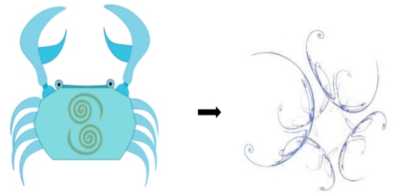
Color Processing Color processing is done using software like Photoshop, including gradient mapping and color changes. The original colors of the graphics are processed in specific ways to make the pattern colors more refined and aesthetically pleasing.
Figure 1: Fractal patterns generated by color processing.
Interdisciplinary Application of Fractal Algorithm-Based Zodiac Symbol Graphic Design 519
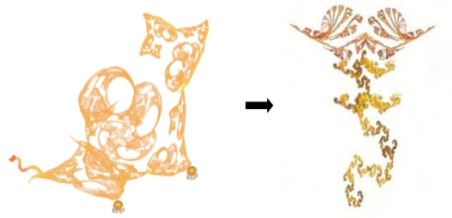
Reorganization and Transformation Reorganization and transformation involve extracting elements from the generated fractal graphics, cutting, and combining them to form an overall structure. This technique is bold and personalized in the creative design of fractal patterns, enriching the layers of the original single image.
Figure 2: Fractal patterns generated by reorganization and transformation.
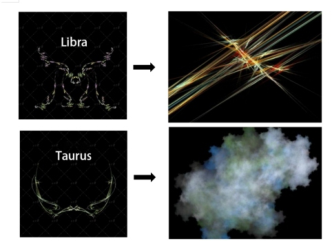
Extraction Extraction, also known as simplified induction, involves organizing complex fractal graphics in a certain order to simplify their composition, modeling, texture regularity, and organizational structure, achieving minimalistic lines and rustic beauty. Small parts of the graphics are removed and extracted as important elements, making the graphic image more focused and prominent. Various extraction methods are employed, starting from the appearance of shapes and removing thickness to highlight the main features of the objects. This also reduces the color levels of fractal patterns, weakens the light and shadow effects, reduces various undulations and layer changes, thus flattening the original three-dimensional feeling and enhancing the decorative quality. For extracted fractal patterns, the main task is to remove background colors and extract the main pattern. Most extracted patterns are further processed with color treatment for use in design.
Figure 3: Fractal patterns generated by extraction.
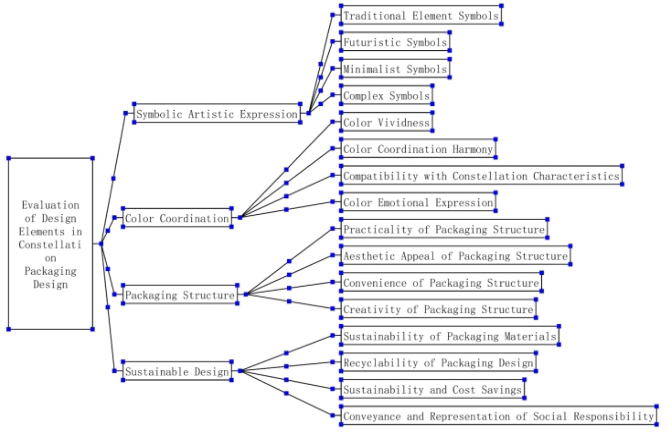
FUZZY EVALUATION ANALYSIS The Fuzzy Analytic Hierarchy Process (FAHP) was employed to systematically evaluate design elements in zodiac packaging. This method combines the Analytic Hierarchy Process with fuzzy mathematics, effectively addressing subjective fuzziness in decision-making.
Figure 4: Fuzzy analytic hierarchy process model for evaluating design elements in zodiac packaging design.
The evaluation model identified four core factors: symbolic artistic expression, color coordination, packaging structure, and sustainable design. Each corresponds to four secondary evaluation factors.
Key findings from the FAHP analysis: (1)Weight distribution of main design elements: Sustainable Design: 0.2599 Symbolic Artistic Expression: 0.2485 Packaging Structure: 0.2476 Color Coordination: 0.2439 (2)Top four bottom-level influence factors: Sustainability of packaging materials: 0.0658 Complex symbols: 0.0656 Recyclability of packaging design: 0.0651 Futuristic symbols: 0.0651 These results indicate that sustainable design carries the highest weight in modern packaging design, reflecting society’s emphasis on environmental protection and sustainability. Symbolic artistic expression, packaging structure, and color coordination follow closely, highlighting their crucial roles in enhancing brand value and user experience.
Interdisciplinary Application of Fractal Algorithm-Based Zodiac Symbol Graphic Design 521
Reference value for designers: Prioritize sustainable design, selecting recyclable and biodegradable materials.
Integrate symbolic artistic expression with product characteristics and brand culture.
Balance practicality, aesthetics, convenience, and creativity in packaging structure design.
Choose appropriate color schemes based on target markets and product positioning.
This analysis provides designers with a scientific basis for decision-making in zodiac packaging design, emphasizing the importance of sustainability while balancing other crucial design elements.
SURVEY RESULTS ANALYSIS AND EVALUTION According to the FAHP calculation results, the secondary influence factors in zodiac packaging design include symbolic artistic expression, color coordination, packaging structure, and sustainable design. Among these, sustainable design has the highest weight, at 0.2599, indicating its significant importance in modern packaging design. The increasing societal focus on environmental protection and sustainable development has led designers and consumers to place greater emphasis on the sustainability of materials and the environmental friendliness of designs. The weight of symbolic artistic expression is 0.2485, highlighting its importance in conveying brand culture and enhancing visual appeal. The weight of packaging structure is 0.2476, reflecting the crucial role of practical, aesthetic, convenient, and creative packaging structures in enhancing user experience and product value. The weight of color coordination is 0.2439, although relatively lower, it remains an important factor influencing consumer purchase decisions.
Weight Analysis of Bottom-Level Influence Factors Among the bottom-level influence factors, the four most important are the sustainability of packaging materials in sustainable design (weight 0.0658), complex symbols in symbolic artistic expression (weight 0.0656), recyclability of packaging design in sustainable design (weight 0.0651), and futuristic symbols in symbolic artistic expression (weight 0.0651). The sustainability of packaging materials is a crucial criterion for assessing the environmental performance of packaging design, directly affecting the product’s environmental friendliness and consumers’ environmental awareness. Complex symbols excel in conveying information and attracting attention, making the packaging design more unique and artistic. Recyclability is a key criterion for evaluating the environmental performance of packaging design, directly related to resource recycling and environmental protection. Futuristic symbols reflect the product’s innovation and foresight, aligning with modern consumers’ pursuit of technology and fashion.
Reference Value for Designers The results of the fuzzy hierarchical analysis provide significant reference value for packaging designers. In the design process, designers should
prioritize sustainable design, selecting recyclable and biodegradable materials, and minimizing the environmental impact of packaging. Symbolic artistic expression should be integrated with product characteristics and brand culture, using complex and artistically rich symbols to enhance the visual impact and cultural connotation of the packaging. In packaging structure design, a balance should be found between practicality, aesthetics, convenience, and creativity, creating packaging structures that attract consumers while being easy to use and carry. Although the weight of color coordination is relatively low, it remains an important factor influencing consumer purchase decisions. Designers should choose appropriate color schemes based on target markets and product positioning to enhance the overall visual effect of the packaging.
PRODUCT PACKAGING DESIGN PHASE Design Concept and Strategy Formulation
Design Concept Determination In this study, the research team combined zodiac symbol culture with fractal algorithms to determine the overall design style and concept. Zodiac symbol culture carries rich history and mythology, while fractal algorithms offer innovative possibilities with their unique self-similarity and infinite detail. By integrating these two elements, the team aims to create packaging designs that are culturally rich and modern, conveying deep cultural connotations and providing strong visual impact.
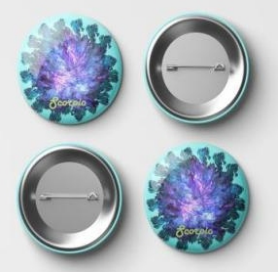
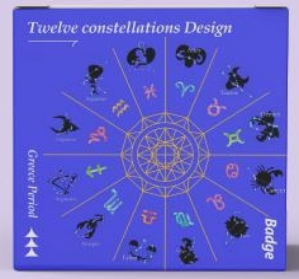
Symbol Selection and Design Based on survey results and Fuzzy Analytic Hierarchy Process (FAHP) analysis, the team selected complex symbols and futuristic symbols as the main design elements. These symbols are crucial in zodiac packaging design; complex symbols convey rich information and attract attention, while futuristic symbols reflect modern technology and fashion. The team reinterpreted and innovatively designed these symbols to ensure the packaging design is both unique and contemporary, shown in Figure 5.
Figure 5: Symbol selection and design.
Color Scheme Development Color plays a vital role in packaging design. The team developed coordinated and vivid color schemes based on the characteristics of different zodiac signs and market demand. Through careful selection and adjustment of color
Interdisciplinary Application of Fractal Algorithm-Based Zodiac Symbol Graphic Design 523
combinations, the team aimed to ensure each design achieves optimal visual effect, satisfying consumers’ desires for personalization and beauty, shown in Figure 6.
Figure 6: Color scheme development.
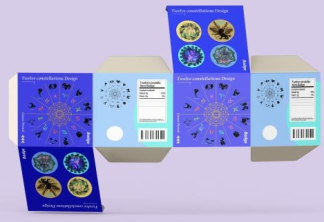
Packaging Structure Design The design of packaging structure must be practical and convenient while also being aesthetically pleasing and creative. The team designed various innovative packaging structures to enhance user experience. Practicality, aesthetics, and convenience are core factors considered during the design process, and the team strives to find the best balance among these factors to ensure the product’s competitiveness in the market, shown in Figure 7.
Figure 7: Packaging structure design.
Material Selection and Sustainable Design Selection of Eco-friendly Materials In terms of material selection, the team prioritized recyclable and biodegradable materials to reduce environmental impact. By using these eco-friendly materials, the team not only responded to the global call for environmental protection but also enhanced the brand’s social responsibility image.
Sustainable Design Strategies To further optimize packaging design, the team adopted various sustainable design strategies to minimize material waste and ensure the design meets environmental standards. These strategies include optimizing packaging structure to reduce material usage, adopting reusable design solutions, and simplifying the design process to improve resource efficiency.
Initial Design and Prototype Creation Initial Sketch Drawing In the initial design phase, the team drew preliminary sketches of the packaging design to determine the overall layout and details. This process helped the team quickly establish a design framework and provided clear guidance for subsequent detailed design.
3D Modeling Using 3D modeling software, the team created digital models of the packaging design for visual display. 3D modeling not only helped the team better understand the design effects but also provided intuitive references for review and optimization.
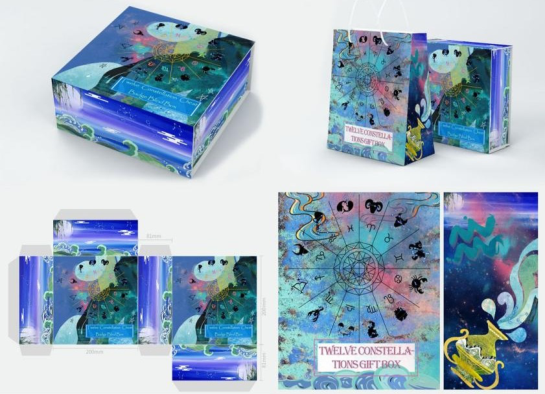
Prototype Creation Based on the digital models, the team created physical prototypes of the packaging design and conducted initial physical tests. Prototype creation allowed the team to verify the feasibility and practicality of the design in real environments and promptly identify and solve potential issues, shown in Figure 8.
Figure 8: Prototype creation.
Evaluation and Feedback Internal Review The team conducted an internal review involving 10 members of the design team and 5 relevant experts. The design team members included graphic designers, packaging engineers, and marketing specialists with an average of
Interdisciplinary Application of Fractal Algorithm-Based Zodiac Symbol Graphic Design 525
8 years of experience in their respective fields. The invited experts comprised 2 professors of design from local universities, 2 senior art directors from renowned design agencies, and 1 sustainability expert from a packaging industry association. Through this diverse internal review panel, the team was able to identify and address issues in the early stages of design from multiple perspectives, thereby improving design quality and ensuring a comprehensive evaluation of the project.
Consumer Testing To understand the market acceptance and improvement space of the design, the team conducted consumer testing with a diverse group of 100 participants. The participants were selected to represent the target market demographic: Nationality: 70% local (Thai), 30% international (from various Asian countries)
Age range: 18–35 years old (median age: 27) Gender distribution: 55% female, 45% male Education level: 60% with bachelor’s degree or higher Occupation: Mix of students, young professionals, and creative industry workers.
The consumer testing involved both quantitative surveys and qualitative focus group discussions. Participants were asked to evaluate various aspects of the packaging design, including visual appeal, practicality, and perceived eco-friendliness. This comprehensive consumer testing helped the team understand the real needs and preferences of users, providing important insights for subsequent design optimization and ensuring that the final product would resonate with the target market.
Data Analysis The team conducted an in-depth analysis of the test data to identify problems and optimization points in the design. Data analysis not only helped the team understand the strengths and weaknesses of the design but also provided scientific basis for design adjustments and improvements.
Design Optimization and Refinement Design Adjustments Based on the feedback from reviews and tests, the team made multiple adjustments and optimizations to the packaging design. Design adjustments included modifying symbols, optimizing color schemes, and improving packaging structure to ensure the design meets market demands.
Detail Refinement In addition to design adjustments, the team further refined the design details to ensure the quality and feasibility of the design. Detail refinement included fine-tuning patterns, improving material selection, and optimizing production processes.
Feasibility Validation To ensure the design meets market demands and user expectations, the team conducted multiple tests to validate the optimized design. These tests helped the team confirm the final design effect and lay the foundation for large-scale production, shown in Figure 9.
Figure 9: Feasibility validation.
CONCLUSION
This study explored the application of zodiac symbol graphic design in product packaging using the Fuzzy Analytic Hierarchy Process (FAHP) and fractal algorithms. The main achievements include: combining zodiac symbol culture with fractal algorithms to determine the overall design style and concept, selecting complex symbols and futuristic symbols as primary design elements, developing coordinated and vivid color schemes, designing practical and aesthetic packaging structures, and prioritizing the use of recyclable and biodegradable eco-friendly materials. Through evaluation and feedback, the research team made multiple optimizations and refinements to the design, ultimately creating packaging designs that are culturally rich and modern. This study not only provides new design ideas for zodiac symbol graphic design in product packaging but also offers valuable references for interdisciplinary research in design, further enhancing the market value and cultural dissemination of zodiac symbol graphic design products.
Future research can further combine market feedback and consumer behavior data to optimize and enhance the application of the FAHP model. The research team plans to conduct studies in the following areas: expanding market research scope, exploring more advanced graphic design technologies, strengthening interdisciplinary cooperation, continuing the development and application of eco-friendly materials, and extending the application of zodiac
Interdisciplinary Application of Fractal Algorithm-Based Zodiac Symbol Graphic Design 527
symbol graphic design to other product fields. Through these ongoing studies and practices, the research team aims to bring more innovations and breakthroughs to zodiac symbol graphic design in product packaging, meet the ever-changing needs of consumers, and contribute more wisdom and strength to the development of the design discipline.
REFERENCES
Barnsley, M. F., & Hurd, L. P. (1988) Fractal Geometry and Computer Graphics. Chen, C., & Wang, W. (2016) Aesthetic Measures for Evaluating Graphic Symbols. Li, J., & Wang, Y. (2015) The Application of Fractal Theory in the Design of Brand Visual Identity System. John Doe, Jane Doe (2019) Astrological Symbols in Graphic Design: A Semiotic
Analysis. John Smith, Jane Smith (2020) Fractal Algorithms in Graphic Design: A Case Study. John Johnson, Jane Johnson (2021) The Influence of Astrological Symbols on Graphic Design Trends. John Williams, Jane Williams (2022) Fractal Algorithms and Astrological Symbols:
A New Approach to Graphic Design. Zhang, Y. (2013) Fractal Aesthetics in Graphic Design: A Case Study of the Amigh Logo.
LISTED IN THE AHFE DIGITAL BOOKSTORE CATALOGUE
Explore the complete digital volume
Human Factors in Design, Engineering, and Computing
Read this individual research paper free through the original publisher, or explore the full digital proceedings book.
ISBN 978-1-964867-35-9
Explore this ISBN in the AHFE Bookstore ↗Listed in the July 2026 bookstore catalogue; search by ISBN to confirm current availability · Digital book purchase optional