Jieru Lin, Eakachat Joneurairatana (2024). Application of Virtual Technology in the Renovation of Ancient architectures Based on Kano Model: The Example of Yongtai Ningyuanzhuang. In: Human Factors in Communication of Design. AHFE Open Access, vol. 136, pp. 84–93. https://doi.org/10.54941/ahfe1004971
As an ancient civilization with a long history, China has a rich variety of unique ancient architectures. Ancient architectures as an important form of expression to carry history and art, showing a long history and cultural achievements. With the continuous development of science and technology,the traditional process of protecting ancient architecture no longer meets the needs for the successful application of digital technology to usher in the digital era, and virtual technology, in which to showcase unique advantages, Taking Ningyuan zhuang in Yongtai, Fujian Province as the research object, we analyze the user demands through Kano model and discuss in depth the advantages of applying virtual technology in the protection of ancient architectures.Virtual technology, especially 3D modeling and simulation technology, plays a key role in the protection and transformation of ancient architectures. The significant advantages of virtual technology in ancient architecture protection highlight its potential value in efficient information processing, exhaustive monitoring and preventive protection. The application of virtual technology realizes the informatization management of cultural relics and architectures and provides a scientific basis for the comprehensive protection of ancient architectures.Ningyuan zhuang, as a typical architecture of Yongtai Zhuangzhai in Fujian during the Qing Dynasties, carries rich historical memories, cultural elements and the characteristics of the southern rural defense structure, making it the focus of the study due to its profound cultural connotation and historical value. The Kano model is based on user needs and implemented through a questionnaire, identifies key areas for improvement in Ningyuan zhuang, including maintenance, signage and cultural content, along with corresponding improvement suggestions.Following the improvement direction proposed by the conclusion of the Kano model, specific measures for the application of virtual technology in the repair and improvement of ancient architectures, including 3D modeling, virtual signage and interactive exhibits. In addition, for effective publicity and cultural promotion, the study provides specific suggestions for displaying virtual images and interactive experiences to enhance the overall level of protection and visitor experience at Ningyuan zhuang.In summary, this paper takes Ningyuan zhuang as a case study, and with the help of the Kano model, proposes suggestions for the application of virtual technology in the conservation of ancient architecture through a user-centered improvement strategy, providing an experimental approach to the conservation and cultural dissemination of ancient architecture. This interdisciplinary research model holds far-reaching significance for the modernization and intelligent development in the field of ancient architecture conservation, ensuring a sustainable future for the heritage of ancient architecture.
Application of Virtual Technology in the Renovation of Ancient Architectures 85
INTRODUCTION
China’s five thousand years of cultural history is most able to express its cultural connotation of ancient architecture. With the development of com- puter technology, digital modeling and virtual simulation for conservation have become important research areas. China’s State Administration of Cul- tural Heritage (SACH) has taken the lead in proposing the “China Digital Museum” program, advocating comprehensive digitization through stor- age, transmission, resource sharing, display diversification, and management computerization. This interdisciplinary research combines advanced virtual technology with ancient architecture and uses the Kano model to propose a generic digitization framework from the perspective of user satisfaction. This model can provide preservationists with a solution in overcoming the gap between digitization models and user acceptance, aiming to maximize the benefits of the digitization process.
CURRENT STATUS OF RESEARCH AND OBJECT OF STUDY Domestic and International Research Status
In the article “Current Status and Future Development of Virtual Reality Technology Research,” (Li Zhiwen, Han Xiaoling, 2005) suggests that VR virtual simulation technology is a highly integrated field based on computer hardware and software, sensing technology, multidimensional display tech- nology, etc. In the article “A Preliminary Exploration of the Concepts and Methods of Cultural Heritage Display,” (Guo Xuan, 2009) the focus on the relationship between the protection, management and display of architectural cultural heritage, argues for the interconnectedness of these aspects and pro- vides suggestions for the future protection of heritage. A doctoral dissertation “Research on China’s Cultural Heritage Display System,” (Brahling, 2013) asserts that the display and development of architectural cultural heritage constitute a significant contemporary challenge. He emphasizes the research value in exploring the relationship between the two and advocates for pro- moting the display and preservation of architectural cultural heritage. In the article “Exploration of the Application of Virtual Reality Technology in the Narrative Design of Museums,”(Miao Ling, 2018) points out that integrating virtual reality technology with narrative design enhances the sensory effect and authenticity experience for the audience during the display of architec- tural cultural heritage. This approach contributes to the dissemination and promotion of architectural cultural heritage display information.
Additionally, collaborative efforts between the Forbidden City Museum in Beijing and the U.S. IBM Company led to the development of a virtual real- ity scene featuring the Forbidden City, formally launched online. This virtual Forbidden City is China’s first historical and cultural architectural heritage landscape scene based on virtual reality technology, offering a panoramic and realistic experience for visitors to enjoy the charm of the Forbidden City from the comfort of their homes. Furthermore, global examples include Ger- many’s virtual reality technology restoration display of Duisburg city (Felix Tschirschwitz, 2018), Singapore’s virtual technology and roaming animation
86 Lin and Joneurairatana
restoration display of the Tamping Chinese Temple (Osten Bang Ping Mah, 2019), and Italy’s utilization of virtual reality technology in museum design, presenting a comprehensive set of detailed work methods and operational processes (Clini, 2019).
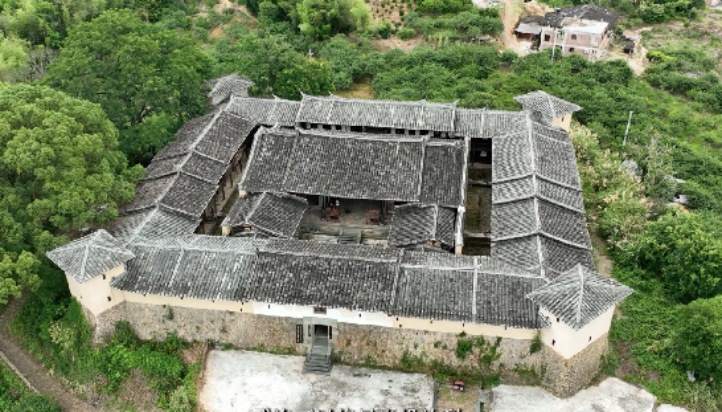
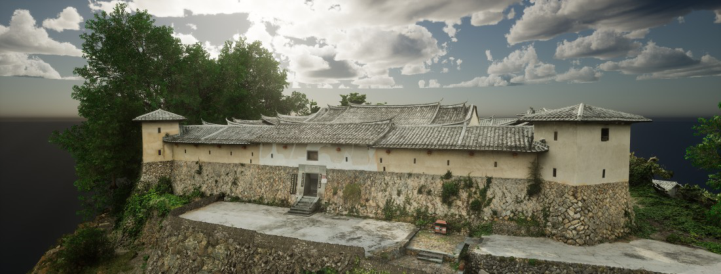
Artistic Characteristics and Cultural Value of Ningyuan Zhuang Ningyuan Zhuang (see Figure 1) in Yongtai County holds a distinctive and significant position as a representative research subject of Fujian Zhuangzhai. Constructed during the Qianlong period of the Qing Dynasty, it encap- sulates historical memories of local culture, family heritage, and farming society, embodying the founding history of Yongtai County and showcas- ing the unique characteristics of southern residential defense architecture. The diverse structures within and outside the fortress, notably the innovative “four beams carrying wells” structure, underscore its architectural ingenuity, seamlessly integrating defense and residential systems. Unlike earth archi- tectures and earth castles, Ningyuan Zhuang is a vernacular architecture rooted in the economy of mountains and forests, presenting a rare case in the realm of ancient southern architecture and offering a distinct focus for research. As an integral part of Yuezhou Village, Ningyuan Zhuang con- tributes significantly to showcasing Yongtai County’s Sacred Land of Science and Technology, holding a unique cultural status. Its walls, adorned with “Jiepao” at all levels, reflect exceptional achievements in imperial examina- tions, symbolizing the pursuit of a better life and the enduring family style of Zhuang zhai people.
Figure 1: Ningyuan zhuang panorama.
Ancient architectures face challenges related to maintenance, protection, and renovation that demand resolution. Through the application of virtual technology, digital modeling and simulation can be employed to establish a scientific foundation for the preservation and transformation of ancient
Application of Virtual Technology in the Renovation of Ancient Architectures 87
architectures. Ningyuan Zhuang in Yongtai County, as the focal point of this study, is not only esteemed for its profound historical value and distinctive architectural structure but also recognized for its notable representativeness in the realm of ancient architecture’s protection and transformation. It serves as a valuable case study for the application of virtual technology, exploring its architectural style, layout, and cultural elements to promote the inheritance and dissemination of the unique local culture. This integration of cultural heritage with modern technology aims to enhance its appeal to tourists and is anticipated to present innovative ideas and methods for the sustainable development of other ancient architectures, such as Yongtai Zhuangzhai (see Figure 2).
ADVANTAGES OF VIRTUAL TECHNOLOGY In the realm of ancient architecture conservation in China, traditional man- ual repair techniques have long been predominant. However, the challenges posed by the time-consuming and labor-intensive nature of these methods have become apparent. The rapid advancement of science and technology, particularly the application of virtual technology, has ushered in significant changes for the protection of ancient architectures. Although 3D virtual technology was initially employed in the 1990s for ancient architecture main- tenance, its widespread application in China is still in its early stages (Yan Li, 2015). Therefore, to effectively carry out the maintenance of ancient archi- tecture, there is a need for a more extensive and profound utilization of 3D virtual technology.
Examining digital protection cases such as those of the Jingjiang King’s Mausoleum Ruins and the Yungang Grottoes, it is evident that digital technology has established a relatively perfect system (Siqi Wang, 2019). The creation of 3D virtual technology models has facilitated the informa- tion management of cultural relics and architectures, thereby advancing the maintenance of these cultural treasures. 3D virtual technology demonstrates superior advantages in comparison to traditional methods in the protection of ancient architectures.
Digital technology enables efficient information processing by applying high-speed computing to protection work, thereby accelerating information processing and refining the details of architectural protection. It offers a more
88 Lin and Joneurairatana
comprehensive access to information on ancient architectures, facilitating the analysis of their overall conditions and making protection efforts more sci- entific and precise. Additionally, digitization technology applied to ancient architectural sites and collections of cultural relics visualizes information and establishes an information system, contributing to the comprehensive management of specific conditions of ancient architectures (Kuangkong Ran, 2021). Unlike the traditional post-restorative approach to the protection of ancient architectures, the application of digital technology allows for preven- tive protection. Through digital technology, real-time monitoring of detailed information about the internal structure of the architecture becomes possi- ble, enabling the recording and analysis of changes in internal parameters in real time. This approach provides a holistic and in-depth framework for protection work. The intelligent restoration facilitated by digital technology simplifies restoration efforts, allowing for the swift recreation of the authen- tic appearance of ancient architectures. Moreover, this approach offers a novel avenue for the cultural inheritance of ancient buildings (Haining Di, 2018). Through virtual technology, the historical origin and architectural appearance of ancient architectures can be vividly showcased, fostering the dissemination of ancient culture. Additionally, the scientific research value of digital technology in ancient architecture is evident, as it provides researchers with intuitive data and support, aiding in the deep excavation and study of cultural resources embedded in ancient architecture.
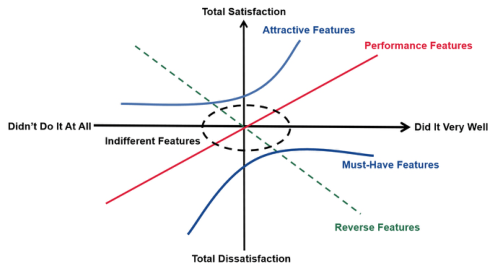
ANALYSIS OF USER NEEDS AND RWCOMMENDATIONS The Kano model is a two-dimensional qualitative analytical model that cate- gorizes product and service attributes through subjective customer feedback and objective product performance (Xiuli Geng, Shidong Xu, and Chunming Ye, 2016). Kano model divides needs into five types (see Figure 3): must-have needs (M), expected needs (O), charismatic needs (A), irrelevant needs (I), and reverse needs (R). The model helps understand the developmental life cycle of user needs, guide scientific decision-making in the protection of ancient architecture, improve user experience, and promote sustainable development in the field.
Figure 3: Kano model requirements categorization quadrant diagram.
Application of Virtual Technology in the Renovation of Ancient Architectures 89
In practical application, the identification of various needs is primarily facilitated through correspondence with statistical data utilizing the Kano evaluation form (see Figure 3). This form offers a structured framework for comprehending the characteristics of different needs within the current chal- lenges faced by Ningyuanzhuang. Utilizing the Kano model principle, our research identified key issues such as “incomplete restoration of the historical site,” “incompatible integration of museum content and building,” “unclear guidance,” “uncertain opening hours,” “inadequate environmental comfort,” and “lack of distinctive cultural heritage features” that require attention to enhance the visitor experience. These issues guided the development of a Kano model questionnaire divided into three sections: basic information on visiting Ningyuanzhuang, positive and negative Kano model questions, and participant demographics. The questionnaire was distributed online and offline, with 59 valid responses collected. Among the respondents, 42 had vis- ited Ningyuanzhuang, with 78.95% recommended by friends and expressing a willingness to recommend it to others.Through a comparison of the results of positive and negative questions with the Kano model comparison table, Kano attributes were obtained, leading to conclusions under the “absolute concept.” This approach offers valuable insights for addressing the identified issues and improving the overall visitor experience at Ningyuan Zhuang.
Table 1. Table analyzing the calculation results of Kano model forward and backward problems.
Table available in the original PDF paper.
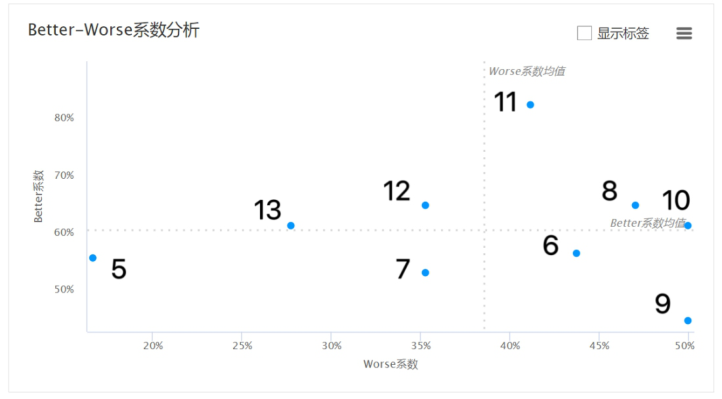
Scatterplot based on the absolute values of “Better” and “Worse” coeffi- cients of the features, and quadrants are divided by the average of all features.
90 Lin and Joneurairatana
The first quadrant is for desired attributes, the second quadrant is for charis- matic attributes, the third quadrant is for undifferentiated attributes, and the fourth quadrant is for required attributes.
The quadrant diagram categorizes attributes under the “relative concept.” Analyzing the diagram (see Figure 4), users prioritize “8. Clear guided tour planning,” “10. Comfortable environment,” and “6. Good health mainte- nance.” These represent expectations for a comprehensive, scientific, and efficient protection program, highlighting areas for improvement. Con- versely, “11. Rich content of the visit,” “12. With local characteristics,” and “5. Repair and restore the original appearance” reflect the demand for charm, emphasizing the need for continuous enhancement. “13. Publicity,” “7. Consistency of style,” and “9. Clear opening hours” are undifferentiated needs, requiring maintained basic standards for consistent user satisfaction. In summary, the quadrant diagram guides understanding of user preferences. Focusing on desired and charismatic attributes improves satisfaction and confidence. Simultaneously, upholding basic standards in undifferentiated attributes is vital for overall user experience.
Figure 4: Quadrant plot of Kano model better-worse coefficient analysis.
The analysis of the questionnaire given through the questionnaire survey suggests improvements to the various functions of Ningyuan zhuang. In terms of restoration and maintenance of the building and long-term management, the historical significance of the restoration is emphasized so that visitors can have a deeper understanding of the importance of the restoration work. Maintain a consistent architectural style, ensure internal and external unity, and increase the overall aesthetics. Enable visitors to experience a consistent cultural atmosphere in different areas. Regularly update the furnishings to maintain a sense of novelty. Develop a detailed guide plan, improve the clar- ity and legibility of the signage system, detailed introduction of attractions, historical background, etc. Regularly update the guide system and provide
Application of Virtual Technology in the Renovation of Ancient Architectures 91
timely feedback on visitors’ needs and suggestions in order to meet visitors’ expectations for detailed information. Reasonable planning and design of the outdoor environment to ensure good indoor ventilation and avoid odors to ensure the overall comfort of visitors in Ningyuan zhuang. Consider pro- viding cooling facilities during the hot season. Establish a regular inspection system to strengthen the management of bats, bees and other ecological con- ditions that may disturb visitors. Provide necessary protective measures such as mosquito nets or anti-mosquito liquid to enhance visitors’ comfort during outdoor visits.
In terms of publicity efforts, develop interesting and educational visit routes, design interesting interactive experiences, enhance the introduction of local architectural features and customs, and cooperate with local profes- sionals to provide authentic local cuisines or handicrafts, so as to enrich the content of the visit and enable visitors to immerse themselves more deeply in the local cultural atmosphere. Showcase unique local culture and history. Produce promotional materials, including maps and brochures, and utilize social media and other channels to actively promote the characteristics and activities of Ninh Duong Zhuang. Strengthen regional and cultural promo- tion to enhance the visibility of Ning Yuen Chong. Clarify the opening hours of Ningyuan zhuang, provide real-time updated information on the open- ing hours on the website or app for easy access by visitors, and ensure that visitors can plan their visit in advance.
PROPOSED MEASURES FOR THE APPLICATION OF VIRTUALIZTION TECHNOLOGIES Through the collection and study of the Kano model questionnaire on the user satisfaction of Ningyuan zhuang, corresponding suggestions for improvement are put forward, in the use of virtual technology to enhance the level of protection and experience of Ningyuan zhuang, and at the same time to promote the organic combination of the cultural heritage of the ancient architecture and modern technology. New ideas and methods are provided by adopting the field of digital protection for ancient architectures.
Starting from the aspect of building repair and maintenance and long- term management, a three-dimensional model can be produced for the virtual simulation design of historical architecture restoration, the development of architectural style maintenance standards, show the effect before and after the restoration, and at the same time, the virtual furnishings can be pro- duced to realize the regular updating. The virtual tour system can be used to design 3D tour planning, update the tour system regularly, and provide real-time feedback to visitors’ needs through the application program. Use virtual simulation algorithms to carry out rational planning and design of the outdoor environment, simulate the weather conditions of different sea- sons in advance to ensure that visitors can have a comfortable experience at any time. Demonstration videos of protective measures can also be pro- duced to enhance visitors’ comfort during outdoor visits. From the aspect of publicity work and cultural promotion, produce promotional materials to showcase the unique local culture and history, and present them to visitors
92 Lin and Joneurairatana
using VR or interactive forms, such as virtual images and audio. Design inter- esting interactive devices to enhance the interactive experience and promote through social media.
CONCLUSION
The application of virtual technology in the protection of ancient architecture has brought a new era of opportunities for protection, promoting the dis- semination of traditional culture and the sustainable development of ancient architecture.The use of Kano model provides a scientific tool for better under- standing of user needs, guides scientific decision-making in the protection of ancient architecture, improves the user experience, and promotes the sus- tainable development of the whole field. In the future protection of ancient architecture, the application of virtual technology will continue to play an important role in contributing more power to the heritage and development of ancient architecture. This mode of combined use of inter-professional and interdisciplinary can provide a new program for the future protection of ancient architecture.
After research and user demand analysis, from the perspective of stake- holders, conservation workers can realize more scientific, efficient and com- prehensive protection by taking full advantage of virtual technology. Using virtual technology, a 3D virtual model is established. This model can contain multi-dimensional information such as the internal and external structure of the building, historical and cultural information, and the surrounding envi- ronment, providing a comprehensive data base for the protection of ancient architectures. It realizes the collection, organization and sharing of informa- tion from multiple places, eliminates information silos, and facilitates the relevant teams to obtain the latest information on ancient architectures in each region at any time. Through the above suggestions, the advantages of virtual technology can be more comprehensively and efficiently utilized for the protection of ancient architectures, promoting the modernization and intelligent development of the field of ancient architecture protection.
ACKNOWLEDGMENT
Your expression of gratitude is heartwarming and well-articulated. It’s won- derful to acknowledge the guidance and support you received from your Thai primary supervisor, Eakachat Joneurairatana, and secondary supervisor, Jirawat Vongphantuset, as well as your Chinese mentor, Wang Yan. Recog- nizing the efforts of your team members who contributed to the survey adds a collaborative and appreciative tone to your acknowledgment.
Wishing you continued success and shared achievements in your aca- demic journey. Your gratitude reflects a strong sense of teamwork and a commitment to the pursuit of knowledge. Well done!
Application of Virtual Technology in the Renovation of Ancient Architectures 93
REFERENCES
Guokui Zhou, Fan Zhang, Shenman Zhang, etal. J. (2015). Research on the design and key technology of three-dimensional digitization system for the mausoleum of King Jingjiang, Surveying and Mapping Bulletin. 105–109. Haala N, Brenner C, J. (1999). Vitual City Models from Laster Altimeter and 2D
Map Data, PE &RS’99, 787–795. Haining Di, J. (2018). An introduction to digital technology in the conservation of ancient architecture, Heritage Identification and Appreciation. KANO N, J. (1984). Attractive quality and must-be quality, Journal of Japanese
Society for Quality Control. 39–48. Kuangkong Ran, J. (2021), Research on Digitization Technology in the Conservation of Ancient Buildings, Cultural Industry. Lin Bu, D. (2012). Research on Display System of Chinese Cultural Heritage,
Northwest University. 5–9. Ling Miao, J. (2018). Exploration of the application of virtual reality technology in the narrative design of museums, Packaging Engineering. 15–18. Siqi Wang, J. (2019). Digital Technology in Ancient Architecture Conservation,
Building Materials and Decoration. Xiaotong Jin, D. (2006). Research on three-dimensional digital modeling and virtual simulation technology of ancient architecture, Xiamen University. Xiuli Geng, Shidong Xu, Chunming Ye, J. (2016). Optimal Design Method of Prod-
uct Function Requirements Considering Quantitative KANO Analysis, Computer Integrated Manufacturing Systems. 1645–1653. Xuan Guo, J. (2009). An Initial Exploration of Concepts and Methods of Cultural Heritage Display, Journal of Architecture. 69–73. Xunxiang Li, M. (2018). Virtual Reality Technology and Art, Wuhan University of
Science and Technology Press. Yan Li, J. (2015). Analysis of Key Factors for Successful Use of BIM Technology in Historical Building Conservation, Journal of Hainan University Natural Science Edition. 258–263. Yubo Liu, D. (2019). Research on the development of architectural cultural heritage
information display based on virtual reality technology, Tianjin University. 3–5. Zhiwen Li, Xiaoling Han, J. (2005). Research status and future development of virtual reality technology, Information Technology and Informatization. 94–96.
LISTED IN THE AHFE DIGITAL BOOKSTORE CATALOGUE
Explore the complete digital volume
Human Factors in Communication of Design
Read this individual research paper free through the original publisher, or explore the full digital proceedings book.
ISBN 978-1-964867-12-0
Explore this ISBN in the AHFE Bookstore ↗Listed in the July 2026 bookstore catalogue; search by ISBN to confirm current availability · Digital book purchase optional