Jing Zhang, Qixin Chen, Liangliang Qiang (2024). Meta-picture and Chindōgu: Design Explorations to Inspire the Visual Experience. In: Human Factors in Design, Engineering, and Computing. AHFE Open Access, vol. 159, pp. 438–445. https://doi.org/10.54941/ahfe1005609
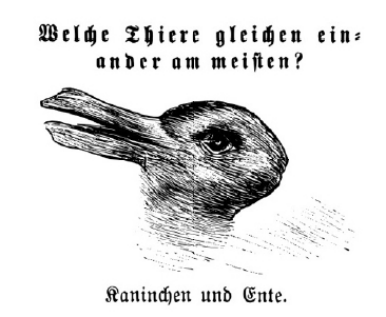
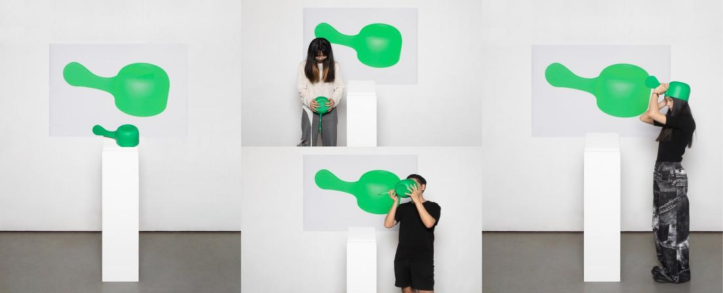
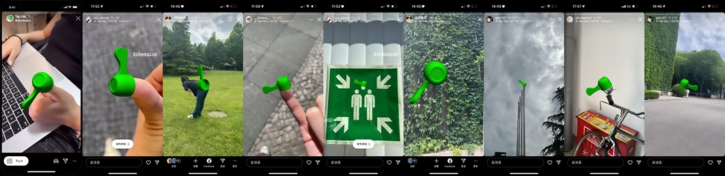
This experimental artwork is divided into a physical installation part and a virtual part. The physical installation is a camera recording the way people use the Tap-Hat, while the virtual part is an invitation for more viewers to participate. The image of the work is created by nesting and superimposing the tap and the hat, and is expressed in the form of a chindōgu, paying homage to the classic meta-picture Duck-Rabbit (Fliegende Blätter 1892). The self-referentiality of the picture is an integral part of Duck-Rabbit, and in 2024 we found this perspective still compelling.In addition to exploring the relationship between the image and the physical object, we believe that this work is also relevant to human society. As Kenji Kawakami, the inventor of the Chindōgu described in his 101 unuseless Japanese Inventions, "Digital products are indeed very advanced, but they also alienate people while facilitate people’s daily life, and deprive them of the freedom. And freedom is the most important thing in life."We wish to explore a form of art where "creation" and "experience" work together in freedom. In the invitation to experience, we expect people to temporarily leave entrenched cognition and purpose behind, and to discuss values and meanings that go beyond monetary figures.
This experimental artwork is divided into a physical installation part and a virtual part. The physical installation is a camera recording the way people use the Tap-Hat, while the virtual part is an invitation for more viewers to participate. The image of the work is created by nesting and superimposing the tap and the hat, and is expressed in the form of a chind¯ogu (Kawakami, 1995), paying homage to the classic meta-picture Duck-Rabbit (Kihlstrom, 2004) (Fliegende Blätter 1892). The self-referentiality of the picture is an integral part of Duck-Rabbit, and in 2024 we found this perspective still compelling.
In addition to exploring the relationship between the image and the physical object, we believe that this work is also relevant to human society. As Kenji Kawakami, the inventor of the Chind¯ogu described in his 101 unuseless Japanese Inventions (Kawakami, 1995), “Digital products are indeed very advanced, but they also alienate people while facilitate people’s daily life, and deprive them of the freedom. And freedom is the most important thing in life.”
We wish to explore a form of art where “creation” and “experience” work together in freedom. In the invitation to experience, we expect people to temporarily leave entrenched cognition and purpose behind, and to discuss values and meanings that go beyond monetary figures (Rosenbak, 2015).
Meta-Picture and Chind ¯ogu: Design Explorations to Inspire Visual Experience 439
Background and Motivation Recent technological developments (e.g. AIGC) remind us of the concept of “meta-picture” (Mitchell, 1995) described by Mitchell in his book Picture Theory: double or multistable images. The monopoly of language can be abolished only if images become carriers of theories in the same way that words are, so that pictures can express themselves without depending on language and can even produce their own theories. He called this highest form of picture meta-picture.
Heidegger once said, “The pictorialization of the world has profoundly changed human existence, transforming a relation of bodily experience into a relation of visual form” (Heidegger, 1977). Indeed, the world we live in has a tendency to be over-imaged, which stands for, first, the rapid proliferation of pictures, second, the over-imaging of individuals, third, the archiving of audience pictures in the media platforms, fourth, the anxiety of pictures across the whole society, and fifth, the profound falsification and distortion of images brought about by AIGC. As Baudrillard argues in his book The Consumer Society: “Today, all around us, there exists an astonishing phenomenon of consumption and abundance constituted by an ever-increasing amount of things, services and material wealth” (Baudrillard, 2016). In fact, with the development of new media, people’s visual needs have gradually shifted from “viewing” to “the ability to find meaning in visual” (Yenawine, 1997). The public’s insatiable appetite for change, deep fascination and numbness to pictures caused by an over-imaged world urge us to explore new ways of generating image experiences. Meta-pictures can satisfy the need for a higher dimension of experience based on the transcendence of text and images. And in the realm of physical experience, the Chind¯ogu invented by Kenji Kawakami also possess a language capable of realizing self-referentiality. Chind¯ogu are ingenious invention of props in daily life that seem to be the ideal solution to particular issues, but may lead to more problems than they solve (Kawakami, 1995). Examples include Eye Drop Funnel Glasses™and Solar-powered Flashlight™(Chindogu, n.d.).
We can see that the difference between Chind¯ogu and general props lies in 1. the rebellion against the traditional aesthetic style; 2. the questioning of the traditional design mode and functionalism; 3. the criticism of over- consumption and commercialism. We found that the principle of “cannot be for real use” (Chindogu, n.d.) is not true: even 20 years after the invention, the perspective and design approach of Chind¯ogu are still relevant and attractive (e.g., the selfie stick was introduced as a Chind¯ogu before phones were equipped with cameras (Kawakami, 1995)), which made them “the Unuseless (Rosenbak, 2015)”. At present, there are many types of physical props with similar motives, modes of operation, and even internalized spirits with “the Unuseless”: Jugaad (Radjou et al., 2010), i.e., “overcomes severe constraints by improvising effective solutions using limited resources” Kludge/kluge (Granholm, 2023) is “An ill-assorted collection of poorly- matching parts, forming a distressing whole”; Bricolage (Baldick, 2008)
refers to the construction or creation of a work using a variety of existing things, or a work constructed using mixed media; etc.
Based on the above concepts, the question of how to merge imagination and material reality to stimulate new experiences has caught our attention. Our work Tap-Hat can also be regarded as an interdisciplinary experiment in art and sociology. By realizing the “floating” nature of images at the visual image aspect, and a rebellious visual narrative at the conceptual aspect, a new system of visual experience can be established. Our perspectives, techniques and processes for developing this system will be described in detail in this paper.
Meta-Pictures and “Multistable” Structures The Tap-Hat project is a homage to the famous Duck-Rabbit. The earliest known version of Duck-Rabbit is an unattributed drawing in the October 23, 1892 issue of the German humor magazine Fliegende Blätter. American psychologist Joseph Jastrow publicized the motif in an article in the Psychological Review (Spinetta and Rigler, 1972) in 1899. Josephs used the duck and rabbit picture as part of a Philosophical Investigations in which he showed that people could see different things in the same pattern, leading to many discussions about perception and understanding. Ludwig Wittgenstein then included it in his Philosophical investigations as a means of describing two different ways of seeing: “seeing that” versus “seeing as” (Wittgenstein, 2019). This seemingly contradictory visual experience is based on the phenomenon of meta-picture nesting: the double or multistable image (Mitchell, 1995). Such pictures can explain itself, and insists on a secondary interrogation of its relation to reality, language, other pictures, and the viewers. Most importantly, some pictures appear as subjects in history, capturing or instigating shifts in time, revealing what Walter Benjamin called “history at a standstill” (Biro, 2001) and thus acquiring new meanings.
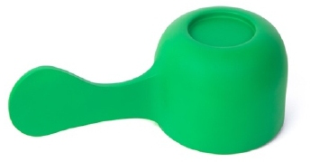
Therefore, Tap-Hat superimposes the form of a tap on the silhouette of a hat in terms of its visual structure, the protruding part of the handle of the tap is associated with the brim of the hat, and the body of the handle is associated with the bucket of the hat. Just like the beak of the duck is associated with the ears of the rabbit in Duck-Rabbit, and the two heads overlap in the opposite direction of the nested characteristics. We use the “multistable” structure of Duck-Rabbit to guide the viewers to discover the contradictory parts of the work and to give different interpretations through the paradox of experience and vision. In terms of phenomena, Tap-Hat envisions a variety of interpretations brought about by the viewer’s subjective perception switching between different ways. For example, the viewer is free to choose the distance, the angle and the way of interaction between himself and the work (the direction of picking up, the way of wearing, etc.). Everything is based on the subjective perception of the viewer, and this interaction is the viewer’s self-referencing in the context of the work Tap-Hat.
Meta-Picture and Chind ¯ogu: Design Explorations to Inspire Visual Experience 441
Chind ¯ogu and Defamiliarization In addition to paying homage to Duck-Rabbit in terms of structure and visual processing, another focus of our work is to summarize the logic of the production of Chind¯ogu, realize the materialization of the image to enhance the viewer’s pictorial experience. Here we will elaborate on the historical background and characteristics of the Chind¯ogu, and how we have developed an artistic narrative through this system to complete the work.
Kenji Kawakami combines objects with different functions to create a Chind¯ogu with a new function. The logic of its creation is characterized by “allegory” in narrative; “defamiliarization (Crawford, 1984)” as its prominent manifestation. Linguistically, “allegory” means “there is an obvious difference between signifier and signified (Key and Noble, 2017). Chind¯ogu goes beyond the surface of functionalism, criticizing the supremacy of functionalism. On the narratological concepts, Chind¯ogu have the creative skill of “defamiliarization” things.
“Defamiliarization” is an artistic technique that presents common things to the viewers in an unfamiliar or strange way, leading the viewers to see the world from a new perspective. In Viktor Shklovskij: Différance in Defamiliarization, Shklovskij used “Defamiliarization” to refer to the means of “distinguishing between poetic and pragmatic language on the basis of the poem’s perceptibility (Crawford, 1984)”. As a creative technique, “Defamiliarization” can stimulate new ideas about the nature of a design problem and its possible solutions, “questioning features that might otherwise seem innocuous (Faily, 2012)”. On the artistic level, the narrative technique of “Defamiliarization” “makes form difficult, increasing the difficulty and depth of perception (Shklovsky, 2017)”. While the aesthetic purpose of the perceived form proceeds, the experience likewise becomes enriched.
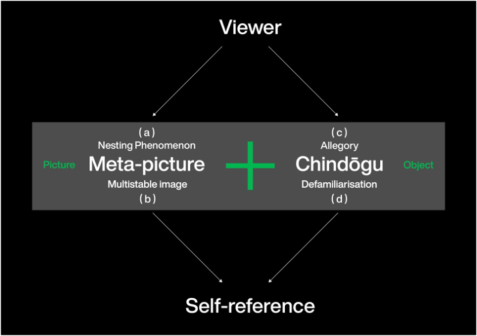
Figure 4: Meta-picture (Mitchell W J T. 1995) structural features correspond to Chind ¯ogu (Kawakami K. 1995) structural features and their modes of operation.
Under the creative perspective of exploring the picture theory of utilizing meta-pictures, the Tap-Hat project includes the characteristics of the Chind¯ogu (c), (d), and the meta-picture structure (a) and (b) to satisfy the viewer’s “self-referentiality”. In effect, it increases the cost of understanding form and perceiving aesthetics, and the “floating”image gives rise to different visual perspectives, thus stimulating the participants to think and bring about an experience of uncertainty.
Meta-Picture and Chind ¯ogu: Design Explorations to Inspire Visual Experience 443
Research on Augmented Reality (AR) Filter Technology To involve more viewers in the experience, we wanted to find a way to extend the invitation to create art for more people.
The focus of the AR experience is not immersion, but integration and interaction with the real world. The most widespread use of AR technology is still in the business and entertainment industries. In particular, the 2016 hit AR game Pokemon Go (Rauschnabel et al., 2017), which randomly placed virtual Pokemon in real environments, attracting players to catch these virtual pets on the streets. Tiktok came out with magic props such as Cute Duck, which allows 3D ducks to be placed in any space and can be zoomed in and out at will. Therefore, in our case, we chose to attract more users to participate in the experience through AR filter technology to provide richer user experience data.
Through the AR filter, the work is no longer confined to the physical world. The computer through the camera to capture the real world, and after its precise calculation of position and angle plus image analysis technology, the virtual information on the screen and the real world combine and interact with each other (Zhang, 2017). By clicking on the filter, the viewer can place a virtual version of Tap-Hat in the space at will. We hope to amplify the “self-referential” characteristic of the meta-picture in the virtual world, emphasizing the viewer’s understanding of the work. They can actively adjust the size and scale of the model, its spatial position and the angle of placement in the AR filter, which forms an interactive invitation to the viewer.
Figure 5: Qixin Chen, Tap-Hat1, AR filter usage, 2024.
Viewer Adjustment: Using the modeling software Cinema 4D, a model of Tap-Hat is built that is as large as in the physical world, and then converted into “.object” format and placed as an asset in the augmented reality development platform Meta Spark Studio. Then use the patch editor in the platform: Screen Pinch to detect the pinch gesture on the screen and change the scale of the object; Screen Pan to detect a swipe of the finger across the device screen and control the spatial position of the object; Screen Rotate to detect the rotation of the screen and change the placement angle of the object (Information, n.d.).
Interaction Invitation: We uploaded and published the AR filter to social media platforms (Instagram, Facebook) using Meta Spark Studio, an AR development platform. The viewer can use the filter effects to complete their own “self-referencing” and have an interactive dialog with us. By viewing
effect page, the viewer can also see other participants’ “self-references”, thus creating a more multilayered communication. Finally, we will view “All Experiences” in the backend of the social media platforms, which will record the viewer’s impression of the work and their participation.
CONCLUSION
Tap-Hat aims to propose new possibilities for visual graphics, the nested structure of meta-images, superimposed on the “allegory” rhetoric and “defamiliarization” of chind¯ogu, gradually smoothing down the boundaries between the picture and the physical object, and creating a diverse experience. In this kind of experience, the new picture and inherent cognition refer to each other, and influence each other in the environment of continuous development and self-regeneration of image and technology. In the future, as real and virtual experiences merge with each other, they may gradually change, and reach a harmonious but dynamic convergence.
ACKNOWLEDGMENTS
First and foremost, we would like to express our special thanks to Prof. Wang Ziyuan for his help in sorting out the framework and giving literature support throughout the whole research process; and Prof. HeJun for his precious suggestions and help in the presentation form and medium of the practical works. Secondly, we are grateful to the research team members, JingZhang contributed to the logical framework of the article, literature sorting, and writing; Qixin Chen for contributing to the design of the experiments and data collection and filtering techniques; and LiangliangQiang for coordinating the content of the paper, the experimental content, and the research results. In addition, this study was supported by the Centre Academy of Fine Arts (CAFA),which provided an important safeguard for our research. Finally, I would like to extend my sincerest thanks to all those who helped me in the research process.
REFERENCES
Baldick, Chris (2008). The Oxford Dictionary of Literary Terms. Oxford; New York: Oxford University Press. p. 42. Baudrillard J. The consumer society: Myths and structures[J]. 2016. Biro M. History at a standstill: Walter Benjamin, Otto Dix, and the question of
stratigraphy[J]. RES: Anthropology and Aesthetics, 2001, 40(1): 153–176. Chindogu Official Website: https://chindogu.com/ics/ Crawford L. Viktor Shklovskij: Différance in Defamiliarization[J]. Comparative Literature, 1984: 209–219. Faily S. Analysing chind¯ogu: applying defamiliarisation to security design[J]. 2012. Granholm, Jackson W. (February 1962). “How to Design a Kludge”. Datamation.
Vol. 8, no. 2. Frank D. Thompson. pp. 30–31. Retrieved 20 November 2023. Heidegger M. The age of the world picture[M]//Science and the Quest for Reality.
London: Palgrave Macmillan UK, 1977: 70–88. Information sources: https://spark.meta.com/
Meta-Picture and Chind ¯ogu: Design Explorations to Inspire Visual Experience 445
Kawakami K. 101 unuseless Japanese inventions: the art of Chindogu[M]. WW Norton & Company, 1995. Key L, Noble B P. An Analysis of Ferdinand de Saussure’s Course in General
Linguistics[M]. Macat Library, 2017. Kihlstrom J F. Joseph Jastrow and his duck–or is it a rabbit[J]. See https://socrates.
berkeley. edu/∼kihstrm/JastrowDuck. htm, 2004. Mitchell W J T, Mitchell W J T. Picture theory: Essays on verbal and visual representation[M]. University of Chicago Press, 1995. Radjou N, Prabhu J, Ahuja S. Jugaad: a new growth formula for corporate
America[J]. Harvard Business Review Blog Network, 2010, 25. Rauschnabel P A, Rossmann A, tom Dieck M C. An adoption framework for mobile augmented reality games: The case of Pokémon Go[J]. Computers in human behavior, 2017, 76: 276–286. Rosenbak S. Prototyping a Useless Design Practice: What, Why & How?[J]. Artifact:
Journal of Design Practice, 2015, 3(4): 5.1–5.18. Shklovsky V. Viktor Shklovsky: A Reader[M]. Bloomsbury Publishing USA, 2017. Spinetta J J, Rigler D. The child-abusing parent: a psychological review[J]. Psychological bulletin, 1972, 77(4): 296. Wittgenstein L. Philosophical investigations[M]. 2019. Yenawine P.,”Thoughts on Visual Literacy”, in J. Flood, S. B. Heath&D. Lappeds.,”Handbook of Research on Teaching Literacythrough the Communicative and Visual Arts”, New York: Macmilan, 1997, p. 845. Zhang Y. Virtual Reality/Augmented Reality Technology and Its Applications[J].
University of Science and Technology of China Press: Hefei, China, 2017.
LISTED IN THE AHFE DIGITAL BOOKSTORE CATALOGUE
Explore the complete digital volume
Human Factors in Design, Engineering, and Computing
Read this individual research paper free through the original publisher, or explore the full digital proceedings book.
ISBN 978-1-964867-35-9
Explore this ISBN in the AHFE Bookstore ↗Listed in the July 2026 bookstore catalogue; search by ISBN to confirm current availability · Digital book purchase optional