Salvatore Di Dio, Mauro Filippi, Benedetto Inzerillo, Samuele Morvillo, Dario Russo (2024). Inclusivity vs Exclusivity. Applying Design for All and Universal Design principles in the field of Nautical Design. In: Design for Inclusion. AHFE Open Access, vol. 128, pp. 32–39. https://doi.org/10.54941/ahfe1004788
This study explores the application of universal design principles in the field of nautical design, aiming to develop products and services that are accessible and functional for all, including individuals from traditionally excluded groups. Utilizing Co-Design methodologies, we actively engaged individuals and communities, including the elderly and people with disabilities, in the design process. By analyzing initiatives such as the “Azzurra600” project, we demonstrate how such approaches can eliminate physical, cognitive, and emotional barriers, promoting universally accessible and customizable solutions. The findings indicate that our methodology not only facilitates social inclusion and reintegration but also establishes genuinely inclusive design protocols that consider both the end recipients and the participants in the creative and productive processes.
In recent years, inclusive design has emerged as an innovative solution that aims not only to make products, services, and environments accessible but, more importantly, to ensure they are functional and usable by a wide vari- ety of users, with particular attention to people who have been historically marginalized or overlooked in design processes, such as the elderly, dis- abled, and all those who find themselves in a state of minority or statistical exception, compared to the “typical user” (Clarkson, 2013). Other examples can be found in services whose use requires personal technological means and skills, theoretically common, but which are not possessed by the entire population, rendering these services non-inclusive, showing the exclusivity generated by the digital divide and the digital inequality (DiMaggio & Har- gittai, 2001). Moreover, services or devices designed to make something inclusive “by default,” but which in reality may create “exclusive” uses for certain categories of users, such as tools for motor support; ramps for people
Inclusivity vs Exclusivity. Applying Design for All and Universal Design Principles 33
with physical disability the disabled; special digital interfaces; or educa- tional platforms designed exclusively for incarcerated students can be cited. Some of these devices are justified and essential, while others might lead to design reflections that could transform them into genuinely inclusive prod- ucts (Inzerillo, 2017). This article aims to explore how the inclusive approach in design proposes to overcome traditional physical, cognitive, and emotional barriers through the promotion of solutions that are universal yet at the same time customizable, building upon the theoretical framework of “pluriversal- ity” developed by Arturo Escobar (2018) and other academics (Smith et al., 2021; Prakash, 2022). In particular, it the paper focuses on dismantling the discrimination and the reasons for inaccessibility that affect individuals with permanent, temporary or situational disabilities (Holmes, 2018), proposing strategies to effectively and respectfully meet the needs of a diverse audience. The attention to human systems integration in system development programs drove hundreds of human-centered design improvements. Efforts were con- centrated on maximizing total system performance through improvements in human workload, ease of maintenance, and personnel safety which resulted in a cost avoidance of billions of dollars and the prevention of hundreds of fatalities and disabling injuries for the system (Booher and Minninger, 2003).
INCLUSIVITY VS EXCLUSIVITY In the current context of design, the dichotomy between inclusivity and exclu- sivity emerges as a crucial theme, highlighting the limitations of traditional design practices and underlining the importance of adopting a holistic and democratic approach, known as Design for All (Story, 1998). In this para- graph, we examine the tension between the desire for universality in design and the historical tendency to design for a hypothetical “standard user,” often at the expense of a large portion of the population that presents diverse needs and abilities (Lee, 2009). Research and the evolution of social awareness have shown how projects specifically focused on users with disabilities, although driven by good intentions, have sometimes inadvertently generated new forms of exclusion (Wachter-Boettcher, 2017). By accentuating differences and highlighting the status of disability, such initiatives risked further seg- menting society. Faced with this realization, the urgent need to adopt a truly inclusive design approach emerges, eliminating architectural, visual, social, and economic barriers through solutions that effectively respond to human diversity (Acolla, 2015). Design for All stands out as the design response that recognizes human diversity not as a limitation to be overcome, but as a valu- able resource to be valued. Contrary to the conventional approach, it aims to develop products, services, and environments that are truly accessible and usable by all individuals, regardless of their physical, sensory, cognitive, or social conditions. This fundamental principle pushes designers to consider a wide variety of users from the very first stages of the design process, using Co- Design techniques to actively include users in defining solutions (Mincolelli, 2018). The traditional focus on exclusive solutions for specific categories of users proves to be not only limiting but also counterproductive in achieving a truly inclusive society. Design for All urges designers to move beyond creating
solutions for the exclusive use of particular categories, promoting instead the integration and active participation of all users. In this way, design becomes a tool to break down social compartments and promote authentic inclusion, ensuring that every individual can benefit from the same opportunities and rights, creating a better balance among economic, social and environmental justice (Costanza-Chock, 2020). Thus, between inclusivity and exclusivity in design, the crucial importance of adopting an approach that recognizes and values human diversity is emphasized. Design for All emerges as a funda- mental paradigm for the future of design, offering a path toward solutions that not only respect the needs of all users but also actively promote equity, participation, and social integration. By adopting this approach, designers can significantly contribute to the construction of a more just and inclusive society.
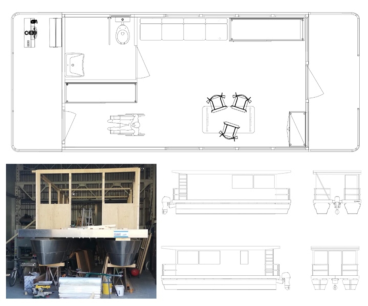
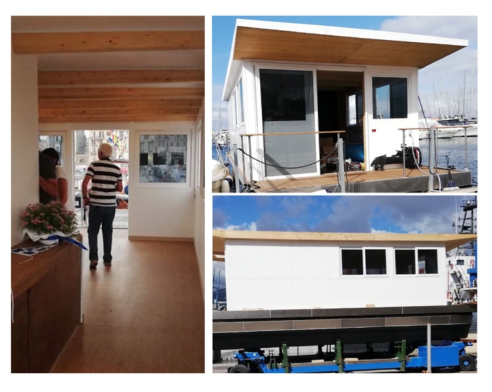
CASE STUDIES The nautical design sector showcases emblematic projects that embody the principles of Design for All, demonstrating how inclusivity can be inte- grated even in specific contexts (Di Nicolantonio, 2019). Notable examples include the “Clubhouse” of the Lega Navale Italiana sezione Palermo Cen- tro, a houseboat for athletes, and “Azzurra 600”, a sailing boat designed for the inclusion of athletes, both projects promoted by the Lega Navale Ital- iana di Palermo Centro. The “Clubhouse Lega Navale Italiana sez. Palermo Centro”(Fig. 1 and Fig. 2) initiated an innovative project: an inclusive house- boat, designed to offer a completely accessible environment. This project is the result of a collaboration between Inzerillo & Albeggiani Yacht Design Studio and local craftsmen, except for the hulls, which were produced in Poland. Launched in June 2021, this houseboat serves as a floating Club- house, designed to navigate calm or protected waters, with an aluminum catamaran structure that ensures both navigation stability and accessibil- ity. The interior of the houseboat, customized to meet the project’s needs, is equipped with facilities and changing rooms, without architectural barriers, and includes a spacious bathroom designed following the Human-Centered Design method (Tosi, 2018).
Figure 1: House boat, “Clubhouse Lega Navale Italiana, Sez. Palermo”.
Inclusivity vs Exclusivity. Applying Design for All and Universal Design Principles 35
Accessibility is facilitated by an aluminum gangway, making the houseboat an example of how design can promote inclusion.
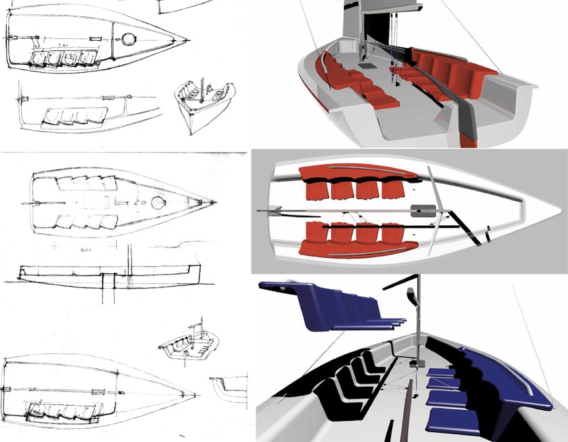
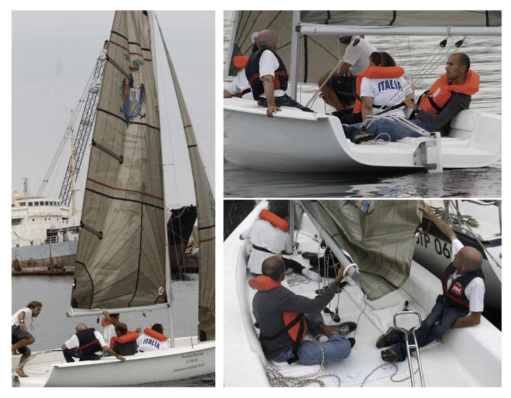
Figure 2: House Boat “Lega Navale Italiana, Sez. Palermo”.Figure 3: Azzurra 600 sketch and 3D cad. “Azzurra 600” (Fig. 2 and 3), another creation by the Inzerillo & Albeg- giani Yacht Design studio, originated from the request for a sailing boat that could be manned primarily by people with Disabilities (Fig. 4). This vessel stands out for its stability and a hull designed to ensure safety and performance even in light wind conditions. Design elements, such as the open stern to facilitate access and the optimized deck to remove any obsta- cle, were studied to make “Azzurra 600” a model of inclusivity. Moreover,
this boat was built by the Azzurra Social Cooperative in Palermo, involving people in social reintegration in its construction, thereby strengthening the link between inclusivity, reintegration, and design. These projects represent concrete applications of Design for All in the nautical sector, demonstrat- ing that it is possible to create spaces and products that respect and value human diversity. Inclusion thus becomes a fundamental criterion in design, promoting access and participation for all, and underlining the importance of overcoming barriers, both physical and social, through innovative design solutions.
Both projects integrated user participation in the design and prototyping process through the CoDesign approach, particularly involving users with significant motor disabilities (Ferrari, 2022). This led to an active collabo- ration between designers and end users from the initial stages of the design process, enabling direct involvement of users in shaping the final products according to their needs and perspectives. In this context, the participa- tion of “all” users provided a fundamental contribution to ensuring that the developed projects effectively met their specific needs.
Through CoDesign, users were actively engaged in identifying require- ments, generating ideas, evaluating prototypes, and providing feedback on proposed solutions. This approach allowed designers to gain a deep under- standing of the challenges and needs of users with motor disabilities, enabling them to develop innovative and functional solutions that promote inclusion and accessibility.
Furthermore, collaboration with users with significant motor disabilities has contributed to promoting an inclusive culture within the nautical design sector, emphasizing the importance of considering the needs of all individu- als, regardless of their physical abilities. This approach has highlighted the potential of inclusive design in overcoming physical and social barriers, and promoting accessibility and participation for all.
Figure 4: Azzurra 600, and its crew.
Inclusivity vs Exclusivity. Applying Design for All and Universal Design Principles 37
UNIVERSAL DESIGN In recent years, the debate between Inclusive Design and Exclusive Design has found common ground in the concept of Universal Design, a theme extensively explored by a research group in North Carolina, United States (Goldsmith, 2007). This practice emphasizes the importance of creating spaces, products, and services that are accessible and usable by the widest possible audience, through the adoption of a protocol based on Seven Princi- ples, which aim to ensure equity, flexibility, and simplicity of use for all users, regardless of their abilities or life conditions.
Equitable Use: The guiding principle is that the design should be mar- ketable and useful to people with diverse abilities, ensuring that everyone can use it in the same ways, avoiding segregation or stigmatization. It is also important to ensure privacy, security, and attractiveness for all, demonstrating that inclusivity does not have to compromise aesthetics or functionality.
Flexibility in Use: This principle accommodates a wide variety of prefer- ences and abilities, offering different options for use. It focuses on facilitating use for everyone, regardless of the user’s dominant hand or speed, promoting adaptability and accessibility.
Simple and Intuitive Use: The aim is to make the design immediately under- standable, eliminating unnecessary complexity and organizing information logically and intuitively so that it can be effectively used by people with any level of experience or concentration.
Perceptible Information: Ensures that essential information is communi- cated effectively to the user, regardless of environmental conditions or the user’s sensory abilities. This implies the use of multiple modes (visual, audi- tory, tactile) for the transmission of information, ensuring that no one is excluded.
Error Tolerance: Reduces risks and consequences of accidental actions through careful design that minimizes hazards and mistakes, while also providing warnings and fail-safe features to prevent or correct involuntary errors.
Low Physical Effort: Aiming for efficient and comfortable use that requires minimal effort, this principle emphasizes the importance of promoting a neu- tral posture and reducing the need for repetitive operations or prolonged physical effort, thereby facilitating access and use by all.
Size and Space for Approach and Use: This principle ensures that adequate space is provided for access, reach, manipulation, and use of products and services, considering a wide range of body sizes, postures, and degrees of mobility. It is also crucial to provide sufficient space for the use of personal assistants or technological aid devices.
The adoption of the principles of Universal Design represents not only a guide for the creation of spaces, products, and services that are accessible and usable by all but also a commitment to a more inclusive and equitable soci- ety. These principles invite designers to deeply reflect on how design can go beyond mere functionality, becoming a means to promote inclusion, equality, and the active participation of all individuals in social and cultural life.
CONCLUSION
In conclusion, the exploration of the dynamics between Inclusive Design, Exclusive Design, and Universal Design highlights a continually evolving landscape in the field of design, increasingly moving towards a holistic and democratic approach (Persson et al., 2015). Design for All emerges not only as a response to the needs of a wide variety of users but also as a key to building a more just and inclusive society, where every individual, regardless of their abilities or life conditions, can enjoy spaces, products, and services designed to be universally accessible and usable. Case studies in the nau- tical sector and the Seven Principles of Universal Design provide concrete examples of how these theories translate into practice, demonstrating the tangible impact of design intended for everyone on individuals’ quality of life and overall accessibility. These examples illustrate how design can go beyond functionality to promote inclusion, equality, and active participation, over- coming physical, cognitive, and emotional barriers. The shift from a Design for All approach to a more inclusive “Design With for All” approach further underscores the importance of collaboration between designers and users in the creative process. A Radical Inclusion (Moinina Sengeh, 2023) is necessary if we want to combine equity and design (Ortiz Guzman, 2017). Including people not only as final recipients but as co-creators in the design phases ensures that the proposed solutions are truly inclusive, effectively meeting the needs of a diverse audience. In summary, promoting accessibility and inclusiv- ity through design requires constant commitment and profound reflection on design practices. Only through an approach that values human diversity and considers all people in their uniqueness can we create products, services, and environments that reflect principles of equity and inclusion. This approach not only improves the lives of those who are traditionally marginalized but enriches the experience of everyone, thus supporting the fundamental princi- ples of Design for All and promoting a more inclusive and welcoming society for future generations.
REFERENCES
Accola, Avril. (2015). Design for all. Il progetto per l’individuo reale. Milano: Franco Angeli editore. Clarkson, P. J., Coleman, R., Keates, S., & Lebbon, C. (2013). Inclusive design:
Design for the whole population. Costanza-Chock, S. (2017). Design Justice: Community-Led Practices to build the worlds we need.The MIT Press. DiMaggio, P., Hargittai, E. (2001). From the ‘Digital Divide’ to ‘Digital Inequality’:
Studying Internet Use as Penetration Increases, Working Paper #15, Summer 2001, Princeton University Center for Arts and Cultural Policy Studies. Di Bucchianico, G. (Ed.). (2019). Advances in Design for Inclusion: Proceedings of the AHFE 2019 International Conference on Design for Inclusion and the AHFE 2019 International Conference on Human Factors for Apparel and Textile Engineering, July 24–28, 2019, Washington DC, USA (Vol. 954). Springer. Di Nicolantonio, M. (2019). Design per la mobilità fluvio costiera. Riflessioni
tematiche e ricerche progettuali (Vol. 6, pp. 1–144). Sala editors.
Inclusivity vs Exclusivity. Applying Design for All and Universal Design Principles 39
Escobar, A. (2017). Design for the Pluriverse: Radical Interdipendence, Autonomy, and the Making of Worlds. Duke University Press. Ferrari. P. (2022). Progettare Imbarcazioni Accessibili: Un nuovo approccio per lo
yacht design/a novel approach... to yacht design. Springer. Goldsmith, S. (2007). Universal design. Routledge. Holmes, K. (2018). Mismatch: How Inclusion Shapes Design. The MIT Press. Inzerillo, B. (2017). “Design for All: Un approccio al design inclusivo.” In Environmental Design 2nd International Conference on Environmental Design (pp. 331– 341). Milano: De Lettera Publisher. Kercher, P., & EIDD, F. P. (2008). “Design for All: changing the world by design.”
4th Annual Issue, 27. Lee, Y., & Cassim, J. (2009). “How the inclusive design process enables social inclusion.” International Association of Societies of Design Research (IASDR), 1–10. Mincolelli, G., Marchi, M., & Imbesi, S. (2018). “Inclusive design for aging peo-
ple and the internet of things: understanding needs.” In Advances in Design for Inclusion: Proceedings of the AHFE 2017 International Conference on Design for Inclusion, July 17–21, 2017, The Westin Bonaventure Hotel, Los Angeles, California, USA 8 (pp.98–108). Springer International Publishing. Moinina Sengeh, D. (2023). Radical Inclusion: Seven Steps to Help You Create a More Just Workplace, Home, and World. Flatiron Books. Ortiz Guzman, C. M. 2017. equityXdesign: Leveraging Identity Development in
the Creation of an Anti-Racist Equitable Design Thinking Process. Doctoral dissertation, Harvard Graduate School of Education. Persson, H., Åhman, H., Yngling, A. A., Gulliksen, J. (2015). Universal design, inclusive design, accessible design, design for all: different concepts - one goal? On the concept of accessibility - historical, methodological and philosophical aspects, Universal Access in the Information Society volume 14, pages 505–526. Prakash, S. (2022). Preparing for the pluriverse: Embracing critical self-reflection in
service design practice. DRS2022, Bilbao, Spain. Smith, R. C, Winschiers-Theophilus, H., Loi, D., Abreude Paula, R., Kambunga, A. P., Samuel, M. M., Zaman, T. (2021). Decolonizing Design Practices: Towards Pluriversality, CHI’21Proceedings, Yokohama, Japan. Story, M. F., Mueller, J. L., & Mace, R. L. (1998). The universal design file: Designing
for people of all ages and abilities. Tosi, F. (2018). Ergonomia & Design, Design per l’Ergonomia (pp. 1–448). Franco Angeli. Wachter-Boettcher, S. (2017). Technically Wrong: Sexist Apps, Biased Algorithms,
and other threats of toxic tech. V. W. Norton.
LISTED IN THE AHFE DIGITAL BOOKSTORE CATALOGUE
Explore the complete digital volume
Design for Inclusion
Read this individual research paper free through the original publisher, or explore the full digital proceedings book.
ISBN 978-1-964867-04-5
Explore this ISBN in the AHFE Bookstore ↗Listed in the July 2026 bookstore catalogue; search by ISBN to confirm current availability · Digital book purchase optional