Regina W Y Wang, Jiacheng Wang, I Ning Liu (2025). Major Epidemic Public Health Safety Sign Text Messages: Grounded Analysis of WHO Website Texts. In: Safety Management and Human Factors. AHFE Open Access, vol. 189, pp. 103–110. https://doi.org/10.54941/ahfe1006575
During the COVID-19 pandemic, emergency signs and graphic messages announced prohibitions or recommendations regarding certain behaviours. They needed to be repeatedly and frequently communicated to the public in order to promptly prevent harm caused by the virus. The purposes of this study were to clarify the most commonly used public health text messages and types issued during the epidemic, to summarise the messages that the public needed to pay attention to during the public health emergency, and to establish norms for text messages related to major epidemic prevention and control in the post-epidemic era. This study investigated text data regarding the prevention and control of public health emergencies published on the official website of the World Health Organization (WHO). It used Grounded Theory to conduct content analysis of the text data. The study found that: (1) the two categories emphasized in public health text messages included ‘Preventive Behaviour’ with an indication function, and ‘Own Health’ with a warning function. (2) ‘Prevention Transmission’ was the main dimension of the two categories of public health text messages, emphasising that people should take the initiative to avoid behaviours that may be detrimental to their health and safety. In addition, the two properties that appeared with the highest frequency were ‘Vaccination’ and ‘Keep Distance’.
MOTIVATION AND OBJECTIVES During a public health emergency, providing clear and accurate information is a matter of life and death (Jurišová, 2020). Borba et al. (2015) pointed out that graphic design is important in health events. Graphics and text with meaningful communication help show people the characteristics of a particular disease, thereby improving prevention efficiency. The Ministry of Health and Welfare Taiwan (MOHW) mentioned in a 2018 document on health promotion that the design of public health safety signs in urban spaces and public transportation facilities was very confusing and urgently needed to be evaluated and revised according to standards (MOHW,2018). The public’s understanding of the definition of a public health emergency is very vague. When an event occurs, they do not know what actions to take to protect their health and safety, making it difficult to effectively educate them (Glik, 2007;
Zhang et al., 2020). Therefore, it is important to understand the functions of text messages and communication during public health emergencies. The objectives of this study were therefore as follows: (1) To clarify public health safety signs’ types, names, and definitions. (2) To analyse and hierarchise the text messages that must be communicated during public health emergencies.
LITERATURE REVIEW
Public health is the organised management of environmental hygiene, infectious diseases, and personal hygiene education to ensure the early detection and treatment of diseases so that every citizen can maintain a healthy standard of living and realise their right to a long and healthy life (Turnock, 2012). On this basis, the World Health Organization (WHO) has added more provisions to improve the framework for public health, including public health emergencies of international concern (WHO, 2005). A public health emergency is an occasional viral disease outbreak that spreads internationally, poses a public health risk to other countries and regions, and requires an internationally coordinated response (WHO, 2020). These public health emergencies require global cooperation to prevent transmission and protect all countries’ public health and safety.
Signs serve as a universally understood means of communication. They can convey a meaning to the public that indicates many actions (Rasmussen, 1983). Distinguishing the functions of signs, Noah (1994) described them as communicating potential risks that may be encountered when generating behaviour, divided into three categories: Caution, Warning, and Danger. Pham (2021) divided them into categories related to indication, restriction, reminder, warning, command, and prohibition (Pham, 2021). Similar to this is the classification by Yucong and Shuqing (2021): Warning, Prohibition, Indication, and Guide signs.
To sum up the above research, warnings, prohibitions, and indications are the three essential sign functions that scholars often mention. The main function of prohibition is to prohibit or restrict certain behaviours; warnings emphasise the possible dangers to people; while indications are used to indicate and guide people in the right direction. These three types of functional signs and their text messages are summarised in Table 1.
Table 1: Sign functions and text messages (collated for this study).
Table available in the original PDF paper.
Figure Example
Exit
Sign Function Prohibition Warning Indication Text Message No smoking Warning Electrical Shock Hazard
The functions of warning, prohibition, and indication signs studied in the past aimed at safe and healthy behaviour. Using the words ‘Don’t drink
Major Epidemic Public Health Safety Sign Text Messages 105
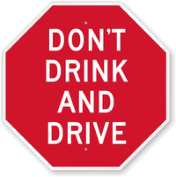
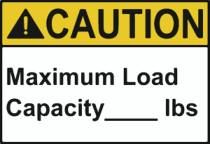
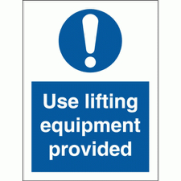
and drive’ on a sign was found to reduce the behaviour of drinking and driving by young people aged 21–34 by 54% (Rivara et al., 2012), indirectly protecting their safety (Fig. 1). Also, for traffic safety, using words such as ‘No crossing’ on roads without zebra crossings improves the behaviour of pedestrians and effectively reduces traffic accidents (Dorohin et al., 2018). Warning signs appear in dangerous workplaces such as construction sites, and machinery manufacturing factories directly print the degree of danger on goods (Adams et al., 1998), as well as on transport vehicles in different locations of the transport device (Fig. 2), ensuring that workers are always aware of the operating status of the machine during operation (Lee et al., 1999; Xu et al., 2020). In hospital environments, effective indication texts improve the guidance of patient flow and the efficiency of treatment (Dolah et al., 2023; Johannes & Yatmo, 2018), thus ensuring the health and safety of patients. Gao et al. (20 21) reviewed a series of behavioural studies on transport workers, and classified all images and text related to human safety issues as a safety signal, such as the statement printed on boxes that they should be handled with lifting equipment (Fig. 3). Today, safety-related text is widely used in all fields requiring safety management, such as hospitals, factories, and construction sites, to urge safe operation, warn of dangers, prevent or reduce accidents, and reduce personal injury (Duarte et al., 2014). These texts involve warnings of potential hazards and indications of prohibitions (Mautner, 2012). The text messages and events in the signs are organized in Table 2 below.
Table 2: Public health safety sign text messages and events (collated for this study).
Table available in the original PDF paper.
Source (Year) Sign Function Event Texts Message (Rivara et al.,
2012) Prohibition Drunk driving Don’t drink and drive (Dorohin et al., Prohibition on crossing
2018) Prohibition Junction crossing against the lights (Xu et al.,
Caution maximum load
2020) Warning Load-bearing of transport equipment capacity (Adams et al.,
Danger of head injury
1998) Warning Injury caused during construction without a helmet (Dolah et al.,
From here on
2023) Indication Guidance to patient consultation rooms and wards (Gao et al.,
Use lifting equipment
2021) Indication Transport worker operating behaviour provided
Figure 1: Don’t drink and drive.Figure 2: Caution maximum load capacity.Figure 3: Use lifting equipment provided.
RESEARCH METHODOLOGY This study used a case study method to investigate the text messages that may be used during public health emergencies. The World Health Organization’s official website was selected to collect representative public health text messages during the epidemic. Extracted on 3 November 2023, the complete text from the ‘World Health Organization website - Emergencies - Advice for the public: Coronavirus disease (Covid-19)’ page was converted into 260 text samples for data analysis. The research process was divided into two stages. In the first stage, the raw text data from the WHO website were selected and obtained, and in the second stage, the raw data were coded for analysis.
Grounded Theory was used to analyse the text messages on public health safety signs. It provided an abstract understanding of the text messages that appeared in the research area and explained their meaning (Charmaz & Thornberg, 2021). Grounded Theory was developed by the sociologists, Glaser and Strauss, who proposed that the data analysis process involves three levels of coding: Open coding, Axial coding, and Selective coding (Glaser & Strauss, 2017). Each stage of coding is related, and the researcher needs to compare and establish connections between them.
Researcher A has more than 10 years of work and teaching experience in visual communication design; Researcher B has 10 years of visual communication design experience and has worked as an outdoor safety and rescue worker. For the analysis process, we used the NVivo qualitative research data analysis software to perform three levels of coding (Open coding, Axial coding, and Selective coding) on the text messages; the steps were as follows (Strauss & Corbin, 1998; Strauss, 2017): (1) The raw data were imported into NVivo 12.0 in the form of a Word file. (2) The researcher marked sentences and words with the same meaning as code or text samples. (3) The above text samples were coded, and text samples related to similar contexts or behaviours were grouped under a clear property. This was the
Major Epidemic Public Health Safety Sign Text Messages 107
Open coding stage. (4) Many of these properties were then coded along a central axis so that divisions with commonalities and similar characteristics were grouped into the same dimension. (5) Finally, all dimensions were collapsed and organised under a small number of categories, which was the selective coding stage.
RESEARCH FINDINGS This study analysed the meaning of epidemic information using the full text of the World Health Organization’s official website, the ‘Public Health Emergencies - Advice for the Public’ webpage. The full text of the webpage contains 9,242 words. Two researchers conducted the coding jointly, and 260 text samples were included. Of these, 221 were coded as completely agreeing, and 39 were coded as having different opinions. After discussion, consensus was reached between the two raters. The reliability of the researcher coding was verified using the inter-rater agreement formula: R = 2M/N1+N2, where R is the reliability, M is the number of wholly agreed codings, and N1 and N2 are the numbers of codings by the two researchers, respectively. The calculated reliability of the text coding was 0.85. The reliability test result met the high consistency standard within the acceptable reference standard range of 0.7–1 (Holsti, 1969; Malek & Tabesh, 2023).
Two researchers used open coding to code 260 text samples from 9,242 words of raw data into 15 properties. Table 3 shows specific events and Open Coding.
Table 3: Public health safety sign text messages: open coding and events.
Table available in the original PDF paper.
Access to Amenities Events Hand Cleaning Wash hands frequently to keep them as sterile as possible. Object Disinfection Sterilise objects you come into contact with on a regular
basis. Resisting Viruses Enhance your resistance and physical and mental health. Vigilance Viruses Inform yourself of the existence of the virus and increase your awareness of the virus. Wearing Mask Wear a mask to cover your mouth and nose. Covering Mouth Cover your nose and mouth when coughing or sneezing to
prevent droplet transmission. Indoor Ventilation Keep indoor air circulating. Vaccination Get vaccinated as soon as possible to acquire antibodies. Keeping Distance Keep your distance and avoid crowding. Cold Symptoms Watch yourself for symptoms related to colds, coughs, and respiratory problems. Fever Symptoms Watch for fever, dizziness, and internal inflammation. Lung Infection Pay attention to your lungs and respiratory problems. Taking Temperature Be aware of changes in your body temperature. Getting Information Get real-time health information to prevent rumours. Immediate
Get immediate treatment for similar symptoms to prevent
Treatment
life-threatening delays.
Based on axial coding, the data were divided into five dimensions: Disinfection and Cleaning (11.9%, n = 31), Virus Prevention (10.4%, n = 27), Prevention Transmission (62.7%, n = 163), Symptoms (6.5%, n = 17), and Health Detection (8.5%, n = 22), while Selective coding divided the data into two major categories: ‘Self-Health’ (15.0%, n = 39) and ‘Preventive Behaviour’ (85.0%, n = 221). In-depth analysis found that the text messages of public health safety signs had the functions of ‘indication’ and ‘warning’ (see Table 4). The statistical frequencies of all 15 properties, from highest to lowest, were: Vaccination (28.1%, n = 73), Keep Distance (15.4%, n = 40), Wearing Mask (10.4%, n = 27), Hand Cleaning (9.6%, n = 25), Be Vigilant (8.1%, n = 21), Getting Information (5.4%, n = 14), Indoor Ventilation (5.0%, n = 13), Covering mouth when coughing (3.8%, n = 10), Lung discomfort (3.5%, n = 9), Disinfecting promptly (2.3%, n = 6), Immediate Treatment (2.3%, n = 6), Resisting Viruses (2.3%, n = 6), Fever Symptoms (1.9%, n = 5), Cold Symptoms (1.2%, n = 3), and Take Temperature (0.8%, n = 2).
Table 4: Results of coding public health safety sign text messages and functions.
Table available in the original PDF paper.
Stage 1 Stage 2 Stage 3 Selective Number Sign text
Today’s text messages on public health safety signs are divided into ‘Preventive Behaviour’ for indications and ‘Own Health’ for warnings. Within ‘Preventive Behaviour,’ the three dimensions of ‘Prevention Transmission’ (62.7%, n = 163), ‘Disinfection and Cleaning’ (11.9%,
Major Epidemic Public Health Safety Sign Text Messages 109
n = 31), and ‘Virus Prevention’ (10.4%, n = 27) should be given priority. The most important properties are ‘Vaccination’ (28.1%, n = 73), ‘Keeping Distance’ (15.4%, n = 40), and ‘Wearing Mask’ (10.4%, n = 27). In the other category, ‘Own Health’, the most important dimension is ‘Health Detection’ (8.5%, n = 22), and the most important property is ‘Getting Information’ (5.4%, n = 14).
This study suggests that in the future, text messages of public health safety signs could be studied in more detail, such as controlling the number of words or designing the font to ensure the correct effect of the text messages on the public.
REFERENCES
Adams, A., et al. (1998). The effectiveness of warning signs in hazardous work places: Cognitive and social determinants. Applied Ergonomics, 29(4), 247–254. https:// doi.org/https://doi.org/10.1016/S0003-6870(97)00047-1 Borba, M. R., et al. (2015). Contributions of graphic design for effective communication in the health campaigns. Charmaz, K., & Thornberg, R. (2021). The pursuit of quality in grounded theory.
Qualitative research in psychology, 18(3), 305–327. Dolah, J., et al. (2023). Designing a Hospital Signage Guidance System Using Environmental Design Elements. Journal Gendang Alam (GA), 13(1). Dorohin, S., et al. (2018). Improvement of road traffic safety in the zone of
unsignalled pedestrian crossings. Transportation research procedia, 36, 122–128. Duarte, E., et al. (2014). Safety sign comprehension by students, adult workers and disabled persons with cerebral palsy. Safety Science, 62, 175–186. https://doi.org/ https://doi.org/10.1016/j.ssci.2013.08.007 Gao, J., et al. (2021). Scientometric Analysis of safety sign research: 1990–2019.
International journal of environmental research and public health, 18(1), 273. Glaser, B., & Strauss, A. (2017). Discovery of grounded theory: Strategies for qualitative research. Routledge. Glik, D. C. (2007). Risk communication for public health emergencies. Annual
review of public health, 28(1), 33–54. Holsti, O. R. (1969). Content analysis for the social sciences and humanities.
Reading. MA: Addison-Wesley (content analysis). Johanes, M., & Yatmo, Y. A. (2018). Application of visibility analysis and visualisation in hospital wayfinding sign design. DIMENSI (Journal of Architecture and Built Environment), 45(1), 1–8. Jurišová, V. (2020). The fundamental role of design and visual communication at the time of the COVID-19 pandemic. Marketing Identity, 8(1), 226–232. Lee, J. D., et al. (1999). Display alternatives for in-vehicle warning and sign
information: Message style, location, and modality. Transportation Human Factors, 1(4), 347–375. Malek, M., & Tabesh, S. (2023). Content Analysis of Iranian Scientific Journals in the Field of Elderly Physical Education. Communication Management in Sport Media, 11(2), 146–163. Mautner, G. (2012). Language, space and the law: A study of directive signs.
International Journal of Speech, Language & the Law, 19(2). MOHW. (2018). Health Promotion Workbook. M. o. H. a. Welfare. Noah, L. (1994). The imperative to warn: Disentangling the right to know from the need to know about consumer product hazards. Yale J. on Reg., 11, 293.
Pham, N. T. L. (2021). American English and Vietnamese use in public signs: A pragmatic cultural comparison and translation. International Journal of TESOL & Education, 1(3), 14–36. Rasmussen, J. (1983). Skills, rules, and knowledge; signals, signs, and symbols, and
other distinctions in human performance models. IEEE transactions on systems, man, and cybernetics (3), 257–266. Rivara, F. P., et al. (2012). Last Call: Decreasing drunk driving among 21–34-year-old bar patrons. International journal of injury control and safety promotion, 19(1), 53–61. Strauss, A., & Corbin, J. (1998). Basics of qualitative research: Techniques and
procedures for developing grounded theory, 2nd ed. Sage Publications, Inc. Strauss, A. L. (2017). The discovery of grounded theory: Strategies for qualitative research. Routledge. Turnock, B. (2012). Public health. Jones & Bartlett Publishers. WHO. (2005). International Health Regulations. WHO. (2020). Statement on the second meeting of the International Health
Regulations (2005) Emergency Committee on the 2019 novel coronavirus epidemic. https://www.who.int/zh/news/item/30-01-2020-statement-on-the- second-meeting-of-the-international-health-regulations-(2005)-emergency- committee-regarding-the-outbreak-of-novel-coronavirus-(2019-ncov) Xu, C., et al. (2020). A driving simulation study to investigate the information threshold of graphical variable message signs based on visual perception characteristics of drivers. Transportation Research Part F: Traffic Psychology and Behaviour, 74, 198–211. https://doi.org/https://doi.org/10.1016/j.trf.2020.08.023 Yucong, S., & Shuqing, G. (2021). Traffic sign recognition based on HOG feature
extraction. Journal of Measurements in Engineering, 9(3), 142–155. Zhang, L., et al. (2020). How the health rumor misleads people’s perception in a public health emergency: Lessons from a purchase craze during the COVID-19 outbreak in China. International journal of environmental research and public health, 17(19), 7213.
LISTED IN THE AHFE DIGITAL BOOKSTORE CATALOGUE
Explore the complete digital volume
Safety Management and Human Factors
Read this individual research paper free through the original publisher, or explore the full digital proceedings book.
ISBN 978-1-964867-65-6
Explore this ISBN in the AHFE Bookstore ↗Listed in the July 2026 bookstore catalogue; search by ISBN to confirm current availability · Digital book purchase optional