Annalisa Di Roma, Giulia Annalinda Neglia, Alessandra Scarcelli (2024). Guidelines for the design of Digital Platforms for wellness and inclusion: Shaping future community of citizens. In: Human Factors in Design, Engineering, and Computing. AHFE Open Access, vol. 159, pp. 480–490. https://doi.org/10.54941/ahfe1005614
The primary objective of the presented research is to explore and outline the possibilities offered by digital platforms in the urban context of the future, enabling the the well-being and care of individuals and communities, asserting that in a fragmented social context, the development of aggregation services and reconfiguration of social networks is crucial to respond to pluralisation and changing needs (Kazepov & Barberis, 2013; Kazepov & Cefalo, 2009). The research is part of the project, funded under XX, which aims to design 'platforms of care' to improve the holistic well-being of citizens in their territorial and cultural context. The first phase of the research concerns the study of the city from a multidisciplinary point of view, integrating theoretical and practical methods from the technical disciplines of design and architecture with those provided by humanistic and social fields, such as socio-semiotics, cultural studies, and urban sociology. The research investigates the intrinsic correlation between digital transformation and progress in the broad context of citizen care and welfare, with a focus in the welfare sector, aimed at promoting economic, environmental and social sustainability while improving responsiveness to emerging social challenges and needs. Digital services can offer support for new services by encouraging and facilitating proximity interactions for better living in today's hybrid physical and digital space (Pais, 2021). In this regard, the paper presents the outcomes of the initial phase of the research, about the analysis of existing digital platforms for the organisation and provision of holistic care services in the Italian national context, promoted by public administrations (PA) and the third sector. In particular, the case studies considered concern the welfare platforms active in Italian cities, covering sectors such as social welfare, education, care, and physical well-being. Strengths and critical points are critically highlighted, particularly with respect to the relationship with citizens and the territorial and cultural context of reference. The robust interconnection between "care" practices and the structure of the city, typical of pre-modern urban contexts, has been gradually replaced by the evolution of increasingly functional and specialised proximity relations in contemporary cities as a result of digital evolution, pushing towards cities of distance, inherently devoid of care. Proximity, understood in the condition of being physically close in space, but also in the feeling arising from the awareness of sharing something with someone (Manzini, 2021) is here understood as a source of care; an ecosystem of people, organisations, places, products and services that collectively demonstrate a mutual capacity for care and wellbeing. The very concept of care emphasises the importance of contact and thus proximity, recognising how holistic care requires close interaction between the actors involved (Manzini, 2021). The physical-digital hybridisation of proximity is intertwined with the analogous hybridisation of care, making tangible the need to redesign care systems to support new communities and forms of proximity, inclusive and capillary over the territory, considering the city of proximity as a common good. The city of proximity becomes a social and material resource of all its citizens, who contribute to its production, and of which they must have the burden Moreover, today the outcomes of digitisation also involve welfare, requiring the transformation of services such as education, health, welfare and social protection services. The welfare of the future requires physical and non-physical places where people can overcome the barriers of sociability, creating the basis for a new community-type cohesion: the ability to establish proximity relations is closely linked to the long-range relations of community welfare. This gives rise to the phenomenon of welfare platforms, based on the principle of several people providing collaborative responses to needs, actively involving social actors and creating interactions, thus strengthening community resources (Arcidiacono et al., 2021; Fosti, 2013, 2016). The platform, in this context, acts as the main infrastructure linking the demand and supply of goods and services through their reorganisation. The methodological approach of the research considers human-centred design, declined with respect to the emerging phenomenon of digitization. The outcomes of the ongoing research presented consist in mapping the reference city context, the city of XX, its significant places, as well as the characteristics, habits and cultures of its citizens. The sociological analysis will support the technical analysis in the field by means of qualitative survey tools in order to outline realistic scenarios as a basis for the design of 'digital platforms of care and well-being'.
The main objective of the presented research is to explore and outline the possibilities offered by digital platforms in the urban context of the future, enabling the wellbeing and care of individuals and communities, asserting that in a fragmented social context, the development of aggregation services and reconfiguration of social networks is crucial to respond to pluralisation and changing needs (Kazepov & Barberis, 2013; Kazepov & Cefalo, 2009).
The human center approach of the research will improve the holistic well- being of citizens in their territorial and cultural context.
The first phase of the research concerns with the study of the city of Bari (capital of the Apulia Region and its metropolitan city and the second most economically important city in southern Italy after Naples) from a multidisciplinary point of view, integrating theoretical and practical methods from the technical disciplines of design and architecture with those provided by humanistic and social fields, such as socio-semiotics, cultural studies, and urban sociology. In this light the research will investigates
Guidelines for the Design of Digital Platforms for Wellness and Inclusion 481
the intrinsic correlation between digital transformation and progress in the broad context of citizen care and welfare, with a focus in the welfare sector, aimed at promoting economic, environmental and social sustainability while improving responsiveness to emerging social challenges and needs.
The main research question is how digital platform can offer support for new services by encouraging and facilitating proximity interactions for better living in today’s hybrid physical and digital space? (Pais, 2021).
In this regard, the paper presents the outcomes of the initial phase of the research, devoted to the definition of the state of the art and of the critical scenario. A reasoned exploratory review of the literature on the relationship between care and city has been developed as well as the definition of a first scenario related with the health and wellbeing in the public spaces of Bari.
Digital Services to Support Citizen Care The robust interconnection between “care” practices and the structure of the city, typical of pre-modern urban contexts, has been gradually replaced by the evolution of increasingly functional and specialised proximity relations in contemporary cities as a result of digital evolution, pushing towards cities of distance, inherently devoid of care. Proximity, understood in the condition of being physically close in space, but also in the feeling arising from the awareness of sharing something with someone (Manzini, 2021) is here understood as a source of care; an ecosystem of people, organisations, places, products and services that collectively demonstrate a mutual capacity for care and wellbeing. The very concept of care emphasises the importance of contact and thus proximity, recognising how holistic care requires close interaction between the actors involved (Manzini, 2021).
The physical-digital hybridisation of proximity is intertwined with the analogous hybridisation of care, making tangible the need to redesign care systems to support new communities and forms of proximity, inclusive and capillary over the territory, considering the city of proximity as a common good.
The city of proximity becomes a social and material resource of all its citizens, who contribute to its production, and of which they must have the burden Moreover, today the outcomes of digitisation also involve welfare, requiring the transformation of services such as education, health, welfare and social protection services. The welfare of the future requires physical and non-physical places where people can overcome the barriers of sociability, creating the basis for a new community-type cohesion: the ability to establish proximity relations is closely linked to the long-range relations of community welfare. This gives rise to the phenomenon of welfare platforms, based on the principle of several people providing collaborative responses to needs, actively involving social actors and creating interactions, thus strengthening community resources (Arcidiacono et al., 2021; Fosti, 2013, 2016). The platform, in this context, acts as the main infrastructure linking the demand and supply of goods and services through their reorganisation. The methodological approach of the research considers human-centred design, declined with respect to the emerging phenomenon of digitization. The outcomes of the ongoing research will be applied to the city of Bari,
its significant places, as well as the characteristics, habits and cultures of its citizens.
City and Wellness Today, the concepts of wellness and inclusion are widely discussed, with different purposes and from different points of view, also with the aim of fighting segregation, gentrification, inaccessibility, or social inequality, as well as to promoting sustainable, healthy and inclusive cities (Granata, 2023).
From a spatial perspective, building a concept of the “welfare city”, which will hopefully facilitate the understanding and theorization of contemporary urban development, also means drawing a series of maps and designing digital platforms that represent and recreate physical and intangible networks of inclusion, care and health in urban environments. In this regard, the WHO constitution states: “Health is a state of complete physical, mental and social well-being and not merely the absence of disease or infirmity. The enjoyment of the highest attainable standard of health is one of the fundamental rights of every human being without distinction of race, religion, political belief, economic or social condition” (Bickenbach, 2017).
Welfare and health are therefore a citizen’s rights, and the city must guarantee such a condition, which goes well beyond the simple management of a health system but must also match with public equipment and public spaces, that can accommodate and promote virtuous behaviors and new lifestyles, as well as with private and public infrastructures essential to guarantee the well-being of the population.
If it is true that socioeconomic conditions, areas of marginalization and individual lifestyle choices influence the health status of citizens, determining disparities (Cecchini, 2007), on the contrary the urban structure can be envisioned as a therapeutic space, because it hosts facilities such as schools, hospitals, recreational spaces, sport and free time areas, green spaces and public parks (Capuano, 2022): all of them respond to the specific concept of care and wellness, and their networks can be mapped and digitalized to address inclusion and urban changes. Moreover, the nature of urban well- being is multifaceted, and therefore various strategies intertwine in shaping the well-being of residents to create holistic, sustainable cities, including digital platforms for making accessible wellness and inclusion.
Since the mid-1980s, the WHO and the Healthy Cities movement, which recognizes the need to work in collaboration across public, private, voluntary and community sector organizations by involving local people in decision- making, have placed the achievement of “health for all” at the center of their strategy, based on the close link existing between cities and human health. Therefore, a growing body of urban studies, policies and practices has been interested in the relationship between urban space and welfare, demonstrating how many fragilities of the global world could be mitigated by adopting appropriate and inclusive settlement models and new lifestyles (WHO 2024).
Today, urban form and living conditions, both physical and mental, at different scale and in diverse urban environments (neighborhood, city,
Guidelines for the Design of Digital Platforms for Wellness and Inclusion 483
community) have a significant potential for moderating health inequalities. Therefore, environmental redevelopment and urban sustainability must be recalibrated accordingly, also including the critical need for community engagement in exploring and implementing digital solutions for advancing well-being. In this regard, digital information and accessibility have the power of influencing people fluxes, address health disparities and reach the most vulnerable people.
Not just for integrating well-being indicators into urban planning processes to ensure that decisions about infrastructure, housing, natural space management, regeneration, and transportation prioritize human well-being (Rhode and Kendle, 1994); not just for rooting the prosperity and progress of society in the well-being of individuals by investing in and promoting the physical, mental (Ulrich, 1999), and emotional (Mari, 2022) health that collectively contribute to the quality of life of the community (Barnes et al., 1999); not only to invest in early childhood development and support lifelong learning opportunities in workplaces and communities; not only to make public places and open areas accessible to all (Colarossi, 2007); not only to recognize the skills and talents of older people to avoid problems such as loneliness, mobility (Takano et al., 2002), vision and hearing impairments, or dementia and Alzheimer’s disease (Chalfont, 2013, Valla, 2002); not only to reduce the underlying causes of mental illness among adolescents and young adults (WHO, 2024): since building well-being and healthy cities requires active community engagement, establishing platforms for mapping well- being means striving for public participation, promoting local interventions that empower residents to actively participate in and contribute to their own well-being, and promoting prosperous societies.
Digital Platforms Digital platforms for mapping well-being can help overcome health and social inequalities by ensuring that all residents have easier access to health care, education, social services, and opportunities to live in healthy and safe public environments and open spaces that promote physical and mental health and foster quality social connections.
The urban landscape and open spaces play a central role in their design (Duhl, 2002), within a holistic health perspective that links the mental and physical human, to the urban and environmental health at local and global levels: mapping and redrawing the relationship between the physical structures and intangible networks of well-being with the physical urban layout is a way of revealing the ways in which the complex set of urban provisions, facilities and open spaces designed to ensure well- being interact with the different categories of urban population (citizens, temporary residents and visitors) that experience the urban environment (Cooper Marcus and Sachs, 2014). It is a way of revealing the ways in which people and welfare together make up the city and, conversely, how the different spatial articulations of welfare contribute to people’s well-being (WHO, 2024).
This is particularly necessary today, because in the metropolitan dimension of the contemporary city, the robust interconnection between welfare
structures, neighborhoods, and urban layouts, typical of the premodern city, has gradually been replaced by specialized and segregated areas, inherently lacking in care and often inaccessible to some categories of residents. It follows that the spatial and social dimension of welfare policies seems to be particularly relevant in the peripheries, which are crucial for the construction of the social fabric and can become virtuous models for the design of new centralities in metropolitan areas.
Mapping local experiences at the neighborhood level reveals areas of identity, diversification, connection, and multiethnic concentration: areas where public space embraces and connects different cultural identities, and where there is a need to create places where different categories of urban population (citizens, temporary residents, and visitors) exchange ideas, visions, and experiences.
Moving through a map of the tangible and intangible networks relevant to well-being, inclusion and care, the concept of “welfare city” becomes an opportunity to closely observe that important heritage of urban equipment that characterizes the city. The role of the digital map on platforms can also be that to transform an abstract concept into a spatial conformation that can be made tangible through the identification of urban spaces, public facilities, and networks of welfare, contributing to the refinement of categories and tools for designing inclusive open spaces for the contemporary city.
Within this framework, digital services can support urban users in finding, connecting to and experiencing open spaces for well-being and inclusion, especially in areas such as social welfare, education, care and physical well- being. It means visualizing systems of inclusion and care for people and communities by making accessible to the different categories of urban users who inhabit or cross the city (citizens, temporary residents and visitors) inclusive, diversified and multifunctional places. In other words, mapping diversity, inclusion and accessibility in public open spaces and urban contexts means making accessible the network of physical and non-physical urban places where people can overcome the barriers of sociality and create the basis for a new community-type cohesion. In particular, mapping welfare and inclusion also means promoting active living, access to sports and recreational facilities, or addressing the design of spaces that enhance social interaction and transform unattractive urban locations into gender sensitive areas and open spaces accessible to people of all abilities and levels of care.
In addition, designing digital platforms for welfare and inclusion also means preparing systems that map the relationships of proximity and distance to community well-being, making tangible the need to redesign care systems to support new communities and forms of proximity that are inclusive and pervasive, and that reflect the multiple perspectives to view a public space that is accessible and inclusive.
Research Methodology The present study specifically concerns the city of Bari, but, given the complexity of the analysis to be conducted, the research initially conducted an exploratory theoretical analysis, followed by an examination of places,
Guidelines for the Design of Digital Platforms for Wellness and Inclusion 485
services, projects, and needs. This process defined a method of analysis that identifies indicators for systematic and comparative observation. In this regard, three macro-indicators (inclusion, memory, sustainability) were identified, further subdivided into more specific sub-indicators, with the aim of identifying all those factors that effectively act as elements of care and well-being for individuals and the entire community (Di Roma et al., in press). Subsequently, the research conducted a specific mapping of four representative areas of the city.
Going more in detail, the action of mapping and designing the platform can be based on the identification of a multiplicity of services related to different typologies of welfare and urban equipping that can be explained and associated to some related keywords, namely inclusion, memory and sustainability. In particular, the issue of accessibility is crucial for the three abovementioned declinations of welfare and can be defined according to a twofold aspect: first, the digital accessibility, second, the physical accessibility. Digital accessibility stands either on the presence of access points to connect to the web or as the presence of QR codes to allow the user to access digital contents that can implement his/her experience of knowing and enjoying places; physical accessibility is related to the presence or absence of elements such as stairs, ramps, architectural barriers that can transform an open space into a space of segregation and inequality.
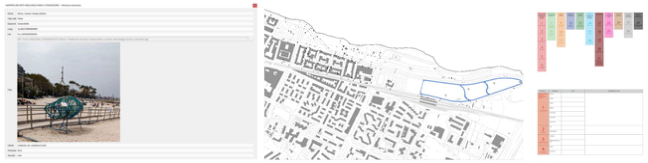
Finally, through the use of a webGIS file, it is possible to associate data related to tangible and intangible urban welfare, inclusion, accessibility and sustainability in the different neighborhoods and urban areas, which, in addition to the classification of services, can give indications about the places, including attributes such as geolocation and the corresponding keyword to the type of welfare service provided.
The development of such a database could offer the entire population, in an equitable way, the possibility of experiencing the city through attractive and stimulating spaces, often immersed in greenery, which allow them to change their lifestyles and guarantee healthier conditions. In response to current challenges to cultivate a sustainable and inclusive society that prioritizes the overall well-being of individuals, communities, and the environment, mapping welfare structures is essential to strengthen coordination between cities, sectors, and stakeholders at the local level.
Figure 1: Mapping example, gis database, area filing.
First Scenario Definition At this connection a first scenario has been developed based on the health and well-being in outdoor sports activities for the city of Bari.
Quality of life and well-being are closely linked to the dynamic interaction with the urban, natural and social environment. The relationship between the city, well-being and care is characterised by a mutual interdependence, where ‘the city as care’ and ‘the care of the city’ are complementary conditions. Wellbeing, therefore, is now considered a necessary and desirable daily resource, and the role of the city, as the context in which citizens live, within this process in striving for full individual and social realisation is fundamental.
In particular, the perspective adopts a human-centred perspective, also known as human-centred design (HCD). This approach to design places the end-user at the centre of the design process and aims to create solutions that meet users’ needs, preferences and behaviours through a series of iterative steps that include understanding the users’ context, defining requirements, creating design solutions and evaluating these solutions with the users themselves.
The users considered within the context of the city of Bari, as described above, include a triad of users, residents and non-residents (tourists and temporary residents), each with specific care and wellbeing needs. These users can be divided into three main categories:
residents, who live in the city permanently;
temporary residents, who travel regularly and reside temporarily in the city for work or study purposes;
tourists, comprising travellers who experience the city for short periods.
Understanding these distinct needs has been crucial to inclusive urban planning and to improving the quality of life and well-being of all users of the city of Bari.
Within the broad spectrum of topics that can be associated with citizen services, the focus of the research was on the topic of health and wellbeing in outdoor sporting activities, setting it as a reference model to support the project.
This choice is supported by the attested growing interest in personal care and well-being that has also emerged as a direct consequence of the COVID- 19 pandemic. In this context, a significant increase in participation in outdoor sporting activities has been observed, considered not only as a means to improve physical fitness, but also as an opportunity to foster psychological and social well-being. Indeed, the pandemic has encouraged the population to re-evaluate the importance of a healthy lifestyle, promoting practices that integrate physical exercise and contact with nature, elements considered essential for holistic well-being.
Starting with a punctual mapping of certain areas of the city that took into consideration the physical location including all components, perceptual characteristics (brightness, windiness, average temperature), services in the
Guidelines for the Design of Digital Platforms for Wellness and Inclusion 487
area, commercial activities, etc., and after an in deep user research based on the three main categories of user identified, a first scenario has been defined.
The user research defines three personas and on the base of their specific attribute the user flow has been observed for the reference area of the city Than have been developed three User Journey maps, each for each key flow associated with the relevant personas. All the interactions and related emotional states of the users in question during the experience of using the services provided in the specific area of the city of Bari examined, aimed at supporting wellness and care through outdoor motor and sports activities.
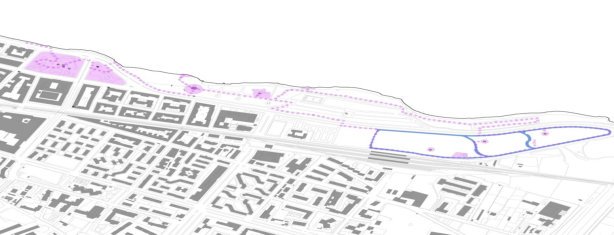
Figure 2: User flow 1.
Citizen user flows are graphical or schematic representations that describe the paths that users (citizens, in this case) follow when interacting with a service or system. These flows trace each step the user takes, from the first interaction to the achievement of their final goal. User flows help to understand how citizens use services, identifying strengths and weaknesses in the process.
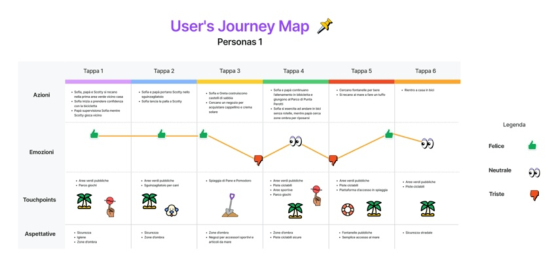
Figure 3: Example of user’s journey map based on user flow 1.
The ‘User Journey Mapping’ method focuses on learning about relevant user processes in order to identify areas in need of user research. The user journey map presented illustrates the user process based on the user flow relevant for mapped city area.
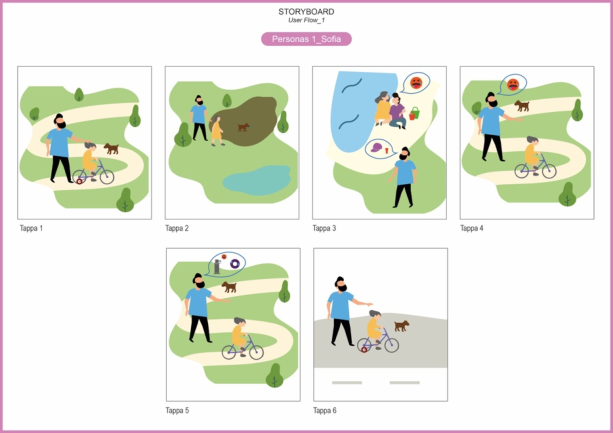
Figure 4: Storyboard based on userflow 1.
CONCLUSION
Although the following study represents the premise for future research development, some initial findings can be discussed.
The comparison of literature from the fields of design, landscape architecture, and sociology outlines an innovative paradigm that supports the development of digital services. This paradigm identifies the enhancement of individual well-being through the development of public spaces as inclusive places of aggregation and proximity.
Ongoing research has taken a number of sample areas, identified on the basis of specific characteristics, and developed 4 mappings for them: periphery marginality, waterfront, historic center, trans-rail node.
On the basis of the analysis and mapping carried out, it has been possible to structure an initial scenario that defines the possible implementation of digital support for “care”, here understood as the possibility of outdoor sporting activities, in the city.
The aim of the research is to develop further scenarios designed to offer the best user experience both in surfing the digital content of a web platform and in experiencing the city as described.
ACKNOWLEDGMENT
The present paper is part of the preliminary research activity of the Project NXT Digital Platform. Coordinator prof. A. Di Roma, OR1: Analysis of technologies and methodologies enabling the NXT Digital Platform (Research Team: Di Roma, A., Scarcelli, A., Neglia, A. L., Losciale, P., Ricci, M., Lafortuna, L., Simone, R.).
Guidelines for the Design of Digital Platforms for Wellness and Inclusion 489
REFERENCES
Arcidiacono, D., Pais, I., Zandonai, F.: Plat-firming welfare: trasformazione digitale nei servizi di cura locali, (2021). Barnes M., Cooper Marcus C., (1999), Healing Garden. Therapeutic benefits and
design recommendation, Wiley and Sons, NJ-Canada. Bickenbach, J. (2017). WHO’s Definition of Health: Philosophical Analysis. In Schramme, T. and Edwards, S. (eds), Handbook of the Philosophy of Medicine. Dordrecht: Springer, pp. 961–974. Capuano A. Il progetto di paesaggio come aspettativa di maggiore equità e salute in
I. Cortesi (ed.) Il paesaggio al centro. Realtà e einterpretazione Siracusa 2022. Cecchini A., (2007), Al centro le periferie: il ruolo degli spazi pubblici e dell’attivazione delle energie saciali in un’esperienza didattica per la riqualificazione urbana, Franco Angeli Chalfont G., (2013), Dementia Green Care Handbook of Therapeutic Design and Practice, Safehouse Books. Colarossi P., (2007), Spazio pubblico e ri-generazione della città, in Arenghi A. (a
cura di), Design for All. Progettare senza barriere architettoniche, Manuali tecnici, UTET. Cooper Marcus, C., & Sachs, N. A. (2014), Therapeutic landscapes. An evidencebased approach to designing healing gardens and restorative outdoor spaces, Hoboken, NJ: John Wiley and Sons. Di Roma A;, Losciale P., Scarcelli A., (in press), Digital environment to support well-
being, empowerment and experience of care. Springer Nature. Duhl L., (2002), Health and greening the city. Relation of urban planning and health, J Epidemiol Community Health. Fosti, G.: Rilanciare il welfare locale: ipotesi e strumenti: una prospettiva di
management delle reti. Egea S.p. A. (2013). Fosti, G.: Sharing Welfare? In: Polizzi, M. and Bassoli, M. (eds.) Le politiche della condivisione. La sharing economy incontra il pubblico. Giuffrè (2016). Granata Elena (2023), Il senso delle donne per la città. Curiosità, ingegno, aperture,
Passaggi Einaudi. Kazepov, Y., Barberis, E.: Il welfare frammentato. Le articolazioni regionali delle politiche sociali italiane. Carocci (2013). Kazepov, Y., Cefalo, R.: La dimensione territoriale delle politiche sociali. Parolechiave. 28, (2009). Manzini, E.: Abitare la prossimità: Idee per la città dei 15 minuti. EGEA S.p. A.
(2021). Mari A., Salvarsi con il verde. La rivoluzione del metro quadro vegetale Giunti mIlano 2022 Pais, I.: Futuro prossimo. Città delle prossimità e piattaforme digitali. In: Manzini,
E. (ed.) Abitare la prossimità: Idee per la città dei 15 minuti. EGEA S.p. A. (2021). Rhode C. L. E., Kendle A., (1994) Human Well-being, Natural Landscape and Wildlife in Urban Areas, a Review, in English Nature Science. Takano T., Nakamura K., Watanabe M., (2002), Urban residential environments
and senior citizens’ longevity in megacity areas: the importance of walkable green spaces, J Epidemiol Community Health. Ulrich R. S., (1999), Patient stress and Health outcomes, in Cooper Marcus C., Barnes M., (1999), Healing Garden. Therapeutic benefits and design recommendation, Wiley and Sons, NJ-Canada.
Valla P., (2002), (a cura di), Alzheimer, Architetture e Giardini come Strumento Terapeutico, Guerini e Associati Editore, Milano. WHO Health and well-being for all: Celebrating 35 Years of the Healthy Cities Movement WHO European Healthy Cities Network Annual Business Meeting and Technical Conference, 21–23 November 2024, Utrecht, Netherlands (Kingdom of the): meeting report. Document number: WHO/EURO:2024-9534- 49306-73701.
LISTED IN THE AHFE DIGITAL BOOKSTORE CATALOGUE
Explore the complete digital volume
Human Factors in Design, Engineering, and Computing
Read this individual research paper free through the original publisher, or explore the full digital proceedings book.
ISBN 978-1-964867-35-9
Explore this ISBN in the AHFE Bookstore ↗Listed in the July 2026 bookstore catalogue; search by ISBN to confirm current availability · Digital book purchase optional