Alice Paracolli, Venanzio Arquilla (2024). UX Sustainability in AI-infused Objects: a systematic literature review of available tools for Designers. In: Human Interaction and Emerging Technologies (IHIET 2024). AHFE Open Access, vol. 157, pp. 406–417. https://doi.org/10.54941/ahfe1005500
The rapid integration of AI-infused objects into our daily lives, as part of the growing Internet of Things (IoT) ecosystem, is transforming common appliances into sophisticated and interconnected systems (ITU, 2020). With projections indicating an increase from 5 billion objects in 2020 to over 200 billion by 2030 (CISCO, 2020), these AI-infused objects create expansive networks of data-consuming devices that persist indefinitely (Crawford, 2018). This surge necessitates a deeper understanding of their ongoing environmental impact, particularly during the use phase. Recognizing the potential for user experience Designers to adjust interactions to mitigate the environmental impact during the use phase of AI-infused objects, we conducted a systematic literature review to pinpoint the Design tools that can assist Designers in this effort. Our systematic literature review aims to identify Design tools that evaluate the sustainability of User Experience in IoT products. We analyzed 24 sources dedicated to sustainability from a User Experience perspective, and 22 that assess UX in IoT devices. The findings reveal a strong focus on product-focused evaluation tools, with general emphasis on User Experience and the usage ecosystem of these objects. As AI-infused objects become increasingly prevalent, it is essential for Designers to gain a comprehensive understanding of the environmental impacts and their cause. This awareness could lead Designers to integrate both technological advancements and environmental considerations effectively into their Design process.
the user’s adopting and interacting with the AI-infused object ecosystem. The impact of user interaction with digital products academically has been explored in Sustainable Interaction Design over the last 15 years (Blevis, 2007), which divides the field into Sustainability in Design and Sustainability through Design. However, these two perspectives could benefit of the comprehensive vision that the lens of UX provides, through analysing user context and needs. Hence, a shift in perspective is required: it’s not enough to design highly efficient or minimally impactful products or objects that guide users towards more sustainable behavior, but understand how the objects are used to reduce the impact of that phase while supporting the user in their daily life. This research intends to bridge by providing a systematic review of Design tools that consider sustainability in UX Design, offering practitioners resources to create more sustainable experiences in AI-Infused objects ecosystems within the domestic settings. We consider Design tools as all the sources available to Designers that can support practical activities, such as toolkits, tips, checklists, guides, guidelines, manifestos etc. Design tool is defined as a physical or digital object used to achieve a specific goal, resulting from intentional human transformative processes, applied through a set of instructions. Instructions ensure replicability in various situations, establishing the Design tool’s validity as a method. Notably, Design agencies like IDEO, MJV, and Frog often organise purpose-specific tools into toolkits, complete with guidelines on their application (Bruno & Mattioli, 2022). Toolkit research aims to simplify the Design process, empower new users, and foster innovation (Ledo, 2019). Toolkits serve as crucial educational and collaborative resources, especially in fields like sustainability and IoT Design since they require a systematic thinking. However, the wide variety and lack of critical testing of these tools, as noted by Nebeling (2017) and Remy (2018), create a challenge for practitioners, leading to an entropy of sources. This study present a systematic analysis of Design tools dedicated to “UX and Sustainability” and “UX and IOT” to help Designers navigate this entropy, focusing on guiding AI-Infused Objects Designers to assess and design with sustainability in mind. Highlighting the Design community’s responsibility towards environmental impacts, it draws on the principles of responsible Design advocated by Papanek (1995) and Monteiro (2019). Despite the wealth of tools for UX Design, there’s a gap in addressing the environmental consequences of user interactions in Design processes.
METHODOLOGY
We conducted a comprehensive review of existing literature, employing a multivocal literature review (MLR) approach following Garousi et al. (2019). This methodology extends beyond traditional systematic literature reviews by incorporating both gray literature — including non-peer-reviewed materials like industry toolkits, expert blogs, seminars, materials from professional practices and manifestos — and white literature, which encompasses peer- reviewed sources such as articles from conferences and journals, and frameworks. Our goal is to achieve a more comprehensive understanding of a the perspective of UX to design more sustainable AI-Infused objects. This expansive approach was critical for understanding the breadth of strategies
408 Paracolli and Arquilla
in both the academic and practical realms. The resulting analysis provided a foundation for selecting frameworks and methods that align UX in IoT with environmental sustainability, to create user experiences that are conscious of their ecological footprint.
Information Sources and Inclusion Criteria Academic literature was sourced from Google Scholar, Scopus, and the IEEE library. To incorporate practical insights and approaches emerging directly from industry practitioners, additional searches were conducted using Google Search and LinkedIn. The research was guided by two main pathways: (1) approaches and tools focused on enhancing user experience for more environmental sustainable design. (2) Approaches for designing AI-infused objects within domestic settings through the lens of UX. Sources that aimed at supporting the Design process within either of these pathways were considered for inclusion. Criteria for selection included the requirement that sources be in English, fully accessible, and validated— either through peer-review for academic contributions or via practical case studies for practitioner-derived insights, or both; understandable and usable by Designers during the Design process. This stringent selection process was designed to ensure the reliability and relevance of the information incorporated into our study.
Search Terms for Queries Derived from the research question (What approaches are available to analyze and design the use phase of AI-Infused Objects with environmental sustainability in mind?), search terms were chosen to cover two main areas of study: user experience (UX) and its intersection with sustainability; the Internet of Things (IoT) from a UX perspective. Notably, the scope of the research was broadened to encompass IoT due to the relative scarcity of literature specifically addressing the term “AI-Infused Objects,” which falls under the broader IoT domain. Table 1 presents these terms along with their synonyms.
Table 1. Research terms, inclusion criteria and no of sources considered. “UX & IOT” “UX & Sustainability”
Table available in the original PDF paper.
Iot, Internet Of Things, AI Infused Objects, User Experience, UX,
Sustainability, Environmental Impact, Sustainable, Human Computer Interaction, SHCI, UX, User Experience, 2. Terms & synonyms
Tool, Toolkit, Methodology, Method, Guidelines, Manifesto, Framework Source available at IEEE, Scopus, Google Scholar, Linkedin, Google Search
IEEE, Scopus, Google Scholar, Linkedin, Google Search Inclusion Criteria English; understandable by designer; practical to be inserted in design process
22 24
English; understandable by designer; practical to be inserted in design process No of sources considered
UX Sustainability in AI-Infused Objects 409
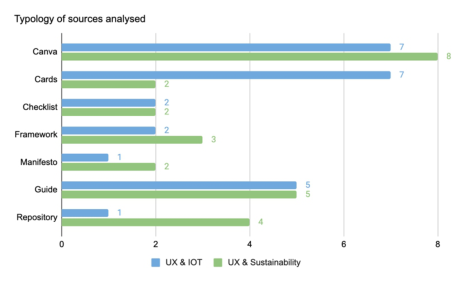
Overview of Sources Our literature review encompassed a total of 46 sources, divided into two main themes: “UX & IoT” and “UX & Sustainability”. For UX & IoT, we analysed 22 sources, including 20 from the white literature and 2 from the gray literature, spanning the years 2012 to 2023. There is an abundancy of manifestos in the literature but Fritsch et al. (2018) revised 28 different IoT manifestos, identifying a notable absence of thorough context analysis for sustainability during the use phase, additionally a UX perspective gap is highlighted in the manifesto by De Roeck (2012). Although these manifestos offer insights that could guide Designers toward a better future with IoT, they generally lack practical, step-by-step guidance for Designers. The manifesto we found dedicated to sustainability in IoT, focuses mainly on physical characteristics considering end-of life and repair of the product, rather than on user impact during the usage phase (Stead, 2019).
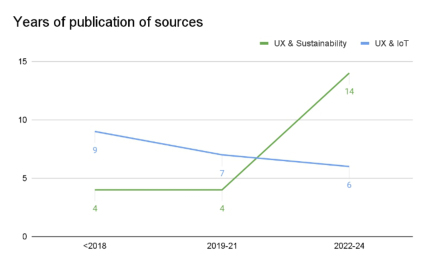
Figure 1: Typology of sources analysed. NB: each source might contain more tools.Figure 2: Sources by year of publication.
For UX & Sustainability, our review included 24 sources, with 6 from the white literature and 18 from the grey literature, published between 2010 and 2024. We observed a significant increase in grey literature from 2022
410 Paracolli and Arquilla
to 2024, reflecting the growing adoption of Sustainable UX practices among practitioners. This trend is especially evident in the design of web pages aimed at being effective and responsive while reducing load times. Such sustainable practices are not only effective but also necessary, prompting practitioners to develop a variety of toolkits to address these challenges. None of the sources referred to AI-infused objects or more in general to IoT.
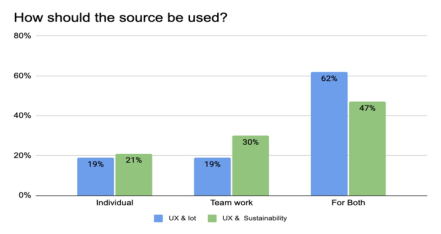
CATEGORIES AND SOURCES ANALYSIS Our analysis of Design approaches has been readapted using the categories established by Hsieh (2023). The first is the “creative inspiration”category of Design tools. These tools are intended to stimulate creativity and encourage out-of-the-box thinking by providing provocative prompts or visuals to ignite ideas (Appendix A & B). Right after, the category “individually or in teams” enabling Designers to swiftly determine the appropriate mode of usage based on the project’s goals (Fig. 3).
We assessed the types of products that could be analysed (web apps, IoT, services), helping Designers navigate the array of tools available and quickly identify the most suitable for their specific design objective (Fig. 4, 5). During the analysis, we categorized the tool by indicating in which phase of the Design process each resource would be useful. We followed and partially adapted the Design process phases proposed by Hsieh (2023) (Table 2), adding “Redesign”.
Figure 3: Utilisation of sourses: “individual vs teamwork”.
Figure 4 & 5: Kind of product to be analysed by sources
UX Sustainability in AI-Infused Objects 411
Table 2. Design process phase and description.
Table available in the original PDF paper.
Process Phase Description Meta-Design Meta-Design goes beyond traditional process models by facilitating environments where users also function as designers, fostering creativity beyond conventional boundaries (Hsieh, 2023). Research This initial phase involves a deep dive into the problem space to understand the stakeholders and their challenges. Insights gained here are crucial for informing subsequent Design decisions. Ideation Designers engage in creative brainstorming to generate ideas. It includes Tools that provide inspiration or insights about human behavior and problems. Prototyping Practitioners convert their concepts or potential solutions into low or high fidelity prototypes to explore the problem space the Design aims to address and evaluate their feasibility. Evaluation Focuses on testing how well the Design solutions work with actual users and context, aiming to check usability and effectiveness. Implementation Involves detailing the prototype for production, collaborating with manufacturers and developers to finalize the design. Redesign It aims to review and refine existing products, high-fidelity prototypes, or well-defined concepts. Tools in this section should facilitate understanding of potential pain points in the product/prototype/concept idea and enable targeted adjustments for improvement.
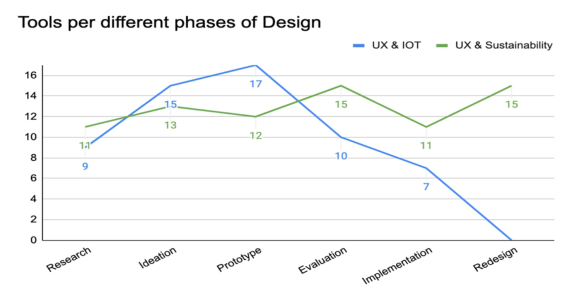
An overview of the source distribution is visible in Fig 6. The “meta- Design” category is not included because only one source fell into this category: Ambe (2019).
Figure 6: Source distribution per design process phase.
The graph demonstrates that “UX & IoT” tools are more concentrated in the early stages of the Design process, particularly during ideation, while UX & Sustainability tools have a more consistent distribution, emphasizing
412 Paracolli and Arquilla
the evaluation phase and maintaining presence through the implementation and redesign phases. This could imply that sustainability considerations in UX are relevant throughout the entire Design process, whereas the focus on IoT within UX seems to diminish as projects move towards implementation and post-launch stages. The data presented in the graph indicates a well- established foundation of tools for sustainability and UX in the early phases of design. However, there appears to be a notable decline in tools addressing these aspects in the later stages of IoT projects, specifically during prototype evaluation, implementation, and redesign. Recognizing this trend, there is an opportunity to develop a unified toolkit that can lead Designers to re- evaluate existing IoT projects through a sustainability-focused UX lens. Such a toolkit would capitalize on the iterative essence of UX practices, facilitating the refinement of IoT designs to reduce environmental impact.
UX Approaches to Sustainability In digital products, the use phase’s environmental impact is often overlooked, as evidenced by prevailing sustainability strategies. Circular approaches, for instance, typically concentrate on product reuse and recycling but tend to fail to address energy consumption during usage. Modular and end- of-life tactics likewise focus on tangible impacts, neglecting operational environmental effects. Sustainable behavior strategies, while promoting eco-friendlier actions, lack robust assessment methods to verify genuine enhancements in sustainability. Even in life cycle assessments (LCAs), though designed to consider the use phase, this is frequently ignored, underscoring a widespread gap in evaluating environmental impacts comprehensively (Pohl, 2019). The Sustainable UX Network, established in 2021 by a group of practitioners (Jonas, 2021), is dedicated to promoting sustainability in UX and through UX. It aligns with the UN’s Sustainable Development Goals (SDGs) and non-profit objectives, advocating for a reduction in negative impacts such as carbon footprint, energy usage, and waste, while encouraging positive outcomes like green solutions and fair practices. This perspective has been anticipated in the academic field of Sustainable Human-Computer Interaction (SHCI), where there is a distinction between sustainability in Design (SiD) and sustainability through Design (StD). SiD adheres to Blevis’s (2007) concept of minimizing environmental impact through product design, whereas StD aims to modify user behaviors and enhance awareness. However, many StD projects face challenges in empirically assessing behavior change. Nonetheless, Basyouny & Männik (2023) highlight a knowledge gap among young Interaction Designers in incorporating sustainability into digital artifact Design processes, which contributes to greater energy usage and carbon emissions. This underscores the urgent need for educational modules on sustainable digital Design practices and practical tools to aid Designers.
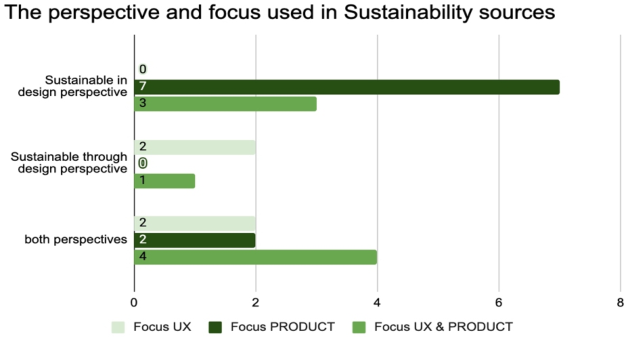
We categorized our source analysis following the perspectives of SiD and StD and then specified if each source had focus on product (more product- oriented viewpoints focusing on what serves the Designer in creating the
UX Sustainability in AI-Infused Objects 413
product) or UX (aiming to support the designer in understanding the user’s context and needs).
We identified in SiD perspectives a greater focus on product-oriented tools (n
7), suggesting an emphasis on the product’s inherent design sustainability. However, only a few tools concentrate on UX (n
3), indicating room for growth, especially given the use phase often-neglected impact. The absence of tools addressing both UX and Product points to a lack of holistic approaches within this category. The analysis indicates a limited focus on Designing for sustainable behavior, likely because such considerations often fall outside the traditional scope of UX Design, thus fewer studies of this nature are represented. Consequently, there’s a clear necessity for additional UX tools that evaluate the environmental impact of a product from a UX standpoint.
UX Approaches in IoT In the realm of IoT, one of the most significant challenges is the inherent complexity related to the number of involved technologies, interfaces, data points, and interactions among various devices, platforms, and stakeholders. Additionally, implementing the appropriate UX for IoT systems becomes particularly challenging due to the diverse needs of different stakeholder groups. This complexity is discussed in works such as Trendowicz (2023) for IoT and Paracolli (2023) when applied to sustainability evaluations. Indeed, evaluating the sustainability of IoT designs is further complicated by factors such as user behavior, including the frequency and scope of system use, as well as the volume of data processed. These variables heavily depend on the context in which the user operates, usually observable only once the product is in use. Consequently, the evaluation and redesign phases become crucial for assessing the environmental impact during the use phase of AI-infused objects.This is the domestication process, Design and domestication are the two components of innovation. Domestication is anticipated by Design, and
414 Paracolli and Arquilla
Design is completed in domestication, in which the Designer outline the object’s meaning for the user and how it will be used (Silverstone, 1996). However, the object acquires whole meaning after, in the domestication process, which must be studied and then manipulated by the Designer with the aim to reduce the impact of the user experience, making the context of use fundamental part of the sustainability evaluation.
The role of data acquires an important facet both environmentally and economically, among the Design tools we analyzed, “The Definitive Ecosystem Design Toolkit” (2024) (Appendix B) is particularly notable. Although primarily business-oriented, this toolkit can be adapted for IoT applications, focusing on stakeholder ecosystems for digital services. It encourages reflection on the role of data not only economically but also in the design of efficient IoT ecosystems where devices communicate securely and collaborate to achieve common goals. Such approach can enhance interoperability, energy efficiency, and security of the IoT ecosystem. However, there is still a need for tools that help designers quantify and understand the impact generated by data.
As shown in Fig. 6, most sources in “UX & IoT” prioritize the early stages of the Design process, often neglecting the evaluation and redesign aspects, which are essential for sustainability. These phases are crucial for reducing object production, possibly by updating existing products rather than creating new ones, and altering user experiences to minimize environmental impact.
Benchmarking aids in comprehending existing market precedents to prevent redundancy in product/service creation and to learn from previous successes and failures. Among the resources reviewed, Vitali (2018), De Roeck (2019), and Aspiala (2016) offer tools ideal for this analysis, emphasizing market trends, user context, and IoT ecosystem assessment respectively. Furthermore, benchmarking highlights how similar products have been utilized, having the potential to encourage a reconsideration of a more sustainable user experience. Yet, a structured system for evaluation or comparison is lacking, which is crucial to support Designers in their decision- making processes. In practice, especially within companies, Designers rarely develop entirely new products from scratch; they often must consider multiple factors such as feasibility, budget, and stakeholder demands (e.g. in Barbosa-Hughes, 2019). This highlights the need for comprehensive, practical tools that encompass both ideation and thorough user research, involving stakeholders without neglecting the users themselves (e.g. in Ambe, 2019).
CONCLUSION
According to Maeda (2019), key aspects for practitioners in Computational Design include a profound understanding of computation, a critical approach to technology, the ability to apply classic Design principles focused on functionality and industrial concerns, and the incorporation of Design Thinking to meet user needs and develop feasible products. Importantly, designers should also take responsibility for the environmental impacts of
UX Sustainability in AI-Infused Objects 415
their creations. Specifically for digital products, it is crucial to consider the environmental impacts during the user phase. In our study, we observed a significant gap in Design tools that help designers evaluate the environmental impacts of their user experiences, particularly within IoT contexts. To effectively assess these impacts, it is essential first to understand the technological foundations of the ecosystem of connected objects. Analyzing user context to fully comprehend how users interact with these systems, including the frequency and duration of interactions and what motivates these interactions. Context also helps interpret the data transmitted within the ecosystem of connected objects, such as what data users check, use, and why. Indeed, the duration and frequency of user interactions, as well as how often users access or utilize data, directly influence the environmental impact of the user experience. Therefore, there is a pressing need for tools that enable designers to assess environmental impacts in a comprehensive and intuitive manner. Our analysis also highlighted a demand for tools that support designers in redesigning or updating IoT products. Such tools would encourage designers and businesses to update existing solutions, making them more meaningful for users through UX analysis and, simultaneously, more sustainable.
APPENDICES Appendix A
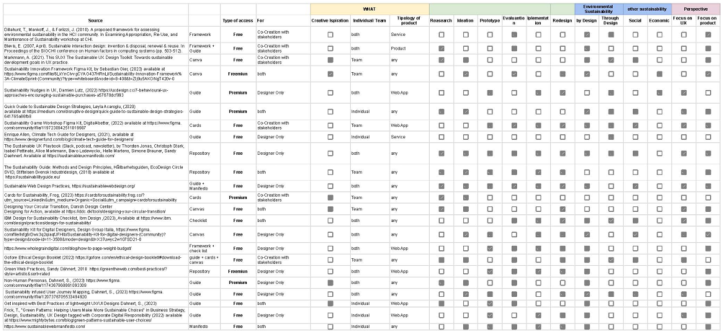
Figure 8: Analysed sources “UX & Sustainability.”
416 Paracolli and Arquilla
Appendix B
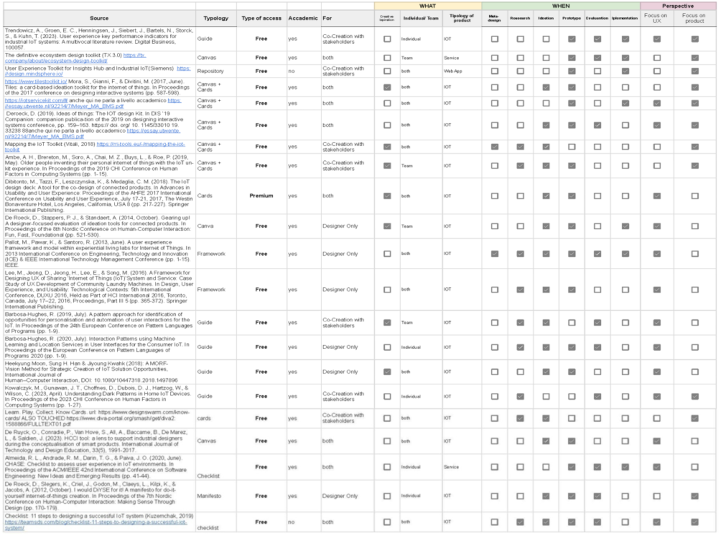
Figure 9: Analysed sources “UX & IoT.”
REFERENCES
Ambe, A. H., Brereton, M., Soro, A., Chai, M. Z., Buys, L., & Roe, P. (2019, May). Older people inventing their personal internet of things with the IoT un- kit experience. In Proceedings of the 2019 CHI Conference on Human Factors in Computing Systems (pp. 1–15). Arquilla, V., & Paracolli, A. (2023). User experience design and sustainability of
AI-infused objects. AGATHÓN International Journal of Architecture, Art and Design, 13, 259–268. doi: 10.19229/2464-9309/13222023. Aspiala, Deschamps-Sonsino, (2016), Learn. Play. Collect. Know Cards. url: https:// www.designswarm.com/know-cards/ ALSO TOUCHED https://www.diva-porta l.org/smash/get/diva2:1588866/FULLTEXT01.pdf Basyouny, M., & Männik, A. (2023). Unleashing the Awareness of Sustainable
Human-Computer Interaction (HCI) Among Youth: Bridging the Knowledge Gap and EmpoweringFuture Sustainable Designers. Blevis, E. (2007, April). Sustainable interaction design: Invention & disposal, renewal & reuse. In Proceedings of the SIGCHI conference on Human factors in computing systems (pp. 503–512). Bruno, C., Gramegna, S. M., Mattioli, F., Monna, V., & Rossi, M. (2022). Design
Tools: A reflection towards the definition of a taxonomy (p. 94). FrancoAngeli. Crawford, K., & Joler, V. (2018). Anatomy of an AI System. Retrieved September, 18, 2018.
UX Sustainability in AI-Infused Objects 417
De Roeck, D., Slegers, K., Criel, J., Godon, M., Claeys, L., Kilpi, K., & Jacobs, A. (2012, October). I would DiYSE for it! A manifesto for do-it-yourself internet-of-things creation. In Proceedings of the 7th Nordic Conference on Human-Computer Interaction: Making Sense Through Design (pp. 170–179). Deroeck, D. (2019). Ideas of things: The IOT design Kit. In DIS ‘19 Companion:
Companion publica-tion of the 2019 on designing interactive systems conference, pp. 159–163. https:// doi. org/ 10. 1145/33010 19. 33238 Fritsch, E., Shklovski, I., & Douglas-Jones, R. (2018, April). Calling for a revolution: An analysis of IoT manifestos. In Proceedings of the 2018 CHI conference on human factors in computing systems (pp. 1–13). Garousi, V., Felderer, M., & Mäntylä, M. V. (2019). Guidelines for including grey
literature and conducting multivocal literature reviews in software engineering. Information and software technology, 106, 101–121. Hsieh, G., Halperin, B. A., Schmitz, E., Chew, Y. N., & Tseng, Y. C. (2023, April). What is in the cards: Exploring uses, patterns, and trends in design cards. In Proceedings of the 2023 CHI Conference on Human Factors in Computing Systems (pp. 1–18). ITU-T Rec. L.1410 (12/2014) Methodology for environmental life cycle assessments of information and communication technology goods, networks and services available at: https://www.itu.int/rec/dologin_pub. asp?lang=f&id=T- REC-L.1410–201412-I!!PDF-E&type=items Jonas, T, (2021) The Sustainable UX Network available https://sustainableuxnetwo
rk.com/. Ledo, D., Houben, S., Vermeulen, J., Marquardt, N., Oehlberg, L., & Greenberg, S.
(2018, April). Evaluation strategies for HCI toolkit research. In Proceedings of the 2018 CHI Conference on Human Factors in Computing Systems (pp. 1–17). Ligozat, A. L., Lefèvre, J., Bugeau, A., & Combaz, J. (2022). Unraveling the Hidden Environmental Impacts of AI Solutions for Environment Life Cycle Assessment of AI Solutions. Sustainability, 14(9), 5172. Maeda J., Design in Tech Report, (2019) p. 11, available at https://designintech.rep
ort/ Monteiro, M. (2019). Ruined by design: How designers destroyed the world, and what we can do to fix it. Mule Design. Nebeling, M. (2017, May). Playing the Tricky Game of Toolkits Research. In
workshop on HCI. Tools at CHI. Papanek, V. (1971). What to design and why. Selskabet for Industriel Formgivning. Pohl, J., Hilty, L. M., & Finkbeiner, M. (2019). How LCA contributes to the environmental assessment of higher order effects of ICT application: A review of different approaches. Journal of cleaner production, 219, 698–712. Remy, C., Bates, O., Dix, A., Thomas, V., Hazas, M., Friday, A., & Huang, E. M.
(2018, April). Evaluation beyond usability: Validating sustainable HCI research. In Proceedings of the 2018 CHI Conference on Human Factors in Computing Systems (pp. 1–14). Silverstone, R., & Haddon, L. (1996). Design and the domestication of information and communication technologies: Technical change and everyday life. Shehabi, A. (2017). Data Clouds and the Environment. In Routledge Handbook of
Sustainable Design (pp. 170–178). Routledge. Stead, M., Coulton, P., & Lindley, J. (2019). Spimes not things. Creating a design manifesto for a sustainable internet of things. The Design Journal, 22(sup1), 2133–2152. Vitali, I., (2018) Mapping the IoT, available at https://rri-tools.eu/-/mapping-the-iot
-toolkit.
LISTED IN THE AHFE DIGITAL BOOKSTORE CATALOGUE
Explore the complete digital volume
Human Interaction and Emerging Technologies (IHIET 2024)
Read this individual research paper free through the original publisher, or explore the full digital proceedings book.
ISBN 978-1-964867-33-5
Explore this ISBN in the AHFE Bookstore ↗Listed in the July 2026 bookstore catalogue; search by ISBN to confirm current availability · Digital book purchase optional