Amic Ho (2024). Assessing Creativity in Higher Education: An Action Research Approach to Developing Effective Assessment Methods in Creative Education. In: Training, Education, and Learning Sciences. AHFE Open Access, vol. 155, pp. 26–35. https://doi.org/10.54941/ahfe1005387
The purpose of this study is to explore, through action research, the effectiveness of non-traditional assessment techniques, developed to capture student creative abilities and academic performance. Portfolio critiques, peer assessment, and design-based activities are approved as viable action research strategies to capture the creative process immolated in student work and to represent student academic performance more holistically. Additionally, this study explores the affect that non-traditional assessment techniques have on student motivation and their ability to solve problems creatively. Non-traditional assessment instruments, which can be used to evaluate students' creative and problem-solving abilities; acceptable assessment methodology for assessing the effectiveness of innovative educational content; and the effects of emotional content development on communication design were also addressed in this research. The findings may be used by educators, designers, and researchers alike to develop more relevant and efficacious standpoint assessment instruments for creative education.
Assessing Creativity in Higher Education: An Action Research Approach 27
and participation might differ with different sorts of assessment protocols as well. Best practices around assessing students for their creative and problem- solving capacities could be identified, and the results might be employed in real-world settings to identify viable assessment methods for gauging the efficacy of innovative education. The goal of this action research project is to better understand the obstacles to teacher and learner traversal as they attempt new forms of assessment and to establish empirical, reliable, and rational standards for creatively relevant educational accomplishments that may be enacted across disciplines and fields. An action learning methodol- ogy is employed to appraise the impact of emotional and emotionalise design concepts in communication design. The experiential dimensions of students are probed using questionnaires, interviews, and behavioural observations – and insights developed via the combined (qualitative and quantitative) data collection and analysis. The methodology also unearthed new perspectives deriving from studies on the significance of effect in creative education and efficacious strategies for the enthralment of junior designers. The lessons of this inquiry should be of applicable and practical assistance to educators, designers, and scholars who wish to develop educational methods capable of empathetically meeting the emotional needs of their users. The princi- pal intent of the proposed inquiry is to contribute to an ongoing argument regarding the need for more efficient and original evaluation methods than those we have inherited from traditional assessment philosophies. The inves- tigation results will appeal to educators, designers, and researchers who wish to develop more pertinent and effective methods of assessing relevancy to a creative education. There is the prospect of offering a theoretical substrate to accelerating revaccination in additional education domains that recognise the importance of contextually emergent assessment of student-derived creativity and performance. When the deep growing urgent and ongoing transforma- tion of the global development of invention, innovation, and critical thinking are ardently relevant, the exigency becomes greater. Better assessment of these skills in all their diversity is fundamental for growing the boldness of our capacity and our nation to profoundly and more creatively and flexi- bly respond to deeply urgent global impactors in balanced and empowering ways. In the end, the results of this inquiry have the potential to tension the education of systematically institutional learning process hence-forward, by which learners are encouraged to meddle and make novel, practical and inventive/beautiful responses to urgent global issues.
IMPORTANCE OF INNOVATIVE EDUCATION AND THE NEED FOR EFFECTIVE ASSESSMENT METHODS Innovative education is important in fostering entrepreneurial, creative, and critical thinking skills among students, and the significance of inno- vative education has been underscored by the fact that innovation is a major educational output (Wang et al., 2022). As a result, various gov- ernments have shown increasing awareness of the importance of education for innovation. Moreover, the cultivation of innovative talents and the
28 Ho
incubation of student entrepreneurial teams are the primary tasks of edu- cation (Chandra et al., 2020), indicating the crucial role of innovation and entrepreneurship education in the national innovation system (Zhao et al., 2020). This also happens in the Quality Assurance through Innovative Tech- nology area in terms of higher education institutions’ Quality (Al-Ramahi and Odeh, 2020) and innovative technologies are indispensable in higher edu- cation institutions’ Quality improvement. Assessment methods are essential in determining the effectiveness of innovative education. Innovative ability assessment is very important for Higher Vocational and College Teaching decisions and is based on comprehensive, reliable assessment data. More- over, making students’ demand for innovative and entrepreneurial vocational ability (Feng et al., 2023) accurate predictions, provides an important refer- ence for elaborate and proper management strategy development of creative and entrepreneurial education (Gong et al., 2023). Learning outcomes and their relationship to assessment methods are discussed and the effectiveness of experiential entrepreneurial education is demonstrated, for example, by analysing assessment methods in Reflective Diaries. Therefore, innovative education is important to develop entrepreneurial, creative and critical think- ing abilities, and promote innovation. Assessment methods are important in determining effectiveness of the innovative education, and it is very important to develop comprehensive, reliable assessment data for measuring innovation ability and making an accurate prediction of student demand for innovative and entrepreneurial vocational ability.
Various Assessment Strategies for Capturing Students’ Creative Processes The goal of this article is to review several assessment strategies that are designed to capture learner creativity processes in a variety of educational arenas. Although the reader will find a review of creativity assessments more generally in Long, Frenzel, and Neish (2022), the present work attempts to present strategies particularly geared to the music classroom, higher-order learning outcomes, K-12 education, psychology, and engineering. The cur- rent studies address how teachers perceive creative learners, ways to foster creativity and creative music products. Additional work is taking place to explore the feasibility of today’s social networking technologies to capture and retain the moment-by-moment development of higher-order skills such as musical creativity, the focus here, and self-reflection (Kirschner, Strijbos, Kreijns, & Beers, 2004). A comprehensive review of the creativity assessment literature from historical, theoretical, empirical, and practical perspectives is available in Long, Frenzel, and Neish (2022). Bolden & DeLuca (2022) focus on developing assessments for learning practices that nurture student cre- ativity in music classrooms, outlining four categories: developing assessment criteria, encouraging creative processes, optimizing the classroom context, and activating self-assessment (Bolden & DeLuca, 2022). Malakate et al. (2007), consider individual and team creativity theory and research from various social sciences to understand the variation in creativity assessments across professional contexts. They review the creativity assessment literature in college-level psychology coursework, as well as the literature on decision
Assessing Creativity in Higher Education: An Action Research Approach 29
heuristics used by expert and novice judges. In addition, they consider the teaching of creativity in engineering courses for the implications for assessing the creative processes in STEM education.
Investigate the Impact of Alternative Assessment Forms on Students’ Motivation and Problem-Solving Capacity Various forms of adaptive learning tasks are known to affect students’ motivation and problem-solving abilities. Dynamic assessment, portfolios, journals, self-assessment, and formative assessment practices, for example, have been linked with increased motivation and self-efficacy (Ho, 2023). Innovative assessment formats, such as the “multiplier grading” technique and take-home examinations, are even associated with higher-order thinking, content mastery, and intrinsic motivation over and above traditional for- mats (Ho & Chau, 2016). Likewise, schema-based instruction (SBI) enhances students’ integrative linking and problem-solving abilities, thereby improv- ing their mathematical performance and foreign language acquisition (Ho, 2014). Likewise, mobile-assisted formative assessment tasks have been found to increase students’ perceived levels of autonomy, competence, and relat- edness, and thereby boost their intrinsic motivation levels (Ho, 2023). In short, adaptive learning tasks significantly impact students’ motivation and problem-solving capacity, with specific forms such as dynamic assessment, portfolios, journals, self-assessment, and formative assessment practices (Ho, 2023) having been linked with increased motivation problem-solving abilities, as well as concerning higher-order thinking skills (Ho & Chau, 2016).
Explore How Types of Practices for Assessing Creative and Problem-Solving Skills The assessment of creative skills and problem-solving skills is a practice rooted in theory from various models used in educational research. For instance, the Creative Problem Solving (CPS) model has been used to increase creative problem-solving ability, especially in the domain of business (e.g., customer satisfaction). The impact of creative problem-solving with interven- tion on the social skills of elementary-aged students on subsequent creative task performance has been explored, which supports the necessity of long- term training arid practice of social skills in the realm of creativity. In addition, research has investigated the processes of creative problem solvers in groups, as well as the development of tests or procedures to measure cre- ative and/or problem-solving ability apart from other cognitive skills, along with research in environmental conditions and teaching strategies designed to increase creative problem-solving activity skills (Ho & Chau, 2016).
Another line of research concentrates on the development of assessment instruments for measuring creative thinking and problem-solving skills. Stud- ies have been conducted to produce assessment instruments on different domains, such as mathematics, biology, and plant growth, for measuring students’ creative thinking and problem-solving abilities. Also examined is the relationship between creativity and interpersonal problem-solving skills
30 Ho
in adults, with an emphasis on the application of creativity training in edu- cational and industrial settings to improve these skills. Other work has investigated the effects of teaching approaches, such as problem-based learn- ing, and the use of teaching materials, to improve creative thinking skills, particularly in mathematics and science education. There is also an emphasis on the development of critical-creative reading assessments, and the analysis of communication skills in creative learning, with an emphasis on distin- guishing between critical and creative reading and the use of educational interventions to enhance students’ communication skills. As demonstrated, the assessment of creative and problem-solving skills takes on many forms and navigates a myriad of practices and models. They include an understand- ing of the Creative Problem Solving (CPS) model, the development of CAPS and ESPAS assessment instruments, the role of teaching approaches, and the real difference between critical and creative thinking. Numerous research endeavours look to further our understanding and in turn the enhancement of creative and problem-solving skills in a multitude of educational disciplines.
Explanation of Action Research Methodology Action research is a research methodology that involves investigators actively studying their own practice to improve it and contribute to a body of knowl- edge applicable to other settings. It is a participative inquiry approach that uses research information to produce and promote change. Action research is employed across disciplines, for instance in education, information sys- tems, nursing, and project management. It is widely practised by educators and teachers and associated with the concepts of empowerment, reflec- tive practice, and affective context-specific knowledge. The literature on action research is rich and varied; including its historical origins, philo- sophical underpinnings, and potential contribution to professional learning. It also addresses the limitations of action research to educational/curricu- lum change; its impact on teacher and school practice and the importance of experiential understanding. Participative inquiry, innovation, and data- driven decision-making have become hallmarks of the methodology and today, the methodology is a valuable one for practitioners seeking to research to promote social and practical positive change to their practice, and their appreciation of their professional development.
RESEARCH METHODS The research design is an evaluation of the impact of the emotionalise and emotional design concepts in communication design. The study employs a broad range of data collection methods including questionnaires, interviews and behavioural observations. The study parallels the use of qualitative and quantitative research, and data collection and analysis. For the qualitative data, the researcher invited six participants from the 1st-year undergraduate design student population, who have expertise in and experience with com- munication design. Qualitative data collection methods included interviews and possibly focus groups, which allow the researcher to gather in-depth information about participants’ views, beliefs and subjective experiences
Assessing Creativity in Higher Education: An Action Research Approach 31
regarding the impact of emotionalise and emotional design concepts. In addi- tion to the qualitative approach, the study also employed a quantitative approach. The researcher invited 100 participants from the first-year under- graduate design student population at to participate. Data, obtained through a quantitative approach, were dependent on questionnaires containing struc- tured questions and scales designed to measure a variety of ways in which emotional communication design impacts life for most persons today mainly based on education gender role expectations for women and traditional aux- iliary services in life Instead by this method researchers obtain their numeric data that can then be analysed using statistical techniques. In using these statistical methods it was possible to obtain numerically other kinds of item data such as nationalities presence in Apple Watch data. There were numer- ous thorough analyses carried out on each type of data. The qualitative data was transcribed and coded by identifying themes and patterns; this analy- sis sought to develop a deeper understanding of the impact of emotionalise and emotional concepts in communication design by capturing rich insights as experienced by participants. On the other hand, the quantitative data was analysed using statistical techniques, which allowed the researcher to identify trends, associations, and patterns within the data that aimed at developing a broader understanding of the impact of design and emotion concepts (as shown in Figure 1). By utilising a combination of both qualitative and quan- titative methods, the researcher sought to enhance the validity and reliability of the findings. While the qualitative data collection allowed for extensive exploration of individual experiences and perspectives, the quantitative strat- egy facilitated generalisation and statistical analysis that was based on a larger sample. The use of interviews, questionnaires, and observation of par- ticipant behaviour served to enhance the comprehensiveness and depth of this study’s examination of the impact of emotionalise and emotional concepts on communication design.
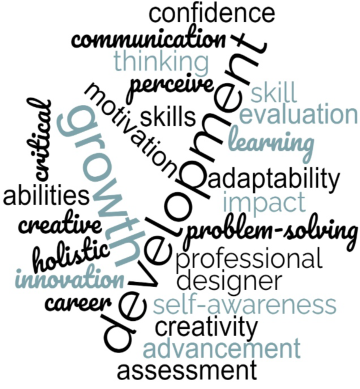
Figure 1: Word cloud of the reflection from the participants.
32 Ho
FINDINGS AND DISCUSSION As a result of the combined findings, those seeking to assess creativity within various educational contexts have the potential to provide a theoretical foun- dation for subsequent research. The data underscores the significance of accurately evaluating invention, critical thinking, and innovation around the globe and highlights the increasing need for more effective and empa- thetic assessment mechanisms. Below are several potential ways in which educational processes might ultimately be improved through the findings:
Enhancing Assessment Accuracy: In terms of assessing creativity, critical thinking, and innovation, the find- ings illustrate the critical importance of an accurate evaluation of these abilities. Future research should focus on those evaluation methods that accurately reflect these in different educational contexts and learning modalities. Doing this will provide educators with an accurate assess- ment of their students’ creative abilities and therefore will enable them to administer feedback with a precision that extends and deepens creative growth.
Integrating Multiple Evaluation Measures: The findings suggest that a multi-method approach will be necessary to capture the multidimensional nature of creativity. Future research should include the integration of numerous options for evaluation that may include portfolio reviews, peer assessments, and design-based activities. By using multiple evaluation methods, future assessments will capture diverse learners’ creative processes in a way that accurately reflects their overall performance.
Promotion of Critical Thinking and Problem-Solving: The data clearly emphasises the need for strategies and instructional approaches that promote critical thinking and problem-solving skills in educational settings. Research is needed to investigate instructional approaches and strategies that effectively develop these skills so that edu- cators can adequately prepare students for the challenges they face in complex real-world scenarios.
Empathy and Constructive Feedback: The findings suggest that constructive feedback is essential for encourag- ing student growth and development. Future research should explore the role of empathy in the assessment process, positioning assessment as both a vital tool in support of learning and an integral element of dynamic, creative education, which supports creativity and the constructive expres- sion of diverse talents. Research in this area can establish instructions of empathy as a foundation for instruction that supports creativity and critical thinking, risk-taking and continued return to the development of problem-solving constructs.
Contextual Relevance and Flexibility: The data emphasises the importance of recognising unique contextual elements when assessing students’ work in educational situations. Educa- tional units and programs evolve in different contexts and fields of study. Future research should explore the development of assessment frame- works that are flexible and considerate of diverse educational and cultural
Assessing Creativity in Higher Education: An Action Research Approach 33
contexts, affording educators the chance to fairly and accurately appraise the application of creativity, critical thinking and innovative principles in specific socio-cultural contexts.
Findings Expansion: The analysis is based on findings in the form of students’ responses to think-aloud interview questions about their answers to the hypothetical design prompts (e.g., ‘How does your prompt response illustrate some- thing you believe is true, beautiful, original, or well-explained?’) in this proof-of-concept work. Despite the growth of new schools and aca- demic programs focused on fostering creativity, student creativity is rarely assessed, particularly in core general education contexts of numerate sci- ence, technology, engineering, and mathematics (STEM) subjects. Many educators and scholars assume that student creativity is essential to achiev- ing complex thinking and innovation, but there are few means of assessing it. The parallel creation of hundreds of professional and academic def- initions of ‘creativity’ and dozens of means of assessing its presence, is evidence of how essential it is, but also of how elusive its definition and assessment can be.
To build on the above findings the importance of accurate evaluation, promoting critical thinking and innovation, fostering empathy and con- structive criticism, considering contextual relevance, and encouraging cross- disciplinary collaboration. Researchers can also use the expanding knowl- edge about students and other forms of creativity that cut across different academic disciplines from psychology, art, business – for example, ‘design thinking’– engineering and pure and applied science to harness their poten- tial to help each other improve their respective means of understanding and assessing creativity. At the same time as systematically marshalling and then critically challenging to produce innovation and improve on new ideas that emerge from these collaborations based on ‘transdisciplinary’ data analyses. Each of these competencies must be explicitly identified and assessed as soon as possible to promote their more widespread adoption in education and beyond.
CONCLUSION
In the evaluation of students’ creative processes, it is essential to implement innovative assessment methods that actively engage students by promoting deeper learning that considers creativity requires, whilst ensuring a reliable evaluation of creativity. The Consensual Assessment Technique (CAT) has been widely used within the scope of research, to evaluate the degree of cre- ativity of diverse creative products, and its extension to nonparallel creative products has been indicated. Additionally, as in the case of a modified CAT to assess creativity in teaching design, the validity, practicality and benefits afforded by the application of a modified CAT to evaluate creativity in educa- tional innovation were recently studied. Further, a methodology that assists in performing an ex-ante sustainability assessment of an innovation facil- itates decision-making and provides a self-evaluation basis for monitoring
34 Ho
the innovation’s process of implementation and for subsequent assessment of its performance. The findings of this study highlight the importance of accurately evaluating creativity, critical thinking, and innovation in various educational contexts. They emphasise the need for more effective and empa- thetic assessment mechanisms. To improve educational processes, the study suggests several ways to enhance assessment accuracy, integrate multiple eval- uation measures, promote critical thinking and problem-solving skills, foster empathy and constructive feedback, consider contextual relevance and flex- ibility, and expand findings. An accurate assessment of these competencies is crucial so that educators can give feedback with precision, stretching and deepening creative growth. A multi-method approach is necessary to capture the multidimensional nature of creativity including portfolio reviews, peer reviews, and design-based activities. Research can investigate instructional approaches that effectively grow these competencies so that students are best prepared for the complex, real-world scenarios in which we wish them to be creative. Constructive feedback is essential for helping students grow and develop and future research could explore how empathy can serve as a tool in the assessment of student creativity. Assessment should be seen as a rich tool for facilitating learning and be recognised as an integral component of the dynamic, rich environment of creative education. It is also important that assessment is relevant to the context in which students’ work and learning is situated and assessment methods are seen as flexible within particular edu- cational settings. As researchers’ expanding knowledge base about students’ and other forms of creativity across the academic disciplines is drawn on to unleash the potential of students from, across the nation, indeed around the world for their creativity across educational settings all will benefit from its potential and ability to assess creativity effectively. Researchers can be encouraged to use these five highly complementary sets of existing theories to understand creativity and innovation across their forms. They can design more research investigating each of these competencies and better understand their multiplication and intersection. These competencies can be used by edu- cational researchers working across disciplines when studying the work of the art student and how to assess it. Researchers can utilise these five sets of the- oretical knowledge to design transdisciplinary lines of research that can be situated in educational settings to identify and assess each of these compe- tencies so that students can be prepared with these highest of abilities at their disposition, in educational settings to unleash their potential into the world and our future.
REFERENCES
Al-Ramahi, N. M. and Odeh, M. (2020) ‘The Impact of Innovative Technology on the Quality Assurance at Higher Education Institutions in Developing Countries: A Case Study of Jordan’, International Journal of Information and Education Technology. Bolden, B. and DeLuca, C. (2022) ‘Nurturing Student Creativity Through Assessment
for Learning in Music Classrooms’, Research Studies in Music Education.
Assessing Creativity in Higher Education: An Action Research Approach 35
Chandra, P., Tomitsch, M. and Large, M. I. (2020) ‘Innovation Education Programs: A Review of Definitions, Pedagogy, Frameworks and Evaluation Measures’, European Journal of Innovation Management. Feng, X., Wang, S. and Fang, L. (2023) ‘Comprehensive Assessment Model of
Teachers’ Innovation Ability in Higher Vocational Colleges Based on Big Data’. Gong, L., Miao, Y., Zhao, Y., Li, A. and Ren, H. (2023) ‘Higher Vocational Students’ Innovation and Entrepreneurship Ability Demand Prediction’, International Journal of Emerging Technologies in Learning (Ijet). Ho, A. G. (2023a) ‘Connecting Emotion with Design Learning’, , pp. 586–592. Ho, A. G. (2023b) Emotion in the Design Process: Intrinsic Factors on Emotion
Management for Decision-making. CRC Press. Ho, A. G. and Chau, P. W. (2016) ‘Understanding the Capacity of Emotion in Decision making for Designers in Design Process Management’, International Journal of Design Management & Professional Practice, 10(4). Long, H., Kerr, B. A., Emler, T. E. and Birdnow, M. (2022) ‘A Critical Review of
Assessments of Creativity in Education’, Review of Research in Education. Malakate, A., Andriopoulos, C. and Gotsi, M. (2007) ‘Assessing Job Candidates’ Creativity: Propositions and Future Research Directions’, Creativity and Innovation Management. Wang, Q., Zhang, L.-N. and Lian, Q. (2022) ‘Innovation Facilitated by Universities:
Balancing Enterprise and Regional Demands’, Discrete Dynamics in Nature and Society. Zhao, D., Zhong, H., Wu, Y. and Zhou, Q. (2020) ‘A Study of the Impact of Internet-Based Instruction Integrated Innovation Education on University Stu- dent Entrepreneurial Team Collaboration and Strategic Innovation’, Frontiers in Psychology.
LISTED IN THE AHFE DIGITAL BOOKSTORE CATALOGUE
Explore the complete digital volume
Training, Education, and Learning Sciences
Read this individual research paper free through the original publisher, or explore the full digital proceedings book.
ISBN 978-1-964867-31-1
Explore this ISBN in the AHFE Bookstore ↗Listed in the July 2026 bookstore catalogue; search by ISBN to confirm current availability · Digital book purchase optional