Oskar Juszczyk (2023). The Impact of Blockchain on Future Business Models within the Renewable Energy Sector. In: Human Interaction & Emerging Technologies (IHIET 2023): Artificial Intelligence & Future Applications. AHFE Open Access, vol. 111, pp. 714–724. https://doi.org/10.54941/ahfe1004078
Blockchains, or distributed ledgers, are innovative information and communication technology (ICT) solutions that are emerging within various sectors and industries across the globe. This distributed ledger technology (DLT) is already widespread in certain sectors, mainly in the banking industry, often through corresponding banking, or syndicating and peer-to-peer (P2P) loans. Outstandingly, blockchain technology has the capability to enhance the transparency and authenticity of transactional processes throughout the whole supply chain. Another significant benefit that Blockchain technology provides, mainly coming from its transparent and decentralized nature, is the capability to decrease the information asymmetries among the collaborating partners. Through e.g. the digitalization of transactional mechanisms, decentralization of authority, Internet of Things (IoT) and asset management enabling as well as smart contracting, the improvement of the business's day-to-day operations is firmly forecasted. Importantly, the digitalization of the energy and other sectors will cause major alterations in current structures, and thus, it will require business model innovation. It is claimed that the decentralized nature of blockchain, mainly due to a reduction of middlemen could revolutionize current market structures and supply chains.Importantly, blockchain application is systematically growing across different industries, for instance in healthcare, voting systems, manufacturing, supply chain management, or luxury goods. It has also gained the attention of the energy industry, where digitalization is already visible in solutions such as smart meters and smart grids, electric e-mobility, vehicle-to-grid (V2G), energy cryptocurrencies and tokens, etc. This has resulted in the introduction of a novel concept of the Internet of Energy (IoE) in the academic literature. This literature analysis serves to determine the impact of blockchain on the imminent business models based on the renewable energy sector. The outcomes of this curiosity study provide numerous theoretical and managerial implications that can foster the widespread blockchain technology diffusion in global energy systems.
Emerging technologies are more often than not disruptive innovations that drive socioeconomic development. However, they usually require transformative adaptation from the business, technological, and regulatory
The Impact of Blockchain on Future Business Models Within the Renewable Energy Sector 715
environments. Nowadays, due to e.g. digitalization, globalization, and grow- ing shares of the middle and higher-middle class, there are increasing levels of energy demand. Fortunately, the global share of renewable energy sources is constantly growing, reaching record-breaking levels. Energy companies tend to increasingly follow the triple-bottom-line approach of societal, environ- mental, and economic value creation (Elkington, 1998), and governments perceive the long-lasting benefits of implementing renewables, i.e. energy security, sustainable development, independence from energy imports, or proficient use of indigenous resources. Additionally, numerous international policies include not only legally-binding requirements for limiting fossil fuels but also various incentives – financial, image-creating, socioeconomic, etc. (Juszczyk et al., 2022). However, renewables are often weather-depending, which causes challenges with their variability, dependability, and grid man- agement. Moreover, with the increased number of transactions, there is a need for a tool that could leverage them in a transparent, secure, and automated fashion.
It is rather evident that the transition towards the Industry 4.0 would not be available with the obsolete, centralized, and inefficient energy sys- tems of today. These numerous issues could be addressed through the widespread implementation of blockchain technology, which provides a distributed ledger that stores and manages transaction data across the net- work participants involved in those processes. It is also called distributed ledger technology (DLT) or Internet of Value, and its central feature is the decentralized nature of authority, which eliminates middlemen from transac- tional processes. This allows to perform such transactions in a more secure, transparent, auditable, efficient, and automated way. Blockchain has been first introduced in 2008 as a platform to support Bitcoin cryptocurrency (Nakamoto, 2008), however, its implementation goes way beyond the area of finance. Despite being a relatively novel technology, its successful adop- tion can be observed across various sectors of the economy, e.g. medicine, public (voting, taxes), insurance, industrial, luxury goods, supply chain man- agement, or energy (Bürer et al., 2019). Moreover, through the application of smart contracts, transactions are executed between the network partici- pants more efficiently based on standardized, previously established rules. As a result, blockchains can bring substantial added value to transaction data, which nowadays are a central feature of every business operation around the world (Tiscini et al., 2020). However, their practical implementation could not be appropriately examined yet due to e.g. infancy stage of technological development, lack of legal compliance, low levels of technological know-how, or a limited number of well-developed use cases (Juszczyk & Shahzad, 2022).
This article aims to bridge this gap by unveiling major opportunities com- ing from blockchain adoption within the renewable energy technologies (RETs) industry with a particular emphasis on its impact on current business models. As blockchain is a highly disruptive technology, it is firmly claimed in the literature that its implementation would require business model innova- tion (BMI) (Nowi´nski & Kozma, 2017; Morkunas, Paschen & Boon, 2019; Shahzad, 2020; Tiscini et al., 2020; Taherdoost & Madanchian, 2023). To thoroughly examine this phenomenon, the following sections of this article
716 Juszczyk
will discuss the concepts of business models, and business model innovation, including sustainable business model innovation, to examine the possible impact of blockchain utilization on different components of business models within the RETs industry.
Business Models – Sustainable Innovation Requirement A plethora of academic literature scrutinized the concept of the business model, agreeing that on a holistic level, it is a conceptual tool explaining how companies do business (Zott et al., 2011). In brief, it is a given organiza- tion’s system of processing inputs using its business activities into numerous outputs through creating, capturing, and delivering original value within a certain period of time (Osterwalder & Pigneur, 2010). Interestingly, it is claimed that every company performing operation in a competitive environ- ment has its own business model, even if it’s not explicitly recognized and stated (Chesbrough, 2007). Initially, three major components of the business model have been dominant in the literature, that were naturally following the original definition: 1) value delivery/proposition: the value embedded in the company’s core product; that is offered to its stakeholders 2) value creation: how value is generated and delivered 3) value capture: how value is mone- tized and distributed (e.g. Teece (2010), Tongur & Engwall (2014)). Another conceptualization distinguishes five key business model elements: 1) value proposition, 2) customer interface, 3) internal organization/key resources, 4) external value chain, and 5) profit equation/revenue streams (Zott et al., 2011; Huijben et al., 2016). According to a seminal study by Osterwalder and Pigneur (2010), business models typically comprise nine following elements concerning a given company’s customers, infrastructure, offer, and financial activity: 1) customer segments, 2) value proposition, 3) channels, 4) customer relationships, 5) key resources, 6) key activities, 7) key partnerships, 8) rev- enue streams, and 9) cost structure. If these elements are accurately mixed and proportioned, they can create and deliver substantial added value. This nine- element model has been named Business Model Canvas and it often serves as a practical tool to evaluate a given company’s business model (Morku- nas, Paschen & Boon, 2019). However, a holistic conceptual approach will be implemented in this study to examine the potential impact of blockchain technology on the business models of companies representing RET sector.
Nonetheless, to thoroughly address this phenomenon, there is a need to consider various sustainability-related aspects. Especially nowadays, when climate change and its adverse impact on the natural environment is influ- encing the quality of everyday life of societies across the globe, it is important to evaluate the necessity of sustainable business model innovation (SBMI) within modern companies. Sustainable business models (SBMs) differ from traditional BMs by carefully reflecting societal and environmental aspects of the daily operations of a given enterprise and thus can be determined as a source of a competitive advantage contributing to the sustainable develop- ment of the company and society, which creates a superior customer value (Geissdoerfer et al., 2018). SBMs, by emphasizing the role of sustainable development and the natural environment according to the concept of a
The Impact of Blockchain on Future Business Models Within the Renewable Energy Sector 717
triple-bottom-line, consider nature and society as stakeholders and often implement environmentally-friendly practices into a given firm’s culture, vision, and mission (Bocken et al., 2014; Joyce & Paquin, 2016). Such prac- tices can bring not only economic profits but also measurable, substantial societal and ecological value to a company and thus SBMs can be a source of a sustainability-based competitive advantage (Porter & Kramer, 2011). Through the observation of 20 case studies involving blockchain, Calandra et al. (2022) discovered four research clusters related to (1) smart energy management, (2) climate change, (3) waste management, and (4) sustain- able production. Furthermore, new business initiatives show that Blockchain can reduce costs by promoting SBMs strictly linked with the United Nations agenda and Sustainable Development Goals (SDGs). Therefore, it seems rea- sonable for companies to innovate their current business models through the lens of sustainability. It is even more evident within the energy and renewable energy sector, where the societal and political pressure to limit greenhouse gas emissions is visibly strong around the world.
Blockchain Technology as a Potential Game-Changer There are numerous studies suggesting blockchain as a prosperous technol- ogy that could bring multifarious benefits to the companies and industries implementing it. Blockchain, also known as distributed ledger technology (DLT) or Internet of Value is a technology that allows digital information cir- culation in a collective database that encompasses a continuously mounting log of transactions together with their chronological order. In other words, it is a ledger that may contain digital transactions, data records, and exe- cutables that are shared among blockchain-participating agents (Nakamoto, 2008; Andoni, 2019). Blockchains distinguish themselves from other extant information systems by four key features: non-localization (decentralization), security, provability, and smart execution (Teufel, 2020). This highly disrup- tive technology is the outcome of a decade’s efforts from “an elite group of computer scientists, cryptographers, and mathematicians” (Tucker, 2019).
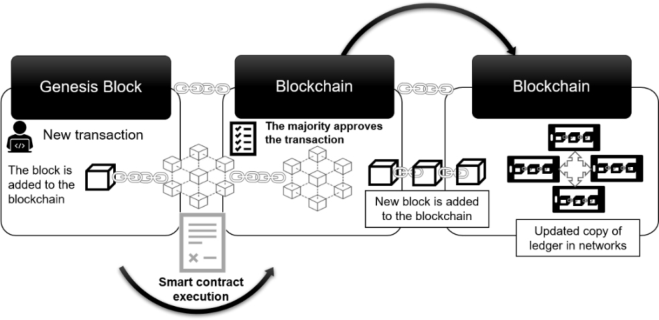
The usual process within blockchains is designed as follows. Initially, an agent generates a new transaction to be involved in the blockchain. This newly formed transaction is distributed within the network for validation and audit. Once this new transaction is approved by the superiority of nodes based on pre-determined and multilaterally established rules, this action can be shifted to the chain as a new block. A record of that transaction is stored in distinct nodes to ensure the safety of the whole system. Meanwhile, the smart contract, as a vital element of blockchain, enables trustworthy transactions to be completed without third parties’ involvement (Cong & He, 2019; Saberi et al., 2019). Figure 1 demonstrates this procedure.
Primarily, blockchain’s central feature is decentralization, which brings many opportunities to revolutionize current market structures and sup- ply chains. By excluding intermediaries from transactional processes, blockchains transfer the authority towards local partnerships, which creates more trust, higher auditability, and safety, and also strengthens and extends supply chains (Morkunas, Paschen & Boon, 2019). Decentralization brings
718 Juszczyk
more information legitimacy and integrity, as dominant, centralized, human- dependent information systems are prone to the risk of hacking, malfunction, or even fraud (Teufel et al., 2020). In blockchain-based systems, informa- tion and data are transparent, verifiable, and easily accessible to authorized users, whose anonymity can be ensured through, inter alia, cryptographic systems (Wang et al., 2019). Each new record has to be certified, verified, and validated by every network participant through consensus mechanisms such as proof-of-stake, proof-of-work, or other highly advanced and auto- mated mechanisms (Lashkari & Musilek, 2021). Furthermore, through the application of smart contracts, blockchains could help companies to lessen informational asymmetry as well as generate wealth and customer surplus by providing greater outreach and competition, although it should be noted that issuing information through consensus formation might cause grander complicity (Cong & He, 2019). Importantly, blockchain, as a highly inno- vative technology, can enable and be supported by novel, digital solutions (such as the Internet of Things, ICT, or smart execution) that could drive a transition toward Industry 4.0 in a fast-paced, automated, and sustain- able way (Hafeez, Juszczyk & Takala, 2021). In spite of the limited amount of use cases yet, it is believed that blockchains could contribute to circular economy practices, renewable energy market development, and sustainable development (Andoni et al., 2019; Upadhyay et al., 2021).
Figure 1: Key steps in the blockchain. (Adapted from Juszczyk & Shahzad, 2022.)
Despite having many prosperous benefits, blockchains are not without flaws. First of all, there is a strictly technological issue of scalability and speed of transactions, which are limited accordingly to the ever-growing numbers of input to process (Zhou et al., 2020). According to the widely recognized phenomenon of blockchain trilemma, current DLT systems can ensure only two of their three features at once: either 1) ultimate blocks decentralization, 2) security of the system and its resilience to cyberattacks, or 3) system scalability, understood as technical capability of processing an ever-increasing number of transactions within a given time (Di Silvestre et al., 2020). Another significant bottleneck is the lack of legal and regula- tory compliance that would support the wider implementation of blockchains globally. Major concerns of politicians and legal authorities come from the
The Impact of Blockchain on Future Business Models Within the Renewable Energy Sector 719
unknown and unresolved legal status of smart contracts as well as potential threats coming from cyberattacks and personal data leakage. Therefore, more focused effort is required to enhance the widespread diffusion of blockchains through technical improvements, education, and awareness-raising actions, as well as bottom-up initiatives that would put societal pressure on govern- ments to introduce supportive regulatory frameworks for blockchain. This, in turn, causes a relatively low or even infancy stage of technological devel- opment of blockchains and a limited number of use cases across industries, which significantly hampers the swift and rapid establishment of solutions to these numerous problems, and in consequence, more extensive adoption of blockchain technology.
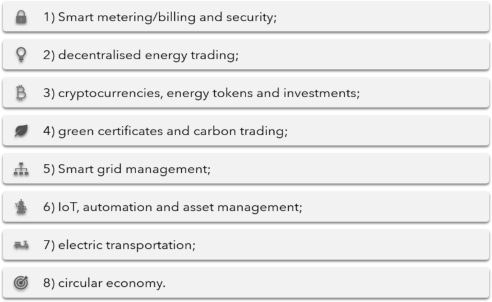
BLOCKCHAIN FOR RENEWABLE ENERGY AND THE IMPACT ON BUSINESS MODELS Blockchain technology has gathered considerable attention across various industries. In the case of the energy market, blockchains have already con- tributed to the emerging concept called the Internet of Energy (IoE) (Miglani et al., 2020) that enables transparent, decentralized energy prosumer net- works, including energy trading platforms (Hwang et al., 2017). There have been several successful applications of blockchain in the energy industry, where improvements provided by this technology fostered the energy transi- tion and circular economy initiatives through e.g. novel solutions for electric e-mobility, energy democratization, P2P energy trading platforms, demand- response mechanisms, smart metering, smart grid management, automation of green certificates issuance and carbon trading, etc. (Andoni et al., 2019; Teufel et al., 2020; Juszczyk & Shahzad, 2022). In essence, as Wang and Su (2020) emphasized, blockchain can provide three major benefits for the energy sector, which are 1) decentralized energy trading and energy supply, 2) effective, automated control of energy and storage flows through smart contracts, and 3) secure record of all the business activities in the energy industry. Figure 2 highlights the possible contributions of blockchain to the development of the renewable energy industry.
Figure 2: Highlighted applications of blockchain within the RET industry. (Adapted from Juszczyk and Shahzad, 2022).
720 Juszczyk
Next, the exemplifications of various applications of blockchain are dis- cussed through the lens of their potential impact on future business models of RET companies. A holistic conceptual approach towards value generation, proposition, and capture serves to scrutinize the influence of blockchain on business models.
CONCLUSION
On a general level, the benefits of implementing blockchain can include significant cost savings due to faster transaction times, disintermediation, fewer record-keeping concerning customers due to distributed ledger tech- nology, as well as enhanced data traceability and authentication. Through a decentralized technique that restricts a single central organization from monopolizing information, blockchain could foster the accomplishment of a more objective and equitable consensus. A blockchain-based business model has a decentralized structure, operates in a secure network, and is based on peer-to-peer transactions, which are the three main characteristics of blockchain technology. Adopting blockchains may cause companies to re- evaluate and/or reformulate their existing business models, which could boost their profitability, productivity, and efficiency (Bürer et al., 2019). By using blockchain, companies could significantly improve their forecasting, optimization, scheduling, planning, management, and resource allocation operations (Taherdoost & Madanchian, 2023). Through the application of blockchain, companies can perform sustainable business model innovation that could contribute to improvements in, inter alia, environmental manage- ment, supply chain and transaction costs reduction, investments and social entrepreneurship, or innovation and intellectual capital management (Calan- dra et al., 2022). Also, the usage of blockchain could attract new business partners such as information technology companies developing application programming interfaces (APIs) as well as software development kits (SDKs), and sustain transactional algorithms (Morkunas, Paschen & Boon, 2019).
When it comes to energy, and more specifically, RET industry that is decen- tralized in nature, distributed energy trading offers numerous benefits. First and foremost, decentralized energy trading based on peer-to-peer platforms allows customers more direct access to the ‘product’, drastically reduces (or in other words, revolutionizes) energy supply chains by removing the inter- mediaries, which has a huge potential significantly reduce the cost of this product, delivery time, and improve overall efficiency (Juszczyk & Shahzad, 2022). This all is ensured by smart contracts, which automate the verifica- tion and execution of energy transactions in a transparent, interoperable, and trustworthy way. Smart contracts can help in smart grid management and enhancement of Internet of Things (IoT) solutions, which can result in improvements in supply-demand balancing, adequate and automated billing through smart metering, grid asset management, or delivery system coor- dination (Mengelkamp et al., 2018). Moreover, customers are encouraged to play a more active role in the energy market, which creates the possibil- ity to become energy prosumers (understood as the energy producers and consumers concurrently), form local energy communities (so-called energy
The Impact of Blockchain on Future Business Models Within the Renewable Energy Sector 721
crowds (Teufel & Teufel, 2014)), and new markets allowing low-volume and limited-cost transactions, which were significantly restricted before. Such prosumer-based energy markets, particularly visible in the solar PV sector, can not only offer enhanced grid flexibility but also transparency about energy provenance and quality, which is ensured through the automation of green certificates and carbon trading issuance (Huijben et al., 2016). Such enhancements in societal awareness could lead to more intensified market competition as well as energy democratization (Brilliantova & Turner, 2019). Last, decentralized P2P energy trading platforms could form local microgrids, which again can lead to the generation of new revenue streams and the lim- itation of the cost of the product for end-customers (Andoni et al., 2019; Esmat et al., 2021).
Furthermore, as blockchain is mostly used in the financial sector, energy cryptocurrencies and tokens can serve as incentive mechanisms for more sus- tainable actions and green investments, which has the potential to influence current revenue streams, management of assets, and client interface. Addi- tionally, blockchains seem to have natural applications in the area of electric e-mobility, which will require more efficient solutions improving, among others, charging speed and availability, user-friendliness, or on-demand car-sharing platforms. Especially in the field of fast and shared charging infrastructure blockchain has its most promising utilization scenario, as it provides transparency about the charging prices, facilitated payments through blockchain wallets, vehicle security and tamper-proof defense from cyberattacks, or a unique communication and validation universal platform allowing cross-border mobility.
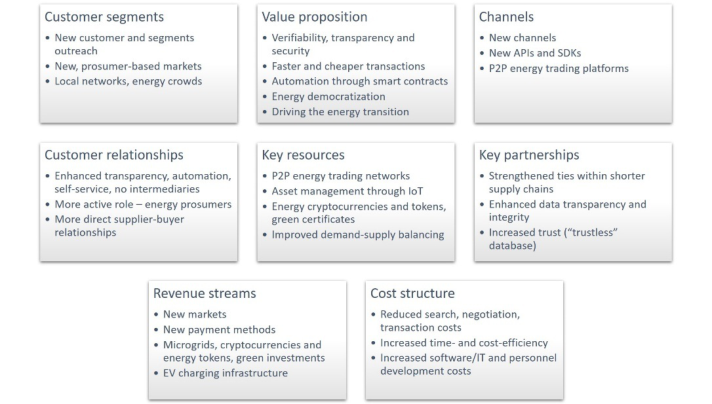
Figure 3: Blockchain-based business models within the RET industry.
Lastly, blockchains can significantly contribute to sustainable and circular economy practices and thus, be among the key drivers of energy transition. Notably, blockchains could have a major impact on sustainable supply chain
722 Juszczyk
management, e.g. through tracking mechanisms allowing to detect the ori- gin of raw materials, location of production, means of storage, or providing transparent information about faulty or subnormal goods or even unethi- cal labor practices (Saberi et al., 2019; Shahzad, Juszczyk & Takala, 2022). In manufacturing, blockchains could help in spare parts tracking, inventory monitoring, or shipping automation, which could lead to significant improve- ments in cost- and time-efficiency of operational and repair activities. In the circular economy, blockchains could act as a social tool to foster waste reduction, reuse, and recycling through their capability of transparent, coor- dinated, and decentralized traceability of such operations (Upadhyay et al., 2021). This could result in the reconsideration of the concept of value cre- ation and capture by considering a decentralized way of value generation and circulation (Narayan & Tidström, 2020).
Figure 3 summarizes the outcomes of this study based on Business Model Canvas (Osterwalder & Pigneur, 2010).
REFERENCES
Andoni, M., Robu, V., Flynn, D., Abram, S., Geach, D., Jenkins, D.,... & Peacock, A. (2019). Blockchain technology in the energy sector: A systematic review of challenges and opportunities. Renewable and Sustainable Energy Reviews, 100, 143–174. Bocken, N. M., Short, S. W., Rana, P., & Evans, S. (2014). A literature and prac-
tice review to develop sustainable business model archetypes. Journal of Cleaner Production, 65, 42–56. Brilliantova, V., & Thurner, T. W. (2019). Blockchain and the future of energy.
Technology in Society, 57, 38–45. Bürer, M. J., de Lapparent, M., Pallotta, V., Capezzali, M., & Carpita, M. (2019).
Use cases for blockchain in the energy industry opportunities of emerging business models and related risks. Computers & Industrial Engineering, 137, 106002. Calandra, D., Secinaro, S., Massaro, M., Dal Mas, F., & Bagnoli, C. (2022). The link between sustainable business models and Blockchain: A multiple case study approach. Business Strategy and the Environment, 1-15. Casino, F., Dasaklis, T. K., & Patsakis, C. (2019). A systematic literature
review of blockchain-based applications: Current status, classification and open issues. Telematics and informatics, 36, 55–81. Chesbrough, H. (2007). Business model innovation: it’s not just about technology anymore. Strategy and Leadership, 35(6), 12–17. Cong, L. W., & He, Z. (2019). Blockchain disruption and smart contracts. The
Review of Financial Studies, 32(5), 1754–1797. Di Silvestre, M. L., Gallo, P., Guerrero, J. M., Musca, R., Sanseverino, E. R., Sciumè, G.,... & Zizzo, G. (2020). Blockchain for power systems: Current trends and future applications. Renewable and Sustainable Energy Reviews, 119, 109585. Elkington, J. (1998). Partnerships from cannibals with forks: the triple bottom line
of 21st-century business. Environmental Quality Management, 8(1), 37–51. Esmat, A., de Vos, M., Ghiassi-Farrokhfal, Y., Palensky, P., & Epema, D. (2021).
A novel decentralized platform for peer-to-peer energy trading market with blockchain technology. Applied Energy, 282, 116123. Geissdoerfer, M., Vladimirova, D., & Evans, S. (2018). Sustainable business model innovation: A review. Journal of Cleaner Production, 198, 401–416.
The Impact of Blockchain on Future Business Models Within the Renewable Energy Sector 723
Hafeez, S., Juszczyk, O., & Takala, J. (2021). A Roadmap for successful IoT implementation: empirical evidence from the energy industry. Issues in Information Systems, 22(1), 92–113. https://doi.org/10.48009/1_iis_2021_92-113 Huijben, J. C. C. M., Verbong, G. P. J., & Podoynitsyna, K. S. (2016). Mainstream-
ing solar: Stretching the regulatory regime through business model innovation. Environmental Innovation and Societal Transitions, 20, 1–15. Hwang, J., Choi, M. I., Lee, T., Jeon, S., Kim, S., Park, S., & Park, S. (2017). Energy prosumer business model using blockchain system to ensure transparency and safety. Energy Procedia, 141, 194–198. Joyce, A., & Paquin, R. L. (2016). The triple layered business model canvas: A tool
to design more sustainable business models. Journal of Cleaner Production, 135, 1474–1486. Juszczyk, O., Juszczyk, J., Juszczyk, S., & Takala, J. (2022). Barriers for renewable energy technologies diffusion: Empirical Evidence from Finland and Poland. Energies, 15(2), 527. Juszczyk, O.; Shahzad, K. (2022). Blockchain Technology for Renewable Energy:
Principles, Applications and Prospects. Energies, 15, 4603. Lashkari, B., & Musilek, P. (2021). A comprehensive review of blockchain consensus mechanisms. IEEE Access, 9, 43620–43652. Mengelkamp, E., Notheisen, B., Beer, C., Dauer, D., & Weinhardt, C. (2018). A
blockchain-based smart grid: towards sustainable local energy markets. Computer Science-Research and Development, 33(1), 207–214. Miglani, A., Kumar, N., Chamola, V., & Zeadally, S. (2020). Blockchain for Internet of Energy management: Review, solutions, and challenges. Computer Communications, 151, 395–418. Morkunas, V. J., Paschen, J., & Boon, E. (2019). How blockchain technologies
impact your business model. Business Horizons, 62(3), 295–306. Nakamoto, S. (2008). Bitcoin: a peer-to-peer electronic cash system. Available from: https://bitcoin.org/bitcoin.pdf (accessed on 15.4.2023). Narayan, R., & Tidström, A. (2020). Tokenizing coopetition in a blockchain for a
transition to circular economy. Journal of Cleaner Production, 263, 121437. Nowi´nski, W., & Kozma, M. (2017). How can blockchain technology disrupt the existing business models?. Entrepreneurial Business and Economics Review, 5(3), 173–188. Osterwalder, A., & Pigneur, Y. (2010). Business model generation: a handbook for
visionaries, game changers, and challengers (Vol. 1). John Wiley & Sons. Porter, M. E. & Kramer, M. R. (2011). Creating shared value. Harvard Business Review, 89(1/2), 62–77. Saberi, S., Kouhizadeh, M., Sarkis, J., & Shen, L. (2019). Blockchain technology and
its relationships to sustainable supply chain management. International Journal of Production Research, 57(7), 2117–2135. Shahzad, K. (2020). Blockchain and Organizational Characteristics: Towards Business Model Innovation. In: Markopoulos, E., Goonetilleke, R., Ho, A., Luximon, Y. (eds) Advances in Creativity, Innovation, Entrepreneurship and Communica- tion of Design. AHFE 2020. Advances in Intelligent Systems and Computing, 1218. Springer, Cham. Shahzad, K., Juszczyk, O., & Takala, J. (2022). Innovative and Sustainable Logistics:
Main Direction of Development. In Sustainable Logistics (pp. 3–27). Routledge. Taherdoost, H., & Madanchian, M. (2023). Blockchain-Based New Business Models: A Systematic Review. Electronics, 12(6), 1479.
724 Juszczyk
Teece, D. J. (2010). Business models, business strategy and innovation. Long Range Planning, 43, 172–194. Teufel, B., Sentic, A., & Barmet, M. (2020). Blockchain energy: Blockchain in future
energy systems. Journal of Electronic Science and Technology, 100011. Teufel, S., & Teufel, B. (2014). The crowd energy concept. Journal of Electronic Science and Technology, 12(3), 263–269. Tiscini, R., Testarmata, S., Ciaburri, M. and Ferrari, E. (2020). The blockchain as a
sustainable business model innovation. Management Decision, 58(8), 1621–1642. Tongur, S., & Engwall, M. (2014). The business model dilemma of technology shifts.
Technovation, 34(9), 525–535. Truby, J. (2018). Decarbonizing Bitcoin: Law and policy choices for reducing the energy consumption of Blockchain technologies and digital currencies. Energy research & social science, 44, 399–410. Tucker, C. (ed.) Blockchain: The Insights You Need from Harvard Business Review,
HBR Insights Series, Harvard Business Press, 2019. Upadhyay, A., Mukhuty, S., Kumar, V., & Kazancoglu, Y. (2021). Blockchain technology and the circular economy: Implications for sustainability and social responsibility. Journal of Cleaner Production, 126130. Wang, L., Shen, X., Li, J., Shao, J., & Yang, Y. (2019). Cryptographic primitives in
blockchains. Journal of Network and Computer Applications, 127, 43–58. Wang, Q., & Su, M. (2020). Integrating blockchain technology into the energy sector—from theory of blockchain to research and application of energy blockchain. Computer Science Review, 37, 100275. Zhou, Q., Huang, H., Zheng, Z., & Bian, J. (2020). Solutions to scalability of
blockchain: A survey. Ieee Access, 8, 16440–16455. Zott, C., Amit, R. and Massa, L. (2011). The business model: recent developments and future research. Journal of Management, 37(4), 1019–1042.
Read this individual research paper free through the original publisher, or explore the full digital proceedings book.
ISBN 978-1-958651-87-2
Explore this ISBN in the AHFE Bookstore ↗Listed in the July 2026 bookstore catalogue; search by ISBN to confirm current availability · Digital book purchase optional