Xinyue Zhang (2023). Research Hotspots and Trend Analysis of User Experience Design for Healthcare Service System. In: Usability and User Experience. AHFE Open Access, vol. 110, pp. 416–427. https://doi.org/10.54941/ahfe1003216
International Organization for Standardization(ISO) defines user experience as the perceptions and responses of users about the usage or anticipated use of a system, product, or service. The notion of "patient-centred" service has steadily evolved over the last several years, focusing on user experience in the healthcare service system. Current research on user experience in healthcare service systems integrates topics such as psychology, design, and engineering. It is impossible to conduct an impartial analysis of this multidisciplinary topic based on a survey of the traditional literature due to the complexity and volume of the reference material. This study utilises bibliometrics to visualise the retrieved data's knowledge structure and structure of the retrieved data and to offer a foundation for future research in the area of user experience design for healthcare service systems.The information for this research comes from the Web of Science. The search strategy was TS=((User Experience)AND(Medical Services OR Medical Products OR Medical Diagnostic Equipment)), and the search sources were the five primary citation indexes typically utilised in the WOS database: SSCI, SCI-Expanded, A&HCI, CPCI-S and CPCI-SSH. During the search process, the sources had to be modified or eliminated to prevent the loss of interdisciplinary literature. The search results were produced as "complete records and cited references" text files. Manual screening is used to screen out publications that diverge from the subject of the study, lack on-site information (e.g., time, keywords, authors, and other crucial information), include duplicate data, or are otherwise distracting. For additional quantitative analysis, a total of 2030 articles were retrieved.This work employs a mix of bibliometrics, content analysis, and information visualisation, as proposed by Pritchard in 1969: bibliometrics may assist in identifying patterns and information in vast volumes of literature via quantitative analysis of all sorts of literature. The study also used a combination of two bibliometric tools, CiteSpace and VOSviewer, to examine keyword co-occurrence analysis and literature co-citation in the cited literature and to map the associated scientific information to visualise research paths and frontier regions.The results of the study indicate that: 1. From a macro perspective, the number of documents in the search area is increasing and will remain a key research direction in the academic community; 2. From the perspective of the number of articles published, the UK, the US, China, and Canada are leading the research in this field; kings coll London, Mcmaster univ, Boston univ and other institutions are more active, but there are few high-producing institutions, and eastern Europe is the least productive region. The need for more collaboration between research institutions and between institutions and writers and the shortage of prolific authors represent the most significant research limitations. 3.The disciplines of "healthcare," "experience," "mental health," "services," "telemedicine," "patient satisfaction," "impact," and "schizophrenia" are varied and strongly interrelated. Nonetheless, this topic's fundamental study has generated many great works.
User experience is the subjective impression formed by the user’s engagement in the interaction process (Zhou, 2014). In the societal context of the new pandemic, continual optimization of the user experience design of healthcare system has become a fundamental demand for enhancing the quality of life for individuals (Duan, 2021). The core service idea of “patient-centeredness”has steadily evolved in today’s healthcare system to improve hospitals’ manage- ment effectiveness and service quality (Liu, Liu and Gin, 2017). Consequently, studying user experience in healthcare service system has garnered a growing amount of scholarly interest.
After 32 years of accumulation, from 1991 to the present, the literature on this topic is vast and increasingly characterised by diverse knowledge system and intricate interdisciplinary content. It is challenging to conduct an impar- tial analysis of the research hotspots, changes, and development dynamics in this topic based solely on a survey of the conventional literature (Shi and Li, 2019). To acquire a deeper comprehension of the present state, hotspots, and
Research Hotspots and Trend Analysis of User Experience Design 417
growth patterns of user experience research in healthcare service system. The relevant literature stored in the WOS database serves as the data source for this investigation. Using bibliometrics showed the knowledge structure of the gathered data. It offers direction for future study in user experience design in healthcare service system.
RESEARCH DESIGN Data Sources
For this investigation, the Web of Science core database was utilised. The search technique was TS=((User Experience)AND(Medical Services OR Medical Products OR Medical Diagnostic Equipment)), and the five most frequently used citation indexes in the WOS database were chosen as the search source. The search time path was configured to include the entire year (i.e. 1901 onwards to December 2022). In order to prevent the loss of multi- disciplinary literature, the sources were not refined or eliminated during the search process, and the search results were exported as “full records with cited references” in text files. To verify the relevancy of the articles, the study was carefully filtered to eliminate articles that diverged from the topic of the study, lacked on-site information (e.g., time, keywords, authors etc.), and had duplicate data. In order to do additional quantitative analysis, 2104 articles were obtained.
Research Methodology This article employs bibliometric, content analysis, and information visu- alisation techniques. The bibliometric method permits the extraction of probable patterns and data from the huge quantity of available literary con- tent (Pritchard, 1969). CiteSpace and VOSviewer are used to analyse the cited literature in keyword co-occurrence analysis and literature co-citation and to visualise research orientations and frontiers by constructing the related scientific knowledge maps.
ANALYSIS OF THE RESULTS OF A BIBLIOMETRIC APPROACH TO USER EXPERIENCE RESEARCH IN HEALTHCARE SERVICE SYSTEM Trends in the Output of the Literature on User Experience Research in Healthcare Service System
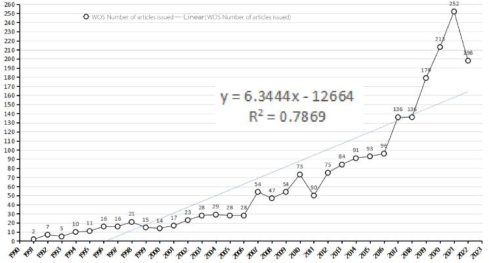
Counting the production of academic literature as it evolves with events is one of the most effective techniques to gauge changes in research subject trends and may effectively evaluate the research dynamics of a field (Li et al., 2019). In this study, data were extracted from the WOS database, and Figure 1 was produced (the full year is 2022, as 2023 is not a full year). Figure 1 demonstrates that the overall output of academic literature is on the rise and has risen sharply over the past six years, indicating that user experience has gained significance in healthcare service system in recent years.
There have been three stages in the evolution of UX research in healthcare service system: inception, growth, and maturity. 1991 marked the publication
418 Zhang
Figure 1: Annual output distribution of literature on user experience research in healthcare service system.
of the first paper in the hunt. The initial phase of UX research in health- care service system occurred between 1991 and 2006, with an average of 17 articles per year and a limited and moderate growth rate. 2018–2022 is the growth period of research, with an average of 195.6 articles per year and a large increase in the number of publications. 2013–2022 is the phase of rese- arch maturity, with an average of 195,6 articles each year. 2022 is a maturity phase, with average particle counts of 148 and a high of 252 in 2021.
An Analysis of User Experience Research Institutions and Highly Productive Authors in Healthcare Service System According to the search results, 1,648 institutions worldwide have studied the user experience of healthcare service system. The size of the graph’s nodes symbolizes the number of papers published. At the same time, the length of the lines between institutions indicates the extent of collaboration, with broader lines signifying tighter collaboration. International collaboration is emphasised heavily in terms of the strength of links within each sub-network. Three significant subgroups of cooperation, including King’s University Lon- don, the University of British Columbia, and the University of Toronto, demonstrate the importance of international collaboration. The University of Toronto and King’s College London are the two largest collaborating subgroups, demonstrating “regional concentration and global dispersion.” Within the search, kings coll London (16 articles), NIV British Colum- bia (13 articles), univ Toronto (12 articles), univ Sydney (11 articles), and univ Michigan (11 articles) were the top five universities for user experience research on healthcare service system.
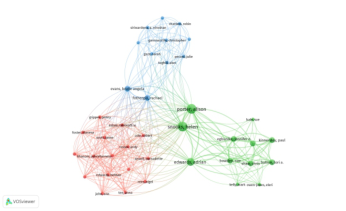
Authors are the lowest literary production unit and directly contribute to academic study (Chen et al., 2022). The greatest sub-network of author outputs and collaborations in the area was recovered by de-duplicating the authors and doing a co-citation analysis (see Figure 2). Porter, Alison (4 publications, 41 citations), snooks, Helen (4 publications, 41 citations), Edwards, Adrian (3 publications, 31 citations), Bowden, sue (2 publica- tions, 32 citations), and button, Lori a. were the top 5 authors in the academic research community (2 publications, 32 citations). As stated, these
Research Hotspots and Trend Analysis of User Experience Design 419
Figure 2: Author co-current network.
writers rank first in terms of overall literature and citations in the sea- rch. They are the primary authors of academic user experience research in healthcare service system. As seen in Figure 2, one of the drawbacks of the current research phase is that scholarly collaboration is erratic and infrequent.
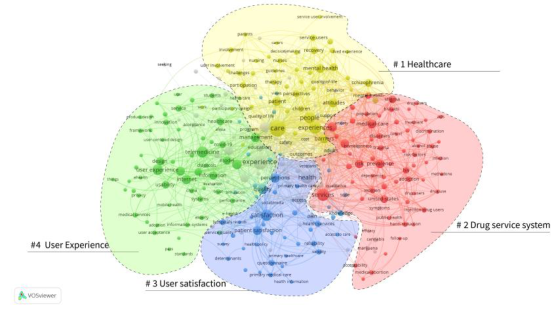
A Review of Current Research on User Experience in Healthcare Service System The literature’s keywords offer a high-level description of the author’s rese- arch, and their high-frequency co-occurrence demonstrates a long history of learning hotspots in the subject (Chen et al., 2022). The searched arti- cles had a total of 4433 keywords, and the keywords in the same colour in the figure create four primary clusters for the same cluster (see Figure 3). Based on the analysis findings, the hottest research issues on user experi- ence design in healthcare service design can be categorised into four pri- mary groups: healthcare, drug service system, user happiness, and user experience.
Cluster 1 - Medical health has 45 members, including psychiatry, cancer, disease, patient, mental health, schizophrenia, medical-students meta- analysis, treatment, and more. In terms of frequent keywords, the clusters
demonstrate a pluralistic and inclusive attitude, with a greater empha- sis on the requirements of various diseases and patient subgroups, such as cancer and mental health. According to Greene et al. (Greene, Tuz- zio and Dan, 2012), the ‘person-centred’ idea in the healthcare service system is based on the population’s needs (Dai, 2022). Greene et al. (2012) claim that the notion of ‘person-centeredness’ in healthcare service System is based on the population’s requirements, habits, and health concerns to give patients customised, individualised health service options (French, 2003).
Cluster 2 - Drug Service System comprises a total of 65 cluster mem- bers, most of which contain the terms drug adherence, drug abuse, drug use, drug users, injection drugs, and trauma. Cluster 2’s research hotspot may be summarised as drug adherence research by combining the features of the fre- quently occurring terms. Medicine adherence refers to the consistency with which patients take medication, eat, or alter other aspects of their lifestyles by medical instructions (Zhou and Yao, 1995). It may be categorised as follows: full adherence, partial adherence (missed doses, excessive dosages, not taking medicine at the specified time, etc.), and complete non-adherence (not taking medication at all) (Du, Wang and Ran, 2004). Enhancing patients’ adherence to medicine can increase the efficacy of the medication and facilitate efficient therapy (Zhou and Yao, 1995).
Cluster 3 - user satisfaction consists of 47 cluster members, the majority of which are user satisfaction, patient satisfaction, survey, alternative medi- cine, service quality, health information, etc. User satisfaction is a vital aspect of the healthcare service system. It is frequently stated as a specific emoti- onal attitude of the user during the process of using a healthcare product, which leads to an evaluation of the healthcare service product as a whole (Yao and Deng, 2017). In the healthcare industry, user happiness is frequen- tly utilised as a proxy for product acceptance, with a favourable experience fostering customer loyalty and continuous usage and vice versa (Kotler and Keller, 2012).
Cluster 4 - User experience comprises 56 research, the majority of which are user experience, e-health, usability, patient experience, product design, service, and telehealth. First, the cluster focuses on the user, with a special emphasis on user experience and usability assessment in E-health research. User experience refers to all the sensations, perceptions, assistance, and expe- riences a product provides the user before, during, and after usage (Farinango et al., 2018). The academic study defines usability as the capacity of a mate- rial thing to be utilised (Bevan, Carte and Harker, 2015). Moreover, usability is frequently regarded as a component of UX and used to evaluate the UX experience in real-world apps (Farinango et al., 2018). Second, the cluster has a high degree of inclusion, encompassing various demographics and focu- sing on particular groups such as the elderly, children, and sick (Wildenbos, Peute and Jaspers, 2018). Due to its user group’s distinctiveness and the pro- duct system’s complexity, healthcare System as life-saving designs frequently demand high usability metrics in system design scenarios (Bitkina, Kim and Park, 2020).
Research Hotspots and Trend Analysis of User Experience Design 421
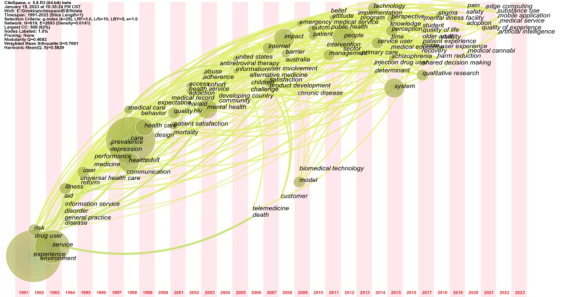
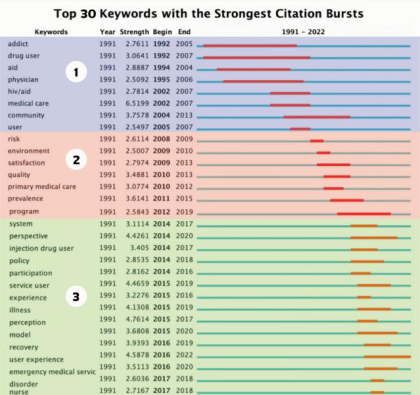
Analysis of Cutting-Edge Trends in User Experience Research in Healthcare Service System To further study cutting-edge themes and trends in user experience research in healthcare service System, the average occurrence time of keywords was statistically analysed to produce the Keywords’ Timezone Map (see Figure 4) and the keyword Burst Term (see Figure 5). The Keywords’ Timezone Map may graphically display the evolution of themes and keyword patterns in each period within the scope of the search, making it easy for academics to analyse (Kim, Nussbaum and Gabbard, 2019). From 1991 to 2023, the trend shifts from drug usage to treatment analysis of specific diseases and demographics to user experience and satisfaction, as seen in Figure 4. The years 2018–2022 have the highest concentration of high-frequency keywords, indicating that this is a golden age for user experience research in healthcare service system. From 2018 to 2022, 978 papers on this topic were published (136 in 2018,
179 in 2019, 213 in 2018, 252 in 2019, 252 in 2020, 198 in 2022 and, as of early January, 2 in 2023). These data represent the most recent heal- thcare service system implementations of user experience research. In this timeframe, frequent terms include user experience (131 occurrences), care (99 occurrences), health (57 occurrences), service user (55 occurrences), happi- ness (48 occurrences), telemedicine (45 occurrences), qualitative research (40 occurrences), etc. The high-frequency keywords show that the study topic of user experience in healthcare service system is mostly concerned with user experience, user satisfaction, and healthcare service system.
Common ways for analysing the temporal dimension brought by keywords include the Timezone map and Burst keyword map high-density emerge- nce, which may be cross-referenced for more objective and reliable findings (Kleinberg, 2003). The dark red portion of the year progress bar in Figure 5 denotes the years in which the keywords were quoted more often. The chro- nology reveals that the WOS research hotspots are separated into three periods. The evolution of keywords over the three intervals reveals that the keywords in the first interval are primarily associated with medical and pharmaceutical services. The keywords in the second interval are primarily associated with user satisfaction. The keywords in the third interval are pri- marily associated with user experience research. From the first to the third stage, there is a progressive shift from product services to user experience, consistent with temporal keyword clustering results. User experience, reco- very, model, disease, emergency medical service, problem, and nurse were among the high-intensity emergent keywords that arose in the previous five years and remained popular until 2022.
The combined analysis in Figures 4 and 5 indicates that future research on user experience in healthcare service system will concentrate on user expe- rience, illness care, and model in that sequence. In addition, the emerging trend in healthcare emphasises personalised and distinct user experiences. In addition, emergency medical care and disease will continue to be the subject of future study.
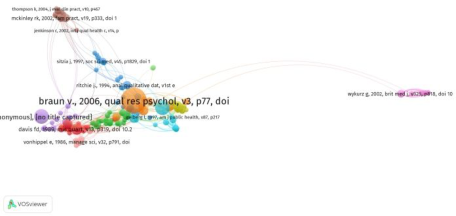
An Investigation of the Theoretical Underpinnings of User Experience Research in Healthcare Service Systems This study presents an in-depth examination of the content of the collected literature to analyse better the research paradigm of user experience in heal- thcare service system. The co-citation network illustrates the progression of the underlying knowledge level (Chen et al., 2022). The articles in the sea- rch universe included 32,373 legitimate references, with 173 nodes emerging when the threshold was set to 4 (see Figure 6). Table I displays the highly referenced literature in this field. The paper with the highest ranking Using theme analysis in psychology, regarded as the standard research literature in this field.
Virginia Braun and Victoria Clarke (2006) address the virtues and disa- dvantages of theme analysis, its usage in qualitative data analysis, and its use in psychology (Braun and Clarke, 2006). In a 1995 paper, Ronald M. Ander- sen analyses its evolution and evaluates its ongoing significance (Andersen,
Research Hotspots and Trend Analysis of User Experience Design 423
1995). In a 1989 report, Davis FD. The TAM model is frequently used to assess client acceptance of new technologies or products (Gunderson et al., 1967). The model’s five most significant components are highlighted: actual behaviour, behavioural goals, attitudes, perceived usefulness, and percei- ved ease of use (Guest, Bunce, and Johnson, 2006). The model approach is frequently employed to investigate and assess human-computer trust, user intention to use, user well-being, and system usability (Lincoln and Guba, 1985; McKinley et al., 2002; Pritchard, 1969). The authors of Merrill MD et al. 2002.’s study on mutual mistrust in medical treatment for drug users analysed caregiver-patient interactions and performed qualitative interviews with drug-using patients and physicians. The study mentioned above iden- tified drug-using patients’ most significant problems while interacting with physicians in an educational hospital setting (Fornell and Larcker, 1981). Fornell and Larcker (1981) devised a testing technique based on shared variance testing of structural, measurement, and global models. Also done were unprecedented statistical assessments for variance and measurement error in structural equation models (Gunderson et al., 1967). In their 1967 article, Gunderson et colleagues, studied “natural experience” utilising cur- rent genetic, chromosomal, and radiological technologies to examine genes, inheritance, and disease (Guest, Bunce and Johnson, 2006).
How Many Interviews Are Sufficient?: An Experiment with Data Satura- tion and Variability is a 2006 article published in Field techniques by Guest, Bunce, and Johnson. The authors acquired data through in-depth intervi- ews with sixty women from West African nations. The data saturation and variance in theme analysis were exhaustively reported (Lincoln and Guba, 1985). 1985 saw the publication of Naturalistic inquiry by Lincoln and Guba. This book demonstrates how science is governed by its dominant paradigm of inquiry. Concurrently, an alternative paradigm is proposed: a “naturali- stic” rather than a “rationalist” approach to study (McKinley et al., 2002). “Meeting patient expectations of care: the key factor of satisfaction with out- of-hours primary medical care?” was published in 2002 in Family Practice by McKinley et al. The primary predictor of patient satisfaction with out- of-hours therapy is meeting patients’ expectations, according to a research of 3,457 patients’ “patient expectations of care” conducted by the authors (Pritchard, 1969). 2004 saw the publication of Qualitative Content Analy- sis in Nursing Research by Granheim and Lundman. Qualitative analysis in
424 Zhang
Table 1. Top ten classic citations about user experience research in healthcare service systems.
Table available in the original PDF paper.
Number First Author Publication Year
Published Journal
Title Number of citations
40
1 Virginia B. 2006 ⟨Qualitative Research in Psychology⟩
⟨Using thematic analysis in psychology⟩
19
2 Ronald M. 1995 ⟨American Sociological Association⟩
⟨Revisiting the Behavioral Model and Access to Medical Care: Does it Matter?⟩
13
3 Davis FD. 1989 ⟨Management Information system Research Center, University of Minnesota⟩
⟨Perceived Usefulness, Perceived Ease of Use, and User Acceptance of Information Technology⟩
12
4 Joseph O. 2002 ⟨Journal of General Internal Medicine⟩
⟨Mutual mistrust in the medical care of drug users⟩
11
5 Fornell C. 1981 ⟨Journal of marketing research⟩
⟨valuating Structural Equation Models with Unobservable Variables and Measurement Error⟩
10
6 Gunderson CH. 1967 ⟨Medicine⟩ ⟨THE KLIPPEL-FEIL SYNDROME: GENETIC AND CLINICAL REEVALUATION OF CERVICAL FUSION⟩
9
7 Guest G. 2006 ⟨Sage Journals⟩ ⟨How Many Interviews Are Enough?: An Experiment with Data Saturation and Variability⟩
9
8 Lincoln YS. 1985 ⟨Field methods⟩ ⟨Naturalistic inquiry⟩ 9 9 McKinley RK. 2002 ⟨Family Practice⟩ ⟨Meeting patient expectations of care: the major determinant of satisfaction with out-of-hours primary medical care?⟩
9
10 Graneheim U. 2004 ⟨Nurse education today⟩
⟨Qualitative content analysis in nursing research: concepts, procedures and measures to achieve trustworthiness⟩ nursing is discussed in one of the papers published in Nurse Education Today. It explains the fundamental concepts of qualitative content analysis and pro- poses methods for creating credibility throughout the research process. The qualitative substance of Watzlawick et al.’s idea is examined from a nursing standpoint (Granheim and Lundman, 2004).
CONCLUSION
The output of time-series research articles on user experience in health- care service system has increased significantly in the last six years. Other
Research Hotspots and Trend Analysis of User Experience Design 425
institutions, like King’s College London, McMaster University, and Boston University, are more involved. Strong geographical features may be observed in international cooperation, including “regional concentration and general dispersion.” However, few countries/regions, institutions, and academics are prolific, and at present, the absence of close coordination between research institutes and institutions and writers is the most significant restriction.
The keyword clustering analysis demonstrates that the research on user experience in healthcare service system is interdisciplinary and cross- sectional. The current study comprises four primary categories: health- care, drug service system, user happiness, and user experience. Collectively, these clusters constitute the hotspots and themes of user experience rese- arch in healthcare service system, demonstrating a change from product service to user experience and eventually embodying the features of “user- centeredness.” Based on the keyword time zone map and Burst Term, the study hotspots for user experience in healthcare service system include user experience, disease care, model, emergency medical service, and sickness. In addition, the latest trend in medical user experience is to emphasise customisation and distinctiveness.
The examination of the reference co-citation network demonstrates that the research in this subject is quite mature and has progressively relied on a vast amount of multidisciplinary knowledge throughout its protracted gro- wth, creating several classic works. It provides a solid theoretical framework, tools, and methodologies for further study.
REFERENCES
Acikgoz, F. and Vega, R. P., 2022. The role of privacy cynicism in consumer habits with voice assistants: a technology acceptance model perspective. International Journal of Human–Computer Interaction, 38(12), pp. 1138–1152. Al-Emran, M., Mezhuyev, V. and Kamaludin, A., 2018. Technology Acceptance
Model in M-learning context: A systematic review. Computers & Education, 125, pp. 389–412. Andersen, R. M., 1995. Revisiting the behavioral model and access to medical care: does it matter?. Journal of health and social behavior, pp. 1–10. Bitkina, O. V., Kim, H. K. and Park, J., 2020. Usability and user experience of medi-
cal devices: An overview of the current state, analysis methodologies, and future challenges. International Journal of Industrial Ergonomics, 76, p. 102932. Braun, V. and Clarke, V., 2006. Using thematic analysis in psychology. Qualitative research in psychology, 3(2), pp. 77–101. Chen, Y. K, Jiang Y. H., He R. K., Wu X. T., 2022. Research progress, hot spots and
trend analysis of emotional design based on bibliometrics. Packaging Engineering, 43(06). Chi, O. H., Jia, S., Li, Y. and Gursoy, D., 2021. Developing a formative scale to measure consumers’ trust toward interaction with artificially intelligent (AI) social robots in service delivery. Computers in Human Behavior, 118, p. 106700. Dai T., 2022. Research on the key elements of a “people-centered”integrated medical
and health service system. China Health Policy Research. Davis, F. D., Bagozzi, R. P. and Warshaw, P. R., 1989. User acceptance of computer technology: A comparison of two theoretical models. Management science, 35(8), pp. 982–1003.
426 Zhang
Du G., Wang R.f., Ran J., 2004. Analysis of the causes and prevention of nonadherence in patients’ medication use. Shi-Zhen Guomao Guomao, 15(8), p.538. Duan Z.y., 2021. Research on improving user satisfaction of telemedicine in L
hospital based on user experience theory. Henan University of Science and Technology. Farinango, C. D., Benavides, J. S., Cerón, J. D., López, D. M. and Álvarez, R. E.,
2018. Human-centered design of a personal health record system for metabolic syndrome management based on the ISO 9241-210: 2010 standard. Journal of multidisciplinary healthcare, pp. 21–37. Fornell, C. and Larcker, D. F., 1981. Evaluating structural equation models with unobservable variables and measurement error. Journal of marketing resea- rch, 18(1), pp. 39–50. French, S., 2003. Patient-centred medicine transforming the clinical method. Physi-
otherapy, 89(12), pp. 767–768. Graneheim, U. H. and Lundman, B., 2004. Qualitative content analysis in nursing research: concepts, procedures and measures to achieve trustworthiness. Nurse education today, 24(2), pp. 105–112. Greene, S. M., Tuzzio, L. and Cherkin, D., 2012. A framework for making patient-
centered care front and center. The Permanente Journal, 16(3), p.49. Guest, G., Bunce, A. and Johnson, L., 2006. How many interviews are enough? An experiment with data saturation and variability. Field methods, 18(1), pp. 59–82. Gunderson, C. H., Greenspan, R. H., Glaser, G. H. and Lubs, H. A., 1967. The
Klippel-Feil syndrome: genetic and clinical reevaluation of cervical fusion. Medi- cine, 46(6), pp. 491–512. Hartson, H. R., 1998. Human–computer interaction: Interdisciplinary roots and trends. Journal of systems and software, 43(2), pp. 103–118. Kim, S., Nussbaum, M. A. and Gabbard, J. L., 2019. Influences of augmented reality
head-worn display type and user interface design on performance and usability in simulated warehouse order picking. Applied ergonomics, 74, pp. 186–193. Kleinberg, J., 2002. Bursty and hierarchical structure in streams. In Proceedings of the eighth ACM SIGKDD international conference on Knowledge discovery and data mining (pp.91–101). Kotler P, Keller K. Marketing Management. 4th ed. Prentice Hall, New Jersey, (2012). Li J., Liu J.h., Wang J.h., Feng C. G., 2019, Research on fire safety academic map
based on FSJ (2019). Fire Science and Technology, 38(12), pp. 1760–5. Lincoln, Y. S. and Guba, E. G., 1985. Naturalistic inquiry. sage. Liu J., Li Z. M., Cheng Y., li M., Luo Y. W., Liu Y. H., 2020. Bibliometric analysis of related research on oral care in China. Journal of Nursing Education, 35(08), pp. 673–8. Liu J., Liu Q., Jin W. K., 2017. Research on the design of medical service system
based on the concept of user self-help. Packaging engineering, 38(18), pp. 67–71. McKinley, R. K., Stevenson, K., Adams, S. and Manku-Scott, T. K., 2002. Meeting patient expectations of care: the major determinant of satisfaction with out-of- hours primary medical care?. Family practice, 19(4), pp. 333–338. Merrill, J. O., Rhodes, L. A., Deyo, R. A., Marlatt, G. A. and Bradley, K. A.,
2002. Mutual mistrust in the medical care of drug users: the keys to the “narc” cabinet. Journal of general internal medicine, 17, pp. 327–333. Pritchard, R. D., 1969. Equity theory: A review and critique. Organizational behavior and human performance, 4(2), pp. 176–211. Quiñones, D., Rusu, C. and Rusu, V., 2018. A methodology to develop usability/user
experience heuristics. Computer standards & interfaces, 59, pp. 109–129.
Research Hotspots and Trend Analysis of User Experience Design 427
Rheu, M., Shin, J. Y., Peng, W. and Huh-Yoo, J., 2021. Systematic review: Trustbuilding factors and implications for conversational agent design. International Journal of Human–Computer Interaction, 37(1), pp. 81–96. Shi J. M., Li J., 2019. Comparative analysis of domestic and foreign corporate
social responsibility research based on CiteSpace. Journal of beijing institute of technology (Social Science Edition), 21(01), pp. 65–73. Warnat-Herresthal, S., Schultze, H., Shastry, K. L., Manamohan, S., Mukherjee, S., Garg, V., Sarveswara, R., Händler, K., Pickkers, P., Aziz, N. A. and Ktena, S., 2021. Swarm learning for decentralized and confidential clinical machine learning. Nature, 594(7862), pp. 265–270. Wildenbos, G. A., Peute, L. and Jaspers, M., 2018. Aging barriers influencing mobile
health usability for older adults: a literature based framework (MOLD-US). Inter- national journal of medical informatics, 114, pp. 66–75. Yao Y. N., Deng Z. H., 1995. A study on user satisfaction of online healthcare websites based on perceived risk and service quality model. China Health Statistics, 34(02), pp. 331–334. Zhou D. S., Yao H. T., 1995. Research on medical system engineering and medical
compliance behavior. Chinese Hospital Management, 15(2), pp. 37. Zhou L., 2014. User research-based furniture design. Changsha: Zhongnan Forestry University.
LISTED IN THE AHFE DIGITAL BOOKSTORE CATALOGUE
Explore the complete digital volume
Usability and User Experience
Read this individual research paper free through the original publisher, or explore the full digital proceedings book.
ISBN 978-1-958651-86-5
Explore this ISBN in the AHFE Bookstore ↗Listed in the July 2026 bookstore catalogue; search by ISBN to confirm current availability · Digital book purchase optional