Shuichi Fukuda (2022). Towards Establishing Benefit Society. In: Affective and Pleasurable Design. AHFE Open Access, vol. 41, pp. 1–9. https://doi.org/10.54941/ahfe1001773
Up to now, cost has attracted major attention, because the producer produced their products in mass and cost played an important role. Although there were changes, they change smoothly, so that we could differentiate them and could predict the future. What customers wanted up to now is material satisfaction. And cost provided us with a quantitative measure of performance. Customers have been substantially consumers. They have been happy to receive and use what producers delivered to them. Cost was, therefore, very reasonable measure of evaluation. But the more products were produced in mass, the more diversification and personalization emerged. And customers are no more consumers. They want to customize their products. Thus, our society has moved from product-centric to process-focused. This change from consumer to customer may be expressed as moving from cardinal to ordinal. What becomes increasingly important is how we can prioritize our decisions. As the Real World is rapidly expanding and it is no more a closed world with boundary. The boundary disappeared, and it is now an open world. To express this change another way, our customers have been homogeneous, but now they are very much heterogenous. And data are no more only numbers, but they contain a wide variety of information. So, the idea of benefit emerged as an opposite to cost. We, customers, enjoy the benefit or performance of products. Even if the prices might become higher, customers are happier with products what works for them to enjoy. But in contrast to cost, benefit is different from person to person. Let us take music for example. Music can be expressed using musical scores. But if we play music based on musical score every time, then we will get bored soon. We would not go for music to enjoy. We enjoy music because it is played differently from player to player. Just as in the case of music, our benefits are different from person to person. Benefit is very much personal. But we enjoy listening to the same music or looking at the same picture, although our personal benefit varies from person to person. Why? These music and pictures provide us with a common platform, which we share, but which provides us with the opportunity to enjoy our own personal benefit.In ICT, they point out that the next generation will be the age of service. This service means shared platform, which allows everyone to process ICT his or her own way. Society is where we share our life. Thus, we should do our best and move toward establishing benefit society.
BENEFIT SOCIETY First, let us make clear what “Benefit Society”means here. Its definition varies widely, depending on the field. Some discuss from the utilitarian point of view. i.e., politics. They insist “maximum happiness for maximum people”. Researchers of ICT insist that their next generation after the age of knowledge will be the age of services. But their arguments are focused on digitization or digital transformation.
But strangely enough, they do not discuss much about data themse- lves. They bring up the word “data-driven”, but they are discussing data transformed to computer processing.
In the Real World, data contain many different things. For example, blood is analog, and it carries signals to our body organs. Therefore, our organs remain working after the death of our brain. So, we can perform organ tran- splantation. Medical doctors watch CT scan or MRI and observe how waves change. They are analog. No verbalization at all. Just moving images are shown. So, the training of how the images should be interpreted for medical diagnosis remain the same as we practiced in the past.
Business sectors have the same problem. They cannot verbalize their world. A wide variety of data come up in their field. These data cannot be quantified objectively. They cannot be expressed in cardinal (one, two, three) scale or
interval scale. But business people need to prioritize their decisions. They need strategic decisions making. What counts most important for them is what they are pursing, i.e., the goal finding is most important. “Key Performance Indicator (KPI)”is the most important performance indicator.
To put it another way, KPI is very much emotional. It is not rational, nor logical at all. In a digital world of computing, we evaluate data using the same scale. This is the world of Euclidean Space, which requires orthonormality and interval scale with units. But we should realize we defined units using our body senses or feelings. In the case of weight, for example, we pick up things and compare them. Heavy, heavier are ordinal. It holds true with length. Such units come after our body experience. What comes first is ordinal scale (first, second, third). We need to prioritize them. This is exactly the world of business.
Perceiving the world holistically and exactly is crucial for strategic deci- sion. We should know the boundary, context, etc.
EMOTIONAL BENEFIT The “Benefit Society” we are going to discuss here is, in short, emotional approach to “Benefit”. So, it is not logical. It is emotional, instinctive, and intuitive. We cannot define what it is. But we can feel and “share the feelings”.
Let us take music for example. We have musical score. So, we can play the music exactly the same way every time. But does such music “move” us? Do we go to such concerts? Absolutely NO. we go to concerts, because we can share our feelings with the conductor, musical players, and the audience. We would like to “share the feelings together”, which varies from situation to situation. We would like to “discover” the new world and would like to share it with those who have the same feeling. We would like to build up a new society. The word “Society” originates from “companionship”, “Fri- endly association with others”. This “Society”is not location or organization fixed. It changes with time, and with environments and situations. We are creating a new or ad hoc society and enjoy. Such activities satisfy our human needs.
Edward Deci and Richard Ryan proposed Self-Determination Theory (Deci and Ryan, 1985), and made it clear that when we do the job inter- nally motivated and self-determined, it provides us the greatest satisfaction and feeling of achievement.
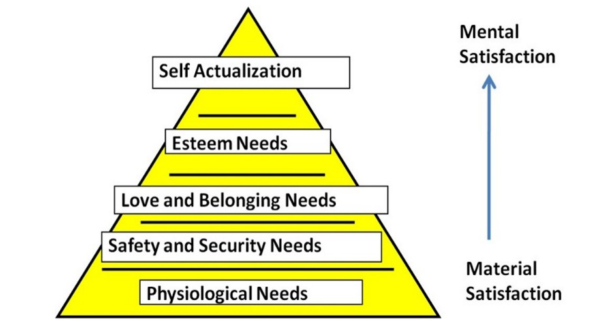
In 1943, about 40 years before Deci and Ryan, Abraham Maslow pro- posed “Hierarchy of Human Needs” (Maslow, 1943), and pointed out “Self-actualization” is the highest need of humans (Figure 1).
FROM PRODUCT TO PROCESS The Industrial Revolution brought forth mass production, because at that time we had material needs. To satisfy growing needs for products, it introdu- ced “Division of Labor”, and we started to “work for others”. Until then, we worked for ourselves. Working for the external rewards, however, does not satisfy our human needs, as Deci and Ryan pointed out. As Maslow pointed
Toward Establishing Benefit Society 3
Figure 1: Maslow’s Hierarchy of Human Needs.
out our needs moved with time from material to mental, toward the highest need of “Self-actualization”.
To describe it in another way, our needs shift from product to process. Yesterday, we needed products in our daily life. We needed food, housing, etc. But once these needs are fulfilled, we moved toward “Self-actualization”. We would like to demonstrate how capable we are. Lego is the precursor of this big change. They did not sell “Product”. They sold “Process”. We enjoyed ourselves by combining blocks in different ways. We can discover new ways and we can satisfy our needs for creation.
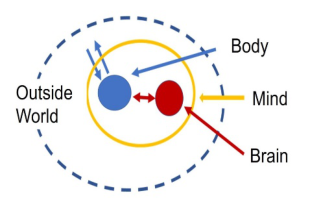
MIND-BODY-BRAIN Let us consider Mind-Body-Brain (Figure 2). It is Body that directly interacts with the Real World. Brain collects these pieces of information (experience) and structure them into Knowledge. Thus, we should remember that know- ledge is very much personal and it varies from person to person. Although it may be used as a feedforwarding tool and make yourself prepared. But today the Real World Is changing from minute to minute. Changes are frequ- ent, extensive, and unpredictable. Knowledge is a thing of the past and very much personal. So, when the environments and situations did not change appreciably, it was very much effective for preparing for the coming context. But today, changes are frequent, extensive, and unpredictable. So, we need to respond to the changing environments and situations immediately. Real time interaction is called for today.
What the Octopus Teaches Us Peter Godfrey-Smith published a very enlightening book “Other Minds: The Octopus, The Sea, and the Deep Origins of Consciousness” (Godfrey-Smith, 2016). Octopuses die immediately after their babies are born. So, they do not inherit knowledge from their previous generations. They have no other way but to live on their “Instinct” alone. The head of the octopus is big, but their brain capability is at the same level as that of a dog. But they are
4 Fukuda
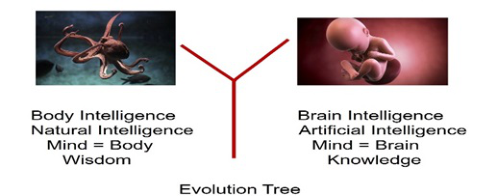
Figure 2: Mind-Body-Brain.Figure 3: Octopus and Human.
known as the expert of escape. They can escape from any environments and situations. They can even escape from a screwed container! They can ach- ieve such wonders, because they use their heads to coordinate their eight arms to cope with the Real World. Their intelligence is body intelligence, and it is wisdom. They can coordinate not only their eight arms, but they can also integrate sensing and actuation. In engineering, sensors and actua- tors are developed for a particular purpose and after sensors detect signals, then the actuator that can process that signal works. Actuation comes after sensing. But in the case of the octopus, they integrate sensing and actua- tion. Sensors and actuators work together at the same time. Thus, when they become situational conscious, they can react to the situation immediately and appropriately, in real time (Figure 3). They are truly agile, adaptive, and dexterous.
Jean Piaget, Swiss psychologist, proposed “Theory of Cognitive Develo- pment” (Piaget, 1952), and made it clear that babies develop their cognitive capabilities up to 2 years old. During these years, they directly interact with the Real World and learn how to cope with it.
The octopus is the only invertebrate that can recognize self in a mirror. Even among vertebrates, only humans and apes can, because they can feel the movement inside of their bodies such as muscles, etc. All these which have the capability of self-recognition in a mirror can “feel” the internal movements such as muscles, so they can understand what the mirror image means.
Betty Edwards, American sketch artist, published, “Drawing on the Right Side of the Brain” (Edwards, 1979). And she made it clear that children draw a sketch as they see. They draw the Real World as it is. But children older than seven years draw sketches based on concepts. Thus, the world after 7
Toward Establishing Benefit Society 5
years old is the world of concept. We are no more processing the Real World. We are processing concepts.
MAHALANOBIS DISTANCE-PATTERN (MDP) APPROACH FOR SHARING EMOTIONS From Verbal to Nonverbal: Increasing Importance of Pattern
As the Real World is getting more and more complex and complicated, and changes come to occur frequently, extensively, and unpredictably, it beco- mes increasingly difficult to express verbally. As the computer processing is based on 0-1 number framework, and our needs were products, we prefer- red quantitative and objective evaluation. Thus, most efforts have been paid to numeric conversion or to be more exact, digital quantification. But even in the computing world, as the fact that quantum computing is emerging demonstrates, we need to process a wide variety of data beyond numbers. In other words, we need nonverbal approaches.
In the old times, we communicated nonverbally. It is recent in the history of humans that we invented languages. Then, how could we communicate without words in the old times. We observed the movements and interpreted what they meant. We are still communicating this way with pets or animals. We can communicate without words. Movements take on that role.
Movements, however, change with time. It is a wave. We cannot distinguish waves. But words are sounds. And sound is none other than a wave. Then, how can we distinguish words?
Shuichi Fukuda and his group used to study detecting emotion from face. To communicate better, we need to guess what is on his or her mind of the other party. Our team tried many image processing techniques, but they took too much time and did not produce satisfactory results. During these chal- lenges, Fukuda realized that when we see a cartoon, we can immediately understand the emotion of characters.
So, we introduced cartoon face model and we succeeded in detecting emo- tion at once and without any difficulties. What this discovery taught us is the importance of pattern. We are communicating with pattern (Kostov, V. Fukuda. S. Johnsson, M. 2001).
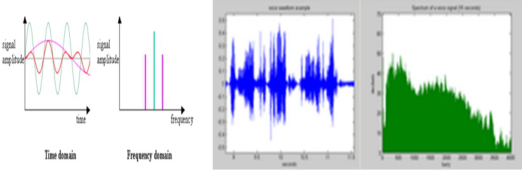
Come to think of it, if we use Fourier Transform (Figure 4), we can transform waves to spectral density pattern.
Although waves look different from wave to wave, their patterns are the same.
Mahalanobis Distance (MD) P. C. Mahalanobis, Indian researcher in design of experiments, proposed Mahalanobis Distance (MD) (Mahalanobis, 1936). In Euclidean Space, datasets satisfy orthonormality and distance is interval scale with unit. He proposed MD to remove outliers to improve his Euclidean Space data. Eucli- dean Space data are cardinal (one, two, three). But to remove outliers, we need to introduce ordinal (first, second, third). What we want to do is remove outliers which is the most far away from the Euclidean Space data. Then, we
want to remove the second far away data. MD provides such ordinal distance to determine which one remove first, second, –.
Mahalanobis-Taguchi System (MTS) Genichi Taguchi proposed Mahalanobis -Taguchi System (MTS) (Taguchi, Chowdhury, Wu, 2000). He was well known around the world for his qua- lity control method “Taguchi Methods” (Taguchi, 1962). But he understood it is very difficult for most factories, companies, and organizations to con- trol quality element by element. Most companies are controlling quality on a factory basis. So, he combined MD and pattern and proposed MTS to manage quality holistically. MTS was, therefore, welcomed by many companies.
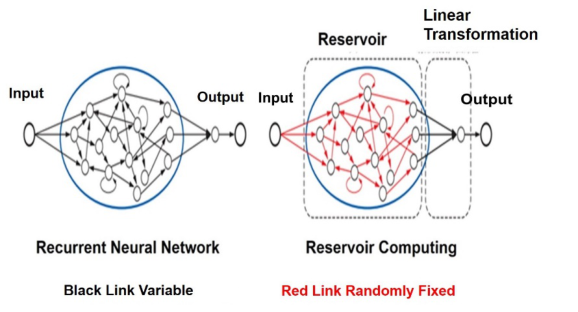
Mahalanobis Distance-Pattern (MDP) From Static to Dynamic MTS (Mahalanobis-Taguchi System) was very useful for most companies. But the Real World changes very frequently, extensively, and unpredictably today. So, we need to develop dynamic approach beyond static pattern matching of MTS. To shift from static to dynamic, we can introduce Recurrent Neural Network (RNN). But weight assignment to links in RNN is made in a random manner. So, Reservoir Computing (RC) is introduced. Then, we can manage the system at the output (Figure 5).
Toward Establishing Benefit Society 7
Figure 6: Human Motion.
Reservoir Computing: Its Benefits Another very important benefit of RC is we can introduce micro technologies. So, we can easily synchronize sensing and actuation. In the traditional engi- neering, sensors and actuators do not work together. Sensor detects signals and actuator which can process that signal then starts to work.
But micro technologies enable us to develop true “Things Team” (Ashton, 2009) and we can change HMI from Interaction to Integration. We truly work together with machines or robots. We can make them part of our body.
Let us come back to the Benefit Society. The idea of “the Benefit Society” here is basically the same as that of the Service in ICT. The ICT researchers insist that the next generation after Knowledge is Service. It means how we can share the benefit and realize real time and wise processing as we see in the octopus.
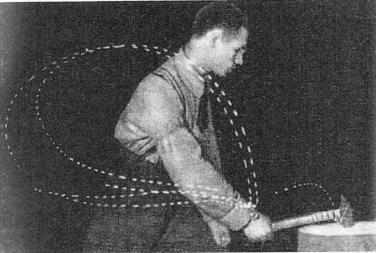
From Control to Coordination The importance of movement is discussed in the above from the stand- point of nonverbal communication. Here let us look at it from a different viewpoint. Human movement is divided into two: Motion, which can be observed from outside and Motor, which is movement inside of us, such as muscles, etc. Nikolai Bernstein clarified the feature of Motion (Bernstein, 1967), (Figure 6). At first, our motion trajectories vary widely from time to time, but as we get close to our target object, our muscles harden and move together with our skeleton. So, we can easily identify the parameter and apply mathematical approaches. Most research of human movements are focused on this stage, because we can “Control”our movements. Then, why our traje- ctories vary so widely at first. It is because we “Coordinate”many body parts and balance our body to cope with the changing environments and situati- ons. As the Real World is changing frequently, extensively, and unpredictably, “Coordination” is increasingly its importance.
From Personal to Sharing It has been emphasized in this paper many times. “Benefit” is no more per- sonal and we must share “Benefit” among us. Then, we can develop “Benefit Society”. Then, how can we share?
8 Fukuda
Figure 7: Movement Coordination.
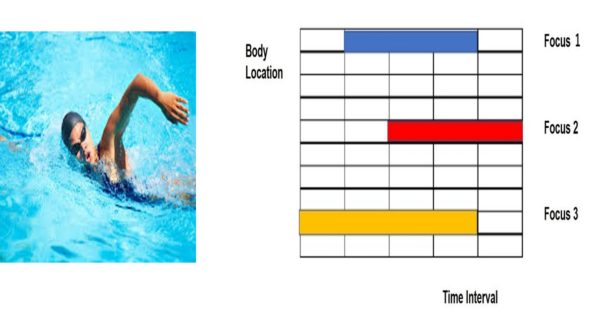
Let us take movement. Movement plays a central role for nonverbal com- munication. And it is easier to understand how we can share “Benefits”, if we consider movement. Figure 7 shows the case of swimming. In swim- ming, water changes continuously, so we cannot identify parameters and apply mathematical approaches. That is why we do not have true “Swimming Robot”. But if we put wearable sensors on the swimmer or take images, we can produce such a data sheet shown on the right. Each row corresponds to each location of muscles. We calculate MD (Mahalanobis Distance) between Time 1 and Time 2. If MD is decreasing, that muscle is working all right But if MD is increasing, we have to change its movement and move the muscles in a different way. How we should move it cannot be obtained mathematically. As muscles are analog and they work together. And the number of dimen- sions becomes too large to process mathematically. Just like an octopus, we have to use our instinct. But this data sheet provides the guideline how we may be able to balance our body and can swim.
Although this is movement, we can apply this approach to emotions. We can produce the same style data sheet. One row shows emotions of a specific person. If MD of a row of this person is increasing, it implies the person is happy. But if it is decreasing, then we need to make that person happy and this way we can balance happiness among the participants.
BENEFIT OF THE BENEFIT SOCIETY Current Industrial Society is approaching its ceiling and many issues are emerging. Now is the time to develop another society for the next gene- ration. SDGs (Sustainable Development Goals) is attracting wide atten- tion these days. My interpretation of the word “Sustain” is to sustain the current Industrial Society. But we cannot sustain “the Industrial Society” anymore. We need to develop another society, i.e., “Sustain” means to “Sustain development”. If we can develop “the Benefit Society”, we can keep developing. The Benefit Society will bring us “the Satisf- ying Society”. The Benefit Society is a Self-Sustaining and Self-Satisfying Society (SSS).
Toward Establishing Benefit Society 9
Thus, the Benefit Society is proposed here. In the past, benefit was eva- luated quantitively and objectively, as the word “cost-benefit” indicates. In these days, we wanted products. So we evaluated their performance quanti- tatively. But our needs gradually shifted from product to mental satisfaction. We want to demonstrate how capable “self” is. But the frequently, extensi- vely and unpredictably changing Real World led us to share our feelings with others and develop an emotionally sharing society. Then, we can create a new common among people and enjoy the environments and situations together. Now, we come to realize how harmonization brings us a new enjoyment. In the Industry Society, we worked for others. And in the old time, we worked for ourselves. Such team enjoyment is, in a sense, working for others, but this is an internal reward, and it provides us the maximum satisfaction as a human.
REFERENCES
Ashton, K. (2009). That ‘Internet of Things’ Thing, RFID Journal, June 22. Bernstein, N. A. (1967). The Co-ordination and Regulation of Movements, Oxford, UK: Pergamon Press. Deci, E. L., Ryan, R. M. (1985). Intrinsic Motivation and Self-Determination in
Human Behavior, New York, NY, Plenum. Edwards, B. (1979). Drawing on the Right Side of the Brain, New York, NY: Tarcher. Godfrey-Smith, P. (2016). Other Minds: The Octopus, the Sea, and the Deep Origins of Consciousness, Glasgow: William Collins. Kostov, V. Fukuda, S. Johnsson, M. (2001), Method for Simple Extraction of Para-
linguistic Features in Human Face, Image & Visual Computing, the Journal of the Institute of Image Electronics Engineers of Japan, Vol. 30, No.2, pp. 111–125. Mahalanobis, P. C. (1936). On the Generalized Distance in Statistics, Proceedings of the National Institute of Science of India, Vol. 2, No.1, pp. 49–55. Maslow, A. H. (1943). A Theory of Human Motivation, Psychological Review,
Vol. 50, No.4, pp. 370–396. Piaget, J. W. F. https://en.wikipedia.org/wiki/wikipedia.org/wiki/Jean_Piaget. Taguchi, G. (1962). https://en.wikipedia.org/wiki/Taguchi_methods. Taguchi, G. Chowdhury, S., Wu. Y. (2000). The Mahalanobis-Taguchi System, New York. NY: McGraw-Hill Professional.
LISTED IN THE AHFE DIGITAL BOOKSTORE CATALOGUE
Explore the complete digital volume
Affective and Pleasurable Design
Read this individual research paper free through the original publisher, or explore the full digital proceedings book.
ISBN 978-1-958651-17-9
Explore this ISBN in the AHFE Bookstore ↗Listed in the July 2026 bookstore catalogue; search by ISBN to confirm current availability · Digital book purchase optional