Luoyu Fu, Peiqi Yi, Zikun Gao, Yan Gan (2022). Design and Research of Flexible Wearable Medical Testing Equipment for Pregnant Women. In: Human Factors and Wearable Technologies. AHFE Open Access, vol. 29, pp. 87–93. https://doi.org/10.54941/ahfe1001478
Pregnant women, as a special group, bear the mission of nurturing and continuing human life. Pregnant women need to experience psychological and physiological changes in the tenth month of pregnancy. In the special "post-epidemic era", it is hard and unsafe for pregnant women to go to the hospital regularly for birth check-up. In order to make pregnant women have a better prenatal experience, our team wants to design a wearable device, which can monitor the fetal heart rate and the frequency of fetal movement, so that pregnant women can also realize routine detection of the fetal condition at home, and protect the growth health and safety of the fetus. In this design, questionnaire interview, literature search and collaborative story telling are used to deeply understand the pain points of pregnant women's antenatal examination, the development status of wearable devices for pregnant women at home and abroad, pregnant women's preferences and so on. Then, determine the product use process, product functional structure and product packaging. This design adopts cutting-edge technologies such as flexible sensors, and combines ergonomics and kansei engineering. The product obtains the data and information of pregnant women and fetuses, and then through sorting and analysis, the results are intuitively transmitted to pregnant women, pregnant women's relatives or doctors in the matching APP, so that users can clearly obtain the health data of pregnant women in real time. Realize early warning of physical abnormalities of infants and mothers, early warning and early treatment, so as to better protect the safety and health of pregnant women and fetuses during pregnancy. After the usability test, the interviewed pregnant women thought that the design had a certain effect.
In the long and arduous ten-month pregnancy period, pregnant women are prone to diseases such as pregnancy-induced hypertension and follicular cysts, and endure physical pains such as dizziness, lethargy and fatigue. Pre- gnant women may have some psychological problems during pregnancy, such as anxiety and depression (Binur Aili et al., 2021). To ensure the health of the pregnant woman and the fetus, regular routine checks need to be carried out every four weeks, if there are no special conditions before the 28th week of pregnancy. The checks include blood pressure, heart rate, body weight,
fetal heart rate, etc. Pregnant women need to have a routine check-up in the hospital every 2 weeks between 28 and 36 weeks; After 36 weeks, pregnant women are required to monitor their fetal heart rate weekly.
The special COVID-19 pandemic situation gives rise to the unsafe factors of pregnant women’s health, since they need to travel to hospital frequently for routine examinations and this increases the risk of contact of people. Besi- des, Cold medical devices can cause discomfort and alienation for pregnant women during antenatal examination. Pregnant women also have various inconvenient experiences on their way to the hospital.
With these difficulties pregnant women face for routine examination, we want to design a special medical product that could provide pregnant women with some of their health index, without going to hospital. When designing products for pregnant women, we need to fully consider the user experi- ence, improve the satisfaction and pleasure of pregnant women, and meet the personalized needs of users on the function. This study aims to propose a feasible design to meet the needs of antenatal examination anytime and anyw- here, this product will alert the abnormal body data of pregnant women and fetuses, achieving early warning and timely treatment, and will better ensure the safety and health of pregnant women and fetuses during pregnancy. This design will allow greater flexibility in the allocation of medical and public resources, which is beneficial from a social macro-perspective.
RELATIVE WORK Questionnaire Survey
We conducted a questionnaire survey among pregnant women. The question- naire consists of 14 questions in four aspects: basic information of pregnant women (age, status), antenatal examination (antenatal examination freque- ncy, existing problems, mood, etc.), antenatal examination equipment (usage, willingness to use) and product expectation (color, function). There were 107 participants, covering 18–50 years old, most of whom were 25–40 years old.
The survey results showed that among the problems encountered in the process of antenatal examination, long waiting time (64.1%) and worrying about Covid-19 (50.9%) had the greatest influence on pregnant women, and the long distance (21.7%) and noisy environment (18.9%) had also become some problems encountered by pregnant women. The average score of pre- gnant women’s mood during the antenatal examination was 77.35 (out of 100. The higher the score, the better the mood.) With regard to mobile antenatal examination equipment, 47.2% of pre- gnant women had the experience of using home antenatal examination equipment, and had doubts about the following factors: short use period (55.7%) since they only use them during pregnancy; worry about radia- tion affecting the health of fetus (41.5%); low specificity and misdiagnosis (19.8%); complicated operation (15.1%), expensive and difficult to pay (11.3%). If there was a flexible wearable device that can meet the needs of simple antenatal examination at home, 86.8% of the respondents were willing to use it.
Design and Research of Flexible Wearable Medical Testing Equipment for Pregnant Women 89
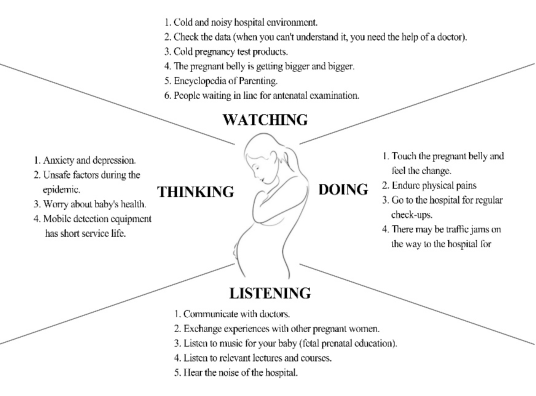
Figure 1: Empathy map of pregnant women.
67.9% of the respondents said they had some knowledge on understanding the fetal heart rate, fetal position and other data in routine testing, but it was not enough. 21.7% of the respondents had no idea on this, and only 10.4% of the respondents reported to interpret the data well. If there was a mobile phone application that can help users analyze data and provide suggestions, 86.8% of the respondents would like to use it. In terms of product expectation, 54.72% of respondents preferred simple appearance style, and 45.3% of respondents preferred warm and lovely appe- arance style. 48.1% of the respondents expected the color of the product to be pink, and 76.4% of the respondents expected the surface material of the product to be soft materials such as textiles.
Empathy Map According to the user interview results, participatory observation results and questionnaire survey results, we extracted the map of pregnant women’s empathy from four aspects: watching, thinking, listening and doing (Figure 1).
Result
According to the survey results, we summarized four main pain points. First, it takes time to go to the hospital for antenatal examination, and it is inco- nvenient to make an appointment and queue up. Secondly, pregnant women need to know the professional data related to examination, acquiring more knowledge and exchanging experiences with other pregnant women. Third, as the pregnancy cycle becomes longer, pregnant women will have larger and larger bellies, therefore the design of wearable devices needs to conform to ergonomics. Fourth, pregnant women are prone to depression and anxiety.
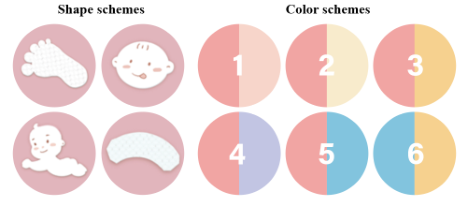
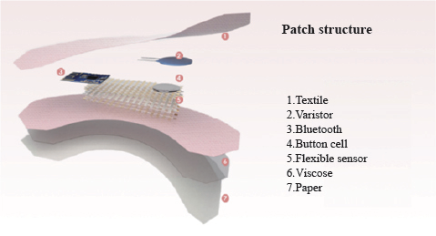
Figure 2: Shape schemes and color schemes.Figure 3: Patch structure.
DESIGN SCHEME Wearable Device Design
We had innovatively combined flexible sensors with maternal and fetal health testing, rather than traditional cold medical instruments. This technology will bring a more convenient and humanized product, which uplifts users’ feelings and happiness.
We combined flexible sensors with patches, clothes and belly pads respecti- vely. Compared with their user experience and feasibility, we chose to use the patch as the carrier to design. The design of the patch is simple, convenient and comfortable, which can meet the needs of pregnant women in different occasions. The patch is 10cm long and 5cm wide.
Next, we designed the appearance of the patch with four schemes, inclu- ding baby’s foot, baby’s face, baby’s body, circular arc shape, and put forward six color schemes (Figure 2). According to the questionnaire data, we chose the baby’s foot (45.45%) and pink and purple color matching (36.36%). The structure of the patch was divided into textile, varistor, Bluetooth, button cell, flexible sensor, viscose, paper (Figure 3).
App Design According to the user’s needs, the functions of App include presentation and analysis of test data, emergency contact with doctors’ families, community of pregnant women and popularization with pregnancy-related knowledge, etc. (Jia 2019). The medical somatosensory communication technology is used to transmit the detection data to the platform for archiving in the
Design and Research of Flexible Wearable Medical Testing Equipment for Pregnant Women 91
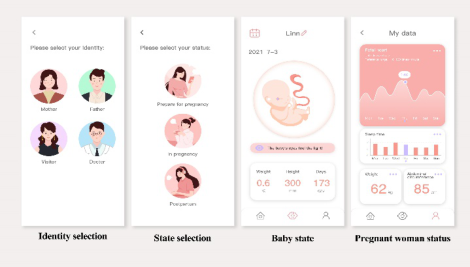
Figure 4: Display of some application program interfaces.
cloud. The processed data results are more intuitive and concise, so that non- medical users can easily understand their health information, and the product is more suitable for the public. Besides, professional pregnant women’s file information can be set up for doctors to visit (Peipei Huang and Yang Feng 2016). When users enter the app for the first time, they will firstly choose their identity and status. After the pregnant women put the patch on their stoma- chs, they can assess the health condition of the fetus and their own through the data feedback. Pregnant women can also communicate with other pre- gnant women through the community and read professional articles to learn relevant knowledge. Family members can check the health status of pregnant women and babies through app, and provide timely help when pregnant women need it. Alarm will be sent immediately to doctor through then app in case of special circumstances, and doctors can take emergency measures when necessary. Doctors can use the historical data records on the app to assist treatment and diagnosis. Through the app, pregnant women, family members and doctors are linked in three ways to ensure the health and safety of pregnant women and fetuses to the maximum extent (Figure 4).
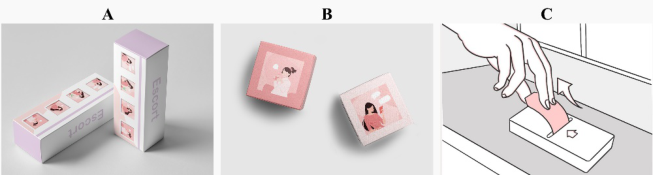
Packaging Design The inspiration for the package is the train carriage, which symbolizes the beautiful journey of the baby to the world (Figure 5A). One big package con- tains four small packages, one small package contains about 7 patches, and a whole big package of patches can be used by pregnant women for about one month. The small package corresponds to a carriage of a train. The surface color of a set of small packages gradually changes from pale to dark, and the belly picture of pregnant women on the package also changes from small to large (Figure 5B), which is convenient for pregnant women to use in sequ- ence. The user extracts the patch from the hole on the surface of the small package (Figure 5C), leaving the next patch with a corner coming out, which is convenient for the next extraction.
Figure 5: Product packaging design.Figure 6: Use process.
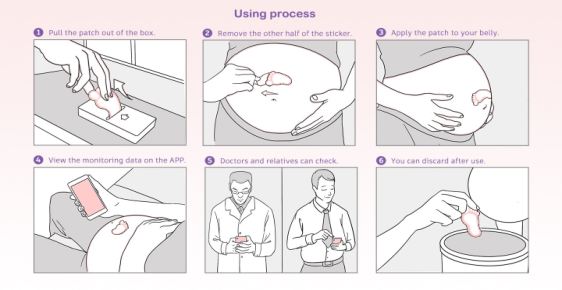
Use Process The use process conforms to the principles of easy operation, emotion, safety and multi-function (Ling Dong and Lei Quan 2021). We plan to achieve a closed loop from simple antenatal examination at home to detecting potential safety hazards of the pregnant woman’s fetus and taking measures. Such a complete process can not only reduce the frequency of pregnant women going to the hospital, but also protect the health and safety of pregnant women in places outside the hospital and enhance the user experience of mothers during pregnancy.
The user pulls out a patch from the box, and after tearing off the sealing paper, the sensor in the patch starts to work. Stick the patch on the position above the navel for, now the patch can begin to collect information such as fetal heartbeat. The information will be visualized on the supporting APP in a easy-reading presentation. The APP updates the information with pregnant women’s family members and doctors. If physical abnormalities of babies and mothers are sensed, alarm will be sent out and people can immediately respond (Figure 6).
CONCLUSION
After the completion of the design scheme, we communicated with pregnant women, and the feedback showed that most pregnant women agreed and appreciated the design scheme of patch detection, app feedback, the linkage
Design and Research of Flexible Wearable Medical Testing Equipment for Pregnant Women 93
of pregnant women, relatives and doctors, and thought that the scheme was necessary and feasible. They expressed willing of trying out if the design could be realized. We made an appearance model of the patch and showed them. Most pregnant women indicated that the patch was of the right size and had a good sense of use. We designed the framework of the app and completed the main functional interface, and gave it to users to experience. The function of App could basically meet the needs of users, but they had further expectations for the professionalism of articles and the security of communities. For the color appearance and packaging design, most pregnant women said that they were touched and healed.
There are limitations in this design. We tend to propose a design direction and scheme. The specific technical implementation needs further scrutiny and development, such as how to analyze the signals collected more accurately, how to ensure the product quality and reduce the product cost.
This project aims to achieve early warning of physical abnormalities of pregnant women and fetuses, and for early treatment, so as to better pro- tect the safety and care the health of pregnant women and fetuses. Pregnant women bear the mission of nurturing and continuing human life, and they need care and help from us. We design this product, and will continually work on future improvement, to provide pregnant women with care and help, and bring them with convenience and happiness.
REFERENCES
Binur Aili, Jie Zheng, Jiaming Xiang and Lingling Gao. (2021). Study on the symptom group of pregnant women in the third trimester of pregnancy and its influencing factors. Journal of Nursing Science, 36(07), pp. 26–30. Ling Dong and Lei Quan. (2021). Research on the Design of Home Fetal Heart
Instrument Based on Bionic Design. Industrial Design, 1, pp. 54–55. Peipei Huang and Yang Feng. (2016). Design and implementation of pregnancy management and diagnosis platform based on mobile internet. Software Industry and Engineering, 39, pp. 38–41. Zixuan Jia. (2019). Research on Interface Design of Pregnant Women’s Smart Brace-
let and Smart Phone Application (APP). Master’s electronic journal [online], 2019– 11-16, pp. 34–36. Available from: https://kns.cnki.net/KCMS/detail/detail.aspx?d bname=CMFD201902&filename=1019190484.nh [accessed 6 June 2021].
LISTED IN THE AHFE DIGITAL BOOKSTORE CATALOGUE
Explore the complete digital volume
Human Factors and Wearable Technologies
Read this individual research paper free through the original publisher, or explore the full digital proceedings book.
ISBN 978-1-958651-05-6
Explore this ISBN in the AHFE Bookstore ↗Listed in the July 2026 bookstore catalogue; search by ISBN to confirm current availability · Digital book purchase optional