Motheo Tjebane, Sandile Wonderboy Sibiya, Molusiwa Stephan Ramabodu, Imoleayo Abraham Awodele, Gift Laolang (2026). The Adoption of 4IR Technologies in the Management of Quantity Surveying Services: Bibliometric Review. In: Accessibility, Assistive Technology and Digital Environments. AHFE Open Access, vol. 202, pp. 189–204. https://doi.org/10.54941/ahfe1007310
By integrating cutting-edge technologies such as blockchain, artificial intelligence (AI), and the Internet of Things (IoT), the Fourth Industrial Revolution (4IR) is reshaping industries worldwide. These innovations offer transformative potential for the construction industry, particularly in enhancing the efficiency, accuracy, and transparency of quantity surveying services. This study presents a bibliometric review of global research on the use of 4IR technologies in the management of quantity surveying services. The study analysed publications from 2013 to 2024 using bibliometric tools such as VOSviewer and Microsoft Excel, utilising data retrieved from the Scopus database. The analysis focused on trends in publishing, notable authors, important nations and institutions, keyword co-occurrence, and thematic focus areas. The findings indicate that quantity surveying is increasingly interested in digital transformation, with BIM and blockchain emerging as predominant themes. However, regional disparities and limited adoption in developing contexts were also observed. This review offers a comprehensive overview of the field's intellectual structure, identifies research gaps, and suggests possible future paths. The purpose of the findings is to assist educators, industry stakeholders, and researchers in comprehending how 4IR technologies are influencing the global evolution of quantity surveying practices.
4IR focuses primarily on how developments in AI, IoT, robotics, 3D printing, quantum computing, and genetic editing, among others, are creating less distinct, more integrated physical, digital, and biological environments (Mhlanga 2022). The Fourth Industrial Revolution is a synonym for the current social and technological upheaval we are experiencing in the 21st Century (Rose & Maynard, 2021). The use of the term Fourth Industrial Revolution (4IR) is, in and of itself, a marker of the current state of society.
While most people refer to this phenomenon and define it nonchalantly, it is a fundamentally new, unprecedented global and societal shift, driven by rapid technological interdependencies and the dissemination of transformational networked Information and Communication Technology (ICT) across all spheres of social and economic activity (Moll 2023). Moll (2023) conducted a survey on expressions, and blockchain and cyber-physical systems were included in the list of the most ‘popular’ terms. Automation had decreased a little. The rising mentions of blockchain seem to stem from the growing trade in Bitcoin, a cryptocurrency. On the other hand, Ibrahim et al. (2022), the innovative use of digital technologies like three-dimensional (3D) printing (3DP), cyber-physical systems, blockchain, digital twin, augmented reality, robots, big data, etc. These digital technologies are a hallmark of the 4th industrial revolution (4IR). Construction still seems to face a myriad of challenges. These range from archaic processes and activities, step-by-step procedures, data collection and recording, monitoring, and even a shortage of skilled workers. Keogh & Smallwood (2021) raise a valid point and even suggest a diminishing enthusiasm towards the industry.
Research Problem The rapid growth of digital technologies associated with the Fourth Industrial Revolution has generated widespread interest within construction research, yet the extent to which these technologies are meaningfully integrated into quantity surveying practice remains unclear. Newman et al. (2020) show that although Industry 4.0 scholarship in construction has expanded significantly, much of the work remains conceptual rather than grounded in professional transformation. Jeune et al. (2023) argue that the South African quantity surveying profession continues to experience fragmented digital adoption despite growing awareness of technological benefits. Lopes and Filho (2024) similarly observe that while construction professionals increasingly recognise the value of advanced technologies, practical integration across firms remains uneven and inconsistent. These patterns suggest a gap between technological potential and professional application.
Olatunji et al. (2021) demonstrate that, even when BIM tools are available, their use in QS practice is often limited to basic functions rather than strategic integration. Llale et al. (2020) caution that without structured adaptation, the profession risks losing relevance in increasingly digitised project environments. Modiba and Harinarain (2024) further suggest that resilience within QS services depends on deliberate engagement with emerging technologies rather than passive exposure. Aghimien et al. (2020) show that much of the existing research continues to prioritise technology development rather than professional transformation. These insights reveal a conceptual and empirical gap in understanding how 4IR technologies are being adopted, structured, and positioned within the management of QS services. This study, therefore, addresses the need for a systematic bibliometric examination of scholarly patterns to clarify dominant themes, gaps, and future directions.
The Adoption of 4IR Technologies in the Management of Quantity Surveying Services 191 Research Question
The main research problem looks at how the adoption of Fourth Industrial Revolution (4IR) technologies is reflected in the management and scholarly discourse of quantity surveying services. This is addressed by sub-questions:
How does the adoption of 4IR technologies influence the efficiency and performance of quantity surveying services, particularly in areas such as cost estimation, measurement, and project control?
What are the dominant trends, patterns, and gaps in existing scholarly research on the adoption of 4IR technologies within the management of quantity surveying services?
LITERATURE REVIEW
4IR Technologies in the Construction Industry and Quantity Surveying Practice Recent scholarship shows a steady growth in the integration of advanced digital technologies within the construction sector, with significant implications for professional practices such as quantity surveying. Newman et al. (2020) emphasise that Industry 4.0 technologies, including building information modelling, automation and data-driven systems, are reshaping operational processes across construction disciplines. Aghimien et al. (2020) support this position by demonstrating, through bibliometric analysis, that robotics, automation, and digital technologies now dominate construction research agendas. Akanmu et al. (2021) further argue that cyber-physical systems and digital twins represent a shift toward intelligent and interconnected construction ecosystems that extend beyond traditional project management approaches. Together, these findings indicate that technological development in construction has moved from experimentation to structured application across professional domains.
The implications of these technologies are particularly visible within quantity surveying functions, where automation and data integration are reshaping traditional workflows. According to Olatunji et al. (2021), BIM adoption within quantity surveying practice has strengthened accuracy, consistency and collaboration in cost-related tasks. Keung et al. (2022) observe that the transfer of BIM into QS services has enabled professionals to engage more strategically with project information rather than remaining confined to manual measurement roles. Alathamneh et al. (2024) reinforce this argument by demonstrating that BIM-based quantity take-off systems significantly improve efficiency compared to conventional methods. These studies collectively corroborate the view that digital technologies are not only tools for technical enhancement but are redefining the nature of professional engagement within quantity surveying. The literature, therefore, suggests a gradual yet clear transition toward digitally mediated QS practice.
Contribution of 4IR Technologies to the Performance of Quantity Surveying Services A growing body of literature demonstrates that 4IR technologies directly improve performance outcomes in cost management, estimation, and decision-making within quantity surveying services. Valinejadshoubi et al. (2024) report that automated BIM-based systems achieve higher accuracy in quantity take-off processes than traditional manual approaches. Liu et al. (2022) similarly note that integrating BIM with point cloud technologies enables faster, more reliable on-site quantification. Wang et al. (2022) extend this discussion by demonstrating that artificial intelligence models enhance predictive accuracy in construction cost estimation. These findings suggest a consistent pattern across technological applications, where automation and data analytics contribute to efficiency, reliability and improved professional judgement. Cassandro et al. (2025) consolidate this view by arguing that 5D BIM environments enable quantity surveyors to integrate time and cost dimensions, thereby supporting more informed, timely project decisions.
Beyond technical improvements, scholars increasingly argue that digital technologies also enhance the strategic value of quantity surveying services. Jeune et al. (2023) emphasise that digital transformation strengthens professional relevance and positions quantity surveyors as key contributors within multidisciplinary project teams. Modiba and Harinarain (2024) similarly argue that technological competence enhances professional resilience, especially during disruptions such as pandemics. Llale et al. (2020) support this position by suggesting that the profession’s future competitiveness is strongly linked to its capacity to embrace technological change. These perspectives suggest that performance enhancement is not limited to productivity gains but also includes broader professional legitimacy and strategic positioning.
Adoption Behaviour, Organisational Readiness and Contextual Challenges While the performance benefits of 4IR technologies are widely acknowledged, the literature also highlights behavioural and organisational factors that shape adoption outcomes. Lopes and Filho (2024) argue that adoption levels across the construction sector vary significantly depending on organisational readiness and perceived usefulness of technology. Oke et al. (2024) similarly observe that awareness and actual usage of digital technologies among construction professionals remain uneven, particularly among operational workers. Aghimien et al. (2022) reinforce this position by demonstrating that behavioural intention plays a decisive role in determining whether organisations invest in emerging technologies such as drones. These findings collectively suggest that technological availability alone does not guarantee effective integration, as adoption remains shaped by human perceptions and institutional cultures.
Contextual challenges are particularly pronounced within developing economies, where infrastructural and institutional barriers continue to constrain digital transformation. Aiyetan and Das (2022) argue that
The Adoption of 4IR Technologies in the Management of Quantity Surveying Services 193 limited digital infrastructure and regulatory uncertainty restrict the uptake of advanced technologies in developing contexts. Ebekozien et al. (2023) support this view by identifying inadequate technical expertise and organisational resistance as key barriers to blockchain adoption within the Nigerian construction industry. Ameyaw et al. (2023) further demonstrate that governance frameworks and stakeholder trust significantly influence the acceptance of smart contract technologies in construction projects. These studies suggest that adoption challenges are not merely technical but deeply embedded within socio-economic and institutional conditions. The literature, therefore, highlights a clear gap between technological potential and contextual realities, particularly in emerging economies.
Theoretical Framework This study is anchored in an integrated theoretical framework that combines technology adoption theory, socio-technical systems thinking, and change management perspectives to explain how Fourth Industrial Revolution (4IR) technologies are adopted and managed within quantity surveying services. These lenses are appropriate because the adoption of digital technologies is not only a technical issue but also a behavioural, organisational, and systemic process. Lopes and Filho (2024) argue that technology adoption in construction is strongly shaped by perceived usefulness, organisational readiness, and contextual pressures, which aligns with the core logic of technology adoption theory. Aghimien et al. (2022) similarly emphasise that behavioural intention plays a decisive role in whether organisations embrace emerging technologies, showing that human perceptions remain central to digital transformation. These positions provide a strong conceptual foundation for examining adoption patterns within quantity surveying scholarship.
The technology adoption perspective is further reinforced by models that explain how individuals and organisations respond to innovation. Olugboyega et al. (2024) propose that adoption processes unfold through identifiable stages linked to awareness, concern, and engagement, which helps to explain why uptake of BIM and other digital tools varies across contexts. This theoretical position is relevant to the present study because bibliometric patterns often reveal uneven attention to different technologies and themes, reflecting varying levels of scholarly maturity. Jeune et al. (2023) extend this argument by demonstrating that successful digital transformation in the quantity surveying profession depends on structured change management processes rather than spontaneous technological uptake. These insights justify the inclusion of organisational and behavioural dimensions within the study’s conceptual framing.
Socio-technical systems theory further strengthens the framework by emphasising that technology adoption is shaped by the interaction between tools, people, and institutional environments. Newman et al. (2020) show, through a bibliometric analysis, that Industry 4.0 research spans technical, managerial, and organisational domains, suggesting that scholarship itself reflects the interconnected nature of digital systems. Cakmak and Akturk
(2024) support this view by arguing that digital construction technologies influence not only efficiency outcomes but also professional roles, decision- making structures, and economic value creation. This perspective is important for a bibliometric review because it allows the study to interpret research clusters as part of a broader system of knowledge production rather than as isolated technical topics.
METHODS
Search Strategy The study adopted a systematic bibliometric approach to ensure transparency and reproducibility in the review process. The Scopus database was selected as the primary source because it provides broad coverage of peer-reviewed journals in construction management and built environment research, thereby strengthening the credibility of bibliometric studies (Newman et al., 2020). Scopus has also been widely applied in construction-focused bibliometric research due to its strong indexing of high-impact journals and citation data, which supports rigorous mapping of research trends (Aghimien et al., 2020). The search covered publications from January 2020 to December 2025 to capture recent developments aligned with the growing influence of digital transformation within the quantity surveying profession. The actual database search was conducted between 5 January 2025 and 20 January 2025 to ensure that the most recent publications were included. This time- bound strategy enabled the study to reflect contemporary scholarly debates on 4IR technologies and their relevance to professional practice. The search strategy was designed to balance inclusivity with relevance, ensuring that the final dataset meaningfully reflected the evolving body of knowledge.
Search Terms The search terms were developed carefully to reflect both the technological dimension of 4IR and the professional context of quantity surveying practice. Keywords were structured using Boolean operators to improve the precision and relevance of the retrieved records. The core search string combined terms such as “Fourth Industrial Revolution” OR “Industry 4.0” OR “4IR” with professional terms including “Quantity Surveying”, “Cost Management”, and “Construction Economics”. This approach aligns with bibliometric best practice in construction research, where structured Boolean searches are used to strengthen retrieval accuracy, as demonstrated by Newman et al. (2020). The formulation of keywords was also informed by recent literature that highlights dominant themes such as digital transformation, BIM, blockchain, and cyber-physical systems within quantity surveying practice, as discussed by Jeune et al. (2023). Only English-language publications were retained because the selected journals in the Scopus database predominantly publish in English, and this ensured consistency in interpretation. Filters were applied to restrict results to journal articles and conference papers in order to preserve academic quality.
The Adoption of 4IR Technologies in the Management of Quantity Surveying Services 195 Inclusion Criteria
Clear inclusion criteria were applied to ensure only relevant, high-quality studies were retained for analysis. First, only publications published between 2020 and 2025 were included, reflecting the period in which scholarly engagement with 4IR in construction and quantity surveying has intensified, according to Jeune et al. (2023). Second, only peer-reviewed journal articles and conference papers were considered eligible because these sources provide validated academic knowledge and are commonly used in bibliometric construction studies, as demonstrated by Newman et al. (2020). Third, studies were required to focus substantively on the adoption, application, or impact of 4IR-related technologies within construction, cost management, or quantity surveying contexts. This focus was consistent with the need to ensure conceptual alignment with the study’s objective of understanding how digital technologies are reshaping professional QS services. Fourth, only English-language publications were included to maintain consistency of interpretation. These criteria allowed the review to remain focused while still capturing a meaningful range of scholarly contributions.
Exclusion Criteria In addition to inclusion rules, specific exclusion criteria were applied to protect the academic rigour of the dataset. Publications that fell outside the 2020– 2025 period were excluded because older studies were less representative of current debates on digital transformation in the built environment, as suggested by Jeune et al. (2023). Non-peer-reviewed materials such as opinion pieces, editorials, blog posts, industry magazines, and unpublished reports were removed in order to avoid weak or unverified evidence, which aligns with the methodological caution emphasised in bibliometric construction studies by Newman et al. (2020). Studies that addressed 4IR technologies in sectors unrelated to construction or quantity surveying were also excluded to maintain conceptual relevance. Similarly, articles that mentioned digital technologies only in passing without meaningful analytical engagement were not retained. Duplicate records retrieved during the search process were removed prior to screening. These exclusions strengthened the internal coherence of the final dataset and ensured that the bibliometric analysis was grounded in focused, high-quality academic scholarship.
Study Selection Process The study selection process followed the PRISMA framework to ensure transparency and methodological discipline in screening and eligibility decisions. The initial screening was conducted through a careful review of titles and abstracts to identify publications clearly aligned with 4IR technologies and quantity surveying or closely related construction management domains, a practice commonly used in construction-focused bibliometric studies (Newman et al., 2020). Articles that appeared relevant at this stage were then subjected to full-text review to confirm their conceptual fit with the study’s focus on the adoption and management of 4IR technologies
within professional QS services. Two independent reviewers were involved throughout the screening and eligibility stages to reduce the risk of subjective bias and improve the credibility of the final dataset, which reflects good practice in systematic review procedures within built environment research, as emphasised by Aghimien et al. (2020). When disagreements arose among the reviewers, discussions continued until a consensus was reached. This structured process strengthened the reliability and consistency of the final selection.
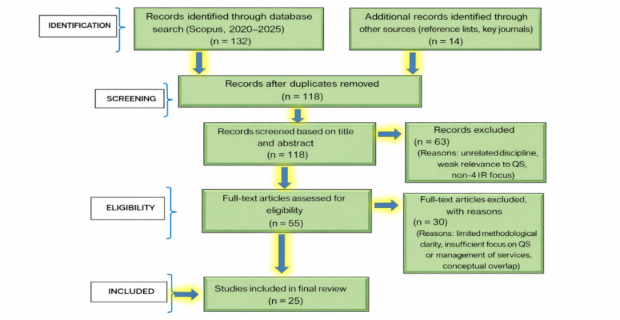
Figure 1: PRISMA, flow-chart template of research and selection strategy (Source: Author’s own work).
The PRISMA flow diagram shows how studies were systematically selected for the review. A total of 146 records were identified through database searching and additional sources. After removing duplicates, 118 records were screened based on titles and abstracts, resulting in the exclusion of 63 studies. Fifty-five full-text articles were assessed for eligibility, with 30 excluded for methodological and relevance reasons. Ultimately, 25 studies were included in the final bibliometric review.
RESULTS & DISCUSSION Theme 1: Influence of 4IR Technologies on the Efficiency and Performance of Quantity Surveying Services
Sub-theme 1.1: Automation of Measurement, Cost Estimation and Quantification The analysis of the reviewed secondary sources shows that automation has become central to the organisation of measurement and cost estimation activities in contemporary quantity surveying practice. Across the dataset, automated quantity take-off systems consistently reduce the time required to generate bills of quantities and minimise inconsistencies caused by repeated manual calculations. The findings further indicate that model- based environments allow quantities to be updated more frequently, which improves the reliability of early cost forecasts. Another pattern
The Adoption of 4IR Technologies in the Management of Quantity Surveying Services 197 is that automated systems enable parallel processing of multiple design options, which supports quicker cost-scenario comparisons during project planning.
According to Olatunji et al. (2021), BIM-enabled quantity surveying practice improves consistency of cost information by linking measurement directly to a shared digital model. Keung et al. (2022) argue that integrating BIM into quantity surveying workflows reduces rework and improves efficiency, although the benefits are strongest when firms redesign their workflows around model-based methods. Alathamneh et al. (2024) emphasise that BIM- based quantity take-off systems now provide reliable outputs that outperform traditional manual measurement in terms of speed and coordination. These positions strongly corroborate the patterns observed in the secondary data, where automation consistently reduces turnaround time and improves the reliability of quantities. The convergence between empirical findings and the literature suggests that efficiency gains are not incidental but are produced through systematic reorganisation of measurement practices.
Sub-theme 1.2: Digital Platforms Strengthening Project Control and Decision-Making The analysis of secondary sources indicates that digital platforms increasingly function as control centres for project monitoring and coordination. The findings show that integrated digital environments enable continuous tracking of quantities, costs, and progress, which supports more frequent and informed management decisions. Another consistent pattern is that digital dashboards allow early detection of cost deviations and scheduling conflicts, enabling corrective actions before risks escalate. The evidence also suggests that shared platforms improve coordination between consultants, contractors, and clients by providing a single reference point for contractual data and project updates. In several cases, digital systems have been shown to support scenario testing, thereby improving forecasting accuracy and reducing uncertainty in financial planning.
According to Olatunji et al. (2021), BIM platforms improve transparency of cost information and enhance coordination between project actors by maintaining a single source of verified data. Keung et al. (2022) argue that digital measurement platforms change the rhythm of project control by allowing quantity surveyors to intervene earlier when deviations occur. Jafary et al. (2025) emphasise that smart-contract environments further extend this control function by automating contractual triggers and payment conditions. These perspectives align closely with the dataset findings that digital platforms strengthen forecasting and monitoring capabilities.
Sub-theme 1.3: Professional Value Creation and Organisational Performance The synthesis of findings under this sub-theme shows that 4IR technologies are increasingly linked to broader organisational outcomes rather than only technical efficiency. The analysed evidence indicates that firms adopting
digital systems report stronger market positioning, particularly where clients demand faster cost advice and transparent reporting. Another recurring pattern is that digital capability is associated with service continuity during disruptions, which enhances organisational resilience. The findings also suggest that technology adoption improves the perceived relevance of quantity surveying services in multidisciplinary project teams, where data- driven input is valued. In addition, professional identity appears to shift toward advisory and analytical roles, with digital tools enabling deeper involvement in strategic project decisions.
According to Jeune et al. (2023), digital transformation in the quantity surveying profession depends on change management and organisational readiness, which supports the finding that performance gains are not automatic. Modiba and Harinarain (2024) argue that digital systems strengthen resilience by enabling QS firms to continue operating during periods of uncertainty. Llale et al. (2020) emphasise that 4IR technologies create opportunities for repositioning QS services within the construction value chain. These arguments corroborate the dataset pattern that technology adoption contributes to professional relevance and service continuity. The literature therefore supports the interpretation that organisational performance improvement arises from both technical capability and strategic alignment.
Theme 2: Dominant Trends, Patterns and Gaps in Scholarly Research on 4IR Adoption in Quantity Surveying Sub-theme 2.1: Expansion of Technology-Focused Scholarship in Construction and QS
The analysis of secondary sources shows a clear increase in scholarly attention to advanced digital technologies in construction and quantity surveying research. A dominant pattern is the growing concentration on technological systems such as BIM, robotics, digital twins, artificial intelligence, and cyber- physical systems as core areas of inquiry. The evidence indicates that much of the existing scholarship prioritises technical capabilities, system architectures, and functional applications over professional and social dimensions. Another observable trend is the frequent use of bibliometric mapping and structured literature reviews to categorise technology clusters and research directions. The findings further suggest that research output has expanded rapidly over the last decade, with technology-oriented keywords appearing more frequently in publication titles and abstracts. This concentration indicates that scholarly interest is being driven primarily by innovation potential rather than practice-based challenges.
According to Newman et al. (2020), bibliometric evidence indicates rapid growth in Industry 4.0 publications in construction research, particularly in digital platforms and automation. Aghimien et al. (2020) argue that robotics and automation research has become a central thematic cluster within built environment scholarship. Akanmu et al. (2021) emphasise that digital twins and cyber-physical systems are increasingly positioned as future-defining technologies in construction research agendas. Cassandro et al. (2025)
The Adoption of 4IR Technologies in the Management of Quantity Surveying Services 199 further demonstrate that 5D BIM scholarship has expanded significantly in recent years, reflecting growing academic interest in technology-led project integration. These perspectives strongly corroborate the patterns identified in the analysed data, where technological capability dominates the scholarly discourse.
Sub-theme 2.2: Emerging Shift Towards Human, Behavioural and Organisational Factors The analysis of the reviewed studies indicates a noticeable shift in recent scholarship towards examining the human side of technology adoption. The findings show that researchers are increasingly interested in professional attitudes, readiness levels, awareness, and behavioural intention rather than only technical capability. A consistent pattern across the data is the growing use of survey instruments to measure perceptions, adoption willingness, and organisational preparedness. The evidence also suggests that adoption outcomes are frequently linked to training availability, leadership support, and institutional culture. Another observed trend is the increasing emphasis on models such as technology acceptance frameworks and adoption theories to explain uptake patterns. This indicates a movement away from purely technical questions toward understanding how professionals engage with innovation.
According to Lopes and Filho (2024), the adoption of 4IR technologies in construction is strongly influenced by professionals’ awareness levels and perceived usefulness. Oke et al. (2024) argue that digital technology usage is shaped by worker understanding and exposure rather than availability alone. Olugboyega et al. (2024) emphasise that implementation success depends on change readiness and organisational alignment rather than technical maturity. Aghimien et al. (2022) further demonstrate that behavioural intention is a key predictor of technology uptake within construction organisations. These perspectives closely align with the analysis’s findings, which show growing attention to perception, readiness, and behavioural drivers.
Sub-theme 2.3: Persistent Research Gaps in Developing Contexts The analysis of the secondary data reveals clear disparities in how 4IR adoption is represented across geographical contexts. A recurring pattern is the underrepresentation of empirical studies from developing economies in comparison to those from advanced construction markets. The findings also show that infrastructural limitations, resource constraints, and institutional instability are frequently mentioned as structural barriers within these contexts. Another observable gap is the limited number of longitudinal studies examining how adoption evolves over time in low-resource environments. The evidence further suggests that many frameworks applied in developing contexts are borrowed from developed economies without adequate contextual adaptation. This indicates that much of the existing knowledge base does not fully reflect the realities faced by quantity surveyors operating in emerging markets.
According to Aiyetan and Das (2022), the use of advanced technologies in developing countries is constrained by limited infrastructure, costs, and skills. Ebekozien et al. (2023) argue that although professionals recognise the value of digital technologies, adoption remains uneven due to institutional barriers. Ameyaw et al. (2023) emphasise that regulatory uncertainty and organisational readiness hinder the effective adoption of blockchain-based systems. Llale et al. (2020) further highlight that South African quantity surveyors face both opportunities and structural threats in engaging with 4IR technologies. These perspectives align closely with the analysis’s findings, which point to contextual limitations as persistent obstacles.
Theme 3: Evidence-Based Strategies for Strengthening Adoption and Integration of 4IR in QS Practice Sub-theme 3.1: Capacity Development and Professional Upskilling
The analysis of the secondary sources indicates that skills limitations remain one of the most persistent barriers to meaningful 4IR adoption within quantity surveying practice. Evidence across the dataset shows that technical tools are often available, yet professional confidence in their effective use remains uneven. A consistent pattern is the mismatch between existing educational preparation and the evolving competency demands of digital practice. The findings further reveal that many professionals rely on informal learning rather than structured training pathways, which weakens long- term adoption outcomes. Another observation is that younger practitioners appear more adaptable to digital systems, while experienced professionals often express uncertainty about their readiness.
According to Jeune et al. (2023), the digital transformation of the quantity surveying profession requires deliberate competency development strategies embedded within professional systems. Chandramohan et al. (2020) argue that emerging QS roles increasingly demand digital and analytical skills beyond traditional cost management competencies. Toh et al. (2025) emphasise that artificial intelligence adoption will only be effective if practitioners understand both the technology and its limitations. Oke et al. (2024) further suggest that awareness and digital literacy strongly influence professionals’ willingness to engage with innovation. These arguments strongly corroborate the analysis’s findings, which identify skills gaps as a critical constraint.
Jeune et al. (2023) also highlight the importance of curriculum reform in preparing future quantity surveyors for digitally mediated practice. Chandramohan et al. (2020) maintain that continuous professional development must evolve alongside technological change. Toh et al. (2025) suggest that ethical reasoning and critical judgment must accompany technical competence when working with AI-supported systems. These perspectives support the interpretation that upskilling should be viewed as a strategic professional priority rather than a supplementary activity.
The Adoption of 4IR Technologies in the Management of Quantity Surveying Services 201 Sub-theme 3.2: Organisational Change, Leadership and Implementation Frameworks
The analysis of the reviewed sources demonstrates that adoption challenges are rarely technical in isolation but are deeply embedded within organisational structures. A key pattern emerging from the data is that firms with clear leadership commitment to digital transformation tend to report more consistent implementation outcomes. The findings further show that unstructured or ad hoc adoption often leads to fragmented technology use across teams. Another observation is that resistance to change frequently stems from unclear roles, weak communication, and limited organisational readiness rather than from technology itself. The data also indicate that firms lacking formal implementation frameworks struggle to integrate digital tools into everyday workflows.
According to Olugboyega et al. (2024), structured implementation models grounded in organisational change theory provide clearer pathways for sustainable BIM adoption. Modiba and Harinarain (2024) argue that organisational resilience is strengthened when firms intentionally align digital strategies with professional identity and service delivery models. Lopes and Filho (2024) emphasise that leadership commitment significantly influences the effectiveness with which technologies are embedded in organisational routines. Weerasooriya et al. (2024) further suggest that integration frameworks are necessary to ensure that cyber-physical systems support rather than disrupt professional roles.
Olugboyega et al. (2024) also propose that implementation frameworks must be flexible enough to accommodate firm-specific contexts. Modiba and Harinarain (2024) maintain that digital change should be approached as a cultural transformation rather than a technical upgrade. Lopes and Filho (2024) argue that without deliberate leadership direction, adoption often remains superficial. These arguments support the interpretation that adoption success depends on governance, culture, and structure. The synthesis, therefore, reinforces the view that organisational strategy must be prioritised alongside technical investment.
Sub-theme 3.3: Strengthening the Digital Ecosystem Through Technology and Policy Support The analysis of the secondary data indicates that adoption challenges extend beyond individual firms and are influenced by the broader digital environment. A recurring pattern is the dependence of effective technology integration on supporting infrastructure, such as reliable connectivity, interoperable platforms, and accessible data environments. The findings also show that weak regulatory clarity often discourages investment in advanced systems, particularly where contractual and legal implications are uncertain. Another observation is that fragmented technological ecosystems limit interoperability between tools, reducing the practical benefits of innovation. The data further suggest that where national or institutional policy support is weak, adoption efforts tend to remain isolated and inconsistent.
According to Akanmu et al. (2021), effective integration of cyber-physical systems requires robust digital infrastructure and coordinated technological environments. Ameyaw et al. (2023) argue that policy clarity and governance frameworks significantly influence organisational willingness to adopt blockchain-enabled systems. Jafary et al. (2025) emphasise that smart contract integration depends on supportive legal and institutional arrangements. Cakmak and Akturk (2024) further suggest that the economic value of digital construction technologies is maximised only when systemic conditions enable integration across the value chain. These arguments strongly corroborate the analysis’s findings, which show that adoption is shaped by ecosystem-level conditions rather than by firm-level effort alone.
Akanmu et al. (2021) also maintain that fragmented technology ecosystems limit the realisation of digital twin potential. Ameyaw et al. (2023) suggest that regulatory uncertainty undermines trust in emerging systems. Jafary et al. (2025) argue that professional acceptance of advanced platforms increases when governance structures provide clarity. These perspectives reinforce the interpretation that adoption requires coordinated technological, institutional, and policy support. The synthesis, therefore, confirms that strengthening the digital ecosystem is a necessary condition for meaningful transformation of QS practice.
CONCLUSION
This study explored how Fourth Industrial Revolution (4IR) technologies, including blockchain, artificial intelligence (AI), and the Internet of Things (IoT), are transforming the construction industry, particularly in quantity surveying. Using bibliometric tools like VOSviewer and data from the Scopus database, the research analyses publications from 2013 to 2024. It highlights trends in publishing, significant authors, contributing nations and institutions, keyword co-occurrence, and thematic areas of focus. Key findings suggest a growing interest in digital transformation within quantity surveying, with Building Information Modelling (BIM) and blockchain emerging as major themes. However, the study also notes regional disparities and limited technology adoption in developing countries. The study also noted the growing recognition of digital technologies’ benefits in construction, but there remains a gap between their potential and their practical integration into quantity surveying practices.
The study emphasises the need to integrate digital competencies into quantity surveying curricula and continuous professional development, advocating for skills such as data analytics and BIM proficiency as essential. It calls for construction organizations to adopt structured digital transformation strategies with strong leadership and infrastructure investment. Additionally, it highlights the importance of creating supportive ecosystems for digital innovation through improved regulations and assistance for smaller firms. Future research should focus on the lived experiences of quantity surveyors, context-specific studies in developing economies, longitudinal adoption analyses, and interdisciplinary collaboration to better understand the impact of 4IR technologies on the profession.
REFERENCES
Aghimien, D.O., Aigbavboa, C.O., Oke, A.E. and Thwala, W.D. (2020) ‘Mapping research focus for robotics and automation research in construction-related studies: A bibliometric approach’, Journal of Engineering, Design and Technology. Aiyetan, A.O. and Das, D.K. (2022) ‘Use of drones for construction in developing
countries: Barriers and strategic interventions’, International Journal of Construction Management. Akanmu, A.A., Anumba, C.J. and Ogunseiju, O.O. (2021) ‘Towards next generation cyber-physical systems and digital twins for construction’, Journal of Information Technology in Construction (ITcon). Alathamneh, S., Collins, W. and Azhar, S. (2024) ‘BIM-based quantity takeoff:
Current state and future directions’, Automation in Construction. Ameyaw, E.E., Edwards, D.J., Kumar, B., Thurairajah, N., Owusu-Manu, D.G. and Oppong, G.D. (2023) ‘Critical factors influencing adoption of blockchain-enabled smart contracts in construction projects’, Journal of Construction Engineering and Management. Cassandro, T. et al. (2025) ‘A comprehensive literature review of 5D building
information modelling (5D BIM): Applications, benefits and future research directions’, Construction Innovation. Cakmak, P.I. and Akturk, B. (2024) ‘An in-depth investigation of digital construction technologies from a building economics perspective’, Construction Economics and Building. Chandramohan, A., Perera, B.A.K.S. and Dewagoda, K. (2020) ‘Diversification of
professional quantity surveyors’ roles in the construction industry’, International Journal of Construction Management. Ebekozien, A., Aigbavboa, C. and Samsurijan, M.S. (2023). ‘An appraisal of blockchain technology relevance in the 21st century Nigerian construction industry’, Journal of Global Operations and Strategic Sourcing. Jafary, M., Shojaei, D. and Rajabifard, A. (2025) ‘Smart contracts and the management
of construction disputes’, International Journal of Construction Management. Jeune, K.L., Ontong, K. and Moghayedi, A. (2023) ‘Promoting the digital transformation of the South African quantity surveying profession through the implementation of change management theories’, Journal of Construction Project Management and Innovation. Keung, C.W., Yiu, T.W. and Feng, X. (2022) ‘Transferring BIM to quantity surveying’,
Journal of Information Technology in Construction (ITcon). Llale, J., Root, D. and Wembe, P. (2020) ‘Opportunities and threats of the Fourth Industrial Revolution on the quantity surveying profession in South Africa’, Common Ground Research Journal. Liu, X., Cheng, J.C.P., Gan, V.J.L. and Zhou, Z. (2022) ‘Automated on-site quantity
take-off by integrating BIM and 3D point clouds’, Automation in Construction. Lopes, J.M. and Filho, L.C.P.S. (2024) ‘Adoption of Fourth Industrial Revolution technologies in the construction sector’, Buildings. Modiba, M. and Harinarain, N. (2024) ‘Building resilience: Quantity surveyors in
the face of future pandemics’, Journal of Construction Project Management and Innovation. Newman, C., Edwards, D., Martek, I., Lai, J., Thwala, W.D. and Rillie, I. (2020) ‘Industry 4.0 deployment in the construction industry: A bibliometric literature review and UK-based case study’, Smart and Sustainable Built Environment.
Oke, A.E., Aliu, J., Singh, P.S.J., Onajite, S.A., Samsurijan, M.S. and Ramli, R.A.
(2024) ‘Appraisal of awareness and usage of digital technologies for sustainable wellbeing among construction workers’, International Journal of Construction Management. Olatunji, O.A., Lee, J.J.S., Chong, H.Y. and Akanmu, A.A. (2021) ‘BIM penetration in quantity surveying practice’, Built Environment Project and Asset Management. Olugboyega, O., Elubode, I.D., Oseghale, G.E. and Aigbavboa, C. (2024) ‘BIM
implementation model from the standpoint of concern-based adoption theory’, Frontiers in Engineering and Built Environment. Toh, J.-S., Wong, C.S. and Ding, X. (2025) ‘The impact of artificial intelligence on the quantity surveying profession’, Journal of Engineering, Design and Technology. Valinejadshoubi, M. et al. (2024) ‘Automated system for high-accuracy quantity
takeoff using BIM’, Automation in Construction. Wang, R., Li, H., Huang, T. and Chong, H.Y. (2022) ‘Assessing effects of economic factors on construction cost estimation using deep neural networks’, Automation in Construction. Weerasooriya, M.K.S.N., Ranadewa, K.A.T.O. and Perera, R.G.A.S. (2024)
‘Facilitating the role of quantity surveyors through integration of cyber-physical systems’, Journal of Engineering, Design and Technology.
LISTED IN THE AHFE DIGITAL BOOKSTORE CATALOGUE
Explore the complete digital volume
Accessibility, Assistive Technology and Digital Environments
Read this individual research paper free through the original publisher, or explore the full digital proceedings book.
ISBN 978-1-964867-78-6
Explore this ISBN in the AHFE Bookstore ↗Listed in the July 2026 bookstore catalogue; search by ISBN to confirm current availability · Digital book purchase optional