Anderson Goes, Priscila Costa, Heliza Góes (2026). Beyond Assistive and Educational Technologies: The Emergence of Educational Assistive Technology. In: Accessibility, Assistive Technology and Digital Environments. AHFE Open Access, vol. 202, pp. 103–113. https://doi.org/10.54941/ahfe1007301
This paper analyzes the actions developed within the scope of the New Research and Innovation Arrangement in Assistive Technology (NAPI-TA), with emphasis on the initiatives of Working Group 02 – Assistive Technology at the Interface with Education. The study aims to examine the development of Educational Assistive Technologies (EAT) conceived from an inclusive perspective, oriented toward the elimination of barriers in teaching and the expansion of equitable access to the school curriculum, with particular attention to the needs of students with visual impairment and blindness. The research is characterized as qualitative and descriptive-analytical, grounded in documentary analysis of projects, institutional reports, and pedagogical materials produced by WG02, largely through the actions of the Educational Assistive Technologies Laboratory (LabTAE). The results indicate that the developed EAT incorporate principles of Universal Design (UD) and Universal Design for Learning (UDL) by anticipating sensory, communicational, and cognitive barriers and enabling the shared use of resources by students with and without disabilities. It is concluded that the actions of NAPI-TA in the educational field demonstrate the potential of applied research and collaborative innovation in promoting inclusive, equitable, and socially engaged pedagogical practices, particularly in addressing the barriers historically imposed on blind students and those with low vision.
In recent decades, Inclusive Education has become a central challenge for public educational policies, requiring schools to embrace diversity and reduce barriers to access, participation, and learning for all students. This scenario has encouraged teaching approaches that anticipate accessibility needs within instructional planning, rather than relying on reactive adaptations once inequalities have already emerged.
In this context, it is essential to consider pedagogical resources that are integrated into planning and capable of addressing the needs of all learners, avoiding practices that segregate students through differentiated resources. This demand highlights the importance of distinguishing Educational Technology (ET), Assistive Technology (AT), and the emerging concept of Educational Assistive Technology (EAT), particularly within planning guided by Universal Design for Learning (UDL).
Traditionally linked to medical and rehabilitation contexts, AT focuses on individual functionality, while ET refers to pedagogical mediation processes aimed at any student. However, the existence of resources that do not fully align with either category reveals the need for an intermediate conceptual framework. In response to this gap, EAT emerges as a distinct category, grounded in inclusive pedagogical intentionalities rather than diagnostic classifications.
EAT is characterized by its alignment with Universal Design and Universal Design for Learning principles, as it seeks to anticipate and eliminate sensory, cognitive, perceptual, and communicational barriers through instructional planning. Its definition is not based on the material characteristics of the resource, but on its pedagogical function within a universally oriented curriculum.
As a conceptual category, EAT challenges the traditional dichotomy between AT and ET by supporting inclusive practices that address collective classroom contexts. Given its limited presence in national and international academic literature, the discussion of EAT is particularly relevant, as it contributes to advancing inclusive educational practices grounded in planning and curriculum organization.
METHODOLOGY
This study is characterized as a theoretical, qualitative, and bibliographic research aimed at analyzing the origins, constitution, and conceptual foundations of Educational Assistive Technology (EAT), in articulation with the fields of Education, Educational Technology (ET), Assistive Technology (AT), Universal Design (UD), and Universal Design for Learning (UDL). This approach was chosen to critically examine how different theoretical perspectives contribute to the formulation of EAT and to identify gaps in the literature, particularly regarding inclusive practices guided by UDL.
Bibliographic research enabled the identification of central ideas, continuities, divergences, and ruptures within the analyzed fields. Through the selection and analysis of theoretical references, a conceptual mapping was conducted to understand the historical development of the concepts and their interrelationships, supporting the theoretical construction of EAT.
The selection of materials was guided by criteria of conceptual relevance, thematic pertinence—especially regarding accessibility, pedagogical mediation, and human variability—and contribution to contemporary debates in Inclusive Education. The analysis was carried out in three stages: exploratory reading, selective reading focused on pedagogical uses of resources and accessibility, and comparative analysis across ET, AT, UD, and UDL.
Beyond Assistive and Educational Technologies 105 Based on this analytical process, the study defends EAT as a hybrid and inclusive conceptual category. Rather than producing empirical data, the methodology aimed to construct a theoretical-analytical synthesis that clarifies the trajectory of EAT and its implications for inclusive educational practices in mainstream schooling contexts.
FUNDAMENTAL CONCEPTS FOR THE CONCEPTION OF EDUCATIONAL ASSISTIVE TECHNOLOGY Understanding the constitution of Educational Assistive Technology (EAT) and its role in school contexts requires a careful analysis of the conceptual fields that underpin it: Educational Resources (ER), Educational Technology (ET), Assistive Technology (AT), Universal Design (UD), and Universal Design for Learning (UDL). Although these concepts emerge from different theoretical traditions and respond to distinct educational demands, they converge around issues of pedagogical mediation, accessibility, and inclusion. Their articulation provides the necessary foundation for understanding EAT as a hybrid, intentional educational technology oriented toward the learning and participation of all students in mainstream educational contexts.
Educational Resources (ER) constitute a central axis of teaching practices and are understood as concrete or symbolic materials that mediate learning and expand possibilities for access, representation, and expression of knowledge. Contemporary literature has progressively moved beyond a purely instrumental understanding of ER, recognizing them as constitutive elements of pedagogical mediation that require intentional planning and theoretical grounding. Lorenzato (2009) emphasizes that educational resources function as auxiliary means that support teaching and learning processes, but do not replace students’ intellectual activity or teachers’ pedagogical intervention. Similarly, Grando (2013) argues that manipulative materials should not be used merely as motivational tools, but as instruments that foster meaningful understanding of concepts, relationships, and structures, provided they are aligned with clear didactic purposes and intentional mediation. Passos and Takahashi (2018) further highlight that although teachers often acknowledge the importance of ER, their selection is frequently intuitive and insufficiently grounded in educational objectives, revealing limitations in pedagogical use and teacher education. From an inclusive perspective, ER must therefore be integrated into instructional planning in ways that anticipate learning barriers and account for human diversity—an understanding that directly informs the conception of EAT.
Educational Technology (ET) has been interpreted in different ways throughout its historical development, but there is broad consensus that it cannot be reduced to the mere presence or use of devices, tools, or digital platforms in educational environments. Candau (1979) emphasizes that ET refers to the pedagogical orientation that underlies the use of technologies in education, encompassing conceptions, methods, and decisions that structure teaching processes. Kenski (2012) understands technology broadly as human creations designed to solve problems and transform social practices, but stresses that only when these technologies are intentionally incorporated into
educational contexts do they become Educational Technology. Valente (2005) reinforces this view by highlighting that ET is characterized by pedagogical mediation, coherence between objectives and resources, and alignment with students’ needs. Selwyn (2016) complements this perspective by distinguishing technologies as instruments from ET as the field that organizes, analyzes, and guides their educational use. Pedagogical intentionality thus constitutes the core of ET, a principle that is fundamental to EAT, which is likewise defined not by the resource itself, but by how it is incorporated into instructional planning and curriculum organization.
Assistive Technology (AT) has been consolidated as an interdisciplinary field aimed at promoting autonomy, independence, quality of life, and social participation for people with disabilities. According to the Technical Aids Committee of the National Secretariat for the Promotion of the Rights of Persons with Disabilities, AT encompasses products, resources, methodologies, strategies, practices, and services designed to enhance individuals’ functional abilities. Historically grounded in biomedical, rehabilitation, and specialized therapeutic fields, AT has focused on compensating for motor, sensory, and cognitive impairments through individualized supports. In educational contexts, AT gained prominence with the recognition of the right to schooling for students who are the target population of Special Education. However, as Galvão Filho and Damasceno (2017) and Maehr (2012) argue, the exclusive reliance on AT tends to reinforce deficit-oriented perspectives and remedial practices, as it responds primarily to previously identified disabilities rather than to the diversity inherent in classrooms. Although indispensable in many situations, AT alone is insufficient to promote inclusive education oriented toward all learners, revealing conceptual and structural limitations that demand broader pedagogical approaches.
Universal Design (UD) emerges as a response to exclusionary design practices historically based on idealized user models, which have systematically marginalized individuals with diverse physical, sensory, and cognitive characteristics (Góes & Costa, 2022). Systematized by Ronald Mace and disseminated in Brazil through the contributions of Carletto and Cambiaghi, UD is structured around seven principles—equitable use, flexibility in use, simple and intuitive use, perceptible information, tolerance for error, low physical effort, and adequate size and space for approach and use. In the Brazilian context, these principles are reinforced by the Brazilian Inclusion Law (Brazil, 2015) and NBR 9050 (ABNT, 2020), which guide accessibility in buildings, furniture, transportation, and communication. Within educational settings, UD plays a fundamental role in ensuring material and informational accessibility; however, its primary focus on physical and structural dimensions does not fully encompass the pedagogical complexity of teaching and learning processes.
It is precisely at this point that Universal Design for Learning (UDL) becomes central. UDL extends the principles of UD to instructional planning by proposing that curricula, objectives, methods, materials, and assessments be designed to anticipate pedagogical barriers and address learner variability from the outset. Structured around the principles of
Beyond Assistive and Educational Technologies 107 Engagement, Representation, and Action and Expression, UDL shifts the focus from individual difficulties to the curriculum itself, recognizing that many barriers to learning reside in rigid and inflexible pedagogical designs (CAST, 2024). By promoting an iterative and dynamic approach to planning, UDL guides teachers in the intentional selection, redesign, and creation of resources and strategies—including assistive technologies—so as to ensure access, participation, and meaningful learning opportunities for all students.
From the articulation of these conceptual fields, Educational Assistive Technology emerges. EAT does not replace Educational Resources, Educational Technology, or Assistive Technology, nor is it limited to the structural accessibility proposed by Universal Design. Rather, it synthesizes these contributions within a pedagogical framework oriented by Universal Design for Learning, in which accessibility, pedagogical mediation, and human variability are integrated into instructional planning. EAT is thus defined not by the materiality of resources, but by a universalist pedagogical intentionality that anticipates barriers and expands possibilities for engagement, representation, and action and expression for every learner in inclusive educational contexts.
EDUCATIONAL ASSISTIVE TECHNOLOGY – PROPOSITION OF A CONCEPTUAL FRAMEWORK Understanding the relationships among Educational Technology (ET), Assistive Technology (AT), Universal Design (UD), and Universal Design for Learning (UDL) is essential to situate the emergence of Educational Assistive Technology (EAT) as a distinct and complementary concept. Although these fields are interrelated, each has specific origins, foundations, objectives, and applications that must be recognized in order to avoid misinterpretations and imprecise uses within school contexts.
Educational Technology, as discussed by Candau (1979) and Kenski (2012), refers to the intentional use of technologies in educational processes. Its focus lies in pedagogical organization, methods, strategies, and teaching mediation, regardless of the existence of specific needs. Therefore, ET is not directed toward a particular target group and is not grounded in individual functionality, but rather in students’ learning processes.
Assistive Technology, in turn, according to the Brazilian Inclusion Law (Brazil, 2015), is oriented toward addressing individual demands related to functional barriers. Its focus is on enhancing or compensating specific abilities, enabling students with disabilities to access environments, communicate, and participate in social practices. Within school contexts, its role is essential; however, it does not encompass broader pedagogical issues nor the curricular structure as a whole.
Universal Design, originating in architecture and design as articulated by Mace (1991) and the Center for Universal Design (1997), provides principles aimed at reducing physical and communicational barriers from the planning stage. These principles contribute to educational contexts by fostering accessible environments. Nevertheless, as highlighted by Góes and Costa (2022), UD does not address pedagogical dimensions related to teaching and learning.
It is within Universal Design for Learning that the foundations of UD are expanded into pedagogical planning. According to CAST (2024) and Meyer, Rose, and Gordon (2014), UDL proposes that curricula be structured to anticipate barriers and to offer multiple means of engagement, representation, and action and expression. In this sense, UDL provides pedagogical criteria that guide the selection and use of Educational Resources, while emphasizing human variability as a core principle of instructional planning.
Within this framework, EAT emerges as a form of technology that articulates dimensions of ET, AT, UD, and UDL, yet cannot be reduced to any of them individually. EAT incorporates from UD and UDL the principle of anticipating barriers; from UDL, the pedagogical structure that organizes curriculum and resources; from AT, the understanding that certain students may require specific supports; and from ET, the centrality of teaching mediation and pedagogical intentionality.
The specificity of EAT lies in the understanding that a resource is constituted as EAT only when it meets three conditions: it is integrated into instructional planning guided by UDL; it is designed to reduce barriers that interfere with learning; and it addresses human variability by enabling broad use, while still offering support to students who require it.
This means that the same resource may function as Educational Technology for some students and as Assistive Technology for others, depending on its role within the pedagogical context. However, it will only be considered EAT when, in addition to this dual function, it has been planned and used in direct articulation with UDL principles and guidelines. It is this articulation that allows EAT to be understood as a specific theoretical category capable of responding to the challenges of inclusive schooling in a more comprehensive and coherent manner.
Thus, EAT does not replace AT nor does it negate ET. On the contrary, it expands their conceptual strength by integrating them within a pedagogical framework oriented toward curricular accessibility and human variability. EAT reaffirms inclusion as a result of planning rather than of subsequent interventions, positioning itself as an essential element in the construction of accessible, equitable, and diversity-sensitive pedagogical practices.
This understanding makes it possible to overcome the common interpretation that any accessible material is automatically an EAT. Enlarged materials, three-dimensional concrete objects, accessible games, or tactile boards are not necessarily EATs. They become EATs only when their conception derives from a universalist pedagogical intentionality grounded in UDL, and when they are used in articulation with instructional planning.
In this way, EAT is defined less by the object itself and more by the inclusive pedagogical function it performs. This epistemological distinction is central, as it positions EAT as an innovation within the field of Inclusive Education by breaking with the logic of late adaptation and proposing a proactive, planned, and theoretically grounded approach to eliminating barriers in learning processes.
EXEMPLIFICATION OF EDUCATIONAL ASSISTIVE TECHNOLOGY The Educational Assistive Technology Laboratory (LabTAE), affiliated with GEPETeL and funded by NAPI-TA and CNPq, focuses on the development and redesign of accessible educational resources by articulating technology, Universal Design, and inclusive pedagogical practices. However, these resources do not automatically constitute Educational Assistive Technologies. A resource is configured as an EAT only when it is integrated into intentional instructional planning grounded in the principles of Universal Design for Learning (UDL), with the aim of proactively eliminating barriers and expanding learning opportunities.
From this perspective, the resources developed at LabTAE express EAT as a form of hybrid mediation, as they may function as Educational Technology for some students and as Assistive Technology for others, without generating segregated learning pathways. What distinguishes an EAT from a conventional educational resource is its universalist pedagogical intentionality, guided by UDL, which ensures multiple means of engagement, representation, and action and expression. The following section presents examples of LabTAE resources and explains how they are configured as EAT when incorporated into instructional planning.
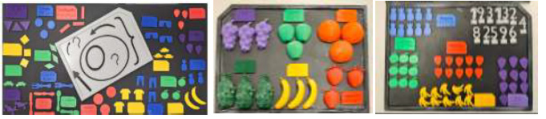
QRT – Three-Dimensional Representations Board The Three-Dimensional Representations Board (QRT) (Góes, Nogueira, & Góes, 2025) enables the representation of problem situations, mathematical objects, and spatial relationships through concrete and manipulable formats (Figure 1).
The QRT is configured as an EAT when the teacher integrates it into a didactic sequence planned based on UDL, using the resource to reduce perceptual and comprehension barriers. By allowing concepts to be explored through touch, visualization, and direct interaction, the QRT expands the means of representation and action and expression. In this way, it supports students with visual impairments as well as students who learn more effectively through manipulable materials, addressing the human variability present in mainstream classrooms.
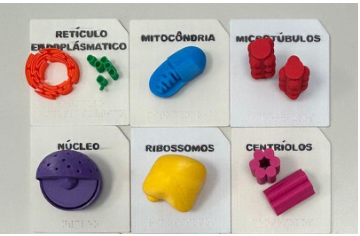
3D Fitting Cells The organelle plates and the three-dimensional models of animal and plant cells, Fitting Cells 3D (Góes et al., 2025), expand access to knowledge by representing microscopic structures in tactile and spatial formats (Figure 2).
Figure 2: 3D models of animal and plant cells. Source: LabTAE collection, 2025.
This resource is configured as an EAT when incorporated into instructional planning that anticipates different forms of engagement and representation. When used in activities guided by UDL, it reduces visual barriers by allowing blind students to explore cellular structures through touch, while also supporting other students through concrete models. The variation of colors among the organelles benefits students with low vision and color blindness. Thus, the resource addresses specific needs without losing its inclusive pedagogical function.
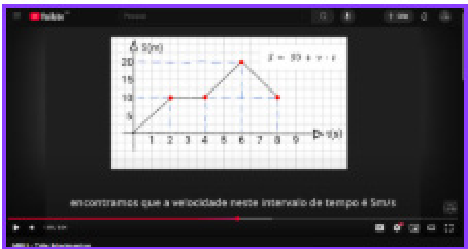
Audio Description of Physics and Mathematics Graphs The production of specialized audio descriptions for graphs and videos (Crispim, Santos, & Góes, 2025) expands access to visual information by converting it into structured oral language, enabling the interpretation of trends, variations, concavities, and slopes of graphs (Figure 3).
This resource becomes an EAT when the teacher integrates it into instructional planning that provides multiple means of representation. Within the UDL framework, audio description reduces sensory barriers faced by blind students and simultaneously enhances the understanding of all other students by offering more detailed explanations. In this way, it broadens access, strengthens participation, and diversifies modes of comprehension.
Beyond Assistive and Educational Technologies 111 Graphic Materials, Booklets, E-books, and Teacher Education
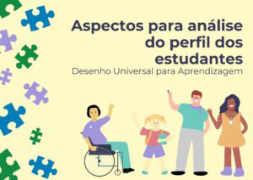
Although they do not fully constitute EATs by themselves, since this depends on how they are used within UDL-oriented planning, the materials produced by GEPETeL and partner teams, available on the websites www.ufpr.br/ gepetel and https://laboratorios.ufpr.br/labtae/, play a relevant role in reducing informational and pedagogical barriers (Figure 4).
Figure 4: Booklets on UDL and student profiles; E-book on UD and UDL. Source: LabTAE collection, 2025.
Designed in accordance with UDL principles, these materials support accessible pedagogical practices, enhance teachers’ understanding of variability and accessibility, and strengthen curriculum planning processes that consider each student. In addition, they are produced in accessible formats compatible with automated reading resources, allowing for broader dissemination within educational contexts.
The diversity of resources developed at LabTAE demonstrates that, from the GEPETeL perspective, EAT is not defined by the artifact itself, but by the function it performs within instructional planning guided by UDL. EAT is fully realized when the resource contributes to eliminating barriers and expanding access, participation, and modes of expression for each student. Thus, more than producing objects, LabTAE supports pedagogical practices that integrate technology, accessibility, and theoretical grounding, reaffirming that school inclusion occurs when each student encounters viable pathways for learning.
FINAL CONSIDERATIONS The discussion developed in this paper indicates that Educational Assistive Technology (EAT) constitutes an emerging and necessary concept within the field of Inclusive Education. Rather than replacing Assistive Technology (AT) or Educational Technology (ET), EAT positions itself as a conceptual synthesis that addresses limitations in both fields by recognizing the complexity of pedagogical practices and the centrality of instructional planning.
The analysis of educational resources, the historical development of AT, the contributions of ET, and the foundations of Universal Design (UD) and Universal Design for Learning (UDL) reveals that EAT represents a shift away from isolated and remedial adaptations. Its defining feature lies in a universalist pedagogical intentionality that organizes objectives, methods, strategies, and assessment practices in alignment with UDL
From this perspective, EAT goes beyond the notion of accessible materials, constituting an inclusive pedagogical technology oriented toward eliminating barriers and expanding opportunities for engagement, representation, and expression for all students. The experiences developed at LabTAE illustrate the practical applicability of EAT in basic education and its potential to inform the reconfiguration of teaching practices.
The consolidation of EAT as a theoretical and practical category depends on its incorporation into intentional, dialogical, and diversity-oriented instructional planning, as well as on the continuity of research and the expansion of its application across different educational contexts. Ultimately, EAT should be understood not as a resource restricted to Special Education, but as a technology grounded in curricular and pedagogical accessibility, reaffirming an ethical commitment to equitable and democratic education.
ACKNOWLEDGMENT
The authors acknowledge the support of Fundação Araucária through the New Research and Innovation Arrangement in Assistive Technology (NAPI-TA) and the National Council for Scientific and Technological Development (CNPq).
REFERENCES
Brazil. Law No. 13,146, of July 6, 2015. Brazilian Law of Inclusion of Persons with Disabilities (Statute of Persons with Disabilities). Official Gazette of the Union, Brasília, DF, July 7, 2015. Candau, V. M. (1979). Educational technology: conceptions and challenges. Cadernos
de Pesquisa, São Paulo, 28, 61–66. Retrieved November 27, 2025, from http:// educa.fcc.org.br/scielo.php?script=sci_arttext&pid=S0100-15741979000100007 CAST. (2024). Universal Design for Learning Guidelines: Version 3.0. Wakefield, MA: CAST. Crispim, G., Santos, A. M., & Góes, H. C. (2025). The study of kinematics through
audio-described graphs. In Proceedings of the 5th Brazilian Congress on Assistive Technology. Curitiba, Brazil. Educational Assistive Technologies Laboratory (LabTAE) (2025). Iconographic collection: inclusive instructional materials. Unpublished material. Galvão Filho, T. A., & Damasceno, A. M. (2017). Assistive Technology: an
introduction (2nd ed.). Natal: EDUFRN. Grando, R. C. (2013). Didactic resources in Mathematics Education. In Proceedings of the XI National Meeting on Mathematics Education. Curitiba, Brazil. Retrieved November 27, 2025, from https://share.google/5rwCXA9C7Xx5GhAwR Góes, A. R. T., & Costa, P. K. A. (2022). From Universal Design to Universal Design
for Learning. In A. R. T. Góes & P. K. A. Costa (Eds.), Universal Design and Universal Design for Learning: foundations, practices, and proposals for Inclusive Education (pp. 25–33). São Carlos: Pedro & João Editores.
Beyond Assistive and Educational Technologies 113 Góes, A. R. T., Benkendorf, I. V., Fiatcoski, D. A. S., & Góes, H. C. (2025). 3D
Fitting Cells: development of an accessible tactile model for teaching cytology in elementary education. In Proceedings of the 5th Brazilian Congress on Assistive Technology (CBTA). Curitiba: UFPR. Góes, A. R. T., Nogueira, C. M. I., & Góes, H. C. (2025). QRT: haptic didactic material for graphic representations of additive problem situations. Diálogos em Educação Matemática, 4, e202521. Kenski, V. M. (2012). Technologies and teaching in face-to-face and distance
education (10th ed.). Campinas: Papirus. Lorenzato, S. (Ed.). (2009). The mathematics teaching laboratory in teacher education (2nd rev. ed.). Campinas: Autores Associados. Mace, R. L. (1991). Universal design: barrier-free environments for everyone.
Raleigh, NC: North Carolina State University. Maehr, A. (2012). Assistive Technology in the Classroom: challenges and considerations. Meyer, A., Rose, D. H., & Gordon, D. T. (2014). Universal Design for Learning:
theory and practice. Wakefield, MA: CAST Professional Publishing. Passos, É. O., & Takahashi, E. K. (2018). Didactic resources in mathematics classes in the early grades: criteria guiding teachers’ choices and use. Revista Brasileira de Estudos Pedagógicos, 99(251), 172–188. https://doi.org/10.24109/2176-6681. rbep.99i251.3095 Selwyn, N. (2016). Distrusting educational technology (Portuguese translation by
Grupo tiCPE). Retrieved November 23, 2025, from https://ticpe.wordpress.com/ wp-content/uploads/2016/12/neil_selwyn_distrusting_cap2_trad_pt_final.pdf Valente, J. A. (2005). Computing in education: teacher education. Campinas: UNICAMP/NIED.
LISTED IN THE AHFE DIGITAL BOOKSTORE CATALOGUE
Explore the complete digital volume
Accessibility, Assistive Technology and Digital Environments
Read this individual research paper free through the original publisher, or explore the full digital proceedings book.
ISBN 978-1-964867-78-6
Explore this ISBN in the AHFE Bookstore ↗Listed in the July 2026 bookstore catalogue; search by ISBN to confirm current availability · Digital book purchase optional