Motheo Tjebane, Snenhlanhla Precious Hlengwa, Samuel Herald Peter Chikafalimani, Molusiwa Stephan Ramabodu, Gift Laolang (2026). Opportunities, Adoption of 4IR Technologies by SMEs in the Construction Industry: A Systematic Review. In: Sustainable Built Environment. AHFE Open Access, vol. 225, pp. 179–192. https://doi.org/10.54941/ahfe1007909
The construction sector, particularly small and medium-sized enterprises (SMEs), faces increasing pressure to improve productivity, competitiveness, and sustainability amid rising project complexity and digital transformation. The adoption of Fourth Industrial Revolution (4IR) technologies offers opportunities to enhance SME performance through efficiency, data-driven decision-making, and organisational resilience. These technologies align with key Sustainable Development Goals, notably SDG 8, SDG 9, and SDG 11. This study presents a systematic review of 38 peer-reviewed, Scopus-indexed journal articles and conference proceedings published between 2020 and 2025, limited to English-language publications in engineering, business management and accounting, social sciences, and environmental studies. The findings show engagement across developed and developing economies. The United Kingdom leads with 10 publications, followed by South Africa with 7, reflecting increasing research interest in a developing-economy context. Malaysia ranks third with 6 publications, indicating sustained digitalisation Southeast Asia, while East Asian contributions highlight the role of digital maturity and policy environments. Despite this engagement, research from developing regions particularly Africa remains limited, with South Africa and Nigeria the only African countries appearing prominently, highlighting persistent research and implementation gaps. The literature identifies key opportunities associated with 4IR adoption, including improved project coordination through BIM, enhanced productivity and cost efficiency via automation and digital platforms, and improved sustainability performance through real-time monitoring and resource optimisation. However, the limited availability of longitudinal and context-specific studies in developing countries shows the need for targeted policy support, investment in digital infrastructure, and capacity-building initiatives to enable inclusive and sustainable digital transformation among construction SMEs.
The construction industry plays a critical role in economic development through infrastructure delivery, technology diffusion, employment creation, Received February 12, 2026; Revised March 30, 2026; Accepted April 13, 2026; Available online July 20, 2026
and value-chain linkages with other sectors (Fei et al., 2021). In recent years, the Fourth Industrial Revolution (4IR) has introduced a new wave of digital technologies, such as Building Information Modelling (BIM), the Internet of Things (IoT), automation, robotics, additive manufacturing, and extended reality, that are reshaping construction processes and business models (Gonese & Ngepah, 2024). Moreover, Rame et al. (2024) highlighted that these technologies present opportunities to improve productivity, efficiency, safety, sustainability, and competitiveness within the industry. Small and medium-sized enterprises (SMEs) constitute the majority of construction firms globally and are particularly significant in developing economies, where they support employment and local economic growth. Despite their importance, construction SMEs often face constraints related to finance, skills, infrastructure, and organisational capacity, which limit their ability to adopt and scale 4IR technologies (Beck & Demirguc-Kunt, 2006). As a result, Vararean-Cochisa and Crisan (2024) alluded that digital transformation within the construction sector remains uneven, with adoption concentrated among larger firms and in developed economies. Given the growing emphasis on digitalisation and innovation in the built environment, there is a need to systematically synthesise existing research on the opportunities and adoption of 4IR technologies by construction SMEs (Asif et al., 2024).
This study addresses this need by conducting a systematic review of recent scholarly literature to examine benefits, adoption trends and technological focus areas. This study consolidating evidence from engineering, computer science, social science, and environmental studies. This review aims to provide a comprehensive understanding of how construction SMEs are adopting 4IR technologies and to identify gaps warranting further investigation, particularly in developing and resource-constrained contexts. The emergence of Fourth Industrial Revolution (4IR) technologies presents significant opportunities to transform construction SMEs by enhancing operational efficiency, collaboration, and decision-making. Digital tools such as Building Information Modelling (BIM), Internet of Things (IoT), artificial intelligence (AI), cloud computing, automation, data analytics, and digital platforms enable SMEs to improve project planning, reduce costs and waste, enhance quality and safety, and support environmentally sustainable practices. These technologies align closely with global sustainability agendas, particularly Sustainable Development Goals SDG 8 Decent Work and Economic Growth, SDG 9 Industry, Innovation and Infrastructure, and SDG 11 Sustainable Cities and Communities.
Despite the recognised benefits of 4IR technologies, their adoption among construction SMEs remains uneven and geographically skewed, with most empirical evidence originating from developed economies. Limited research focuses on the opportunities and contextual realities of SMEs in developing regions, particularly in Africa. This study therefore explores the opportunities associated with 4IR technology adoption for construction SMEs through a systematic literature review. It aims to identify key technologies, adoption trends, and research gaps, and to inform policies and strategies that support inclusive and sustainable digital transformation in the construction industry.
LITERATURE REVIEW
According to Olaitan et al. (2024) across the reviewed studies retrieved from the Scopus database, the adoption of Fourth Industrial Revolution (4IR) digital technologies is consistently associated with a range of strategic, operational, and organisational opportunities for construction SMEs. These opportunities span project performance, workforce capability, resource efficiency, and long-term business sustainability. A prominent opportunity identified in the literature is improved project planning and control. Moreover, Liu et al. (2025) states that digital technologies such as Building Information Modelling (BIM), data analytics, and IoT-enabled monitoring systems enhance the accuracy of project scheduling, cost estimation, and progress tracking. By enabling real-time access to project data and predictive insights, SMEs are better positioned to identify risks early, minimise rework, and make informed decisions throughout the project lifecycle (Salimimoghadam et al., 2025). This improved control is particularly valuable for SMEs operating under tight margins and resource constraints. Another widely reported opportunity is enhanced collaboration and information sharing. 4IR technologies facilitate integrated data environments, cloud-based platforms, and interoperable systems that improve communication among project stakeholders (Rashid & Kausik, 2024). Enhanced transparency and information flow reduce fragmentation, coordination errors, and delays, which are persistent challenges in the construction industry (Abbas & Miller, 2025). Furthermore, Audretsch et al. (2023) advise that for SMEs, improved collaboration strengthens relationships with clients, consultants, and contractors. This enables participation in more complex and digitally enabled project delivery models. The literature also highlights cost and time efficiency as a key benefit of 4IR adoption. Automation of data processing, digital documentation, and monitoring processes reduces manual workloads and administrative inefficiencies (George, 2024). Improved accuracy in design coordination and construction planning contributes to shorter project durations, lower material waste, and better cost predictability. These efficiency gains enhance financial performance and support the economic sustainability of construction SMEs.
Improved safety performance emerges as another significant opportunity associated with digital technology adoption. Technologies such as IoT sensors, wearable devices, and digital safety management systems enable proactive hazard identification, real-time monitoring of site conditions, and improved compliance with safety regulations (Dodoo et al., 2024). Enhanced safety outcomes not only reduce accidents and associated costs but also contribute to workforce well-being and organisational reputation. In addition, 4IR adoption supports better resource management and sustainability outcomes. Studies by Goel et al., (2024) confirms that digital tools enable more efficient utilisation of materials, equipment, and energy, contributing to reduced environmental impact and improved environmental performance. A study by Goel et al. (2024) shows that these outcomes align with increasing regulatory pressures and sustainability expectations in the construction sector, enabling SMEs to remain compliant and competitive in evolving
markets. Collectively, these opportunities strengthen competitiveness and long-term business sustainability for construction SMEs (Bugwandin et al., 2025). By improving productivity, adaptability, and innovation capacity, 4IR technologies enable SMEs to respond more effectively to market changes and industry transformation. The reviewed literature suggests that, despite adoption challenges, strategic investment in digital technologies can serve as a critical enabler for SME growth, resilience, and sustained participation in the digital construction ecosystem.
The study by Mlagnino et al. (2020) found that Building Information Modelling (BIM) and Internet of Things (IoT) based systems are the most frequently examined and adopted Fourth Industrial Revolution (4IR) technologies among construction SMEs. Moreover, Skibniewski (2024) further states that these technologies are relatively mature, scalable, and compatible with existing construction workflows, making them more accessible to resource-constrained SMEs. Their adoption has been associated with improved project coordination, enhanced real-time monitoring, better information integration, and increased operational efficiency (Sampaio et al., 2023). In contrast, advanced technologies such as automation, robotics, additive manufacturing, and augmented or virtual reality remain underrepresented in the literature. They are largely confined to exploratory or pilot stages of adoption (Sahoo & Lo, 2022). Moreover, Bok and Tolmay (2025) states that this limited uptake is often attributed to high capital costs, technical complexity, skills shortages, and uncertainty regarding return on investment. Nevertheless, these emerging technologies present significant long-term opportunities for construction SMEs, particularly in improving productivity, safety, precision, and sustainability performance (Mateko, 2024). Importantly, Magagula and Awodiji (2024) echoes that the adoption of 4IR technologies is shown to drive workforce training and upskilling in digital tools, which represents a critical opportunity for SME development. As SMEs integrate BIM, IoT, and related digital systems, employees must acquire new technical, analytical, and collaborative competencies (Rakibul et al., 2024). This process enhances digital literacy, strengthens problem-solving capabilities, and improves the workforce’s adaptability to technological change. The development of such skills not only supports effective technology utilisation but also increases organisational resilience and competitiveness in an increasingly digital construction environment (Afeti, 2024). Furthermore, Karakhan et al. (2023) echo that workforce upskilling enables construction SMEs to better align with industry transformation trends, comply with evolving regulatory and sustainability requirements, and participate more effectively in digitally enabled project delivery models. Over time, this human capital development can reduce resistance to innovation, support incremental adoption of more advanced 4IR technologies, and position SMEs for sustainable growth within the digital construction ecosystem (Osei, 2024).
RESEARCH METHODOLOGY This review adopts a systematic review methodology to examine the literature on SMEs’ adoption of 4IR digital technologies in the construction
Opportunities, Adoption of 4IR Technologies by SMEs in the Construction Industry 183 industry. According to Bangdiwala (2024), systematic reviews are well suited to consolidating fragmented research, identifying dominant themes, and highlighting knowledge gaps in rapidly evolving, interdisciplinary fields. The review followed PRISMA guidelines to ensure transparency, rigour, and replicability.
Search Strategy A systematic search strategy was implemented to identify relevant literature on the adoption of 4IR digital technologies by construction SMEs across both developed and developing contexts (MacFarlane et al., 2022). In addition, Phillips and Barker (2021) emphasise that the approach aimed to include a wide range of peer-reviewed and grey literature across technological, organisational, environmental, and socio-economic perspectives, using the Scopus database as the primary source. The search employed Boolean operators, particularly AND, to systematically combine all core concepts, ensuring that each retrieved record addressed every element of the research question (Badami et al., 2023; Chigbu et al., 2023). Keywords included terms related to SMEs, digital technologies, adoption, and the construction industry. This systematic combination of terms improved the precision and relevance of the results, minimising the inclusion of unrelated studies and streamlining the screening process (MacFarlane et al., 2022). By adopting this rigorous and targeted approach, the review effectively captured literature pertinent to 4IR adoption by SMEs, ensuring methodological robustness and alignment with the review’s objectives. The search string applied is : TITLE-ABS-KEY ((smes AND technology AND adoption AND construction AND industry)) AND PUBYEAR > 2019 AND PUBYEAR < 2026 AND (LIMIT-TO (SUBJAREA, “ENGI”) OR LIMIT-TO (SUBJAREA, “BUSI”) OR LIMIT-TO (SUBJAREA, “ENVI”) OR LIMIT-TO (SUBJAREA, “SOCI”)) AND (LIMIT-TO (DOCTYPE, “ar”) OR LIMIT-TO (DOCTYPE, “cp”)) AND (LIMIT-TO (LANGUAGE, “English”)). This strategy ensured the retrieval of studies addressing digital technology adoption by construction SMEs across technical, organisational, and socio-environmental perspectives.
Inclusion and Exclusion Criteria To maintain relevance and methodological consistency, a clear set of inclusion and exclusion criteria was applied throughout the review selection process. Inclusion and exclusion criteria are essential to high quality systematic reviews (Khan et al., 2022). Moreover, Pérez et al. (2020) emphasised that well defined inclusion criteria ensure the relevance of selected studies, minimise bias, and establish a transparent and structured framework for the review process. For this review, the following inclusion criteria were established:
Studies on Opportunities and the Adoption of 4IR Technologies by SMEs in the construction industry Subject areas: Environmental, Economic, Engineering, and Social Science.
This includes publications from 2020 to 2025,
in English,
and published in peer-reviewed journals and conference papers.
The exclusion criteria:
Studies not focusing on Opportunities, Adoption of 4IR Technologies by SMEs in the Construction Industry: Environmental, Economic, Engineering and Social Science
Publications before 2015 and 2019
Not written in English
Not peer-reviewed journal and conference papers
DATA ANALYSIS Information extracted from each study was systematically organised and compiled according to predefined data categories. This study uses a quantitative methodology, which involves the objective collection and analysis of numerical data to examine phenomena, test hypotheses, and generate predictive insights (Suciati &Hum, 2023). Descriptive analysis was employed to summarise and interpret the dataset’s characteristics (Alabi & Bukola, 2023). Descriptive statistics focus on collecting, organising, and summarising data to present a clear, concise overview of the findings. Microsoft Excel (MS Excel) was used to analyse the data and to present the distribution of publications by year and country of origin. To assess the current state of research, identify emerging trends, and highlight knowledge gaps, the study applied an integrated approach.
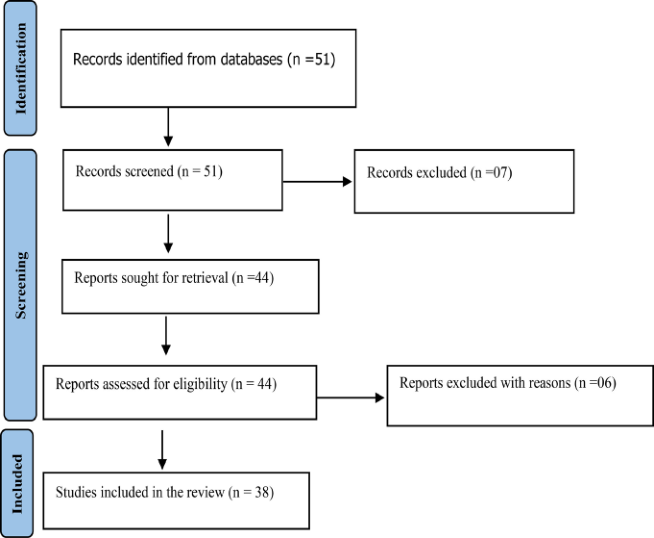
Data Extraction and Analysis A systematic and transparent data extraction process was employed to ensure consistent and accurate collection of relevant information from all included studies, of which 38 met the inclusion criteria. A predesigned data extraction template, aligned with the review objectives and research questions, facilitated systematic comparison and synthesis of findings across diverse sources. All data were recorded in Excel and independently verified to minimise bias and ensure reliability. Accurate extraction is essential to prevent errors that could lead to misleading conclusions (Duan et al., 2024). The template captured key information from each review, including author(s), year of publication, review objectives, research methodology, 4IR technologies examined, reported adoption benefits, barriers, and regional context. The extracted data were then systematically analysed to identify recurring themes, emerging trends, and research gaps, providing a comprehensive overview of 4IR adoption by construction SMEs. This process enabled a deeper understanding of the technological, organisational, and environmental factors influencing adoption, as well as the opportunities and challenges SMEs face across different contexts.
RESEARCH FINDINGS AND DISCUSSION Selected Studies
Figure 1 below indicates an overview of study selection process for this review.
Figure 1: PRISMA Model [Adapted from: Schjerven et al. (2024)].
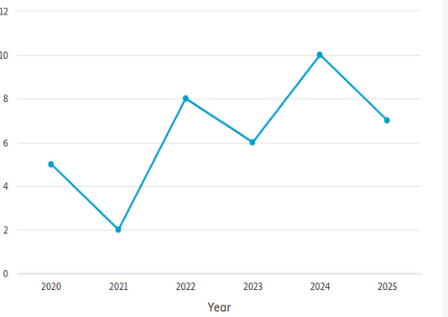
Descriptive Analysis Figures 2 and 3 present descriptive information on the publications addressing the adoption of 4IR technologies by SMEs in the construction industry. Figure 2 illustrates the annual publication of the 38 documents between 2020 and 2025 on opportunities, the adoption of 4IR Technologies by SMEs in the construction industry, and the distribution of publications by country, revealing a geographically uneven research gap. It is worth noting that, of these publications, only 05 were published in 2020, as obtained from the Scopus database. Although there was a gradual decrease in publications from 2021 (2 publications) to 2022 (8 publications), increasing by 8 publications. Furthermore, the results revealed a significant decrease to 06 publications in 2023, an increase to 10 publications in 2024, and, in 2025, another decrease to only 7 publications. The alternating increase- decrease pattern indicates an emerging growth research area characterised by irregular scholarly attention, highlighting the need for more consistent longitudinal, empirical, and context-specific studies to stabilise and
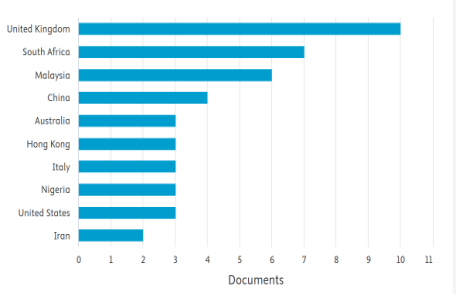
advance the field. Figure 3 details the publications by country. The United Kingdom leads with 10 publications, followed by South Africa (SA) with 7 publications, and Malaysia ranking third with 6 publications, followed by China with 4 publications. Australia, Hong Kong, Italy, Nigeria and United States (US) each have 3 publications. With Iran ranking last with 2 publications.
Figure 2: No. of publication per year.Figure 3: No. of publication per country.
Among African countries, only South Africa and Nigeria satisfied the specified inclusion criteria. Nigeria’s presence, partly through collaborative research with South Africa, further underscores the growing role of African scholars in the discourse on 4IR construction, despite resource and infrastructure constraints. This highlights the need for more locally led, empirically grounded studies in developing regions to balance the current geographical skew and strengthen contextual relevance.
DISCUSSION
The studies demonstrate that Fourth Industrial Revolution (4IR) technologies present substantial opportunities to transform construction SMEs by enhancing productivity, efficiency, collaboration, and sustainability performance (Maoeng & Ntakana, 2025). However, Mbatha (2024) the adoption of these technologies remains uneven across the sector, reflecting the influence of structural, organisational, and contextual constraints. While digital transformation offers clear benefits, SMEs’ ability to capitalise on these opportunities is shaped by their resource capacity, technological readiness, and external environment. The review indicates that Building Information Modelling (BIM) and the Internet of Things (IoT) serve as entry- point technologies for construction SMEs. Their relative maturity, scalability, and compatibility with existing construction processes make them more accessible compared to advanced 4IR solutions (Lopes & Pinto, 2024). BIM facilitates improved project coordination, information integration, and decision-making, while IoT systems enhance real-time monitoring, safety management, and asset tracking. As such, these technologies enable incremental digital transformation and provide a foundation for the development of more advanced digital capabilities.
Among the 7 South African reviewed studies, the authors each investigating key opportunities and constraints influencing the adoption of 4IR technologies by construction SMEs highlighting practical applications, organisational readiness, and sustainability outcomes. Oyediran et al. (2023) examined cyber-physical systems as enablers of real-time monitoring, automation, and enhanced decision-making, while emphasizing infrastructural and skills limitations. Jacobs and Kabaso (2024) investigated enterprise resource planning systems and found that effective feature utilisation improves operational efficiency and competitive advantage, although adoption depth among SMEs remains uneven. Several studies focused on BIM adoption, particularly Bamgbose et al. (2024), who identified cost, skills shortages, and resistance to change as major barriers, and Sila Nosabelo et al. (2024), have highlighted managerial support and perceived safety benefits as key adoption drivers. Expanding beyond BIM, John et al. (2024) linked digital and circular economy practices to SME growth and resilience, meanwhile Adekunle et al. (2025) investigated broader emerging technologies and emphasised financial, policy, and capability constraints. As a final point, Makabate et al. (2025) provided a bibliometric overview showing the thematic dominance of BIM and the geographic concentration of SME- focused 4IR research.
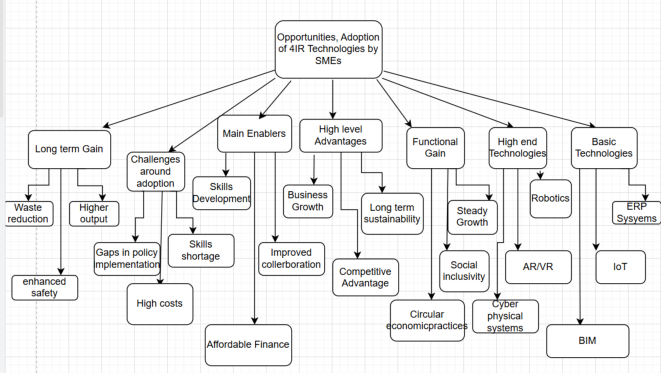
According to Javaid et al. (2021) highlights that technologies such as BIM, ERP, IoT, automation, robotics, and AR/VR are increasingly leveraged to enhance operational efficiency, project management, and competitive advantage. Benefits include improved resource allocation, enhanced safety management, integrated sustainability, and long-term organisational growth (Johansson & Roupé, 2024). However, adoption remains uneven, particularly in developing economies, due to barriers such as high implementation costs, limited technical skills, organizational readiness, and inadequate institutional and policy support. African studies, including those from Nigeria and South
Africa, emphasize the influence of contextual challenges, while datasets from the UK, Malaysia, and China highlight more structured adoption processes supported by policy, collaboration, and infrastructure.
A second theme emerging from the review is the relationship between adoption and sustainability, highlighting how SMEs integrate 4IR technologies with circular economy and environmentally conscious practices to achieve cost savings, compliance, and market differentiation. Knowledge mapping and scientometric analyses reveal that research is concentrated in developed economies, while empirical studies in resource- constrained contexts remain limited, indicating a critical need for localized, context-specific research. Overall, the review underscores that the adoption of 4IR technologies by construction SMEs is multifaceted, driven by both operational and strategic imperatives, but moderated by financial, technical, and organizational barriers (Khan et al., 2024). Tailored interventions, including targeted capacity building, collaborative networks, and supportive policies, are essential to enable SMEs to fully leverage 4IR technologies, enhance competitiveness, and contribute to sustainable, resilient growth in the construction sector.
Figure 4: Explains opportunities for adopting 4IR technologies.
CONCLUSION AND RECOMMENDATIONS The descriptive analysis of 38 Scopus-indexed publications Opportunities, Adoption of 4IR Technologies by SMEs in the Construction Industry reveals an emerging growth research area characterised by irregular scholarly attention, highlighting the need for more consistent longitudinal, empirical, and context-specific studies to stabilise and advance the field. Annual publication counts demonstrate an emergent phase in 2020 (5 studies), followed by a steady decline trajectory through 2021(2 studies), 2022(peaking at 8 studies) and 2023 (declining at 6 studies), and a peak
Opportunities, Adoption of 4IR Technologies by SMEs in the Construction Industry 189 in 2024 (10 studies), and 2025 declining (7 studies) the studies suggest that tailored interventions such as capacity-building programs, supportive policy frameworks, and collaborative initiatives are essential to enable SMEs to fully leverage 4IR technologies. Geographically, scholarly contributions are heavily concentrated in developed economies, with United Kingdom leading (10 publications), even though South Africa came second with (7 publications) it is through affiliation with Nigeria and the publications are not necessarily focusing on opportunities and adoption of 4IR Technologies by SMEs hence this show a gap in the studies related to the research followed by Malasia with (6 publications), China (with 4 publications). Moderate outputs were recorded from Australia, Hong Kong, Italy Nigeria and United States, each with 3 publications, while Iran produced 2 publications. From the African continent, South Africa and Nigeria, with 7 and 3 publications respectively with Nigeria relatively by affiliation, met the inclusion criteria.
The adoption of 4IR technologies by construction SMEs presents significant opportunities to enhance operational efficiency, competitiveness, sustainability, and organizational growth, yet it remains uneven and constrained by financial limitations, skills gaps, organizational readiness, and limited policy or institutional support, particularly in developing economies. Evidence from the 38 Scopus datasets and key studies highlights themes of competitive advantage, barriers to adoption, operational and safety benefits, sustainability-driven growth, and research gaps, demonstrating both the promise and challenges of digital adoption. To address these issues, a coordinated approach is needed that combines supportive policy frameworks, financial incentives, and capacity-building initiatives to enhance SMEs’ digital literacy and technical skills in technologies such as BIM, ERP, IoT, automation, robotics, and AR/VR. Cross-sector collaboration with larger firms, research institutions, and technology providers can facilitate knowledge transfer and resource sharing, while context-specific, phased adoption strategies aligned with long-term business goals can maximize operational and economic benefits. Future research should focus on empirical and longitudinal studies in resource- constrained settings, explore emerging 4IR technologies, and examine organizational, cultural, and policy factors influencing adoption. By integrating these measures, SMEs can overcome barriers, fully leverage 4IR technologies, and achieve sustainable, resilient, and competitive growth, thereby contributing to the broader transformation and modernization of the construction industry.
REFERENCES
Abbas, R., & Miller, T. (2025). Exploring communication inefficiencies in disaster response: Perspectives of emergency managers and health professionals. International Journal of Disaster Risk Reduction, 120. https://doi.org/10.1016/j. ijdrr.2025.105393 Afeti, G. (2024). Promoting employment-oriented skills development in Africa:
Reality, relevance and research as enablers. Journal of Vocational, Adult and Continuing Education and Training, 7(2), 13–13. https://doi.org/10.14426/ jovacet.v7i2.414
Alabi, O., & Bukola, T. M. (2023). Introduction to Descriptive statistics. IntechOpen EBooks. https://doi.org/10.5772/intechopen.1002475 Asif, M., Naeem, G., & Khalid, M. (2024). Digitalization for sustainable buildings:
Technologies, applications, potential, and challenges. Journal of Cleaner Production, 450, 141814–141814. https://doi.org/10.1016/j.jclepro.2024.141814 Audretsch, D. B., Belitski, M., Caiazza, R., & Phan, P. H. (2023). Collaboration strategies and SME innovation performance. Journal of Business Research, 164, 114018–114018. https://doi.org/10.1016/j.jbusres.2023.114018 Bangdiwala, S. I. (2024). The importance of systematic reviews. International Journal
of Injury Control and Safety Promotion, 31(3), 347–349. https://doi.org/10.1080/ 17457300.2024.2388484 Beck, T., & Demirguc-Kunt, A. (2006). Small and medium-size enterprises: Access to finance as a growth constraint. Journal of Banking & Finance, 30(11), 2931– 2943. https://doi.org/10.1016/j.jbankfin.2006.05.009 Bok, E., & Tolmay, A. S. (2025). Barriers Preventing South African Small and Medium
Enterprises From Adopting Green Information Technology. The Electronic Journal of Information Systems in Developing Countries, 91(3). https://doi.org/10.1002/ isd2.70011 Bugwandin, V., Anwana, E., & Aroba, O. J. (2025). Critical Factors for Growth and Sustainability of Small and Medium Enterprises: A Systematic Literature Review and Propositions for a Successful Transition into Large Corporate Organizations. 7(1), 1–18. https://doi.org/10.51415/ajims.v7i1.1530 Chigbu, U. E., Atiku, S. O., & Du Plessis, C. C. (2023). The Science of Literature
Reviews: Searching, Identifying, Selecting, and Synthesising. Publications, 11(1), 2. MDPI. https://doi.org/10.3390/publications11010002 Dodoo, J. E., Al-Samarraie, H., Alzahrani, A. I., Lonsdale, M., & Alalwan, N.
(2024). Digital Innovations for Occupational Safety: Empowering Workers in Hazardous Environments. Workplace Health & Safety, 72(3). https://doi. org/10.1177/21650799231215811 Fei, W., Opoku, A., Agyekum, K., Oppon, J. A., Ahmed, V., Chen, C., & Lok, K.
L. (2021). The Critical Role of the Construction Industry in Achieving the Sustainable Development Goals (SDGs): Delivering Projects for the Common Good. Sustainability, 13(16), 9112. mdpi. George, D. A. S. (2024). The Fourth Industrial Revolution: A Primer on Industry 4.0 and its Transformative Impact. Partners Universal Innovative Research Publication, 2(1), 16–40. https://doi.org/10.5281/zenodo.10671872 Goel, A., Masurkar, S., & Pathade, G. R. (2024). An Overview of Digital
Transformation and Environmental Sustainability: Threats, Opportunities, and Solutions. Sustainability, 16(24), 11079. https://doi.org/10.3390/su162411079 Goel, A., Masurkar, S., & Pathade, G. R. (2024). An Overview of Digital Transformation and Environmental Sustainability: Threats, Opportunities, and Solutions. Sustainability, 16(24), 11079. https://doi.org/10.3390/su162411079 Gonese, D., & Ngepah, N. N. (2024). Fourth industrial revolution technologies and
sectoral employment in South Africa. Cogent Social Sciences, 10(1). https://doi. org/10.1080/23311886.2024.2382282 Javaid, M., Haleem, A., Singh, R. P., & Suman, R. (2021). Substantial capabilities of robotics in enhancing industry 4.0 implementation. Cognitive Robotics, 1(1), 58–75. Sciencedirect. https://doi.org/10.1016/j.cogr.2021.06.001 Johansson, M., & Roupé, M. (2024). Real-world applications of BIM and immersive
VR in construction. Automation in Construction, 158, 105233. https://doi. org/10.1016/j.autcon.2023.105233
Opportunities, Adoption of 4IR Technologies by SMEs in the Construction Industry 191 Karakhan, A. A., Nnaji, C. A., Gambatese, J. A., & Simmons, D. R. (2023). Best
Practice Strategies for Workforce Development and Sustainability in Construction. Practice Periodical on Structural Design and Construction, 28(1). https://doi. org/10.1061/(asce)sc.1943-5576.0000746 Khan, M. I., Yasmeen, T., Khan, M., Hadi, N. ul, Asif, M., Farooq, M., & Al-Ghamdi, S. G. (2024). Integrating industry 4.0 for enhanced sustainability: Pathways and prospects. Sustainable Production and Consumption, 54. https:// doi.org/10.1016/j.spc.2024.12.012 Liu, X., Antwi-Afari, M. F., Li, J., Zhang, Y., & Manu, P. (2025). BIM, IoT, and GIS
integration in construction resource monitoring. Automation in Construction, 174, 106149. https://doi.org/10.1016/j.autcon.2025.106149 Lopes, J. M., & Pinto, C. (2024). Adoption of Fourth Industrial Revolution Technologies in the Construction Sector: Evidence from a Questionnaire Survey. Buildings, 14(7), 2132–2132. https://doi.org/10.3390/buildings14072132 MacFarlane, A., Russell-Rose, T., & Shokraneh, F. (2022). Search Strategy
Formulation for Systematic Reviews: Issues, Challenges and Opportunities. Intelligent Systems with Applications, 15(1). sciencedirect. https://doi. org/10.1016/j.iswa.2022.200091 Magagula, M. M., & Awodiji, O. A. (2024). The implications of the fourth industrial revolution on technical and vocational education and training in South Africa. Social Sciences & Humanities Open, 10, 100896–100896. https://doi. org/10.1016/j.ssaho.2024.100896 Malagnino, A., Montanaro, T., Lazoi, M., Sergi, I., Corallo, A., & Patrono, L. (2021).
Building Information Modeling and Internet of Things integration for smart and sustainable environments: A review. Journal of Cleaner Production, 312, 127716. https://doi.org/10.1016/j.jclepro.2021.127716 Maoeng, M., & Ntakana, K. (2025). Assessing the improvement of information communication technology for the construction SMES in the 4IR. Journal of Infrastructure Policy and Development, 9(1), 8198. https://doi.org/10.24294/ jipd8198 Mateko, F. M. (2024). Opportunities in emerging technologies for Southern Africa:
How the Global South should adopt to take advantage? ˜the œElectronic Journal on Information Systems in Developing Countries, 90(5). https://doi.org/10.1002/ isd2.12321 Mbatha, B. (2024). Digital divide: a phenomenon of unequal adoption of technology by SMMEs in the agribusiness sector in South Africa. Communicare Journal for Communication Studies in Africa, 43(2), 65–75. https://doi.org/10.36615/ vdjgg265 Olaitan, O., Vijayalekshmi, S., & Kumar, D. V. (2024). Integrating 4IR Technologies
into Higher Education in South Africa: Opportunities, Challenges, and Strategies. International Journal of Learning Teaching and Educational Research, 23(11), 157–179. https://doi.org/10.26803/ijlter.23.11.8 Osei, D. B. (2024). Digital infrastructure and innovation in Africa: Does human capital mediates the effect? Telematics and Informatics, 89, 102111–102111. https://doi.org/10.1016/j.tele.2024.102111 Phillips, V., & Barker, E. (2021). Systematic reviews: Structure, Form and
Content. Journal of Perioperative Practice, 31(9), 349–353. https://doi. org/10.1177/1750458921994693 Rakibul, M., Faraji, M. R., Rashid, M., Bhuyan, M. K., Hossain, R., & Ghose, P.
(2024). Digital Transformation in SMEs Emerging Technological Tools and Technologies for Enhancing the SME’s Strategies and Outcomes. Journal of Ecohumanism, 3(4), 211–224. https://doi.org/10.62754/joe.v3i4.3594
Rame, R., Purwanto, P., & Sudarno, S. (2024). Industry 5.0 and sustainability: An overview of emerging trends and challenges for a green future. Innovation and Green Development, 3(4), 100173–100173. https://doi.org/10.1016/j. igd.2024.100173 Sahoo, S., & Lo, C.-Y. (2022). Smart manufacturing powered by recent technological
advancements: A review. Journal of Manufacturing Systems, 64, 236–250. https:// doi.org/10.1016/j.jmsy.2022.06.008 Salimimoghadam, S., Ghanbaripour, A. N., Tumpa, R. J., Rahimi, A. K., Golmoradi, M., Rashidian, S., & Skitmore, M. (2025). The Rise of Artificial Intelligence in Project Management: A Systematic Literature Review of Current Opportunities, Enablers, and Barriers. Buildings, 15(7), 1130–1130. MDPI. https://doi. org/10.3390/buildings15071130 Sampaio, A. Z., Fernandes, V., & Gomes, A. (2023). The use of BIM-based tools to
improve collaborative building projects. Procedia Computer Science, 219, 2027– 2034. https://doi.org/10.1016/j.procs.2023.01.504 Schjerven, F. E., Lindseth, F., & Steinsland, I. (2024). Prognostic risk models for incident hypertension: A PRISMA systematic review and meta-analysis. PLOS ONE, 19(3), e0294148–e0294148. https://doi.org/10.1371/journal. pone.0294148 Skibniewski, M. J. (2024). The Present and Future of Smart Construction
Technologies. Engineering, 44. https://doi.org/10.1016/j.eng.2024.12.024 Suciati, I., & S.H., M. Hum, Dr. J. S. (2023). Legal Protection of Child Offenders in the Juvenile Criminal Justice System Perspective in Indonesia. International Journal of Social Science and Human Research, 6(10). https://doi.org/10.47191/ ijsshr/v6-i10-20 Vararean-Cochisa, D., & Crisan, E.-L. (2024). The digital transformation of the
construction industry: a review. IIM Ranchi Journal of Management Studies, 4(1). https://doi.org/10.1108/irjms-04-2024-0035
LISTED IN THE AHFE DIGITAL BOOKSTORE CATALOGUE
Explore the complete digital volume
Sustainable Built Environment
Read this individual research paper free through the original publisher, or explore the full digital proceedings book.
ISBN 979-8-950676-01-7
Explore this ISBN in the AHFE Bookstore ↗Listed in the July 2026 bookstore catalogue; search by ISBN to confirm current availability · Digital book purchase optional