Zixiao Chen, RongRong Fu (2025). Generative AI-Driven Optimization for Cultural Packaging Design: Translating Chinese Poetic Imagery into Tea Packaging Design. In: Human Factors in Design, Engineering, and Computing. AHFE Open Access, vol. 199, pp. 1191–1202. https://doi.org/10.54941/ahfe1006930
The rapid advancement of AIGC has unlocked new potential in design processes, making it an essential tool for innovation. However, systematic research on AIGC-based product packaging design remains insufficient, particularly in enhancing design efficiency and accurately reflecting cultural elements. This study proposes an AIGC-based optimization framework to address these challenges. First, ChatGPT and the LDA model were used to extract imagery words from high-quality literary works aligned with the design theme. These words served as prompts for ChatGPT, guiding iterative image creation through Midjourney. Furthermore, AIGC-based image recognition was integrated to incorporate big data into the decision-making process. To ensure cultural relevance and consumer satisfaction, the AHP and FCE methods were employed to conduct a multidimensional evaluation and optimization. The empirical findings from the case study employing The Thousand Poems as thematic content for Jiangnan Longjing tea packaging design substantiate that AI-generated content driven design methodologies not only optimize decision-making efficacy but also establish an adaptive framework for design refinement, thereby providing a robust theoretical and practical foundation for subsequent scholarly inquiry.
The essence of packaging design lies in its capacity to communicate through visual symbols, functioning both strategically and aesthetically by promoting the product while enhancing its visual appeal (Shang et al., 2024). Images play a central role in packaging design, with their composition and layout serving as key elements of the overall presentation. These images not only capture consumer attention but also convey product information effectively, shaping consumer perception and influencing purchasing decisions (Schifferstein et al., 2021).
While the original function of brand packaging was to protect products (Dai, 2021), advancements in technology have introduced new challenges. Contemporary packaging design often suffers from a lack of cultural depth, repetitive patterns, insufficient creativity, and limited feedback mechanisms.
From a consumer perspective, research indicates that the most prominent issues include the absence of cultural substance and repetitive design elements (Ji and Xia, 2024). From the designer’s perspective, although computer-aided design has enhanced the efficiency of packaging design, creativity remains constrained due to limitations in both hardware and software (Chen et al., 2023; Hang et al., 2024). Imagery aesthetics represents a core theoretical framework in product packaging design, influencing both user-oriented and market-oriented outcomes. From a user-oriented perspective, imagery enhances the aesthetic experience, creating a more enjoyable interaction with the product. From a market-oriented perspective, it strengthens brand recognition, giving products a unique identity and competitive edge. Beyond reflecting the product’s basic function, imagery conveys deeper symbolic meanings and emotional resonance (Hou et al., 2024). Traditional artistic creation relies heavily on the subjective interpretation and creativity of the artist, making outcomes limited and often unpredictable. The rise of AIGC has accelerated the development of creative content generation (Tang et al., 2019), significantly reducing labour costs and improving production efficiency (Lu, 2024).
RELATED WORK
With the rapid development of artificial intelligence-generated content (AIGC) technology, related application scenarios are constantly expanding, covering personalized recommendation, education and training, content generation, and other fields.
AIGC has also significantly transformed the creative process across text, image, and video production. For example, in creative writing, researchers are exploring ways to accelerate the conversion of stories into high-quality scripts (Charly et al., 2021). Sentiment analysis techniques are used to predict emotional touchpoints and guide the development of narratives through AI (Lu et al., 2023). In visual fields, AIGC plays a crucial role in illustration field (Cao, 2024), game field (Li and Liu, 2024), and so on, primarily serving as a creative aid for image generation. To improve satisfaction with AIGC-based designs, it is essential to optimize both interpretability and controllability throughout the design process (Charly et al., 2021). Scholars have begun developing AIGC-driven packaging design frameworks, offering new pathways for innovative visual expression (Tang et al., 2019). Despite growing interest in AIGC across industries, the literature still lacks comprehensive methodological guidance for applying AIGC in packaging design, underscoring the need for further research and optimization.
Traditional packaging design provides a basic framework but must also ensure that the intended goals are achieved. Evaluating packaging design effectiveness requires multidimensional analysis from various perspectives. Methods such as eye-tracking technology (Acartürk et al., 2024) and the combination of electroencephalography and eye-tracking technologies (Pan and Li, 2023) offer insights into consumer responses. Quantitative approaches like the AHP model (Wu et al., 2024) and IPA method
Generative AI-Driven Optimization for Cultural Packaging Design 1193
(Chen et al., 2023) further help assess consumer needs and preferences, offering data-driven guidance for design innovation.
This study aims to establish an efficient AIGC-based optimization method for product packaging design, leveraging advanced tools to enhance creativity, align with consumer preferences, and drive design innovation.
METHODOLOGY
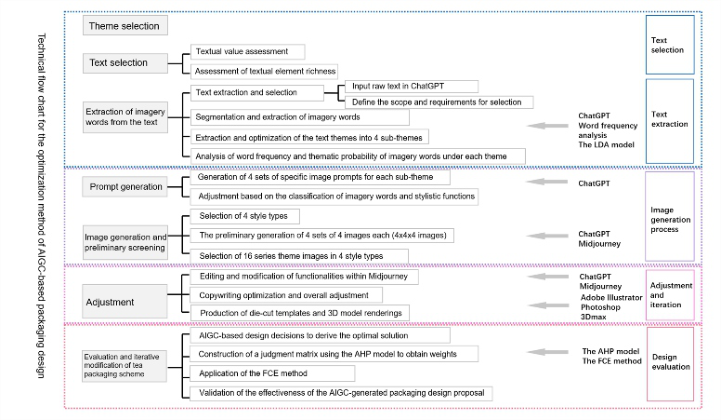
Based on the previous research, this section outlines the techniques and methods employed in the AIGC-based optimization of packaging design (Figure 1).
Figure 1: Technical flow chart (self-drawn by the author).
Application of Text Artificial Intelligence Tools in the Design Process In this study’s packaging design process, GPT-4o functions as the primary technical tool, supported by the LDA model as an auxiliary component. Text- generation AI tools are employed to extract themes and relevant cultural elements from the original texts. The following outlines the steps involved in applying text-based AI tools throughout the packaging design process:
1. Preliminary text processing
First, texts with high cultural value and rich elements are selected, and ChatGPT conducts preliminary screening to ensure alignment with the overarching theme of the packaging design. At this stage, specific filtering criteria can be applied, such as: “Define the scope of [content to be filtered]: [related definition]. Evaluate by combining [aspect...]. [Initial text]. You are an expert in [related field]. Please make a judgment and provide reasoning.”
After the initial screening, ChatGPT segments the selected texts to extract cultural elements, laying the groundwork for identifying imagery words
1194 Chen and Fu
through the LDA model. For instance: “Define the imagery words: [related definition of imagery word]. Text to be evaluated: [text]. As an expert in [related field], please extract the imagery words from this text.” In this process, GPT-4o supports text processing and classification, significantly enhancing the efficiency and accuracy of the screening process. Additionally, ChatGPT can format the output according to specific requirements by adding formatting references.
2. Extraction of sub-themes and corresponding imagery words
In this study, the LDA model primarily assists in extracting imagery words, identifying text themes, and analyzing the probability of those themes.
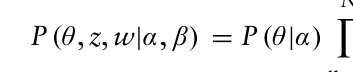
The generative process of the LDA model can be described as follows: First, themes are generated. For each document d, assume the number of latent themes is k. We generate a theme distribution θd ∼Dir(α) for the document from a Dirichlet distribution Dir(α), where α is a hyperparameter that controls the sparsity of the themes. Next, we move to word generation. For each theme k, a word distribution φk ∼Dir(β) is generated from another Dirichlet distribution Dir(β), where β regulates the distribution of words. Finally, documents are generated. For the n-th word in each document, we sample a theme zdn ∼Multinomial(θd) from the document’s theme distribution θd and sample a wordwdn ∼Multinomial(φzdn) from the corresponding word distribution φzdn.
The complete probability of the model is expressed as: Nd Y
Equation reproduced from the original PDF.Equation reproduced from the original PDF.
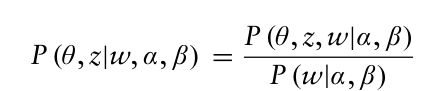
What we need is posterior distribution, which shows that we can infer the theme distribution θ and word distribution from the words in the document:
Equation reproduced from the original PDF.
P (w|α, β) (2) To sum up, its core formula can be summarized as theme distribution:
P
Equation reproduced from the original PDF.
θd
α Word distribution of each theme:
P
Equation reproduced from the original PDF.
φk
β Conditional probability of each word generation:
P wdn
= φzdn,wdn (5)
zdn, φ
3. Optimization of sub-themes and corresponding imagery words
Preliminary sub-theme titles often lack appeal, so ChatGPT can be employed to enhance these titles. We can frame your request like this: “Please optimize and expand the [sub-themes set], ensuring that the titles are refined
Generative AI-Driven Optimization for Cultural Packaging Design 1195
in relation to the [packaging design theme]. Each title should contain the same number of words. Let your creativity flow!”
Next, we conduct word frequency analysis and theme probability analysis for the imagery words associated with the sub-themes. Word frequency measures how often a specific term appears in a document. In this study, the aim of the word frequency analysis is to identify widely applicable words that can serve as general imagery. The formula for calculating word frequency is as follows: TF t, d = The occurrence count of word t in document d The total number of words in document d (6)
Common words are filtered out when organizing the imagery words linked to the sub-themes to ensure clarity and distinction. Once the relevant imagery words are identified, frequently occurring words with broad applicability are included as general imagery. This approach enriches the literary elements available for generating prompt words in the subsequent image selection process.
4. Generation and optimization of image prompt words
When generating prompt words for Midjourney, ChatGPT’s primary role is to evaluate the suitability of these words for creating relevant images while ensuring they align with the packaging design theme. You might use phrasing like: “You are an expert in [related fields]. Please assess whether the [set of imagery words] aligns with the [sub-theme and packaging design theme], and help me eliminate any imagery words that do not fit.”
The next step involves creating precise prompt words based on these imagery words. This can be framed as follows: “You are a graphic designer proficient in using Midjourney software to generate images. [Introduction of Midjourney]. These images are primarily intended for packaging design. Imagery words for picture elements: [set of imagery words]. Please combine [excellent case] and ensure [other requirements]. Generate n different prompt phrases for me.”
Application of Image Artificial Intelligence Tools in the Design Process Midjourney has emerged as a central tool in the design process, enabling designers to effectively express and optimize their creativity. The following steps outline its application in the packaging design process.
At the image generation process stage, using the -Sref function in the Midjourney prompt helps establish style references, ensuring that the generated images are consistent and cohesive within specific stylistic dimensions. By conducting targeted interviews, we can identify images that are frequently recognized and serve as strong stylistic references. These references will assist in the subsequent learning of image styles. When the initial prompt is submitted, Midjourney typically produces a set of 4 images, we can sort and prioritize them to select the best image for further use.
The initial images generated by Midjourney often do not fully meet designers’ requirements. However, these images can be optimized using AIGC techniques through specific instructions in the image generation tool.
1196 Chen and Fu
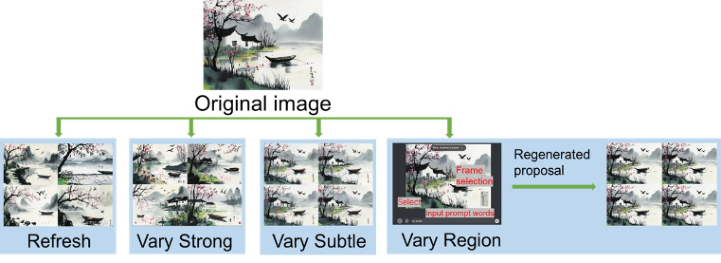
To start, input the command /settings and enable the Remix mode. This process (Figure 2) focuses on 4 key options: Refresh, Vary Strong, Vary Subtle, and Vary Region. Each option allows for different adjustments to the generated images, helping designers refine them to better align with their vision.
Figure 2: Editing and revision workflow (self-drawn by the author).
Application of Text Artificial Intelligence Tools in the Design Decision-Making Process Once the rendering is complete, ChatGPT can be utilized to support design decisions. For a large number of generated images, the first step involves manually screening and sorting them, followed by using ChatGPT for evaluation. An example inquiry could be: “You are an expert in design; please assess the uploaded images related to [the major theme of packaging design]. The criteria for scoring each image are as follows: [list criteria]. Please provide the scores and calculate the total to identify the best design.”
Integrating ChatGPT into the design decision-making process helps reduce the time and workload associated with manual evaluation by offering intelligent assessments. For image groups that meet specific quality standards and exhibit only minor differences, ChatGPT enhances the efficiency and accuracy of design evaluations. This approach effectively addresses the challenges of time-consuming and delayed feedback commonly found in traditional design assessment methods.
To verify the effectiveness of the selected product packaging design scheme based on AIGC, the Analytic Hierarchy Process (AHP) and the Fuzzy Comprehensive Evaluation (FCE)methods are used. The comprehensive score can be used for the final judgment of the evaluation results. In the validation phase of this study, if the highest-scoring option is the AIGC-based product packaging design scheme, it demonstrates the effectiveness of the design. If not, a comparison can be made using the individual scores of each criterion, allowing for iterative modifications of the weaker scoring aspects, and repeating the above steps.Furthermore, the selected product packaging design solutions were cross-validated using a user satisfaction scale to ensure consistency between the two assessment methodologies.
In conclusion, the precise organization of inquiry prompts in this study significantly enhanced the quality and applicability of prompts for design tasks. Unlike traditional inquiry methods, which typically rely on a
Generative AI-Driven Optimization for Cultural Packaging Design 1197
simplistic question-and-answer approach, this study emphasizes the flexible combination and application of prompts.
CASE STUDY This study focused on the packaging design of Jiangnan Longjing Spring Tea as an empirical case to develop an optimization strategy grounded in AIGC technology.
The Thousand Poems was chosen as the source text for extracting Jiangnan’s poetic imagery due to its significant influence and representativeness in literary history. Since its publication during the Song and Yuan Dynasties, The Thousand Poems has been widely circulated, particularly gaining prominence in the Ming and Qing Dynasties. The richness and diversity of the poetry’s semantics present both challenges and typical characteristics in the image extraction process.
In a narrow sense, Jiangnan refers to the regions of Zhejiang, southern Jiangsu, southern Anhui, Shanghai, and northeastern Jiangxi. The criteria for selecting poetry related to Jiangnan are as follows: First, the poet must have a significant connection to the Jiangnan region. Second, the poetry should reflect the distinctive natural landscapes and cultural environments that characterize Jiangnan. While the creative context does not have to be limited to Jiangnan, it should be relevant, through depictions of its scenery or expressions of homesickness.
The definition of imagery is deeply rooted in the grand philosophical and aesthetic systems of ancient China, particularly stemming from the profound concepts found in the I Ching, such as “observing objects to derive imagery” and “establishing forms to express the essence.” The “meaning” in imagery symbolizes the emotions, thoughts, and spiritual realms residing deep within the poet’s soul, while the “form” serves as the manifestation of these intangible meanings.
Using the previous definition of Jiangnan poetry, 104 poems related to the region were identified from The Thousand Poems through discussions with ChatGPT. This selection was finalized after expert review, providing robust data support for further research.
This study utilized Micro Word Cloud software for text analysis based on the LDA model, focusing on frequency statistics and imagery word analysis in The Thousand Poems. The goal was to generate rich inspiration for packaging design that embodies the Jiangnan style. Given the complexity and diversity of language in classical Chinese poetry, relying solely on automated segmentation tools can easily lead to the omission of key imagery words. Therefore, a manual review of the segmentation results and the configuration of custom phrases are essential. These custom phrases were primarily generated using ChatGPT, leveraging natural language processing. After obtaining initial results through dialogue, a manual review was conducted before inputting them into the software for imagery word segmentation.To enhance the segmentation results, filtered poetry texts related to Jiangnan were input into the LDA model. Custom phrases, including imagery words
1198 Chen and Fu
verified by both ChatGPT and manual review, were integrated to prevent the segmentation tool from making narrow judgments.
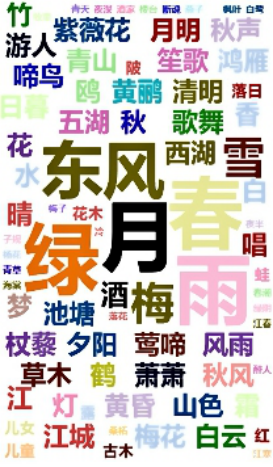
Following this processing, a basic information table detailing the corresponding word frequencies for imagery words was created, along with a word cloud visualization (Figure 3). The word frequency table, derived from frequency analysis, served primarily to assess the significance of words within the text. In subsequent packaging designs, higher-frequency words can be employed as general Jiangnan imagery. The word cloud visually represented frequently occurring vocabulary, and the prominent words identified can be further used to enrich and expand the imagery associated with specific sub-themes.
Figure 3: Word cloud (self-drawn by the author).
This study focuses on the packaging design of Jiangnan Longjing Spring Tea, a renowned tea that holds a significant position in both domestic and international markets due to its unique flavor and rich cultural heritage. The annual arrival of new tea varieties not only drives increased demand for packaging but also elevates the expectations for design timeliness. As a symbol of Chinese tea culture with a deep historical background, Longjing tea is intricately woven into Jiangnan culture, thereby raising the standards for cultural expression in its packaging.
Using the LDA model configured in the program, a thematic analysis was performed on poetry texts. Through multiple iterations, 6 themes emerged: “Pond,” “Moon,” “Autumn,” “Spring,” “Green,” and “Rain.” In configuring the model, a minimum occurrence of two was established to filter out representative vocabulary, given the concise nature of the poetry.
Recognizing the simplicity of the themes generated due to the brevity of the poetry, further optimization and expansion were necessary. The optimization
Generative AI-Driven Optimization for Cultural Packaging Design 1199
process, which involved using ChatGPT, is outlined in Supplemental Material 7. Following this, a sample of 50 ordinary audiences and 69 cultural and creative practitioners were invited to evaluate the six sub-themes. A matrix scale questionnaire was utilized to assess each theme’s appeal, cultural relevance, creativity, and emotional resonance. Based on the analysis of the results, the themes which received lower and somewhat similar scores, were excluded from further consideration.
Based on the data obtained, the first step involved screening for imagery words with a theme probability of 100% corresponding to the identified themes. Subsequently, nine high-scoring words were selected based on earlier calculations of word frequency. These words serve as general imagery elements that can be incorporated into prompts and utilized in the subsequent packaging designs for each sub-theme, enhancing the visual content.
Next, ChatGPT was employed to establish connections between the imagery words and the themes related to Jiangnan Longjing Spring Tea, resulting in the generation of 16 sets of prompt words. In Midjourney, each group of prompts generated 4 images that exhibited minor variations in style and content. To evaluate the overall satisfaction with these images, an SPSS- based ranking survey was conducted among 10 design professionals. This process facilitated the selection of the highest-scoring images. The images underwent an initial 1.5× upscaling, followed by a 4× enhancement to improve clarity.
Additionally, 12 design professionals were surveyed to rank a set of AIGC- generated images sharing the same theme and style. The ranking criteria included the alignment of images with sub-themes, visual appeal, and style applicability. It is important to note that this survey focused solely on the original images generated, excluding any errors that may have occurred.
During the editing and modification phase, images with elemental errors or visual disharmony were edited and modified in Midjourney. After that, the designer carried out manual copy optimization and overall adjustment. The three-dimensional effect drawing is shown in Table 1.
Table 1: Three-dimensional renderings of Jiangnan Longjing spring tea packaging design.
Reflections of misty waves on the pond Emerald tones of Jiangnan
Fragrance of tea at moonset
1200 Chen and Fu
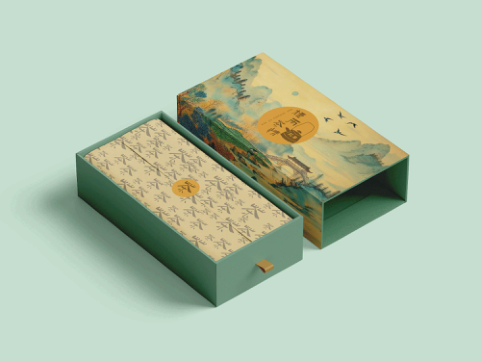
This study aimed to leverage ChatGPT-4o for data-driven decision-making in the packaging design of Jiangnan Longjing Spring Tea, focusing on dimensions such as visual recognition, aesthetic identification, and cultural characteristics. The 16 designs were categorized into four groups: A1-A4, B1-B4, C1-C4, and D1-D4. From each group, the top-scoring design was selected, and these four designs were subjected to further comparison and scoring using the same methodology with ChatGPT. Design A2 (Figure 4) was chosen as the representative scheme to validate its effectiveness during the design evaluation phase.
Figure 4: Optimal design scheme assisted by AIGC (self-drawn by the author).
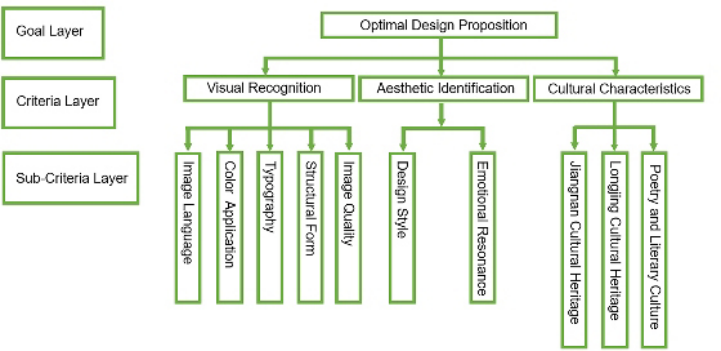
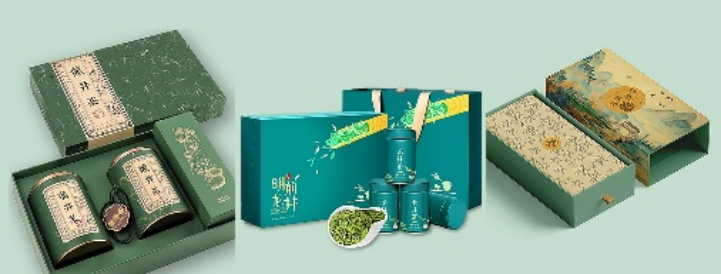
As illustrated in the hierarchical model (Figure 5), A total of 38 respondents participated in the scoring process, comprising 20 design practitioners, 8 literature experts, and 10 tea packaging consumers. Based on the weight ranking results, this study employed the FCA method to evaluate the AIGC-based packaging design of Jiangnan Longjing Spring Tea alongside traditional packaging designs, thereby assessing the effectiveness of AIGC integration in product packaging. Two market packages, selected from the top-ranked Jiangnan Longjing Spring Tea listings on JD.COM, were compared. To maintain rigor and comparability, brand information and complex backgrounds were excluded from the design schemes (Figure 6).Ten design experts were invited to assess all elements within the sub-criteria layer, ultimately determining the AIGC-based packaging scheme as the most effective solution, thereby validating its efficacy.
To further verify the findings, a large-scale user satisfaction survey was conducted in the later stage to obtain representative consumer data. Using the five-point Likert scale, the questionnaire includes three main aspects: Visual Distinctiveness, Aesthetic Resonance, and Cultural Significance. It also has modules for measuring the Net Promoter Score (NPS) and overall satisfaction. The results confirm the effectiveness of the product packaging design approach.
Generative AI-Driven Optimization for Cultural Packaging Design 1201
Figure 5: Design of the AHP model (self-drawn by the author).Figure 6: Design evaluation schemes.
CONCLUSION
This study explores an optimization method for packaging design utilizing AIGC. Through empirical analysis, it integrates AIGC-based packaging design for Jiangnan Longjing Spring Tea, proposing an innovative approach that enhances both design efficiency and quality. AIGC plays a crucial role in the design process and decision-making stages. By leveraging ChatGPT in conjunction with the LDA model for text analysis and employing Midjourney for image generation, this process significantly boosts efficiency while achieving impressive results in visual presentation and cultural expression. Future research should focus on enhancing AIGC’s ability to interpret cultural imagery at a deeper level, incorporating brand culture into design extraction and evaluation processes, and validating its effectiveness in commercial applications through market feedback and user research. In conclusion, this study encourages design practitioners to optimize traditional workflows by actively adopting cutting-edge technologies, thereby fostering innovation and advancing the field of design.
1202 Chen and Fu
REFERENCES
Acartürk, C., Fal, M. and Çakır, M. P. (2024) User performance and engagement in multi-user gaming environments: An experimental investigation through the group eye tracking (GET) paradigm. Entertainment Computing, 51: 100714. Cao, N. (2024) Practice and exploration of applying AI painting to assist illustration
design. Aesthetics, 2(2): 116–119. Charly, J. C., Eldhose, K., Jose, C., Siddharth, S., Geejo, S. S. and Sreedevi, S. (2021) Alyce: An artificial intelligence fine-tuned screenplay writer. In: Innovative Data Communication Technologies and Application, Singapore: Springer, pp. 627–636. Chen, T., Lu, D. B., Wang, J. and Li, G. H. (2023) Analysis on design satisfaction and
strategies of artificial intelligence generated packaging based on IPA. Packaging Engineering, 44(24): 328–335+404. Dai, Y. L. (2021) Research on brand packaging design of Chinese intangible cultural and creative products. Hunan Packaging, 36(2): 86–89. Hang, K. L., Liu, Y. C. and Dong, M. Q. (2024) Incorporating AIGC into design
ideation: A study on self-efficacy and learning experience acceptance under higher- order thinking. Thinking Skills and Creativity, 52: 101508. Hou, S. J., Wei, J. J., Sun, Y. C., Liu, Y., Wang, J. Q. and Lian, B. J. (2024) Product metaphor design method based on LDA model and imagery schema. Packaging Engineering, 45(16): 138–149+170. Ji, X. H. and Xia, Y. Z. (2024) Innovative design of Hunan local product packaging
under the mode of intangible cultural heritage + AI. Packaging Engineering, 45(16): 301–312. Li, J. Q. and Liu, Q. C. (2025) Application of generative artificial intelligence (AIGC) technology under neural network algorithm in game character art design. Journal of the Knowledge Economy, 16: 4652–4683. Lu, Q., Sun, X., Long, Y., Gao, Z., Feng, J. and Sun, T. (2023) Sentiment analysis:
Comprehensive reviews, recent advances, and open challenges. IEEE Transactions on Neural Networks and Learning Systems, 35(11): 15902–15112. Lu, S. Z., Min, Z. Y., Huang, Q. Y. and Wang, H. R. (2024) Packaging design driven by natural language processing model and text image generation technology. Packaging Engineering, 45(22): 232–241. Pan, S. S. and Li, J. X. (2023) Improved design of Shanghai Vive packaging based on
gray correlation analysis. Designs, 36(15): 116–119. Schifferstein, H. N. J., Boer, A. D. and Lemke, M. (2021) Conveying information through food packaging: A literature review comparing legislation with consumer perception. Journal of Functional Foods, 86(3): 104734. Shang, K. Y., Won, J. C. and Fan, Y. (2024) Analyzing the packaging design evaluation
based on image emotion perception computing. Heliyon, 10(10): e31408. Tang, Y. C., Huang, J. J., Yao, M. T., Wei, J., Li, W., He, Y. X. and Li, Z. J. (2019) A review of design intelligence: Progress, problems, and challenges. Frontiers of Information Technology & Electronic Engineering, 20(12): 1595–1617. Wu, F., Hsiao, S. W. and Lu, P. (2024) An AIGC-empowered methodology to product
color matching design. Displays, 81: 102623.
LISTED IN THE AHFE DIGITAL BOOKSTORE CATALOGUE
Explore the complete digital volume
Human Factors in Design, Engineering, and Computing
Read this individual research paper free through the original publisher, or explore the full digital proceedings book.
ISBN 978-1-964867-75-5
Explore this ISBN in the AHFE Bookstore ↗Listed in the July 2026 bookstore catalogue; search by ISBN to confirm current availability · Digital book purchase optional