Rodrigo Dominguez, Miguel Tapia, Fernando Tapia, Sebastian Pino, Anghela Cieza, Alex Rojas, Carlos Gomez, Sofia Murillo (2025). Preliminary Findings on the Relationship Between Noise Exposure and Sleep Quality in DJs. In: Social and Occupational Ergonomics. AHFE Open Access, vol. 190, pp. 73–81. https://doi.org/10.54941/ahfe1006599
Night venues, characterized by elevated noise levels and late-night operations, present various occupational hazards for staff. While noise exposure has been a subject of research, its impact on workers' quality of life, particularly sleep quality, remains unclear. This study investigates the relationship between noise exposure and sleep quality among DJs, aiming to inform future research and potential interventions. Methods: This study employed a causal-correlational, non-probabilistic design. Data were collected from a convenience sample of DJs in Valparaíso using a Sound Pressure Level meter for noise assessment and the Pittsburgh Sleep Quality Index (PSQI) questionnaire for sleep quality evaluation. Data analysis was performed using SPSS software. Results: No statistically significant relationship was found between sleep quality and gender within the predominantly young adult (approximately 20-30 years old) sample. However, the PSQI data suggests a correlation between noise exposure and poor sleep quality, with 100% of the studied DJs exhibiting indicators of poor sleep. Conclusions: This preliminary study indicates a potential link between noise exposure and compromised sleep quality among DJs working in Valparaíso night venues. While the present findings highlight the potential impact of noise on sleep, the non-probabilistic sampling method and limited sample size restrict the generalizability of the results and the ability to definitively establish a causal relationship. Future research with larger, more representative samples is recommended to further explore this association and investigate potential contributing factors. Expanding the study population will allow for a more robust analysis of the relationship between noise exposure and sleep quality, and will help determine if the observed correlation reflects a causal link
The exploration of the complex relationship between noise exposure and sleep quality is an interesting subject to explore. It is known that many people present sleep disorders, thus the necessity of identifying the causes of this problems.
This study focuses on the challenges faced by night workers, particularly in noisy environments like nightclubs, where high sound levels can disrupt sleep patterns.
Noise Noise is a psychological concept and is defined as sound that is unwanted by the listener because it is unpleasant, bothersome, interferes with important activities or is believed to be psychologically harmful (German-González & Santillán, 2006), however, as it is dependent of the listeners perception this noise definition is very subjective, for example, fairly loud sounds may sometimes be viewed as desirable, while relatively soft sounds can be viewed as noisy (Cohen & Weinstein, 1981), this indicates the necessity of an objective measurement tool, thus the need of the concept of Sound Pressure Level where the sound level meter provides measurements of sound pressure level and displays it in units of dB (Katalin, 2018).
Sleep Quality Good sleep quality is associated with a wide range of positive outcomes such as better health, less daytime sleepiness, greater well-being and better psychological functioning (Harvey et al., 2008).
On the other hand, a good sleep is necessary due to many reasons, this has been previously studied and studies indicate that a positive relationship has been found between sleep quality and performance in the attitude area. In addition, proper mental functioning during wakefulness depends on the regularity and efficiency of sleep, which not only improves cognitive performance, but also increases well-being, stress tolerance and the ability to face frustrations (Sáez et al., 2013).
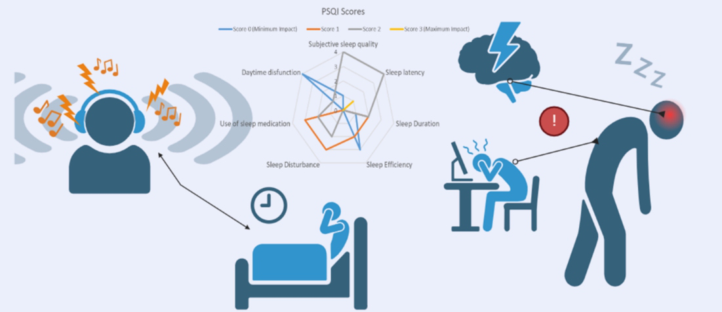
Figure 1: Graphical abstract by biorender.
As it could be expected, sleep problems are quite common among night workers (Ávila, 2016), however it is not widely known that night work can be a factor for several diseases, such as gastric, cardiovascular, and sleep disorders (de Castro & Mazzilli, 2004).
Some literature indicates that is important to consider that there is a bi-directional relationship between sleep disturbances and mental health (Clement-Carbonell et al., 2021), and other authors agree that not only does poor sleep quality affect job performance, but high sleep debt also causes
Preliminary Findings on the Relationship Between Noise Exposure and Sleep Quality in DJs 75
chronic fatigue (Chang & Peng, 2021). This condition, often associated with shifts, is probably due to the desynchronization of circadian rhythm or reduced sleep similar to jet lag syndrome (Ferri et al., 2016) therefore it is important to clarify if the root problem of bad sleep quality is linked to noise exposure or the night shifts itself, as studies have shown that individuals engaged in shift work experience disturbed sleep and excessive sleepiness relative to day workers (Drake et al., 2004).
Influence of Noise in Health The neurosis, psychosis, and hysteria are frequent symptoms linked to important exposures to noise (Mucci et al., 2021). Results have indicated that 600 million workers are exposed to occupational noise. The effects of exposure to loud noise at workplaces and other locations have been well documented (Rahimi Moghadam et al., 2018) some literature states that elevated levels of noise results in sleep disturbance among other adverse effects (Cordova et al., 2013). The time exposure factor should also be considered, as some authors indicate, acute exposure to noise has been linked to some physical reactions in experimental settings, it is hypothesized that long-term exposure to noise may have adverse effects on health (Babisch, 2000). It is important to also mention noise-induced hearing loss, commonly as- sociated with workplace noise but in reality caused any exposure that exceeds a time-weighted average (TWA) of 90 dB regularly over a period of years (Clark, 1992).
Influence of Sleep Quality in Health About one third of the population prevails affected by poor sleep quality (Zeitlhofer et al., 2000) if the high prevalence of sleep disturbances and the close relationship between sleep and quality of life, sleep quality can be regarded as an important indicator of quality of life (Lin et al., 2016).
It is widely known that insufficient and poor-quality sleep represent high-risk factors for health; sleep has also been associated with risk-taking behavior, accidents, increased mortality rates, and diminished quality of life (Darchia et al., 2018).
Other authors also state that evidence has confirmed the widely held belief that sleep health, characteristically defined as quantity and quality, is important for a range of health and well-being outcomes, across the entire lifespan. Sleep disturbances and insufficient sleep have been shown to be associated with a variety of chronic diseases (Simonelli et al., 2018).
Taking this into account it is safe to assume that sleep quality can affect both quality of life and productivity in individuals (Ghalichi et al., 2013) and for quite some time, sleep disorders have been a health, welfare and social problem that requires close monitoring and prevention (Garbarino et al., 2016). The fact that multiple authors have propose that sleep problems may be a relevant risk factor for occupational injuries (Uehli et al., 2014) indicates that there is an underlying problem that should be clearly addressed.
Exposure Although work related hearing disturbances have a higher incidence in the activities of manufacturing, extraction, and construction industries, there are profession where sound emission is the foundation of their activity, particularly music (Patacas, 2024). In this case, the nightclub industry is just like this last one, a unique work environment and differs from other noisy industries since the source of noise, that is, the loud music cannot be eliminated as it is expected by patrons (Kelly et al., 2015).
Studies indicate that, due to the nature of their job, it is between 10 pm and 3 am that the noise exposure level goes above 85 dBA (Lee, 1999). A review of previously published data found the geometric mean of sound levels in concert halls and arenas to be 103.4 dBA (Gunderson et al., 1997) showing alarming values if we consider that noise exposure levels ≥85 dBA are associated with Occupational Noise-Induced Hearing Loss (Ntlhakana et al., 2021).
Analyzing this with data from Chile some researches do conclude that discotheques are one of the places with the highest noise pollution (Paltzer et al., 2007). Previous research indicates that background noise levels tend to increase from happy hours to peak hours in multiple pubs and bars (Ming To & Awl, 2019), which raises the question: does this tendency replicate in Chile? And is there a connection between this and the sleep quality of DJs?
METHOD AND MATERIALS This research is designed to be correlational where the variables of study are noise, sleep quality and DJs, given the circumstances in which the study is performed the structure aims to a quantitative, nonexperimental study, considering a causal-correlational investigative design.
The groups of study were not randomly selected and consist of DJs who are likely to be exposed to high sound pressure levels in the region of Valparaiso, Chile. In order to determine the pressure levels a sound pressure level meter was used to measure the sound pressure levels in the worker’s workstation during the subject’s work shift. Along with these measurements, a Pittsburgh Sleep Quality Index (PSQI) questionnaire was given to the participant to answer. After the measurement was done and validated it was exported to be later analyzed with the other variables On the other hand, The Pittsburgh Sleep Quality Index (PSQI) is a questionnaire that measures sleep quality across seven areas. Scores range from 0–21, where higher scores indicate worse sleep quality; a score above 5 suggests poor sleep quality. Once all the questionnaires were retrieved, they were scored and registered in the SPSS software. With the data from the sound pressure level meter and the PSQI questionnaire collected and paired a careful analysis was made to determine if the exposure to high sound pressure levels has a relation with the sleep quality of the exposed workers.
The population to be studied corresponds to DJs, in order to narrow the studied group, the selection of subjects will correspond to DJs from the city of Valparaiso that work in places that host events focused on the university
Preliminary Findings on the Relationship Between Noise Exposure and Sleep Quality in DJs 77
population. Due to the relatively low population of DJs in the area of study the experiment consists of a non-probabilistic sampling. As previously stated, all data was analyzed through the statistical analysis software “IBM SPSS Statistics”.
RESULTS
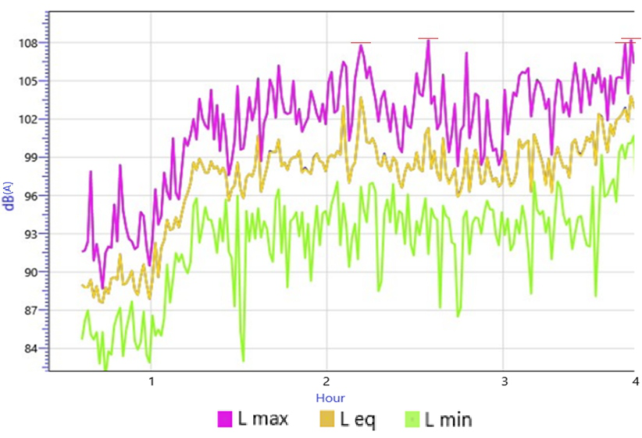
The sound pressure levels obtained from the measurement indicate Lmin, Lmax and Leq in dB(A) of 81.7, 109.1 and 99.2, this value confirms the exposure to occupational noise.
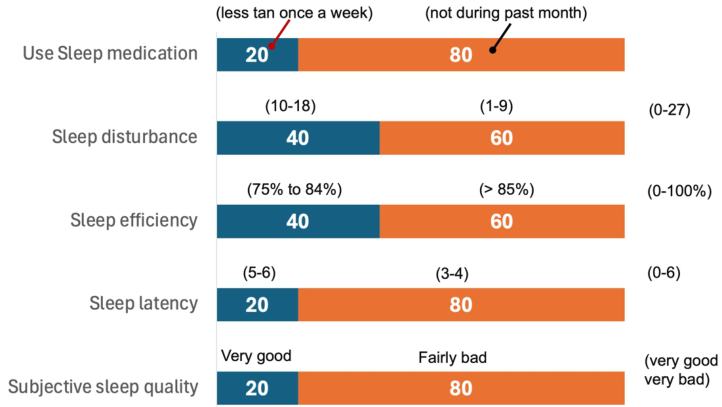
The Pittsburgh Sleep Quality Index (PSQI) was used to determine if this exposure was reflected in the sleep quality of the individuals working as DJs. The Figure 3 show the components analyzed in the PSQI, this data allows to identify which components are affected the most by the exposure to noise.
The most affected components of sleep quality. The subjective sleep quality chart shows that 80% of the studied group indicates a fairly bad sleep quality, whilst the other 20% indicates that they have not seen their sleep quality compromised by the noise exposure during their work.
The sleep latency chart shows concerning data, 20% of the population sees significant problems while trying to fall asleep, while the other 80% of the population is situated in the second highest score for bad sleep quality.
The sleep duration chart shows differences on the population, 20% indicates a duration of 7 or more hours of sleep, while 40% indicates a range between 6 to 7 and the other 40% indicates a sleep duration of 5 to 6 hours. This data could be analyzed in future research with the average sleep duration of the general population, to discard or prove if the sleep duration is an underlying problem of the noise exposure or a generalized problem.
Figure 3: Use of sleep medication (not during past month, less than once a week, once or twice a week, three o more times a week); sleep disturbance (0, 1–9, 10–18 and 19– 27); Sleep efficiency (< 65%, 65–74, 75–84, >85%);Sleep latency (0, 1–2, 3–4 and 5–6); Subjective sleep quality (very good, fairly good, fairly bad and very bad).
The sleep efficiency chart shows relatively good values, with 60% of the population showing an efficiency above 85%, followed by the other 40% of the population with an efficiency ranging from 75% to 84%. Just like the previous chart, this data could also be corroborated with data obtained from the general population, to discard or prove if this problem is inherent to the noise exposure or a generalized problem.
The sleep disturbance chart shows problems while sleeping, where 60% of the studied group identifies occasional problems during their sleep, and the other 40% indicates recurring problems.
The use of medication chart shows the crude data of how often the studied group has needed the use of sleep medication, here, 20% of the participants recognizes that they have used medication at least once or twice a week, while the remaining 80% indicates no usage of sleep medication.
And the final chart of daytime disfunction shows 60% of the population indicating mild issues while carrying out their daily activities, and the remaining 40% shows frequent/moderate issues while performing their routinary activities.
With this information the results show a concerning value of the whole study group having a bad sleep quality, where the most prominent problems are the sleep latency, sleep disturbances and daytime disfunction. As previously stated, the literature indicates that sleep quality can be seen as a direct indicator of quality of life, and the data collected proves the evident relation between the noise exposure and the resulting sleep latency problems, sleep disturbances and daytime disfunction.
This study faced several limitations that should be considered when interpreting the results. The limited number of participating Pubs reduced the
Preliminary Findings on the Relationship Between Noise Exposure and Sleep Quality in DJs 79
representativeness of the findings. Another key challenge was the availability of the Pubs for noise measurements, which constrained the opportunities for data collection. Additionally, restricted operating hours limited the ability to gather data during peak and off-peak times, potentially missing critical noise variations. Addressing these limitations in future studies could improve the reliability and applicability of the results.
CONCLUSION
The results of the study on sleep quality in DJs exposed to nighttime noise show a concerning trend of poor sleep quality across the entire studied population. The data indicates that most participants experience significant problems in key areas such as sleep latency, sleep disturbances, and daytime dysfunction, highlighting the relationship between noise exposure and these issues. While some indicators, such as sleep efficiency, show relatively good values, sleep latency and disturbances remain predominant problems. Additionally, the use of sleep medication should be closely looked at, and daytime dysfunction values are alarming. These results suggest that nighttime noise exposure has a significant impact on sleep quality and, consequently, on the quality of life of DJs, justifying the need for further research to confirm these findings and develop appropriate solutions.
The main concern of the study has been mostly confirmed, however the data collected quantity is nowhere near to the desired for this type of study, thus the need to elaborate further research on the addressed problem.
REFERENCES
Ávila, S. (2016). Implicaciones del trabajo nocturno y/o trabajo por turnos sobre la salud. 33(1). Babisch, W. (2000). Traffic Noise and Cardiovascular Disease: Epidemiological
Review and Synthesis. Chang, W. P., & Peng, Y. X. (2021). Meta-analysis of differences in sleep quality based on actigraphs between day and night shift workers and the moderating effect of age. In Journal of Occupational Health (Vol. 63, Issue 1). John Wiley and Sons Inc. https://doi.org/10.1002/1348-9585.12262 Clark, W. W. (1992). Hearing: The effects of noise. Otolaryngology - Head and Neck
Surgery, 106(6), 669–678. Clement-Carbonell, V., Portilla-Tamarit, I., Rubio-Aparicio, M., & Madrid-Valero, J. J. (2021). Sleep quality, mental and physical health: A differential relationship. International Journal of Environmental Research and Public Health, 18(2), 1–8. Cohen, S., & Weinstein, N. (1981). Nonauditory effects of noise on behavior and health. Cordova, A. C., Logishetty, K., Fauerbach, J., Price, L. A., Gibson, B. R., &
Milner, S. M. (2013). Noise levels in a burn intensive care unit. Burns, 39(1), 44–48. Darchia, N., Oniani, N., Sakhelashvili, I., Supatashvili, M., Basishvili, T., Eliozishvili, M., Maisuradze, L., & Cervena, K. (2018). Relationship between sleep disorders and health related quality of life—results from the georgia SOMNUS study. International Journal of Environmental Research and Public Health, 15(8).
Drake, C. L., Roehrs Timothy, Richardson, G., Walsh, J. K., & Roth, T. (2004). Shift Work Sleep Disorder: Prevalence and Consequences Beyond that of Symptomatic Day Workers. Ferri, P., Guadi, M., Marcheselli, L., Balduzzi, S., Magnani, D., & Di Lorenzo, R.
(2016). The impact of shift work on the psychological and physical health of nurses in a general hospital: A comparison between rotating night shifts and day shifts. Risk Management and Healthcare Policy, 9, 203–211. Garbarino, S., Lanteri, P., Durando, P., Magnavita, N., & Sannita, W. G. (2016).
Co-morbidity, mortality, quality of life and the healthcare/welfare/social costs of disordered sleep: A rapid review. In International Journal of Environmental Research and Public Health (Vol. 13, Issue 8). MDPI. German-González, M., & Santillán, A. O. (2006). Del concepto de ruido urbano al del paisaje sonoro. Revista Bitácora Urbano Territorial. Ghalichi, L., Pournik, O., & Ghaffari, M. (2013). Sleep Quality among Health Care
Workers. In Archives of Iranian Medicine (Vol. 16, Issue 2). Gunderson, E., Moline, J., & Catalano, P. (1997). Risks of developing noise-induced hearing loss in employees of urban music clubs. American Journal of Industrial Medicine, 31(1), 75–79. Harvey, A. G., Stinson, K., Whitaker, K. L., Moskovitz, D., & Virk, H. (2008).
The Subjective Meaning of Sleep Quality: A Comparison of Individuals with and without Insomnia Subjective Meaning of Sleep Quality-Harvey et al. In SLEEP (Vol. 31, Issue 3). Katalin, Á. (2018). Studying noise measurement and analysis. Procedia Manufacturing, 22, 533–538. Kelly, A. C., Boyd, S. M., & Henehan, G. T. M. (2015). Perceived barriers to hearing protection use by employees in amplified music venues, a focus group study. Health Education Journal, 74(4), 458–472. Lee, L. T. (1999). A Study of the Noise Hazard to Employees in Local Discotheques. Lin, Y. K., Lin, G. Y., Lee, J. T., Lee, M. S., Tsai, C. K., Hsu, Y. W., Lin, Y. Z.,
Tsai, Y. C., & Yang, F. C. (2016). Associations between Sleep Quality and Migraine Frequency. Medicine (United States), 95(17). Ming To, W., & Awl, C. (2019). Noise exposure in entertainment venues: the case of pubs and bars in Hong. Mucci, N., Traversini, V., Lulli, L. G., Vimercati, L., Rapisarda, V., Galea, R. P., De
Sio, S., & Arcangeli, G. (2021). Neurobehavioral alterations in occupational noise exposure: A systematic review. In Sustainability (Switzerland) (Vol. 13, Issue 21). MDPI. Ntlhakana, L., Nelson, G., Khoza-Shangase, K., & Maposa, I. (2021). Predicting standard threshold shifts for occupational hearing loss among miners at a large- scale platinum mine in South Africa. The Journal of the Southern African Institute of Mining and Metallurgy, 121. Paltzer, L., Iñiguez, R., Cevo, J., & Ayala, F. (2007). Environmental noise levels
measurement of the city of Santiago, Chile. Patacas, C. (2024). A Exposição ao Ruído por Músicos de Orquestra-Revisão da Literatura. Rahimi Moghadam, S., Naser Laiegh Tizabi, M., Khanjani, N., Emkani, M., Taghavi
Manesh, V., Akbar Mohammadi, A., Bagher Delkhosh, M., & Najafi, H. (2018). Noise pollution and sleep disturbance among Neyshabur Hospital staff, Iran (Vol. 7, Issue 1).
Preliminary Findings on the Relationship Between Noise Exposure and Sleep Quality in DJs 81
Sáez G, J., Santos R, G., Salazar C, K., & Carhuancho-Aguilar, J. (2013). Calidad del sueño relacionada con el rendimiento académico de estudiantes de medicina humana. Simonelli, G., Marshall, N. S., Grillakis, A., Miller, C. B., Hoyos, C. M., &
Glozier, N. (2018). Sleep health epidemiology in low and middle-income countries: A systematic review and meta-analysis of the prevalence of poor sleep quality and sleep duration. In Sleep Health (Vol. 4, Issue 3, pp. 239–250). Elsevier Inc.
LISTED IN THE AHFE DIGITAL BOOKSTORE CATALOGUE
Explore the complete digital volume
Social and Occupational Ergonomics
Read this individual research paper free through the original publisher, or explore the full digital proceedings book.
ISBN 978-1-964867-66-3
Explore this ISBN in the AHFE Bookstore ↗Listed in the July 2026 bookstore catalogue; search by ISBN to confirm current availability · Digital book purchase optional