Rodrigo Dominguez, Joan Toro, Claudio Acuña, Sebastian Amaro, Enrique Calderón (2023). Exposure to non–ionizing radiation of solar origin: Measurements in Patagonia. In: Safety Management and Human Factors. AHFE Open Access, vol. 105, pp. 24–30. https://doi.org/10.54941/ahfe1003066
This article aim is to measure the exposure to non-ionic radiation of solar origin in Patagonia, in order to provide information that to date almost does not exist and serve as a basis for future research on the subject. The measurements were made in the XI Region Aysén , Chile; more specifically in the town of Chile Chico. A UVR meter was used. The measurements were made during the months of September and October, the measures were made each day, with 1-hour intervals. The data were compiled and tabulated to be later analyzed and presented in this study. The URV averages are presented considering those days with the highest temperatures and the general average for the months of September and October. The highest measurement obtained was 3,7 mW/cm^2 and it was at 12 p.m. on October 10. The highest measurements were recorded between 10 a.m. and 4 p.m., which is consistent with studies conducted on the subject. The Sun safety at work questionnaire, Solar UV Radiation Risk Assessment for Outdoor Workers: Operational review, was also applied to workers in the area, managing to evaluate 4 jobs positions, three of these job positions received an overall medium risk level and the fourth received a high risk level. Further studies are needed in Patagonia in order to establish more precise standards to reduce the risks associated with exposure to non-ionizing radiation of solar origin.
Non-ionizing radiation refers electromagnetic radiation with photons energy less than 10 eV, corresponding to frequencies less than 3 × 10¹⁵ Hz and wavelengths longer than 100 nm (ICNIRP, 2020). Non-Ionizing radiation originates from various sources: Natural origin (such as sunlight or lightning discharges) and manmade (seen in wireless communications, industrial, sci- entific and medical applications) (Ng, 2003). Sunlight is the main source of ultraviolet radiation (UVR) (Gallagher et al., 2010) and it is defined as radi- ation between 100 and 400 nanometers (nm) length (WHO, 1994). UVR is subdivided into ultraviolet “A” [UVA (315–400 nm)], ultraviolet “B” [UVB (280– 315 nm)] and ultraviolet “C” [UVC (100–280 nm)] (Narayanan et al., 2010). UVC radiation, unlike UVA and UVB radiation, is almost completely
Exposure to Non–Ionizing Radiation of Solar Origin: Measurements in Patagonia 25
absorbed by the ozone layer. Approximately 90–99% of UVR reaches the earth’s surface is UVA, and only 1–10% is UVB (Miller et al., 1998; Pastila & Leszczynski, 2007). UVA and UVB rays reach the earth in sufficient quantities to damage skin structures (Silveira & Pedroso, 2014; Bosch et al., 2015). UV radiation can penetrate the skin interacting with skin cells (Gilchrest, 2013). Quality (spectrum) and quantity (intensity) of terrestrial UV radiation vary with the sun elevation above the horizon, or solar altitude (Diffey, 2002). Clouds redistribute and generally reduce the UVR reaching the Earth’s sur- face, but often not nearly as much as the average person would expect, as sunburns can occur on overcast days (ICNIRP, 2010). The destructive mech- anism of UVB and UVA action on DNA molecules differs, which is related to the amount of energy absorbed by base pairs in the DNA chain (Almeida et al., 2015). Changes arising as a result of UVB radiation are visible mainly within the epidermis, but it also penetrates the upper part of dermis (Debacq- Chainiaux et al., 2012; Zhang et al., 2014). Overexposure to UV radiation increases the formation of reactive oxygen species (ROS), which at higher concentrations can damage the main proteins that make up the skin, col- lagen and elastin (Ryu et al., 2014; Pérez-Sánchez et al., 2014; Rinnerthaler et al., 2015; Ngan et al., 2015; Gromkowska-Ke˛pka et al., 2021). High levels of exposure to UVR increase the risk of all three major forms of skin cancer, and approximately 65% to 90% of melanomas are caused by UV exposure (Glanz & Mayer, 2005).
There are different devices to measure UVR, these can be radiometers, capable of measuring instantaneous UV intensity, or dosimeters, capable of measuring accumulated UV dose over time (Banerjee et al., 2017).
MATERIAL AND METHODS Non-ionizing radiation of solar origin was measured in Patagonia, Chile Chico town, XI Region - Aysen - Carlos Ibañez del Campo (46
34′53′′S 71
41′12′′W). An UV meter UVA - UVB radiation meter PCE-UV34 were used on a static lectern at 1 meter height in each measurement, this device operates at 290 to 390 nm wavelength, it has two measuring ranges:
Range 01 0, 000 to 1, 999mW/cm2 or 0, 000 to 19, 9 W/cm2 Range 02 1, 999 to 19, 99mW/cm2 or 19, 99 to 199, 9 W/cm2 The second range was mostly used. Measures were made every day until September 11th and then every other day until the end of October. All measurements were made from 8 a.m. to 5 p.m. at one-hour intervals.
In every measurement the maximum and minimum temperature, humi- dity percentage and wind speed and direction were in addition recorded. No measures were made on rainy days due to the practically zero exposure of the people in this condition.
The measurements were entered into an excel spreadsheet for further analysis.
Averages were obtained hourly considering the high temperatures days for each month.
The Sun safety at work questionnaire, Solar UV radiation risk assessment for outdoor workers: Operational review, was also applied to workers at
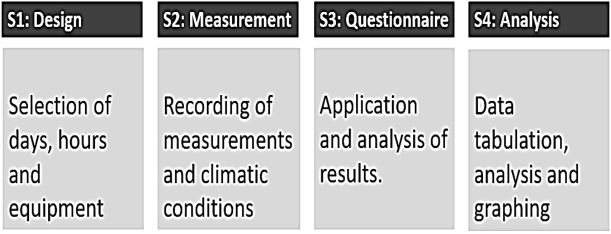
Figure 1: Outline of the study’s methodology.
the “Normalization of the Chile Chico Hospital” construction site. Four job positions were evaluated: (P1) Warehouse assistant (unloading material); (P2) Daily Laborer (Concrete Mixing) (P3) Master builder’s assistant (concrete distribution) (P4) Daily Laborer (Pit Excavation).
A brief outline of the study methodology is shown in Figure 1.
RESULTS
An example of a daily sampling record is shown in Table 1.
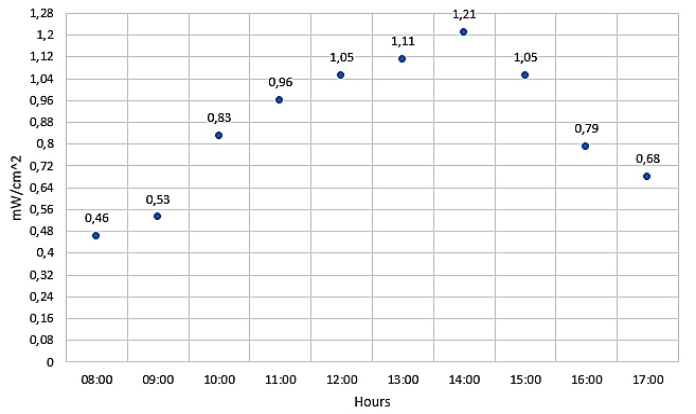
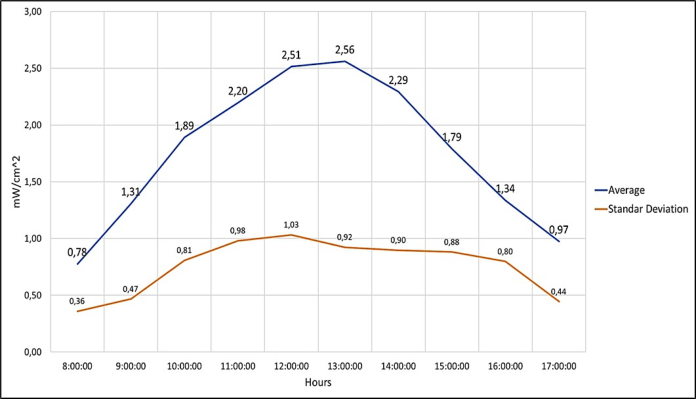
All the results obtained are expressed in mW/cm2, which is the unit of mea- surement of the intensity of non-ionizing radiation of solar origin. The highest measurement obtained was 3.7 mW/cm2 and it was at 12 p.m. on October 10, and the respective distribution of measurements is shown in Figure 2. The averages were calculated for one hour measurement, considering only days exceeding 11
C. Averages distribution and standard deviations are shown in Figure 3.
Table 1. Example of a daily sample record. (Saturday 3 September 2022.)
Exposure to Non–Ionizing Radiation of Solar Origin: Measurements in Patagonia 27
Figure 2: Distribution of measurements Saturdays September 2022.Figure 3: Average on days with high temperatures.
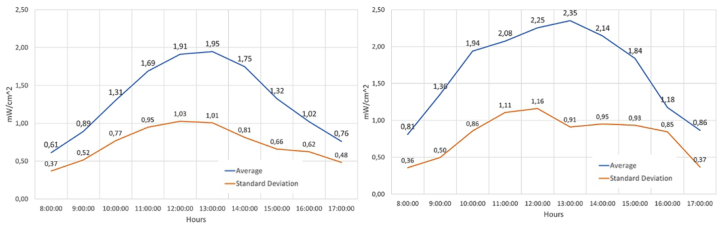
Averages were also obtained for all days sampled in September and October, respectively which are shown in Figure 4.
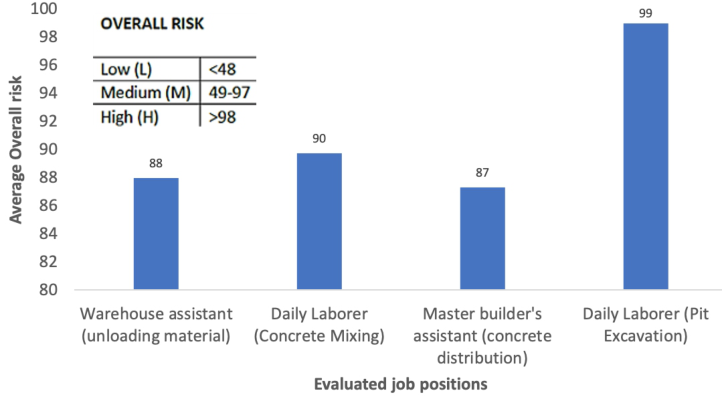
The results obtained from the application of the questionnaire are shown in Figure 5, together with the overall risk ranges.
DISCUSSION
The results show the greatest irradiance periods are between 10 am and 4 pm, It is congruence with the evidence shown so far. It is also possible to appreciate the relationship between higher radiation levels and days exceeding 11
C.
Figure 4: Average on September and October 2022 respectively.Figure 5: Average global risk of evaluated jobs.
Comparing October and September, the latter shown a higher hourly UVR averages measured. With regard the questionnaire application, although only 4 job positions could be evaluated, interesting results were obtained, three workstations obtained a medium overall risk (warehouse assistant (88); Daily laborer (90); Master builder‘s assistant) and only one obtained a high level (Pit Excavation (99)). A more detailed analysis showed the main aspect affected the evaluation was the lack of shade at the workstation.
CONCLUSION
This study presented the results obtained by measuring solar radiation in Chile Chico town during September and October 2022. Measuring one- hour intervals, the daily irradiance evolution and the highest and lowest intensity hours were clearly shown. The highest measurement obtained was 3.7 mW/cm2 and it was at 12 p.m. on October 10.
Exposure to Non–Ionizing Radiation of Solar Origin: Measurements in Patagonia 29
The Sun safety at work questionnaire, Solar UV radiation risk assessment for outdoor workers: Operational review, was applied to workers at the Con- struction site. There were 3 jobs positions with a medium overall risk and one with a high risk, the latter with a score of 99, which is only 1 point above what the questionnaire states.
The results presented both measurements and of the questionnaire are important because there was no information, on the other hand it coincide with other research, but are far from being a sufficient source of information regarding exposure to non-ionizing radiation of solar origin.
Some recommendations that could mitigate the effects of exposure to non- ionizing radiation are: a) Inform the UV index on a daily basis to workers b) Provide physical barriers against radiation (gloves, sunglasses, helmets, appropriate clothing, sunscreen among others) c) Promote personal self-care through talks, training and seminars.
FUTURE WORKS More research and analysis are required in Patagonia in order to establish more precise standards to reduce the risks associated with exposure to non- ionizing radiation of solar origin.
REFERENCES
Almeida, I. F., Pinto, A. S., Monteiro, C., Monteiro, H., Belo, L., Fernandes, J.,... & Costa, P. C. (2015). Protective effect of C. sativa leaf extract against UV mediated- DNA damage in a human keratinocyte cell line. Journal of Photochemistry and Photobiology B: Biology, 144, 28–34. Banerjee, S., Hoch, E. G., Kaplan, P. D., & Dumont, E. L. (2017, December). A
comparative study of wearable ultraviolet radiometers. In 2017 IEEE Life Sciences Conference (LSC) (pp.9–12). IEEE. Bosch, R., Philips, N., Suárez-Pérez, J. A., Juarranz, A., Devmurari, A., Chalensouk- Khaosaat, J., & González, S. (2015). Mechanisms of photoaging and cutaneous photocarcinogenesis, and photoprotective strategies with phytochemicals. Antio- xidants, 4(2), 248–268. Debacq-Chainiaux, F., Leduc, C., Verbeke, A., & Toussaint, O. (2012). UV, stress
and aging. Dermatoendocrinol. 4: 236–240. Diffey, B. L. (2002). Sources and measurement of ultraviolet radiation. Methods, 28(1), 4–13. Gallagher, R. P., Lee, T. K., Bajdik, C. D., & Borugian, M. (2010). Ultraviolet
radiation. Chronic diseases and injuries in Canada, 29. Gilchrest, B. A. (2013). Photoaging. J Invest Dermatol, 133(E1): E2–E6. Glanz, K., & Mayer, J. A. (2005). Reducing ultraviolet radiation exposure to prevent skin cancer: Methodology and measurement. American journal of preventive medicine, 29(2), 131–142. Gromkowska-Ke˛pka, K. J., Pu´scion-Jakubik, A., Markiewicz- ˙Zukowska, R., &
Socha, K. (2021). The impact of ultraviolet radiation on skin photoaging—Review of in vitro studies. Journal of Cosmetic Dermatology, 20(11), 3427–3431. International Commission on Non-Ionizing Radiation Protection. (2010). ICNIRP statement—protection of workers against ultraviolet radiation. Health Phy- sics, 99(1), 66–87.
International Commission on Non-Ionizing Radiation Protection. (2020). Principles for non-ionizing radiation protection. Health physics, 118(5), 477–482. Miller, S. A., Hamilton, S. L., Wester, U. G., & Cyr, W. H. (1998). An analysis of UVA
emissions from sunlamps and the potential importance for melanoma. Photoche- mistry and photobiology, 68(1), 63–70. Narayanan, D. L., Saladi, R. N., & Fox, J. L. (2010). Ultraviolet radiation and skin cancer. International journal of dermatology, 49(9), 978–986. Ng, K. H. (2003, October). Non-ionizing radiations–sources, biological effects,
emissions and exposures. In Proceedings of the international conference on non-ionizing radiation at UNITEN (pp.1–16). Ngan, C. L., Basri, M., Tripathy, M., Karjiban, R. A., & Abdul-Malek, E. (2015).
Skin intervention of fullerene-integrated nanoemulsion in structural and collagen regeneration against skin aging. European Journal of Pharmaceutical Sciences, 70, 22–28. Pastila, R., & Leszczynski, D. (2007). Ultraviolet-A radiation induces changes in cyclin G gene expression in mouse melanoma B16-F1 cells. Cancer cell internati- onal, 7(1), 1–9. Pérez-Sánchez, A., Barrajón-Catalán, E., Caturla, N., Castillo, J., Benavente-García,
O., Alcaraz, M., & Micol, V. (2014). Protective effects of citrus and rosemary extracts on UV-induced damage in skin cell model and human volunteers. Journal of Photochemistry and Photobiology B: Biology, 136, 12–18. Rinnerthaler, M., Bischof, J., Streubel, M. K., Trost, A., & Richter, K. (2015).
Oxidative stress in aging human skin. Biomolecules, 5(2), 545–589. Ryu, J., Park, S. J., Kim, I. H., Choi, Y. H., & Nam, T. J. (2014). Protective effect of porphyra-334 on UVA-induced photoaging in human skin fibroblasts. Internati- onal journal of molecular medicine, 34(3), 796–803. Silveira, J. E. P. S., & Pedroso, D. M. M. (2014). UV light and skin aging. Reviews on
environmental health, 29(3), 243–254. WHO. (1994). Environmental Health Criteria 160—ultraviolet radiation. Zhang, J. A., Yin, Z., Ma, L. W., Yin, Z. Q., Hu, Y. Y., Xu, Y.,... & Zhou, B. R. (2014).
The protective effect of baicalin against UVB irradiation induced photoaging: an in vitro and in vivo study. PloS one, 9(6), e99703.
LISTED IN THE AHFE DIGITAL BOOKSTORE CATALOGUE
Explore the complete digital volume
Safety Management and Human Factors
Read this individual research paper free through the original publisher, or explore the full digital proceedings book.
ISBN 978-1-958651-81-0
Explore this ISBN in the AHFE Bookstore ↗Listed in the July 2026 bookstore catalogue; search by ISBN to confirm current availability · Digital book purchase optional