Rachel Feine, Elham Morshedzadeh, Gordon Vos, Jeff Feng (2025). Integrating Color Theory into Smart Desk Lighting System for Enhanced Productivity and Cognitive Function in Work Environments. In: Interdisciplinary Practice in Industrial Design. AHFE Open Access, vol. 183, pp. 30–39. https://doi.org/10.54941/ahfe1006424
The integration of color theory into workspace lighting design has the potential to significantly enhance productivity, cognitive function, and overall well-being. This study investigates the impact of lighting on productivity and health, focusing on how principles of color theory and user-centered design can inform more effective workspace solutions. As remote work and flexible office arrangements continue to grow, the need for adaptable, ergonomic, and personalized work environments has become increasingly clear, emphasizing the importance of fostering productivity, health, and overall well-being for users. Lighting, an essential yet often underestimated aspect of these environments, directly influences focus, mood, and physical comfort. An extensive literature review examined the effects of light on cognitive performance, emotional states, and physiological well-being. Research revealed that specific lighting characteristics—including color temperature and hue—affect mental and physical states in distinct ways. Cooler tones, such as blue and white light, were found to enhance focus and task accuracy, while warmer tones, like amber, promote relaxation and reduce stress. These findings highlight the importance of tailoring lighting conditions to specific tasks and user needs.To deepen understanding, user surveys were conducted to identify common challenges and preferences in home and office lighting setups. Key issues included limited adjustability, excessive glare, and a lack of personalization options. Participants frequently expressed dissatisfaction with their current lighting environments, citing negative impacts on their productivity, comfort, and mood. These insights underscored the critical need for solutions that prioritize user adaptability and ergonomic considerations.The study emphasizes the role of design in addressing these challenges, proposing an approach centered on user needs and the principles of color theory. The design phase, informed by research findings, focuses on the conceptualization of a smart desk lighting system. This system aims to offer dynamic lighting options tailored to diverse tasks, such as reading, computer work, brainstorming, and relaxation. Key design features include customizable brightness, color temperature, and hue, as well as pre-set configurations for productivity, relaxation, and creativity. The integration of ergonomic principles, such as glare reduction and flexible positioning, is a foundational element of the design approach.Although the study has not yet progressed to the prototype development and testing phase, its research findings lay a robust foundation for future work. By demonstrating the measurable effects of lighting on productivity and well-being, the study highlights the importance of adaptable and user-focused solutions in modern workspace design. It also underscores the potential of leveraging color theory and thoughtful design to bridge the gap between functional utility and aesthetic appeal.This study contributes to the fields of industrial design and human factors by emphasizing the interplay between lighting, color, and human behavior. By prioritizing adaptability and user-centric approaches, it provides a framework for developing innovative lighting solutions that enhance productivity, support cognitive function, and improve overall health in work environments. The findings pave the way for future exploration and prototype development, aiming to redefine how lighting is integrated into modern workspaces.
Integrating Color Theory Into Smart Desk Lighting System 31
INTRODUCTION
The insurgence of remote work has called upon the need for flexible office arrangements. Hybrid work settings have emphasized the critical importance of work environments that support productivity, health, and well-being (ILO, 2020). Lighting, a fundamental aspect of workspace design, plays a vital role in shaping focus, mood, and physical comfort. The effect of lighting design thus needs further probing. Poor lighting conditions can lead to significant issues, including eye strain, diminished cognitive performance, and long-term health effects such as disrupted circadian rhythms and sleep patterns (Smolders & de Kort, 2014). Compounding these challenges, glare from poorly designed lighting systems can strain the eyes and even trigger ocular migraines, further hindering productivity and well-being (IES, 2021). Moreover, inadequate lighting fosters stress and fatigue, ultimately reducing engagement and creating less productive workspaces (Bao et al., 2021).
In response to these challenges, the fields of industrial design and human factors have increasingly prioritized user-centered environments that cater to individual needs (Norman, 2013). This research aims to contribute to that effort by studying and commenting on the deficiencies in traditional workspace lighting systems through exploring the integration and applicability of color theory principles. The study focuses on two factors, namely color temperature and hue, and how they contribute to the development of adaptable, ergonomic, and visually appealing solutions that redefine workspace lighting. The objective is to examine how lighting influences cognitive performance and emotional states, using insights from literature, user surveys, and planned in-person testing to conceptualize a smart desk lighting system tailored to a variety of tasks and user preferences.
BACKGROUND
On average, professionals spend over six hours daily at a desk, often more in remote or office-based roles (BLS, 2021). Given this prolonged exposure, lighting significantly impacts productivity, comfort, and health. It can reduce eye strain, fatigue, and cognitive load, while influencing mood and focus (Smolders & de Kort, 2014). Poor lighting—particularly inadequate brightness or excessive glare—has been linked to reduced concentration and heightened stress (IES, 2021). The COVID-19 pandemic accelerated the shift to hybrid work, pushing individuals and companies to adapt to remote- friendly environments (ILO, 2020). As a result, workspace design, especially lighting, became essential for maintaining well-being and efficiency in home offices.
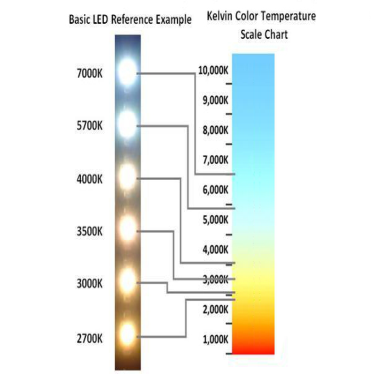
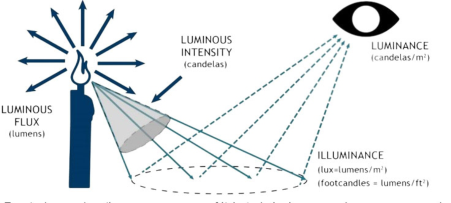
Lighting strongly affects human behavior and performance, with color psychology and lighting physics offering important insights. Blue tones are linked to focus and alertness, while warmer amber tones support relaxation and creativity. Color temperature (Figure 1), measured in Kelvin (K), provides a framework for evaluating light’s warmth or coolness. Cooler tones (5000–6500K) promote concentration and task performance, while warmer tones (2700–3000K) foster calm environments. Additionally, illuminance (Figure 2), measured in lux, influences visual comfort and task efficiency.
Lighting also regulates circadian rhythms—our internal clock—affecting sleep-wake cycles and cognitive function.
Extensive research confirms lighting’s effects on cognition. Cooler light tones enhance focus, accuracy, and alertness. Smolders and de Kort (2014) found that exposure to higher color temperatures during desk tasks improved sustained attention and task completion rates by 15% compared to neutral white light. Warmer tones help reduce stress and support creative or restorative tasks. Bao et al. (2021) demonstrated that dynamic RGB (Red, Green, Blue) lighting increased mood satisfaction by approximately 20% compared to static lighting setups.
Figure 1: Kelvin color temperature scale chart (Behavioral Health Facility Consulting, 2020).Figure 2: Terminology to describe various measures of light includes luminance, luminous intensity, luminous flux, and illuminance (CK Associates, 2020).
Despite technological advances, current lighting systems often lack adaptability and personalization. Many remain static and fail to meet the diverse needs of users. According to the Illuminating Engineering Society, over 70% of employees express dissatisfaction with workspace lighting due to factors like glare, poor adjustability, and lack of visual variety (IES, 2021).
Integrating Color Theory Into Smart Desk Lighting System 33
These gaps reveal opportunities to integrate dynamic customization and color theory into lighting design—balancing functionality with aesthetic value.
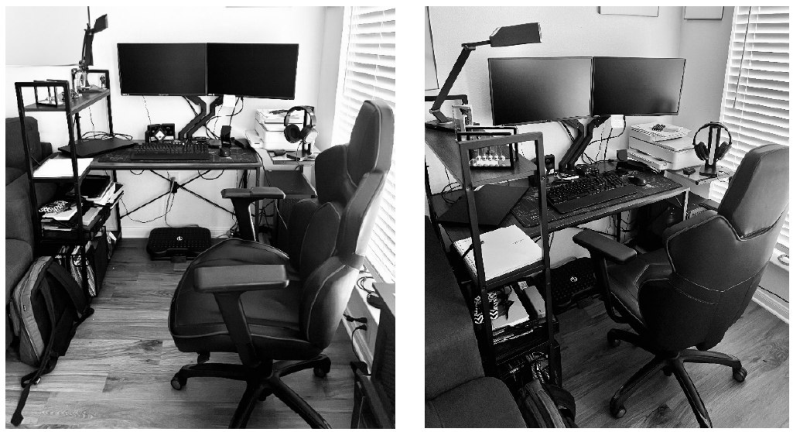
Current workspace and study environments (Figure 3) often suffer from suboptimal lighting—insufficient brightness, glare, and limited adaptability—which contribute to eye strain, fatigue, and diminished cognitive performance (Smolders & de Kort, 2014). These issues largely stem from traditional lighting approaches that prioritize general illumination over task-specific or user-centered solutions (Boubekri, 2020).
The proposed smart desk lighting system addresses these challenges by incorporating adjustable brightness, task-specific lighting profiles, and dynamic RGB customization. It supports both comfort and performance by enabling users to shift lighting conditions based on task and time of day. Research suggests that tailored lighting improves mood and productivity by up to 20% (Bao et al., 2021). By applying ergonomic lighting principles— such as color temperature modulation and seamless profile transitions—this solution provides a holistic, human-centered approach to modern workspace lighting.
Figure 3: Two views of a current home-workspace setup. Note: this image was taken by the author (2024).
METHODOLOGY AND RESULTS This study was approved by the University of Houston’s Institutional Review Board (IRB) under Study #4998 and adhered to all ethical guidelines for human subjects’ research. To explore user workspace preferences and the consequent challenges, a comprehensive survey was conducted with over 100 participants from various professions, age groups, and workspace environments. Recruitment took place via online platforms such as LinkedIn,
Facebook, and Instagram, as well as academic institutions, and workplace networks, ensuring diverse perspectives. The survey used a mix of multiple- choice and open-ended questions to collect quantitative and qualitative data. Key areas of investigation included desk usage patterns, current workspace lighting, lighting challenges, and preferences for ideal lighting system features.
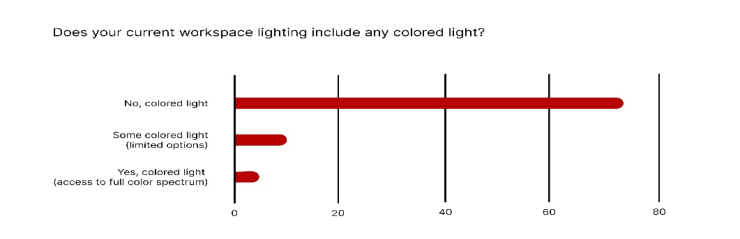
Participants highlighted several challenges, with 91% working at their desks for over five hours daily. Common issues included excessive glare, poor adjustability, and insufficient brightness. 51% of respondents noted difficulty balancing natural and artificial light, particularly those working near windows who struggled with excessive glare during the day and dim lighting in the evening. Preferences emphasized adjustable brightness and color temperature, with 62% prioritizing these features, and 74% expressing interest in RGB lighting for mood enhancement (Figure 4).
Analysis revealed a growing demand for lighting systems that provide emotional benefits in addition to functional utility which was not expected at the beginning of the study. Many participants valued mood-enhancing features like warm, soft hues to create a calming workspace. The importance of seamless transitions between lighting profiles for different tasks was another key finding, which aligns with the circadian-friendly principles.
These results informed the design of a smart desk lighting system emphasizing adjustability, dynamic features, and integration of natural and artificial light. The findings highlight the necessity of a user-centered approach that balances functional, cognitive, and emotional needs.
Figure 4: Does your current workspace lighting include any colored light (Study Survey Analytics, 2025).
LIGHTING SYSTEM DESIGN The proposed smart desk lighting system is an innovative, multi-component solution rooted in user insights and comprehensive research (see the background). The proposed design modifies the current desk lighting in three major ways. First, adjustable desk lamps provide focused task lighting, eliminate shadows and improve visibility. Second, a desk light bar ensures
Integrating Color Theory Into Smart Desk Lighting System 35
uniform workspace illumination, addressing inefficiencies caused by single- source setups. Third, ambient lighting is provided by a floor lamp, reducing contrast and eye strain, while wall panels with RGB lighting align with users’ circadian rhythms and mood preferences.
Customization is central to the design, offering adjustable brightness, color temperature, and hue to meet diverse user needs. Pre-set configurations tailored for productivity, relaxation, and creativity simplify interaction while aligning lighting with specific tasks. Ergonomic considerations, such as glare reduction and flexible positioning, further enhance comfort and usability.
EXPERIMENT PROTOCOL DESIGN To evaluate the effectiveness of the prototype lighting system, an in-person testing protocol has been developed. This portion of the study was still in progress at the time of this writing, with testing scheduled for Spring 2025.
Participants would engage in a series of tasks under three distinct lighting profiles, each designed to evaluate the impact of different lighting conditions on performance and comfort. The first profile, Baseline Light, utilizes the existing room lighting to serve as a control condition, representing a typical, unoptimized workspace setting. The second profile, Task-Optimized Light, features white light specifically tailored for task-focused activities, ensuring clarity and precision for tasks requiring sustained attention. Finally, the third profile, Enhanced Task Light, builds on the task-optimized setup by incorporating subtle colored lighting to align with principles of color theory, aiming to enhance mood and cognitive engagement while supporting specific task requirements. Together, these profiles provide a comprehensive framework for assessing the effectiveness of lighting in diverse work scenarios.
To ensure the validity of the testing conditions, all environmental factors apart from lighting remain consistent throughout the study; the surrounding space, including room layout, furniture arrangement, desk setup, and seating position, remains unchanged for all participants, allowing the experiment to isolate the impact of lighting variations without interference from external spatial variables.
The selected tasks are designed to evaluate the impact of different lighting profiles on common workspace activities, providing a comprehensive assessment of productivity, comfort, and cognitive performance. Chosen for their relevance to typical workspace tasks like reading, typing, and problem- solving, these activities allow for a thorough evaluation of lighting’s effects, aligning with human-centered design principles (Norman, 2013).
The first task, a) Reading on a Monitor, requires participants to read a short, uniformly formatted paragraph displayed on a monitor. Afterwards, they would have to answer three comprehension questions to assess their focus, readability, and cognitive retention under varying lighting conditions. This task highlights the importance of minimizing glare and optimizing illumination for prolonged screen use. Similarly, b) Typing on a Computer evaluates the participants’ ability to transcribe a paragraph read aloud to them. By focusing on typing accuracy and speed, measured by the number of
mistakes and time of task completion, this task analyzes how brightness and color temperature influence physical engagement and cognitive performance during repetitive tasks. c) Gaming on a Computer introduces an interactive component by having participants play Tetris, starting at level 5, for three minutes. This game requires rapid decision-making, hand-eye coordination, and visual precision, making it an ideal task for assessing the effects of lighting on dynamic stimuli and cognitive focus. Level 5 of the online game introduces a moderate challenge, as the falling speed of the Tetris pieces increases significantly compared to earlier levels, requiring quicker decision- making and faster reaction times, but still allowing room for strategic placement and maneuvering. The task provides insights into how lighting supports fast-paced, keyboard-driven interactions while minimizing visual fatigue.
For tasks involving physical media, Reading on Paper evaluates the impact of lighting on text clarity and shadow minimization. Participants read a printed paragraph and answer comprehension questions, focusing on how lighting affects readability under direct and ambient light sources. Similarly, Puzzle on Paper, which involves completing a 10–12 word search, tests visual clarity, problem-solving skills, and sustained attention under each lighting profile.
Finally, Sketching on Paper explores how lighting affects creative tasks requiring precision and focus. Participants will sketch simple objects, with prompts changing for each lighting profile to maintain a consistent level of cognitive effort while preventing anticipation bias. This task evaluates how lighting minimizes shadows and enhances visual clarity for intricate manual work.
After completing each task, participants will fill out a customized questionnaire to provide additional insights into their experience under each lighting profile. These questionnaires will evaluate eye comfort and strain, the perceived quality and tone of the lighting, and the lighting’s impact on focus, mood, and overall task performance. By integrating these subjective evaluations with the measurable outcomes (time competition, error and accuracy rates) of each task, the study aims to generate a holistic understanding of how lighting affects cognitive and physical engagement in diverse workspace scenarios. Together, this comprehensive approach directly aligns with the study’s objective to develop adaptable and effective lighting solutions tailored to user needs.
IMPLICATIONS FOR PROTOTYPE DEVELOPMENT The findings of this study have significant implications for the development of the smart desk lighting system prototype. Customization will be the central focus, with user-friendly controls enabling seamless adjustments to brightness, tone, and color to suit individual preferences and task requirements. Integration is another key priority and a challenge; the system will be designed to complement natural light, ensuring a balanced workspace environment while providing smooth transitions between various lighting profiles for different activities. Finally, in-person testing will play a crucial
Integrating Color Theory Into Smart Desk Lighting System 37
role in validating the system’s effectiveness. These testing sessions will provide valuable user feedback, which will guide iterative refinements to ensure that the final design aligns with user needs and enhances productivity, comfort, and overall well-being.
CONCLUSION
This study underscores the transformative potential of integrating color theory and user-centered design into workspace lighting systems, addressing critical gaps in traditional solutions. By prioritizing adjustability, color- customizable features, and ergonomic considerations, the proposed design bridges the divide between functionality and aesthetic appeal. It not only supports task-specific performance but also enhances emotional and cognitive well-being, reflecting the growing demand for holistic solutions in workspace design. It underlines the need to study the effect of emotional states on the task-specific performance under the context of lighting.
From an industrial design perspective, this research reinforces the necessity of adaptability and user-centric solutions. Traditional lighting systems have historically prioritized basic functionality, often neglecting the psychological and emotional dimensions of light (IES, 2021). By incorporating features such as RGB lighting and customizable brightness, the proposed system elevates workspace lighting, offering users greater flexibility, personalization and a chance to explore their definition of comfort (Norman, 2013). These elements align with modern design principles of balancing functionality, usability, and aesthetic appeal, setting a new benchmark for products that combine practicality with visual and emotional resonance.
In the realm of human factors, the findings (Smolders & de Kort, 2014) emphasize the critical importance of ergonomic considerations, such as glare reduction and flexible positioning, to enhance user comfort and efficiency. Furthermore, the study validates the need to address cognitive and emotional needs alongside physical ones. Dynamic lighting profiles that adapt to tasks and times of day align with circadian rhythms, fostering mental alertness during focused work and relaxation when transitioning to less demanding tasks. This dual functionality highlights the broader implications of the study for creating healthier and more engaging workspaces.
Compared to existing systems, the proposed multi-component lighting system, featuring desk lamps, light bars, floor lamps, and wall panels, offers seamless adaptability with precise control over brightness, color temperature, and hue. Unlike existing systems, it effectively integrates natural and artificial lighting to enhance productivity and create a healthier, more engaging workspace.
In the wake of these advancements, the study acknowledges several potential challenges and limitations in real-world implementation. Manufacturing costs for advanced features, such as RGB lighting and circadian-friendly adjustments, could limit accessibility. Additionally, some users may find the system’s customization options overwhelming, especially if they are accustomed to static lighting solutions and thus implore for more research. Ensuring compatibility with diverse workspace configurations
and addressing environmental concerns, such as energy consumption and material sustainability, are critical next steps. Future iterations of the prototype must balance advanced functionality with cost-efficiency, usability, and eco-friendliness to ensure broader applicability and long-term success.
Ultimately, this research lays a robust foundation for future exploration and prototype development, and its findings pave the way for innovative lighting solutions that redefine modern work environments, offering a harmonious blend of functionality, aesthetics, and user-centered innovation. This integrated approach positions the design to make a lasting impact on how workspaces are illuminated and experienced.
ACKNOWLEDGMENT
The author would like to express gratitude to their thesis committee members at the University of Houston, Dr. David Foss and Dr. Celeste Williams for their invaluable guidance, support, and expertise throughout this research.
REFERENCES
AL-Ayash, A., Kane, R. T., Smith, D., & Green-Armytage, P. (2015). The influence of color on student emotion, heart rate, and performance in learning environments. Color Research & Application, 41(2), 196–205. https://doi.org/ 10.1002/col.21949. Alpert, N., J., & Alpert, M. (2008). Enhancing cognitive performance with aromatherapy inhalation of peppermint oil. International Journal of Neuroscience, 118(1), 59–77. Aries, M. (2005). Human lighting demands: healthy lighting in an office environment. Semantic Scholar. https://doi.org/10.6100/IR594257. Baker, H. D. (1951). [Review of Color Psychology and Color Therapy. A Factual
Study of the Influence of Color on Human Life., by F. Birren]. The Quarterly Review of Biology, 26(3), 320–321. http://www.jstor.org/stable/2809976. Bao, J., Song, X., Li, Y., Bai, Y., & Zhou, Q. (2021). Effect of lighting illuminance and colour temperature on mental workload in an office setting. Scientific Reports, 11(1). https://doi.org/10.1038/s41598-021-94795-0. Boubekri, M. (2020). Daylighting, architecture, and health: Building design
strategies. Routledge. BHFC Design Consulting (2020). Applications of Color Temperature Options with LED Lighting. BHFC. https://www.bhfcllc.com/post/applications-of-color- temperature-options-with-led-lighting. Bureau of Labor Statistics (BLS). (2021). American time use survey: Work and home
office trends. U. S. Department of Labor. Correa, Á., Barba, A., & Padilla, F. (2016). Light Effects on Behavioural Performance Depend on the Individual State of Vigilance. PLoS ONE, 11(11). https://doi.org/ 10.1371/journal.pone.0164945. CK Associates (2020). Lighting for Health: Human-Centric Lighting. https://
www.ckassoc.com/press-release/lighting-for-health-human-centric-lighting- using-advanced-leds-to-achieve-lighting-design-that-promotes-human-health- productivity-and-rest. Ferree, C. E., & Rand, G. (1937). Requirements of Good Desk Lighting*.
American Journal of Ophthalmology, 20(3), 286–292. https://doi.org/10.1016/ s0002-9394(37)91292-3.
Integrating Color Theory Into Smart Desk Lighting System 39
Gupta, R. (2021). (PDF) Color Therapy in Mental Health and Well Being. ResearchGate. https://www.researchgate.net/publication/ 349426950_COLOR_THERAPY_IN_MENTAL_HEALTH_AND_WELL_ BEING. Hadi, F., Ishak, M., & Mohd-Yusoff, M. Y. Z. (2020). Impact of indoor lighting color temperature on university students’ cognitive performance. Sustainability, 12(9), 3690. Illuminating Engineering Society (IES). (2021). Lighting design for workplaces:
Enhancing comfort and productivity. Illuminating Engineering Society. International Labour Organization (ILO). (2020). Teleworking during the COVID-19 pandemic and beyond: A practical guide. McKee, C., & Hedge, A. (2022). Ergonomic lighting considerations for the home office workplace. Work, 71(2), 335–343. https://doi.org/10.3233/wor-210704. Norman, D. A. (2013). The design of everyday things (Revised and expanded edition).
Basic Books. O’Connor, Z. (2011). Colour Psychology and Colour Therapy: Caveat Emptor.
Color Research & Application, 36(3), 231. https://doi.org/10.1002/col.20597. Osterhaus, W., Hemphälä, H., & Nylén, P. (2015). Lighting at computer workstations. Work, 52(2), 315–328. https://doi.org/10.3233/wor-152163. Pheasant, S., & Haslegrave, C. M. (2018). Bodyspace: Anthropometry, ergonomics, and the design of work (3rd ed.). CRC Press. Smolders, K. C. H. J., & de Kort, Y. A. W. (2014). Bright light and mental
fatigue: Effects on alertness, vitality, performance and physiological arousal. Journal of Environmental Psychology, 39, 77–91. https://doi.org/10.1016/ j.jenvp.2013.12.010. Stroh, C. (1997). Basic Color Theory and Color in Computers. Art Education, 50(4), 17–22. https://doi.org/10.2307/3193649. Taylor, G. H. (1924). Color Testing and the Psychology of Color. The American
Journal of Psychology, 35(2), 185–189. https://doi.org/10.2307/1413820. Van de Werff, T., Van Lotringen, C., Van Essen, H., & Eggen, B. (2019). Design Considerations for Interactive Office Lighting. Proceedings of the 2019 CHI Conference on Human Factors in Computing Systems. https://doi.org/10.1145/ 3290605.3300640. Vasquez, N. G., Amorim, C. N. D., Matusiak, B., Kanno, J., Sokol, N., Martyniuk-
Peczek, J., Sibilio, S., Scorpio, M., & Koga, Y. (2022). Lighting conditions in home office and occupant’s perception: Exploring drivers of satisfaction. Energy and Buildings, 261, 111977. https://doi.org/10.1016/j.enbuild.2022.111977. Wurtman, R. J. (1975). The Effects of Light on the Human Body. Scientific American, 233(1), 68–79. http://www.jstor.org/stable/24949844.
LISTED IN THE AHFE DIGITAL BOOKSTORE CATALOGUE
Explore the complete digital volume
Interdisciplinary Practice in Industrial Design
Read this individual research paper free through the original publisher, or explore the full digital proceedings book.
ISBN 978-1-964867-59-5
Explore this ISBN in the AHFE Bookstore ↗Listed in the July 2026 bookstore catalogue; search by ISBN to confirm current availability · Digital book purchase optional