Shruti Shukla, Elham Morshedzadeh, Jeff Feng (2024). A multisensory design approach to help relieve stress in a healthcare workplace. In: Interdisciplinary Practice in Industrial Design. AHFE Open Access, vol. 144, pp. 130–140. https://doi.org/10.54941/ahfe1005125
Nurse stress and burnout have underscored the need for supportive work environments and effective coping mechanisms. The World Health Organization identifies healthcare workplace stress as a significant hazard, exacerbated by staff shortages, particularly in nursing. To address these challenges, efforts include promoting self-care, implementing mental health support programs, advocating for manageable workloads, emphasizing the crucial role of healthcare organizations in prioritizing nurse well-being, and enhancing patient care. Research employing design tools aims to explore how design practices can effectively impact the psychological well-being of the healthcare workforce. This study has taken into consideration the previous solutions employed for the purpose of stress relief has built on those ideas and has presented findings. The study aims at capturing the sensory modalities of interactions that users have with their product and leveraging them to design a product that produces a calming effect on the user.
The healthcare industry is a crucial one as it affects the wellbeing of the pub- lic, ensuring a normal functioning of the society (Daniels, 2001). It has a direct impact on the economic health and plays a major role in lives of peo- ple. There are various stakeholders in the healthcare industry, hospital staff and patients being the crucial components. Doctors, nurses, administration, sponsors, and patients make the healthcare industry function and affect it in their own ways. Working in the healthcare industry comes with its own challenges. Especially in the healthcare industry in the United States which is private (Lameire et al., 1999). The private nature of the healthcare industry puts train on the stakeholders of this very industry that helps to maintain the public health. The healthcare sector’s place in society extends beyond the realm of individual well-being, encompassing broader economic and social implications. The healthcare workers (HCWs) constitute major stakehold- ers in the healthcare industry. A significant amount of literature exists on the well-being of patients, but attention needs to be given to the health of the healthcare workers who themselves provide healthcare to the patients (Mohanty et al., 2019). Reasons ranging from less staff, increasing work- load, extended working hours, expectations of the patients and the role of
A Multisensory Design Approach to Help Relieve Stress in a Healthcare Workplace 131
being a HCW brings a significant level of stress to the occupation. This stress is termed occupational stress or job role stress which points towards the stress stemming from the duties of being in that occupation or role within as institution; here that institution being the healthcare industry.
Reasons like workplace conflict, discrimination of gender, marital sta- tus, educational status, job satisfaction and lack of recognition are highly correlated to stress related to the job. The responsibilities associated with being an HCW itself brings. The focus of researchers on the organizational culture thus takes some importance and brings to the discussion the impor- tance and assessment of workplace culture. As important it is to take care of one’s mental health, we cannot unsee the effects one’s workplace has on them. Workplace has a significant role in the life of an individual. An average working individual spends majority of the time either at workplace or doing work-related activities. The nature of the work that a healthcare worker is involved in includes taking care of others and is thus emotionally taxing. Not only that, but the physical work involved in the healthcare also adds to the workplace experience. The role stress of nurse is accompanied by the need to take care of others. The discussion around mental health and psychological distress at workplace is stigmatized since it directly hampers the employee image and affects their careers [chew graham et al]. Thus, there is a hard battle between getting to do the job that one has and the mental strain that comes with it that needs open discussion.
In a study conducted by Chatterjee et al. (2021), HCWs were marked in 4 components of mental health. Nurses were found to be the most irri- table as compared to the doctors and the non-clinical staff. They are also more prone to relying on disengagement techniques in time of crisis and use self-distraction methods as compared to the doctors. The burnout rate amongst the nurses is considerably high, owing to these very reasons. Many researchers thus agree that a further analysis needs to be done to under- stand the needs at a deeper level and find appropriate solutions. These solutions should be able to make the discussion around mental health easy and well-perceived instead of making it a difficult conversation.
HYPOTHESIS: Elements of design/design process that reflect the multi- sensory design can be used to lower the stress levels in a work environment. A product developed using this approach can be used to help relieve nurses of their workplace stress by creating micro-interventions.
BACKGROUND
Nurses in the healthcare have found to be more stressed than any other pro- fessions within the healthcare. Nursing students have also been observed to have been exposed to greater stress as compared to other healthcare students (Mottaghi et al., 2020). Nurses who have been exposed to long working hours, confronting death daily, low on staffing, shift work, personal prob- lems, health issues, COVID-related working complexities are experiencing burnouts and tend to leave the job. This in turn, leads to staffing problems and hence extra burden on the current staff. The patient to nurse ratio also takes a downfall and thus there are two factors that are at risk, the patient
care quality and the mental health of the nurses who are responsible for tak- ing care of the patients. There are several programs that have been established to address the mental health of the HCWs. Blacher (2023) has mentioned the Emotional Freedom Technique (EFT) as means to let the nurses take control over the situation and grapple with issues like anxiety, depression, and stress. This method combines the method of acupressure with utterance of the issue that that person is suffering from. EFT helps both the psychological and phys- iological aspects by combining the speech and tactile pressure points. The biological markers like Heart Rate Variability (HRV), heart coherence (HC), cortisol levels in saliva have been observed to decrease and the quotient of happiness has been reported to have increased. Another study conducted by Okyay and Uçar (2023) has shown that EFT combined with music ensures a significant decrease in cortisol levels although the lowest score of anxiety was found among the EFT control group. The study was conducted on pregnant women who had suffered prenatal loss but can also serve as a god model to be tested on HCWs. Kachaturoff et al. (2020) reviewed articles from January 2000 to August 2018 which make a good case for peer-mentoring as a tool for reducing stress and anxiety amongst nursing students.
Tamminga et al. (2023) have discussed the interventions for stress-relief methods focused on experiencing the feeling of stress as opposed to the pulling one’s attention away from the feeling of stress. It has been found that interventions at the individual level and those at the organizational level, both are needed to create any lasting impact on the stress levels of health- care workers. They recognized there are three distinct ways in which one can approach dealing with the stressors present in the work environment; one is through factors present in the environment, second is focusing thoughts away from stress and the third one is to focus on work-related risk factors to reduce stress. A combination of these three was found to be effective as well. Malheiros et al. (2023) studied the effect of mindfulness-based programs on the students of medicine and dentistry. They found out that even though the stress levels decreased, there was no significant difference between the mind- fulness and the control groups. Elsayed et al. (2023) conducted similar study amongst the healthcare workers in Egypt. They concluded that with proper mental health interventions situated at the workplace and by making men- tal health services available to the workers though public campaigns, there is a fair chance of reducing the symptoms of stress, depression, and anxiety. These services would alter the perception of risk factors and thus create some relief. Amongst other methods of stress-relief, Ohkawa et al. (2023) tested facial massage. This trial that was conducted on a group of women showed that facial massage has a significant effect on the stress felt by the women. The ‘relaxation level’ and ‘comfort level’ were observed to increase post the 3-minute facial massage intervention, although the change in blood pressure was found to be unrelated to the change in stress levels. Boudrias et al. (2012) studied the effects of psychological empowerment on the level of stress. They were faced with partial support for their hypothesis and could relate only job meaningfulness cognition to positive changes in stress levels. They sug- gested using this correlation to develop strategies for workers’ mental health. Baumann et al. (2023) focused on web-based and app-based interventions on healthcare workers.
A Multisensory Design Approach to Help Relieve Stress in a Healthcare Workplace 133
Table 1. Benchmarking in the context of multisensory design.
Table available in the original PDF paper.
Through their research they acknowledged that such interventions have a positive impact on the users, but considerable research still needs to be con- ducted to establish its validity in healthcare setting. They developed ‘fitcor’, an app that they plan to test with a group of healthcare workers across mul- tiple departments. Rushforth et al. (2023) highlighted a research gap through their review on the topic of self-compassion. According to the research con- ducted by them, self-compassion can be a useful tool for dealing with the secondary trauma that healthcare providers suffer. Their findings indicated that more research needs to be done on varied demographics from different regions to establish the efficacy of self-compassion as a stress-reliever tool. It opens up avenues for others to develop solutions with self-compassion as the basis. Kopplin and Rosenthal (2023) studied the effect of pranayama (breathing technique) and cold exposure and found evidence suggesting that the combination of both has a significant effect on stress-levels and helps the exponent feel calm.
Table 1 shows the benchmarking of all the product solutions available in the market for stress-relief. It cross-references them with the sensory stimuli involved in the interaction one has while using them. From these observations those products which can be easily used within the workspace are using one modality (sensory stimulus), while those which are based on multisensory
design are not feasible at the workplace and can cause hindrance in the shift work. From the table below it is also clear that more design ventures must be undertaken to test the validity of multisensory design for the purpose of mental health.
THE DESIGN REALM Design was born out of the need for mass production during the time of the second world war. What began with the intent of mass production, slowly started getting a tech-heavy backdrop and sub-units like Human Computer Interaction (HCI), UI/UX (User interaction design) came into play. As more research started taking place in this field, more emphasis started to be given to understanding the needs of the user and the community. The need to understand the problem, define the user, and understand what is happen- ing while interacting with the products and the environment paved way to the emergence of articulated school of user-centred design.
In the research published by Flach et al. (2017), a bridge between cog- nitive science and design has been built by thinking on the lines of what happens on a biological level when a user (human) interacts with a prod- uct and their surroundings. A significant level of importance has been given to the context. Both disciplines of cognitive science and design have roots in understanding the human reaction to being in a particular environment and interacting with the physical entities in that environment. Design is seen to have a product-centric thinking while the cognitive sciences have a human- centric thinking. Flach et al. elaborated on the concepts of affordance, value and satisfaction as the ones describing the experience of humans with the products. The research built a framework which situated the interface/ex- perience between the product-centric and the human-centric domains, thus bridging the gap and defining design as a human experience creator. Both the perspectives are seen to help each other and create a stronger symbiotic relationship for future research to explore. Kazmierczak (2003) built their research on communication design and how the aesthetics play a role in data visualization and communication. They used the phrase ‘meaning making’ using aesthetics and segway their way into the existence of signifiers when it comes to design. This ties back to the affordances mentioned in the research published by Flach.
Design has the power to engage with the user and create a relationship between the user and the environment in which the user is interacting in. The relationship between the user and their environment is thus influenced by the relationship between the user and the objects within the same envi- ronment. As humans, we experience or sense the environment around us using the feedback from our five sensory organs. The sensory information collected using these organs gets translated to brain signals which then affects the emotional state of us humans. The sensory stimuli thus play a major role in the setting the emotional undertone of a person. This makes the products mediums through which we experience emotions. This creates an opportu- nity for designers to play with the materials, colours and finishes along with
A Multisensory Design Approach to Help Relieve Stress in a Healthcare Workplace 135
the design of the mechanisms to create interesting, meaningful, and effective interactions that increase the satisfaction of the users.
There have been many instances in the last several decades where this approach was used to either create brand loyalty or to redesign existing products. Sangari et al. (2023) designed a wearable clinical ICU alarm based multisensory design. It was found that audio and visual stimuli coupled with haptic (tactile) modality resulted in lower response times. The inclusion of haptic feedback was reported to have higher ease of use and learnability. Reinoso-Carvalho et al. (2020) researched the topic of sonic seasoning where music is used to influence the food experiences. Music has been found to affect the dining experience and thus makes a good case for audio modality. Kuo and Chang (2020) used the multisensory design approach to redesign bicycle saddles. Sport emotion and product personality were used to evalu- ate the designs. Creative, comfortable, cute, warm were the adjectives that got positive reviews and paved way for future ideation especially for women saddles, the traditional designs did not get much positive reaction. Masters et al. (2023) used the multisensory approach in the application of virtual reality. They experimented with the olfactory (smell) and tactile (tempera- ture) to enhance the immersivity of the virtual natural environment and used it to simulate a forest bath. This study helped populations who have lack of access to nature, experience the forest bathing and feel relaxed. Spence (2021) in one of his multisensory research publications has talked about the gap in understanding the effect of extrinsic factors like colour, shape and sound of pharmaceutical packaging on medical treatment adherence. Patients have a hard time sticking to the treatment and these extrinsic factors, unrelated to the medicinal properties, seem to have some unspecified influ- ence on the attitude of the patients. Castillo-Villar and Villasante-Arellano (2020) explored the effect of multisensory design on bran acceptance and loyalty. They used the multisensory sculpting (MSS) technique and recom- mend it as an effective means to understand users’ perceptions. Putrino et al. (2020) have invested their research efforts into designing nature-inspired nature rooms to help relieve stress in the frontline healthcare workers. The recharge rooms simulated nature using audio, visual and olfactory modali- ties. This resulted in decreased stress levels amongst the healthcare workers. Kleinsman-Leusink-Hill et al. (2018) through their research have showcased the importance of tactile modality in mixed reality environments. The ability to touch and sense the presence of objects has been regarded as one integral part of our interaction with the world around us. Even though their research has been in the realm of mixed realities, it brings to attention the significance of tactile modality in the designs we create.
For this explorative study, based on the literature collected and studied, a combination of sensory modalities is being considered as opposed to a sin- gle sensory stimulus. Nurses are found to have less downtime during their shifts and compromise even on their break (Spence, 2020). They frequent the patient rooms and the nursing station during their shift and carry out tasks like patient care, charts and paperwork, medicine retrieval, and other tasks. These tasks eventually lead to them being overworked. Thus, visual and tactile modalities have been selected to be experimented with as the study
goes forward. Visual stimulus is the one which does not require any prior interaction/action to be performed in order to get exposed. Tactile is another stimulus which requires less investment from the user. Audio stimulus, even though found to be effective, has been dropped as nurses are already exposed to considerable audio levels of varied kinds and might lead to overloading of senses. Olfactory stimulus, also found to be effective, has been dropped to make the conceived product more portable and durable. Gustatory stimulus will be considered beyond the scope of this study owing to the regulations and limitations of the environment, research team. Instead, it might be considered as a potential third element if an attempt is made at synaesthetic design. The design of the product will lead the research team to learn more about validity of synaesthetic design in the context of the workplace.
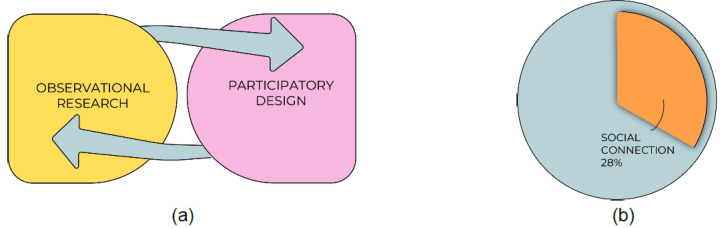
Figure 1: (a) Study design approach (b) favourable interactions.
Figure 1 shows the approach used to plan this study. The study will be performed with a team of nurses, mostly from the same department. The Perceived Stress Scale (PSS), Coping Orientation to Problems Experienced Inventory (Brief-COPE) and Positive and Negative Affect Scale (PANAS) will be used to evaluate the various stages of the study. The study will be divided into three phases as shown in the schematic. Phase 1 will involve collecting data using PSS and establishing the stress levels of the participants. This phase will also include interviews to understand and empathize with the nurses. The research team will generate ideas based on the literature review conducted so far. Phase 2 will involve ideation and prototyping based on the data collected from Phase 1. Phase 3 will involve collecting data as feedback from partic- ipants and understanding the satisfaction of the goal and the users. A t-test will be performed to validate the findings.
Figure 1(b) is a visual representation of the type of interactions favoured by the nurses. This was because of the literature review and community engage- ment during the research of the project. It shows that social interactions are the most sought after and will help in generating a feeling of togetherness amongst the workers.
DISCUSSION
The study is in Phase 1 (February 2024) and the team has brainstormed ideas that can take more solid form as the study progresses. The team consists of
A Multisensory Design Approach to Help Relieve Stress in a Healthcare Workplace 137
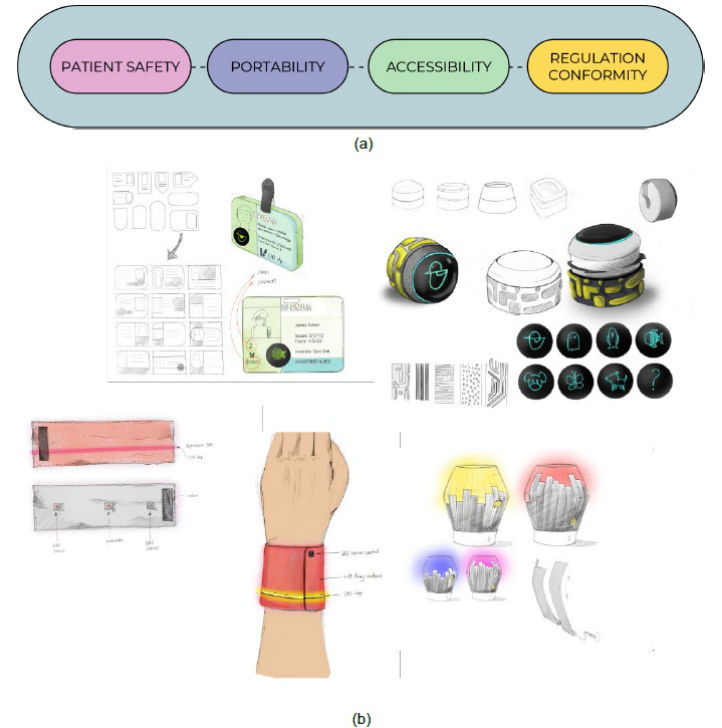
the principal investigator (PI), the faculty chair and a team of nurses serving as experts on the matter. The ideas generated by the PI were shown to the experts and feedback was collected for the first round of ideation. The ideas generated so far have been envisioned to take up three avenues: design of a novel fidget, design of a wearable and design of space. These avenues were drawn up after careful consideration of the factors that the ‘stress-relief prod- uct’ should have (based on literature review and expert opinion) which were: portability (easy to carry around), safety (safe to be used around patients), regulatory conformation and accessibility (easy and safe to use in a healthcare setting) Refer Figure 3(a).
Figure 2: (a) Factors affecting the design (b) ideation examples.
The ideation so far has resulted in leading the study in a few directions. A few are illustrated in Figure 3(b). The directions of wearables in healthcare workspace, novel fidgets, smart badges that do more, and relaxing central devices have been undertaken. The explorative nature of the study has proven to accommodate more empathy for the nurses.
CONCLUSION
There are various methods in use to help relieve stress at workplace and beyond. These methods are not completely feasible, and thus more research needs to be carried out for stress-relief methods to be employed at the work- place. Multisensory design has enough evidence that proves significant effect on users and can be used as a method to produce designs that can have calm- ing effect on users. The context of workplace is important as it limits many interventions and thus creates a challenge for design community. This study concludes with multisensory design as a potential framework for designing for mental health. Synaesthetic design as an extension of multisensory design can be attempted with further research.
STUDY LIMITATIONS AND FUTURE SCOPE With the study still in its data collection and conceptualization stage, the researcher plans to validate the findings with one concept [design direc- tion] that receives the maximum positive feedback from the participants. The researcher plans to show the ideas in the form of sketches and receive comments from the participants, thus practicing participatory design. Once the researcher decides on a design direction, they will work on developing a prototype and a protocol to test the prototype in a healthcare setting and thus validate the hypothesis. They plan on involving the nurses by allowing them to use the prototype for a period of not more than a week. During this time, the researcher will observe the participants use the prototype and note down observations (observational research) as well as carry out contextual inquiry and try to find the shortcomings of the prototype. The researcher will then engage in iterative prototyping and develop multiple prototypes before developing the final prototype. This iterative, agile and exploratory process is envisioned to lead the study in a definitive direction and produce a product that will help the nurses relieve stress at the workplace.
REFERENCES
Baumann, H., Heuel, L., Bischoff, L. L., & Wollesen, B. (2023). mHealth interventions to reduce stress in healthcare workers (fitcor): Study protocol for a randomized controlled trial. Trials, 24(1), 163. Blacher, S. (2023). Emotional Freedom Technique (EFT): Tap to relieve stress and
burnout. Journal of Interprofessional Education & Practice, 30, 100599. Boudrias, J. S., Morin, A. J., & Brodeur, M. M. (2012). Role of psychological empowerment in the reduction of burnout in Canadian healthcare workers. Nursing & health sciences, 14(1), 8–17. Castillo-Villar, F. R., & Villasante-Arellano, A. J. (2020). Applying the multisensory
sculpture technique to explore the role of brand usage on multisensory brand experiences. Journal of Retailing and Consumer Services, 57, 102185. Chatterjee, S. S., Chakrabarty, M., Banerjee, D., Grover, S., Chatterjee, S. S., & Dan, U. (2021). Stress, sleep and psychological impact in healthcare workers during the early phase of COVID-19 in India: A factor analysis. Frontiers in Psychology, 473. Elsayed, M. E., El-Abasiri, R. A., Marzo, R. R., Dardeer, K. T., Kamal, M. A.,
Abdelaziz, H.,... & Htay, M. N. N. (2023). Mental health, risk perception, and coping strategies among healthcare workers in Egypt during the COVID-19 pandemic. PloS one, 18(2), e0282264.
A Multisensory Design Approach to Help Relieve Stress in a Healthcare Workplace 139
Flach, J. M., Stappers, P. J., & Voorhorst, F. A. (2017). Beyond affordances: Closing the generalization gap between design and cognitive science. Design Issues, 33(1), 76–89. Kachaturoff, M., Caboral-Stevens, M., Gee, M., & Lan, V. M. (2020). Effects of
peer-mentoring on stress and anxiety levels of undergraduate nursing students: An integrative review. Journal of Professional Nursing, 36(4), 223–228. Kazmierczak, E. T. (2003). Design as meaning making: from making things to the design of thinking. Design issues, 19(2), 45–59. Kleinsman-Leusink-Hill, B., Bronlund, J., & Gupta, G. S. (2018, May). Thermal and
haptic interface design: Adding sensory feedback to VR/AR. In 2018 IEEE Inter- national Instrumentation and Measurement Technology Conference (I2MTC) (pp. 1–6). IEEE. Kopplin, C. S., & Rosenthal, L. (2023). The positive effects of combined breathing techniques and cold exposure on perceived stress: A randomised trial. Current Psychology, 42(31), 27058–27070. Kuo, J. Y., & Chang, D. (2020). User Emotional Experience Evaluation on Bicycle
Design from a Multi-sensory Perspective. In Advances in Usability and User Expe- rience: Proceedings of the AHFE 2019 International Conferences on Usability & User Experience, and Human Factors and Assistive Technology, July 24–28, 2019, Washington DC, USA 10 (pp. 723–732). Springer International Publishing. Lameire, N., Joffe, P., & Wiedemann, M. (1999). Healthcare systems— an international review: an overview. Nephrology Dialysis Transplantation, 14(suppl_6), 3–9. Malheiros, P. C., Vanderlei, A. D., & Brum, E. H. M. D. (2023). Meditation for stress and anxiety relief in undergraduate students: a randomized clinical trial. Revista Brasileira de Educação Médica, 47, e025. Masters, R., Ortega, F., & Interrante, V. (2023). A Multisensory Approach to Virtual
Reality Stress Reduction. Mohanty, A., Kabi, A., & Mohanty, A. P. (2019). Health problems in healthcare workers: A review. Journal of family medicine and primary care, 8(8), 2568. Mottaghi, S., Poursheikhali, H., & Shameli, L. (2020). Empathy, compassion fatigue,
guilt and secondary traumatic stress in nurses. Nursing ethics, 27(2), 494–504. Norman Daniels (2001) Justice, Health, and Healthcare, The American Journal of Bioethics, 1:2, 2–16, doi: 10.1162/152651601300168834. Ohkawa, Y., Tanoue, H., & Fukai, K. (2023). Physiological and psychological effec-
tiveness of facial massage in women: A randomized crossover trial. Journal of International Nursing Research, 2(1), e2021–0005. Okyay, E. K., & Uçar, T. (2023). The effect of Emotional Freedom Technique and music applied to pregnant women who experienced prenatal loss on psychological growth, well-being, and cortisol level: A randomized controlled trial. Archives of Psychiatric Nursing. Putrino, D., Ripp, J., Herrera, J. E., Cortes, M., Kellner, C., Rizk, D., &
Dams-O’Connor, K. (2020). Multisensory, nature-inspired recharge rooms yield short-term reductions in perceived stress among frontline healthcare workers. Frontiers in Psychology, 11, 560833. Reinoso-Carvalho, F., Gunn, L. H., Horst, E. T., & Spence, C. (2020). Blending emotions and cross-modality in sonic seasoning: Towards greater applicability in the design of multisensory food experiences. Foods, 9(12), 1876. Rushforth, A., Durk, M., Rothwell-Blake, G. A., Kirkman, A., Ng, F., & Kotera, Y.
(2023). Self-Compassion Interventions to Target Secondary Traumatic Stress in Healthcare Workers: A Systematic Review. International Journal of Environmen- tal Research and Public Health, 20(12), 6109.
Sangari, A., Bingham, M. A., Cummins, M., Sood, A., Tong, A., Purcell, P., & Schlesinger, J. J. (2023). A Spatiotemporal and Multisensory Approach to Designing Wearable Clinical ICU Alarms. Journal of Medical Systems, 47(1), 105. Spence, C. (2020). Senses of place: architectural design for the multisensory mind.
Cognitive Research: Principles and Implications, 5(1), 46. Spence, C. (2021). The multisensory design of pharmaceuticals and their packaging.
Food Quality and Preference, 91, 104200. Tamminga, S. J., Emal, L. M., Boschman, J. S., Levasseur, A., Thota, A., Ruotsalainen, J. H., & Schelvis, R. M. (2023). Individual-level interventions for reducing occupational stress in healthcare workers. Cochrane Database of Systematic Reviews, (5). Utriainen, K., Ala-Mursula, L., & Kyngäs, H. (2015). Hospital nurses’ wellbeing at
work: A theoretical model. Journal of Nursing Management, 23(6), 736–743.
LISTED IN THE AHFE DIGITAL BOOKSTORE CATALOGUE
Explore the complete digital volume
Interdisciplinary Practice in Industrial Design
Read this individual research paper free through the original publisher, or explore the full digital proceedings book.
ISBN 978-1-964867-20-5
Explore this ISBN in the AHFE Bookstore ↗Listed in the July 2026 bookstore catalogue; search by ISBN to confirm current availability · Digital book purchase optional