Muhammad Tanvir Akanda, Min Kang (2025). Empowering Older Adults with AI Agent-driven Medication Management: Enhancing Adherence, Independence, and Health Outcomes. In: Interdisciplinary Practice in Industrial Design. AHFE Open Access, vol. 183, pp. 133–143. https://doi.org/10.54941/ahfe1006434
As the aging population grows, the healthcare system faces challenges in meeting the unique needs of older adults. Medication non-adherence among older adults is a critical issue that leads to severe health complications and reduced independence. Traditional medication management tools often fail to address this problem due to their technological limitations, complexity, lack of personalization, and poor accessibility. These shortcomings make it challenging for older adults to manage complex medication routines, increasing health risks and dependence on caregivers. Research indicates that approximately 40% of older adults struggle with medication adherence due to memory issues, complex routines, and accessibility barriers. This study aims to design an AI Agent-driven medication management solution to empower older adults by simplifying their medication routines and reducing cognitive and physical strain. The proposed system aims to improve medication adherence, promote greater independence, and minimize caregiver reliance through personalized and accessible support. A human-centered design methodology guided this research with initial qualitative user studies through interviews and surveys to identify gaps in existing solutions. Quantitative scenarios-based testing evaluated the system’s impact on user confidence and accessibility. The system integrates advanced AI capabilities, including real-time contextual processing and multimodal integration, which ensures adaptability to user needs and seamless interactions. The proposed solution delivers a personalized, user-centered experience that simplifies medication routines for older adults by employing AI technologies, including large language models (LLMs), large multimodal models (LMLs), and other existing tools, such as various apps on the phone and computer to function effectively with contextual information. Key features include medication reminders, meal planning, activity suggestions, and family monitoring tailored to an individual’s health condition, prescribed medication, avoiding dietary lists, recent grocery shopping data, current weather, and other necessary contextual factors for a patient’s health management. This holistic system promotes medication adherence and supports broader health management needs for an active lifestyle. The project focuses on iterative refinement guided by user feedback to create a design that provides usability and accessibility to users. Results from user testing show a significant rise in confidence among the target users, who reported feeling more comfortable and independent in managing their health with the AI-powered medication management solution. This study emphasizes the potential of AI to reduce health risks among older adults by promoting their medication adherence. By incorporating AI potential with human-centered design, this solution proves how to bridge the gap between user needs and technological possibilities. This system approach improves health management needs and independence and reduces caregiver burden, encouraging a balanced support system. These findings highlight the broader implications of AI in healthcare, offering a scalable and impactful model for addressing the challenges of an aging population and providing a pathway for context-based AI assistive solutions in UX design that improve the quality of life for older adults.
Medication management has presented significant challenges for older adults, impacting their overall health and quality of life. Aging individuals often face chronic conditions such as diabetes, hypertension, and arthritis, necessitating strict, complex medication regimens (BeMedWise, n.d.). However, cognitive, sensory, and physical limitations frequently interfere with proper medication adherence. Common barriers include memory
impairments, diminished vision or hearing, and difficulties comprehending medical instructions (Punnapurath et al., 2021). Up to 60% of older adults with dementia experience drug-related problems, including inappropriate medication combinations and administration timing (Hoang, Stall, & Rochon, 2024). Additionally, physical challenges such as reduced manual dexterity, difficulty opening medication containers, and mobility issues further complicate adherence (PMC, 2016).
The structure of healthcare systems also contributes to these challenges. Many seniors see multiple healthcare providers, leading to polypharmacy. This issue also raises concerns about drug interactions, drug reactions, and medication errors. For example, an estimated 32% of European older adults take five or more medicines every day, and polypharmacy is associated with increased risk of falls, frailty, cognitive impairment, hospitalization, and death (Xie et al., 2023).
Poor adherence to prescribed pharmacological therapy and extensive use of polypharmacy are major contributors to many geriatric syndromes, including falls, fractures, urinary incontinence, and cognitive impairment. These conditions not only threaten the health of elderly persons but also reduce their functional independence and heighten the likelihood of their needing institutional care (Khairullah et al., 2018). It is important to note that these issues are not isolated phenomena. Rather, they are often interconnected, generating a compounding cycle wherein poor adherence precipitates worsening health, which in turn leads to increasingly complex medication regimens, further entrenching adherence problems. The upward trend highlights the pressing need for advanced systems to enable early intervention, assist effective management, and foster long-term adherence (Smaje et al., 2018). According to the World Health Organization, as cited in Huang et al. (2020), approximately 40% of older patients with chronic conditions do not follow their planned prescriptions. Furthermore, 33% to 69% of drug-related hospitalizations are caused by poor medication adherence in the United States, which induces an avoidable annual healthcare cost of US$100 to 300 billion (Huang et al., 2020).
Given these complexities, this research explores the application of advanced AI technologies, including large language models (LLMs) and machine learning (ML), to develop a sophisticated medication management architecture through the implementation of user experience (UX) design. The goal is to enhance adherence and minimize errors through real-time monitoring, adaptive interventions, and personalized support for patients and caregivers. By integrating AI-driven solutions, this approach aims to go beyond traditional healthcare systems, offering an innovative, user-centered framework that prioritizes accessibility, ease of use, and health outcomes for older adults.
CHALLENGES IN MEDICATION MANAGEMENT This study begins by exploring real-world challenges that older adults face in managing their medications. To gain a deeper understanding of these struggles, we conducted a survey followed by user interviews. Our study
Empowering Older Adults With AI Agent-Driven Medication Management 135
included 23 participants (15 M, 8F), whose insights provided a clear view of the difficulties they face regularly.
Findings revealed that medication management is a complex task, often requiring external support. Almost half of the respondents rely on family members for medication reminders, while the rest rely on phone alarms, handwritten notes, pill organizers, or even visual cues to keep track of their medication. However, 81% admitted that these were only moderately effective, leading to missed or mistimed doses. A significant challenge was medication adherence. 50% of the participants frequently forgot to refill their prescriptions, while 69% struggled remembering the correct way to take their medications. This issue was further complicated because 50% of the respondents managed between 3 to 5 different medications, and 31% handled 1 to 2. Managing multiple prescriptions added to cognitive load increases the possibility of error.
In addition to medicine schedules, we observed a lack of adoption of technology for managing personal healthcare. Only 13% of participants indicated high confidence in using technology, while 75% indicated moderate confidence in using it for medical purposes. Interviews with the targeted population highlighted that many older adults found existing medicine management tools too complex, hard to use, and require much manual effort. In addition, the user interviews revealed more fundamental emotional and cognitive challenges. Some participants described a sense of anxiety and frustration related to medicine management, fearing consequences of a missed dose. Some participants said that they often asked themselves if they already took a pill, causing unintentional doubling of a dose or skipping medicines altogether. Also, interviews indicated that vision impairments and dexterity issues made it harder to manage small pills and to read labels.
ARTIFICIAL INTELIGGENT (AI) AND AI AGENT-DRIVEN SOLUTIONS In order to address the complex challenges involved with medication management, especially in the context of the aging population, this analysis explores the abilities offered by artificial intelligence (AI) as well as by AI-augmented interventions in providing an enhanced system that is not merely more efficient but responsive to the differing cognitive, behavioural, and technological needs of the population. AI-powered interventions have the potential to improve clinical results and quality of life. By leveraging machine learning, natural language processing, and predictive analytics, these systems can recognize the complex factors underlying medication non- adherence (Graafsma et al., 2024). As such, AI is able to offer information, motivation, reminders, and interventions that are more effective at reducing medication errors than traditional approaches (Bohlmann et al., 2021). AI is already widely used in healthcare for precision diagnostics, such as automated analysis of medical images in radiology, dermatology, pathology, and cardiology. Studies have shown that AI systems can match or even exceed human experts in tasks like detecting pneumonia on chest X-rays, classifying skin lesions, and diagnosing heart attacks from ECG data (Bajwa et al., 2021). To understand such a solution, it is first necessary to establish clear
136 Akanda and Kang
definitions of AI as well as of AI agents, as also their coupling in such a system.
In its core definition, artificial intelligence (AI) refers to computing systems that can perform operations which typically involve human cognitive processes such as learning, problem-solving, and reasoning by analysing vast amounts of complex data through complex algorithms, especially those linked to machine learning and deep learning methods (Jiang et al., 2017). This field includes a vast range of methods such as machine learning, natural language processing, and computer vision which facilitate machines to extract knowledge from data, learn, and optimize their performance through incremental improvements.
An artificial intelligent agent is a type of AI that acts independently in an environment to accomplish assigned goals. It learns about its environment through sensors, data feeds, or APIs, processes this information through complex algorithms, then takes action to accomplish these goals. In health care, specifically in medication management, such an intelligent agent is able to monitor to monitor drug intake, support patient autonomy, and ultimately improve adherence by delivering timely reminders and analyzing usage patterns to offer personalized interventions (Babel et al., 2021).
As part of this effort, an AI medication management assistant was developed to provide personalized and instant support to older adults. The AI agent leverages natural language processing (NLP), machine learning methods, and predictive modelling to facilitate medication adherence and augment the intuitiveness of human-device interactions. In contrast to typical reminder applications, this AI agent communicates using interactive dialogue, assesses patterns of medication use, and adaptively modifies support accordingly.
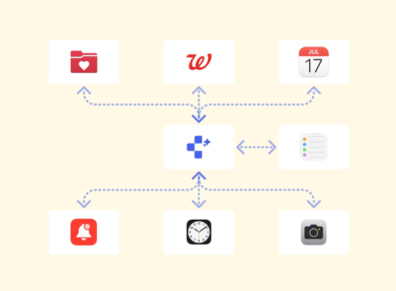
Using voice-interaction capabilities, the AI agent allows users to receive reminders, verify their medication use, and check their medications using simple voice commands. This capability reduces the need for manual input, making it more accessible to users lacking high-tech proficiency. In addition to reminders, the AI agent communicates with electronic health records (EHRs) and pharmacy systems to manage prescription refill queues and inform users when a refill is imminent (Figure 1).
For this work, the AI-assisted approach serves not just as a reminder system but also as a comprehensive support system for helping older adults manage their medications. Using adaptive learning, multimodal interaction, and predictive analysis, AI-based solutions make medication management more intuitive, convenient, and effective, reducing stress and improving adherence.
EXPERIENCE-DRIVEN DESIGN APPROACH The development of the design solution for the AI-powered medication management system was rooted in an experience-driven design approach, focused on understanding the users’ needs, challenges, and behaviors. This approach helped ensure that the system went beyond functionality to become intuitive, usable, and helpful in nature, particularly addressing the needs
Empowering Older Adults With AI Agent-Driven Medication Management 137
of medication management in older adults. Extensive engagement with the target age group helped design an experience highly attuned to their unique needs and preferences.
Figure 1: System map for AI agent-driven application.
Data gathered using surveys and interviews was initially used to define the user’s journey and determine key areas of concern related to medication management. This process helped shed light on the emotional, cognitive, and practical challenges older adults face daily. The objective was to simplify the user’s experience by providing a logical and understandable system that was easy to use and flexible over time.
The guiding principle of the design was to create a system that blended in seamlessly with users’ day-to-day routines, providing maximum support in a manner that caused minimum interference. The guiding principle was used to design a multimodal interaction system that allowed users to choose their preferred method of interaction with the AI agent. Particular focus was given to voice-based interaction to provide maximum usability, enabling users to interact verbally with the AI for reminders, medication reminders, and more. In combination with voice guidance, visual and interactive reminders were added to support users who prefer to interact using screens, hence creating a more inclusive design that addresses all users’ varying preferences and capabilities.
A fundamental aspect of this approach was incorporating user testing, which provided practical observations at different points during the design process. Prototyping was evaluated using a representative set of participants, thus allowing us to witness their interaction with the system in a controlled environment. Informed by their input, iterative refinements were carried out to enhance functionality and user experience. For example, in initial testing, participants complained of challenges in traversing many options in the menu; hence, we sharpened the design to simplify the number of steps required and improve intuitiveness in manoeuvrability.
Lastly, experience-centered design principles ensured that a solution was created that was in line with users’ goals, preferences, and constraints. The solution emphasized simplicity, personalization, and flexibility, enabling older adults to manage their medicines independently and self-assuredly.
138 Akanda and Kang
By basing the design process on actual users’ experiences, we created a solution that is not just useful but also highly relevant to older adults’ needs.
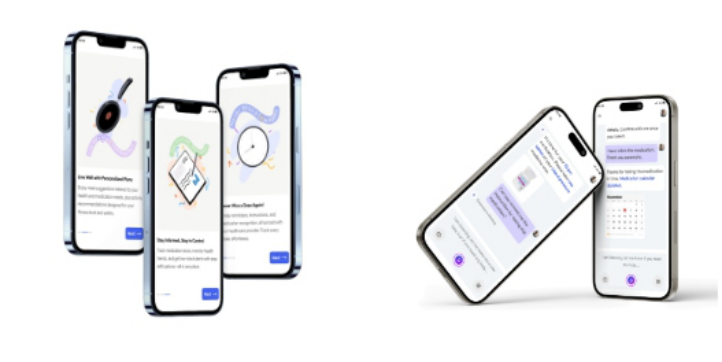
BUILDING PROTOTYPES AND TESTING The final outcomes of this study concern developing and testing a functional prototype of an artificial intelligence-based system for managing medication among the elderly. To conceptually design the proposed system’s interface and workflow, detailed wireframes were created. These representations were paramount in showing how the system would look and work.
Figure 2: Wireframes for application design.
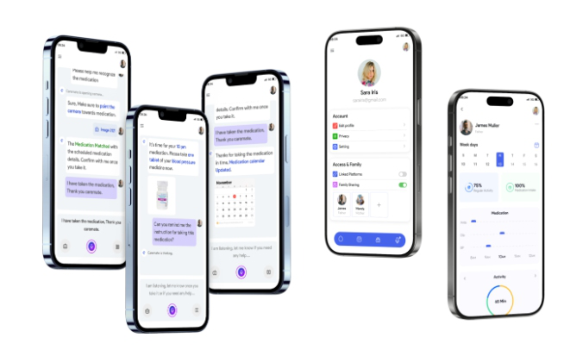
The results were presented to the potential user of this product to solicit their opinions on the overall design, functionality, and usability. User feedback during this phase was used to iterate the prototype design further, finalizing its appropriateness for older adults through accessibility and ease of navigation. To make the capabilities embedded in the AI-driven system understandable to both technical and non-technical stakeholders, representations and visualizations of the basic features, the medication reminder system and the computer vision-enabled pill recognition feature were designed. These visual aids improved stakeholders’ understanding of how the system works and how it could simplify medication management for older adults, especially those with limited technological literacy.
Figure 3: Initial user interface (UI) design for mobile application prototype: care mate.
Empowering Older Adults With AI Agent-Driven Medication Management 139
This prototype was also a proof-of-concept demonstration of the system’s potential to alleviate the challenges surrounding medication management. It gathered user input and guided design improvements.
Development of the AI-driven system started with creating a workable prototype to demonstrate fundamental functionalities and their potential in reducing challenges identified during the user research stage. The prototype was never built as a complete product but was designed to illustrate the very core principles of the system: integration with electronic health records to retrieve prescription information on one hand, and the other, offer intelligent medication reminders. The goal was to test the feasibility of such functionalities and gather initial user feedback. The prototype aimed to show how the system could offload user burdens, such as the need to remember refills or medication intake instructions, through an intuitive interface and intelligent features. The above refinements were tested continuously with a small group of older adults and their caregivers, thus ensuring that feedback on usability and design could substantially shape further refinements to the idea.
The results from the pilot study using the working prototype were most helpful. Users reported that the system made it easier to manage their medication and improved their adherence. In particular, family members found the tailored health advice and real-time monitoring features instrumental in ensuring that medications were taken correctly and at the right time. Pilot testing was an essential step in proving the concept’s ability to address key medication management issues and provide meaningful support to patients and caregivers.
The prototype validation focused on confirming that the concepts within were feasible and usable. The information gathered in this validation step was used to refine the prototype further, ensuring that the design and functionalities were pragmatic and robust for implementation in real-world settings.
Figure 4: Refined UI design for care mate mobile application prototype.
140 Akanda and Kang
These findings illustrate the great potential for artificial intelligence systems to improve medical care in older adults. A few critical design principles were identified as essential for informing the iterative development of such systems. The research also shows how the system could help reduce some of the key problems associated with polypharmacy and improve health outcomes.
While the work did not result in testing a fully functional product, the groundwork was solid and could be further improved. Further work may be directed toward the realization of a comprehensive solution to help medication adherence since this is where tangible enhancements in the quality of life of older adults are most likely to occur. As such, the implications of this study go beyond its immediate findings and outline the scope for future advancement in this important area of healthcare.
The findings also enabled the integration of functionalities such as computer vision for medication identification and automated reminders about refills that would take care of common issues such as forgetfulness to refill the prescription or misremembering about dosage. As confidence in using technologies varies in levels, designing this system to be friendly and simple makes it easy for all levels of user knowledge about technology to experience the functionalities. After the design, user testing was conducted with older adults and their family members, who used the system for a specified period. The test utilized a task-based usability testing methodology, where participant interacted with the prototype to simulate routine medication-related activity. The activities included viewing reminders, confirming pill-taking, and reviewing refill notifications. Observational data was captured in the process of session execution, which then supplemented interviews aimed at eliciting qualitative responses in terms of usability, understandability, and general experience. In this phase, feedback regarding the system’s usability, effectiveness, and impact on medication adherence was collected. Users’ experiences in using the system were expressed, including ease of use, clarity of reminders, and general satisfaction with the system’s functionality.
Figure 5: Prototype user testing.
The results of this user testing proved invaluable in improving the system by addressing remaining usability issues and implementing changes to the interface and reminder functions. The iterative design, testing, and refinement process ensures that the final system meets the real needs of older adults.
Empowering Older Adults With AI Agent-Driven Medication Management 141
LEARNINGS FROM THE RESEARCH Designing a concept model and testing of an artificial intelligence-based system for handling drugs in the elderly generated several key findings that would be of great assistance in further improvements and uses. The processes of pilot testing and soliciting user feedback were essential for the refinement of the system. Engaging a limited cohort of patients and their family members at the initial stages of development allowed us to detect and address usability challenges, technical malfunctions, and design imperfections before large-scale implementation. This iterative approach to testing significantly improved the system’s usability and functionality.
Other important results concern the exploitation of user-centered design approaches. Identifying the needs of both the patient and their relatives led to the development of an intuitive and easy-to-use system that can also meet challenges. From the simplicity of the interfaces to the clarity of instructions to personalized reminders, all these aspects have considerably increased user acceptance and satisfaction.
The initiative has stated how much artificial intelligence can improve medication management. Furthermore, the use of machine learning algorithms combined with computer vision methods for the recognition of pharmaceuticals and forecasting behavior related to adherence has been proven successful, with enhancements in precision and efficacy; however, it has highlighted the further need for refinement and model validation to ensure the dependability and effectiveness of the models over time.
One of the strong focuses during research was ethical and privacy concerns: informed consent, data confidentiality, and following institutional procedures, all of which reassured the would-be participants that their trust would not be breached. These experiences underlined the critical need to install sound ethical frameworks in developing AI-enhanced healthcare solutions.
The study also highlighted how such an AI-enabled system positively impacted the health outcomes of older adults. This is because such systems can give personalized health advice, monitor medication intake in real time, and give intelligent reminders based on the patient’s individual needs.
CONCLUSION
This study underscores the potential of an AI-driven medication management system, through the UX design process, to address the critical challenges that older adults face. By integrating AI agent-driven solutions and a user-centered design approach, the proposed system enhances medication adherence, reduces health risks, and fosters greater independence.
One limitation of this study is the relatively small user sample, which necessitates broader testing to ensure generalizability across diverse populations. Research on advanced technology for older adults should explore strategies to enhance inclusivity, such as incorporating alternative interaction methods and ensuring seamless integration with the existing
142 Akanda and Kang
healthcare system. This will be considered an essential principle for future research with fully developed application, requiring further refinement and large-scale validation. Despite its promise, the integration of AI into healthcare and other domains also raises important concerns, including issues of privacy, transparency, and the potential for bias in decision-making (Ahmad et al., 2023).
Despite these challenges, this research lays a strong foundation for integrating AI technology into the meaningful use cases in the context of medication management for older adults. With further improvements, such systems have the potential to significantly enhance medication adherence and health outcomes, as well as reduce the risk associated with medication intake for older adults. By prioritizing personalization, accessibility, and adaptability, AI-driven medication management can revolutionize elderly care and contribute to a more proactive and efficient healthcare ecosystem.
REFERENCES
Ahmad, S. F., Han, H., Alam, M. M., Rehmat, M., Irshad, M., Arraño-Muñoz, M., & Ariza-Montes, A. (2023). Impact of artificial intelligence on human loss in decision making, laziness and safety in education. Humanities and Social Sciences Communications, 10(1), 1–14. Babel, A., Taneja, R., Mondello Malvestiti, F., Monaco, A., & Donde, S. (2021).
Artificial intelligence solutions to increase medication adherence in patients with non-communicable diseases. Frontiers in Digital Health, 3, 669869. Bajwa, J., Munir, U., Nori, A., & Williams, B. (2021). Artificial intelligence in healthcare: Transforming the practice of medicine. Future healthcare journal, 8(2), e188–e194. BeMedWise. (n.d.). Medication management for older adults. https:// www.bemedwise.org/medication-management-for-older-adults/ Bohlmann, A., Mostafa, J., & Kumar, M. (2021). Machine learning and medication
adherence: Scoping review. JMIRx Med 2 (4): e26993. Graafsma, J., Murphy, R. M., van de Garde, E. M., Karapinar-Çarkit, F., Derijks, H. J., Hoge, R. H.,... & van den Bemt, P. M. (2024). The use of artificial intelligence to optimize medication alerts generated by clinical decision support systems: A scoping review. Journal of the American Medical Informatics Association, 31(6), 1411–1422. Hoang, P. M., Stall, N. M., & Rochon, P. A. (2024). Home alone and high risk:
Supporting medication management in older adults living alone with cognitive impairment. Journal of the American Geriatrics Society, 72(12), 3631–3633. Huang, J., Wang, H. H., Zheng, Z., & Wong, M. (2020). Medication adherence among the older adults: Challenges and recommendations. Hong Kong Medical Journal, 26(6), 476–478. Jiang, F., Jiang, Y., Zhi, H., Dong, Y., Li, H., Ma, S.,... & Wang, Y. (2017).
Artificial intelligence in healthcare: Past, present and future. Stroke and vascular neurology, 2(4). Khairullah, A., Platt, B., & Chater, R. W. (2018). Medication non adherence in older adults: Patient engagement solutions and pharmacist impact. Pharm Times, 50(11), 38–44. PMC. (2016, March 14). An update on geriatric medication safety and challenges
specific to older adults. https://pmc.ncbi.nlm.nih.gov/articles/PMC4915389/
Empowering Older Adults With AI Agent-Driven Medication Management 143
Punnapurath, S., Vijayakumar, P., Platty, P. L., Krishna, S., & Thomas, T. (2021).
A study of medication compliance in geriatric patients with chronic illness. Journal of Family Medicine and Primary Care, 10(4), 1644–1648. Smaje, A., Weston-Clark, M., Raj, R., Orlu, M., Davis, D., & Rawle, M. (2018).
Factors associated with medication adherence in older patients: A systematic review. Aging medicine, 1(3), 254–266. Xie, C., Gu, Y., Wang, Y., Ni, F., & Li, Y. (2023). Research status and hotspots of medication safety in older adults: A bibliometric analysis. Frontiers in Public Health, 10, 967227.
LISTED IN THE AHFE DIGITAL BOOKSTORE CATALOGUE
Explore the complete digital volume
Interdisciplinary Practice in Industrial Design
Read this individual research paper free through the original publisher, or explore the full digital proceedings book.
ISBN 978-1-964867-59-5
Explore this ISBN in the AHFE Bookstore ↗Listed in the July 2026 bookstore catalogue; search by ISBN to confirm current availability · Digital book purchase optional