Yu Hu, Qiangqiang Fan, Xinyi Wang (2025). Cultural Heritage in the Digital Age: Interaction Design Strategies for the Preservation of Porcelain of the Liao Dynasty. In: Human Factors in Communication of Design. AHFE Open Access, vol. 177, pp. 127–138. https://doi.org/10.54941/ahfe1006337
This study explores the integration of interaction design with traditional handicrafts, focusing on Porcelain of the Liao Dynasty as a case study. Traditional handicrafts face challenges in preservation and inheritance due to outdated methods and limited engagement with younger generations. By leveraging modern technologies such as 3D modeling, virtual reality (VR), augmented reality (AR), and machine learning, this research proposes a human-centered interaction design model to revitalize and popularize traditional crafts. The study identifies three levels of interaction—perceptual, behavioral, and abstract—to enhance user engagement and learning. Through user interviews, surveys, and design practices, the research highlights the potential of digital tools to bridge the gap between traditional craftsmanship and contemporary audiences. The findings demonstrate that interactive and dynamic media designs significantly improve user engagement and understanding compared to static methods. This approach not only preserves the cultural essence of Porcelain of the Liao Dynasty but also fosters innovation and sustainable development in the realm of intangible cultural heritage (ICH).
Overview of the Porcelain of the Liao Dynasty Porcelain of the Liao Dynasty, with a history of over 1,000 years, is a unique form of ceramics developed during the Liao Dynasty. Modern interpretations combine contemporary technology, materials, and craftsmanship, resulting in diverse and distinctive designs. However, the inheritance of traditional handicrafts, including Porcelain of the Liao Dynasty, has struggled to integrate with modern science and technology. Traditional handicrafts carry rich cultural and historical value but rely on outdated methods like oral transmission and hands-on teaching, making preservation and dissemination difficult in a rapidly advancing technological world. To adapt to modern
market demands, especially in tourism, traditional crafts must balance artistic value with cost efficiency. Technologies such as 3D printing, virtual reality (VR), and augmented reality (AR) provide opportunities to modernize production and presentation while preserving their cultural significance.
Challenges in Preserving Traditional Handicraft Skills The preservation of traditional handicraft techniques faces numerous challenges. First, the complexity of these techniques often requires long- term learning and accumulation of experience, which limits the number of skilled inheritors. Second, the rise of modern technology and industrialized production has driven a gradual decline in market demand for traditional handicrafts, making it increasingly difficult to sustain the traditional production processes. Third, the value and status of certain traditional handicrafts have been marginalized in the modern world, often receiving inadequate support and attention. As a result, many traditional crafts are at risk of being lost.
Challenges of Outdated Inheritance Methods With Younger Generations Traditional handicrafts are often passed down using outdated “master- apprentice” methods, which rely on hands-on practice and individual understanding. Many inheritors fail to document the knowledge, theories, and techniques systematically, making the process inefficient. Additionally, geographic and time constraints limit the dissemination of these crafts, hindering their accessibility and inheritance across regions. To overcome these challenges, it is crucial to build a comprehensive knowledge system that integrates both theoretical and practical aspects of handicraft preservation.
Opportunities for Modernizing Traditional Handicrafts Given the current challenges in the preservation and development of traditional handicrafts, as well as the opportunities presented by modern technological advancements, this study proposes a human-centered interaction design model. This model emphasizes authentic regional characteristics to enhance user participation and satisfaction in experiencing traditional crafts. The integration of scientific and technological methods, such as digital tools and platforms, further enriches the expression of traditional handicrafts and creates new possibilities for their popularization.
By exploring the effective integration of digital design into traditional handicrafts, this study aims to allow more young people to engage with and experience the cultural heritage of traditional crafts. It constructs a digital design strategy for safeguarding and revitalizing traditional handicrafts, providing a practical and transferable model for their sustainable development. This approach not only preserves the cultural essence of traditional crafts but also promotes their innovation and relevance in contemporary society.
Cultural Heritage in the Digital Age: Interaction Design Strategies 129
INTERACTION DESIGN IN INTANGIBLE CULTRAL HERITAGE Concepts of Interaction Design
Interaction refers to processes of communication, cooperation, and mutual influence. Interaction design emphasizes active participation, creating a two- way relationship between creators and appreciators. It focuses on people, prioritizing human behavior, experiences, and services. The five key elements of interaction design are the person, the action, the tool or medium, the purpose, and the scene (Xin, 2015).
Current Status of Applications Mobile Application Design: The ‘Pocket Museum’ Project Projects like Cloud Brocade Weaving Road and Arch demonstrate how user experience (UX) design can be applied to cultural and educational apps. These projects use the five layers of UX design—strategy, scope, structure, framework, and performance—to create engaging and interactive experiences tailored to different intangible cultural heritage (ICH) themes (Tong, 2016).
Public Participation in Physical Space Interaction In Japan, public participation plays a key role in promoting ICH awareness. Initiatives include organizing ICH events, designing interactive exhibition spaces, and incorporating “interactive” and “experiential” elements into displays. For example, an exhibition of Japan’s National Treasure of Humanity pottery uses sound, light, and visuals to immerse visitors in the cultural story. These methods transform intangible cultural content into engaging experiences, combining education, dissemination, and public involvement (Zhao & Duan, 2024).
Virtual Interaction Enhances User Experience Digital technologies offer new ways to promote ICH. The Nanjing Museum of Intangible Cultural Heritage, for instance, uses multimedia displays and interactive experiences to make ICH content more accessible and engaging. By integrating digital tools, educational programs on ICH can become more interactive, especially for younger audiences. This approach not only deepens engagement with traditional crafts but also supports their preservation and popularization. Digital platforms also encourage community participation, helping to sustain ICH efforts.
Designing Practices With an Interactive Learning Model This study focuses on Porcelain of the Liao Dynasty, a traditional craft recognized as provincial intangible cultural heritage in Liaoning Province in 2015. The craft includes elements like inheritors, production processes, historical timelines, tools, and artistic features. By integrating these elements with digital design, the study creates interactive experiences that preserve and revitalize traditional crafts. This approach combines modern technology with cultural heritage, offering a sustainable development model for ICH.
THE ANALYSIS OF THE FUCTIONAL LELEMENTS OF TRADITIONAL HANDICRAFRTS’ NON-LEGACY User Interview
Interaction design focuses on understanding users’ psychological and behavioral traits to improve how they interact with products. This is especially important for integrating traditional handicrafts with digital tools (He & Wen, 2024).
Defining Research Objectives This study examines how interaction design can connect traditional handicrafts (ICH) with digital design. The goal is to preserve and innovate traditional culture while exploring new possibilities for digital interaction. The research focuses on colleges and universities, using insights from a survey of 142 visitors and the five elements of interactive behavior. During the user research phase, a combination of face-to-face interviews, online surveys, and user profiles was used to study user behavior and learning scenarios related to traditional crafts. Designers observed users, identified key challenges, and defined the target audience. Remote interviews (30–40 minutes each) were conducted to explore user needs, focusing on their expectations for digital craft experiences, feedback on existing digital products, and attitudes toward new technologies. The study aims to develop user experience principles that use digital design to preserve and grow traditional crafts (Zhang & Luo, 2021).
Selection of Respondents The study targeted young people aged 18 to 35, focusing on their needs and expectations for the digital design of traditional handicrafts and ICH. By understanding this group, the research aims to integrate digital design with traditional crafts, promoting cultural inheritance and innovation.
Design of Interview Questionnaires The interview questionnaire was designed to align with the research goals and respondent characteristics. It was divided into five parts: (1) Collecting demographic and background information; (2) Exploring users’ familiarity and interest in traditional handicrafts; (3) Investigating users’ experiences with digital technology in traditional crafts, including its functions and content; (4) Understanding users’ preferred technologies and daily habits to shape the digital platform’s design; (5) Capturing users’ key needs and expectations to ensure the platform meets their requirements. The questionnaire ensured the digital platform matched user needs effectively. A summary of the design is provided in Table 1.
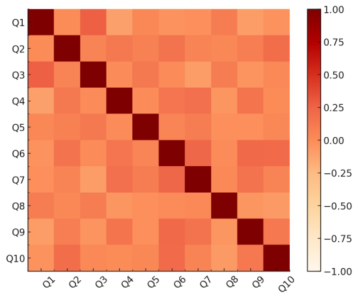
Figure 1: Correlation between key issues (Q1-Q10).
Figure 1 shows the correlation between the 10 key questions (Q1-Q10); the closer the value is to 1 or –1, the stronger the correlation between the two variables. Positive values indicate a positive correlation and negative values indicate a negative correlation.
Discussion of Interview Findings The interview notes were carefully organized to extract key insights and ideas, followed by an in-depth analysis of the data. The findings revealed that willingness and preference to participate in digital experiences of traditional handicrafts’ non-legacy (NRM) were significantly and positively correlated with factors such as gender, prior participation in traditional handicraft activities, and familiarity with digital approaches. Participants who had prior experience with digital methods for exploring intangible cultural heritage (ICH) were more likely to prefer using specific devices and recognized the advantages of digital tools. While age had a minor effect on most variables, factors such as gender, occupation, and preference for digital experiences showed the most significant influence on user interest.
Based on the interview results, users’ needs and expectations for the digital experience of traditional handicrafts and ICH were explored. These included their perceptions of NRM traditions, their acceptance of digital presentations, and the specific content or experiences they hoped to encounter in the digital format. Many interviewees emphasized the role of digital technologies in vividly and intuitively presenting traditional crafts to the public, enhancing participation and engagement. Digital
experiences were seen as effective tools for education and transmission, particularly in attracting younger generations. They were identified as opportunities to learn about traditional crafts and promote intergenerational transmission. Furthermore, the digital experience of traditional crafts opens up new pathways for sustainable development by creating economic benefits, attracting resources, and generating employment opportunities for inheritors. These opportunities contribute to the preservation and growth of traditional crafts. Ultimately, the interview findings were the result of joint discussions, summaries, and in-depth analyses between designers and users. These results authentically reflect the needs and expectations of users regarding the digital representation of traditional handicrafts.
Analysis of Functional Elements of Design Based on User Interviews The user interviews included 142 respondents, evenly split between men and women, aged 15 to 35. This demographic, comprising students and working professionals such as programmers, teachers, and designers, provided varied perspectives. Most participants had a basic understanding of intangible cultural heritage (ICH), with exposure often stemming from school education. Their cultural understanding of ICH varied based on personal interests, education, and regional backgrounds.Young users frequently engaged with ICH using digital devices like smartphones, tablets, and computers, and many showed interest in immersive technologies like virtual reality (VR) and augmented reality (AR). Participants familiar with VR games or AR apps demonstrated a readiness to adopt these technologies in traditional crafts. To attract this demographic, digital platforms must be user-centered, addressing their specific preferences and habits to maximize engagement.
Some researchers have found that compared to pure text content, static information graphics with charts and graphs can enhance the understanding and engagement of participants (Saffer, 2010). Additionally, designs combining text and graphics can further stimulate the audience’s thinking about the content (Colombo et al., 2012). In contrast to static information graphics, the conveyance of messages through audio-visual dynamics is more effective (Larson, 2015). Interactive information can enhance the audience’s experiential perception (Occa & Suggs, 2016). According to the above research results, interactive and dynamic media design forms have better information dissemination effects than static text or image designs (Locoro et al., 2017).
In virtual environments, avatars influence user interaction, self-perception, and behavior. VR design allows users to personalize avatars, enhancing engagement through tailored interactions. Designers must consider user characteristics, such as an average arm reach of 50–70 cm, when positioning interactive objects. For interfaces beyond this range, alternative inputs like gestures, speech, or posture can ensure accessibility. Feedback mechanisms are essential for sensory comfort and enriching user experiences. Ultimately, while experiences cannot be directly designed, designers can craft opportunities for aesthetic, emotional, and educational engagement,
Cultural Heritage in the Digital Age: Interaction Design Strategies 133
connecting users with their perceptions and the world around them (Wu, 2019).
APPLICATION OF PORCELAIN OF THE LIAO DYNASTY IN INTERACTION DESIGN Learning About Porcelain of the Liao Dynasty Through Different Interaction Techniques
The process of learning about Porcelain of the Liao Dynasty can be divided into three levels: perceptual, behavioral, and abstract.
Perception Level (see Figure 2) This level involves collecting and analyzing image and semantic information about Porcelain of the Liao Dynasty through a comprehensive learning system (PC + Mobile) (Figure 2a). The system is built on a database that includes the historical background of Porcelain of the Liao Dynasty, covering its rise, development, prosperity, and innovation. It also provides cognitive learning about materials, decorations, tools, and shapes (Figure 2b), as well as observations of processing techniques (Figure 2c). This integrated approach offers users a complete design source to participate in the creative process.
Figure 2: Perceptual level: (a) collection of information on Porcelain of the Liao Dynasty images and analysis and organization of semantic information, (b) cognitive learning of materials, decorations, tools, and shapes, and (c) observation of processing techniques.
Behavioral Level (See Figure 3) This level focuses on hands-on experiences and tool preparation. Participants use elements of Porcelain of the Liao Dynasty and technical methods to design small games, customize products, and create cultural and creative items. They learn about pattern decoration and the blend of modern and traditional styles through independent matching. Machine learning algorithms are used to segment and process image information, generating innovative designs inspired by Porcelain of the Liao Dynasty. The Web AR 2.0 human- computer interaction system allows for 3D modeling, image segmentation, and mapping (Figure 3a). Additionally, craft workshops (Figure 3b) and offline communication experiences (Figure 3c) are part of this level.
Figure 3: Behavioral levels: (a) human-computer interaction and 3D modeling creation, (b) craft workshops, (c) offline communication experiences.
Abstraction Level (See Figure 4) This level highlights the cultural and symbolic value of Porcelain of the Liao Dynasty, including its national spirit, craftsmanship inheritance, and innovation (Figure 4a). It also offers immersive experiences (Figure 4b) by analyzing user perceptions, regional culture, and personality creation. This level emphasizes the inheritance of traditional skills and innovation, extracting design elements for cultural and creative products (Figure 4c).
Figure 4: Levels of abstraction: (a) Liao Porcelain backstory display, (b) immersive experience, (c) cultural and creative product redesign.
The Learner’s Complete Interactive Experience Process As shown in Table 2, researchers compared three forms of information representation—static, dynamic, and interactive—and found that each has its unique advantages in media design (Seng et al., 2024). This comparison helps optimize the learning experience for Porcelain of the Liao Dynasty.
Table 2: The complete process of interactive experience.
Table available in the original PDF paper.
Cognitive Content Learning Objectives Interactive Behavior Process of Interaction Pre- interaction The process of Porcelain of the Liao Dynasty craftsmanship; knowledge of unique painting and firing techniques.
Perception of physical and virtual environments; familiarity with interactive environments and interactive processes.
The first learning experience of Porcelain of the Liao Dynasty molds under the interactive guidance of the virtual environment.
Continued
Cultural Heritage in the Digital Age: Interaction Design Strategies 135
Table 2: Continued Cognitive Content Learning Objectives Interactive Behavior Process of Interaction
Table available in the original PDF paper.
Interactive mid-term
Organize the use of different categories of patterns, colors, materials, and shapes.
Expression of design work using different patterns, techniques, and materials.
Experience applying different molds for porcelain making through several experiments. Late interaction
Experiencers are able to grasp the artistic style of Porcelain of the Liao Dynasty
Active participation in the whole process of Porcelain of the Liao Dynasty and completion of production.
Observe specific Porcelain of the Liao Dynasty vessel types and color patterns to consolidate knowledge.
Analyzing the Practice of Educational Exploration in Higher Education Agenda Setting: Porcelain of the Liao Dynasty Brings Folklore to Life Information about Porcelain of the Liao Dynasty is transformed into immersive experiences using text, symbols, colors, music, and visual elements. By simulating realistic environments, users engage their senses—visual, auditory, and tactile—to connect with the product and its cultural context. This human-centered approach highlights aesthetic appreciation and fosters two-way communication, allowing users to interact with digital resources, provide feedback, and contribute to creative refinements. This enhances the preservation and expression of traditional craftsmanship.
User-Centered Interactive Display Technology Digital technologies such as VR, holographic projection, touch-sensitive interfaces, and intuitive product semantics are used to preserve and communicate cultural heritage. These tools create immersive, interactive experiences that bridge the gap between users and history. By prioritizing human-centered interaction, physiological and personal traits are considered to minimize information distortion. Users can intuitively operate systems without professional training, enhancing human-computer interaction and enriching lives (Xue et al., 2019).
Designers use 3D modeling and virtual environments to recreate Porcelain of the Liao Dynasty, allowing users to virtually experience its form, color, and cultural significance. Historical and artistic elements are combined to foster deeper public appreciation and two-way communication, enabling feedback that refines creative processes. The integration of VR technology transforms static exhibitions into dynamic, multi-sensory experiences, allowing users to interact directly with cultural artifacts.For example, the traditional process of Porcelain of the Liao Dynasty production—design, modeling, material selection, and decoration, which is digitized and adapted for public interaction. VR technology enables designers to create immersive narratives, synthesizing historical materials and artistic innovation. This approach not
only preserves cultural heritage but also modernizes its presentation, creating new forms of beauty and meaning. Additional tools like apps and offline terminals further promote understanding and accessibility, fostering public engagement and innovation in traditional crafts.
Creative Product Design Methods From the Designer’s Perspective In the interactive design process, in addition to the application of modern technology as a means to popularize the development of innovation, on the one hand, pay attention to quality, respect traditional craftsmanship, give full play to the spirit of craftsmanship, inherit and develop traditional craftsmanship and innovation, in the selection of materials, comply with the expression of natural materials, from the point of embodiment of the beauty of the material; on the other hand, based on the traditional skills, the use of modern technology innovation, such as 3D modeling, Printing and molding, more efficient, convenient, accurate, improve the process and expand the function, give the Porcelain of the Liao Dynasty new connotation of the times; summarize the typical, refine the traditional modeling, the traditional classic elements for deconstruction, decomposition, reconstruction, decoding, coding, exploring a new image; along with the traditional actual theme, not detached from the cultural heritage, so that the product is a kind of cultural symbols carrier, peripheral derivatives to design to extend the industrial value chain. In a series of complete designs, provide material packages and guide the handmade experience, such as organizing cultural festivals, porcelain creative workshops, and experience museums to create suitable group experience activities. Product creative designers to understand the cultural heritage knowledge system and how the elements of cultural heritage are used in product design; through the system, it can be more natural and convenient to retrieve the knowledge of cultural heritage, including cultural heritage ontology knowledge and creative design knowledge; assist designers to quickly use the elements of cultural heritage as well as the system to build the model, complete the product creative design of cultural and biological researchers to use the system knowledge base to carry out thematic research on cultural heritage knowledge. Understand how the elements of cultural relics can be reconstructed and used in our daily products; explore the value of cultural relics more deeply (Wang & Li, 2024).
CONCLUSION
This study underscores the transformative potential of interaction design in preserving and revitalizing traditional handicrafts, particularly Porcelain of the Liao Dynasty. By addressing the challenges of outdated inheritance methods and limited market appeal, the integration of digital technologies offers a pathway to engage younger generations and ensure the sustainable development of intangible cultural heritage (ICH). The proposed three- level interaction model—perceptual, behavioral, and abstract—provides a comprehensive framework for users to learn, experience, and innovate within the context of traditional crafts.Key findings reveal that dynamic and interactive media designs, such as VR, AR, and 3D modeling, significantly
Cultural Heritage in the Digital Age: Interaction Design Strategies 137
enhance user engagement and understanding compared to traditional static methods. User-centered design principles, informed by interviews and surveys, highlight the importance of intuitive interfaces, immersive experiences, and culturally relevant content in fostering deeper connections with traditional crafts.The study also emphasizes the role of educational institutions and public participation in promoting ICH. By incorporating digital tools into higher education and cultural exhibitions, traditional crafts can be presented in innovative ways that resonate with modern audiences. This approach not only preserves the cultural and historical value of Porcelain of the Liao Dynasty but also opens new avenues for economic and creative opportunities, ensuring its relevance in contemporary society.In conclusion, the fusion of traditional craftsmanship with modern interaction design offers a promising model for the preservation, innovation, and popularization of intangible cultural heritage. Future research should explore the scalability of this model to other traditional crafts and further refine the integration of emerging technologies to enhance user experiences and cultural sustainability.
REFERENCES
Colombo, L., Landoni, M., & Rubegni, E. (2012). Understanding reading experience to inform the design of eBooks for children [Paper presentation]. Proceedings of the 11th international conference on interaction design and children, Bremen, Germany. He, Z., & Wen, C. (2024). Construction of digital creation development model
of intangible cultural heritage crafts in China. Humanities and Social Sciences Communications, 11(1), Article 1745. Larson, L. C. (2015). E-books and audiobooks: Extending the digital reading experience. Reading Teacher, 69(2), 169–177. Locoro, A., Cabitza, F., Actis-Grosso, R., & Batini, C. (2017). Static and interactive
infographics in daily tasks: A value-in-use and quality of interaction user study. Computers in Human Behavior, 71, 240–257. Occa, A., & Suggs, L. S. (2016). Communicating breast cancer screening with young women: An experimental test of didactic and narrative messages using video and infographics. Journal of Health Communication, 21(1), 1–11. Saffer, D. (2010). Designing for interaction: Creating innovative applications and
devices. New Riders. Seng, W. Y., Seun, O. A., Yeh, L. H., & Nor, N. M. (2024). Information visualization on the reading comprehension for elementary school students in Malaysia. Journal of Advanced Research in Applied Sciences and Engineering Technology, 42(1), 31–41. Tong, F. (2016). Design of user experience elements in pocket museum. Journal of
Nanjing Arts Institute (Art and Design), (3), 126–133. Wang, Z., & Li, L. (2024). Exploration of cultural products based on design semiotics: A case study of traditional yugu clothing patterns [Paper presentation]. 2024 4th International Conference on Public Relations and Social Sciences (ICPRSS 2024) Qingdao, China. Wu, N. (2019). Research on immersive virtual reality interactive art design [Doctoral
dissertation, Central Academy of Fine Arts]. CNKI. https://cdmd.cnki.com.cn/ Article/CDMD-10047-1019135881.htm
Xin, X. Y. (2015). Interaction design: From physical logic to behavioral logic.
Decoration, (1), 58–62. Xue, K., Li, Y., & Meng, X. (2019). An evaluation model to assess the communication effects of intangible cultural heritage. Journal of Cultural Heritage, 40, 124–132. Zhang, Y. L., & Luo, T. (2021). Behavior analysis in interaction design for
community public facilities. Packaging Engineering, 42(4), 256–262. Zhao, X., & Duan, S. (2024). Interactive design and promotion of virtual experience of non-heritage culture. Applied Mathematics and Nonlinear Sciences, 9(1), 1–17.
LISTED IN THE AHFE DIGITAL BOOKSTORE CATALOGUE
Explore the complete digital volume
Human Factors in Communication of Design
Read this individual research paper free through the original publisher, or explore the full digital proceedings book.
ISBN 978-1-964867-53-3
Explore this ISBN in the AHFE Bookstore ↗Listed in the July 2026 bookstore catalogue; search by ISBN to confirm current availability · Digital book purchase optional