Jose Laparra Hernández, Mónica Redón, Jorge Valero, Ignacio Espíritu García-molina, Carlos Navarro, Paola Piqueras, José Navarro, María Jesús Solera, Carlos Atienza, Sara Enrique, Nicolás Palomares (2024). How a Human-Centered Design Approach Can Speed Up Market Acceptance of ECG Monitoring Devices. In: Human Factors in Design, Engineering, and Computing. AHFE Open Access, vol. 159, pp. 646–654. https://doi.org/10.54941/ahfe1005631
Cardiovascular diseases constitute a significant portion of preventable fatalities, underscoring the necessity for early detection and diagnosis to enhance quality of life and mitigate healthcare expenses. While conventional monitoring tools are typically confined to hospital environments, limiting continuous monitoring of high-risk individuals, ambulatory monitoring devices improve the yield of detected pathologies. However, few solutions allow comfortable long-term monitoring systems and still fewer combine event monitoring and real-time access to data, limiting the potential to detect critical and sporadic events like atrial fibrillation or tachycardia, potentially resulting in sudden fatalities. This paper presents the design of an ambulatory ECG monitoring system based on wearable technology, guided by Human Factors, User Experience, and Lean methodologies for expediting market deployment and ensuring acceptance by clinicians, patients, and markets, thereby reducing time and costs. The work described covers the initial phase of the development process, including conceptual designs, dummy prototypes, detailed designs, and prototype validation with participants. In European and US body shape databases, anthropometric research was conducted to comprehend population variability and determine device shapes and dimensions for signal accuracy and comfort optimisation.An iterative design approach was employed to streamline design and development, aligning with regulatory standards required by regulatory bodies such as MDR and FDA to facilitate defining and validating functionalities, risks, ease of use, comfort, privacy, and satisfaction.
Cardiovascular diseases (CVDs) are the leading cause of death worldwide. An estimated 17.9 million people died from CVDs in 2019, representing 32% of all global deaths. Of these deaths, 85% were due to heart attack and stroke (World Health Organization, 2021). However, an early detection and diagnosis can promote the reduction of deaths, the prevention of disability situations and the improvement of the population’s quality of life; as well reducing healthcare costs (Wolowacz et al., 2011).
How a Human-Centered Design Approach Can Speed Up Market Acceptance 647
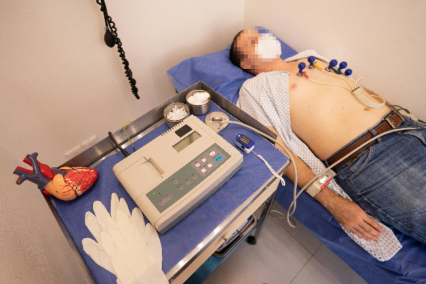
Several solutions are available on the market for measuring the electrical activity of the heart using electrocardiogram (ECG) tests. The standard method employed in hospitals typically involves a 12-lead ECG (Figure 1) (Park et al., 2022). Instead, continuous, remote monitoring allows for a more rigorous oversight of patients’ conditions, even compared to in-hospital observation (Neri et al., 2023). The irruption of new wearables devices represent a new approach for monitoring ECG signals for health purposes (Neri et al., 2024). Their simplicity, cost-effectiveness, and prolonged monitoring capabilities, are considered as alternatives to traditional and more expensive medical equipment (Bouzid et al., 2022). This is especially critical for atrial fibrillation (AFib) or other life threatening arrythmias.
Figure 1: Example of 12-lead ECG.
In this context, Analog Devices, a company with extensive experience in electronic components across various sectors, including medical devices, is conducting research for the design of an ambulatory ECG monitoring based on wearable technology. This paper outlines the activities undertaken during the initial phase of the research, which work was based following a human factors plan. This approach integrated UX and lean methodologies while considering the requirements outlined by CE mark and FDA regulations.
HUMAN FACTORS PLAN DEPLOYMENT A Human Factors (HF) Plan serves as a comprehensive blueprint for the design of a medical device to guarantee its usability, safety, and ultimately optimize the overall user experience. Through a systematically approach, it outlines strategies to address user needs and preferences, ensuring that the device fulfils the expectations of the product. This is achieved by integrating HF, UX, and lean methodologies and techniques. Furthermore, alignment with the MDR process facilitates expedited compliance with CE mark and FDA regulations, while also ensuring appropriate market deployment.
In this project, a Human Factors Plan was implemented following the three main phases defined by Morales et al. (2023):
Learn: Understanding the intended users’ needs, preferences, and behaviors.
Ideate: Generating potential solutions to address the identified user needs and challenges. This stage encourages creative thinking and collaboration among multidisciplinary teams.
Validate testing and evaluating the proposed solutions to ensure they meet user requirements and goals.
The process was based on an iterative process to allow to early detect risks (user, technical, market, etc.) and select the key functionalities, minimizing costs due to errors along design process by enhance patient and professional satisfaction and considering current and future technical boundaries.
This article is focused on the Learn and Ideate phase, covering from conceptual designs, dummy prototypes, detailed design and prototypes validation.
FROM NEEDS TO REQUIREMENTS AND RISK ANALYSIS The initial task involved establishing the design requirements for this device, which is composed by a patch adhered to the chest skin and an enclosure housing the electronics for cardiac activity monitoring.
Firstly, a thorough bibliographic review was undertaken to identify the boundaries and limitations pertinent to usability and user comfort. This encompassed an exploration of key standards associated with devices of this nature and their usability considerations. Secondly, a benchmark analysis was conducted to identify analogous systems in both market circulation and research and development stages. This involved scrutinizing scientific and technical literature, market data, and product instructions to discern usability challenges and market limitations hindering widespread deployment.
The outcomes of previous tasks, in conjunction with several sessions involving clinicians and patients, and based on previous ADI experience, have enabled the definition of the following key requirements:
Optimization of ECG recording areas, particularly addressing challenges posed by individuals with high body mass index (BMI) and women with large breasts.
Enhancement of recording and detection algorithms for conditions such as atrial fibrillation, and other non-life threatening arrythmias.
Exploration of novel materials and printed electronics to ensure both signal quality and user comfort during extended usage.
Development of an intuitive and user-friendly platform for streamlined operation.
The proposed device is expected to be used for extended periods thus comfortability is a critical requirement. Therefore, the device should be ergonomic, comfortable, and easy to put on and take off by users. Additionally, adaptability to various pathologies and body shapes, including gender differences, is essential. For instance, accommodating the impact of breast size on women’s comfort and signal quality.
How a Human-Centered Design Approach Can Speed Up Market Acceptance 649
Most of papers covered by the literature consider only men as women’s anatomy might cause reproducibility problems. The approach followed on this project looks for optimization of comfortability of the patients for both genders and for different morphotypes.
Because of the long-term monitoring, the wearable device shall be waterproof for allowing patients to take a shower.
To facilitate interaction between the patient and the wearable device, the feedback provided to the patients shall be primary through visual, although a secondary mechanism is suggested e.g. to allow interaction to blind patients or color-blinded patients.
On the other hand, the patch should be flexible to ensure patient’s comfortability and it shall be attached to the wearable device.
These data have served as inputs for initiating various workshops aimed at conducting risk analysis with reference to Regulation (EU) 2017/745 (2017). Two categories of hazards or risks have been identified. The first category includes generic known or foreseeable hazards associated with the product, such as biological hazards, environmental hazards, or inadequate user interface. Subsequently, specific risks pertaining to the product have been determined, taking into account general safety and performance requirements, and identified through a comprehensive understanding of the product. Their significance has been assessed through an analysis conducted in accordance with the standard ISO 14971(2020).
FROM CONCEPTUAL DESIGN TO PROTOTYPES: ITERATIVE TESTS The design process began with defining the anthropometric requirements of the patch in terms of shape and dimensions, as well as assessing their suitability for the target population of interest: adult males and females in both USA and Europe. The goal was to design a patch that would fit as many individuals from the target population as possible.
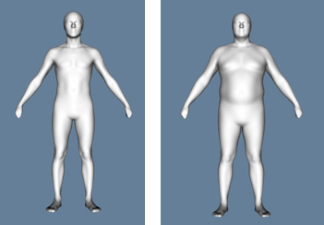
An anthropometric database of more than 11.000 3D body scans, registered using template-fitting methods, was used for the analysis. The human body shape space was parametrized using Principal Component Analyses (PCA). PCA allows for the generation of realistic human-shaped models representing specific human morphotypes (Figure 2). Differences in body shapes determines the quality of fit of the patch and the necessity to consider different solutions.
Figure 2: Example of a skinny and a large morphotypes obtained using PCA.
Then, an optimization procedure based on Procrustes analysis was conducted over the various possible placements of electrodes on the human chest to determine the best shape and dimensions of the patch, considering anthropometric variability.
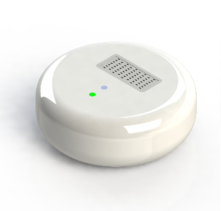
The next step involved designing the enclosure, with a focus on integrating components while ensuring functionality. Exploring three distinct shape factors - circular, square, and rectangular - the design team considered aspects like size, weight, and functional mechanics to achieve an efficient system (Figure 3).
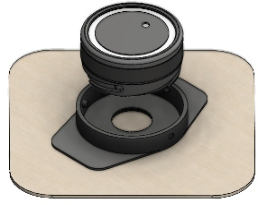
The connection between the enclosure and the patch, concerning the method of putting on/off, was also designed with diverse approaches (Figure 4). The goal was to achieve a balance between comfort, usability, design considerations, and their impacts on electronics and functionalities.
Figure 3: Prototypes of the enclosure, presenting various shapes for comparison. Left: circular shape; center: square shape; right: rectangular shape.Figure 4: Different approaches considered to put off the enclosure in the patch.
How a Human-Centered Design Approach Can Speed Up Market Acceptance 651
THERMAL COMFORT TEST Different tests were performed to assess durability or breaking points or electronic degradation due to sweat. The most interesting tests was a thermal test before starting users validation. The methodology consisted of the following steps. The patch, resulting from the union of the textile patch and the printed electrode patch, were firstly adhered to a silicone sample whose properties are very similar to human skin (from now on, it will be called synthetic skin).
The patch and synthetic skin ensembles were immersed in water at room temperature for 60 seconds, and after a minimum drying, they were placed on a thermal mannequin. The thermal mannequin used for the test was the ST-2, from Measurement Technology Northwest.
The thermal mannequin was set to a temperature of 35
C (normal skin temperature) and was placed in a climatic chamber with simulated conditions of high temperature and humidity (40
C and 65% RH) for 3 hours. Figure 5 shows some examples of the testing process.
Figure 5: Thermal test based on IBV methodology.
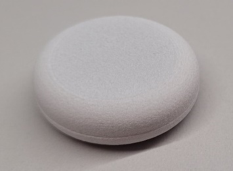
USER COMFORT TESTS A comfort assessment was conducted with the aim of analyzing various preferences regarding the placement of the device on the chest and the shape of the device. Specifically, three possible chest locations were considered: beneath the chest, on the breastbone, and above the chest. The three shape factors for the enclosure were examined (circular, square, and rectangular). Furthermore, the test included inquiries about the thermal comfort of the patch, and lastly, the discretion of the device was evaluated, as it can influence patients’ acceptance of its use. To carry out the tests, non-functional prototypes were crafted using rapid prototyping techniques (Figure 6).
Figure 6: Mock-ups of the enclosures made using rapid prototyping techniques.
The comfort test engaged 12 participants, evenly distributed across genders and aged from 20 to 60 years. The BMI of the users predominantly fell within the range of 18.5 to 24.9 (67% of users). Within this BMI range, users were selected to represent diverse morphotypes and thermotypes.
The positioning of the device on the chest was selected to each user individually. At this designated location, all participants tested the three device shapes for 15 minutes each. Following this initial period, one of the device shapes was selected for the user to wear for a duration of 5 hours. Throughout the test, participants completed a questionnaire to provide feedback on their experience.
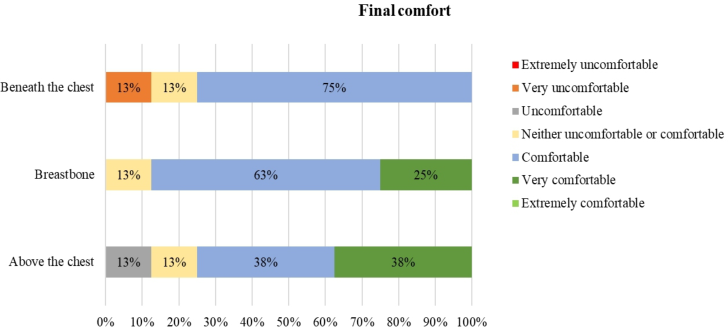
Figure 7 shows the comfort levels reported by the participants across all device types in each area of the chest. Remarkably, most of the participants rated the three chest areas as comfortable or very comfortable, with the breastbone area obtaining the best rating. Approximately 88% of users expressed this zone is comfortable or very comfortable.
Figure 7: Comfort ratings based on different areas of the patch.
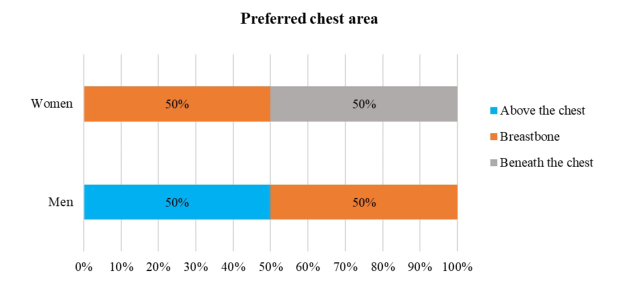
Regarding the preference for the location on the chest, the analysis was conducted separately for men and women since breast shape could influence their comfort assessment. As depicted in the Figure 8, among women, the breastbone area (50% of users) and the area beneath the chest (50% of users) were identified as the most comfortable placement areas. For men, the breastbone area (50% of users) and the area above the chest (50% of users) were reported as the most comfortable. When considering users collectively, the breastbone area emerged as the most comfortable placement area for 50% of the users. It is noteworthy to consider that the breastbone is the one of the flattest and most rigid areas of the chest, facilitating patch adherence.
How a Human-Centered Design Approach Can Speed Up Market Acceptance 653
Figure 8: Preferred location on the chest for the patch.
Concerning the device’s shape, most of the participants expressed a preference for the circular design as the most comfortable option across all three chest areas.
Participants reported that the patch did not induce increased sweating among users. Wearing the components resulted in a neutral thermal sensation for all users, meaning the elements were neither perceived as warm nor cool.
Furthermore, most of the participants indicated that the patch exhibited flexibility and discretion, regardless of the placement area. However, there was slightly more diversity in opinions regarding the area above the chest. This discrepancy can be attributed to the fact that women use to wear t-shirts with more neckline compared to men.
CONCLUSION
This paper presents the design of an ambulatory ECG monitoring system utilizing wearable technology, guided by a human factors approach. The integration of this human factors plan, alongside UX and lean methodologies, has facilitated:
Reduce time and cost developments in development through iterative testing with conceptual designs and dummy prototypes.
Enable comparison of various technical solutions prior to development, ensuring a balance between specifications, technical constraints, and actual user needs.
Integrate mechanical and iterative testing with a limited user sample before embarking on formative and summative evaluations with patients.
This has allowed to substantially reduce starting clinical validations and avoid developments with unneeded functions or low satisfactions of patients and clinicians.
ACKNOWLEDGMENT
This project has been financed by Agencia Valenciana de Innovación (AVI), with reference number INNCAD/2021/126.
The authors of this paper would like to thanks to the Digital Healthcare team for their support while executing this research.
REFERENCES
Bouzid, Z., Al-Zaiti, S. S., Bond, R., Sejdi´c, E., 2022. Remote and wearable ECG devices with diagnostic abilities in adults: A state-of-the-science scoping review. Heart Rhythm 19, 1192–1201. Casas, A. M., Vicente, A. L., Solano-García, L., Laparra, J., 2023. 3 sprints from
zero to innovative medical device in 16 months: Benefits of combining Human Factors and Agile, in: Production Management and Process Control. Presented at the AHFE (2023) International Conference, AHFE Open Acces. https://doi.org/ 10.54941/ahfe1003047 EN ISO 14971:2020 Medical devices - Application of risk management to medical devices, 2020. Neri, L., Gallelli, I., Dall’Olio, M., Lago, J., Borghi, C., Diemberger, I., Corazza, I.,
2024. Validation of a New and Straightforward Algorithm to Evaluate Signal Quality during ECG Monitoring with Wearable Devices Used in a Clinical Setting. Bioengineering 11, 222. https://doi.org/10.3390/bioengineering11030222 Neri, L., Oberdier, M. T., van Abeelen, K. C. J., Menghini, L., Tumarkin, E., Tripathi, H., Jaipalli, S., Orro, A., Paolocci, N., Gallelli, I., Dall’Olio, M., Beker, A., Carrick, R. T., Borghi, C., Halperin, H. R., 2023. Electrocardiogram Monitoring Wearable Devices and Artificial-Intelligence-Enabled Diagnostic Capabilities: A Review. Sensors (Basel) 23, 4805. https://doi.org/10.3390/ s23104805 Park, J., An, J., Kim, J., Jung, S., Gil, Y., Jang, Y., Lee, K., Oh, I., 2022. Study on the
use of standard 12-lead ECG data for rhythm-type ECG classification problems. Computer Methods and Programs in Biomedicine 214, 106521. https://doi.org/ 10.1016/j.cmpb.2021.106521 Regulation (EU) 2017/745 of the European Parliament and of the Council of 5 April 2017 on medical devices, amending Directive 2001/83/EC, Regulation (EC) No 178/2002 and Regulation (EC) No 1223/2009 and repealing Council Directives 90/385/EEC and 93/42/EEC (Text with EEA relevance.), 2017., OJ L. Wolowacz, S. E., Samuel, M., Brennan, V. K., Jasso-Mosqueda, J.-G., Van Gelder,
I. C., 2011. The cost of illness of atrial fibrillation: a systematic review of the recent literature. Europace 13, 1375–1385. World Health Organization, 2021. World Health Organization. Cardiovascular diseases (CVDs). Fact sheet, updated June 2021. Available at: https://www.who.int/news-room/fact-sheets/detail/cardiovascular-diseases-(cvds). Accessed April 3, 2024.
LISTED IN THE AHFE DIGITAL BOOKSTORE CATALOGUE
Explore the complete digital volume
Human Factors in Design, Engineering, and Computing
Read this individual research paper free through the original publisher, or explore the full digital proceedings book.
ISBN 978-1-964867-35-9
Explore this ISBN in the AHFE Bookstore ↗Listed in the July 2026 bookstore catalogue; search by ISBN to confirm current availability · Digital book purchase optional