Fortune Aigbe, Clinton Aigbavboa, Lekan Amusan, Ayobami Idowu (2024). Education and Training in the Technological Era: Adopting the Head, Heart, and Hand Approach for Effective Social Media Usage. In: Human Factors in Design, Engineering, and Computing. AHFE Open Access, vol. 159, pp. 1998–2005. https://doi.org/10.54941/ahfe1005767
The various industrial revolution from the first industrial revolution birthed water- and steam-powered manufacturing facilities, the second industrial revolution birthed electrically powered mass production, the third industrial revolution led to the birthing of computers and Robots, while the fourth industrial revolution welcomed Cyber-physical systems and the internet. The advent of computers and the internet has led to the use of social media platforms such as Facebook, Twitter, and Instagram, which can be used for work and for communication. The workers who will need these platforms will be those who are already employed, as well as those who need to be employed Hence, requisite skills (which could be both hard and soft) are required to use these platforms effectively. This study is based on the use of secondary data sources such as articles and journals using inductive and semantic approaches and thematic analysis. The study aims to promote the effective utilization of social media for work and communication through the Head, Hand, Heart Approach to Education and Training. The study reveals that the Head and Hand approach, which is cognitive learning and practical doing, provides the workers with the necessary hard skills to use social media. The Heart approach, which is affective learning, relational knowing, and emotional involvement, provides workers with the necessary soft skills to use social media for communication. The study contributes to scholarly discussions on workforce education and training in the digital era, as well as empirically contributes to the effective management of the workforce of the future.
The evolution of technology has presented both positive and negative benefits to the society. The history of the Industrial Revolution began at the end of the 18th century, which was the first industrial revolution, and it birthed
Education and Training in the Technological Era 1999 water- and steam-powered manufacturing facilities. Furthermore, the study stated that the second industrial revolution, which began at the start of the 20th century (first production line, Cincinnati Slaughterhouses 1870), birthed electrically powered mass production (Alaloul et al., 2018). Xu et al. (2018) stated that the third industrial revolution, which was between 1960- 2000, led to the birthing of computers and Robots, while the fourth industrial revolution, which was from 2000, welcomed Cyber-physical systems and the internet.
The advent of computers and the internet has led to the use of social media platforms such as Facebook, Twitter, and Instagram, which can be used for work and for communication. The workers who will need these platforms will be those who are already employed, as well as those who need to be employed Hence, requisite skills (which could be both hard and soft) are required to use these platforms effectively. Short and Keller-Bell (2019) opined that the key to success in the twenty-first century and future labour markets will be to combine hard and soft skills into a comprehensive package tailored to specific needs, including the ability to think clearly about complex problems, apply creative and innovation solutions to solve problems, and apply new knowledge and skills in new settings. Horvathova et al. (2022) identified the compositions of future skills as effective teamwork skills, goal- achieving skills, self-awareness, self-management skills, and digital skills. Hence, effectively using social media platforms in the technological era requires both hard and soft skills. The importance of possessing both hard and soft skills for operating social media platforms in the 21st century cannot be overemphasized. Hence this study aimed to examine how effective education and training of workers can be achieved through the Head, Heart, and Hand Approach for effective social media usage for work and communication.
Methodology
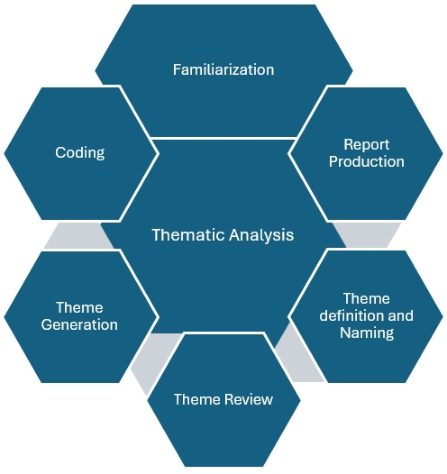
The study was based on a systematic review of secondary data sources such as articles and journals. These articles and journals were sourced from databases like Scopus and Google Scholar (Aigbe et al., 2024). The criteria for searching the literature included individual and collective keywords, using Boolean logic to refine the searches (Bergh, 2012). The keywords used were “Education,” “Training,” “Workforce,” “Head,Heart,Hand” and “Social media,” among others. A qualitative, inductive, and semantic approach was adopted for the study (Caulfield, 2023). Studies that addressed women in construction, operational phase, and regulation written in English were included in this study, while others which were written in other foreign languages and did not address women in construction at the operational phase were excluded (Hu et al., 2024). Thematic analysis was used to identify themes and generate conclusions, in line with Braun and Clarke (2006) study of thematic analysis in psychology, which states that thematic analysis involves repeated reading and assessment of text to recognize patterns (coding) and constructs (theme development) drawn from across various
scholarship claims (data interpretation). Furthermore, the study stated that thematic analysis is a non-linear process, but a recursive process.
Figure 1: Thematic analysis process by Braun and Clarke (2006).
LITERATURE REVIEW
Workforce, Social Media, Head, Hand,Heart Workforce Jack and Hawley (2009), citing Jacobs (2000), stated that the workforce can be conceived as individuals who are currently employed full-time or part-time, those recruited from other locations for employment, and those undergoing a transition in their employment. Badroodien (2003), citing Macum (2001), stated that training is needed by three categories of people (especially in South Africa): the pre-employed, unemployed, and currently employed.
Social Media Social media are Internet-based channels where people can talk to each other, share things with a variety of audiences (i.e., both broad and narrow) who derive value from content that is user-generated and see what other people are doing (Carr & Hayes, 2015). Social media can be classified as YouTube (content communities), Facebook (social networking sites, text- based communication, picture, video sharing) (Kaplain & Haenlein, 2010). The seven functional building blocks of social media are identity, relationship, reputation, sharing, presence, group, and conversation; hence, social media can help in relationship building, networking, reputation management,
Education and Training in the Technological Era 2001 community building, marketing, and leading a human face to businesses (Taprial & Kanwar, 2012).
The functionality of social media adopted from (Taprial & Kanwar, 2012).
EDUCATION AND TRAINING Education is the preparation of candidates (by improving general knowledge and understanding) for employment, while Training is an activity related to the improvement of the knowledge and skills of employees (Hadiyat & Budiatma, 2018). The educational needs of human resources can be; training to perform certain tasks and the achievement of corporate strategic objectives (Stavrinoudis & Psimoulis, 2015). Education (Program) increases competitiveness and contributes positively to business performance and the overall human resource management performance. Furthermore, the study stated that education and training enable workers to adapt to future changes (Stavrinoudis & Psimoulis, 2017). Education and Training help improve knowledge, skills, and employee behaviour (Hadiyat & Budiatma, 2018). Education can foster societal impact and encourage inclusivity (Aigbe et al., 2024).
Education and Training: Head, Hand, Heart The Head, Heart, Hand approach is a total (interconnectedness) and robust/ transformative approach (deep learning, views and knowledge expansion) to education (Virkkunen, 2021).
The Head portion of the Head, Heart, and Hands approach refers to “Cognitive learning”, which is the development of different aspects of mind function inducing perception, memory, imagination, reflection, thought and language, which can be gained through classroom critique and discussion, learning (Virkkunen, 2021) etc. The 21st century is placing great demands on individuals; cognitive learning (Head) will not be sufficient alone but will
require both the affective (Heart) and behavioural domains (Hand) as best practice (Wangaard et al., 2014).
Virkkunen (2021) described Hand as learning through active doing by engaging with physical material/or using digital programs. The Heart, which is the affective domain, is linked to relational knowing (Jagannathan et al., 2018); it refers to emotional involvement and affective learning, which encourages learning about values, attitudes, personal identity, and perception (Virkkunen, 2021).
Application of the Head, Heart, Hand Approach to the Education and Training of the Workforce Unemployed Workforce The need for these categories of workforce to build relevant hard skills / technical skills (related to the use of social media) cannot be overemphasized. This will help them have a means of employment and earn a means of livelihood. This will require them to build knowledge, skills, and abilities which align with the Head and Hand approach. Marwala (2022) described the ways in which workers can be trained as reskilling, upskilling and lifelong learning, which could be internal labour market training meant to build basic skills
Employed Workforce Tran and Sokas (2017) identified the issues associated with the gig economy as isolation, as jobs are performed separately from and in competition with fellow workers, denying workers face-to-face contact with their colleagues, which forms the basis of both social support. In a Non-Standard employment relation like the Gig work, there is a challenge of the inability of the workforce to meet their social and relatedness needs i.e., the feeling of belongingness and connectedness with others (Fisher & Cassady, 2019). Ashford et al. (2018) stated that work in the gig economy is most frequently done alone, physically separated from others working in this style, which creates relational challenges for the gig workers, leaving individuals feeling unmoored from others. Fisher and Cassady (2019) stated that communication (among others) could help address the social and relatedness needs of gig workers by making information more available to them, either by sending it directly to them or by making it easier to find online. The nature of workplace communication could be recast by social media, thereby enhancing employer-employee communication (Holland et al., 2019). The need for these categories of employed workforce to build soft skills (related to the use of social media) that will be required for improved communication aligns with the Heart approach. Furthermore, Fisher and Cassady (2019) stated when organizations use social media such as Facebook, LinkedIn, Instagram etc to communicate with their employees, they serve social eHRM goals.
The Heart approach can be conceptualized as building soft skills that enable adequate communication in the use of social media for work purposes. Horvathova et al. (2022) identified the compositions of future
Education and Training in the Technological Era 2003 skills as effective teamwork skills, goal-achieving skills, self-awareness, self- management skills (soft skills) and digital skills (hard skills). Fidler and Williams (2016) identified future soft skills as cross-cultural competency, social intelligence, etc. New forms of digital labour, like micro-work and crowdsourcing, demand that people quickly establish rapport with distributed teams, frequently composed of colleagues they will never actually meet in person; interpersonal skills and intelligence are poised to play an ever-greater role in the ways we work (which are also critical to success in the traditional sense. In face-to-face interactions).
Methods For Head, Heart, Hand Education and Training of the Workforce Traditional and Non-Traditional Approach to Education Education is an essential process in developing individuals’ knowledge, skills and character, even as knowledge is gained through lectures, seminars, presentations of course assignments, training, and educational field trips (Menkshi & Braholli, 2020). The concrete experiences stage, combined with active experimentation, leads to the most significant degree of individual learning (Cassadyand Kozlowski, 2008).
On the Job and Off the Job Training It is the training of an employee by an assigned person or his superior so as to obtain the necessary skills required to complete a task and bring the employee to a minimum acceptable standard of performance in the shortest time possible (Sangurde, 2019). It aids employees in determining how to deal with problems, as the most important aspect of this kind of training is learning by doing, in which new or unskilled employees observe and attempt to imitate experienced supervisors (Said et al., 2022). On-the-job training includes Job rotation, coaching and counselling, under study, etc. Furthermore, on-the-job training can also be mentoring, apprenticeship, and internship (Basariya & Sree., 2019).
It requires the employees to undergo training for a specific period away from the workplace (Satyendra, 2014). Milhem (2014) citing Kempton (1995), stated that off-the-job training involves group discussions, one-to- one tutorials, lectures, reading, training courses, and workshops. This type of training is important for new employees who have no knowledge of the working environment and do not have skills for the present job, as the working environment is duplicated and used for training (Basariya & Sree., 2019). Said et al. (2022), citing Raheja (2015), stated that off-the-job is characterised by learning-focused provision of study materials, as well as the freedom of speech. Furthermore, it provides a specialized training area separate from the regular work environment where employees acquire the skills and techniques required to execute their jobs. Off-the-job training includes conferences, classroom methods, committees, simulations, etc.
DISCUSSION AND CONCLUSION There is a need for a holistic approach to education and training, i.e., the head, heart, and hand approach, for the effective use of social media both
for the purpose of work and communication. The Head and Hand approach, which is cognitive learning and practical doing, provides the workers with the necessary hard skills to use social media. This aligns with Aigbe et al. (2024), who stated that there is a need to build knowledge, skills, and ability during technological changes. The Heart approach, which is affective learning, relational knowing, and emotional involvement, provides workers with the necessary soft skills to use social media for communication. This aligns with Horvathova et al. (2022), who identified the compositions of future skills as effective teamwork skills, goal-achieving skills, self-awareness, and self-management skills. The methods for head, heart, and hand education and training of the workforce can be based on the traditional and non- traditional approaches to education, such as lectures and seminars, as well as the use of on-the-job and off-the-job training.
ACKNOWLEDGEMENT
The authors would like to appreciate the University of Johannesburg, and also the Sustainable Human Settlement and Construction Research Centre at the University of Johannesburg.
REFERENCES
Aigbe, F., Aigbavboa, C., Aliu, J. & Amusan, L. 2024. Understanding the Future Competitive Advantages of the Construction Industry. Buildings, 14. Aigbe, F., Ayobiojo, L. & Imoisili, P. E. Societal Impact for Inclusivity, Peace, and
Sustainable Development: A Case Study of the Congress of Nigerian Students at the University of Johannesburg Partnership with the University of Johannesburg Community Engagement. Peace, and Sustainable Development: A Case Study of the Congress of Nigerian Students at the University of Johannesburg Partnership with the University of Johannesburg Community Engagement. Alaloul, W. S., Liew, M. S., Zawawi, N. A. W. A. & Mohammed, B. S. Industry revolution IR 4.0: future opportunities and challenges in construction industry. MATEC web of conferences, 2018. EDP Sciences, 02010. Ashford, S. J., Caza, B. B. & Reid, E. M. 2018. From surviving to thriving in the gig
economy: A research agenda for individuals in the new world of work. Research in Organizational Behavior, 38, 23–41. Badroodien, A. 2003. Enterprise training. Human Resources Development Review 2003: Education, Employment and Skills in South Africa. Basariya, S. R. & Sree, V. 2019. Pros and Cons of on the Job training versus Off
the Job Training. International Journal of Scientific & Technology Research, 8, 671–674. Bergh, G. 2012. Systematic Reviews in International Development. Internal. London: ODI. Braun, V. & Clarke, V. 2006. Using thematic analysis in psychology. Qualitative
research in psychology, 3, 77–101. Carr, C. T. & Hayes, R. A. 2015. Social media: Defining, developing, and divining.
Atlantic journal of communication, 23, 46–65. Cassady, J. C., Kozlowski, A. & Kornmann, M. 2008. Electronic field trips as interactive learning events: Promoting student learning at a distance. Journal of Interactive Learning Research, 19, 439-454.
Education and Training in the Technological Era 2005
Caulfield, J. (2023). How to Do Thematic Analysis | Step-by-Step Guide & Examples. Scribbr. Retrieved August 22, 2024, from https://www.scribbr.com/me thodology/thematic-analysis/ Fidler, D. & Williams, S. 2016. Future skills. Update and literature review. Prepared
for ACT Foundation and the Joyce Foundation. Institute for the Future [Internet], 4–33. Fisher, S. L. & Cassady, E. A. 2019. Use of Relational eHRM Tools in Gig Worker Platforms. Advanced Series in Management, 23, 81–97. Hidayat, R. & Budiatma, J. 2018. Education and job training on employee
performance. International journal of social sciences and humanities, 2, 171–181. Holland, P., Cooper, B. & Hecker, R. 2019. Social media at work: a new form of employee voice? Employee voice at work, 73–89. Horváthová, A., Hrnˇciar, M. & Rievajová, E. 2022. Changes in the skills of the
workforce for future development of the labor market in the Slovak Republic. Entrepreneurship and Sustainability Issues, 9, 212. Hu, J., Chen, J., LI, P., Yan, J. & Wang, H. 2024. Systematic Review of Socially Sustainable and Community Regeneration: Research Traits, Focal Points, and Future Trajectories. Buildings, 14, 881. Jacobs, R. L. & Hawley, J. D. 2009. The emergence of ‘workforce development’:
Definition, conceptual boundaries and implications. International handbook of education for the changing world of work: Bridging academic and vocational learning, 2537–2552. Jagannathan, R., Camasso, M. J. & Delacalle, M. 2018. The effectiveness of a head-heart-hands model for natural and environmental science learning in urban schools. Evaluation and program planning, 66, 53–62. Kaplan, A. M. & Haenlein, M. 2010. Users of the world, unite! The challenges and
opportunities of Social Media. Business horizons, 53, 59–68. Marwala, T. 2022. Closing the gap: The fourth industrial revolution in Africa, Pan Macmillan South Africa. Menkshi, E., & Braholli, E. 2020. Field Trips as a Valuable Learning Experience for
Students. Milhem, W., Abushamsieh, K. & Pérez Aróstegui, M. N. 2014. Training Strategies, Theories and Types. Journal of Accounting, Business & Management, 21. Mohd Said, N. S., Abd Halim, N. W., Abdul Manaf, S. M. & Adenan, N. D. 2022.
The Impact of Training and Development on Organizational Performance. Jurnal Intelek, 17, 113–123. Sangurde, R. 2019. Training & Development, Process, Types and Impact, LAP LAMBERT Academic Publishing. Satyendra. 2014. RE: Training and Development Process. Short, M. N. & Keller-Bell, Y. 2019. Essential skills for the 21st century workforce.
Handbook of research on promoting higher-order skills and global competencies in life and work. IGI Global. Stavrinoudis, T. & Psimoulis, M. The effect of employee education-training on HRM performance in the hotels of Attica. Conference Proceedings of The, 2015. 373. Taprial, V. & Kanwar, P. 2012. Understanding social media, Bookboon. Tran, M. & Sokas, R. K. 2017. The Gig Economy and Contingent Work: An
Occupational Health Assessment. J Occup Environ Med, 59, e63–e66. Virkkunen, E. 2021. Head, Heart, and Hands: exploring art education for the individual and community. Wangaard, D., Elias, M. J. & Fink, K. 2014. Educating the head, heart, and hand for
the 21st century. SEEN: Southeast Education Network, 16, 16–19. Xu, M., David, J. M. & Kim, S. H. 2018. The fourth industrial revolution: Opportunities and challenges. International journal of financial research, 9, 90–95.
View publication stats
LISTED IN THE AHFE DIGITAL BOOKSTORE CATALOGUE
Explore the complete digital volume
Human Factors in Design, Engineering, and Computing
Read this individual research paper free through the original publisher, or explore the full digital proceedings book.
ISBN 978-1-964867-35-9
Explore this ISBN in the AHFE Bookstore ↗Listed in the July 2026 bookstore catalogue; search by ISBN to confirm current availability · Digital book purchase optional