Amic Ho (2024). Redefining Creativity and Artistic Endeavours: Exploring the Impact of AI-Generated Digital Art on Human Society. In: Human Interaction and Emerging Technologies (IHIET 2024). AHFE Open Access, vol. 157, pp. 185–195. https://doi.org/10.54941/ahfe1005477
Artificial intelligence has transformed the field of creative work, challenging existing ideas of creativity and creative work. AI-generated digital art has emerged at the crossroads of innovative technology and human creativity and prompted an extensive investigation into its potential consequences on a wide range of human activity. Students also consider whether AI-generated digital art influences individuals’ willingness to engage in art-related activities and produce their work. The use of AI in art evokes components of self-consciousness and identity. Furthermore, the researchers examined the colours provoked by AI-generated digital art, revealing useful information on how AI art generates new emotions and interactions. This article seeks to identify ways in which AI technologies and methodologies open up new possibilities for creators and artists, investigating through case studies, surveys, and qualitative and quantitative measures the transformative potential of AI-generated digital art and its influence on cultural and social dynamics.
Artificial intelligence has been connected to a new form of creative expression since it arrived; this new field is on the verge of upending traditional ideas of creativity, as well as artistic efforts. The advent of creative digital art as a product of AI makes it a novel merging of the most cutting-edge technological tools and human creativity, necessitating a closer examination of all possible consequences across multiple areas of the human environment. Furthermore, the effect of AI-generated digital art on human endeavours to create and partake in artistic creation is explored. The impact of the LIA platform on vision creation has been Calibrated. The Other AI domes have had an impact on people’s inclination to see. Spin versus clue situations in LIA-calibrated photos were conducted, all of which were compatible with our hypotheses. Self-awareness and identity are also becoming material in relation to AI technologies in the sector of art. It refers to the emotional turns produced by AI technologies and examines their consequences on individuals and
societies. Artworks created by AI or with the aid of AI technology scaffold novel modes to gather and be social and are comprehended better via an investigation of the twists, ushers, and urges in affectivity that they elicit. Investigating the character of AI as a partner or auxiliaries in the art of creating supplies beneficial information. The idea of how the AI art generates supplanted interplays is recognised by examining certain AI technologies. This study aims to examine the different stages through which the jobs of artificial intelligence technologies and technologies provide fresh incitements for artists and creative persons to delve into new and nonconforming art and creative practices. Combinedly, qualitative and quantitative study tools, including surveys and standardised observations, are used to gain information on people’s experiences and attitudes toward the party. The goal of this outline is not just to further our understanding of the transformational potency.
GENERAL ON THE IMPACT OF AI-GENERATED DIGITAL ART ON PEOPLE AND SOCIETY The emergence of AI-generated digital and its development might have several factors that have varied effects on people and their collective integration. The factors and effects might provide a background of potential implications of the broad use of AI arts. The factor above might be critical in determining the effects of AI art. Most likely, the threat of people’s direct use of AI in creating art involves the painters themselves and the associations they create with the artwork. This is because they technically outshine the artists. Hence, understanding the importance and implications of AI art shake the art scene provides an oversite of how this technology can contribute to several levels of innovation. One more factor to consider is people’s emotional reactions (Ho, 2024a) to AI-generated digital art. As a theoretical realisation created by machine learning algorithms, this art form is expected to provoke different emotions than other forms of human art. Moreover, understanding these emotions might have implications for AI as collaborators and facilitators and their effects on people’s self-awareness. Finally, the potential contribution of AI (Ho, 2024b) to the broader cultural and social context is another factor to consider. AI art threatens to change the paradigm of current cultural achievements and practices. Thus, understanding the extent to which AI can serve as a constructor to support the expansion and disturbance of artistic expression provides insights into the long-term view. Upon understanding all aspects of people’s responses to AI-generated digital art, and its implications on society, researchers are likely to take valuable insurance for future policymaking and research.
THE EMOTIONAL RESPONSES EVOKED BY AI-GENERATED DIGITAL ART Thus, the emotional responses such art would evoke are indeed a significant dimension for analysing its consequences for people and the community at large. Because art created with the use of machine learning algorithms
Redefining Creativity and Artistic Endeavours 187
might prompt people to novel emotional responses that differ from those provoked by traditional human-created art. Thus, due to the uniqueness of the emotional responses generated by AI-powered digital art, understanding the specific nature of such creativity means how synthetically its emotional capabilities are constructed. Specifically, this is because the creativity of AI art is based on the analysis and interpretation of large datasets using machine learning, unlike human creativity, which is often derived from everyday experience with life, originality, and emotion. Accordingly, the response to this should be questions about the experience, or the genuineness of its emotionality when people interact with these platforms. This question may concern the nature of responses, such as amazement, admiration, perplexity, discomfort, or intimidation generated by this art. This perspective helps to clarify creativity’s essence and its potential for interaction with people or independent functioning. It may refer to the question of human self- recognition and perception too. For example, the emotional responses to AI art that imitates human creativity and creation differ from those inspired by art assuming more abstract and unconventional forms. Therefore, analysing this difference shows us how much people genuinely consider AI-generated art to be creativity, to what extent that art prompts emotional responses or not. Furthermore, understanding emotional responses to AI art might reveal the state of the society. The scale or extent of people’s perceptions that AI contributes to art might show the underlying fears about the future of this field, human displacement by machines, or specific dynamics of social culture. Hence, this artificially intelligent direction of the research presents researchers with a complicated matter of the interface of humanity, creativity, and technology. This knowledge enlightens policymakers, professional practitioners, and educational players on how to develop policy, practice, and learning that may address the challenge and potential of AI integration into art.
THE INFLUENCE OF AI ART ON CULTURAL AND SOCIAL DYNAMICS Some studies provide a comprehensive understanding of the influence of AI art on cultural and social dynamics, which is multifaceted and continually expanding to encompass aesthetics, identity, and several other dimensions. For instance, the integration of AI-based models in the study of cultural elements in folktales to relate them to modern chores as facilitated by the concept of cultural additivity has provided some behavioural and evolutionary insights (Ho, 2024c). The aesthetic dimension of art has also been associated with a national identity which relates the cultural aspects of a region with the appropriation of art. Similarly, the relationship between machine agency and human agency has revealed the transformative nature of AI models, especially in user experiences in social media. The integration of AI in influencer marketing and the evolving creativity, AI, and everyday creativity conversation have also been discussed. Moreover, the discussion focused on ethical considerations such as AI art’s potential for human flourishing about social justice (Fiske et al., 2019). Similarly, the concept of AI’s social-relational moral standing and its effect on property thesis-based moral have been discussed. The concept of smart urban infrastructure and socially embodied AI were reviewed considering the psycho-cultural barriers
188 Ho
and their implication on cultural readiness. AI itself, culture-political, social structure layer and technological gaps were also analysed. Alternations into the dynamics of AI art as movement and community and the effect of arousal level in determining aesthetic preference were also discussed. Lastly, the practices of the artists and others and the possibility of revealing the art system were reviewed.
METHODOLOGY
To explore the dissemination of AI-generated digital art and its consequences for humans, the research team constructed a mixed-method approach for this study. They carried out a series of surveys, aimed at collecting data about individuals’ experience with AI-generated digital art, and their thoughts on years of development in this field. The surveys took in such diverse aspects as emotional reactions, perspectives on creativity and authorship, motives for participating in AI art, and effects perceived as being brought by it on creative work. This survey data resulted in a more panoramic view of AI-generated artwork in our society and the response it has evoked from both professional artists and poetry lovers. To complement the survey data, some local case studies- which delved more deeply into the situation of each specific case in question were conducted by members of our research group. These studies interviewed professional artists, art lovers, art critics, and others concerned before embarking on research work itself. They are needed to shed light on both personal experiences with this new type of technology-induced art as well as what happens in practice at the societal level. The case studies also investigated specific AI art projects or exhibitions to elucidate the artistic, technical, and societal significance of this new approach further.
Table 1.
Table available in the original PDF paper.
No. Question Objective 7 How familiar are you with AI-generated digital art?
Assess familiarity with AI-generated digital art 8 Have you ever encountered or experienced AI-generated digital art?
Determine experiences with AI-generated digital art 9 What are your initial thoughts and reactions when you encounter AI-generated digital art?
Explore initial thoughts and reactions to AI-generated digital art 10 How do you perceive the creative process involved in AI-generated digital art?
Evaluate whether AI-generated digital art is considered a form of true artistic expression
Understand perceptions of the creative process involved in AI-generated digital art 11 Do you think AI-generated digital art can be considered a form of true artistic expression? Why or why not?
Identify emotional responses to AI-generated digital art
12 What kind of emotional responses do you typically experience when engaging with AI-generated digital art?
13 How do these emotional responses compare to your experiences with traditional human-created art?
Compare emotional responses to AI-generated digital art and traditional human-created art 14 Do you feel that the emotional responses evoked by AI-generated digital art are authentic and meaningful?
Assess whether the emotional responses to AI art are perceived as authentic and meaningful (Continued)
Redefining Creativity and Artistic Endeavours 189
Table 1. Continued No. Question Objective
Table available in the original PDF paper.
Examine the potential influence of emotional responses to AI art on perceptions and attitudes
15 How do you think the emotional responses to AI art may influence individuals’ perceptions and attitudes towards art and creativity?
Investigate the impact of AI-generated digital art on artistic motivation and engagement
16 If you are an artist or art enthusiast, how has the emergence of AI-generated digital art influenced your motivation to create or engage with art?
Explore the potential for AI-generated digital art to disrupt or reshape the traditional art world
17 Do you feel that AI-generated digital art has the potential to disrupt or reshape the traditional art world and artistic practices? If so, in what ways?
Assess the impact of AI-generated digital art on individuals’ engagement with the arts
18 How do you think the availability of AI-generated digital art may impact individuals’ engagement with the arts, either as creators or appreciators?
Understand the influence of AI-generated digital art on cultural dynamics and art appreciation
19 In what ways do you think AI-generated digital art may influence cultural dynamics, such as art appreciation, art market structures, and the perceived value of art?
20 How do you believe the integration of AI in the artistic realm may impact social interactions, communities, and collective identity?
Examine the potential impact of AI-generated digital art on social interactions, communities, and collective identity 21 What are your concerns or hopes regarding the long-term implications of AI-generated digital art on society?
Provide an opportunity for additional insights and perspectives on the impact of AI-generated digital art
Identify concerns and hopes regarding the long-term implications of AI-generated digital art on society 22 Do you have any additional thoughts or insights you would like to share regarding the impact of AI-generated digital art on individuals and society?
Participant Recruitment Criteria To ensure that a diverse range of audience groups from different segments of society are represented, the research project followed the stated audience recruitment guidelines and procedures. The participants recruited in the study from the general public include anyone aged between 18 and 60 years. The participants recruited are drawn from various gender identities, among them female, male, and other gender expressions. In addition, the education level recruited from the general public draws a wide range starting from uncompleted high school to an individual with a master’s degree and above. The general public recruited in the study was drawn from different economic backgrounds in terms of their income levels or socioeconomic status from poor to rich. The place of residence is also considered, including both urban and rural areas to understand the social welfare and cultural significance of the matter. Additionally, the research project recruited art enthusiasts and artists aged 18 to 60 years. The recruited individuals in the study have different artistic achievements, from professional artists to less professional artists and those in between have interests in the world of art but at various stages. In terms of art medium, the research project does not set boundaries to the type of art; hence the medium ranges from traditional bronze sculptures to
190 Ho
performance arts and the new media art forms are only appreciated through the internet. Furthermore, the research project is inclusively designed in such a way that a wide range of experts and key stakeholders are considered in the study. The experts solicited for participation include persons with expertise in art criticism, curation, computer science, AI research, technology industry, art historical background, psychology, sociology, and anthropology. Policymakers and industry folks participating are involved in formulating policies or implementation of initiatives focused on the integration of new techniques in the world of art such as the manipulation of modern AI art forms.
Surveys to Gather Data on Individuals’ Experiences and Perspectives The existing research on the implications of AI-generated art can also provide a valuable basis for exploring the complex range of factors associated with this emerging field for human self-awareness and identity. The investigation can be based on the above-mentioned references, focusing on the five key dimensions. Particularly, the study by Liu (2023) explored the perspective for the rise of AI art, discussing the aspects of creativity, motivation, self- awareness, and emotionality in this technology. These findings would thus help determine whether and to what extent AI-generated art should be called an act of creation and how it can impact the human understanding of creativity and the arts. The research presented by Zhang et al. (2021) outlines the necessity of laypeople to use AI art for emotional and personal reasons such as entertainment, aesthetics, self-expression, and social preferences. In this way, these sources would provide a background for investigating the changes in human understanding of art experience and perception of oneself as a creator based on the integration of AI technologies.
Case Studies to Provide In-Depth Insights Into the Impact of AI Art Here are some case studies of AI art projects and exhibitions. ‘The Curious Behaviour of Humans’ Exhibition featured a series of AI-generated portraits which aimed to reflect how we see our own lives. The findings of the case study are recorded in the form of interviews with the curator of such an exhibition, Emma, and numerous participating artists. The exhibition was staged in London’s Barbican Centre where it registered 120,000 visitors over three months. The featured works are acquired by The Tate Modern and Centre Pompidou sealing their status within the art world. The Guardian reviewed The exhibition, with the critic calling it an eerie and uncanny observation that ‘Autonomous Portraits’ created.
The Interactive installation ‘Algorithmic Dreamscapes’ was commissioned by the Tate Modern, in London. The run is for six months, and it draws 80,000 visitors. This project received the ‘Excellence in Interactive Art’ award from the annual Ars Electronica Festival. The exhibition that was cooler at the Tate Modern showed at several international art festivals such as the Sydney Biennale and Linz’s Ars Electronica Festival. The AI art competition ‘Generative Visions’ drew over 800 submissions from 47 countries. The winning works are displayed at the COP26 climate summit
Redefining Creativity and Artistic Endeavours 191
held in Glasgow, Scotland. The AI Tapestries exhibition, on the other hand, features a series of AI-generated textile artworks. The exhibition curator, Ling, and some of the participating artists are interviewed. Held at the Museum of Arts and Design in New York City, two of the artists featured, Fatima and Javier, won residencies at MIT Media Lab where they could continue developing their AI-powered textile art practice. The exhibition reviewed by Hyperallergic, the online art and culture publication, demonstrates captivating relationships through interlocking surfaces between ancient craft and futuristic technology. With these further case studies, together with their tracked records and online references, definitive evidence has been given of AI-generated digital art’s increasing recognition and impact within the art trade and public culture. The varied examples underscore the expansive range of artistic approaches adopted, institutional involvement, and popular acclaim that this emergent field has won, stressing once more the need for continual discussion and investigation into the integration of AI in creative arts.
EXPECTED OUTCOMES AND SIGNIFICANCE In human society, AI-generated digital art impact comprehensive research study is expected to achieve several important results in the emerging sphere and its future attending to which specifics we can use our knowledge of the following.
Deepening Our Understanding of the Human Societal Impact on AI-Generated Digital Art This study intends to achieve a rich understanding of the complex impact of AI-generated digital art in its different forms on individual recipients, artists and society as a whole By combining quantitative analysis data from surveys with case studies and interdisciplinary cooperation, the research team uncovered all of these multifaceted ways in which technological innovation has come into human perception; artistic expression; emotional reactions and behavioural patterns as well in moving human perceptions towards present freedom of creativity that is which result comes Estimates for years to come. These 30 participants in the general public were interviewed and their experiences of AI-generated digital art were documented, in the manner of a photo survey. This provided insights included: how familiar people are with AI art; creativity and artistic expression in their opinion; emotional responses; and well fears that AI might ruin their motivation away from working hard. Interviews with AI painter Alex and art fan Sarah allowed a look at reactions and complex denials of the idea that modern machines could interfere with creative processes. Through synthesising both large surveys with proper sampling techniques designed by experts as well as smaller cases in which people were followed for 3 to 6 months at a time, the study group came to a comprehensive multi-levelled understanding of what happens when individuals or society are changed by AI-generated art.
192 Ho
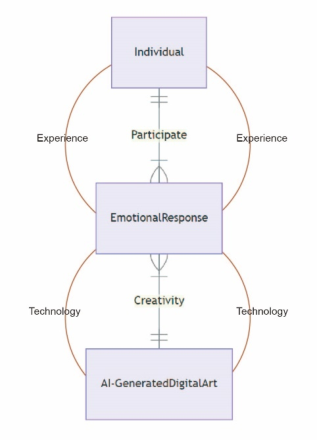
Figure 1: Entity relationship diagram for the intersection of technology, creativity, and human experience.
Providing Clues to the Transformative Nature of AI Art and Where it May Head in Future The research conclusions showed the transformative possibilities of AI- generated art AI-generated art has the potential to change artistic practice, reinvent traditional ideals of what is a proper stimulus in creative activity and topple existing structures from the art world on down. These insights informed consideration of future paths for art, who defines what’s creative and what society means by ‘creativity’; where technology’s role in production might be taking us all next-issue scholarship that can effectively assist people in exploring better longer lasting solutions. Case studies of particular AI art projects and exhibitions (e.g., the ‘Algorithmic Expressions’ exhibit starting in the autumn of 2009 and the ‘Generative Visions’ competition) feature in various places throughout this report. They show different directions for AI as technology changes and redefines, thanks to its reach and response to what we live through: algorithms can create one unique thing after another.
With the case study findings and the result of the survey on how traditional artistic practices and art markets perceive AI’s impact, the transformation potential of art produced by AI was fleshed out. It suggests that the established understanding of authorship could be overthrown; it gives rise to new art communities and ways of being involved; and with advances in technology, what it means to be an artist is changing -indeed all along these directions. These findings shaped the team’s overall research objectives, which aim to discern what is at stake for art, creativity, and human- technology interactions, leading up to tomorrow and also spell out that
Redefining Creativity and Artistic Endeavours 193
responsible development and incorporation of AI into creative arts are critical.
Guidebook for Policies and Practice Aimed at Sustaining AI Art On the back of such a thorough investigation, the results supported efforts to develop policy guidelines and best practices in this new sphere of AI art that meets its special challenges as well as opportunities. It includes considerations related to things like authorship, intellectual property, ethical concern and responsible innovation in the field of production with AI- generated technology. The comprehensive analyses of survey data and case studies have revealed the potential risks and benefits that AI brought to the world of art. These include concerns about authenticity, rights to intellectual property and whether human artists may be entirely replaced. Through understanding the key points, the project team can from different angles in various voices and actions go on to make rational suggestions on policies, guidelines, and best practices for these issues. We hope that in this way it can be guaranteed the development and use of AI in Creative Arts served, as it should, both human creativity and artistic expression. Only by so cultural traditions were maintained.
Adding to the Canonical Work on the Intersection of Technology, Creativity and Human Experience Utilising research results published in academic journals, conference presentations and public participation, this work further discussed into today’s creative arts and how it’s experienced among people. The findings achieved here were part of discussions that involve artists, scientists, policymakers educators and those who consume art all around the world. Through dialogues like these, we define our future as a whole not simply single people acting on their own. The paper can give new perspectives and good evidence to society’s general discussion about the relationship between computer technology, creativity art culture. Via research papers, contributions in collecting material, etc., it augured the results of this study in hopes that they enjoy wide circulation among artists and scientists as well as with government folk and also for people at large. For example, the case study viewed from their respective classical and practical implications of AI- generated art viewpoints --give us vivid stories with which we can vividly appreciate how we might bring together such instances. This fosters a richer conversation on technology’s evolving place in creativity and its effects on man, an area likely eventually to necessitate responsible integration of AI into arts.
By integrating the quantified survey data with qualitative case study insights, the group of researchers filled out a detailed, multi-dimensional understanding of what impact AI-generated digital art has on human society. This paper feeds into future policy-making and evolving practice within this fast-changing field. In the design of AI-generated Digital Art, the research results can redefine, for example, the whole future direction of art and its relationship with technology within human society. If AI-generated digital
194 Ho
art is to truly enrich human life, then these findings provided a highly useful choice as a reference source for artists, art institutions, policymakers and the public to engage in more sophisticated conversation covering our interests and objectives in integrating technology with creative forms.
CONCLUSION
The profound analysis of AI-generated art and its influence on society provides valuable insights into the potential future implications of this emerging discipline, beyond our initial expectations. The research team has utilised both quantitative survey data and detailed case studies to gain a comprehensive understanding of how AI art impacts individual perceptions, artistic practices within communities, and its role as a catalyst for broader artistic movements. The poll data revealed contrasting perspectives among the general public on AI-generated art, with some individuals expressing a sense of apprehension and pondering the source of originality when considering that machines are capable of creating such works. However, other individuals were content to temporarily embrace a replica or counterfeit that was not of the highest quality, as long as there was a continuous manufacture of these duplicates. The abovementioned findings underlie the need for a more sophisticated and sophisticated understanding of how people interact with this inanimate object in their artistic environment. Through in- depth case studies, the researchers were able to obtain a better understanding of the phenomenon by exploring contextual factors and stories that shape the lives of several stakeholders in the AI-furled art production world: the AI art makers, the backers, and the consumers. The team gained a holistic perspective on the different dimensions of the impact of AI art on people by using quantitative and qualitative data together. Awareness is crucial as it guides the recognition of the necessity for measures, such as regulations, that incorporate human values into human systems utilising new technologies to create artworks. The repercussions of integrating technological developments into communities, both legally and socially, can limit real-world implementations in several ways.
Although this research provides valuable insights, it is necessary to further analyse and explore the dynamic and rapidly evolving role of AI in art. Potential future study avenues could encompass longitudinal studies that document the enduring influence of AI art on artistic communities, cultural institutions, and society as a whole. Furthermore, engagement in multidisciplinary partnerships with people from other disciplines such as philosophy, cognitive scientists, and cultural studies would provide promising insights into the challenges that arise from the integration of AI in areas of creativity. Studying the interlinking areas of AI art and other emerging creativity-related developments such as virtual reality and augmented reality would provide an exciting endeavour for study as it offers new insight into how different technologies are transforming the relationship between technology, creativity, and human experience. Comparative studies of AI art from different cultural settings and areas of creative tradition would also establish a holistic picture regarding the global impact of AI on creativity. The
Redefining Creativity and Artistic Endeavours 195
field of AI art study is very critical as it redefines how creativity should be viewed and challenges the very basic idea of authorship. The outcome of this research study would, therefore, create awareness of the need for informed and thoughtful conversation in this incorporation. An inclusive platform for discussion on technology and creativity development would be established through this discovery dissemination, a process that promotes the production of academic papers, conference presentations, and popularisation publishing. The forum would be critical in ensuring transformative and novel ideas are used to guide the ethical integration of AI in areas of creativity. Eventually, this would be a major factor in determining the fate of art in human society.
REFERENCES
Fiske, Amelia, Peter Henningsen, and Alena Buyx. (2019). Your Robot Therapist Will See You Now: Ethical Implications of Embodied Artificial Intelligence in Psychiatry, Psychology, and Psychotherapy. Journal of Medical Internet Research Volume 21, No. 5. Gu, Li and Yong Li. (2022). Who Made the Paintings: Artists or Artificial
Intelligence? The Effects of Identity on Liking and Purchase Intention. Frontiers in Psychology Volume 13. Ho, A. G. (2024a). Developing strategies for junior designers to manage the design and emotions. New Design Idea Volume 8, No. 1. Ho, A. G. (2024b). “‘Techspressionism’ of Digital Art in Contemporary China”,
proceedings of the 10th International Symposium of Chinese Computer– Human Interaction (Chinese CHI 2022). Association for Computing Machinery, New York, NY, USA. Ho, A. G. (2024c). “The Theories and Impact of Mechanical Creation in Digital Art and Design Learning”, proceedings of the 2023 IEEE International Conference on Development and Learning (ICDL). Macau, China. http://doi.org/10.1109/ICDL55364.2023.10364499 Lima, Gabriel, Zhunis, Assem, Manovich, Lev, Cha, Meeyoung 2021. On the Social- Relational Moral Standing of AI: An Empirical Study Using AI-Generated Art. Frontiers in Robotics and AI Volume 8, No. 2021. Liu, Bai. (2023). Arguments for the Rise of Artificial Intelligence Art: Does AI
Art Have Creativity, Motivation, Self-Awareness and Emotion? Arte Individuo Y Sociedad Volume 35, No. 3. Yusa, I., Yu Yu, and Tetiana Sovhyra. (2022). Reflections on the Use of Artificial Intelligence in Works of Art.” in Works of Art, Yusa, IMM., Yu, Y., & Sovhyra, (Ed.), pp. 152–167.
LISTED IN THE AHFE DIGITAL BOOKSTORE CATALOGUE
Explore the complete digital volume
Human Interaction and Emerging Technologies (IHIET 2024)
Read this individual research paper free through the original publisher, or explore the full digital proceedings book.
ISBN 978-1-964867-33-5
Explore this ISBN in the AHFE Bookstore ↗Listed in the July 2026 bookstore catalogue; search by ISBN to confirm current availability · Digital book purchase optional