Lidia Minchenkova, Aleksandra Minchenkova, Vera Vodyanova, Nikolay Zaichkin, Olga Minchenkova (2024). Formation of the necessary conditions to ensure the quality of training specialists in the field of humanitarian science. In: Training, Education, and Learning Sciences. AHFE Open Access, vol. 155, pp. 141–152. https://doi.org/10.54941/ahfe1005399
Purpose – The article is devoted to the problem of training specialists in the field of humanitarian science, especially aggravated in the context of educational reforms and digital transition. The excessive digitalization of social spheres, in particular, education, without a clear understanding of the possible consequences will lead to the fact that the specialists' training quality will be lower than the demands dictated by the economy. Design/methodology – The article has been built a model of the educational process, which includes three stages: school, university, and the stage of professional activity. The model's main assumption is the representation of the educational process as a process with saturation. A function is selected to demonstrate the behavior of the course of the educational process, and the breakpoints that arise at the moments of the student's transition from one stage to another are comprehended. The problem of teaching of mathematical disciplines to students of the humanities is revealed.Findings – The paper provides possible methods for eliminating gaps are presented and the dependence of the state of the economy on the chosen method of smoothing the model curve is shown. To solve this problem have developed a special technology called "Collective Intelligence".Originality – The constructed model of the educational process can be useful in the formation of training courses. The proposed educational technology will allow students to form and consolidate the required minimum of knowledge in the field of application of mathematics.In this context, the intensified introduction of various digital platforms into the educational process only harms the latter. New technologies can complement the traditional educational process but not replace it in any way. Thus, total distance learning is the exclusion of experienced knowledge. Now we have an unsatisfactory state of education in almost all areas, especially in the field of social and behavioral sciences. It is all the more interesting to study the experience of two independent schools with full-time education during the COVID-19 pandemic (Gillespie et al., 2021).According to V. I. Arnold, the outstanding mathematician of our time, “Mathematics is now, like two millennia ago, the first candidate for destruction. The computer revolution makes it possible to replace educated slaves with ignorant ones. The governments of all countries began to exclude mathematics from secondary school programs” (Arnold, 1999).In pursuit of digital fashion in education, a catastrophic imbalance can be obtained; digitally trained people will not be able to effectively participate in the transformed digital economy without social and behavioral skills (communication, interpersonal and intercultural interaction) and cognitive skills (self-development, organization, adaptability) in addition to digital skills when implementing such competencies as communication and cooperation in the digital environment, self-development in conditions of uncertainty, creative thinking, information and data management, critical thinking in a digital environment (Perry and DeDeo, 2021).A research task arises – to identify bottlenecks in the system of formation and training of specialists and determine possible ways of joining. As for the training of specialists in social and behavioral spheres, special attention should be paid to the problem of teaching exact disciplines, particularly mathematics, since its active neglect in training specialists in these areas leads to a loss of systems thinking and a lack of analytical skills, which are so necessary for the development and making management decisions.Due to the recent trends in education, there is a sharp problem with teaching mathematical disciplines in the field of social and behavioral sciences. On the one hand, it is recognized that mathematics is not only counting but changes the way of thinking; on the other hand, one can see an intensification of the tendency that V. I. Arnold identified in his study (Arnold, 1999).In the presented paper, the following questions are answered using the example of teaching mathematical disciplines:•Whether active methods of teaching mathematical disciplines are possible for students in the humanities;•How the teaching of such disciplines should be structured so that students can subsequently demonstrate the presence of residual knowledge.These questions give rise to a wide variety of views and approaches among teachers of mathematical disciplines.The paper presents a model that identifies bottlenecks in the educational process of training specialists and presents recommendations on how to bridge these bottlenecks. In addition, the technology of teaching mathematical disciplines to students in humanitarian training areas is presented.
The digital transition has objective prerequisites, the first of which arose in the middle of the last century (1947) and represented the discovery of the first semiconductor transistor. Other prerequisites include increasing quan- titative changes in agriculture, industry, and construction. Thus, the world economic system has accumulated enough changes that prepared it for a leap
in development. This leap was mainly pushed by the technical discovery of the semiconductor transistor in 1947, driving the development of more complete and accurate systems for signal processing (Oshana, 2012). In other words, the analog signal, which until recently was the main signal for transmitting information, can be replaced by a digital signal with wider distribution capa- bilities than its predecessor. With digital transmission, information reaches the receiver without distortion, while the transmission of an analog sig- nal, carried out using electromagnetic waves, is influenced, for example, by weather and geographic or urban factors; meanwhile, the digital signal remains practically unaffected under these circumstances (Meddins, 2000).
It is evident that the transfer of the automated production control systems from an analog signal to a digital one was a completely natural step in the context of the evolution of the world’s socio-economic system (Vodyanova and Zaichkin, 2018a).
Officials, managers, scientists, and interested representatives of some sec- tors of the economy, who have joined the digitalization race, have begun to prepare local economic models. At the same time, understanding the actual transition to digital rails was often discordant.
According to the developed timeline of the evolution of the digital econ- omy, the following stages are identified (Lapidus, 2017):
Formation (1990–2005);
Growth (2005–2010);
Maturity (2010–2015);
Digital fever (2015–2020);
Systemic transformation (2020–2030).
Chronologically, humanity is at the last stage now, and one should talk about the systemic transformation of society, which is understood as the pro- cess of transition to a qualitatively new state accompanied by a purposeful change in all social spheres and modal personality types.
In other words, a radical change in the most typical personality traits of the identified communities is awaited. What communities will be highlighted remains to be guessed, although the results of the educational reform show that the transformation is aimed at the whole society and will inevitably affect the basic type of personality – the most typical personality traits characteristic of people who are carriers of the same culture. In addition, the development of the concept of a modal personality affects the features of national traits, which causes concern in the context of the ongoing transformation (Inkeles and Levinson, 1969).
In the current educational reforms, there is a lack of a single list of didac- tic units in the standards for higher education (Kondakov, 2019) and many textbooks on one discipline for high school (Russian Federation, 2018). The widespread introduction of Harvard case study technology (Rebeiz, 2011) shows the tendency of the formation of soft skills, among which there is a focus on the development of mathematical literacy as a completely sufficient skill instead of traditional mathematical training (Kolesnikova,
Formation of the Necessary Conditions to Ensure the Quality of Training Specialists 143
2020) – this leads to the fact that the training of specialists suffers. Math- ematical modeling studies (Yang et al., 2021) only state the implications of this problem.
In this context, the intensified introduction of various digital platforms into the educational process only harms the latter. New technologies can comple- ment the traditional educational process but not replace it in any way. Thus, total distance learning is the exclusion of experienced knowledge. Now we have an unsatisfactory state of education in almost all areas, especially in the field of social and behavioral sciences. It is all the more interesting to study the experience of two independent schools with full-time education during the COVID-19 pandemic (Gillespie et al., 2021).
According to V. I. Arnold, the outstanding mathematician of our time, “Mathematics is now, like two millennia ago, the first candidate for destruc- tion. The computer revolution makes it possible to replace educated slaves with ignorant ones. The governments of all countries began to exclude mathematics from secondary school programs” (Arnold, 1999).
In pursuit of digital fashion in education, a catastrophic imbalance can be obtained; digitally trained people will not be able to effectively partici- pate in the transformed digital economy without social and behavioral skills (communication, interpersonal and intercultural interaction) and cognitive skills (self-development, organization, adaptability) in addition to digital skills when implementing such competencies as communication and coopera- tion in the digital environment, self-development in conditions of uncertainty, creative thinking, information and data management, critical thinking in a digital environment (Perry and DeDeo, 2021).
A research task arises – to identify bottlenecks in the system of formation and training of specialists and determine possible ways of joining. As for the training of specialists in social and behavioral spheres, special attention should be paid to the problem of teaching exact disciplines, particularly math- ematics, since its active neglect in training specialists in these areas leads to a loss of systems thinking and a lack of analytical skills, which are so necessary for the development and making management decisions.
Due to the recent trends in education, there is a sharp problem with teach- ing mathematical disciplines in the field of social and behavioral sciences. On the one hand, it is recognized that mathematics is not only counting but changes the way of thinking; on the other hand, one can see an intensification of the tendency that V. I. Arnold identified in his study (Arnold, 1999).
In the presented paper, the following questions are answered using the example of teaching mathematical disciplines:
Whether active methods of teaching mathematical disciplines are possible for students in the humanities;
How the teaching of such disciplines should be structured so that students can subsequently demonstrate the presence of residual knowledge.
These questions give rise to a wide variety of views and approaches among teachers of mathematical disciplines.
The paper presents a model that identifies bottlenecks in the educational process of training specialists and presents recommendations on how to bridge these bottlenecks. In addition, the technology of teaching mathemati- cal disciplines to students in humanitarian training areas is presented.
MATERIALS AND METHODS
The presented work aims to build an explanatory model of the process of training a specialist – a model based on which the main problem areas in the education process associated with the transformation of students’ knowledge obtained by them at the previous stages can be identified. The model should show the discontinuities that arise in a supposedly continuous process, which should be education, and the influence of these discontinuities on the state of subsequent stages of education.
It is necessary to solve the following tasks to achieve this goal:
Determine the type and dynamics of the course of the learning process from the point of view of the student;
Find a mathematical law describing similar behavior;
Give an interpretation of the parameters included in the formula;
Evaluate the quality of the breakpoints;
Determine the ways to join the bottlenecks generated by the breakpoints;
Assess the consequences for the economy generated by the breakpoints in the process of training specialists;
Apply the results of modeling to the process of training specialists in the field of social and behavioral sciences.
The method of soft modeling was chosen to build a model for describing the training of a specialist (Arnold, 2004; Kapitsa and Kurdyumov, 2001). This method belongs to the qualitative methods of analyzing the behavior of systems. Its essence lies in the fact that the description of the selected pro- cess occurs using models that demonstrate behavior similar to the process. In other words, the law of process change is not precisely known. However, a function with identical behavior was selected to describe it. At one time, the transition (activation function) for a neural network was described first using a step function, then using a piecewise linear function; now, it is carried out using a logistic function.
When describing the process of training a specialist, the authors proceed from the fact that each time, a person, while learning, reaches a level of knowledge determined according to the chosen teaching methodology. Thus, the learning process can be described by a step function, where each step is an achieved level of acquired knowledge. Therefore, the main assumption of the model is the interpretation of the learning process as a process with sat- uration. A generally accepted description of a process with saturation is its description using a logistic function:
f(t) = α · f0 · eαt
α −β · f0 + β · f0 · eαt , (1)
Formation of the Necessary Conditions to Ensure the Quality of Training Specialists 145
where: f(0) – the initial level of education– f(t) – the level of education at time t; α – the coefficient of assimilation of educational material in the learning process, α > 0; β – the coefficient of slowing down the assimilation of educational material in the learning process, β > 0.
The parameter α characterizes the rate of transition of the system from one level of knowledge to another; the parameter β characterizes the influence of such factors as the complexity of the material, the lack of time for mastering, and the level of the student’s abilities. As a result, the parameter β determines the final level of knowledge for the past time interval. Due to the properties of the logistic function, it can always be used to describe students reaching at least some educational level, provided that they leave the level of initial illiteracy.
The main assumption of the model about the education process as a pro- cess with saturation is formed based on pedagogical theories, the authors’ personal experience in obtaining education, and the basis of many years of the authors’ teaching practice. Moreover, the latter factor formed the basis of the developed technology for teaching exact disciplines in the humani- tarian training areas. The development of the methodology took place in the process of teaching the disciplines “Financial Mathematics,” “Meth- ods of Making Management Decisions,” “Mathematical Analysis,” “Linear Algebra,” “Probability Theory,” “Mathematical Statistics,” “Mathemati- cal Methods,” and “Models in Logistics” based on the State University of Management (Moscow, Russia), Russian Academy of National Economy and Public Administration under the President of the Russian Federation (Moscow, Russia), and Moscow University for the Humanities (Moscow, Russia).
The presented model is a macro-level model. In an aggregated form, it represents the process of training specialists. The specification of training directions, the level of students, and the level of the school or higher edu- cation institution should impact the model. At the same time, the concept of representing the education process as a process with saturation will not change since this assumption is rough (i.e., it ensures the structural stabil- ity of the model). Qualitative models aim to reflect the main features of the process under study. Therefore, the subsequent refinement of the model can translate them into the category of quantitative models, which, however, will retain the main characteristics inherent in their qualitative basis.
RESULTS
Consider the situations that the model can simulate. The model covers three stages on time intervals [0, T1], [T1, T2], and [T2, T3], each of which is described by the logistic function (1) with its parameters. The time interval [0, T1] is the time of pre-university training. The curve corresponding to this interval reflects the result of upbringing, the formation of the personality, training, and the level of education of the child obtained in the preschool and school years (stage 1). The time interval [T1, T2] corresponds to the period
of stay in a higher education institution (stage 2). The time interval [T2, T3] corresponds to the period of professional activity starting after graduation from a higher education institution (stage 3). In the model, these periods are sequential.
The interactions of logistic curves occur at the end values of time intervals and mean a change in the educational stage in a person’s life: primary/sec- ondary education – higher education – professional activity.
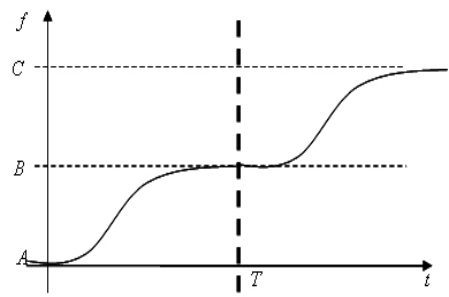
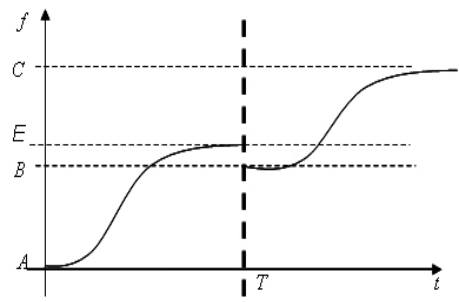
Based on the assumption that the situation is ideal if the level of training obtained at the previous stage coincides with the required level of training at the current stage or exceeds it (e.g., the level of training of a school graduate is not lower than the level of training required for an applicant, or the level of training of a graduate of a higher education institution is not below the requirements of the external environment). Figures 1 and 2 correspond to this situation.
Figure 1: The level of training obtained at the previous educational stage (logistic curve AB) corresponds to the current requirements (logistic curve BC) at time T. Source: Compiled by the authors.Figure 2: The level of training obtained at the previous educational stage (logistic curve AE) is higher than the current requirements (logistic curve BC) at time T. Source: Compiled by the authors.
Formation of the Necessary Conditions to Ensure the Quality of Training Specialists 147
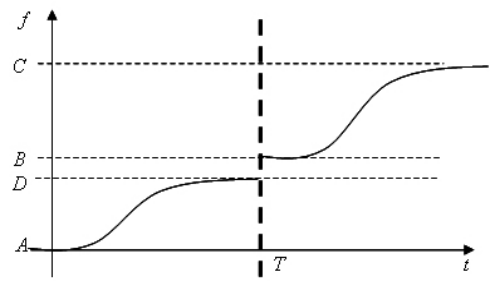
The situation ceases to be ideal when the level of training obtained at the previous level is lower than the required one; then, a gap arises at point T, at both ends of which the function has a finite value. When the external environment is adjusted, this gap can be eliminated since adjusting external conditions will change the very function that describes the process. Figure 3 corresponds to this situation.
Figure 3: The level of training obtained at the previous educational stage (logistic curve AD) is lower than the current requirements (logistic curve BC). Source: Compiled by the authors.
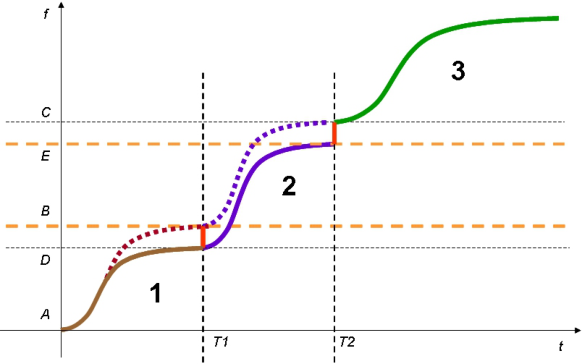
Methods for bridging the gap in the “school – university”link are described in detail (Vodyanova and Zaichkin, 2018b). If the requirements from the higher education institution remain the same, this task can be solved both at the micro-level (by students and their parents through a system of additional training, carried out, as a rule, by tutors) and the macro level (when the Min- istry of Education finally takes care of this problem and will begin to look for ways out constructively, not in the way it is being done now). However, another very dangerous and far-reaching negative way to close this gap exists. This method is destructive, and its emergence is caused by the general ten- dency of degradation of our national education, formed by the technocratic approach of “effective”managers. In the conditions of the protracted process of closing the gap by improving the quality of preparation at school, higher education institutions are forced to lower the bar of requirements for the applicant. The gap is thereby eliminated, but the level of training of specialists decreases since it is difficult to obtain an excellent product from low-quality raw materials, and this does not depend on the skill of the master (Deming, 2011). This leads to the emergence of the “university – economy” gap, which is exacerbated by the current trend of accelerating obsolescence of knowl- edge (Figure 4). Then the “university – economy” gap will lead to a drop in the level of the economy, weakening of key industries, and a decrease in eco- nomic and national security. For the sake of fairness, it should be said that the “university – economy” gap has always existed since the graduate has theo- retical knowledge but does not own the features of the practical application of their knowledge.
Figure 4: The level of training obtained in stage 1 (logistic curve AD) is lower than the requirements of stage 2 (logistic curve BC). Then higher education institutions lower the requirements, which entails a deterioration in the quality of training. Due to the inconsistency of the level of training with the requirements of the economy (employers), a gap arises at this point. Dotted lines indicate ideal situations. Source: Compiled by the authors.
Due to the pre-existing government policy toward young professionals, this gap was quickly closed. Today, graduates are left to themselves and can only rely on their competitiveness, which they should develop in a higher edu- cation institution; however, it cannot always be obtained due to the difference in the processes of growing up and socialization in young people. Thus, in the general case, it is not always possible to bridge the gap between the level of training of a graduate and the level of economic requirements quickly and painlessly.
The “Collective Intelligence” technology has arisen as an answer to the question posed at the beginning of the paper about the fundamental possi- bility of using active methods of teaching mathematical disciplines in those higher education institutions where mathematics is not a core discipline.
The technology, which received the name “Collective Intelligence,”is based on the idea of joint discussion and mastering of the studied material by students. As a result of such a discussion, nuances are clarified, and new knowledge emerges, which contributes to a greater understanding of the topic under study than when examining it on its own.
In the technology “Collective Intelligence,” it is proposed to use two forms of interactive learning:
Interactive answer on the blackboard;
Interactive test work.
With an interactive answer on the blackboard, the student not only solves the problem but also answers other students’ questions under the supervision of the teacher. The teacher’s participation is due to the need to control the correctness of interpretations and make amendments, if necessary.
Formation of the Necessary Conditions to Ensure the Quality of Training Specialists 149
In an interactive test, the teacher allows students to interact in the pro- cess of solving it. However, this form is effective only when (1) a ban on using abstracts, textbooks, and other improvised material is introduced and (2) each student has an individual and a rather laborious task. In the case of a strong complication of the task of the control work, it is quite permissi- ble to remove the ban on the use of additional materials. Communication is allowed only from a certain point in time determined by the teacher.
Until this moment, students solve their tasks on their own; in case of diffi- culties with a solution, they become ready to accept a small hint from a friend because they simply should not have time for more.
Long-term practice of using the “Collective Intelligence” technology has shown that with such interactive forms of student interaction, there is an increase in the quality of information perception.
DISCUSSION
V. I. Arnold quite rightly warns that “if mathematicians do not come to their senses themselves, then consumers who have retained both the need for a modern, in the best sense of the word, mathematical theory and the immunity characteristic of every sane person to useless axiomatic chatter, will eventually refuse the services of half-educated scholastics in universities and schools” (Arnold, 1998). The author believes that mathematics is a branch of physics, and its teaching requires “external control by experiments or obser- vations, as in any experimental science, and they should teach primary school students from the very beginning” (Arnold, 1998).
Unfortunately, the warning of this outstanding mathematician comes true with tremendous speed. Many humanitarian training areas either reduce the mathematics course to a minimum or exclude it altogether, transferring it to an optional one. This is mostly due to the peculiarity of presenting mathe- matical disciplines, which the teachers demonstrate, and is directly related to what V. I. Arnold comments in his study (Arnold, 1998). Furthermore, in humanities higher education institutions, teachers do not always tune with the target audience correctly due to their specific requirements related to the poor preparation of students at the school stage, their complete lack of inter- est in the subject, and their consideration of the subject as unnecessary and unimportant for further professional activities. This is certainly a delusion. However, to overcome it, teachers must look for new ways of presenting the material precisely for such an audience. Lebedev says that economists need to teach mathematics only based on a specific problem, that is, using the case study method (Lebedev, 1997, p. 224).
However, the place of business games and study cases in such courses is very limited. Moreover, business games and cases will achieve their learning goal only when the routine – counting – is mastered. Therefore, the technol- ogy described above has been developed and proven its viability and quality for more than twenty years of its application. Researchers from the Insti- tute of Mathematical and Theoretical Biology (Arizona, USA) are working in a similar direction. Castillo-Chavez et al. (2017) highlight the impor- tance of applying mathematics to the sciences and social sciences through
research, present the results of work with students based on modeling active collaborative learning and note the positive role of such an approach in cre- ating sustainable learning communities. Unfortunately, there are very few works describing such experiments. Researchers are engaged either in sys- temic things or purely statistical studies of the phenomenon that occurs in society. The following works can be highlighted:
The Evolution of Social Learning and Its Economic Consequences (Bossan et al., 2015).
Stochastic Theory of Two-Species Cooperation (Pinero et al., 2021).
Occupational Mobility and Automation: A Data-Driven Network Model (Del Rio-Chanona et al., 2021).
The Origin of Cooperation (Koduir and Andrew, 2021).
The Skills Space in Informal Work: Insights from Bangalore (Sengupta et al., 2021).
Belief Polarization in a Complex World: A Learning Theory Perspective (Haghtalab and Jackson, 2021).
Falling Through the Cracks: Modeling the Formation of Social Category Boundaries (Yang et al., 2021).
The Experience of Two Independent Schools with In-Person Learning During the COVID-19 Pandemic (Gillespie et al., 2021).
These works reflect possible solutions to different facets of the problem described in this research, present evolutionary behavioral models of agents that demonstrate their adaptive capabilities to environmental conditions, and assess occupational mobility and the emergence of collaboration; several works are aimed at describing the interaction of cognitive and social skills.
CONCLUSION
The work has shown that the learning process is a process with saturation, which is true not only from the point of view of the student but also from the point of view of pedagogical science. At the qualitative level, the process with saturation is best described by a logistic curve. The logistic function contains two parameters: (1) coefficient of assimilation of educational material in the learning process and (2) coefficient of slowing down the assimilation of edu- cational material in the learning process. The model describes three stages of the formation of a specialist: (1) stage of preschool and school education and formation, (2) stage of university training, and (3) stage of professional activity. Each stage is described by a logistic function. In an ideal situation, the curve described by the three selected logistic functions, each of which has its own set of parameters, is continuous. However, in real life, gaps in the levels of knowledge that disrupt the continuity of the educational process may occur at the moments corresponding to the “gluing” points of func- tions. In the context of the constructed model, these gaps define bottlenecks in the process of training a specialist. Depending on how these bottlenecks are addressed, the impact on the level of economic development will be different.
In particular, poor training of future economists or sociologists will nega- tively affect the economic activity of the country and the quality of strategic
Formation of the Necessary Conditions to Ensure the Quality of Training Specialists 151
decisions developed based on sociological research. One of the ways to elim- inate the consequences of the gaps between the “school – university” stages and reduce the future gap between the “university – economy” stages is to change the approach to teaching exact disciplines for students of these training areas. An example of such a change is the implementation of the “Collective Intelligence”technology developed by the authors. The presented model can be used in managing the educational process. Detailing a specific stage allows one to build an indicator showing the quality of mastering the selected discipline by students. Based on the model, it is possible to improve the sequence of the studied disciplines, assess their continuity, and develop programs of academic disciplines given the rolling didactic units. In turn, this will increase the efficiency of the educational process and answer the question of how the teaching of such disciplines should be structured so that students can subsequently demonstrate the presence of residual knowledge.
The “Collective Intelligence” technology will be especially useful in teach- ing exact disciplines to students of humanitarian areas of training since it will allow them not only to get the necessary minimum of knowledge but also to consolidate it.
CONFLICTS OF INTEREST AND FUNDING SOURCES The authors declare that the research was conducted in the absence of any commercial or financial relationships that could be construed as a potential conflict of interests.
REFERENCES
Arnold, V. I. (1998), “Teaching mathematics.” Akademizdat Center “Science” RAS, Vol. 3, p. 117. Arnold, V. I. (1999), “Anti-scientific revolution and mathematics.” Bulletin of the
Russian Academy of Sciences, Vol. 6, p. 553. Arnold, V. I. (2004), “Hard” and “Soft” Mathematical Models, MTsNMO, Moscow, Russia. Bossan, B., Jann O. and Hammerstein, P. (2015), The evolution of social learning and
its economic consequences. Available at: https://www.santafe.edu/research/results /papers/4504-the-evolution-of-social-learning-and-its-econ. Castillo-Chavez, C., Kribs, C. and Morin, B. (2017), Student-driven research at the mathematical and theoretical biology institute. Available at: https://www.santafe.edu/research/results/papers/7069-student-driven-researc h-at-the-mathematical-a. Del Rio-Chanona, R. M., Mealy, P., Beguerisse-Diaz, M., Lafond, F. and Farmer, J. D.
(2021), “Occupational mobility and automation: A data-driven network model.” Journal of the Royal Society Interface, Vol. 18, No. 174. Available at: https://ww w.doi.org/10.1098/rsif.2020.0898. Deming, W. E. (2011), Way out of the crisis. A new paradigm for managing people, systems, and processes. In: Deming W. E. (Ed.), Way Out of the Crisis. A New Paradigm for Managing People, Systems, and Processes, Alpina Publisher Moscow, Russia, p. 296.
Gillespie, D. L., Meyers, L. A., Lachmann, M., Redd„ S. C. and Zenilman, J. M.
(2021), “The experience of two independent schools with in-person learning dur- ing the COVID-19 pandemic.” Available at: https://www.doi.org/10.1101/2021. 01.26.21250065. Haghtalab, N., and Jackson, M. O. (2021), “Belief polarization in a complex world: A learning theory perspective.” Proceedings in the National Academy of Sciences of the United States of America, Vol. 118, No. 19. Available at: https://www.doi. org/10.1073/pnas.2010144118. Inkeles, A. and Levinson, A. D. (1969), National character: The study of modal
personality and sociocultural system. In: Lindzey G. and Aronson E. (Eds.), The Handbook of Social Psychology, Vol. 4, Addison-Wesley, Boston, USA. Kapitsa S. P., Kurdyumov S. P. and Malinetskiy G. G. (2001), Synergetics and Forecasts of the Future, Editorial URSS, Moscow, Russia, p. 288. Koduir, N., and Andrew, W. (2021), “The origin of cooperation.” Proceedings in the
National Academy of Sciences of the United States of America, Vol. 118, No. 26. Available at: https://doi.org/10.1073/pnas.201557211. Kolesnikova, K. C. (2020), “You’re wrong!” Rossiyskaya Gazeta – Federal Issue, 30 March. Kondakov, M. (2019), Development of a Basic Competency Model for the Digital
Economy, Mobile e-education, Moscow, Russia. Lapidus, L. V. (2017), Digital Economy Competence Center, Association of citizens and organizations for the promotion of corporate education, Moscow, Russia. Lebedev, V. V. (1997), Mathematical Modeling of Socio-Economic Processes. Izograf,
Moscow, Russia. Meddins, B. (2000), Introduction to Digital Signal Processing, Newnes, University of East Anglia, UK, pp. 1–15. Oshana, R. (Ed), (2012), DSP for Embedded and Real-Time Systems. Elsevier. https:
//doi.org/10.1016/C2010-0-67143-4 Perry C. and DeDeo S. (2021), The cognitive science of extremist ideologies online.
Available at: https://arxiv.org/pdf/2110.00626.pdf. Pinero, J., Redner S. and Sole R. (2021). Stochastic theory of two-species cooperation.
Available at: https://arxiv.org/pdf/2110.00626.pdf. Rebeiz, K. S. (2011), An Insider Perspective on Implementing the Harvard Case Study Method in Business Teaching, American University of Beirut, Beirut, Lebanon. Russian Federation. (2018), Parliamentary hearings of the State Duma Committee
on Education and Science, Duma, Moscow, Russia. Sengupta, N., Gaurav S. and Evans J. (2021), “The skills space in informal work: Insights from Bangalore slums.” The Journal of Development Studies. Available at: https://en.x-mol.com/paper/paper/1376576958867419136. Vodyanova, V. V. and Zaichkin, N. I. (2018a), Digitization, hibernation, and SEO
robots, GUU Publishing House. Moscow, Russia. Vodyanova, V. V. and Zaichkin, N. I. (2018b), “Identification of threats to the economic security of Russia based on the education model.” Initiatives of the XXI Century, Vol. 4, pp. 50–54. Yang, V. C., van der Does, T. and Olsson, H. (2021), “Falling through the cracks:
Modeling the formation of social category boundaries.” PLOS ONE. https://doi. org/10.1371/journal.pone.0247562
LISTED IN THE AHFE DIGITAL BOOKSTORE CATALOGUE
Explore the complete digital volume
Training, Education, and Learning Sciences
Read this individual research paper free through the original publisher, or explore the full digital proceedings book.
ISBN 978-1-964867-31-1
Explore this ISBN in the AHFE Bookstore ↗Listed in the July 2026 bookstore catalogue; search by ISBN to confirm current availability · Digital book purchase optional