Jakob Weber, Marc-André Weber, Sascha Stowasser (2024). Work design in production: Foundations and recommendations for the implementation of mobile, time-flexible work design in chipping production. In: Human Factors and Systems Interaction. AHFE Open Access, vol. 154, pp. 59–67. https://doi.org/10.54941/ahfe1005353
The discussion on new work models and the benefits of mobile, time-flexible work often focuses exclusively on employees in administrations. Employees in production and production-related areas often lack the opportunity for mobile and time-flexible work. Companies need to ensure that this imbalance doesn't impact collaboration among employees or influence the organizational culture. This paper presents the results of an empirical survey that provides an overview of the opinions of employees and executives in chipping manufacturing, addressing the research question as to what extent a mobile, time-flexible work design is possible for shop floor employees. Based on the findings, a model is developed on how mobile, time-flexible work can be facilitated in chipping production. For the survey study, an empirical investigation was conducted using a mixed-method design. A quantitative data collection was carried out through an online survey, while qualitative data were collected through guided interviews. 61 employees participated in the online survey, and eleven executives, including CEOs and production managers, were interviewed. Both employees and executives work in companies operating in the chipping production in Germany. The results indicate that, among other factors, the secure automation and digitalization of production processes enable employees in chipping production to perform tasks mobile and time-flexibly while the machine tool produces workpieces. Building on these results, a model for the design of mobile, time-flexible work is developed, emphasizing constraints for its implementation. In the future, the digitalization and automation of production will enable a mobile, time-flexible work design.
Due to external influences and changes, companies and their work orga- nizations are in a constant transformation process. In addition to various socio-economic and cultural developments, advancing digitalization and the development of new technologies are influencing the way work is done. These dynamic changes require companies to constantly adapt to new challenges and circumstances to ensure long-term success.
One of these challenges is an increasing shortage of skilled workers. Espe- cially in Germany, many companies are in the situation of not being able to fill jobs requiring certain skills in a timely manner due to a shortage of suit- ably qualified specialists available on the labour market (Bundesagentur für Arbeit, 2022). As a result of this development, securing skilled workers is becoming an increasingly essential issue for companies to retain employees in the long term.
Even before the COVID-19 pandemic, there was a growing demand for flexible forms of work (Gärtner et al., 2016). Despite having the necessary technical prerequisites in place, flexible forms of working were not uni- versally adopted (Kugler, 2020). However, the dynamic changes triggered by the pandemic and compliance with social distancing rules dissolved the long-standing resistance to mobile and flexible working arrangements in companies. Companies were forced to allow their employees to work flexibly from home or other locations (Shift Collective, 2021).
Since the pandemic, mobile and flexible working arrangements, for exam- ple working from home, have become a prerequisite for existing and future employees on the labour market and thus increase employer attractiveness if it is offered (Widuckel and Bellmann, 2023). Companies are being forced by the labour market to revise their work organization to attract skilled workers.
In addition to the aforementioned points, a growing number of studies show that mobile and flexible working arrangements have positive impacts on employee satisfaction and productivity. For example, employee satis- faction is increased by a better work-life balance and greater flexibility in organizing working hours and location. These factors also have an impact on the productivity of employees, as they are more motivated and able to complete their work more smoothly (Choudhury et al., 2019; Aksoy et al., 2022; Shift Collective, 2021; Barrero et al., 2021). The positive impacts are countered by negative effects. For example, the blurring of the boundaries between work and leisure can lead to increased stress levels among employ- ees or social contacts can suffer (European Foundation for the Improvement of Living and Working Conditions and International Labour Office, 2017; Song and Gao, 2018).
Consequently, a mobile and time-flexible work design can not only enable companies to attract and secure skilled workers, it can also increase employee productivity and satisfaction. Nevertheless, the design of mobile and time- flexible work focuses on the administrative area. This includes office and knowledge work. There are comparatively few approaches for employees in production or production-related areas (Peschl et al., 2023).
In chipping production, employees are responsible for preparing and oper- ating capital-intensive machine systems. Despite technical possibilities, the operation of machines and systems often necessitates on-site presence due to high costs in safety equipment for the protection of employees. For this reason, time-flexible shift design in chipping production is often the focus of work design considerations.
However, the changes in work processes within machining production due to developments in the context of Industry 4.0 open the possibility of adapt- ing work design. For example, various tasks in work preparation and process
Work Design in Production Foundations and Recommendations 61
monitoring and control can be made remote while the machines produce workpieces on site. This requires different factors in employee qualification and support, as well as in the technical equipment of people and machines.
This paper focuses mainly on the aspects of mobile work design in chip- ping production, including aspects of time-flexible work to offer a holistic perspective on work design in this context.
THE RESULTS OF THE EMPIRICAL SURVEY IN CHIPPING PRODUCTION To create an overview regarding the feasibility of mobile, time-flexible work design in chipping production, an empirical study was conducted using a mixed-methods design. The overarching research question was: To what extent is mobile, time-flexible work design feasible for employees in chipping production?
The qualitative approach involved the analysis of guided interviews with industry experts, while the quantitative approach comprised an online survey of employees in chipping companies. The survey and interview requests were distributed to chipping companies in Northern Germany between March and May 2023. The respective research approaches yielded divergent and com- plementary results. Below, the general findings of the empirical study are summarized.
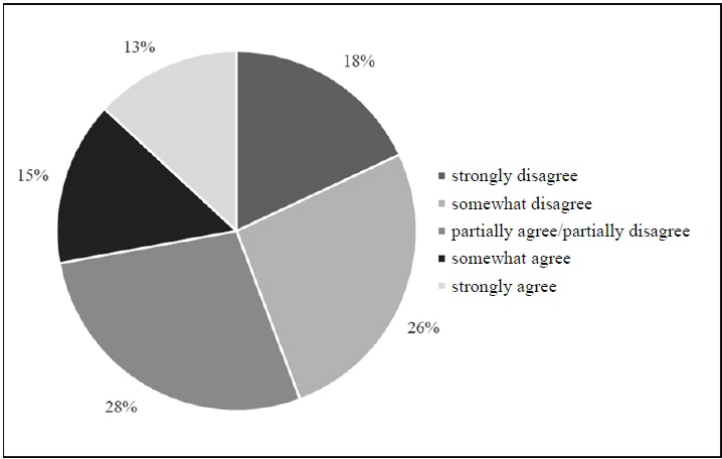
The quantitative study involved 61 participants from 6 companies, with 56 percent belonging to the 27–42 age range. Among these 61 partici- pants, 57 were professionals in metal processing, with 29 of them having completed an apprenticeship as chipping mechanics. 66 percent of partic- ipants worked directly on machines, of which 80 percent had automation for manufacturing workpieces. 92 percent stated that employees in other areas were allowed to use home office, while 79 percent did not have this option. The desire for home office usage varied, with 28 percent strongly or somewhat agreeing (13 percent strongly agree; 15 percent somewhat agree), while 44 percent strongly or somewhat disagreed (18 percent strongly disagree; 26 percent somewhat disagree). A portion of participants was uncer- tain about whether they agreed with the desire or not (28 percent partially agree/partially disagree) (see Figure 1).
The qualitative study involved 11 executives, including 5 CEOs, from 10 chipping companies. In over 120 minutes of interview recordings, all partic- ipants provided responses. The interviewees exhibited heterogeneity in their responses and opinions on the posed questions. The posed questions repre- sented subdomains that contributed to addressing the main research question. These related to the following areas:
Field of responsibilities
Perceived imbalance
Working time model
Mitigation of skilled labour shortage
Potential machinery, equipment, and IT software
Design options
Subsequently, the results regarding the respective research question are consolidated to create a comprehensive overview of opinions on the design of mobile, time-flexible work in chipping production. The following presents selected results of the study, organized by subdomains that contributed to addressing the main research question.
Figure 1: Would you like to be able to work from home? (n = 61).
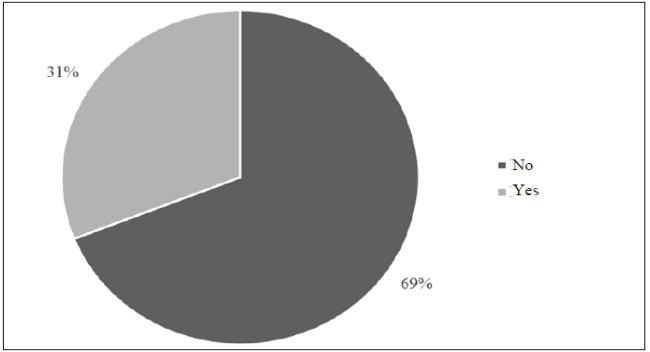
Field of Responsibilities The amalgamation of both studies reveals diverse opinions and assess- ments regarding the transformation of the field of responsibilities for chip- ping mechanics, ranging from loading workpieces to the programming of machines and equipment. 42 respondents see no possibility for implement- ing home office in chipping production, leading to no change in the field of responsibilities (see Figure 2).
On the other hand, another group of respondents (n = 19) observes that the field of responsibilities for chipping mechanics is currently undergoing changes and will continue to do so in the future due to increasing digital- ization and automation of manufacturing processes. They mentioned having tasks in their current job that can be done from home. Tasks will shift more towards digital work preparation and the development of secure produc- tion processes, reducing the on-site loading of workpieces into machines. Consequently, the competencies of chipping mechanics will evolve into those of equipment supervisors, responsible for process planning, moni- toring, and observation. This shift requires a corresponding educational background and qualifications, emphasizing the importance of integrating relevant competency training into the educational process.
Work Design in Production Foundations and Recommendations 63
Figure 2: Are there any tasks in your current job that you can do from home? (n = 61).
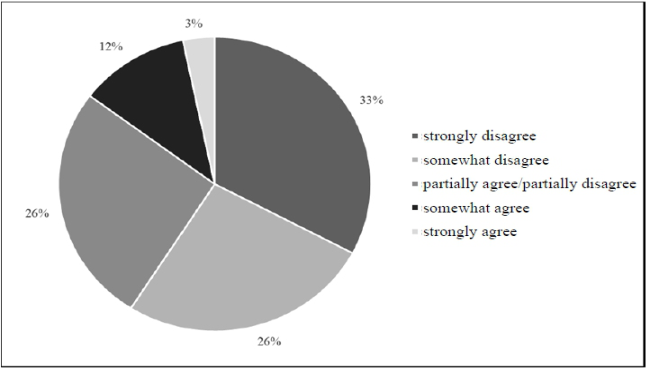
Perceived Imbalance The summary of both research approaches indicates an observed imbalance, predominantly not perceived as unfair. Only 15 percent of respondents would agree that there is an injustice (see Figure 3). The observed dissatisfaction, expressed through criticism of accessibility in the home office and a sense of inequality by shop floor workers, is already affecting collaboration in the surveyed companies. Leaders should monitor this development by engaging in conversations with their employees and listening to prevent a rise of dis- satisfaction. Facilitating mobile, time-flexible work design could potentially alleviate the prevailing imbalance and resolve dissatisfaction.
Figure 3: Do you think it is unfair that employees in other areas of your company can work from home? (n = 61).
Working Time Model From examining both research strands, a definitive determination regarding a specific working time model cannot be made. All working time models are considered by the interviewees as possible and adaptable if they adhere to the legal framework. Notably, there is a controversial view regarding the runtime of the machines. While some interviewees prioritize this and want to flexibly align working hours with machine runtime to maximize efficiency, another interviewee views this as conservative and traditional. The partici- pant emphasized that, while it may be economically sound, the current era necessitates flexibility in working hours based on employee needs.
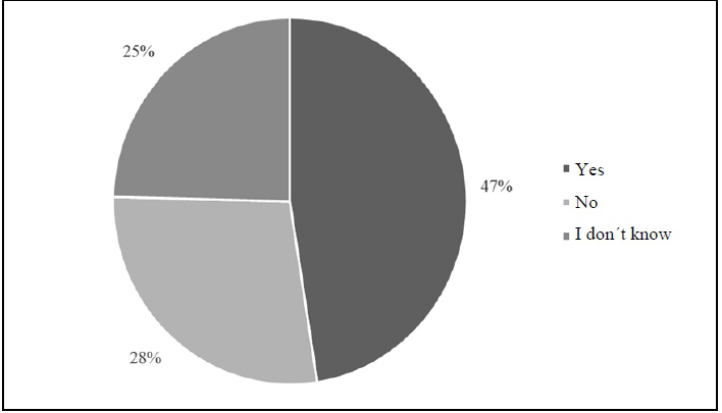
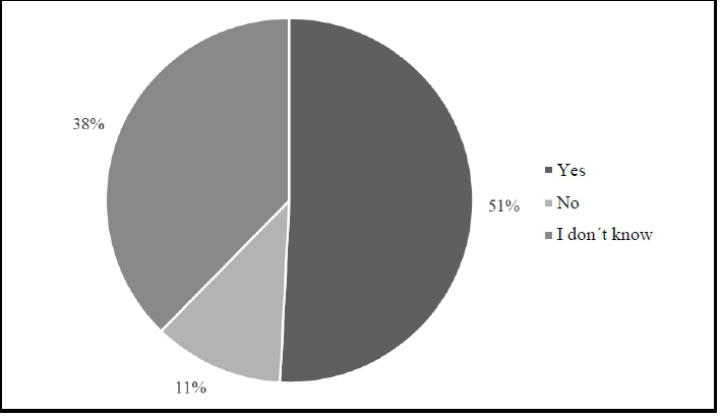
Mitigation of Skilled Labour Shortage The participants in the quantitative study expressed that their companies face difficulties in recruiting skilled professionals for machining production (see Figure 4). 51 percent of the respondents perceived that the option of home office usage would make the workplace in this field more attractive (see Figure 5). This has the potential to enhance the appeal of the profession and attract new skilled workers.
The responses from the interviewees emphasized this prevailing opinion. Many highlighted it as a competitive advantage in recruiting new employ- ees and apprentices, as well as enhancing the overall attractiveness of the workplace. Particularly, young and prospective workers prefer such work arrangements to achieve a better work-life balance.
Figure 4: Does your company have difficulties recruiting employees for chipping production on the labour market? (n = 61).
However, 2 out of 11 interviewees did not observe any contribution to mitigating the skilled labour shortage or an enhancement in the attractive- ness of the profession through the option of home office usage. This group
Work Design in Production Foundations and Recommendations 65
emphasized that the profession of a chipping mechanic is characterized by craftsmanship and technical challenges, therefore it would not become more attractive through the possibility of working from home.
The combination of the quantitative and qualitative research strands indi- cates that a majority is convinced that the option of home office usage makes the workplace in chipping production more attractive and can contribute to addressing the skilled labour shortage. By enabling a mobile, time-flexible work design and adjusting the field of responsibilities with comprehensive tasks in process planning, supervision, and control, such work arrangements could persuade young and future workers to pursue a career in chipping production.
Figure 5: Would the ability to perform tasks from home make the job in chipping production more interesting? (n = 61).
Design Options To address the main research question in the quantitative research strand, an open-ended survey inquired about the possibilities for designing home office work. While some respondents could not envision enabling home office in chipping production, others detailed prerequisites and ways in which home office could be facilitated. This includes the process-secure automation of workpiece production, which can enable mobile, time-flexible work design.
The qualitative survey complemented these possibilities. Some intervie- wees outlined design possibilities through the progressing, full digitalization of manufacturing and a process-secure automation of production processes. One interviewee asserted that an equivalent extension of home office oppor- tunities to production employees, akin to those available for office-based personnel, may pose challenges, but it holds the potential for positive
outcomes. These potentials align with the possibilities identified in the quan- titative survey, focusing on tasks such as programming machine tools, pre- and post-work documentation and planning, as well as process monitoring and control.
Concerns and impracticalities were also expressed in the qualitative survey. Doubts arise from the many location-bound tasks that a chipping mechanic must perform. Furthermore, the establishment of a standardized framework for each production employee would be necessary; otherwise, it might lead to additional imbalances.
The respective research strands illustrate that there are perceptions and possibilities for how and to what extent home office can be enabled in chip- ping production. These possibilities lie in the digitalization and automation of manufacturing processes. Through these, along with employee qualification and the establishment of a standardized framework in chipping production, mobile, time-flexible work can be designed.
CONCLUSION
In summary, this study contributes to the discourse on the design of work structures in chipping production. Given the external influences and dynam- ics in modern enterprises influenced by socio-economic, cultural develop- ments, and digital transformation, organizations are compelled to adapt constantly to new challenges. The escalating shortage of skilled workers stands out as a central challenge, forcing companies to ensure long-term success through securing qualified staff.
The study uncovered not only the aspiration for time-flexible work design in the chipping industry but also presented tangible strategies and insights for its implementation. A model is currently under development by the authors to provide executives and managers with a foundational framework and recom- mendations for reshaping work structures. Furthermore, this comprehensive model extends its scope, encompassing essential principles and practical rec- ommendations for the seamless integration of -flexible work design within the realm of chipping production.
The development of a comprehensive model to promote such work structures represents a promising step in providing executives and man- agers with the necessary foundations and recommendations for successful implementation.
It is noteworthy that the extension of the model goes beyond the sole focus on time-flexible work design. The inclusion of mobile work forms, such as working from home, contributes to offering a comprehensive perspective on work design in this context. The empirical findings of the study reveal differentiated opinions and assessments regarding the transformation of the responsibilities of chipping mechanics, perceived imbalances, and potential solutions.
In this sense, the present study represents a crucial step towards promoting contemporary and flexible work design in chipping production. The models and recommendations to be developed will be a valuable contribution for companies striving to remain competitive in the era of digital transformation
Work Design in Production Foundations and Recommendations 67
and skilled labour shortages, while simultaneously enhancing the satisfaction and productivity of their employees.
REFERENCES
Aksoy, Cevat Giray; Barrero, Jose Maria; Bloom, Nicholas; Davis, Steven J.; Dolls, Mathias and Zarate, Pablo (2022). Working from Home Around the World. Cambridge, MA: National Bureau of Economic Research. Barrero, Jose Maria; Bloom, Nicholas and Davis, Steven (2021). Why Working from
Home Will Stick. Cambridge, MA: National Bureau of Economic Research. Bundesagentur für Arbeit (2022). Arbeits- und Fachkräftemangel trotz Arbeitslosigkeit. Nürnberg: Bundesagentur für Arbeit. Choudhury, Prithwiraj; Foroughi, Cirrus and Larson, Barbara (2019). Work-fromanywhere: The Productivity Effects of Geographic Flexibility. In: SSRN Electronic Journal. European Foundation for the Improvement of Living and Working Conditions and
International Labour Office (2017). Working anytime, anywhere: the effects on the world of work. LU: Publications Office. Gärtner, Marc; Garten, Thea and Huesmann, Monika (2016). Flexible Arbeitsmodelle für Führungskräfte. Zum Stand der Forschung. In: Zeitschrift für Arbeitswis- senschaft, Vol. 70, S. 220–230. Kugler, Petra (2020). Gut zu wissen: Arbeitsflexibilisierung für die Baby Boomer und
die Generationen X und Y: Was Mitarbeiter wollen und Unternehmen bieten. In: Wörwag, Sebastian; Cloots, Alexandra (Hrsg.). Zukunft der Arbeit – Perspektive Mensch. Wiesbaden: Springer Fachmedien Wiesbaden, S. 139–148. Peschl, Anika; Conrad, Ralph; Pape, Katrin; Altun, Ufuk and Monsig, Jörg (2023).
Instrumente und Systeme zur Gestaltung sowie Umsetzung mobile, zeitflexi- bler Arbeit im produktionsnahen und direkten Produktionsbereich. In: Nitsch, Verena; Brandl, Christopher; Häußling, Roger; Roth, Philip; Gries, Thomas, Schmenk, Bernhard (Hrsg). Digitalisierung der Arbeitswelt im Mittelstand 3 – Ergebnisse und Best Practice des BMBF-Forschungsschwerpunkts “Zukunft der Arbeit: Mittelstand – innovativ und sozial“. Berlin: Springer, S. 35–66. Shift Collective (2021). The Future is Hybrid. Eine Studie zur hybriden Arbeitswelt.
Berlin: Intraprenör GmbH. Song, Younghwan and Gao, Jia (2018). Does Telework Stress Employees Out? A Study on Working at Home and Subjective Well-Being for Wage/Salary Workers. Rochester, NY. Widuckel, Werner and Bellmann, Lutz (2023). Homeoffice: Perspektiven, Heraus-
forderungen, Lösungsansätze. In: Wisskirchen, Gerlind (Hrsg.). Die Zukunft der Arbeit. Wiesbaden: Springer Fachmedien Wiesbaden, S. 49–56.
LISTED IN THE AHFE DIGITAL BOOKSTORE CATALOGUE
Explore the complete digital volume
Human Factors and Systems Interaction
Read this individual research paper free through the original publisher, or explore the full digital proceedings book.
ISBN 978-1-964867-30-4
Explore this ISBN in the AHFE Bookstore ↗Listed in the July 2026 bookstore catalogue; search by ISBN to confirm current availability · Digital book purchase optional