Alireza Abouhossein, Zahra Ansari, Sajjad Rostamzadeh Kalkhoran (2024). 3D Printed Hands-Free Door Handle to Prevent COVID-19 Virus Spread: Developing a Design Based on Iranian population for Medical Centers. In: Human Aspects of Advanced Manufacturing, Production Management and Process Control. AHFE Open Access, vol. 146, pp. 171–183. https://doi.org/10.54941/ahfe1005163
Hands-free door handles are considered one of the new design approaches to reduce the amount of hand contact with doorknobs, which will reduce bacterial or viral transmission through hands and doorknobs. We designed a hands-free ergonomic door handle (HFEDH) using the Iranian anthropometric dimension of the forearm and its circumference to be placed on existing Iranian hospital door handles. To perceive the effectiveness of the designed HFEDH, a questionnaire containing 10 statements from the System Usability Scale (SUS) was distributed among 245 participants who participated in the experiment, as a survey scale for evaluating the final product usability. The Wilcoxon signed-rank test showed that the use of HFEDH elicits a statistically significant change in usability score (Z=-13.202, p<0.0005) when compared to the use of a typical door handle (DH). Conclusions: The suggested hands-free door handle was designed so that it can accommodate the 5th to 95th percentiles of forearm circumference anthropometric dimensions. The current hands-free door handle is an affordable solution for hospitals to prevent the spread of any virus and bacteria during the pandemic.
reduce the risk factors, in this case, reducing the direct contact of the hand with the doorknob that is exposed to the viruses and bacteria more frequently than any other part of the body, maybe help to reduce the transmission of the virus from one person to another.
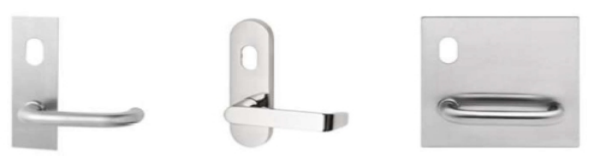
As stated, one of the very important objects that come into contact with individuals’ hands during any pandemic is the door handle. The purpose of door handles is to make it easier to come in and out of the room without having to struggle or push the door. Door handles are situated the far most distanced from the door hinges to utilize the largest moment arm and the least amount of force required from any individual who shall open/close the door. Hospital wards are classified based on the care that they provide to the patients, whether they are medical or surgical care. Surgical ward doors for accessibility and hygiene are usually accommodated by airtight, automatic sliding doors. However, when dealing with other medical wards partition- ing doors are on many occasions based on hinged doors rotating about the vertical axes with steel or aluminium door handles. Hospital door handles in Iran contrary to other countries do not follow standard doorknobs as recommended by World Health Organization (WHO) (Organization 1998) or International Health Facility Guidelines Part C ((iHFG) 2015). Figure 1 depicts some of the typical door handles recommended in hospital wards in North American and European countries (Figure 1).
Figure 1: Typical door handles recommended by iHFG.
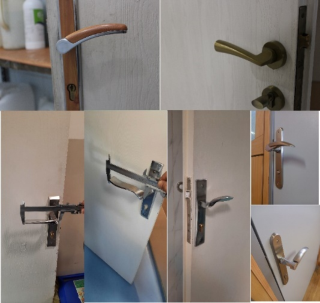
There are no standards for typical hospital door handles in Iran (Figure 2). The door handle morphology is different from one to another ward and from one hospital to another.
Figure 2: Typical door handles in Iranian hospitals.
3D Printed Hands-Free Door Handle to Prevent COVID-19 Virus Spread 173
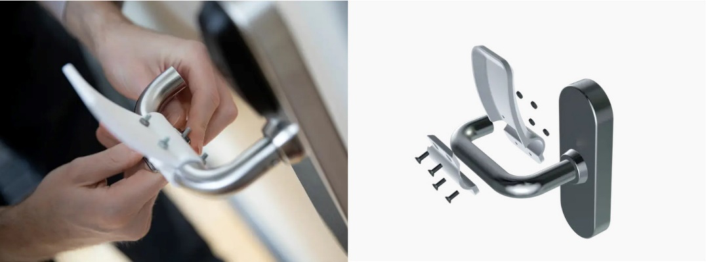
Several hands-free door handles have been developed in other countries since the onset of the pandemic of COVID-19 virus. Maranha et al. (2021) designed a hands-free door handle specifically for doorknobs that are in Portugal hospitals (Maranha et al., 2021). Materialise Company used 3D printing technology and released hands-free door handles to the public during the COVID-19 pandemic (Materialise, 2020) (Figure 3).
Figure 3: Door handle courtesy of materialise Belgium.
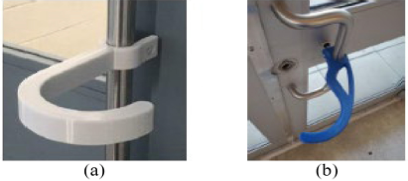
Pasha et al. (2022) suggested the design of a pull door bracket to be mounted onto fixed door handles and bars using a rapid tool that combines injection molding (IM) along with additive manufacturing (AM) technologies (Figure 4) (Pasha et al., 2022).
Figure 4: a) J-Hood model b) offset bar to pull the door bars (Pasha et al., 2022).
Our understanding is that the advancement of AM and the evolution of 3D printing are becoming more available across the hospital wards and may provide a rapid solution to ongoing problems such as creating PPE or engi- neering control solutions for the hospital wards. Therefore, the goal of this study was to design a Hands-Free Ergonomic Door Handle (HFEDH) to fit in the variety of door handles available in hospital wards to avoid direct contact, a device that is going to be mounted on the existing door handles to prevent individuals from direct contact with the door handle that is usually full of germs. Moreover, we shall evaluate its usability against the current door han- dles to have the design evaluation in the process of a complete user-centered design.
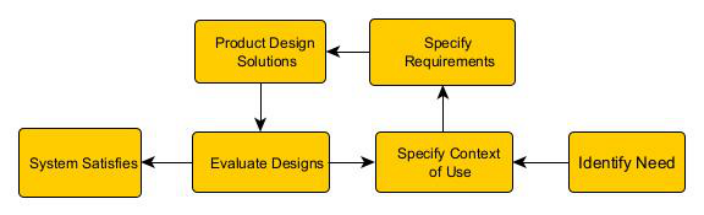
Material and Methods Designing a door handle for the general purpose of doorknob profiles is quite a complex task consisting of many steps and acceptance by the user. For a device to create a superior user experience (UX), its design should be perceived by the emotional and cognitive of the user, and finally, its per- formance should be evaluated (Graziosi et al., 2013). On the other hand, from the point of system design, the user-centered design (UCD) process should be followed as shown in Figure 5. One of the starting points is to specify the design requirements. Therefore, for a mechanical system, the following objectives were considered a hands-free ergonomic door handle (HFEDH):
1. HFEDH should easily be mounted on every door handle geometry shown in Figure 2 as there is no standard in Iran for hospital door handles. 2. Manufacturing should be done with less complicated manufacturing pro- cesses, with environmentally friendly materials and the possible inclusion of antibacterial materials shall be considered. 3. The design should be for performance and intuitive use when a user comes to interact with it (ergonomic considerations).
The present study focuses on items 1 and 3. The design process is described in the next sections. Once the requirements are identified and the solution is proposed, the design should be assessed and evaluated to understand the user acceptance levels and satisfaction which in part is the entire system’s satisfaction. The assessment of this research work was done subjectively and since participants were involved, an ethical protocol was obtained. The study protocol was reviewed and approved by the Research and Ethics Committee of Shahid Beheshti University of Medical Sciences (IR.SBMU.PHNS.REC.1399.131).
Figure 5: User-centered design process; the process starts from right and it is an iterative process to improve overall product acceptance by a user.
Design Process One of the requirements of our design, which is interacting with a user is to consider ergonomic design standards. One would be anthropometric and the other important one is the flexibility of the design where the design solutions can easily be perceived and validated in a virtual environment. Therefore, the
3D Printed Hands-Free Door Handle to Prevent COVID-19 Virus Spread 175
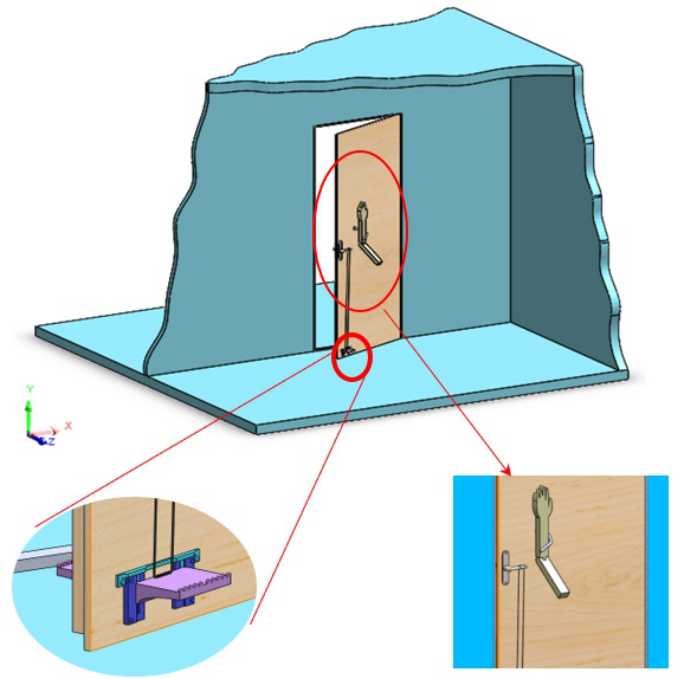
use of computer-aided design (CAD) along with virtual prototyping (VP) is an important factor in including the user’s feedback in the design solution. Thus, to test and evaluate the design, fused deposition modeling (FDM)/3D printing was used along with CAD tools to design, manufacture, and quickly receive feedback from the users. Therefore, our design was exposed to the hospital employees during the brainstorming process, and two ideas were considered. One design was considered using a foot pedal (unlatch) along with a handle to pull the door (Figure 6) and the second one used the forearm and just the kinematics of the upper body will create a proper torque to pull and open up the door without ever to touch the door by hands. The former design has two major drawbacks and therefore, it was not implemented, the unlatching mechanism and pulling part were not on the same device and required a mechanical mounting process which was not flexible and user- friendly enough to achieve the objective of the design and required tools and expert individuals to permanently mount the devices. Therefore, the second option was considered.
Hands-Free Ergonomic Door Handle (HFEDH)
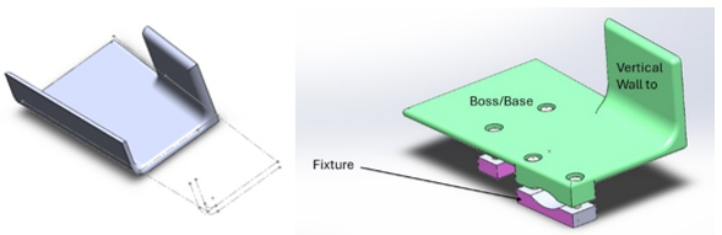
Figure 7 shows the implementation of the design and latching that were done simultaneously. To design the morphology of the upper boss (Figure 7), we used data from our ongoing anthropometric study in which we mea- sured hand-forearm anthropometric dimensions including wrist circumfer- ence, forearm length, and forearm circumference (Table 1) (Rostamzadeh et al., 2024). The data were measured from a 7119 Iranian healthy popu- lation (3525 males and 3594 females) aged 18–89 years by an accurate JEGS digital caliper (Model: 80519, Columbus, OH 43211, USA; ±0.01 mm) and a measuring tape (HaB Essentials SKU: LCR01; ±0.1 cm). To start the design we considered 95 percentile circumference of the forarm to accommodate the proper area required for pulling, latching and unlatching of the door handle (Figure 7). The design was implemented and tested for interference with the door or human hand on SolidWorks® 2020 (Dassault Systèmes, SEVélizy- Villacoublay, France) software. Moreover, we used a 3D printer (Author M Pro, 3DPE Company, Tehran, Iran) to make a prototype of the hands-free door handle and utilized it in the environment with several users. The parts created in SolidWorks were tessellated to stereolithography (.stl) format and transferred to the Simplify3D (Version 3.1.0, Cincinnati, Ohio, USA) to gen- erate the G-Code and make the slicer manufacturing process to input to our 3D printer. Several factors are important in manufacturing high-quality parts on 3D printers. maintaining mechanical strength, and implementing proper dimensions and tolerances. Another factor affecting the design and produc- ing a part is to pick the proper orientation to reduce the number of supports required to produce the part. The former can be learned by experience and observing the way it is manufactured in Simplify3D software. Choosing the proper raster angle for the nozzle deposing the material and choosing the proper number of internal supports will also speed up the process of 3D printer manufacture and increase the strength and dimension tolerances of the part.
Figure 6: The first proposed solution was included to have a foot pedal used to unlatch the door and a forearm handle to pull the door, this model was not pursued as many parts were involved.Figure 7: Both latching and pulling on the same device and fixtures to attach to the existing door handles. Left photo: the open-up boss without any fixture; right photo: the complete proposed design with part names.
3D Printed Hands-Free Door Handle to Prevent COVID-19 Virus Spread 177
Table 1. Anthropometric dimensions of Iranian hands (n = 7119).
Manufacturing Process: Fused Deposition Modeling (FDM) Fused deposition modeling (FDM) 3D printing also known as fused filament fabrication (FFF) is an additive manufacturing (AM) process within the realm of material extrusion. The process of manufacturing is the transfer of the vol- umetric data to on-planar surfaces for stereolithography (STL) file extension. FDM uses the surface maps to build parts layer by layer selectively depositing melted materials, the thermoplastic polymers such as Polylactic Acid (PLA) PLA which are recyclable and environmentally friendly materials in a pre- determined path. The filament was entered into the extrusion head (nozzle) to be pre-heated to about 220 centigrade to melt the filament to produce a 3D object. Today, in many hospitals, FDM and 3D printing are widely avail- able to implement rapid prototyping of the designed devices that are used for the outcome of complex operations (Belhouideg 2020; Oladapo et al., 2021; Rostamzadeh et al., 2024) or to design customized bioreactors that are used in seed adipogenic stem cells into a bone-substitute scaffold (Su, Wang, and Guo 2021), for an instance.
Design Challenges The prototype of the considered design was manufactured using FDM with PLA material. The priority of the design was to maintain the mechanical sta- bility of HFEDH on the existing door handles (i.e. the 6-degree of freedom (6-DOF) constraint, so the HFEDH is completely fixed to the existing door handle). Both material and design contributed to the stability of the HFEDH over the existing door handles. The morphology of the two fixtures was per- pendicular with a 90-degree orthogonality to constrain the entire proposed design over the door handle. The circular shape we had chosen for the fixture had to be changed to an elliptical shape to conform to any door handles and constrain the device from extra movement and possible vibration. In addi- tion, it was realized that using a PLA material due to its rigidity was not introducing enough damping to dissipate the energy produced by individuals who apply load jeopardizing the stability of HFEDH on the steel surfaces of the existing door handles. Therefore, we had to change the external fixation material to the PLA soft to accommodate the spring and damping type flexi- bility required between the HFEDH and the existing door handles to maintain stability. Moreover, there were no transitions at the bottom of HFEDH from the boss of the HFEDH to the rectangular fixture. The 3D printing process was not suited to the final product as the FDM tolerances are low (±0.5) and
therefore, sharp corners are not well produced and jeopardize the structure’s soundness. So, adding fillet and chamfer provided the stability and aesthetic needed on the part were accommodated and implemented.
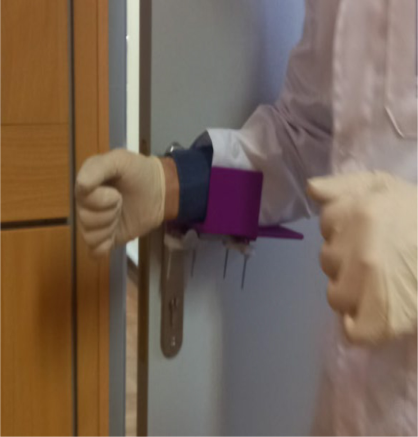
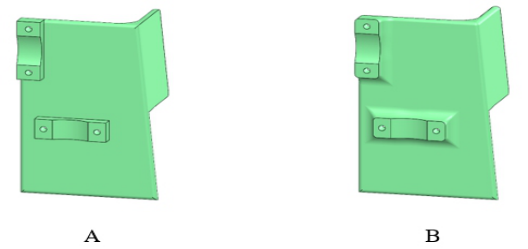
Figure 6 depicts the proper technique to use the HFEDH. In all Iranian hospitals, the door handles are pulled down to open the door, therefore it is necessary to exert a downward force on the door handle to open the door. The current HFEDH design offers a larger surface area, facilitating a proper force exert. Additionally, the vertical component attached to the surface area of HFEDH is utilized to facilitate pulling the door that has already been opened. As there are no standard door handles in the hospitals in Iran, we had to design a base flange attachment to accommodate all types of door handles available in the hospitals. For that reason, we picked the ellipse to be one of the best geometrical shapes to alleviate stress concentration between the HFEDH and hospital door handles (Figure 10).
System Usability Scale (SUS) The assessment of the proposed HFEDH was carried out in two hospitals between May 2021 and August 2021 in Tehran, Iran. System Usability Scale (SUS) containing 10 statements was distributed among 245 respondents, as a survey scale for evaluating the final product usability (scored on a 5-point Likert scale of strength of agreement from 1=strongly disagree to 5=strongly agree) (Bangor, Kortum, and Miller 2009). Final scores for the SUS range from 0 to 100, with higher scores indicating higher perceived usability.
Figure 8: HFEDH mechanism when the user is utilizing HFEDH.
Usability is a relative concept that is subjectively evaluated. For this study, the following questionnaire was adapted from (Brooke 1996, 2013). The participants in the experiment answered the questions given in Table 2.
3D Printed Hands-Free Door Handle to Prevent COVID-19 Virus Spread 179
Table 2. Typical usability questionnaire given to the participants in the experiment, it is adapted from Brooke 1996 and Brooke 2013 (Brooke 1996, 2013).
Table available in the original PDF paper.
Row Questions 1 (strongly disagree) 2 3 4 5 (strongly agree) 1 I think that I would like to use this system frequently 2 I found the system unnecessarily complex 3 I thought the system was easy to use 4 I think that I would need the support of a technical person to be able to use this system 5 I found the various functions in this system were well-integrated 6 I thought there was too much inconsistency in this system 7 I would imagine that most people would learn to use this system very quickly 8 I found the system very cumbersome to use 9 I felt very confident using the system 10 I needed to learn a lot of things before I could get going with this system
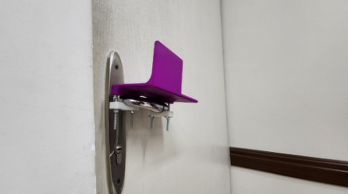
Figure 9: HFEDH manufactured and fixed to an existing door handle in the hospital with four M5 nuts and bolts.Figure 10: A) The design with circular and rectangular fixtures and B) The design with elliptical and filet around the fixture of the HFEDH.
Descriptive Analysis Statistical analysis was performed by SPSS 22 (IBM SPSS Statistics, New York, United States). The normality test was carried out using the Kolmogorov-Smirnov test for all data sets. Statistical outliers were checked using Grubb’s test which is based on the difference between the mean of the sample and the most extreme data considering the standard deviation (Grubbs 1969). Basic descriptive statistics such as means±standard deviation (SD), min-max, and number (percentage) were calculated for SUS scores. The Wilcoxon signed-ran test is a non-parametric statistical hypothesis test used to test the usability of the developed HFEDH. The statistical significance was set at p<0.05.
RESULTS AND DISCUSSION
The main results of the study are shown in Table 3. The Wilcoxon signed- rank test showed that the use of HFEDH elicits a statistically significant change in usability score (Z=−13.202, p<0.0005) when compared to the use of a typical door handle (DH). Indeed, the median usability score was significantly different before and after the use of HFEDH.
The proposed HFEDH was perceived subjectively to be effective and effi- cient during a single shift of hospital staff who were using it at least 5 to 10 times per 3 hours or more. However, as the use of the forearm contributes to higher metabolic energy usage (i.e. forearm should be raised to a higher elevation to be placed in the HFEDH, therefore, a higher metabolic energy level is required), a longer shift may be important to be evaluated and assessed physically using accelerometers or surface electromyography (sEMG) to have a better understating of muscle power consumption in comparison to the normal door handle.
Table 3. Descriptive analysis for the useability of the responses of participants.
Table available in the original PDF paper.
Type of handle N Mean Std.
Minimum Maximum Percentiles Deviation 25th 50th (Median) 75th
An anatomical grip was shown to improve the comfort of the user inter- action between hand and handle (Harih and Dolšak 2014; Saremi and Rostamzadeh 2018; Rostamzadeh et al., 2021; Saremi, Rostamzadeh, and Nasr Esfahani 2021; Rostamzadeh et al., 2020). Our design could be improved if we conform the Boss/Base to an anatomy of the forearm where the forearm sits well into the Boss creating a low torque to open the han- dle. The staff of hospitals who participated in the experiment stated that being satisfied with the HFEDH, however, the vertical rectangle attached to the boss was slightly higher for shorter participants. They had to stand on their toes to raise their upper body to reach the inner side of the HFGDH.
3D Printed Hands-Free Door Handle to Prevent COVID-19 Virus Spread 181
In the next version, we might reduce the height of the vertical wall attached to the Boss/Base, so the users feel comfortable reaching inside the HFEDH, simultaneously, adding an anatomic shape of the forearm on the base of the design. The current design was only implemented for right-opened doors. Our study and usability score proved that the design quality was perceived by the users who were interacting with the HFEDH, and this is the initial step to the user’s satisfaction, as it is required in human-centered design. The future work shall include Copper-based antibacterial material to produce this HFEDH and have it tested for a complete shift use in the hospital against the ordinary door handles. The HFEDH has the potential to be commercialized in its current form or when antibacterial material is integrated with the current environmentally friendly material.
CONCLUSION
A hands-free ergonomics door handle (HFEDH) was designed and manufac- tured on the 3D printer. The design was based on the 95th percentile of Iranian forearms to accommodate the most Iranian personnel in the hospitals as the door handles in the hospitals do not comply with any available standard. Our design was assessed for system performance with an SUS questionnaire against the existing door handle and it was obtained that the usability of the design HFEDH was significantly higher than those door handles already existing in the hospital wards.
ACKNOWLEDGMENT
This work was supported by the Shahid Beheshti University of Medical Sci- ences, Tehran, Iran (under Grant No. 99-24474). The authors would like to express special thanks to all the participants for giving up their time for this research.
REFERENCES
(iHFG), I. H. F. G. o. 2015. “International Health Facility Guidelines.” Part C, Version 4.” https://healthfacilityguidelines.com/ViewPDF/ViewIndexPDF/iHFG_par t_c_doors. Bangor, Aaron, Philip Kortum, and James Miller. 2009. “Determining What Indi-
vidual SUS Scores Mean: Adding an Adjective Rating Scale.” Journal of Usability Studies 4 (3): 114–23. Belhouideg, Soufiane. 2020. “Impact of 3D Printed Medical Equipment on the Management of the Covid19 Pandemic.” The International Journal of Health Planning and Management 35 (5): 1014–22. Brooke, John. 1996. “SUS-A Quick and Dirty Usability Scale.” Usability Evaluation
in Industry 189 (194): 4–7. Brooke, John. 2013. “SUS: A Retrospective.” Journal of Usability Studies 8 (2): 29–40. Graziosi, Serena, Francesco Ferrise, Monica Bordegoni, and Ozan Ozbey. 2013. “A
Method for Capturing and Translating Qualitative User Experience into Design Specifications: The Haptic Feedback of Appliance Interfaces.” In DS 75–7: Pro- ceedings of the 19th International Conference on Engineering Design (ICED13), Design for Harmonies, Vol. 7: Human Behaviour in Design, Seoul, Korea, 19–22.08. 2013, 427–36.
Grubbs, Frank E. 1969. “Procedures for Detecting Outlying Observations in Samples.” Technometrics 11 (1): 1–21. Harih, Gregor, and Bojan Dolšak. 2014. “Comparison of Subjective Comfort Ratings
between Anatomically Shaped and Cylindrical Handles.” Applied Ergonomics 45 (4): 943–54. Mantelakis, Angelos, Harry V M Spiers, Chang Woo Lee, Alastair Chambers, and Anil Joshi. 2021. “Availability of Personal Protective Equipment in NHS Hospitals during COVID-19: A National Survey.” Annals of Work Exposures and Health 65 (1): 136–40. Maranha, Vítor, Pedro Maia, Luís Margalho, Nicolle Lourenço, Diogo Oliveira,
Diogo Maurício, João F Caseiro, and Luis Roseiro. 2021. “Development of a Dynamic Hands-Free Door Opener to Prevent COVID-19 Pandemic Spreading.” Designs 5 (3): 56. Materialise. 2020. “3D Printing Technology Supports Coronavirus Containment Efforts.” https://www.materialise.com/en/news/press-releases/3d-printing-techno logy-supports-coronavirus-containment-efforts Mulugeta, Tewodros, Elazar Tadesse, Tewodros Shegute, and Takele Taye Desta.
2021. “COVID-19: Socio-Economic Impacts and Challenges in the Working Group.” Heliyon 7 (6). Oladapo, Bankole I, Sikiru O Ismail, Temitope D Afolalu, David B Olawade, and Mohsen Zahedi. 2021. “Review on 3D Printing: Fight against COVID-19.” Materials Chemistry and Physics 258: 123943. Organization, World Health. 1998. District Health Facilities: Guidelines for Devel-
opment and Operations. WHO Regional Office for the Western Pacific. Pasha, Alireza D, Jill Urbanic, Bob Hedrick, Hamoon Ramezani, and Ofelia Jianu.
2022. “Leveraging Advanced Design and Novel Rapid Manufacturing Solutions to Respond to the COVID-19 Pandemic.” Comput Aided Des Appl 19: 755–78. Rostamzadeh Sajjad, Saremi Mahnaz, Bradtmiller Bruce. 2020. “Age, Gender and Side-Stratified Grip Strength Norms and Related Socio-Demographic Factors for 20–80 Years Iranian Healthy Population: Comparison with Consolidated and International Norms.” International Journal of Industrial Ergonomics. Rostamzadeh, Sajjad, Alireza Abouhossein, Khurshid Alam, Shahram Vosoughi, and
Seyedeh Sousan Sattari. 2024. “Exploratory Analysis Using Machine Learning Algorithms to Predict Pinch Strength by Anthropometric and Socio-Demographic Features.” International Journal of Occupational Safety and Ergonomics, 1–14. Rostamzadeh, Sajjad, Mahnaz Saremi, and Fereshteh Taheri. n.d. “Maximum Handgrip Strength as a Function of Type of Work and Hand-Forearm Dimensions.” Work, no. Preprint: 1–9. Rostamzadeh, Sajjad, Mahnaz Saremi, Shahram Vosoughi, Bruce Bradtmiller,
Leila Janani, Ali Asghar Farshad, and Fereshteh Taheri. 2021. “Analysis of Hand-Forearm Anthropometric Components in Assessing Handgrip and Pinch Strengths of School-Aged Children and Adolescents: A Partial Least Squares (PLS) Approach.” BMC Pediatrics 21 (1): 1–12. Saremi, Mahnaz, and Sajjad Rostamzadeh. 2018. “Hand Dimensions and Grip Strength: A Comparison of Manual and Non-Manual Workers.” In Congress of the International Ergonomics Association, 520–29. Springer. Saremi, Mahnaz, Sajjad Rostamzadeh, and Mahmoud Nasr Esfahani. 2021. “Hand
Functionality in Dentists: The Effect of Anthropometric Dimensions and Spe- cialty.” International Journal of Occupational Safety and Ergonomics, no. just- accepted: 1–26.
3D Printed Hands-Free Door Handle to Prevent COVID-19 Virus Spread 183
Su, Xin, Ting Wang, and Shu Guo. 2021. “Applications of 3D Printed Bone Tissue Engineering Scaffolds in the Stem Cell Field.” Regenerative Therapy 16: 63–72. Zelik, Karl E, Cameron A Nurse, Mark C Schall Jr, Richard F Sesek, Matthew C
Marino, and Sean Gallagher. 2022. “An Ergonomic Assessment Tool for Evalu- ating the Effect of Back Exoskeletons on Injury Risk.” Applied Ergonomics 99: 103619.
LISTED IN THE AHFE DIGITAL BOOKSTORE CATALOGUE
Explore the complete digital volume
Human Aspects of Advanced Manufacturing, Production Management and Process Control
Read this individual research paper free through the original publisher, or explore the full digital proceedings book.
ISBN 978-1-964867-22-9
Explore this ISBN in the AHFE Bookstore ↗Listed in the July 2026 bookstore catalogue; search by ISBN to confirm current availability · Digital book purchase optional