Elena Dalinger, Daniel Feiser, Nina Mundt (2026). Systematic business process optimization based on TRIZ: a novel method supported by a user interface. In: Usability and User Experience. AHFE Open Access, vol. 232, pp. 132–142. https://doi.org/10.54941/ahfe1008042
Existing methods for process redesign widely rely on general heuristics and creativity techniques, which can be time-consuming and yet may miss important aspects. Most methodologies do not provide structured guidance for analyzing and optimizing business processes. A novel method for systematic process optimization based on the Theory of Inventive Problem Solving (TRIZ) is presented in this paper. Originally developed for engineering, the authors have adapted TRIZ to the domain of business process management. This method offers new ways of analyzing and optimizing business processes by providing a systematic approach that can be applied by both experts and novices. Significant elements of the method are the use of a database containing use cases and an ergonomically designed human-machine interface (HMI) that facilitates the use of the method and effective interaction with the database. A first qualitative user-centered evaluation suggests that the developed method and the HMI can effectively support users in process analysis and optimization tasks.
Organizations strive to improve their business processes in order to save costs and time as well as to increase quality and flexibility – in short, to remain competitive (Reijers and Mansar, 2005). Concepts, methods, techniques, and tools for business process optimization are developed in the discipline of Business Process Management (BPM). Beyond this, BPM considers the whole lifecycle of business processes: from the identification to the discovery, analysis, redesign (also known as optimization or improvement), and implementation of processes up to process monitoring and control (Dumas et al., 2018). A large body of scientific literature exists that supports the first phases of the BPM lifecycle. Popular research topics are for example automated process discovery via data mining techniques (Tiwari et al., 2008) and process models, modeling languages, and modeling tools (Aguilar-Savén, 2004). Less clearly described is how to get from the as-is process with its weaknesses to an optimized to-be process. Case studies frequently report as-is- and to-be-situations, but do not extensively cover the optimization Received February 6, 2026; Revised April 6, 2026; Accepted April 25, 2026; Available online July 20, 2026
Systematic Business Process Optimization Based on TRIZ 133 process in between. Sharp and McDermott (2001) associate this step with a spontaneous miracle, while Zellner (2011) criticizes the “improvement black box”. Descriptions of improvement approaches tend to be vague and incomplete. It is widely agreed among authors that the literature provides rather little guidance to support the practical optimization of processes: The field lacks structured, methodical guidelines.
This paper aims to contribute to filling this gap by providing a systematic method for process analysis and optimization that is suitable for both experts and novices. The method developed builds on the Theory of Inventive Problem Solving (Russian acronym: TRIZ; Koltze and Souchkov, 2017). TRIZ is the result of studies based on worldwide patent research, which revealed that many fundamental technical problems have already been solved before and that the principles applied can be used to solve similar problems. With the help of TRIZ, strong solution alternatives can be defined in a time-saving manner. Though TRIZ methods were originally developed for engineering, they can be adapted to optimize business processes. In this paper, the authors guide through a series of steps based on TRIZ and show how abstract problem patterns and solution patterns can be applied to optimize business processes. To assist users of the method in the analysis of problems encountered in their processes, an approach from Feiser et al. (2025) was utilized. It enables a thorough classification of process problems, thereby facilitating the identification of solutions. The method is complemented by a database with a Human-Machine Interface (HMI) developed in a human- centered approach. This optimization tool aims at supporting the users in the analysis of processes and the development of optimization proposals. Even without prior optimization experience, novice users can still access optimization suggestions via a database containing use cases. It supports users in clearly defining process problems, finding suitable solutions for their cases, and thus achieving their goals. It also ensures that even inexperienced users can acquire the method incrementally and operate the database without additional training.
RELATED WORK
Although process redesign is still considered to be “more art than science” (Netjes et al., 2005), some redesign methods and techniques do exist. Dumas et al. (2018) classify them on a spectrum from creative to analytical and from transactional (for incremental improvements) to transformational (for radical changes). Additionally, they distinguish outward-looking and inward-looking methods. Since in practice incremental, evolutionary process changes occur more frequently than radical ones, this paper concentrates on the transactional methods. The focus is also on inward-looking methods as they do not require input from outside of the organization.
On the creative side of the transactional inward-looking approaches, there are the two methods 7FE (Jeston and Nelis, 2014) and BPTrends (Harmon, 2019). Both involve several steps. For the actual process improvement, they propose a series of workshops lead by a professional facilitator (e.g., a management consultant). To foster the generation of redesign ideas, both
recommend creativity techniques like brainstorming or SCAMPER (Dumas et al., 2018). Drawbacks of these methods are that the workshops may lead to biased decisions and that certain aspects and solutions risk to be overlooked due to the unstructured approach (Mansar et al., 2009).
The analytical side of the transactional inward-looking approaches aims to avoid these drawbacks. Using Six Sigma, process performance indicators are precisely monitored with the aim of minimizing any deviations from defined target values. However, the method does not provide concrete guidance for process improvement measures (Dumas et al., 2018). The Theory of Constraints focuses on process bottlenecks that are to be eliminated in a continuous improvement process (Dumas et al., 2018). While this can be a useful approach to improve the overall performance of a (production) system, it may neglect other important aspects of process optimization that go beyond elevating constraints. The main idea of Positive Deviance is to uncover positively unusual behavior within the organization and use this as a model for process improvement (Dumas et al., 2018). This is an interesting approach that can provide valuable insights, but it is limited to process optimization solutions that already exist somewhere in the organization. A popular analytical method is Heuristic Process Design (Reijers and Mansar, 2005). Here, a set of redesign principles, which are best practices from past optimization projects, is used to identify possible process optimization measures. Heuristic process design can also be combined with process simulations, e.g., to compare several redesign variants (Jansen-Vullers and Reijers, 2005). However, simulations can require a great effort in data collection and still may not fully reflect the actual reality.
The TRIZ method, with its roots in engineering, has also been applied to business problems in recent decades. For example, there are approaches for developing competitive business models (Souchkov, 2010), a contradiction matrix for finding solutions to business problems (Mann, 2007), and innovation principles for business and management (Ruchti and Livotov, 2001). TRIZ can also be employed to process redesign with some similarity to the redesign heuristics: The basic idea is to apply specific principles or patterns to obtain improvement options in a systematic approach. In contrast to the heuristics, these principles are not best practices from redesign projects but originate from TRIZ patent research.
There are several methods that apply specific principles or best practices to identify improvement options for business processes. Nevertheless, there is an absence of structured, methodical guidelines for optimization and ergonomically designed HMI-based approaches to support optimization. The method described below offers a novel systematic approach for the analysis and optimization of business processes.
BUSINESS PROCESS OPTIMIZATION METHOD BASED ON TRIZ Adaptation of TRIZ Methods
During the development of the original TRIZ methods, the focus was on technical systems. However, at a higher level of abstraction, the fundamental principles of the organization of artificial systems remain largely the same
Systematic Business Process Optimization Based on TRIZ 135 (Souchkov, 2010), so that adaptations for different domains are possible. When adapting TRIZ methods to business process optimization problems, some challenges must be considered. Firstly, many TRIZ methods do not provide a definitive solution. Rather, the solution must be developed through a specific process. Secondly, the selection of appropriate methods requires expertise in TRIZ, which is not a skill that can be expected among future users of the process optimization method. Thus, users of the process optimization method must be adequately supported both in selecting the appropriate method and in defining the solution.
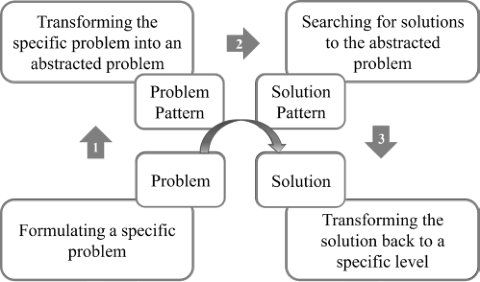
The general approach of TRIZ is shown in Figure 1: A specific problem is first formulated, then converted into an abstract defined problem. This is followed by a search for a solution to the abstract problem using TRIZ tools. Thereafter, the solution is adapted to align with the original problem. This approach has been adopted in the developed method, whereby the term “problem pattern” was introduced to describe an abstract problem, whereas “solution pattern” was used to denote an abstract solution to the problem in question. It is essential that the search for a solution is supported by a set of rules to be established to ensure the alignment of problem patterns with problem solutions.
Figure 1: General TRIZ approach.
To develop the method and to select appropriate standards and principles of TRIZ, they were applied to specific optimization problems, and a series of tests were conducted with selected use cases. To achieve this, a database of use cases was created. Some of the use cases were derived from the cases documented in research projects conducted by the authors themselves. Some were sourced from case studies documented in the relevant academic literature, e.g., Mann (2007). The method was developed based on 80 use cases, which address a range of optimization problems from different disciplinary fields and their respective solutions.
The TRIZ methods selected for adaptation to the field of process optimization were the 76 Standard Solutions for eliminating substance-field problems and the 40 Principles of Inventive Problem Solving or innovation principles (Koltze and Souchkov, 2017). The reasons for the selection of these methods were twofold: Firstly, the solutions were straightforwardly
defined, and secondly, there was the potential for transferability to non- technical domains. For example, the standard solution “Eliminating excess afterwards” can be described simplified and abstracted from its technical context as follows: “If the optimum effect is difficult or impossible to achieve for some reason, the maximum effect can be used. The excess effect can then be removed.” This standard solution could be applied to the problem of information overload coupled with the challenge of identifying relevant data: “Make all information available, then filter out unnecessary information.” An example of an innovation principle is “Prior Cushioning (preventive action)”, which is defined as “Prepare emergency means beforehand to compensate for the possible problems that might occur later” (Mann, 2007). This principle can be easily applied to the optimization of business processes, for example: “Planning of additional staff in advance to avoid unexpected staff absences”.
Technical systems can be described using four basic models (Terninko, 2000):
complete working systems that will be the subject of further development,
incomplete systems that need to be completed or replaced by a new system,
complete but inefficient systems that will be the subject of improvement,
complete but harmful systems, where the negative effects need to be eliminated.
By looking at the TRIZ methods from a process optimization perspective, the following considerations were made:
1. In relation to basic models of a technical system, a process can be seen as either a complete working system that is to be further developed, or a complete but inefficient system that needs to be improved. 2. In most cases, there are no purely harmful effects in processes, however, instances where the effect is either insufficient or simultaneous beneficial and harmful, or where a beneficial effect can be enhanced, are relatively common.
So, for optimization of business processes, the cases of either improvement or elimination of harmful effects are relevant. Only a limited number of process-relevant standard solutions were considered relevant, so it was deemed appropriate to complement them with the innovation principles. Innovation principles represent solution concepts that have been successfully applied to solve different problems in many non-technical fields (Rietsch, 2007). This is mainly possible because there are principles that can be applied universally (Zobel, 2004). The innovation principles that can effectively contribute to process optimization were identified. For this purpose, the 16 universal principles from Zobel (2004) were selected and then complemented by four additional principles. These additional principles were deemed relevant on account of analogous optimization solutions identified in considered use cases. The relationship between innovation principles and standard solutions has already been analyzed in Domb et al. (1999) and similarities have been
Systematic Business Process Optimization Based on TRIZ 137 identified. Both methods use certain rules, the application of which is well described. In some cases, a single innovation principle can effectively replace multiple standard solutions, and thus, some of the standard solutions were excluded from further consideration. A total of 24 optimization rules were defined based on the innovation principles and standard solutions.
Definition of Problem and Solution Patterns The initial concept involved the utilization of Business Process Modeling Notation (BPMN; OMG, 2013) elements for the purpose of defining problem and solution patterns, like actor, activity, message, etc. After several tests with subject matter experts these elements were modified to actor (personnel), activity, information, and work equipment. Based on the use cases in the database, abstract problem and solution patterns were defined according to the effects that can occur in processes, as presented in Table 1. The preliminary problem patterns were then revised in workshops with process analysis and optimization experts. The following five elements, also called problem sources, were identified, which helped to concretize the problem patterns:
Activity scheduling – planning and coordination of activities in a process.
Use of work equipment – consideration of the work equipment for the task.
Information exchange – data communication or the access to information.
Information generation – creation and utilization of information to enable collaboration between actors.
Personnel deployment – allocation of actors to the activities in the process.
Table 1: Problem and solution patterns according to effects.
Table available in the original PDF paper.
Example (Problem – Solution)
Effects Problem Pattern
Solution Pattern Add element Actor does not receive relevant messages – Send messages to actor Lack of effect Element missing (too little)
Remove element
Simultaneous beneficial and harmful effect
Element superfluous (too much)
Actor receives superfluous messages (in addition to useful ones) – Stop sending superfluous messages to actor
Insufficient effect Element inappropriate
Modify element
Actor must wait for a message to be sent – Use automatically generated messages Each problem source can have the problem characteristics “too little”, “inappropriate”, or “too much”. A resulting problem pattern is for example “too little personnel deployment”. It is noticeable that the aspects “time” and “costs”, which are frequently mentioned in the literature, are not explicitly mentioned in the problem sources. However, these aspects are inherently present in all defined problem sources and, as a result, were not deemed suitable for classification. In order to construct a solution pattern, one of the
defined elements (actor, activity, information, or work equipment.) must be combined with the verb “add”, “remove”, or “modify”, e.g., “modify work equipment”. Maslow’s hierarchy of needs provided valuable insights for the definition of solution patterns (Maslow, 1943). In view of Maslow’s hierarchy, it was determined that a more concrete definition of the modification of the element was required, e.g., “modify work equipment regarding hardware ergonomics” (physiological needs) or “modify actor regarding competence” (self-actualization).
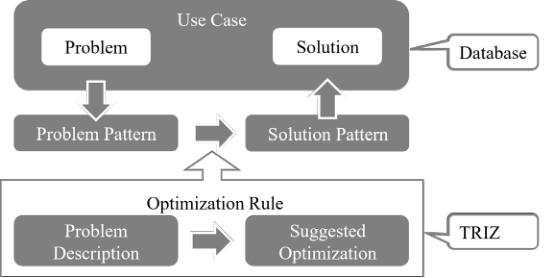
Figure 2: Description of the database entry.
The database with the use cases was adjusted to the developed method. Each entry in the database represents a specific problem and the solution to that problem (see Figure 2). Each use case is described by a problem pattern (of which there are 15 in total), a solution pattern (of which there are 18 in total), and an optimization rule. It is important to mention that there is no one-to-one mapping between problem patterns and solution patterns, which is why the utilization of use cases in the method is so important. The optimization rules were defined by adapting the definitions of innovation principles and standard solutions to the field of process optimization and consist of a problem description and a suggested optimization.
An evaluation of the optimization method with subject matter experts highlighted the necessity for a structured approach not only in identifying the solution but also in defining the problem itself. The authors developed such an approach that is described in greater detail in Feiser et al. (2025). This approach assists the users in identifying and defining a problem concerning a business process and in assigning a clear goal to the defined problem, thus facilitating the formulation of an effective solution and the achievement of the goal. A stencil is provided to clearly assign a problem to a specific goal, as only problem-specific solution proposals can be identified in the database. Another important aspect of this approach is the use of a set of distinct, generic optimization goals based on usability criteria (ISO, 2020), particularly the consideration of satisfaction as a goal for process optimization, which includes the human component in process optimization.
Systematic Business Process Optimization Based on TRIZ 139 Example of Applying the Method
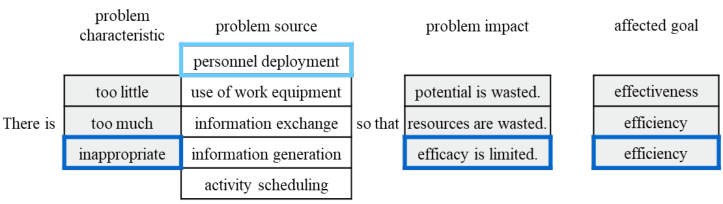
The following example illustrates how the method can be applied to solve a practical problem. The problem can be described as follows: “Employees have to wait for approval from superiors”. Rather than going through a list of possible optimization solutions or searching the database for a similar case, the method offers a more efficient approach. The first step is to apply the stencil to define the problem (see Figure 3). To do this, firstly, the source of the problem must be selected. Secondly, depending on the understanding of the problem, either the problem characteristic, the problem impact, or the affected goal must be specified. The latter three are directly related, so that only one of these three elements needs to be selected. For the problem “Employees have to wait for approval from superiors” the definition of the problem is “There is inappropriate personnel deployment, so that the efficacy is limited”, the problem pattern is “inappropriate personnel deployment” (see Figure 3). Once the problem pattern has been selected via stencil, use cases with this pattern can be found in the database. After applying the stencil, 13 out of 100 use cases from the database were filtered out. All the use cases found are assigned to one of two following problem descriptions:
1. There is too little freedom to make decisions or take action (too little responsibility). 2. The staff are unsuitable (they lack skills, are overqualified or unmotivated).
If the problem is not caused by unsuitable staff, the first problem description will be chosen, leading to the following suggested optimization: “Workers should be able to perform all adjustment, setup, maintenance and repair work independently”. The corresponding abstract solution pattern is “Modify the actor’s level of authority”. The following solutions are suggested by three corresponding database use cases:
Increase workers’ decision-making authority.
Give workers more responsibility.
Provide multiple certifications for workers so they can review their own work.
Should these solutions be deemed unsuitable for addressing the problem, this may indicate that the initial problem pattern was incorrect and that another one should be considered.
Figure 3: Stencil for problem definition (parameter selection for the problem “Employees have to wait for approval from superiors”).
User Interface The methodology for business process optimization based on TRIZ was implemented in a prototype of a database that is graphically visualized. The visualizations have been designed with the objective of facilitating efficient and intuitive use of the database. The HMI was developed to offer a clear and intuitive structure. The user interface features a separate section for database entries. A single database entry contains the following information: problem, problem pattern, solution, solution pattern, and an optimization rule consisting of problem description and suggested optimization. Another section of the interface offers three different ways to find a solution in the database. The stencil can be employed as a filter to identify potential optimization options. As an alternative, the solutions can be identified by responding to questions, which may assist in the identification of the problem pattern, or by filtering by problem or solution pattern. A search function is also available.
The database is an essential part of the developed process optimization method as it provides use cases that are assigned to a specific optimization rule. Even if users are unable to identify a use case that precisely aligns with their own, there are analogous cases that can be adapted to address their unique problem. Moreover, the investigative process of defining a problem and searching for solutions may facilitate a more profound understanding of the problem.
A first qualitative evaluation was conducted to determine whether the optimization of business processes with the help of the method and the database offers advantages over optimization with neither. Another objective was to evaluate the usability of the HMI regarding the application of optimization methods. The evaluation methods used were observation, think aloud technique, and structured interviews. Six subjects participated, all of whom were experts in the field of usability, and three of whom were also experts in process optimization. The participants were provided with a brief overview of the optimization method. Then, they were given instructions for their tasks. The tasks were to identify problems in two parts of a business process and to develop optimization proposals. At first, the subjects completed one of the tasks without the method, then completed the other task using the method.
The evaluation results indicate that the database offers a solid foundation for the implementation of the optimization methodology, largely due to its intuitive usability. When participants were asked how complicated the method was (on a scale ranging from 1 to 5, where 1 denotes “very easy” and 5 “far too complicated”), the average answer was 2. Comparing the optimization approaches with and without the proposed method, the results demonstrate that the method offers ideas for optimizing a problem that would not have been considered without the method. It is important to note that the test subjects were able to arrive at solutions without applying the method. However, the variation of possible solutions was greater with the method’s support, indicating that the method facilitates the generation of a broader range of potential solutions. All participants stated that the optimization method effectively supported them in completing the task and that they would use the method if they had to optimize a process.
CONCLUSION
The research presented aims to advance the current state of the art in process redesign by developing a new optimization approach. A comprehensive scientific study was conducted to develop an HMI-based approach to process optimization. The method was developed in several iterative steps, with each iteration providing new insights and successive improvements to the method. TRIZ methods originally developed for engineering have been adapted to optimize business processes. Significant elements of the method are the use of a database containing use cases and an ergonomically designed HMI that facilitates the use of the method and effective interaction with the database. A first qualitative user-centered evaluation was conducted to determine whether the method and the database can effectively support users in process analysis and optimization tasks. Another objective was to evaluate the usability of the database’s HMI regarding the application of the optimization method. The evaluation results indicate that the database offers a solid foundation for the implementation of the optimization method, largely due to its intuitive usability. The results of this study emphasize the importance of adopting a human-centered approach when optimizing business processes. The resulting system offers a support framework that is easily understandable for non- experts in the complex domain of process optimization. The findings of the evaluation indicate that the system should be adjusted for two distinct roles: users (including those with limited experience) who utilize the database to identify solutions to optimization problems, and experts who have mastered the method and can contribute additional cases to the database. Further research is needed to examine the method’s effectiveness in real-world scenarios.
REFERENCES
Aguilar-Savén, R. S. (2004). Business process modelling: Review and framework.
International Journal of Production Economics 90(2), 129–149. Domb, E., Terninko, J., Miller, J., MacGran, E. (1999). The Seventy-Six Standard Solutions: How They Relate to the 40 Principles of Inventive Problem Solving. TRIZ Journal: https://the-trizjournal.com/seventy-six-standard-solutions-relate- 40-principles-inventive-problem-solving, last accessed 2025/01/30. Dumas, M., Rosa, L. M., Mendling, J., Reijers, A. H. (2018). Fundamentals of
business process management. 2nd edn. Springer-Verlag. Feiser, D., Dalinger, E., Mundt, N. (2025). A human-centered approach to support business process analysis. In: Tareq Ahram, Waldemar Karwowski and Jay Kalra (eds) Human Factors in Design, Engineering, and Computing. AHFE (2025) International Conference. AHFE Open Access, vol 199. AHFE International, USA. Harmon, P. (2019). Business process change: a business process management guide
for managers and process professionals. 4th edn. Morgan Kaufmann. ISO (2020). ISO 9241-110:2020: Ergonomics of human-system interaction – Part 110: Interaction principles. Jansen-Vullers, M., Reijers, H. (2005). Business process redesign in healthcare:
towards a structured approach. INFOR: Information Systems and Operational Research 43(4), 321–339.
Jeston, J., Nelis, J. (2014). Business Process Management: Practical Guidelines to Successful Implementations. 3rd edn. Routledge. Koltze, K., Souchkov, V. (2017). Systematische Innovation: TRIZ-Anwendung in der
Produkt- und Prozessentwicklung. Carl Hanser Verlag, München. Mann, D. (2007). Hands on Systematic Innovation: for business and management.
IFR Press. Mansar, S. L., Reijers, H. A., Ounnar, F. (2009). Development of a decision-making strategy to improve the efficiency of BPR. Expert Systems with Applications 36(2), 3248–3262. Maslow, A. H. (1943). A theory of human motivation. Psychological Review 50(4),
370–396. Netjes, M., Vanderfeesten, I., Reijers, H. A. (2005). “Intelligent” tools for workflow process rede-sign: A research agenda. In: International Conference on Business Process Management, pp. 444–453. Berlin, Heidelberg: Springer Berlin Heidelberg. OMG (2013). Business Process Model and Notation (BPMN), Specification Version
2.0.2. Object Management Group (OMG), Specification. Reijers, H. A., Mansar, S. L. (2005). Best practices in business process redesign: an overview and qualitative evaluation of successful redesign heuristics. Omega 33(4), 283–306. Rietsch, P., ed. (2007). TRIZ - Anwendungen und Weiterentwicklung in nicht-
technischen Bereichen. Wien: Facultas. Ruchti, B., Livotov, P. (2001). TRIZ-based Innovation Principles and a Process for Problem Solving in Business and Management. The TRIZ Journal: https:// the-trizjournal.com/triz-based-innovation-principles-process-problem-solving- business-management/, last accessed 2025/02/25. Sharp, A., McDermott, P. (2001). Workflow Modeling: Tools for Process Improvement
and Application Development. Artech House, Boston, MA. Souchkov, V. (2010). TRIZ and Systematic Business Model Innovation. In: Proceedings of the 10th ETRIA World TRIZ Future Conference. Terninko, J. (2000). Su-Field Analysis. The TRIZ Journal: https://the-trizjournal.
com/su-field-analysis/, last accessed 2025/02/27. Tiwari, A., Turner, C. J., Majeed, B. (2008). A review of business process mining: stateof-the-art and future trends. Business Process Management Journal 14(1), 5–22. Zellner, G. (2011). A structured evaluation of business process improvement
approaches. Business Process Management Journal 17(2), 203–237. Zobel, D. (2004). Systematisches Erfinden: Methoden und Beispiele für den Praktiker.
Renningen: Expert Verlag.
LISTED IN THE AHFE DIGITAL BOOKSTORE CATALOGUE
Explore the complete digital volume
Usability and User Experience
Read this individual research paper free through the original publisher, or explore the full digital proceedings book.
ISBN 979-8-950676-08-6
Explore this ISBN in the AHFE Bookstore ↗Listed in the July 2026 bookstore catalogue; search by ISBN to confirm current availability · Digital book purchase optional