Marianna Oliverio, Matteo Lapi, Enrico Trallori (2026). Human-centered approach for the development of the housing for an ultrasound probe. In: Intelligent Human Systems Integration (IHSI 2026): Disruptive and Innovative Technologies. AHFE Open Access, vol. 200, pp. 569–577. https://doi.org/10.54941/ahfe1007115
The development of the housing for an ultrasound probe is a challenging aspect of design, as it must combine functionality, ergonomics, and usability for the medical device. This project shows how the development of the housing for an ultrasound probe adopts a human-centered approach, basing the design on the needs of the end user, particularly for those working in a healthcare institution, where the high-pressure environment is a fundamental aspect to consider.For this reason, it is relevant to involve the final user since the preliminary steps of development, thought iterative and interactive test cycles, for the evaluation of ergonomics aspects, like the weight, grip and shape, and of usability features like graphics, symbols and reference on the housing. Housing probes include minor but impactful features that are not arbitrary choices of design, but they are the output of studies on the behavior and activities conducted by the physicians, promoting precision and reducing the risk of injuries. Attention to details is crucial to reduce the mental workload and enhance usability.These aspects must match mandatory requirements, for example biocompatibility in material selection, and they need to be inserted into a structure that allows the device to achieve a good result in terms of performance, as well as being easy and comfortable for the user.In conclusion, the development of the housing for an ultrasound probe requires to match regulatory, performance and user-based requirements. Human centered approach consents to achieve harmony between these aspects, emphasizing the importance of user feedback to achieve a higher level of satisfaction and simplify workflows, as well as improving comfort during the use of diagnostic medical devices.
Ultrasound diagnostics is the most widely used imaging modality in the world, thanks to its use of non-ionizing radiation and its versatility (Azhari, 2012). Ultrasound probes are widely used in the medical device field and are employed in different environments and applications. Diagnostic ultra sound imaging is used for different parts of the body (Andreoni et al., 2015), on different patient population (fetal, neonatal, pediatric, adult, human and animal), and by different type of users (sonographers, physicians, radiolo gists, surgeons, anaesthetists, obstetricians, paramedics or veterinarians) (De Luca et al., 2018).
During the design and development of these medical devices, the manufac turer must meet several types of requirements, in particular: – Technical requirements (e.g., acoustic performance and image quality) – Regulatory requirements (e.g., safety, biocompatibility, and usability) – Human factors requirements (e.g., ergonomics and usability).
Given the benefits brought to the development of medical devices by a human factor engineering approach, there is growing recognition of the importance of this methodology and the key role it plays in the development of a safe medical device (Money et al., 2011).
In fact, human factors requirements intersect with regulatory requirements when it involves usability, as medical device compliance must be in line with IEC 62366 standard. As defined in the IEC 62366-1:2015 + AMD1:2020, usability is the characteristic of the user interface that facilitates use and thereby establishes effectiveness, efficiency, and user satisfaction in the intended use environment. Usability is part of the regulatory requirements for the design of a safe medical device.
Regarding ergonomics requirements, it is an important aspect in design and development of ultrasound probe. In fact, the results of a study conducted by Zangiabadi et al. (2024) showed that the prevalence of MSDs (Musculo- skeletal disorders) among sonographers exceeded 90%. It is important, from the ergonomics point of view, to collect feedback from the final users, to avoid discomfort when using the device and ensure its suitability. For this reason, it is crucial to involve the intended user, since from the earliest stage of design and development, to define the main characteristic of the user inter face, through an iterative and interactive process (De Luca et al., 2019).
Usability and ergonomics are two different aspects that both involve the user interface: usability is linked to risk analysis and aims to ensure safe use of the device by preventing the user interface from misleading the user, while ergonomics aims to ensure that the device can be used in a way that meets the user’s physical and psychological needs, with the aim of prevent ing physical and psychological damage caused by repetitive actions (Jaffar et al., 2011).
Both aspects see the user as the central figure around whom the device must be developed, since the focus of modern technology is the improvement of human interaction with the devices used in different work environments.
In the field of human-centered medical device design, it is important to emphasize that even small changes to a device can influence user interaction, improving workflow and simplifying use.
In fact, small and essential changes to the user interface can result in more intuitive modes of use and a more comfortable form for everyday use by the intended user. This project describes the design of an ultrasound probe and the development of its user interface based on a human-centered approach.
DEVELOPMENT OF THE USER INTERFACE FOR AN ULTRASOUND PROBE The starting point for developing an ultrasound probe is clinical needs. These define the application, the environment in which the probe will be used, and the patient population. This information forms the basis for the device devel opment and consequently influences both the transducer type and the user interface design (De Luca et al., 2018). The environment, type of application, and patient population influence its shape, grip, and markers on the device. They can also influence the graphics on the case. This paper describes the development step by step, highlighting the human factors-based approach.
HUMAN FACTORS IN ULTRASOUND PROBE HOUSING DESIGN In this paper the development of the housing for a phased array ultrasound probe is described.
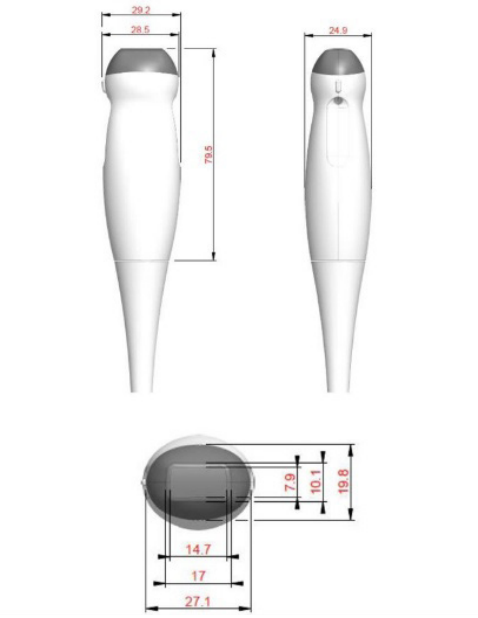
As preliminary design input, in addition to clinical requirements, an ini tial internal probe is selected as a reference for modeling the housing. The following drawings show the reference probe used to develop the housing design.
Figure 1: Internal probe used as an initial reference for housing development of a phased array probe.
In addition, a market analysis focused on customer needs was carried out to investigate probes with characteristics similar to those required.
Based on these analyses, a preliminary proposal has been developed, shap ing the external form according to the dimensions of the internal circuits and electronics.
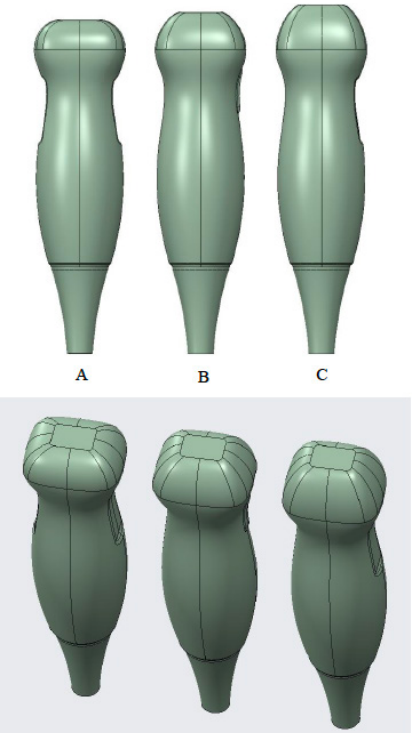
The main differences are: –Shape A: double reference recess, probe head shorter than others –Shape B: single reference relief, intermediate heigh of the probe head –Shape C: single reference recess, probe head higher.
Figure 2: Preliminary shapes of the phased array probe, according to the dimensions of the internal circuits and electronics.
The three proposals result from a study on the variation of the head frame, which promotes two different aspects: a more rounded, lower head frame improves patient comfort, while a higher head frame allows better access to the patient’s intercostal window. The reference on the housing is to identify, through tactile recognition, the first element of the array, being the probe
Human-Centered Approach for the Development of Housing for an Ultrasound Probe 573 symmetrical, and it can also improve grip. These three proposals were sub mitted for evaluation by an expert group that gathers feedback from field practice and end users.
The main aspect assessed in these proposals was the probe head size, aim ing to improve tissue coupling and maneuverability according to the body area where the phased array probe is applied. According to users, option C was the most comfortable from a footprint point of view, because it allows for better movement in the patient’s intercostal space.
Then, different proposals were submitted based on the mockup of the selected footprint (Option C), to show the possible combination of the tactile reference on the housing.
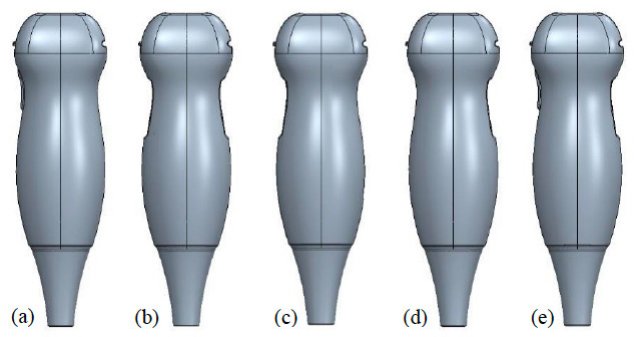
Figure 3: Option C with different references: (a) one relief, (b) double recess, (c) one recess left, (d) one recess right, (e) double reference, one recess and one relief.
These options were explored for several reasons: on the one hand, the recess on the probe handle provides a more comfortable grip through fin ger grooves; on the other hand, the raised reference provides immediate information on the orientation of the probe and on where the first element is located. Two design options were selected for user testing: the one with a single raised reference (a), considered essential for device usability, and the one with the double reference, raised and recessed on the opposite side (e), to ensure usability and facilitate rotational movements. Proposals (b), (c), and (d) were rejected for the following reasons: (b) did not include a raised reference, and the final shape of the housing would have been sym metrical, completely losing the tactile information for probe orientation, while (c) and (d) were rejected for aesthetic reasons, as the appearance of the probe would have been too asymmetrical. From the first feedback, the user highlighted the importance of having a tactile reference on the probe to indicate its orientation. A subsequent test, conducted using mock-ups only, showed that six out of eight users preferred the double reference:
raised for indicating the orientation of the probe and, on the opposite side, recessed to facilitate rotational movements. The reason behind this choice was explained by emphasizing the greater grip and stability of the han dle. The other two users expressed a preference for the raised reference, not understanding the function of the recess, but without highlighting any potential usability risks related to the probe.
Then, according to user feedback, option (e) was chosen to continue the ergonomic study. Once the handle was chosen, the study focused on the probe headframe and three other proposals were developed.
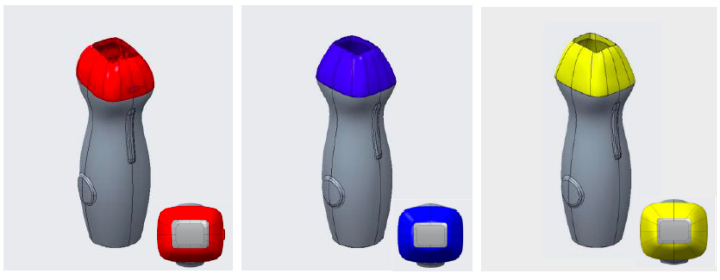
Figure 4: Option (e) (refer to Figure 5) with different headframe.
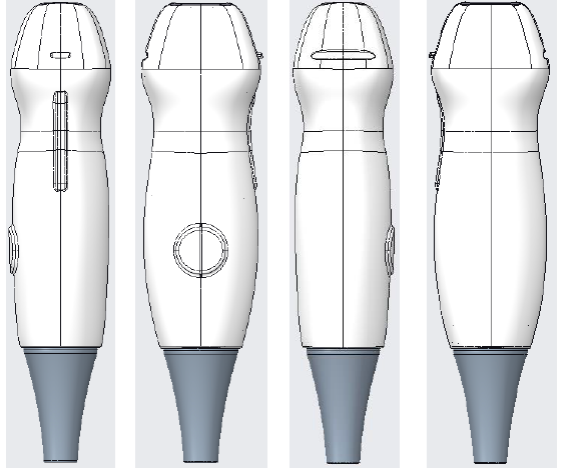
Then, another round of testing was done with users, suggesting a more pointed shape based on user feedback for even better insertion into the patient’s intercostal space. As a result, users expressed their preference for the more pointed prototype (the one with the yellow head) based on its bet ter insertion between the ribs during the exam. It was also requested that the probe be made less symmetrical, specifically less spherical in the central part and thinner on the lateral side, to make it easier to grip. In addition, a simulation was performed with the probe, using the final material, and it was requested that the recess be removed, as the single raised reference was considered more effective. With the previous 3D printed mock-up, it was considered necessary, for better grip, to have a recess that would allow for better suitability, accommodating the fingers in the groove. By streamlining the shape laterally and using the final material, this detail was no longer necessary, according to users. Furthermore, the involvement of the usability team revealed that the most common practice in the field is to include a single reference to allow the user to identify the orientation of the probe by tactile feedback. Therefore, it was decided to follow current practice in the field, avoiding the inclusion of additional references that would be unnecessary at this stage. Risk analysis plays a significant role in designing a safe device that does not induce the user to make a misleading error. Then, the following drawings illustrate the final shape.
Figure 5: Phased probe final shape.
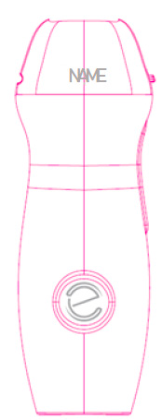
At this point, the graphics for the probe were discussed. It was requested that the probe’s logo and name1 be included in the graph ics, as shown in the image below.
Figure 6: Phased probe final graphics.
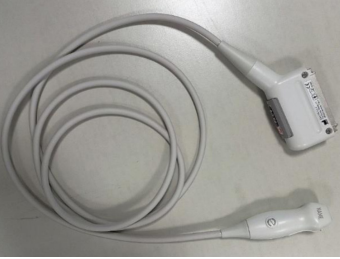
Following this iterative and interactive study, the probe was then developed and produced, as a result of a human-centered approach, which involved users from the early stages of the project.
1 The label NAME is for illustrative purposes only, to give the reader an idea of where the name of the probe will be positioned.
Figure 7: Final product photo.
CONCLUSION
The study of interactions between end users and medical devices is becom ing increasingly important during the development phase of new projects. In this context, planning activities that involve users early on is essential to implement changes that, although seemingly minor, involve project revisions and can be significant for the end user. The new challenge for medical device manufacturers is to facilitate workflow and overall use to improve efficiency and human-machine interaction. This is why usability and ergonomics stud ies, and more generally human factors, become a crucial aspect of the design phase.
ACKNOWLEDGMENT
Esaote S.p.A. Research & Development U/S Probes Team for their work and contributions to this project.
REFERENCES
De Luca R., Dattoma T., Forzoni L., Bamber J., Palchetti P., Gubbini A. (2018), Diagnostic ultrasound probes: a typology and overview of technologies, Current Directions in Biomedical Engineering, 4(1): 49–53, doi: 10.1515/ cdbme-2018–0013. De Luca Ramona, Forzoni Leonardo, Gelli Francesca & Bamber Jeffrey. (2021). An
Educational Overview of Ultrasound Probe Types and Their Fields of Application. Archives of Acoustics. 46. 3–15. 10.24425/aoa.2021.136555. EN ISO 14971:2019 + A11 2021 Medical devices. Application of risk management to medical devices. Evans, K., Roll, S., Baker, J.: Work-related musculoskeletal disorders (WRMSD)
among registered diagnostic medical sonographers and vascular technologists. J. Diagn. Med. Sonography 25, 287–299 (2009). G. Andreoni, M. Mazzola, S. Matteoli, S. D’Onofrio, L. Forzoni, Ultrasound System Typologies, User Interfaces and Probes Design: A Review, Procedia Manuf., 2015. Ganesh, Ashween. (2022). Critical Evaluation of Low Ergonomics Risk Awareness
among Early Product Development Stage of the Medical Device Industry. 15. H. Azhari, Ultrasound: Medical Imaging and Beyond (An Invited Review), Curr.
Pharm. Biotechnol., 2012.
Human-Centered Approach for the Development of Housing for an Ultrasound Probe 577 IEC 62366-1:2015 + AMD1:2020, Medical devices - Part 1: Application of usability
engineering to medical devices. IEC 62366-2:2016, Medical devices - Part 2: Guidance of the application of usability engineering to medical devices. ISO-TR 15223-1:2021 Medical devices – Symbols to be used with information to be
supplied by the manufacturer – Part 1: General requirements. Mariia Zolotova & Angela Giambattista (2019) Designing Cognitive Ergonomics Features of Medical Devices. Aspects of Cognitive Interaction, The Design Journal, 22:sup1, 463–474, DOI: 10.1080/14606925.2019.1595432 Money et al.: The role of the user within the medical device design and development
process: medical device manufacturers’ perspectives. BMC Medical Informatics and Decision Making 2011 11:15. N. Jaffar, A.H. Abdul-Tharim, I.F. Mohd-Kamar, N.S. Lop, “A Literature Review of Ergonomics Risk Factors in Construction Industry, Procedia Engineering Volume 2”, 2011, Pages 89–97. Oliverio, M., Fiesoli, D., Bellavia, S., & De Luca, R. (2023). Usability testing of
instructions for use in cleaning, disinfection and sterilization of ultrasound probes. Human Systems Engineering and Design (IHSED 2023): Future Trends and Applications. R. De Luca, T. Dattoma, L. Forzoni, J. Bamber, P. Palchetti, A. Gubbini (2018) “Diagnostic ultrasound probes: a typology and overview of technologies”, Current Directions in Biomedical Engineering 2018; 4(1): 49–53. Ramona De Luca, Leonardo Forzoni , Fabrizio Spezia1, Fabio Rezzonico, Carlo
Emilio Standol, and Giuseppe Andreoni, “Ergonomic Design Process of the Shape of a Diagnostic Ultrasound Probe”, Proceedings of the 2nd International Conference on Human Systems Engineering and Design (IHSED2019), pp. 718–723. Shah SG, Robinson I, AlShawi S. Developing medical device technologies from users’ perspectives: a theoretical framework for involving users in the development pro cess. Int J Technol Assess Health Care. 2009 Oct; 25(4):514–21. doi: 10.1017/ S0266462309990328. PMID: 19845981. Zangiabadi, Z., Makki, F., Marzban, H. et al. Musculoskeletal disorders among
sonographers: a systematic review and meta-analysis. BMC Health Serv Res 24, 1233 (2024). https://doi.org/10.1186/s12913-024-11666-w
LISTED IN THE AHFE DIGITAL BOOKSTORE CATALOGUE
Explore the complete digital volume
Intelligent Human Systems Integration (IHSI 2026): Disruptive and Innovative Technologies
Read this individual research paper free through the original publisher, or explore the full digital proceedings book.
ISBN 978-1-964867-76-2
Explore this ISBN in the AHFE Bookstore ↗Listed in the July 2026 bookstore catalogue; search by ISBN to confirm current availability · Digital book purchase optional