Takashi onoda, Yasunobu Ito (2024). Academic Researchers' Voluntary Incentives in Technology Transfer: An ethnographic case study of genome science. In: The Human Side of Service Engineering. AHFE Open Access, vol. 143, pp. 279–287. https://doi.org/10.54941/ahfe1005108
The predominant contributors to the advancement of medical devices have traditionally resided within the industrial sector. Nevertheless, owing to recent progress in open innovation and other contributing factors, academia has experienced a notable surge in research and development activities. In 2015, the Japanese government inaugurated the Japan Agency for Medical Research and Development (AMED), aspiring to emulate the National Institutes of Health (NIH) in the United States, with the objective of fostering the creation of medical devices originating from academic endeavors. In the realm of medical devices utilized for diagnostic, therapeutic, preventative, or monitoring purposes, there is a growing focus not only on therapeutic and diagnostic devices but also on the burgeoning significance of simple genetic diagnosis as a testing modality. The application of genetic diagnosis has extended beyond rare diseases to encompass the treatment of common ailments such as cancer, manifesting a notable expansion in recent years. Projections indicate that by 2025, the global market is poised to reach $13.2 billion, a threefold increase from the 2017 level, with further growth anticipated in tandem with heightened research and development undertakings. Despite these promising prospects, the facilitation of medical device development within academia encounters formidable challenges. Issues such as funding constraints, legal constraints, and limited collaboration with industry are universally acknowledged hurdles. Of particular concern is the sustainable promotion of these activities by researchers within academic institutions. Historically, addressing societal implementation concerns related to technology transfer and commercialization has fallen under the purview of liaison personnel, who act as intermediaries between industry and academia. However, existing support structures primarily address external aspects, presenting challenges in offering comprehensive solutions. Additionally, the imperative of devising mechanisms to ensure incentives for academic researchers is a critical aspect of sustainable activities, constituting a prominent challenge. Consequently, this study places emphasis on the cognitive culture or background—the epistemic culture inherent in the consciousness of actors engaged in research and development. Employing a multi-site ethnographic survey encompassing research institutions and facilities affiliated with the participating actors, alongside in-depth interviews, the study endeavors to shed light on the cultural aspects of knowledge intrinsic to the awareness of participating actors and their backgrounds. A protracted ethnographic and interview survey will be conducted among researchers involved in the "Cancer Biomarker Discovery Project" within academic research organizations. The aim is to elucidate the cultural dimensions of knowledge inherent in the consciousness of participating actors and to identify the challenges associated with medical device development within academia. Through survey analysis, this research will address the issue of securing voluntary incentives for researchers, a recognized concern in the context of medical device development within academia. The anticipated outcome is the elucidation of guidelines and promotional strategies for ensuring voluntary incentives, thereby fostering the revitalization of medical device development within academic settings.
Medical devices used for diagnosis, treatment, prevention or monitoring of medical conditions, genetic diagnosis, alongside therapeutic and diagnostic devices are garnering increasing attention using simple test kits. Traditionally, the technology of genetic diagnosis has focused on prenatal diagnosis. How- ever, its limited application for rare and intractable diseases has impeded the widespread adoption of prenatal diagnosis. Genetic diagnosis has recently expanded to cover “common diseases” with a particular focus on cancer. In Japan, insurance coverage for gene panel testing was approved in 2019, marking the initiation of cancer genome medicine, which diagnoses and treats patients based on genomic information collected and analyzed from their cancer tissue and blood.
Moreover, there is a growing market for “direct-to-consumer (DTC) genetic testing” catering to a broader public or consumer audience. Many of these tests involve simple genetic diagnosis using kits from saliva or blood samples. These tests, which are based on detected genes, aim to predict disease susceptibility or provide insights into personalities and abilities. As its use extends beyond individual diagnosis, as a means of collecting whole-genome samples, these technologies impact society.
Driven by factors such as open innovation, academic institutions have become more involved in researching and developing genetic analysis kits, alongside industry efforts. Japan Agency for Medical Research and Develop- ment (AMED) established in 2015 reflects a shift towards development of medical devices originating from academic institutions (Awa, 2015). How- ever, there are some challenges in promoting medical device development within academia, including issues related to funding, legal and regulatory matters, and a lack of collaboration with industry (Japanese Ministry of Health, Labor and Welfare, 2022). In academia in particular, researchers need sustainable strategies in addressing these challenges (Sormani and Uude, 2022). This thesis posits that for academia to actively promote medical device development, guidelines and promotion measures should be formulated to secure voluntary incentives from participating researchers. The research ques- tion guiding is this: “What are the values held by researchers for securing voluntary incentives in order to promote their research activities and dis- seminate technologies in society?” The study aims to answer this question through qualitative survey analysis. To understand the epistemic culture (Knorr-Cetina, 1999) and background that is influencing the researchers’ attitudes toward securing voluntary incentives, this study conducted a multi- site ethnographic survey of affiliated research institutions and facilities. Addi- tionally, by conducting in-depth interviews with informants and fostering deep relationships to gain valuable insights.
LITERATURE REVIEW
It is widely acknowledged that liaisons, acting as intermediaries between academia and industry, play a crucial role in addressing the concept of tech- nology transfer in academia. Various aspects of this issue have been explored previously, including support for technology transfer in academia by inter- mediary organizations engaged in liaison work within academic institutions (Franco and Haase, 2015). Other studies have focused on how financial support by industry collaborations complemented researchers’ incentives (De Fuentes and Dutrénit, 2010).
There is also an emphasis on the close connection between research activ- ities and technology transfer. For instance, a study spotlighted researchers who are adept in industry-academia collaborations and in research fields like engineering that seamlessly integrate with industry (Perkmann et al., 2021; Calderini, Franzoni, and Vezzulli, 2009). However, these analyzes typically exclude researchers in main basic research, hence these analyzes are less likely to provide a fundamental solution to the technology transfer issue in academia. This is a particularly pertinent point as ensuring incentives
Academic Researchers’ Voluntary Incentives in Technology Transfer 281
for researchers who are primarily engaged in research activities poses a con- siderable challenge. Consequently, identifying strategies to secure incentives for researchers involved in sustained activities for technology transfer within academia remains the key challenge.
METHOD AND MATERIAL In this study, an extensive ethnographic and interview-based investigation was conducted over two years, focusing on researchers in genome science. Genome science, a subfield of basic science, possesses unique features not found in traditional basic sciences. It has gained increasing attention for its direct impact on healthcare and drug discovery, setting it apart from conven- tional basic sciences. Genome science is notable not only for its influence on medical and pharmaceutical domains but also for its interdisciplinary nature, involving collaboration across diverse fields i.e. biology, genetics, biochem- istry, biotechnology, and informatics. Such interdisciplinary collaboration is relatively uncommon in academic disciplines (Torgersen, 2009). By inves- tigating the epistemic culture surrounding technology transfer in genome science, we believe it can provide new insights into the challenges related to technology transfer in academia and academic engagement. The subject of our research was the Institute of Physical and Chemical Research (RIKEN) and The AIRC Institute of Molecular Oncology (IFOM) which is a cancer genomics collaboration team at RIKEN, and the Institute for the Advanced Study of Human Biology (ASHBi) at Kyoto University.
These research teams, consisting of one team leader and three Ph.D. candi- dates (all of whom are also physicians), conducted molecular analyzes with the aim of unravelling the fundamental molecular mechanisms underlying the onset and maintenance of cancer. They sought to uncover new life phe- nomena and concepts that were previously imperceptible using conventional methods. Furthermore, by leveraging the genomic information obtained, the team engaged in developing innovative genomic therapeutic methods and realized the next-generation genomic medicine. Since January 2022, the team initiated a new project aimed at identifying renal cancer biomarkers that were challenging to detect previously. Starting in April 2022, we held monthly meetings along with project participants, to discuss the challenges and strategies related to technology transfer.
In July 2023, we conducted a preliminary survey to grasp the needs of physicians as potential end-users in the market. The purpose of this pre- liminary survey is to provide feedback to researchers on the survey results, confirm the direction of their research and technology transfer. Addition- ally, regarding technology transfer, the interview survey analyzed and delved deeply into the researchers’ epistemic cultures.
RESULTS AND DISCUSSIONS Results of a Preliminary Survey
To investigate the market demand for new cancer screening methods in Japan, we conducted a preliminary survey among 100 urologists with more than
282 Onoda and Ito
seven years of specialized experience in the field. We focused on urologists because they play a role in diagnosing kidney cancer. Urologists with a min- imum of seven years of experience were chosen because we found that those with less experience might not contribute substantially to the discussions on kidney cancer diagnosis from the earlier discussions with both physicians and researchers. In the survey, the participant number was restricted to 100 due to budget limitations. Since the survey’s goal is primarily exploratory, aimed at understanding physicians’ needs at a qualitative level rather than a quantitative one, there is little doubt about the validity of the results. In the future, conducting a more extensive survey, possibly with additional budget measures, may be required.
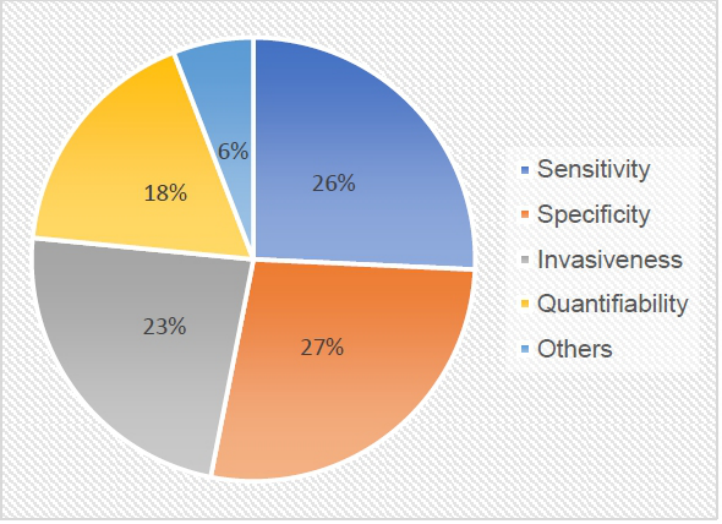
The survey specifically focused on the market receptivity for innovative cancer screening methods (refer to the questionnaire in Appendix). Figure 1 illustrates the respondents’ opinions regarding the use of a kidney cancer biomarker test which can diagnose kidney cancer more rapidly in compari- son to the current methods of ultrasound and CT scans. The survey assessed the perceived importance of biomarker criteria, which included “sensitivity”, “specificity”, “invasiveness”, and “quantifiability.” The results indicated a balanced significance attributed to each criterion.
Figure 1: Determinants prioritized by physicians in kidney cancer biomarker assess- ment (Onoda and Ito, 2024).
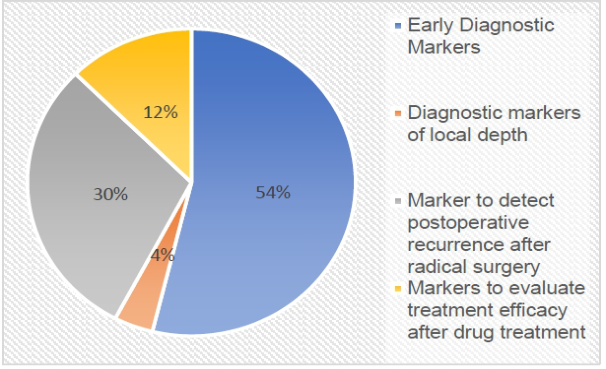
In Figure 2, the responses indicated an impartial significance on markers deemed most suitable for diagnosing kidney cancer. These markers were cat- egorized as follows: “Early diagnosis marker,” “Diagnostic marker for local
Academic Researchers’ Voluntary Incentives in Technology Transfer 283
depth,” “Marker to detect postoperative recurrence after radical surgery,” and “Marker to evaluate treatment efficacy after drug treatment.” From this graph, it can be observed that “Early diagnostic marker” accounts for more than half and “Marker to detect postoperative recurrence after radical surgery” accounts for about 30%.
Figure 2: Primary criteria evaluated by physicians for determining kidney cancer (Onoda and Ito, 2024).
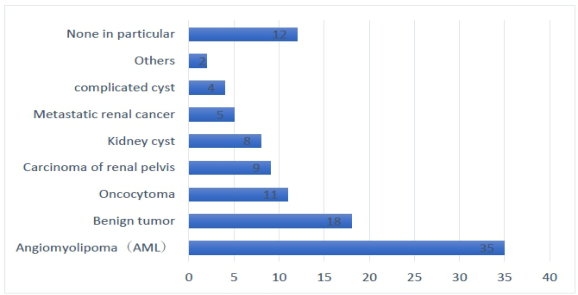
Figure 3 summarizes free-response descriptions of conditions that lead urologists to misdiagnose when determining kidney cancer. Leading the list is 35 cases of Angiomyolipoma (AML), followed by 18 cases of Benign tumor, 11 cases of Oncocytoma, 9 cases of Carcinoma of renal pelvis, 8 cases of Kidney CYST, 5 cases of Metastatic renal cancer, and 4 cases of Complicated Cyst.
Figure 3: Challenging diseases for physicians in kidney cancer diagnosis (Onoda and Ito, 2024).
284 Onoda and Ito
Providing Feedback on the Preliminary Survey to Researchers We are investigating on what voluntary incentives researchers prioritize as they advance in their research and promote technology transfer, particularly in challenging situations where obtaining incentives for technology develop- ment is difficult. To elucidate this point, we intend to provide feedback to researchers within the team through interview surveys, based on the results of the preliminary survey conducted with urologists. Through their reac- tions and comments, we aim to analyze their epistemic culture regarding technology transfer.
Before conducting the survey, the team discussed the market and target audience as initially envisioned. The team acknowledges that current imag- ing technologies like CT and MRI can identify kidney cancer in 80–90% of suspected patients. However, for the remaining 10–20%, relying solely on imaging may not provide conclusive results. Currently, in these uncer- tain cases, a biopsy is conducted, potentially affecting the patient’s quality of life. On the other hand, the research team envisions that creating a simple RNA expression analysis kit for stratification, independent of biopsy reliance, could ease the burdens on both medical professionals and patients.
The survey results for physicians, covering areas such as early diagno- sis, recurrence detection, and treatment effectiveness evaluation, matched the team’s expectations. Moreover, for diagnoses where kidney cancer judg- ment is uncertain, the survey results mirrored the anticipated conditions by the team, including diseases like AML and renal pelvis cancer. It means that for technology transfer to be effective, physicians need a reference point for comparison with other conditions, such as AML, which is prone to being misdiagnosed as kidney cancer. Addressing this issue requires analysing sam- ples not only from kidney cancer but also from other diseases. Additionally, there is an increasing demand for the development of technologies that can identify diseases from urine samples, enabling convenient testing in clinical settings.
How do researchers in the team view the need for extra research and development for technology transfer? A Ph.D. candidate, who is engaged in biomarker identification research within the team, underscored the impor- tance of considering aspects related to technology development. The candi- date conveyed the following perspective: “In the realm of medical academic journals, achieving high-impact results requires analyzes with significant societal implications. Merely identifying biomarkers using disease tissues does not guarantee such impact and there is risk of rejection by prestigious journals. Rather than consider technology transfer a diversion, I believe focusing on it not only benefits patients but also leads to impactful publications. Thus, engaging in social implementa- tion of technology, alongside paper writing, can contribute to more impactful publications. In my paper, I envision future technology development which surpasses merely identifying tissue marker”(A Female PhD candidate, 27 Dec 2023).
Academic Researchers’ Voluntary Incentives in Technology Transfer 285
In the interview, the researcher clearly sees her paper being published in influential academic journals and social implementation as equivalent. Espe- cially since there’s a need to evaluate both academic and societal impacts in medical academic papers and high-impact journals. This approach is based on the expectation to assess social impacts along with academic accomplish- ments. Having both roles as a researcher and a practicing physician, the researcher thinks it’s crucial to consider both academic contributions and technology transfer.
In the translation of foundational research to technological implementa- tion, a predominant challenge lies in the tenuous association between fun- damental theoretical constructs and their application in empirical research. Notwithstanding, findings from the present investigation elucidate an intrigu- ing paradigm wherein, despite the foundational nature of the genomic science underpinning the research endeavour, there is a pronounced emphasis on addressing a pragmatic concern: the development of a simplified diagnostic approach for kidney cancer, aimed at mitigating the burdens borne by both medical practitioners and patients.
The methodological framework, as delineated in the current study, extends beyond the mere analysis of renal tissues, imperative for the identification of oncological biomarkers. It encompasses the examination of urinary spec- imens, not immediately requisite for the present analytical objectives but envisaged for their utility in facilitating expedient diagnostic procedures in future clinical applications. Furthermore, the research design incorporates a comparative analysis with samples from disparate pathological conditions, such as AML, to enhance the specificity of the diagnostic criteria, a critical consideration in clinical therapeutics.
From the vantage point of basic research, the identification of biomark- ers for kidney cancer suffices as a terminal objective of the study. However, it becomes manifest that, notwithstanding its foundational research orienta- tion, the project is imbued with a pragmatic problem-solving ethos and an applied research methodology.
While the project firmly situates itself within the domain of basic research, eschewing a direct focus on the development of commercial diagnostic tools, it adopts a research design inherently inclined towards practical applica- tion. This investigation, albeit confined to the realm of genomic science, exemplifies a forward-thinking approach in research design, integrating con- siderations for eventual clinical applicability from the initial stages of concep- tualization, thereby underscoring the translational potential of foundational scientific inquiries.
The epistemic culture concerning the technological application of genome science, which is part of basic science revealed an attitude that seeks to contribute to basic science while also pursuing the social application of tech- nology. This observation of mindset in the study may be influenced by the fact that these researchers also work as physicians, interacting with patients daily. Genome science faces challenges in sample acquisition, given its association with scientists holding medical qualifications. Since many of the samples used for analysis are derived from humans, much of genome science is undertaken by researchers with a medical school background who have close connections
286 Onoda and Ito
with hospitals affiliated with medical schools. The study’s findings highlight an interesting epistemic culture in basic science.
CONCLUSION
Researchers specializing in basic research frequently encounter challenges in technology transfer. This difficulty stems from the necessity of engaging in R&D activities that may not align seamlessly with their primary research objectives. Despite the difficulty in obtaining direct incentives for such activ- ities, our study on researchers engaged in basic research revealed a shared awareness that bridges academic outputs and societal applications.
In this analysis, we have accentuated epistemic culture regarding the technology transfer in genome science through ethnographic investigations. However, for a more in-depth analysis in the future, we aim to conduct additional inquiries and combine quantitative research methods, including investigations into other genome science laboratories both domestically and internationally. On another note, since the surveyed projects have not yet identified biomarkers at the early stage of technology transfer, further inves- tigations are necessary to reveal a new growth mindset supporting the societal application of basic research, thereby strengthening the connection between research and its broader societal impact.
APPENDIX
Questionnaire
1. If there was a kidney cancer biomarker test that was faster and easier to use than the current tests for kidney cancer (e.g., echo, CT), would you use it? (Yes or No) 2. (If Y) Why is that? (Free answer) 3. (N) What advantages would you have over the current test? (Multiple choice) A. Sensitivity B. Specificity C. Invasiveness D. Quantitative E. Other (free answer)
4. Please tell us if there is anything missing in the current examination for renal cancer (free answer). 5. Which of the following markers do you think is the most appropriate marker to determine renal cancer?
A. Early diagnostic marker B. Diagnostic marker of local depth C. Marker to detect postoperative recurrence after radical surgery D. Marker to evaluate the efficacy of treatment after drug therapy
6. What do you consider to be the most annoying disease when making a diagnosis to distinguish it from renal cancer? (Free answer)
Academic Researchers’ Voluntary Incentives in Technology Transfer 287
ACKNOWLEDGMENT
This work was supported by JSPS KAKENHI Grant Number 23K12517 and the JST Program Manager Training and Promotion Program. We would like to express my gratitude to the members of the RIKEN-IFOM cancer genomics collaboration team at RIKEN and ASHBi at Kyoto University for their warm hospitality during our research. Additionally, we extend my sincere thanks to Dynata for their invaluable support and collaboration in conducting the preliminary survey.
REFERENCES
Calderini, Mario, Chiara Franzoni, and Andrea Vezzulli. (2009). The Unequal Benefits of Academic Patenting for Science and Engineering Research. IEEE Transactions on Engineering Management Volume 56, No. 1, 16–30. De Fuentes, Claudia, and Gabriela Dutrénit. (2010). A Three-Stage Model of the Academy-Industry Linking Process: The Perspective of Both Agents. Lund University, CIRCLE - Center for Innova- tion, Research and Competences in the Learning Economy. Website: https://econpapers.repec.org/paper/hhslucirc/2010_5f006.htm. Franco, Mário, and Heiko Haase. (2015). University–Industry Cooperation:
Researchers’Motivations and Interaction Channels. Journal of Engineering and Technology Management Volume 36, (April): 41–51. Japanese Ministry of Health, Labor and Welfare. (2022). Kokumin ga ukeru iryou no sitsu no kojo no tameno iryoukiki no kennkyu kaihatsu oyobi fukyuu no sokusinn ni kannsuru kihonnkeikaku (Basic Plan for the Promotion of Research, Development and Dissemination of Medical Devices to Improve the Quality of Medical Care Received by the Public). Website: https://www.mhlw.go.jp/content /10807000/000944187.pdf. Keisuke, Awa. (2015). Akademia niyoru Iyakuhin/Iryokiki Kaihatsu (Pharmaceu-
tical and Medical Device Development by Academia). Farumasia (Pharmacia) Volume 51: 531–35. Knorr-Cetina, Karin D. (1999). Epistemic Cultures: How the Sciences Make Knowledge. Cambridge, MA: Harvard University Press. Perkmann, Markus, Rossella Salandra, Valentina Tartari, Maureen McKelvey,
and Alan Hughes. (2021). Academic Engagement: A Review of the Literature 2011–2019.” Research Policy Volume 50, No. 1, 104114. Sormani, E., and K. Uude. (2022). Academics’Prosocial Motivation for Engagement with Society: The Case of German Academics in Health Science. Science & Public Policy Volume 49, No. 6, 962–71. Torgersen, Helge. (2009). Fuzzy Genes: Epistemic Tensions in Genomics. Science as
Culture Volume 18, No. 1, 65–87.
LISTED IN THE AHFE DIGITAL BOOKSTORE CATALOGUE
Explore the complete digital volume
The Human Side of Service Engineering
Read this individual research paper free through the original publisher, or explore the full digital proceedings book.
ISBN 978-1-964867-19-9
Explore this ISBN in the AHFE Bookstore ↗Listed in the July 2026 bookstore catalogue; search by ISBN to confirm current availability · Digital book purchase optional