Nils Hellmuth, Eva-Maria Jakobs (2022). Potential of conflict communication formats for infrastructure projects. In: Human Factors in Architecture, Sustainable Urban Planning and Infrastructure. AHFE Open Access, vol. 58, pp. 283–294. https://doi.org/10.54941/ahfe1002363
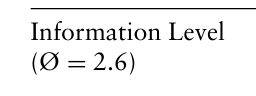
Germany has decided to fundamentally transform its whole energy system. The transformation requires numerous infrastructure projects that are conflict-prone [1]. To handle conflicts, involved companies are expected to use legally prescribed public participation procedures (formal) as well as non-legally binding participation processes (informal). Public participation can occur on three intensity levels: information, consultation, and cooperation [2]. Little research has been done on how conflict communication can be used at different participation levels. This paper aims on a deeper understanding of how conflict communication formats are perceived by people living in so-called energy regions, i.e., regions undergoing an intensive energy transformation. It focuses on how they retrospectively evaluate their potential for conflict management, and what recommendations they derive from this knowledge.This paper presents selected outcomes of a study conducted in the large-scale project ENSURE, funded by the German Federal Ministry of Education and Research. The project aims on solutions for the German energy transition. The study combines in-depth interview and pre-questionnaire. The literature-based interview guideline covers two question complexes: (1) background, remit, and experience, (2) conflict communication (occurrence of conflict; conflict triggers and resolutions; potential of communication formats; quality criteria; challenges of distance conditions). In the pre-questionnaire, respondents were asked to rate the potential of formats of participation levels for conflict management (1 = very suitable; 6 = not suitable at all). For each level, formats frequently named in the literature were given [3]. In the in-depth interviews, participants were asked to comment on their ratings. In addition, they were asked to recall two infrastructure projects they had experience with and indicate which formats had been used particularly well or poorly? The participants were contacted using a stakeholder list provided by the project consortium. The participants (n=12; nine male, three female) live in the federate state Schleswig-Holstein and have experience with infrastructure projects in the energy and/or mobility sector. All are well-informed about the region. Most of them (n=8) are involved in environmental protection organizations or in local politics, e.g., in regional development committees. Interviews were conducted digitally in 2021. The data were anonymized, transcribed, analyzed qualitatively (two coders; overall categories: 247) as well as quantitatively.Conflict communication formats were mostly used on the information level. The best ratings are given to consultation level formats (Ø = 2.2). At the information level, information events are rated as most suitable (Ø = 1.3). At consultation level, resource-intensive personal talks with those affected are recommended (Ø = 1.3). Respondents favor integrating levels of participation and formats, e.g., consultation processes as part of information events. At cooperation level, mediation is best rated (Ø = 1.9). The respondents address factors influencing the suitability of formats for conflict management. Some formats are strongly topic-dependent, e.g., an expert hearing is particularly suitable if a topic generates fears. Other factors are the target group, the local context (city/rural) or the setting (private/public). The format choice should consider the project size and phase.Further research should examine the impact of the factors named above and how conflict communication can function under distance conditions (COVID-19 pandemic).Literature[1] Renn (2015): Aspekte der Energiewende aus sozialwissenschaftlicher Perspektive. Analyse aus der Schriftenreihe Energiesysteme der Zukunft. München: acatech.[2] Verein Deutscher Ingenieure e.V. (VDI) (2015): VDI-Standard 7001 – Communication and public participation in planning and building of infrastructure projects. Training for work stages of engineers. Berlin: Beuth.[3] Ziekow/ Barth/ Schütte/ Ewen (2014): Konfliktdialog bei der Zulassung von Vorhaben der Energiewende. Leitfaden für Behörden. Konfliktdialog bei Höchstspannungsanlagen.
Germany has decided to fundamentally transform its energy system. The transformation requires numerous infrastructure projects that are conflict prone (Renn, 2015). To handle conflicts, involved companies are expected to
use legally prescribed public participation procedures (formal) as well as non- legally binding participation processes (informal). Public participation can occur on three intensity levels: information, consultation, and cooperation (VDI, 2015). Little research has been done on how conflict communication can be used at these levels. This paper presents selected outcomes of a study conducted in the large-scale project ENSURE.1 In In the project, solutions for the German energy transition and especially for the power grid of the future are developed. The solutions are tested and implemented in an energy region in Schleswig-Holstein. Energy regions are regions in which energy measu- res have been and are being implemented particularly intensively. This paper aims on a deeper understanding of how conflict communication formats are perceived by people living in these regions who have a long experience with energy projects. It focuses on how they retrospectively evaluate the potential of communication formats for conflict management, what recommendati- ons they derive from this knowledge, and how these recommendations can be used for the planning and implementation of conflict management. In the following, the terms conflict, conflict communication as well as participation levels are briefly discussed. The next chapters present the methodological approach, the results and their discussion, conclusion, and outlook.
CONFLICT (-COMMUNICATION) AND PARTICIPATION LEVELS A conflict can be defined as a private, public, or journalistic dispute betw- een at least two people or groups on a topic or subject (here: the technical and social challenge of the energy transition) (Kepplinger, 2015). Conflicts show cross connections to risks (risks can lead to conflicts or conflicts can be reactions to risks) and crises (a conflict can be the starting point of a crisis or develop into a crisis). Conflicts can occur in the context of controver- sial technologies, e.g., genetic engineering, but also in infrastructure projects. Conflict communication is seen as an instrument with which possible areas of conflict (their topics and conflict potential) can be localized at an early stage and, ideally, prohibitively.
One way to deal with existing conflicts is the use of participation formats at three different participation levels which are all highly communicative in nature. Informing is considered a requirement; it constitutes the basic stage of any participation process (and for dialog-oriented communication and public participation). Its purpose is to inform stakeholders early, tran- sparently, comprehensively, and continuously about progress and planned measures, as well as to provide relevant and sound information (Gudowsky and Bechtold, 2013). The consultation level is built on the information level. It is an active form of public participation aimed at soliciting and exchanging opinions with the goal of finding consensus (Schweizer-Ries et al., 2010). The level makes it possible to provide or receive important input on the pro- cess so that all concerns can be considered in the decision-making process.
1ENSURE is funded by the German Federal Ministry of Education and Research (funding code 03SFK1C0- 2). The authors are responsible for the content of this publication.
Potential of Conflict Communication Formats for Infrastructure Projects 285
The cooperation level is the most interactive level of participation; it is inten- ded to provide opportunities for the public to participate in decision making and influencing, e.g., working collaboratively to develop potential solutions (Buchholz and Huge, 2014; Schweizer-Ries et al., 2011). Participants can broaden their view of the subject matter, gain new insights, work on oppo- sing interests in a structured way, or at least objectify the debate (Thakore, 2013). However, a participation paradox is often observed in the planning of infrastructure projects. In early project phases, the stakeholder interest is low but the opportunities for shaping the project are at their peak. In later project phases and with increasing concretization, the interest of the stakeholders to participate increases but the opportunities to shape the project decrease (VDI, 2015).
METHODOLOGICAL APPROACH The qualitative study combines pre-questionnaire and in-depth interview. The questionnaire was sent to the respondents, the interviews followed two weeks later. The questionnaire contains four questions; question one to three offers tables listing participation levels and per level often in the literature menti- oned formats (Ziekow et al., 2014): (1) How do you assess the potential of the formats for conflict management on the participation levels (scale: 1-6; 1 = very suitable, 6 = not suitable). (2) Please recall two infrastructure proje- cts you have experience with. Answer for each project: Which of the conflict communication formats listed were offered in the projects at which parti- cipation level (yes/no; space for additional formats at each level)? (3) Did you participate in the projects at participation levels (yes/no)? If yes, which formats listed in the table did you use there? (4) In your opinion, how impor- tant is the quality of the design of communication and information formats for the success of conflict management (scale: 1-5)? This paper focuses on questions one to three. The literature-based interview guideline covers two question complexes: (1) background, remit, and experience of the partici- pants, (2) conflict communication (occurrence of conflict; conflict triggers and resolutions; potential of communication formats; quality criteria; chal- lenges of distance conditions). It started with the pre-questionnaire-queries. The participants were asked to comment on their response, e.g., why they rated a format well or poorly.
The participants were invited by e-mail contact using a stakeholder list provided by the project consortium (response rate 20%). The participants (n = 12; nine male, three female) (average age: 47.9 years, 27 to 72 years) live in the federate state Schleswig-Holstein and have experience with infra- structure projects in the energy sector (e.g., power grid expansion) and/or in the mobility sector (e.g., highways). All are well-informed about the region. Eleven persons have an academic degree; two of them additionally comple- ted a vocational training; two have a doctorate. Most of them (n = 8) are active in environmental protection organizations or politics, e.g., in regional development committees.
The interviews were conducted digitally in 2021 and recorded with the consent of the participants. Their duration varied between 45 and 86 minutes
286 Hellmuth and Jakobs
Table 1. Evaluation of the potential of conflict management formats (scale: 1–6; 1 = very suitable, 6 = not suitable at all).
(Ø: 73 min). Data were anonymized, transcribed, and enriched with meta- data. The open questions were analyzed qualitatively with the MAXQDA software, and closed questions quantitatively (average values). The material was coded separately by two coders and discussed comparatively (intercoder reliability). Results are illustrated by quoting respondents (abbreviation PX: P = participant, X = number of the participant).
EVALUATION OF THE POTENTIAL FOR CONFLICT MANAGEMENT FORMATS In nearly all projects reported, conflicts occurred, and conflict communica- tion formats were used. The formats were dominantly used at the information level (68 mentions), followed by the consultation level (37), and the coopera- tion level (16). At the information level, the most frequently used formats are press releases (14), information events, and the project website (13 each). At the consultation level, the format personal talk dominates (13). At the cooperation level, formats were rarely or not offered and used (e.g., World Café/Citizens’ jury, 0 mentions each). The consultation level (and their formats) received the best average rating and is considered as the most appropriate level for conflict management (Table 1).
Two formats were added on the consultation level that are not listed in the preliminary questionnaire: regional conference and citizens’ dialog.
In the interviews, the participants commented on their evaluations. They named the advantages and disadvantages of the formats and made experience-based recommendations.
Information Level At this level, information events are seen as the most appropriate format for dealing with conflicts. Comprehensive information is considered indi- spensable. The events should present the project and explain the procedure transparently and early (optimally starting from the planning phase). To avoid one-sidedness, groups such as community representatives or public interest groups should be included in addition to residents. The experiences of the interviewees show that information events tend to be controversial
Potential of Conflict Communication Formats for Infrastructure Projects 287
when information is imparted from different perspectives because this can lead to opposing opinions. Nevertheless, the interviewees believe that infor- ming without the minimal possibility of interaction through queries can have a conflict-promoting effect. It is striking that many respondents advocate using information events not only to provide information but also to initiate consultation processes: “[...] it is good to get into a dialogue and not have one-way communica- tion. That’s where I see the biggest advantage, that the citizens have an opportunity to express concerns and you can respond to them directly in return” (P06).
Mailings are seen controversially and receive the worst rating at this level; half of the participants appreciate them, the other half do not. One advantage for conflict management is their wide reach. Almost everyone opens their mailbox and information is brought to the recipients’ homes: “The good thing is that you reach the people who don’t go to events. [...] I cannot say to what extent this will be read, but there is a chance that it will be read” (P11).
The respondents rate it as very important to reach and inform all stakeholders (e.g., also neighboring communities or landowners who live in another place). Mailings are seen as a part of a “canon of measures” in this context, which also includes other formats, such as the press release: “We have adjacent communities that are also affected, and you should take them with you” (P02).
The advantage of the press release is that many decision-makers and “espe- cially the elderly” still regularly read local newspapers: “What is written in the press is a topic at work, among friends, in the political circle [...]. You do not reach most of the population through a press release anymore, but those who want to find out about regional politics, are still very much tied to newspaper reports” (P10).
Mailings are not appropriate when the location, e.g., for wind turbines, is still unclear. The effort to identify all those potentially affected would be too great and too costly. Mailings are recommended for the project phase when the course or location are fixed. Some participants reject mailings as antiquated and out of date. People who consider press releases as unsuitable prefer (external) multi-part reports or articles in which coverage can be more detailed and objective.
The interviewees point out that many people, especially younger people, inform themselves mainly on the Internet. Establishing a project website is described as a “must-have”and “first port of call”. To support conflict mana- gement during a project, attention must be paid to the website content, e.g., the timeliness of the information provided; design; structure; accessibility; and user-friendliness:
288 Hellmuth and Jakobs
“I can make a website interactive, integrate videos, set up explanatory fields, and prepare a topic much better” (P06).
Most respondents use the newsletter format only selectively, e.g., by checking the summary and headlines for relevant information. They see the newsletter as an important format for long-term project support (over multiple project phases). It allows new information to be disseminated without the recipi- ent having to act themselves. Some see a risk in receiving too many and too frequent newsletters (information overload). Only a few rate newsletters as unsuitable for conflict management.
Flyer and project brochure were rated equally. They provide information to satisfy different information needs and should be offered to take away at events. The advantages of a flyer are its brevity and its targeting. It serves as a brief overview, whereas a brochure contains in-depth information. Some see the potential completeness of the information as an advantage, others as a disadvantage. Only people who have a strong interest in the project (e.g., critics) are willing to read longer documents. The disadvantage cited for both formats is that, like the press release, they are often perceived as a form of self-promotion: ”It is more to stage yourself and show what you can do, but it does not work well for local conflict management” (P11).
An important challenge on the information level is seen in convincing people who are still unpositioned: “An important contribution is to pick up those who have not yet taken a position and to create a more positive mood around the project. That is the biggest contribution you can make, considering that you cannot convince the die-hard critics anyway” (P11).
Consultation Level At this level, the personal talk or conversation is considered the most important format for conflict management. Although the format is resource- intensive, its rather private setting makes it particularly suitable for issues that affect a person directly and personally and for strong conflicts, above all, distributional conflicts (conflicts that arise from an unequal distribution of advantages and disadvantages among those affected). It is important that the person initiating the verbal exchange makes it clear that he or she cares about the issues and concerns of the partner, and takes time to listen:
“I do not think it is always feasible, but a face-to-face conversation is still what has the biggest impact for most people especially if you have specific concerns” (P04).
The format citizens ask, experts answer is recommended for conflicts on a factual level, such as knowledge conflicts that relate to specific situations and facts and where experts can help resolve through a rational assessment. It is less suitable for emotionally charged conflicts, i.e., when different emotions such as anger, fear or rage show themselves:
Potential of Conflict Communication Formats for Infrastructure Projects 289
“People think [...] a tunnel is being built here, but no one has thought about the breeding ground for porpoises, and no one cares about the environment. But the opposite is the case. This is shown by the detailed environmental impact assessments and how they deal with all the animal and plant species around the project. This is the best way to convince people because they go home thinking that everything has been thought of” (P11).
The expert hearing format (impulse talk, panel discussion, audience que- stions) is also suitable for dealing with knowledge conflicts. The success of the implementation of the format can be highly topic dependent. The parti- cipants’ experiences indicate that the hearings are suitable for topics with which parts of the population associate fears, e.g., radioactive pollution, electromagnetic radiation, or heating of soils: “Such lectures can answer many questions, take away fears and at the same time broaden the view” (P08).
An important, success-relevant aspect of expert formats is the selection of independent experts and the consideration of multiple perspectives: “We try to get different experts and not just one-sided hearing from the company side” (P05).
There is a risk that expert explanations are too difficult and do not reach critics: “Expert hearings can be tedious and non-citizen-friendly” (P07).
An early workshop with critics is seen as suitable for conflict management because it addresses the “leaders of speech”. It is important to confront critics with people who know the subject well and can act appropriately both rhe- torically and personally. The critics’ workshop should be conducted in small rounds to find out which issues or topics are seen as controversial and why (therefore well suited for value conflicts).
A scenario workshop is another option. The format aims to establish a mutual understanding and those perspectives can be gathered with regional stakeholders. The following applies to both critics’ workshop and scenario workshop: “You reduce concerns in advance, and you can already point out what the planners have to pay attention to” (P03).
Simultaneously, a goal should be using active expectation management to avoid raising false or too high expectations, e.g., that there would be completely open-ended discussions: “We think it is the right thing to do, but we are also here to hear your side and take it seriously. It is important to engage in discourse and every decision is a weighing of arguments. I think people are sympathetic to that” (P08).
290 Hellmuth and Jakobs
The format citizens’ consultation hours is evaluated controversially. Some interviewees report positive experiences. They appreciate the personal and private atmosphere, which can be beneficial in terms of dealing with conflicts: “It is an intimate and confidential format, because in other formats peo- ple might not want to open up. A one-on-one citizens’ consultation offers new opportunities” (P07).
Other respondents complain about low attendance (“They are always offe- red, but who goes there?”, P03) and limited appointments (“Mostly it is one day a week. I do not find it low-threshold”, P06).
The telephone hotline is partially rated as a suitable instrument for conflict management. The low-threshold use (callers only need to know the number) and the private setting are emphasized positively. Problems are accessibility of staff member (bound to certain times and/or general: “You cannot get through”, P05), the qualification of staff (“They are incompetent”, P05), and the personnel capacities of the municipalities which limit the use of this format.
The format public event with Speakers’ Corner is viewed very skeptically. Most respondents assess the potential for their region as very low. They are convinced that the format would remain unused in rural areas in general and in their region in particular and is more suitable for urban structures. If it were used, it would be by people who want to make their opinions known or use the format as a podium. A high risk is seen in the possibility of a small minority abusing the event by changing or stopping the previously objective discussion through inappropriate emotionalization: “The format is interesting, but not for conflict management [...]. You fuel the debate emotionally instead of getting it down. If I were a critic, I would not need to stay on a factual level” (P06).
Positive statements rate it as a low threshold offer and support the fact that extreme positions can also be expressed: “It could not be greater in its freedom because you allow open speech without any guidelines” (P07).
Cooperation Level At this level, the mediation process receives the best rating. It is suitable for conflicts that cannot be averted. Most respondents have positive experiences with mediation. The mediator is seen as playing an important role as an inde- pendent, neutral, and impartial person that helps the groups involved to come to an agreement:
“If there are hardened fronts, it is good because you need someone who has nothing to do with the matter and does not interfere, but simply wants to be convinced” (P01).
It was noted several times that mediation is particularly suitable for conflicts in which both parties have the same goal, and a compromise seems possible, e.g., when neighboring communities are in dispute over an industrial area
Potential of Conflict Communication Formats for Infrastructure Projects 291
(distributional conflict). For mediation to be effective in resolving conflicts, a small group size is recommended: “District administration, representatives of federal and state govern- ment, mayor, property owners, lawyers, citizens’ initiative. Too large to resolve the conflict” (P06).
The advantage of a planning workshop is that topics can be dealt with in depth (e.g., nature conservation law, compensation). It was emphasized that these workshops help getting people involved in processes, bring them toge- ther to work constructively on solutions, and that they feel valued as a result: “You feel taken seriously and you can cooperate, and that is one of the best things to prevent conflicts” (P03).
Aspects can be mentioned that planners had not previously thought of: “We often have to deal with muddy marshland soils, which is a big chal- lenge for underground cables. I think that is where you must rely on regional knowledge. That can also be the farmer who has to deal with it daily - drainages are a big issue” (P04).
The interviewees see the advantages of the round table format in the fact that it allows different points of view to be presented and discussed to find a solution. The success depends, among other things, on the expertise and skills of the persons leading the discussion, as well as on the results and their implementation. Like mediation, respondents recommend small groups: “Small circles; they can structure a discussion in peace. The stringent, systematic management of a discussion, where you work through indi- vidual problems, and come to a conclusion. That can be achieved in round tables” (P05).
Like the Speakers’ Corner format, the online participation platform harbors a great potential for abuse. Half of the respondents consider the anonymity of the format to be counterproductive, as it could lead to offensive com- ments. The other half sees anonymity as an important feature, as everyone can express their opinion without fear. The platform can profit from the con- tribution of local stakeholders’ expertise as well as provide draft maps (e.g., corridor options) that are clickable and provide transparency for the project early on.
Only a few respondents had positive experiences with the workshop vari- ant World Café. For dealing with conflicts, the majority rejects the casual and informal atmosphere. The format is recommended for planning in which no one experiences a disadvantage and conflicts are unlikely, e.g., for the design of a publicly accessible square in the city center: “It is for creative processes. The coffeehouse atmosphere and the chan- ging of tables is unsuitable for infrastructure planning. It gives the impression that you have a homey atmosphere and come to a good result, I think that is window dressing” (P12).
292 Hellmuth and Jakobs
On the cooperation level, the Citizens’ jury receives the lowest rating. The reason for this is that the format suggests more decision-making power for participants than exists: “Jury means that the citizens decide. That does not work in infrastru- cture planning, where roles and tasks are clearly distributed, and the process is subject to a multitude of legal requirements” (P12).
The goal of the Citizens’ jury is to give citizens a say and the opportunity to assist in the decision-making process. For the respondents, the format is only important if the jury’s decisions have a chance of being implemented or at least intensively scrutinized. As with the workshop formats, the results should be used for possible readjustment: “[…] if no consequences follow, you do not need it […]. If you still can develop alternative courses of action, […] and develop scenarios from that, I would see that as a highly effective and people-oriented tool” (P07).
“You create further resistance if it does not go into the approval process” (P11).
The format is discussed controversially. Half of the participants argue that as long as there are no more efficient formats, the decision-making power should remain with the politicians and is made, for example, by municipal committees. The other half - mostly participants with a political background - basically want such decisions to be made by politicians: “I am very skeptical when the political mandate is undermined, and we move towards grassroots democracy” (P05).
CONCLUSION
The inhabitants of energy regions have many years of experience with energy projects and conflict management attempts. These experiences are part of their regional historical memory and should be considered when dealing with new conflicts. A careful analysis of which communication formats have pro- ven successful in the past and which formats do not fit locally or have negative connotations, provides important information for the choice of formats.
Assessing the potential of conflict management formats seems to depend on various factors. These include the suitability of the format for a particular issue, the nature of the conflict (type), the target audience, the local context and communicative situation, and the phase and size of the project requi- ring conflict management. When a conflict arises, these factors should be considered in the selection and combination of communication formats, as well as in their timing and sequencing (e.g., setting up a format (temporarily) depending on the importance of the issues).
Another finding is that conflict management requires a well-coordinated and carefully designed combination of several communication formats. Indi- vidual formats may be suitable for conflict management in individual cases, but they are usually not sufficient. Respondents prefer the integration of
Potential of Conflict Communication Formats for Infrastructure Projects 293
participation levels and level-related formats, e.g., the combination of infor- mation events and consultation formats. This confirms recommendations from the literature, such as the combination of face-to-face events and online participation at the consultation level or the effective combination of different formats for informal dialog processes (VDI, 2015).
There is a need for action in research, practice, and policy. One need for action concerns guidelines for the implementation of infrastructure projects. They should focus more than before on conflict communication and consider whether the regions concerned are energy regions or regions in which there has been little project experience to date.
To counteract the participation paradox, public participation should start early. The results show that, especially in energy regions, there is an awa- reness of the need to establish informal conflict communication formats at the cooperation level at an early and more binding stage, in addition to for- mally prescribed formats. If these informal formats are offered, they must be carefully planned, designed, and implemented, otherwise they may tend to exacerbate conflict. Informal formats at the cooperation level are only produ- ctive if decision-makers seriously consider the results of informal exchanges and integrate them into the coordination process. If the recommendations developed in informal formats remain inconsequential, this has a negative impact. A key challenge for research, practice and policy is to develop new or adapted formats that work under distance conditions, in close cooperation with the target groups, e.g., as co-creation.
REFERENCES
Buchholz, Frank and Huge, Antonia (2014). Beteiligung - ein Mittel, um die Bürger bei der Energiewende mitzunehmen? Ein aktueller Zwischenbericht zur Windenergieplanung in Baden-Württemberg. In: Nimm’s sportlich - Planung als Hindernislauf, Grotheer, Swantje, Schwöbel, Arne and Stepper, Martina (Ed.). Hannover: ARL, pp. 4–17. Gudowsky, Niklas and Bechtold, Ulrike (2013). The Role of Information in Public
Participation. In: Journal of Public Deliberation Vol. 9: Issue 1, Article 3. Kepplinger, Hans Mathias (2015). Konflikt- und Krisenkommunikation. In: Handbuch der Public Relations. Wissenschaftliche Grundlagen und berufliches Han- deln. Mit Lexikon, Fröhlich, Romy, Szyszka, Peter and Bentele, Günter (Ed.). Wiesbaden: Springer, pp. 993–1000. Renn, Ortwin (2015). Aspekte der Energiewende aus sozialwissenschaftlicher Per-
spektive. Analyse aus der Schriftenreihe Energiesysteme der Zukunft. Munich: acatech. Schweizer-Ries, Petra. Rau, Irina and Zöllner, Jan (2010). Projektabschlussbericht der Forschungsgruppe Umweltpsychologie: Aktivität und Teilhabe – Akzeptanz Erneuerbarer Energien durch Beteiligung steigern. Schweizer-Ries, Petra. Rau, Irina and Hildebrand, Jan (2011). Akzeptanz- und Par-
tizipationsforschung zu Energienachhaltigkeit. In: Beiträge Forschungsverbund Erneuerbare Energien (FVEE). Transformationsforschung für ein nachhaltiges Energiesystem zur FVEE-Jahrestagung 2011. Berlin: FVEE, pp. 138–144. Thakore, Digvijaysinh (2013). Conflict and Conflict Management. In: IOSR Journal of Business and Management Vol. 8: Issue 6, pp. 7–16.
294 Hellmuth and Jakobs
Verein Deutscher Ingenieure e.V. (VDI) (2015). VDI-Standard 7001 – Communication and public participation in planning and building of infrastructure projects. Training for work stages of engineers. Berlin: Beuth. Ziekow, Jan. Barth, Regine, Schütte, Silvia and Ewen, Christoph (2014). Konfliktdi-
alog bei der Zulassung von Vorhaben der Energiewende. Leitfaden für Behörden. Konfliktdialog bei Höchstspannungsanlagen.
LISTED IN THE AHFE DIGITAL BOOKSTORE CATALOGUE
Explore the complete digital volume
Human Factors in Architecture, Sustainable Urban Planning and Infrastructure
Read this individual research paper free through the original publisher, or explore the full digital proceedings book.
ISBN 978-1-958651-34-6
Explore this ISBN in the AHFE Bookstore ↗Listed in the July 2026 bookstore catalogue; search by ISBN to confirm current availability · Digital book purchase optional