Siyang Zhang, Yun Wang, Youru Wu, Sixuan Nie, Lu Chen (2022). Design and Evaluation: Virtual Reality Haptic Interface to Enhance User Experience. In: Human Factors in Virtual Environments and Game Design. AHFE Open Access, vol. 50, pp. 189–199. https://doi.org/10.54941/ahfe1002077
Haptic interface is a platform that convey haptic stimuli to represent and transmit information through touch. This paper systematically focus the achievements of haptic interface and multisensory interaction in virtual reality environment on perspectives of human-computer interaction research: immersive experience and emotional expression, and proposes an evaluation system based on the Quality of Experience (QoE) model aimed to quantitatively analyze and enhance human-computer interaction user experience in haptic interfaces with its statistical significance, which assists researchers and engineers to research, develop, and utilize haptic interaction technologies in virtual reality environments.
Since 1960s, I.E.Sutherland, the founder of computer graphics discipline, pro- posed a brand-new graphics display technology and the idea of the observer interacting with the virtual world, which opened the prelude to the resea- rch of virtual reality (VR) and virtual simulation (Sutherland, 1965). Early virtual reality systems used computer graphics and audio synthesis to make virtual experiences more realistic. Virtual reality systems provide users with a partial sensory experience when only basic visual and auditory are used, and today the ability to simulate images and sounds in a virtual multimedia envi- ronment is still the key to realism. The potential precondition of multimedia programs development is to further increase the ability of natural interaction between users and multimedia channels.
In addition to traditional multimedia such as images, audio, and video, haptics play an integral role to collaborate and share virtual environments. Touch sense is widely and abundantly used in daily life. While the use of touch in communication is often thought to be primarily associated with blind and deaf people, it is equally significant to all of us. In particular, the way to touch contains specific meanings and regulates certain emotions, which is well
explored and understood in the social sciences but not in human-computer interaction (HCI) and user interface (UI) design (Obrist, 2015).
Haptics in Multisensory Haptics as a research term refers to the science of interacting with multimedia environments through touching, including tactile feedback and kinesthetic feedback. The potential of haptics in VR was demonstrated as early as the end of the 20th century, and the current trend is to combine haptics with VR systems to make them more intrinsic and natural to users. The closely coupling of haptics with vision and hearing is the trend of haptic interface design, that multimodal HCI with haptic intervention make eyes, ears and the sensors of many muscles, joints and skins of the body work collaboratively.
According to a qualitative analysis and evaluation of numerous studies conducted by a review of multi-sensory stimuli in virtual environments, the vast majority of cutting-edge studies report positive effects of multi-sensory VR systems, and demonstrating that the more stimuli used, the more rea- listic the user experience. Among them the quantity of the combination of “vision + hearing + haptics” or the combination of “vision + haptics” is far ahead. However, limitations of multi-sensory system intervention are also significant that only few research and studies consider from the point of view of user perception perspective, which indicates that the impact of multi-sensory stimulation on user experience improvement needs to be paid attention to.
Haptics for Realism Since the birth of VR, people have clearly pursued a realistic virtual expe- rience. With the advancement of science and technology, especially the generation of computer graphics and high-performance computing and image processors, the possibility and potential of realistic virtual experience is huge among scientific and social fields. Studies around haptics has surpassed its initial application in the industrial field, yet which are still underdeveloped. It is a formidable challenge to reshape and display haptics in virtual envi- ronment, because there is no such haptic interfaces capable of simulating all to provide variety of haptics. However, simulated stimuli must be as close as possible to real stimuli to lead to a more realistic virtual experience. So, when developing a VR system with haptic feedback, it actually depends on the purpose and the requirements as reference to determine such a suitable haptic interface, which make the simulations in each study different has its own specific purpose.
Combined with existing work on providing haptic feedback to users in virtual environments, haptic interfaces can be categorized as Wearables, Han- dhelds, Encountered Type, Physical Props and Mid-air channels, which can be fully referenced in subsequent experience studies (see Table 1). Although technical barriers remain, it is important for researchers and developers to manage the available resources wisely to provide the best real-world experi- ence within the given constraints, firstly requiring establishing benchmarks for evaluation against which realism is judged.
Design and Evaluation: Virtual Reality Haptic Interface to Enhance User Experience 191
Table 1. Degree of correlation between haptic interface types and realism factors.
Table available in the original PDF paper.
The existing research on user experience mainly studies the user experience of exit, guidance, scene transition, sound and movement in the VR environ- ment. Scope area of studies have shown that the user experience of VR is related to user characteristics and interaction behavior types, but there are few existing researches on the user experience of multimodal interaction with haptic interfaces in VR. Therefore, this paper aims to make researchers and developers pay attention to the factors related to haptic interface and realism and propose an evaluation system for rating the haptic interface in virtual environment. It will analyze from two perspectives of pursuing immersive experience and assisting emotional expression. To our knowledge, no other work has focused on the design and evaluation of haptic interfaces for virtual reality.
ENVIRONMENTAL SIMULATION: PURSING IMMERSIVE EXPERIENCE The sense of immersion especially emphasizes the authenticity of the user experience. For the subject in the virtual reality environment, it seems to be in a completely real three-dimensional environment which is difficult to distinguish between true and false, the user can feel the sense of realism as much as possible, that the perception is consistent with the experience in the real world. If a conflict between physiological perception and virtual psycho- logical perception was concerned, there is a non-negligible risk of destroying the immersion.
Improving Spatial Information Perception When the user grasps a purely virtual object, movement is not hindered by the mass. Therefore, some methods need to be used to convey the perce- ption of tactile sensation from gravity in the absence of kinesthetic feedback.
Majed Samad et al. induced and modulated the perceived weight of an object by visually manipulating the Control-to-Display ratio of hand motion, ena- bling it to control the weight that the user could feel (Samad, 2019). Depth perception distortion is also a common problem that humans cannot corre- ctly perceive the spatial depth of objects in a virtual environment, and usually touch objects that are closer than expected. Lawrence Makin et al. showed that pure force feedback or force feedback combined with some form of haptic feedback is beneficial to enhance virtual reality users’ experience of perceiving spatial depth (Makin, 2019). In addition, cutting-edge research focused on remote haptic feedback for floating text input and location pre- cisely to improve typing quality and efficiency (Gupta, 2020),and explored how haptic feedback in the head region ameliorates VR sickness, perceived discomfort, and realism of the walking experience (Peng, 2020).
Shaping Realistic Haptic Interactions Dynamic passive haptics is not used to actively apply force to the user, but to alter the prop itself to change its tactile sensation, which enables to provide different passive haptic impressions before and after transformation. Huang et al. proposed a surround device similar to a “hula hoop” arranged with different props., when the user touches a specific object in the virtual envi- ronment, it automatically rotates to align with the corresponding prop to be received (Huang, 2020). Hettiarachchi and Wigdor developed the Annexing Reality platform, which is expensive and slow to manufacture 3D models for each individual virtual experience with low reusability (Hettiarachchi, 2016). PoCoPo, a handheld-based graphics rendering device consisting of custom -shaped small airbags, can change its shape to match the virtual object before holding the airbag assembly (Yoshida, 2020). The HapTwist toolbox takes advantage of the low cost of passive haptics to further enhance the expressiveness and reusability of haptics by using twistable Rubik’s Cube- like artifacts that can be freely shaped and assembled to represent different objects, which can be disassembled and reused for new virtual scenes without any constraints on hand gestures (Zhu, 2019).
A hand-held rendering device named Drag:on that simulates both air resistance and weight changes, just like a fan, which utilizes airfoils to dyna- mically change shape while the user interacts, for creating airflow to provide a range of different haptics and gravity (Zenner, 2019). Both handheld con- trollers NormalTouch suitable for large-surface objects and TextureTouch suitable for finer-details objects. The shape of virtual objects is rendered sof- tly by programming displacement of independent driving sub-equipments, so that users can feel the visual rendering 3D surfaces, textures and force feed- back matched with actual accuracy (Benko, 2016). Leviopole resembles a pole with a multi-rotor at each end, which is capable of providing semi-air haptic feedback using a rotor (Sasaki, 2018).
AFFECTIVE ENRICHMENT: ASSISTING EMOTIONAL EXPRESSION Haptics provides the sensory scaffolding and emotional dimension. Human emotions are easily evoked by different cues, and haptics is one of the most
Design and Evaluation: Virtual Reality Haptic Interface to Enhance User Experience 193
emotional channels. Haptics conveys emotional value and reinforces other sensory emotional expressions.
Rendering Ambient Atmosphere Users can use haptics to assist itself to generate positive or negative emotions, as well as more complex mixed emotions, resulting in a more realistic experi- ence in a specific virtual environment, such as a pleasant positive atmosphere suitable for parent-child entertainment games, and a nervous and anxious negative atmosphere suitable for Adventure games, horror games, watching sad scenes, and more.
Han et al. developed a device to enhance the teleportation experience in a virtual world, consisting of a combination of cold modules, hot modules, and fog modules, providing a climatic basis for simulating geographically different styles by mid-air haptics (Han, 2018). The wearable LeapMotion based on Arduino has a built-in hand tracking system for capturing hand movements, sending haptics (vibration and heat) from the microcontroller at the wrist to each fingertip when appropriate (Kim, 2017). Thermairglove is a glove that provides thermal feedback and texture recognition. The custo- mized gloves are externally connected to independent cold air chambers and hot air chambers which are maintained at a constant temperature respectively. The pneumatic control module controls the air mixing to make the hand pro- duce different temperature perceptions to stimulate different material types (Cai, 2020).
Conveying Diverse Emotions Participants are able to express and recognize haptic stimuli to convey emo- tional meaning. Haptic emotion descriptions are created and encoded by one set of users and received and decoded by another set of users. The passw- ord is some type of touch. Previous research has shown evidence that people successfully communicate emotionally through touch.
Soft touch is generally more pleasant and increases positive effects (Whi- tcher, 1979), while also reducing negative effects such as pain and stress caused by social exclusion (Tai, 2011). In contrast, rough textures are gene- rally considered unpleasant and induce negative emotional responses such as depression and discomfort (Zuo, 2004). Jin et al. compared three haptic conditions in positive and negative scenes, then verified that spiked stimuli did not exacerbate negative emotions, while soft stimuli increased positive emotions and decreased negative emotions (Kim, 2019).
TaSST was created as a forearm-mounted haptic sleeve for social contact, based on the finding that haptics has the advantage of conveying specific six foundamental emotions, each emotion was difined by a type of touch (Huisman, 2013). Likewise, equipped on the forearm and powered by servo motors, HexTouch performs complementary touches based on the behavior of non-player characters (NPCs) in VR, conveying emotions and other noti- fications or cues to promote player companionship and to increase the social experience and immersion (Zhou, 2020). Park et al. explored the role of
haptics in tele-relational conversations, and found that sharing of weak touch at a distance can help express and understand emotions (Park, 2013).
EVALUATION SYSTEM AND PRACTICE Up to now, few research have objectively analyzed the ways in which haptic interfaces improve user experience. However, the optimization of Quality of Experience (QoE) of projects or experiments by the addition of haptic feedback remains incompletely understood. The official definition of QoE given by the International Communication Union (ITU) is “The overall acceptability of an application or service, as perceived subjectively by the end-user”.
QoE and QoE-aided Evaluation System QoE is an approach that describes the evolving reality that what ultimately matters in a multimedia system is how users perceive its performance (Susa, 2014). It is focused on summarizing the impact of improving the quality of experience in virtual reality systems by introducing QoE in the evaluation system, and the areas that it may optimize the user experience compared with the traditional multimedia.
Hamam et al. have tried to collect all possible parameters for multimedia’s QoE evaluation, and constructed a classification method for reference, which divides QoE into Quality of Service (QoS) and User Experience (Hamam, 2008). However, traditional QoS concept in communication and electronic information industry has little influence on studying haptic interfaces (Wu, 2009). In fact, it is important to specify User Experience in the QoE model. We divide the User Experience into four parts: rendering quality, physical feeling, psychological feeling and presence quality. Compared with Hamam’s classification (Hamam, 2013), the QoE-aided system replaces perceptual measures with presence quality. It is necessary to focus on the evaluation of presence, because the immersion in virtual environment and the adaptabi- lity of the character to new virtual system are most closely coupled with the user experience.
It is wished to establish a logical system to evaluate a certain VR project by several parameters from the QoE model. We designed user experiments and developed a logic model based on the experiments. The model system can estimate overall QoE value based on input parameter values. We relied on Mean Opinion Score (MOS) (Rec, 2006) values from questionnaires to derive statistical analyses from the results. The parameters of the QoE-aided evaluation system should more respect the commonality of most haptic inter- faces and reduce the individuality factor of special engineering, because the overfitted model will lead to bias of estimation.
Experiment and Questionnaire Design In a pre-set experiment, the researchers examined and evaluated the guiding role of the haptic interface in commanding reasonable operation during a vir- tual maintenance task. The test project of the virtual maintenance was created as a demonstration of a fingertip vibrator. The main scene of the experiment
Design and Evaluation: Virtual Reality Haptic Interface to Enhance User Experience 195
Table 2. Question Lists of Questionnaire.
Table available in the original PDF paper.
Serial Number Question Related parameters Qi Do you think the haptic feedback from your fingertip is delayed compared to operation?
Sync Accuracy Qii Do you think the haptic feedback from your fingertips is realistic?
Rendering Quality Qiii Do you think the haptic feedback from your fingertips makes you uncomfortable?
Practicality
Physiological Comfort Qiv Do you think the haptic feedback from your fingertips is better than having no-haptic feedback?
Psychological Satisfaction
Qv Do you think the haptic feedback from your fingertips makes you dissatisfied and uncomfortable?
Overall QoE
Qvi Please score your overall experience during the experiment.
was to complete the task of locating rivet position on the aircraft wing skin, when the hand-held virtual rivet is aligned with the correct position of the wing skin, the subjects will receive tactile feedback on the fingertips. In addi- tion, the haptic device also functions when entering and exiting the virtual reality interface to indicate a successful operation. According to the simple task content and the properties of the haptic interface, synchronization accu- racy (sync accuracy), rendering quality, physiological comfort, practicality and psychological satisfaction are determined as five parameters in the QoE system.
A total of 12 subjects (6 men, 6 women, all undergraduates or graduate stu- dents) who hadn’t haptic research experience and were unfamiliar with haptic devices. After the subjects were introduced to the task steps and goals, they were equipped with Microsoft HoloLens II Head-Mounted Display (HMD) in order, and completed a series of engineering surveying and mapping tasks under the guidance of built-in program of the HMD. Questions from Qi to Qv are 5-point Likert scales, and question Qvi asks subjects to score their ove- rall experience during the experiment. Most of the questions are followed a five-point option required to pick the key option closest to their subjective consideration by subjects.
Result and Analysis The most relevant issue in the questionnaire that relates to the effect of haptic interface of virtual system on the QoE is Qiv which showed in row 5 labe- led Usefulness. Looking backward at the questionnaire, Qiv investigates the subjects’ experience with the fingertip vibrator compared with their experi- ence using finger only, in which the subjects were limited to consider only the UI feedback factor. The average value of the subjects’ score is 3.92 ± 1.16 (mean ± standard deviation) which suggests a normal preference towards the
Table 3. Results of the questionnaire conducted for the haptic experiment.
Table available in the original PDF paper.
Parameter Mean (Out of 5) Standard deviation (Out of 100) Sync Accuracy 4.67 0.49 Rendering Quality 3.58 0.99 Physiological Comfort 3.83 0.93 Practicality 3.92 1.16 Psychological Satisfaction 4.25 0.75 Overall QoE 82.42 10.26
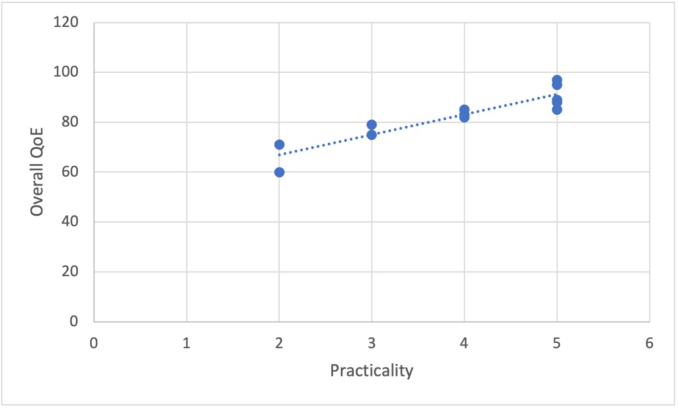
Figure 1: Scatter diagram with regression line of haptic-unequipped and haptic feedback on the QoE for the haptic experiment.
haptic interface as the average value is in the high range. The results are visu- ally shown (see Table 3), which shows the quantity of subjects who evaluated their preference for haptic devices opposed to unequipped hands.
The existing results show a positive trend, and it seems to imply that the subjects tend to have the haptic interface compared to the haptic-unequipped state, but it does not mean that haptic interface is selected as a necessary hardware. The last row in Fig. entitled Overall QoE is followed. If indeed haptic interfaces increase the overall QoE then subjects who strongly approve that their haptic experience surpasses their haptic-unequipped experience will evaluate the overall quality higher than others. The previous prediction that haptic interface add to the QoE usefully is valid.
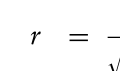
The correlation between the Overall QoE and Practicality are displayed (see Figure 1) . The diagram suggests a linear correlation as indicated by the straight line that reveals the overall trend of the scattered dots. We calculated the exact correlation of the two data series according to
Design and Evaluation: Virtual Reality Haptic Interface to Enhance User Experience 197
Table 4. Haptic factors and their correlation with QoE.
where X is the overall QoE series and Y is the Practicality series. The corre- lation between the haptic/haptic-unequipped experience and the overall QoE is found to be 0.914. This is a very high correlation value, which suggests that if users found their haptic interface experience better than the haptic- unequipped experience, more probably users have a better overall QoE as a result of the QoE evaluation system when using the haptic interface.
In addition to the parameter of Usefulness directly, other system para- meters of the haptic interface are expected to affect the overall QoE. The correlation between the overall QoE and the different parameters are listed (see Table 4). Most parameters correlated significantly with overall QoE except for Quality which was exclusively 0.230 without a significant cor- relation level. The correlation of 0.544 has belonged to the parameter of Comfort which is significant at the p<0.1 level with overall QoE. Probably it has attributed to subjects who don’t have any experience in using haptic devices, so they cannot make an objective evaluation of the rendering quality without pre-trained evaluation standards in life. According to the correlation analysis, it can be judged that the majority of the subjects are more concerned about the parameter of Usefulness and Real-time, which leads to be closely related to the overall QoE.
The demonstration experiment aims to determine the QoE evaluation of user experience to haptic-enhanced interfaces. The current research mainly considers basic kinesthetic and tactile interaction, analyzing the statistical significance of user survey data. For future research, we can transfer the design ideas of the evaluation system to different types of projects or expe- riments which have other types of haptic interfaces. We can even categorize and integrate solutions in different haptic experience fields according to the QoE evaluation result library to guide the progress of follow-up work on haptic interface development for virtual reality systems.
CONCLUSION
Virtual reality is the computer system that can create and experience vir- tual world, acting on the user through sight, hearing, touch, smell, etc., to produce an immersive interactive visual simulation. Immersion, intera- ctivity and imagination are the three basic characteristics of virtual reality
systems. The tactile interface is a platform for applying tactile stimuli to represent and transmit information through touch. This paper systematically reviews the research history of tactile display in virtual reality and the cur- rent research status at home and abroad. By analyzing and sorting out the three human-computer interaction research fields of the haptic interface in the virtual reality: immersive experience and emotional expression, and pro- poses an evaluation system based on the Quality of Experience (QoE) model aimed to quantitatively analyze and enhance human-computer interaction user experience in haptic interfaces with its statistical significance, which assists researchers and engineers to research, develop, and utilize haptic interaction technologies in virtual reality environments.
REFERENCES
Benko, H., Holz, C., Sinclair, M., & Ofek, E. (2016, October). Normaltouch and texturetouch: High-fidelity 3d haptic shape rendering on handheld virtual rea- lity controllers. In Proceedings of the 29th Annual Symposium on User Interface Software and Technology (pp. 717–728). Cai, S., Ke, P., Narumi, T., & Zhu, K. (2020, March). Thermairglove: A pneumatic
glove for thermal perception and material identification in virtual reality. In 2020 IEEE Conference on Virtual Reality and 3D User Interfaces (VR) (pp. 248–257). IEEE. Gupta, A., Samad, M., Kin, K., Kristensson, P. O., & Benko, H. (2020, November).
Investigating remote tactile feedback for mid-air text-entry in virtual reality. In 2020 IEEE International Symposium on Mixed and Augmented Reality (ISMAR) (pp. 350–360). IEEE. Han, P. H., Chen, Y. S., Lee, K. C., Wang, H. C., Hsieh, C. E., Hsiao, J. C., ... & Hung, Y. P. (2018, November). Haptic around: multiple tactile sensations for immersive environment and interaction in virtual reality. In Proceedings of the 24th ACM symposium on virtual reality software and technology (pp. 1–10). Hamam, A., Eid, M., El Saddik, A., & Georganas, N. D. (2008, February). A quality
of experience model for haptic user interfaces. In Proceedings of the 2008 Ambi- Sys workshop on Haptic user interfaces in ambient media systems (pp. 1–6). Hamam, A., Eid, M., & El Saddik, A. (2013). Effect of kinesthetic and tactile haptic feedback on the quality of experience of edutainment applications. Multimedia tools and applications, 67(2), 455–472. Hettiarachchi, A., & Wigdor, D. (2016, May). Annexing reality: Enabling oppor-
tunistic use of everyday objects as tangible proxies in augmented reality. In Proceedings of the 2016 CHI Conference on Human Factors in Computing Systems (pp. 1957–1967). Huang, H. Y., Ning, C. W., Wang, P. Y., Cheng, J. H., & Cheng, L. P. (2020, April).
Haptic-go-round: A surrounding platform for encounter-type haptics in virtual reality experiences. In Proceedings of the 2020 CHI Conference on Human Factors in Computing Systems (pp. 1-10). Huisman, G., Frederiks, A. D., Van Dijk, B., Hevlen, D., & Kröse, B. (2013, April).
The TaSSt: Tactile sleeve for social touch. In 2013 World Haptics Conference (WHC) (pp. 211–216). IEEE. Kim, A., Bae, H., & Lee, K. (2019, November). Effects of Tactile Perception on Emotion and Immersion to Film Viewing in a Virtual Environment. In 25th ACM Symposium on Virtual Reality Software and Technology (pp. 1–3).
Design and Evaluation: Virtual Reality Haptic Interface to Enhance User Experience 199
Kim, M., Jeon, C., & Kim, J. (2017). A study on immersion and presence of a portable hand haptic system for immersive virtual reality. Sensors, 17(5), 1141. Makin, L., Barnaby, G., & Roudaut, A. (2019). Tactile and kinesthetic feedba-
cks improve distance perception in virtual reality. In Proceedings of the 31st Conference on l’Interaction Homme-Machine (pp. 1–9). Obrist, M., Subramanian, S., Gatti, E., Long, B., & Carter, T. (2015, April). Emotions mediated through mid-air haptics. In Proceedings of the 33rd Annual ACM Conference on Human Factors in Computing Systems (pp. 2053-2062). Park, Y. W., Baek, K. M., & Nam, T. J. (2013, April). The roles of touch during
phone conversations: long-distance couples’ use of POKE in their homes. In Proceedings of the SIGCHI conference on human factors in computing systems (pp. 1679–1688). Peng, Y. H., Yu, C., Liu, S. H., Wang, C. W., Taele, P., Yu, N. H., & Chen, M. Y.
(2020, April). Walkingvibe: Reducing virtual reality sickness and improving rea- lism while walking in vr using unobtrusive head-mounted vibrotactile feedback. In Proceedings of the 2020 CHI Conference on Human Factors in Computing Systems (pp. 1–12). Rec I (2006) P. 800.1, Mean opinion score (MOS) terminology. International Telecommunication Union, Geneva Sasaki, T., Hartanto, R. S., Liu, K. H., Tsuchiya, K., Hiyama, A., & Inami, M. (2018).
Leviopole: mid-air haptic interactions using multirotor. In ACM SIGGRAPH 2018 Emerging Technologies (pp. 1–2). Samad, M., Gatti, E., Hermes, A., Benko, H., & Parise, C. (2019). Pseudo-haptic weight: Changing the perceived weight of virtual objects by manipulating control- display ratio. In Proceedings of the 2019 CHI Conference on Human Factors in Computing Systems (pp. 1–13). Susa, D., Pozgaj, Z., & Vuksic, V. B. (2014). Unified CommUniCations. In An
Enterprise Odyssey. International Conference Proceedings (p. 756). University of Zagreb, Faculty of Economics and Business. Sutherland, I. (1965). The ultimate display. Whitcher, S. J., & Fisher, J. D. (1979). Multidimensional reaction to therapeutic touch in a hospital setting. Journal of Personality and Social Psychology, 37(1), 87. Wu W, Arefin A, Rivas R, Nahrstedt K, Sheppard R, Yang Z (2009) Quality of
experience in distributed interactive multimedia environments: Toward a theo- retical framework. Proceedings of the Seventeen ACM International Conference on Multimedia, pp. 81–490. Yoshida, S., Sun, Y., & Kuzuoka, H. (2020, April). Pocopo: Handheld pin-based shape display for haptic rendering in virtual reality. In Proceedings of the 2020 CHI Conference on Human Factors in Computing Systems (pp. 1–13). Zenner, A., & Krüger, A. (2019, May). Drag: on: A virtual reality controller provi-
ding haptic feedback based on drag and weight shift. In Proceedings of the 2019 CHI Conference on Human Factors in Computing Systems (pp. 1–12). Zhou, R., Wu, Y., & Sareen, H. (2020). HexTouch: A Wearable Haptic Robot for Complementary Interactions to Companion Agents in Virtual Reality. In SIGGRAPH Asia 2020 Emerging Technologies (pp. 1–2). Zhu, K., Chen, T., Han, F., & Wu, Y. S. (2019, May). HapTwist: creating interactive
haptic proxies in virtual reality using low-cost twistable artefacts. In Proceedings of the 2019 CHI Conference on Human Factors in Computing Systems (pp. 1–13).
LISTED IN THE AHFE DIGITAL BOOKSTORE CATALOGUE
Explore the complete digital volume
Human Factors in Virtual Environments and Game Design
Read this individual research paper free through the original publisher, or explore the full digital proceedings book.
ISBN 978-1-958651-26-1
Explore this ISBN in the AHFE Bookstore ↗Listed in the July 2026 bookstore catalogue; search by ISBN to confirm current availability · Digital book purchase optional