Regina Heloisa Maciel, João Bosco Feitosa dos Santos, Ana Paula Torres do Nascimento (2021). Working Conditions of Health Technicians in Ceará’s Public Health System. In: Advances in Human Aspects of Healthcare. AHFE Open Access, vol. 13. https://doi.org/10.54941/ahfe100520
The study aims to analyze the working conditions of health professionals of Basic Health Units (BHU) of Fortaleza, Ceará, Brazil. BHUs are primary health care units that are the front door of the national public health system. The research analyzes working conditions of primary care auxiliary and/or technicians and their perceptions regarding working conditions and harassment. It is a cross-sectional survey of exploratory nature, using quantitative and qualitative methods. 120 mid-educational level background workers answered a questionnaire containing socio-economic information; an occupational stressors scale and the Negative Acts Questionnaire (NAQ). Nine technicians and auxiliaries participated in individual interviews. Observations of workplaces were also done. 2.5% of participants declared to have suffered workplace harassment. However, 11.7% reported negative acts towards them, weekly or daily in the last six months. The participants perceive their working conditions as precarious. They report employment instability, lack of equipment, low salaries, and long working journeys. They appear to worry about exercising their activities with prejudice to the services’ quality and to their health. The study points to the need for actions that bring egalitarian conditions in terms of employment to this category of workers, better working conditions, and financial and social recognition.
This work focuses on working conditions of Brazil's Public Health System (called SUS), investigating the perceptions of middle-educational level health workers of Fortaleza, Ceará. The goal is to analyze working conditions but also to correlate these working conditions with reports of harassment at work.
The changes and concerns that the labor market is currently going through reach several categories, including healthcare workers. The advancement of the capitalist restructuring, which modifies the working conditions, especially regarding working organization and workers’ control also affects healthcare (Ribeiro & Martins, 2011).
Human resources in health are undergoing changes mainly regarding job security and employment rights. The deregulation process is replacing formal employment contracts for various other contract modalities, including outsourcing, a reflection of the general context of the Brazilian labor market (Varella & Pierantoni, 2008).
On the assumption that healthcare workers represent the most important resource of health systems that, in turn, provide health services to the main part of the populations, since 2006, Organización Panamericana de Salud (OPAS) began a project to draw attention to the importance of analyzing and acting upon the health situation, safety and working conditions of health workers (OPAS, 2012). To this end, it is pertinent to develop research to support policy development and programs in healthcare. Healthcare workers are a growing number due to the high demand for workers in the health sector. However, the Brazilian health sector is also undergoing a deterioration process, with a clear flexibilization of employment contracts and worsening of working conditions.
Research studies show that healthcare workers suffered losses in their rights in the last few decades and are exposed to job insecurity and poor conditions (Girardi & Carvalho, 2003; Santos, Uchoa, & Neto, 2004; Maciel et al., 2006; Machado & Oliveira, 2006; Lourenço & Bertani, 2007; Koster & Machado, 2012). In addition, Schraiber, D’Oliveira and Couto (2006), Mayhew & Chappell (2001) and Rippon (2000) show that health workers are also exposed to psychological violence from patients and from management and colleagues, mainly because they work with limited and scarce resources.
The Public Health System Since the 1980s, the Brazilian health system has been being reorganized. The implantation of SUS brought a new configuration for health care in Brazil, extending health services to various small towns and promoting quality health care to all social groups. SUS is also a promoter of new job opportunities for health workers (Santos et al., 2006). The system divides health care into three levels: primary, secondary and tertiary.
The primary level of health care is mainly composed of the family health programme (FHP). Created in 1994, FHP consists of a strategy of expansion and implementation of SUS ideals. Focusing on primary health care, the strategy introduced several basic health units (BHU) in all parts of Brazil. In July 2004, of the 5,561 municipalities in the country, 4,701 (84.55%) had FHP, representing a coverage of 38.3% of the population. Specifically in Ceará, in 1988, 83% of its municipalities had FHP teams (Santos el al., 2006).
The FHP has brought a new conception of medical practice. The FHP guidelines favor an integral vision of the patient and their social context. Their units have teams that must look at the patient as a whole, accompanying patients’ health shortcomings, taking into account the family and collective dimensions, including education in hygiene and different approaches to health, emphasizing health promotion in a localized and regionalized form. The programme appears to have been effective in modifying some health indicators, such as the sharp decline in infant mortality and the increase in the number of immunizations (Dussault & Franceschini, 2006).
A basic unit of family health can act with one or more teams, depending on the concentration of families within its scope. The family health team is minimally composed of a general practitioner or family physician, a nurse, a nursing assistant between four and six community health agents. The number of health agents varies according to the number of people under the responsibility of the team. On average, there must be one agent for 550 people. Other health professionals can be incorporated into the team or can give support to a number of teams that provide services in a basic unit according to local needs and possibilities. In 2001, with the aim of improving the population's access to health services, there was the inclusion of dental health teams. Each dental health team has a dentist and a dental assistant and, in some cases, one experienced dental hygienist (MS, 2001).
In the family health team, each professional performs his/her expertise in a process of collective work, whose product must be the sum of the specific contributions of the different professional areas. It is expected that teams’ members are able to "analyze the work that has to be done by the team, checking for specific group and individual assignments in the unit, in the patients’ home and the community, as well as sharing knowledge and information" (MS, 2001, p.74).
The secondary level of health care comprises specialized units for treatment and exams, as well as units specialized in population segments such as workers’ health and psychosocial care units.
The tertiary level performs attendance and treatment of high complexity and is composed of hospitals managed by the state or municipality.
Workers’ health keeps a close relationship with working conditions. Health professionals working conditions includes exposure to biological, chemical, physical and mechanical hazards. However, workers are also exposed to more subtle hazards, such as those related to the form the work is organized (European Agency for Safety and Health at Work, 2007). Exposure to these risks can affect workers’ mental health and, ultimately, prejudice patients’ care (Ribeiro & Martins, 2011).
In Brazil, economic development and working conditions are different in the various regions of the country. Medeiros and Rocha (2004) discuss the effects on health workers of the neo-liberal administration models, widely deployed in all economic sectors from the 1980s, presenting the problems brought about by the use of these models in the northeastern region of the country. According to the authors, to the extent that neoliberal policies of work restructuring are widely adopted by local management of health institutions, the difficulties faced by workers within the SUS deepen, leading to inequality, injustice and social instability. Workers become more flexible in order to adapt to the model and, in doing so, they subject themselves to losses in their rights, job insecurity and other factors that can lead to health problems. Besides that, they try to compensate salary losses by having more than one job, leading to fatigue and increasing their health problems.
In relation to the organization and division of tasks in healthcare work, Medeiros and Rocha (2004) consider as the main problems faced by health professionals:
1. unequal task assignments; 2. arbitrary criteria for promotions; 3. absence of careers plans; 4. lack of performance assessments or assessments made without explicit criteria; 5. absence of guidelines and technical and institutional principles in hiring workers; 6. hiring workers for political reasons; 7. the absence of a policy of continuing education; 8. work overload for some professionals with simultaneous underutilization of other workers; 9. low wages.
Similarly, Guimarães et al. (2005), in a study about accidents in a university hospital, conclude that accidents were linked to unsatisfactory division of tasks, excessive concentration of activities and heavy workload.
In Ceará, these organizational problems in healthcare deepens, to the extent that socio-economic policies have not demonstrated advances capable of changing the framework of inequality quickly and efficiently. Nevertheless, with regard to the implementation of the FHP and the community health agents program in the SUS, Ceará stands out in Brazil, given its policy of decentralization of resources and incentives for municipalities (Marques & Mendes, 2002).
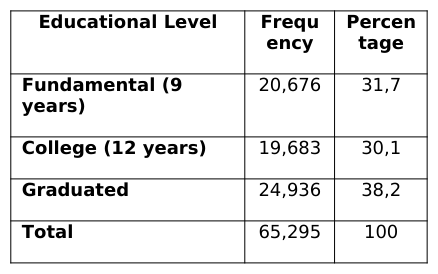
In the Brazilian public health system, the workforce comprises professionals with different educational levels, but the majority of workers have a low educational level (between 9 to 12 years of formal education). These workers, in 2013, correspond to 61.7% of the total Ceará’s health workforce as shown in Table 1.
Table 1: Distribution of Ceará’s health workforce by educational level (Ceará’s Secretary of Health,
2013, personal communication) Educational Level Frequ Percen
Healthcare technical staff play a key role in healthcare services. Given their role in the functioning of SUS, however, their working conditions have not been studied in accordance with their importance. Human Aspects of Healthcare (2021)
Although the Ministry of Health along with local governments seeks to improve the quality of hospital and outpatient care through the provision of technicians’ professional qualification training and a policy of professional evaluation (Almeida & Ferraz, 2008), there is still much to be done to improve working conditions and empower this contingent of professionals.
Workplace Harassment Soboll and Gosdal (2009), Elgenneni and Vercesi (2009), Freire (2008, 2009), Freitas, Heloani and Barreto (2008), Barreto (2006) and Hirigoyen (2002) show that, in adopting modern practices, the majority of organizations seek to attend a globalized competitive market and tend to use coercive means such as discipline towards the workforce, that can become practices of psychological violence or harassment at work.
Most studies about the prevalence of harassment at work use the victims’ subjective reports as a source of information, i.e. auto reports of harassment occurrences. Einarsen et al. (2003) use a method with two purposes: one that focuses on the victim's feelings about having being harassed (subjective measure) and a second one that presents a list of 22 negative acts, asking the participant if these acts have occurred in their workplace towards them (objective measure). Both measures give rise to the negative acts questionnaire (NAQ). The advantage of this method is that the evaluation considers the victims’ feelings and the evidence of negative acts, including an evaluation of their frequency.
Workplace harassment occurs in the form of acts or attitudes. The acts considered as abusive at work are, for example, tasks with impossible deadlines; enforce trivial tasks; taking credit for the ideas of others; ignoring the employee, only speaking to him through third parties; withholding information; spreading malicious rumors; making persistent criticism; underestimating worker’s efforts, etc. All these actions can jeopardize the work quality of the individual or even lead to loss of employment (Freitas, 2007; Hirigoyen, 2002, 2005).
This study focusses specifically on the 30.1% mid-educational level health workers, analyzing working conditions of the primary care auxiliary and/or technicians and their perceptions regarding working conditions and harassment.
METHODS
Twelve BHUs in Fortaleza participated in the study. The criterion used to select units to be visited was accessibility. Free observations of the working conditions of these units were noted in a field diary. Field observations were: (1) information about the participants such as disposition to participate and behavioral aspects and (2) information about the unit such as infrastructure of the buildings, management and number of patients.
The participants of both the quantitative and the qualitative part of the study were primary care workers. They were nursing assistants, administrative technicians, management support and oral health auxiliaries.
All technicians of the 12 BHUs visited participated in the study, compounding a sample of 120 workers. The availability in participating in the research and perform medium level functions were the criteria for inclusion in the research. The instruments were applied during visits to the chosen HBU.
The instruments used to collect quantitative data were: (1) a socio-demographic questionnaire, which allowed checking of personal and professional characteristics (job, time of work in the institution and as health technicians, age, gender, educational level, marital status, hours of work, and type of employment contract;
(2) a work stressors scale to measure workers’ perception of their working conditions. The stressors scale has 35 items and asks participants to rate each item according to how much the condition stresses him or her from 1 to 100. The items relate to workplace physical installations, workload, frequency of activities, physical, chemical and biological hazards, and psychosocial aspects of the job (Neto, 2006 constructed and validated this scale);
(3) NAQ measures harassment occurrences. Maciel and Gonçalves (2008) translated and validated the NAQ into Brazilian Portuguese. The questionnaire lists 22 negative acts (objective harassment), asking participants to rate their exposure to these acts in terms of the frequency of occurrence in the last six months on a Likert response scale of five points (never, occasionally, monthly, weekly and daily). In the second part of the questionnaire, it presents a definition of harassment and asks if the participant thinks that he/she was exposed to the condition over the past six months and to indicate the frequency and characteristics of the event.
The results were analyzed using SPSS (v20 for Windows). In relation to the NAQ and the stressors scale, a score for each participant was computed. According to these scores, participants were classified in four groups: (1) high harassment and stress; (2) low harassment and stress; (3) high harassment and low stress and; (4) high stress and low harassment.
Following the questionnaire application, semi structured individual interviews were carried out. The interviewees were chosen according to their classification in the NAQ and stressor scale. At least two individuals of each group were interviewed. Respondents were eight women and one man (9 interviews). The interviews were tape recorded and transcribed. Qualitative data was analyzed by means of a content analysis, following a thematic coding as proposed by Strauss (1987).
All participants signed an informed consent as is recommended by the Commission on Research Ethics.
RESULTS AND DISCUSSION
Quantitative Data
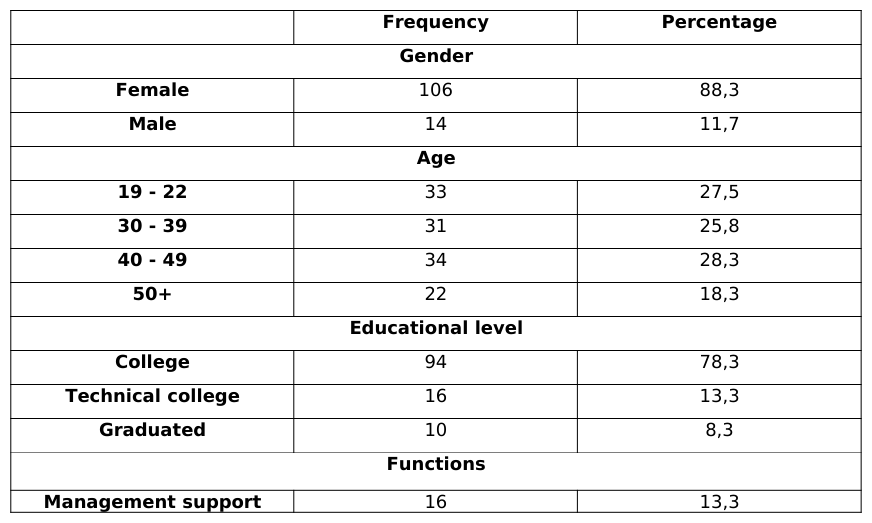
Table 2 shows the sample distribution by gender, age, educational level and function in the respective BHU. In the sample studied, 88.33% were female and only 11.67% were male. Although the sample was not representative, this result confirms the predominance of female workers in healthcare (Machado & Oliveira, 2006; Santos et al., 2004). The majority of the participants were between 19 and 29 (27.5%). The age of participants range between 19 and 65 years, with an average of 38 (SD = 10.67 years).
Table 2: Sample distribution by age, gender, educational level and function in the HBU.
Regarding the employment situation of those surveyed, some 90% have outsource contracts and only 10% have stable contracts (public servants1). This data shows that a large population of workers serves the public health system with flexible, precarious and unstable job contracts. Girardi and Carvalho (2003) shows the same irregularity in the city of Belo Horizonte, mainly in the primary health care institutions. The results found here, however, are evidence of an increase in this type of employment. In Fortaleza, the standard is hiring workers through outsource firms. The coexistence of outsourced and stable workers in the same HBU can lead to perceptions of unfairness and can have consequences to patient´s care, promoting insecure ties between the health professional and the client. Undoubtedly, the indirect hiring of workers in public administration promotes precarious work. Druck (2011) points out that outsourcing put into practice by means of social organizations or entities of public interest is largely associated with a precarious labor market and can lead to illicit contracts, an increase in informal work and to flexible workers’ rights, with evasion of labor and social security taxes (Aguilar et al., 2006). This situation exposes healthcare workers to a vulnerable situation, as well as poor services to the community.
Stressors Scale The general average in the stressors scale for all items was 38.92 (SD = 11.65). Taking into account the midpoint of the scale (the answers could range from 1 to 100), the judgments indicate that workers do not consider their working condition as stress-generating.
The items with higher notes, i.e. items that can lead to workers’ stress, were low salaries, repetitive movements in performing the tasks and exposure to biological risks, all with notes above 70. On the other hand, items that appear to be less stressful were competition between co-workers, knowledge on how to use equipment and the use of equipment that promote vibration, all with notes below or equal to 11.
NAQ Some 11.7% show objective harassment in the NAQ. This percentage refers to participants who report the occurrence of at least one negative act with a weekly or daily frequency in the last six months. In the seminal epidemiological study of Leymann (1996), a rate of 3.5% was found for Swedish workers. The rate found here is at least three times higher, indicating that the group of our study suffers harassment constantly.
Higher averages refer to the items “someone withheld information that might affect your job”, “someone spread rumors or gossip about you” and there is “excessive work supervision”. Except for the last item, the first two refer to the kind of personal harassment to which Einarsen (2005) considers aggression directed at the victim's characteristics or particular condition, such as spreading rumors, criticizing persistently, screaming, humiliating, isolating and exclusion. This kind of harassment is most prevalent in public institutions, mainly due to the organization culture and has to do with the imbalance of political power and interference from the municipality politicians (Gonçalves & Maciel, 2008).
In order to check for possible relationships between perceptions of working conditions and reports of negative acts with the socio demographic variables, we compared means by variance analysis (ANOVA). The variables gender and employment status (outsourced or not) have not been computed in view of the small number of subjects in one of its sub-groups, namely: males and outsourced. There were no differences in comparing NAQ responses and the variables time at the institution and function and hours of work. However, time at the institution shows a significant 1 In Brazil, public servants have a special contract that follows the public servants legislation. The main difference is that public servants have a contract for their whole working life, if they want. Human Aspects of Healthcare (2021) difference (F=3.240; df=3; p<0.05). Health professionals with between one and seven years of work in the HBU perceive working conditions as more stressful. This may be due to two reasons. The first is the novelty effect that may be masking the perceptions of this group and the second relates to the familiarity effect.
There was an association between working conditions perceptions and reports of negative acts (Pearson r = 0.342; p < < 0.05), indicating that those considering their working conditions as stressful are the same who suffer or have suffered negative acts at work. However, there was no significant correlation between the perceptions about stress in the workplace and subjective harassment (Pearson r = 0.095). Figure 1 shows this relation graphically.
Stressors means
Above mean Below mean 34 36 38 40 42 44 46 Harassment
Figure 1: Comparison of means in stressors scale and NAQ.
Figure available in the original PDF paper.
Qualitative Data Qualitative data comprises the individual interviews and notes from the field diary. The nine interviews were transcribed and arranged in three a priori thematic axes, outsourcing and job insecurity, working conditions and harassment.
Outsourcing and job insecurity All workers interviewed were outsourced. This fact was not targeted, nor purposeful. Actually, the majority of workers of the HBUs studied have outsourced links. All participants report that they are treated differently compared to public servants. The discourses reveal dissatisfaction with their working relationships and the favorable conditions that the public servants have. They feel that they are being discriminated and they report a different type of treatment regarding flexibility in working hours and compensation entitlement, among others.
It would be different if I had a stable contract. When you are a public servant, you don’t have to endure that [referring to management]. So I am praying to God for a public job (E2) The perception of different rights between outsourced and public servants is markedly present in the workers’ discourse. Frequently outsourced professionals feel inferior to their public servants colleagues. Some report the disparity of treatment offered to both classes.
(...) everybody suffers discrimination. (...) in the attitudes of stable servants. It is as if they had all the power and we have none. They can do everything they want, the coordination gives a goal, we have a meeting to do this and that, but they never follow orders. We are the ones who have to fulfill and compensate for them. (E3) For sure! Insecurity from the moment we have an outsourced job we are already unsafe. The right, the best, would be if they open public jobs for our area so we can become public servants. (E6)
Research conducted by Vaitsman (2001) that investigated expectations of public health workers found that job stability was of greater interest when applying for a job in the health area, meaning that the stability provided by public employment has a positive sign for the workers. However, workplace relations appear as a deciding factor for motivation and satisfaction of those in subordinated jobs, with low degree of autonomy, as assistants and administrative staff.
Working Conditions Workers describe their working conditions as inadequate. They mention, specially, the exposure to biological risk factors such as exposure to bacteria and viruses. One example of this kind of risk is the case of exposure to influenza and tuberculosis. Several studies point to the high incidence of tuberculosis among healthcare workers (Lorenzi & Oliveira, 2008; Marziale, Nishimura, & Ferreira, 2004).
Another type of risk that workers are exposed to is the psychosocial risk linked mainly to work organization. With regard to psychosocial risks, workers cite job content, division of tasks, lack of materials and the high demand for health services.
(...) We look for paper towels and there aren’t any. Look for soap and there is no soap. Then comes the soap, but there are no paper towels. There is no cotton wool, no alcohol and the instruments are broken. There are gloves, but only the exact amount for the foot and gynecology exams. So, it is difficult. It is limited (...) It is precarious. (E7) There were three of us in the vaccination room, one has left and we two are overworked. When one of us is sick, the other has to work a double shift. We have to vaccine 800 to 1000 children per day. This is no joke; it is really dif-fi-cul-t (…) (E7)
Workplace Harassment Harassment is a practice that can occur in both private and public companies. However, in the public sector, harassment can persist for a longer time when compared to the private sector, perhaps because in the public sector, employment is stable and it is difficult to get a public job. In order not to lose their jobs, public employees tend to endure situations of harassment.
(…) and it wasn't just me, it was everybody, everybody. Oh my God! It was awful, it was terrible, I don't know how I could even go back to work every day. It was a depressing situation (...) But that person is no longer here. It was difficult, but we got over it. (E3) It is in the context of pressures, precarious employment links, job insecurity, risk of unemployment, illness and increasing discrimination that workplace harassment tends to occur. It functions as a way to silence and submit workers.
FINAL CONSIDERATIONS Medium level professionals rate their working conditions in terms of stress as being 38.92 in a scale ranging from 1 to 100. However, in the workplace observations one can note the precariousness of the work situations, with rooms poorly equipped and too small for the healthcare services. Besides that, overcrowding caused by the large number of users and the consequent excess of demand decisively interferes in the working conditions. The infrastructure and the lack of equipment and medicines compromise the quality of care being provided. The source of these problems may be related to administrative matters, namely outsourcing and low salaries. This scenario of scarce resources can lead to job dissatisfaction of professionals and of users. It was observed in the interviews and visits that there is an effort on the part of many professionals to solve some of these problems with their own resources, such as, for example, small repairs, purchase of chairs and other materials.
Respondents tended to consider their working conditions between regular and good. The worst judgments refer to low salaries, repetitive movements in performing the tasks and exposure to biological risks. These results corroborate, in part, those obtained in the qualitative analysis. Workers cited the exposure to biological risks as a main problem in their working conditions. The fact that the professionals responded that they consider the physical conditions of the workplace as reasonable may be due to the local socio-economic situation, i.e. Ceará is one of the poorest states in the country and the infrastructure of the health institutions studied follows the standard encountered in other public services of the region. However, these conditions are unacceptable in health institutions. Human Aspects of Healthcare (2021)
Nevertheless, they also cited psychosocial risks as a major concern. Some 11.7% of workers investigated report objective harassment in the workplace. This figure is high when compared to other studies, which used the same scale. However, only 2.5% of the sample claim to have been harassed. This difference may be accounted for by the phenomenon of naturalization of situations of harassment. Depending on the local culture, there may be a tendency to perceive negative acts in the workplace as “natural”, common acts to which we are all subjected. This perspective can lead to a situation where individuals do not feel the urge to complain. On the contrary, they feel complaints can do more harm than good.
The positive correlation between perceived stressful conditions and reports of negative acts indicates that perceiving working conditions as stressful is a possible precursor of harassment. Agervold and Milkkelsen (2004) discuss this idea and came to the conclusion that management style may affect directly or indirectly the occurrence of harassment, although they cast some doubt on the general assumption that poor working conditions contribute to harassment. In another study, Agervold (2009) found that organizational factors could contribute to the emergence of higher incidences of bullying. Baillien, Notelaers, De Witte and Matthiesen (2011) propose a model relating conflicts at work and incidence of harassment. The model dictates that the type of reaction to conflicts and the way management and groups deal with conflicts is predictive of harassment at work. Although our results relate to perceived stress and not to conflicts, one can infer that perceived stress is a function of how problems or conflicts are addressed in the workplace, adding evidence to the general assumption that conflicts and the way employees and management deal with them can lead to harassment.
Harassment is not a necessarily a result of poor working conditions, but poor working conditions or dysfunctions in the psychosocial environment may favor the practice of harassment or bullying. Conflicts in the workplace may not lead to manifestations of violence and, in some cases, can lead to better decisions and work arrangements. However, conflicts, precarious conditions and the form to approach them can prevent the full development of activities causing stress. Factors perceived as stressful in the workplace can then lead to harassment.
In the interviews, the unequal treatment between the public servant and the outsourced was noted. Besides that, at the time of data collection, the HBUs were undergoing management changes due to a change in the municipality local government. The new elected government was implementing changes related to the workers agency. Workers did not receive their salaries for three months and there was no guarantee of maintaining their jobs. This data confirms the position of Pierantoni, Varella and França (2006) who argue against the hiring of outsourced healthcare workers by work cooperatives or outsourcering agencies. Such modalities have been providing very diverse job contracts in relation to wages, hours of work, fairness and other factors that can, ultimately, lead to stressful situations, harassment, poor workers’ health and dysfunctions in the health services provided by the health system.
From our findings we can suggest that policies, programmes and intervention projects in health institutions have to: (1) take into account the fact that professionals’ contracts are largely outsourced and that these workers should be promoted to the status of public servants; (2) promote an increase in the number of health professionals in order to match the actual demand; (3) improve working conditions, not only the physical conditions, but also equipment and material supplies and; (4) promote equitable job rights in terms of wages, benefits, education and training, so mid- level healthcare workers can perform their jobs more effectively and with dignity.
REFERENCES
Agervold, M. (2009). The significance of organizational factors for the incidence of bullying. Scandinavian Journal of Psychology, 50(3), 267–76. doi:10.1111/j.1467-9450.2009.00710.x Agervold, M., & Mikkelsen, E. (2004). Relationships between bullying, psychosocial work environment and individual stress
reactions. Work & Stress, 18(4), 336–351. Almeida, L. P. V. G., & Ferraz, C. A. (2005). Políticas de formação de recursos humanos em saúde e enfermagem. Revista Brasileira de Enfermagem, 6(1), 31-35. Baillien, E., Notelaers, G., De Witte, H., & Matthiesen, S. B. (2011). The relationship between the work unit’s conflict
management styles and bullying at work: Moderation by conflict frequency. Economic and Industrial Democracy, 32(3), 401-419. Barreto, M. (2006). Violência, saúde e trabalho: Uma jornada de humilhações. 2ed. São Paulo, Editora PUC. Druck, G. (2011). Trabalho, precarização e resistências: Novos e velhos desafios? Caderno CRH, Salvador, 24(1), 37-57. Dussault, G., & Franceschini, M. C. (2006). Not enough there, too many here: Understanding geographical imbalances in the distribution of the health workforce. Human Resources for Health, 4(12). doi:10.1186/1478-4491-4-12. Recuperated from http://www.human-resources-health.com/content/4/1/12. Einarsen, S., Hoel, H., Zapf, D., & Cooper, C. (2003). The concept of bullying at work. The European tradition. In S. Einarsen,
H. Hoel, D. Zapf, & C. Cooper (Eds.), Bullying and harassment in the workplace: Developments in theory, research practice (3-30). 2ed. CRC Press. Einarsen, S. (2005). The nature, causes and consequences of bullying at work: The Norwegian experience. Pistes,7(3).
Recuperated from http://www.pistes.uqam.ca/v7n3/articles/v7n31en.htm. European Agency for Safety and Health at Work (2007). Expert forecast on emerging psychosocial risks related to occupational safety and health. Luxembourg, Office for Official Publications of the European Communities. Elgenneni, S. M., & Vercesi, C. (2009). Assédio moral no trabalho: Implicações individuais, organizacionais e sociais. Revista
Psicologia Organizacional e do Trabalho, 9(1), 68-85. Freire, P. A. (2008) Assédio moral e saúde mental do trabalhador. Trabalho, Educação e Saúde, 6(2), 367-380. Freire, P.A. (2009). O assédio moral como corolário dos sistemas fordista/taylorista e toyotista e os danos à saúde mental do trabalhador. Revista da SJRJ, Rio de Janeiro, (25),377-394. Freitas, M., Heloani, R., & Barreto, M. (2008). Assédio moral no trabalho. Psicologia Política, 8(15), 179-182. Freitas, M. (2007). Quem paga a conta do assédio moral no trabalho? Revista de Administração de Empresas, 6(1). Recuperated
from http://www.rae.com.br/eletronica/index.cfm?FuseAction=Artigo&ID=4544&Secao=PENSATA&Volume=6& Numero=1&Ano=2007. Girardi, S. N., & Carvalho, C. L. (2003). Contratação e qualidade do emprego no Programa de Saúde da Família no Brasil. In A.
Falcão, P. M. Santos Neto, P.S. Costa, S. A. Belisário (Orgs.). Observatório de Recursos Humanos em Saúde no Brasil: Estudos e análises, v.1. Rio de Janeiro, Editora FIOCRUZ. Guimarães, R.M., Mauro, M.Y.C., Mendes, R., Melo, A.O., & Costa, T.F. (2005). Fatores ergonômicos de risco e de proteção contra acidentes de trabalho: Um estudo caso-controle. Revista Brasileira de Epidemiologia, 8(3), 282-94. Hirigoyen, M. (2002). Mal-estar no trabalho: Redefinindo o assédio moral. Rio de Janeiro, Bertrand Brasil. Hirigoyen, M. (2005). Assédio moral: A violência perversa no cotidiano. 7ed. Rio de Janeiro, Bertrand Brasil. Koster, I., & Machado, M. H. (2012). A gestão do trabalho e o contexto da flexibilização no sistema único de saúde. Divulgação
em Saúde para Debate, Rio de Janeiro, (47), 33-44. Leymann, H. (1996). The content and development of mobbing at work. European Journal of Work And Organizational Psychology, 5(2), 165-184. Lorenzi, R. L., & Oliveira, I. M. (2008). Tuberculose em trabalhadores de enfermagem: Uma abordagem epidemiológica de base
populacional. Revista Brasileira de Saúde Ocupacional, 33(117), 6–14. Lourenço, E., & Bertani, I. (2007). Saúde do trabalhador no SUS: Desafios e perspectivas frente à precarização do trabalho.
Revista Brasileira de Saúde Ocupacional, 32(115), 121-134. Machado, M., & Oliveira, E. (2006). Mercado de trabalho em saúde: Em que trabalham? In M. H. Machado, N. Moysés, E.
Oliveira (Orgs.), Trabalhadores de saúde em números, v.2 (59-94). Rio de Janeiro, FIOCRUZ. Maciel, R.; Aguiar, A.; Albuquerque, A., Lima, A.; Santos, J. (2006). Cultura organizacional dos estabelecimentos de saúde no âmbito do SUS no Ceará. Relatório Técnico Rede Observatório Recursos Humanos Estação CETREDE/UFC/UECE. Fortaleza, UECE. Maciel, R. & Gonçalves, R. (2008). Pesquisando o assédio moral: A questão do método e a validação do NAQ para o Brasil. In
L. A. P. Soboll (Org.). Violência psicológica e assédio moral no trabalho: Pesquisas brasileiras (167-185). São Paulo, Caso do Psicólogo. Marques, R.M., & Mendes, A. (2002). A política de incentivos do Ministério da Saúde para a atenção básica: Uma ameaça à autonomia dos gestores municipais e ao princípio da integralidade? Cadernos de Saúde Pública, Rio de Janeiro, 18(Supl.), 163-171. Marziale, M., Nishimura, K., Ferreira, M. (2004). Riscos de contaminação ocasionados por acidentes de trabalho com material
perfuro cortante entre trabalhadores de enfermagem. Revista Latino-Americana de Enfermagem, 12(1), 36-42. Mayhew, C., & Chappell, D. (2001). Occupational violence: Types, reporting patterns, and variations between health sectors (Vol. 139). School of Industrial Relations, University of New South Wales. Medeiros, S.M., & Rocha, S.M.M. (2004). Considerações sobre a terceira revolução industrial e a força de trabalho em saúde em
Natal. Ciência & Saúde Coletiva, 9(2):399-409. MS-Ministério da Saúde, Brasil. Departamento de Atenção Básica (2001). Guia prático do Programa de Saúde da Família.
Brasília, Ministério da Saúde. Neto, R. C.(2006). Construção e validação da escala de estressores ocupacionais das linhas de produção. PhD. Thesis, Instituto de Psicologia, PUC Campinas. Recuperated from http://www.bibliotecadigital.puccampinas.edu.br/tde_ busca/arquivo.php? codArquivo=182&PHPSESSID=22711b9e178b732fa5d3ac752d564451. OPAS-Organización Panamericana de la Salud (2012). Estudio comparativo de las condiciones de trabajo y salud de los
trabajadores de la salud en Argentina, Brasil, Costa Rica y Perú. Lima, OPAS. Pierantoni, C. R., Varella, T. C., & França, T. (2006). Recursos humanos e gestão do trabalho em saúde: Da teoria à prática.
Cadernos RH Saúde, 3(1), 27-38. Recuperated from http://bvsms.saude.gov.br/bvs/publicacoes/cadernos_rh.pdf. Ribeiro, S., & Martins, S. (2011). Sofrimento psíquico do trabalhador da Saúde da família na organização do trabalho. Psicologia em Estudo, Maringá, 16(2), 241-250. Rippon, T. J. (2000). Agression and violence in health care professions. Journal of Advanced Nursing, 31(2), 452- 460. Santos, J., Uchoa, J., & Neto, J. (2004). Precarização do trabalho de nível técnico em saúde no Nordeste: Um enfoque nos auxiliares e nos técnicos de enfermagem. In A. Falcão, P. M. Santos Neto, P.S. Costa, S. A. Belisário (Orgs.), Observatório de Recursos Humanos em Saúde no Brasil: Estudos e análises, Vol.2. Rio de Janeiro, Editora FIOCRUZ. Schraiber, L. B., D’oliveira, A. F. P. L., & Couto, M. T. (2006). Violência e saúde: Estudos científicos recentes. Revista de Saúde
Pública, 40(N.Esp.), 112-120. Soboll, L., & Gosdal, T. (2009). Assédio moral, interpessoal e organizacional (13-49). São Paulo, LTR. Strauss, A. (1987). Qualitative analysis for social scientists. Cambridge, Cambridge University Press. Vaitsman, J. (2001). Gerencialismo, cultura e expectativas entre servidores públicos de saúde. Revista de Administração Pública, 35(1), 29–47. Varella, T., & Pierantoni, C. (2008). Mercado de trabalho: Revendo conceitos e aproximando o campo da saúde. A década de 90
em destaque. Physis Revista de Saúde Coletiva, 18(3), 521-544.
LISTED IN THE AHFE DIGITAL BOOKSTORE CATALOGUE
Explore the complete digital volume
Advances in Human Aspects of Healthcare
Read this individual research paper free through the original publisher, or explore the full digital proceedings book.
ISBN 978-1-4951-2093-0
Explore this ISBN in the AHFE Bookstore ↗Listed in the July 2026 bookstore catalogue; search by ISBN to confirm current availability · Digital book purchase optional