Benedetta Terenzi, Giovanna Binetti (2026). Smart materials from Absorbent hygiene products (AHP) waste: a model of inclusive circular economy. In: Intelligent Human Systems Integration (IHSI 2026): Disruptive and Innovative Technologies. AHFE Open Access, vol. 200, pp. 537–547. https://doi.org/10.54941/ahfe1007112
In recent decades, the concept of sustainability has undergone a profound transformation: from a marginal idea, it has now become a guiding principle in environmental policies and design practices. Two key milestones in this process are the Brundtland Report (1987) and the Caring for the Earth strategy (1991), which provided a global framework for sustainable living, consolidating sustainability as a guiding principle for environmental and design policies. However, the various definitions proposed by international bodies and organizations reveal a certain conceptual ambiguity, from the systemic definition put forward by the US EPA (2025), to the visions focused on responsible resource management by Greenpeace (2025), up to the United Nations 2030 Agenda (2015). In this sense, sustainability today appears as a shared but non-univocal concept.Absorbent hygiene products (AHP) represent a waste stream with a high impact in terms of volumes, management costs and raw material waste, but also characterized by a recycling experience already tested. Some industrial plants are financed in Italy currently being funded by the PNRR (National Recovery and Resilience Plan) as part of waste management and the circular economy, in Mission 2 (Green Revolution and Ecological Transition) and aim to support the construction or modernisation of innovative plants. The funds are intended to create a national network of plants that can give “true circularity” to this fraction of waste, preventing it from ending up in landfill or incineration.The market survey carried out by Legambiente and Mizzouri (2025) on extended producer responsibility (EPR) for diapers, based on over 100,000 data points derived from 502 interviewed parents, highlights both a low initial awareness of the end-of-life of AHP and of the available recycling technologies, and a significant willingness to pay more if a transparent and virtuous supply chain is guaranteed. This result underscores the importance of communication, trust in public actors, and service design in making technological recycling systems inclusive, fostering citizen participation and the valorization of secondary raw materials (SRM).This contribution describes the ongoing research project within the International PhD in Civil and Environmental Engineering (40th cycle) at the Department of Civil and Environmental Engineering of the University of Perugia, conducted in collaboration with Gesenu S.p.A.The proposed case study concerns the new AHP plant of Gesenu at the Ponte Rio (Perugia) waste management hub, funded by the NRRP and designed for a capacity of 5,000 tonnes per year (Pera, 2025). The research analyses AHP collection systems at national and international levels, evaluating dedicated and accessible configurations for nurseries, families, older adults and people with disabilities, as well as the role of municipalities as mediators between the plant, citizens and producers.The research delves into the AHP treatment process, with particular attention to the recovery of SRM such as plastics and cellulose, and to the preliminary assessment of environmental and economic performance compared to traditional disposal scenarios such as landfilling and incineration. On the design side, a product concept is developed starting from the SRM obtained from AHP recycling, exploring applications that can make the material and emotional return of citizens’ separate collection behaviour tangible.In order to propose innovative solutions for collection systems, plant technologies and SRM outputs, several national and international case studies are analysed through comparative sheets, useful both for mapping the state of the art and as input to enhance the research case study. Among these, the RE-CIG project, launched in 2019, demonstrates how a complex urban waste stream - cigarette butts - can be transformed into SRM through an integrated approach combining technological innovation, social awareness-raising and institutional collaboration.In conclusion, the research aims to demonstrate the environmental, economic and social validity of Gesenu’s AHP plant, proposing an integrated model in which smart materials derived from recycling converge into a replicable circular economy ecosystem, contributing to sustainable innovation and social inclusion through responsible design practices and circular supply chains.
In recent decades, the concept of sustainability has undergone a profound transformation: from a marginal idea, largely confined to academic debates and environmental movements, it has become today a guiding principle in environmental policies, development models, and design practices. This
538 Terenzi and Binetti evolution has been marked by several key milestones that have progressively expanded its scope and relevance. A first turning point is represented by the Brundtland Report (1987), which introduced one of the most widely recognized definitions of sustainable development, emphasizing the balance between the needs of present generations and the rights of future ones. This document contributed to shifting the focus from mere environmental protection to an integrated vision encompassing economic, social, and institutional dimensions.
In continuity with this approach, the Caring for the Earth strategy (1991) further consolidated the concept of “sustainable living,” providing an operational framework for natural resource management and territorial planning, oriented toward reducing environmental impacts and improving quality of life. Despite this progressive institutionalization, sustainability remains an inherently multifaceted and, to some extent, ambiguous concept.
Another cornerstone that broadened the scope toward extended sustainability, that is, the integration of environmental, social, and economic dimensions, along with governance, participation, and measurability, is the 1992 Rio Earth Summit (Rio Declaration + Agenda 21). It consolidated the principle of integrating environmental policies with development, forcefully introducing public participation, the precautionary approach, and common but differentiated responsibilities. It also provided a multi-level action program for states and cities, marking the shift from statements of intent to operational mechanisms and multi-actor governance.
Definitions proposed by institutions, agencies, and international organizations reveal differing and sometimes complementary perspectives. According to the systemic definition proposed by the United States Environmental Protection Agency (US EPA, 2025), pursuing sustainability means creating and maintaining conditions in which humans and nature can coexist in productive harmony to support present and future generations. Greenpeace (2025), by contrast, emphasizes strictly responsible and prudent management of natural resources, highlighting the need to drastically reduce material and energy use, as well as pollutant emissions throughout the entire product lifecycle. Finally, the United Nations 2030 Agenda (2015) translates sustainability into a framework of global goals (SDGs) aimed at combining ecosystem protection with social justice, intergenerational equity, and economic development. This plurality of definitions and approaches reveals that sustainability is today widely endorsed rhetorically and programmatically but not unambiguously delineated theoretically or operationally.
On the one hand, this broad understanding facilitates its transversal adoption across various domains - from public policy to technical design, urban planning, and waste management - while on the other hand, it requires analytical and methodological tools capable of translating general principles into concrete, measurable, and context-specific decisions.
Within this framework, the analysis of specific waste streams and their management chains, such as Absorbent Hygiene Products (AHP), provides a privileged ground to interrogate “sustainability” not only as an abstract principle but as a practice verifiable in environmental, economic, and social terms.
Smart Materials From Absorbent Hygiene Products (AHP) Waste 539 National studies and reports on urban waste management show that an integrated reading of material composition, collection systems, and facility performance is essential to evaluate the effectiveness of environmental policies and management models (Italian Institute for Environmental Protection and Research, 2024).
ABSORBENT HYGIENE PRODUCTS (AHP) AHP currently constitute a waste stream with distinctive characteristics and criticalities: high specific volumes in terms of weight and bulk, elevated management costs for the residual fraction, and a multi-material composition incorporating cellulosic fibers, superabsorbent polymers (SAPs), and heterogeneous plastics (Embraced Consortium, 2020). These characteristics complicate treatment with traditional management practices (landfilling and incineration) but, at the same time, make AHP a natural candidate for targeted circular economy interventions, capable of recovering valuable Secondary Raw Materials (SRM) if the supply chain is adequately structured.
Crucial for the scalability of the supply chain is Extended Producer Responsibility (EPR), as a mechanism that can internalize end-of-life costs and stimulate investments in dedicated collection, traceability, and SRM quality. In recent years, in Italy, the National Recovery and Resilience Plan (NRRP), under Mission 2 - Component 1 - Investment 1.1: “Establishment of new waste management plants and upgrading of existing facilities,” and through Intervention Line C, which funds innovative facilities for the treatment/recycling of personal absorbent materials (AHP/PAD) (Ministry of Environment and Energy Security, 2021), has financed 15 facilities distributed across the national territory. Among these is the Gesenu facility at the Ponte Rio (PG) plant hub, designed for a capacity of 5,000 tons per year (Pera, 2025), aimed at creating a network capable of ensuring the true circularity of these products, avoiding disposal in landfills or incineration (Ministry of Environment and Energy Security, 2023). The goal of funding these facilities is not only to divert AHP waste from traditional landfill or incineration destinations but also to redirect it toward a recycling supply chain capable of reintroducing high-quality SRM into the market, promoting replicable and scalable circular economy models.
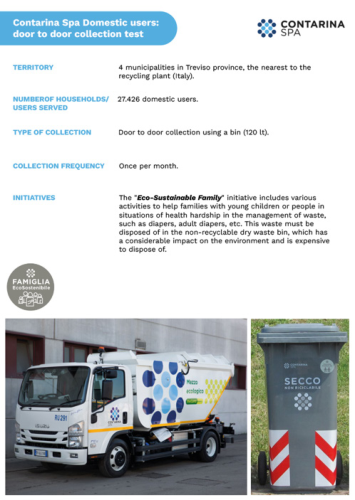
A pioneering experience in the Italian context is represented by the experimental facility implemented at Contarina S.p.A. (Treviso) with Fater technology, inaugurated in 2015, which constituted the first integrated full- scale system dedicated to AHP recycling. The project tested an integrated system of door-to-door collection, treatment, and material recovery, enabling the production of high-quality SRM from household waste. Although the experience concluded in 2022, it provided important technical and organizational insights, representing a pilot model useful for planning the new NRRP-funded facilities and for defining collection, treatment, and valorization protocols for AHP.
The results of the “Prima indagine di mercato sul riciclo dei pannolini in Italia” conducted by Legambiente and Mizzouri (2025) on a targeted sample of 502 parents using diapers provide relevant insights into the social
540 Terenzi and Binetti dimension and demand for such policies: the survey (dataset of 100,000 datapoints, from which 87,850 joint behavioral data points were extracted from interviews, generating 20,080 responses later categorized into 37 groups) reveals a significant information gap - only a small proportion of parents are aware of the end-of-life details of AHP - but also indicates potential willingness for economic and behavioral participation. While price remains the primary decision factor at purchase, education regarding recycling and local management significantly increased the propensity to bear an additional cost: the mean declared willingness-to-pay was +€4.82 per pack (typical pack of 17 units), indicating that supply chain transparency and perceived recycling effectiveness can convert latent demand into direct financial support.
The results highlight that over 45% of the sample express high concern about diaper waste impacts, showing a clear preference for recycling over landfill or incineration; simultaneously, there is a request for municipalities to allocate part of the waste tax to enhance separate collection activities and an expectation of economic benefits, in the form of reduced tariffs or incentives linked to the adoption of virtuous recovery practices (Legambiente and Mizzouri, 2025). In this context, transparency is no longer merely an ethical value but a strategic lever for companies seeking to establish an authentic relationship with their audience (Terenzi and Binetti, 2025).
Clear territorial differences also emerge within the national context: parents in the North-East and South show greater willingness to pay and higher initial engagement, whereas parents in the North-West appear more skeptical and require stronger technical and communication guarantees.
From a management perspective, the research also indicates widespread distrust in the ability of local operators to correctly process AHP; therefore, building trust will require the involvement of independent technical partners, transparent communication on resource destinations, and accountability measures regarding the use of resources derived from the TARI tax. Moreover, the perception of potential value derived from the recovery of these wastes suggests that, beyond the environmental argument, the economic valorization of SRM can constitute a persuasive argument for operators and policymakers (Legambiente and Mizzouri, 2025).
These findings provide useful insights for assessing the socio-economic feasibility of facilities such as the Ponte Rio (PG) plant and for designing EPR models and collection services that integrate technical sustainability, social acceptance, and financial sustainability.
FROM COLLECTION SYSTEMS DEDICATED TO AHP RECYCLING Dedicated collection systems for AHP represent the primary element for establishing stable and scalable recycling supply chains. As highlighted by the Embraced project, launched in June 2017, the implementation of recycling depends on the availability of a continuous and sufficiently concentrated incoming stream, originating both from household users and large producers (care homes, hospitals, nurseries). The project aimed to create a demonstration facility, the first of its kind, as an integrated biorefinery in Amsterdam, based
Smart Materials From Absorbent Hygiene Products (AHP) Waste 541 on the valorization of the cellulosic fraction of post-consumer AHP waste to produce bio-based components, polymers, and fertilizers (Embraced Consortium, 2020).
In various European contexts, there is a rapid expansion of separate collection schemes for AHP, often in response to the increasing share of this fraction in residual waste (up to 15-25% in some areas) and to reduced collection frequencies for residual waste (Embraced Consortium, 2020).
Pilot experiences, presented in the document “Closing the Loop of Absorbent Hygiene Products - Blueprint for the Replication of the Embraced Recycling Model” (2020), demonstrate a range of operational solutions: on one hand, urban systems based on “smart” containers, as in the case of the Municipality of Amsterdam, where smart bins are accessible via an app and integrated into a digital platform that informs users about the environmental benefits of recycling and allows them to monitor their contribution; on the other hand, door-to-door collection models that integrate AHP into existing logistics, as in Italian municipalities served by operators such as Contarina S.p.A., A&T 2000 SpA, or ESA-Com, where diapers are deposited in dedicated bags and collected at varying frequencies, often combined with organic or residual waste depending on the tariff structure and service choices (Embraced Consortium, 2020) (see Figure 1).
In Italy, over 800 municipalities - covering approximately 12 million inhabitants - are already served by AHP collection services, even in the absence of operational recycling solutions, confirming that collection constitutes a preparatory measure that can lay the groundwork for the establishment of specialized facilities (Italian Institute for Environmental Protection and Research, 2024).
Figure 1: Examples of national and international collection system data sheets.
542 Terenzi and Binetti The treatment and recovery process for AHP involves a sequence of main phases aimed at separating and valorizing the components of the waste:
- Dedicated collection: ensures a constant material flow from household users and large producers (care homes, nurseries, hospitals). - Storage: collected waste is sent to controlled areas designed to contain odors and prevent contamination. - Shredding: reduces material volumes and prepares them for subsequent treatment operations. - Sterilization: ensures complete hygienization of the waste, making it safe for handling and material recovery. - Drying and SRM separation: allows the distinction of cellulose, plastics, and SAPs, which can be reintroduced into the production cycle.
Each ton of recycled AHP waste produces approximately 150 kg of cellulose, 75 kg of plastic, and 75 kg of SAPs, thus providing a significant amount of reusable materials for new products and circular design applications (Pera, 2025).
In this context, the regulatory framework of End of Waste 62/2019 assumes a fundamental enabling role. In 2023, the Ministry of Environment and Energy Security announced an update to the End of Waste decree for AHP, to facilitate the exit of recovered materials from the waste classification (biological, chemical, environmental requirements) and promote their industrial reuse (Ministry of Environment and Energy Security, 2023). The decree establishes the criteria under which heterogeneous polyolefin-based plastics, SAPs, and cellulose recovered from AHP cease to be classified as “waste” and are recognized as SRM. A “Secondary Raw Material” is a material derived from recovery and recycling processes of waste or end-of- life products that can be reintroduced into production cycles as a replacement for or in addition to virgin raw materials (European Commission, 2025). Within the framework of European circular economy policies, such materials are recognized as strategic elements for improving resource efficiency and reducing dependency on primary raw materials.
In research and concrete applications in product design, heterogeneous plastics can be used in manufacturing processes to produce rigid or semi- rigid components (containers for separate collection, furniture and urban furnishing elements, technical packaging components), and cellulose can be used for paper or textile products (low-SAPs cellulose).
In this sense, the integration of dedicated collection systems, plant technologies, and clear End of Waste criteria allows AHP to be reconfigured not merely as a high-impact disposal cost, but as a potentially valorized resource flow, capable of feeding new product chains and measurably strengthening the circular dimension of the waste system.
DESIGN FOR SUSTAINABILITY: CASE STUDIES Within the field of design, figures such as Tomás Maldonado (1967) and Victor Papanek (1971) introduced, already in the second half of the twentieth century, a profoundly critical and ecological perspective on design,
Smart Materials From Absorbent Hygiene Products (AHP) Waste 543 challenging the notion of design as mere object production and orienting it toward social and environmental responsibility. These theoretical contributions laid the conceptual foundations of ecodesign, or design for sustainability, a design approach aimed at reducing environmental impacts across the entire lifecycle of products, services, and systems (Brezet and van Hemel, 1997).
In this context, ecodesign is positioned as a strategic tool for the transition to a circular economy: designing “upstream” for disassembly, component separation, material regeneration, and lifecycle closure makes technically and logistically feasible the very recovery strategies that environmental policies and regulatory frameworks promote “downstream” (Vezzoli and Manzini, 2008).
Within the present research, design for sustainability assumes an operational role when the SRM derived from AHP recycling are considered not only as technical outputs of the facility but as genuine “design materials”. In this context, ecodesign is not understood as an autonomous discipline nor merely as a technical solution, but rather as a hybrid field of research and design practice, requiring transdisciplinary skills and a critical ability to read and interpret contexts (Binetti and Terenzi, 2025). On the design front, a product concept is thus developed based on the SRM obtained from AHP recycling, exploring applications capable of making tangible and emotionally perceptible the positive outcomes of citizens’ disposal behavior.
To guide these design choices, various national and international case studies related to product families developed from SRM are analyzed and catalogued. The comparative sheets produced serve a dual purpose: on one hand, they allow the construction of an up-to-date overview of the state of the art, identifying replicable solutions, recurring criticalities, and enabling factors; on the other hand, they provide concrete input to valorize the specific case study of the AHP facility in Ponte Rio (PG), directing design choices toward outcomes compatible with the characteristics of the SRM actually available (see Figures 2 and 3).
THE RE-CIG CASE Within this context, the innovative Italian start-up Re-Cig (2024), founded in Trento in 2016, represents the sole national and European example of how a complex urban waste stream - cigarette butts - can be transformed into a resource through an integrated approach of technological innovation and social awareness.
For over 30 years, cigarette butts have been the most common waste worldwide, accounting for up to 90% of litter and often cited as one of the main pollutants of urban streets and beaches. It is estimated that 65% of smokers improperly dispose of them without using an ashtray (Marevivo, 2020). The idea of the start-up arose from increasing awareness of the environmental impact caused by the dispersion of cigarette butts, a waste still largely underestimated and inadequately managed within ordinary collection systems. Their widespread presence in the environment generates particularly
544 Terenzi and Binetti critical effects on ecosystems - especially aquatic ones, where the release of microplastics and toxic substances alters biological balances - and indirectly affects human health through bioaccumulation along the food chain.
Figure 2 and 3: Example of national and international case study sheets.
Within this research, the Re-Cig method was therefore adopted as a methodological case study to systematically analyze the three key stages of the circular supply chain:
- Organization of a dedicated collection system for cigarette butts (B2B and B2G service): companies or public administrations can purchase the service and receive “Smoker Points” on loan - collection containers that combine functionality and design. The service includes technical consultancy for identifying the optimal collection location, transportation, installation, and quarterly emptying of the Smoker Points.
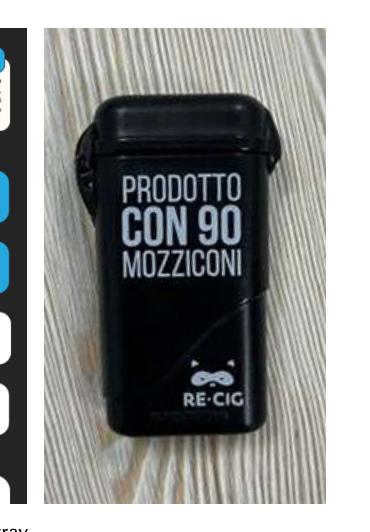
- Treatment and processing: transforms the waste into SRM through stages of selection, inertization, and technological transformation. Specifically, the process comprises several steps including sieving, pre-washing and washing, and finally drying and thermal mixing. - Eco-design initiatives: application of Re-CA® (Recycled Cellulose Acetate) in new sectors. The start-up collaborates with companies in the fashion industry to produce clothing accessories (buttons, zippers, and fasteners) and directly manufactures portable ashtrays using Re-CA® mixed with production waste from the eyewear industry. These applications not only close the material lifecycle but also make the outcome of users’ disposal behavior tangible and recognizable (see Figure 4).
This methodological analysis, based on an integrated reading of dedicated collection, the process, and product outputs, can be replicated and adapted to the case study of AHP, with the aim of evaluating not only the technical and managerial feasibility of recycling but also the capacity of the supply chain to generate perceived value and trust, essential elements for consolidating over time circular economy models centered on design for sustainability.
Figure 4: RE-CIG Report 2024, portable ashtray.
CONCLUSION
The valorization of AHP and SRM represents an area of increasing scientific and industrial relevance. The present research demonstrates how materials traditionally considered waste can be transformed into resources for the creation of innovative products, highlighting the strategic role of design for sustainability in promoting circular economy models and effectively closing material life cycles.
546 Terenzi and Binetti The integrated analysis of collection systems, AHP treatment, and product design based on SRM allowed the identification of the conditions necessary to ensure stable flows to facilities, obtain high-quality SRM, and translate these resources into concrete design applications. In particular, the investigation highlighted that citizen engagement and process transparency are key elements for consolidating trust and participation, making the environmental, social, and economic value of the supply chain tangible.
The ultimate objective of the research is the development of a design product created from AHP SRM, aiming to demonstrate the overall effectiveness of the new Gesenu AHP facility and to promote a replicable circular economy model. This approach integrates technological innovation, social responsibility, and sustainable design strategies, generating tangible benefits in the Umbria region and in the textile, furniture, paper-based, and architectural sectors.
In summary, the work provides an original contribution to the transition toward more circular, responsible, and innovative industrial supply chains, highlighting the potential of design as a lever for material regeneration and the creation of shared value.
REFERENCES
Binetti, G., Terenzi, B. (2025) “Ecodesign per l’inclusione: Strategie di economia circolare per spazi urbani accessibili e sostenibili”. In Strade per la gente / Streets for People: Le persone negli spazi aperti - Progetti, pratiche e ricerche per il benessere psicofisico (pp. 410–417). Anteferma Edizioni. Available at https://doi. org/10.57623/979-12-5953-188-9. Brezet, H., van Hemel, C. (1997). ECODESIGN: A promising approach to sustainable
production and consumption. Paris, France: UNEP. Brundtland, G.H. (1987). Our Common Future. Oxford, UK: Oxford University Press. Italian Ministry of Environment and Energy Security. (2025). End of Waste Decree
62/2019 for Absorbent Hygiene Products (AHP): Criteria for the recognition of plastics, SAP, and cellulose from AHP as secondary raw materials. Official Gazette of the Italian Republic.
Embraced Consortium (2020). Closing the loop of Absorbent Hygiene Products – Blueprint for the replication of the Embraced recycling model (Deliverable 1.7). Embraced Project, Grant Agreement No. 745746, Horizon 2020. European Commission. (2025). Strategy for secondary raw materials (Unione
Europea). European Commission document on the strategy for secondary raw materials. Available at https://www.europarl.europa.eu/legislative-train/package- action-plan-for-the-circular-economy-sub-package/file-strategy-for-secondary- raw-materials?utm Fiksel, J. R. (ed.) (1996). Design for environment: Creating eco-efficient products and processes. New York: McGraw-Hill. Greenpeace. (2025). Sustainability. Greenpeace UK. Available at https://www.
greenpeace.org.uk/challenges/sustainability/ Italian Institute for Environmental Protection and Research (ISPRA) (2024). Urban Waste Report – 2024 Edition (ISPRA Reports, 407/2024). Rome, Italy: ISPRA. Available at: https://www.isprambiente.gov.it/files2024/pubblicazioni/rapporti/ rapportorifiutiurbani_ed-2024_n406_versione_integrale.pdf
Smart Materials From Absorbent Hygiene Products (AHP) Waste 547 Italian Ministry of Environment and Energy Security. (2021). National Recovery
and Resilience Plan (NRRP) – Mission 2, Component 1, Investment 1.1. Italian Government. Italian Ministry of Environment and Energy Security. (2023). National Recovery and Resilience Plan - Mission 2: Green Revolution and Ecological Transition. Intervention lines for waste treatment plants and the circular economy. Legambiente e Mizzouri. (2025). Prima indagine di mercato sul riciclo dei pannolini
in Italia (Presentation). Maldonado, T. (1967). Design, Science, and Education. London: Studio Vista. Marevivo. (2020). Report Piccoli gesti, grandi crimini. Sorrento: Marevivo Onlus. Papanek, V. (1971). Design for the Real World: Human Ecology and Social Change.
New York: Pantheon Books. Pera, M. (2025). Impianto innovativo di trattamento e recupero di pannolini (Presentation). Ecoforum Umbria. Available at https://www.legambienteumbria.it/ wp-content/uploads/2025/02/Presentazione-ing.-Pera_Impianto-PAP-GESENU_ Ecoforum-Umbria-2025.pdf Re-Cig (2024). Sustainability Report 2024. Available at https://drive.google.com/
file/d/1Pc2S7JvsTpoik9ZrZlNG1cx7LO13mkqq/view Terenzi, B., Binetti, G. (2025) “Greenwashing and ethical images: The ethics of proper corporate communication in sustainability”. In V. Menchetelli, F. Cotana & E. Dottorini (Eds.), IMG2025 - IMAGE ETHICS. Proceedings of the 5th International and Interdisciplinary Conference on Images and Imagination (pp. 136–147). Publica Press. Available at https://doi.org/10.82048/202513 United Nations Environment Programme, International Union for Conservation of
Nature, & World Wide Fund for Nature. (1991). Caring for the Earth: A strategy for sustainable living. Gland, Switzerland: IUCN, UNEP, WWF. United Nations. (2015). Transforming our world: The 2030 Agenda for Sustainable Development. United Nations. Available at https://sdgs.un.org/2030agenda US Environmental Protection Agency (US EPA) (2025). Systemic Definitions of
Sustainability. Washington, DC: US EPA. Available at https://www.epa.gov/ sustainability/learn-about-sustainability Vezzoli, C., Manzini, E. (2008). Design for environmental sustainability. London, UK: Springer.
LISTED IN THE AHFE DIGITAL BOOKSTORE CATALOGUE
Explore the complete digital volume
Intelligent Human Systems Integration (IHSI 2026): Disruptive and Innovative Technologies
Read this individual research paper free through the original publisher, or explore the full digital proceedings book.
ISBN 978-1-964867-76-2
Explore this ISBN in the AHFE Bookstore ↗Listed in the July 2026 bookstore catalogue; search by ISBN to confirm current availability · Digital book purchase optional