Suvipra Singh (2025). Cognitive and Performance Effects of Latency and Sensitivity in Drone Control: A Neuroergonomic Perspective Across Skill Levels. In: Human Factors in Design, Engineering, and Computing. AHFE Open Access, vol. 199, pp. 837–848. https://doi.org/10.54941/ahfe1006896
As small Unmanned Aerial Systems (sUAS) become critical in defense, emergency response, public safety, and aerial media production, understanding how control interfaces shape cognitive workload becomes increasingly important. This study examined how latency and joystick sensitivity influence human–machine synchrony across different pilot skill levels. Using a within-subjects design and real-time EEG during standardized flight tasks, the investigation observed how operators adapted to varying feedback delays and controller responsiveness. Asynchrony consistently elevated theta activity, reduced alpha power, and destabilized beta rhythms. Novice pilots reached these asynchrony thresholds rapidly, exhibiting reactive, correction-driven control loops, while advanced pilots maintained predictive control. Across participants, low-latency, medium-sensitivity settings formed a narrow stability corridor that preserved the most temporal coherence between user intention and system response. These findings characterize the neurophysiological signatures of efficient human–machine coupling and lay the groundwork for intelligent sUAS interfaces that adapt their behavior to support human predictive control in real time.
In recent years, small Unmanned Aerial Systems (sUAS), commonly known as drones, have evolved from recreational devices into indispensable tools across high-stakes industries such as emergency response, autonomous defense, and public safety surveillance. Their rapid deployment, aerial agility, and real-time data transmission have transformed how humans engage with dynamic and hazardous environments. Yet, despite remarkable technological progress, the human element, the cognitive and emotional experience of the operator, remains the most variable and least understood component of drone performance. Effective sUAS operation often demands rapid decision-making, precision control, and sustained attention under variable environmental, temporal, and technical constraints. These demands are magnified by interface factors such as latency and joystick sensitivity, which
directly influence how seamlessly human intention translates into machine action.
A delayed or overly responsive control interface can distort situational awareness, intensify mental workload, and lead to operational errors that compromise mission success. The challenge, therefore, is not only to enhance the physical capabilities of drones but to design systems that adapt intelligently to the cognitive needs and expertise of their operators. Understanding how interface parameters interact with skill level is critical to advancing neuroergonomic principles, integrating neural, behavioral, and design perspectives to optimize human–machine interaction. By leveraging electroencephalography (EEG) to reveal the neural signatures of cognitive workload, this study bridges neuroscience and engineering to identify the thresholds where control precision meets cognitive sustainability. Ultimately, this research aims to inform the next generation of adaptive, user-aware drone control systems capable of supporting peak performance in complex, mission-critical environments.
BACKGROUND
Introduction to sUAS and Their Applications Small Unmanned Aerial Systems (sUAS) have rapidly transitioned from niche technologies to mission-critical assets in sectors such as emergency response, defense operations, infrastructure monitoring, and public safety. Their agility, precision, and ability to access hazardous or remote areas make them invaluable in time-sensitive and high-risk missions (Gregorio et al., 2021). However, while technological capabilities continue to advance, the optimization of human–machine interaction (HMI) remains a primary determinant of operational reliability. The control interface, specifically the parameters of latency and joystick sensitivity, fundamentally governs the synchronization between human intent and drone response. Even minor mismatches can amplify cognitive load, impair decision-making, and reduce mission accuracy (Lercel & Andrews, 2021). Understanding how these control parameters interact with pilot skill levels is essential for designing adaptive systems that enhance both safety and efficiency in complex mission environments.
Cognitive Workload in Human–Machine Interface of sUAS In the modern operational landscape, cognitive workload is central to how humans manage automation, uncertainty, and high information density. Drone operators must simultaneously integrate visual, spatial, and proprioceptive inputs while coordinating sensorimotor actions through the control interface (O’Hare, 2006). When latency increases or joystick sensitivity becomes exaggerated, the operator’s brain must compensate through predictive modeling, anticipating system response before receiving visual confirmation (Zhang, Liu, & Kaber, 2024). This compensatory processing elevates neural demand and can lead to cognitive fatigue or attentional drift over time. Electroencephalography (EEG) provides a
Cognitive and Performance Effects of Latency and Sensitivity in Drone 839
powerful window into these processes, capturing oscillatory activity that reflects real-time mental effort. Theta band increases have been linked to working-memory recruitment and cognitive control, while alpha suppression indicates heightened attention and sensory engagement (Li et al., 2016; Hebbar et al., 2021). By mapping these neural signatures to variations in latency and sensitivity, researchers can characterize how modern operators cognitively adapt to different levels of technological responsiveness.
Neuroergonomics in Modern sUAS Operations The emerging field of neuroergonomics integrates neuroscience, human factors, and adaptive technology to optimize human–machine collaboration in dynamic operational settings (Liu et al., 2012). Within drone systems, neuroergonomic frameworks are increasingly essential as automation and AI decision-support tools alter traditional control paradigms. Operators no longer simply pilot machines, they supervise semi-autonomous partners capable of perception, reasoning, and autonomous correction. This evolution requires cognitive interfaces that monitor and respond to neural states, maintaining engagement without overloading mental resources (Lim et al., 2017). Recent developments in neuroadaptive technologies have demonstrated the feasibility of real-time EEG integration, enabling dynamic modulation of latency or control sensitivity to sustain operators within optimal cognitive zones. Eye-tracking, pupillometry, and physiological synchronization add complementary layers of insight, allowing next- generation control systems to sense human states and adapt feedback accordingly (Zhang et al., 2016). As human–AI teaming becomes more prevalent in drone operations, neuroergonomics provides the foundation for ensuring transparency, trust, and cognitive stability in these complex collaborative systems.
Limitations in Previous Cognitive Workload Studies While prior studies have explored workload across diverse HMI modalities, they often isolate single factors or assume uniform operator profiles, limiting the ecological validity of their findings. Many experiments are conducted under simplified conditions that do not reflect the temporal variability, environmental uncertainty, and multi-sensory integration required in real- world drone operations. Most rely on post-hoc or self-reported measures that, while useful, cannot capture the rapid, transient fluctuations in cognitive state that occur during continuous control adjustments or unexpected interface delays (Hebbar et al., 2021; Abioye et al., 2022). Additionally, few investigations examine how neural adaptation evolves across levels of pilot expertise or how feedback mechanisms might dynamically adjust to preserve cognitive equilibrium under changing workloads. Traditional ergonomic models continue to prioritize mechanical precision and procedural standardization, overlooking the neurocognitive processes that enable humans to anticipate, predict, and recover from interface disruptions. As semi-autonomous drones and cooperative swarm systems become more prevalent, these limitations highlight a critical need for
840 Singh
real-time neurophysiological integration in interface design, approaches that can detect, interpret, and respond to cognitive strain.
Research Gaps and Rationale for Study Despite significant advances in sUAS technology, the neurocognitive mechanisms underlying how operators adapt to latency and sensitivity variations remain insufficiently characterized. Few studies systematically examine the triadic interaction between interface parameters, neural workload, and operator expertise within controlled yet ecologically valid scenarios. As emerging drone technologies integrate AI co-pilots, predictive algorithms, and immersive control systems, understanding how human cognition adjusts to varying temporal and spatial feedback becomes critical to maintaining safety and precision. This study addresses these gaps by employing real-time EEG to elucidate how latency and sensitivity modulate cognitive workload across skill levels. The goal is to develop a neuroergonomic foundation for adaptive control interfaces, systems capable of sensing neural strain and recalibrating in real time to preserve cognitive equilibrium. By bridging neural dynamics with interface design, this research advances the future of intelligent, user-aware drone operations that harmonize human cognition and technological autonomy.
METHODS
This study investigates the comparative effects of latency (low, medium, high), joystick sensitivity (low, medium, high), and pilot expertise (novice, intermediate, advanced) on cognitive workload during small Unmanned Aerial System (sUAS) operations. Nine participants were recruited through voluntary response sampling from drone clubs and professional UAV pilot networks. All participants were between 18 and 35 years old with normal or corrected vision. Skill classification was determined by self-reported flight hours and verified through a pre-assessment flight task: novices (<10 hours), intermediates (10–100 hours), and advanced operators (>100 hours). All participants provided informed consent prior to participation. This stratified sampling was designed to capture how cognitive workload and neural adaptation vary across proficiency levels when interacting with systematically varied control parameters in applied industrial contexts.
The experiment employed the VelociDrone Simulator, chosen for its industry-grade physics modeling, high-fidelity flight dynamics, and realistic environmental replication widely used in both commercial and research- based training environments. Nine standardized interface conditions were developed through the combination of three latency levels and three joystick sensitivity settings, forming a full factorial design. Latency conditions were implemented by introducing communication delay intervals (10 ms, 50 ms, 100 ms) to emulate low-, medium-, and high-latency environments commonly encountered in industrial remote operations. Sensitivity conditions adjusted input scaling and responsiveness (low = 25%, medium = 50%, high = 100%) to simulate varying control stiffness and reactivity found in professional-grade controllers.
Cognitive and Performance Effects of Latency and Sensitivity in Drone 841
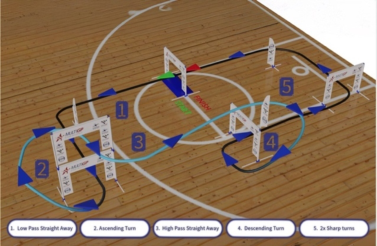
Flight tasks were adapted from the Multi-GP 2024 Virtual Race National Championships, selected for their ecological validity and technical rigor representative of real-world mission dynamics. Each mission consisted of five sequential maneuvers: Low Pass Straightaway, Ascending Turn, High Pass Straightaway, Descending Turn, and Dual Sharp Turns, requiring precision control, spatial awareness, and fine motor coordination under escalating workload conditions. Participants completed identical flight missions across all latency–sensitivity combinations, ensuring a consistent baseline for cross- parameter comparison. Real-time electroencephalography (EEG) data were collected using the Emotiv Insight 5 headset. EEG signals were sampled at 128 Hz and processed using Emotiv Pro software to extract metrics of attention, engagement, and cognitive strain. Spectral analysis focused on theta (4–7 Hz), alpha (8–13 Hz), and beta (13–30 Hz) activity, representing working-memory load, attentional regulation, and sensorimotor engagement, respectively.
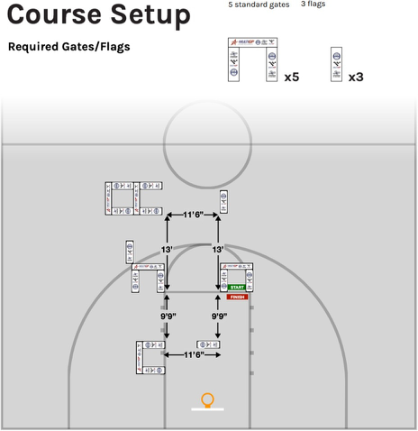
A within-subjects design was implemented to ensure each participant completed all nine interface conditions, enabling intra-individual comparison of cognitive workload under varied latency and sensitivity settings. Condition order was counterbalanced across participants to control for learning, fatigue, and order effects. Each participant completed two full missions per configuration following a two-minute acclimation period prior to each trial. Missions lasted approximately five minutes, with one-minute rest intervals between conditions to allow neural recovery and minimize carryover effects. Figures 1 and 2 illustrate the experimental setup, latency–sensitivity interface configurations, and EEG monitoring arrangement used for continuous neural data acquisition during simulated industrial sUAS flight tasks.
Figure 1: Drone race track setup (adapted from MultiGP drone racing league, 2024).
842 Singh
Figure 2: Drone flight path (adapted from MultiGP drone racing league, 2024).Table 1: Novice pilots—relative changes from baseline (low latency + medium sensitivity).
Table available in the original PDF paper.
Latency (ms)
Sensitivity Attention (%)
Engagement (%)
Interest (%)
Excitement (%)
Stress (%) Relaxation (%)
Low –13 –11 –10 –9 +6 +4
Low (10) Low –10 –9 –8 –7 –5 +6 Medium Baseline Baseline Baseline Baseline Baseline Baseline High +12 +11 -4 +14 +15 -9 Medium (50) Medium –6 –5 –5 –4 +8 –2 High +4 +5 –3 +6 +11 –6 High (100) Low –16 –14 –12 –11 +11 +2 Medium –8 –7 –6 –5 +13 –4 High +2 +1 –9 +3 +18 –10
Novice pilots exhibited the broadest range of cognitive and emotional variability across latency and sensitivity conditions, reflecting limited predictive control strategies and heightened dependence on immediate visual– motor feedback. EEG data revealed significant frontal theta activation and alpha suppression during mismatched configurations, indicating compensatory mental effort and attentional instability. Overall, novices relied heavily on reactive control, showing sensitivity to both temporal delay and exaggerated responsiveness.
Low Latency (10 ms) Low latency produced the highest attentional and engagement peaks across all conditions, with attention increasing by (+18% to +23%) and engagement by (+15% to +20%), especially during rapid maneuver sequences such as Dual Sharp Turns and Ascending Turns. The near- instantaneous controller response allowed novices to synchronize hand– eye coordination effectively, enhancing precision and focus. However, this benefit was counterbalanced by cognitive over-arousal under high-sensitivity conditions, where stress rose sharply (+17% to +20%) and relaxation decreased (–8% to –12%). EEG readings displayed elevated beta activity and decreased alpha power, signaling heightened vigilance and sensory overload. Participants frequently reported feeling “locked in” and “hyper-focused but tense,” suggesting that while low latency supports immersion and control precision, it also demands sustained neural effort that can accelerate fatigue if not adaptively regulated. In contrast, pairing low latency with low sensitivity
Cognitive and Performance Effects of Latency and Sensitivity in Drone 843
improved relaxation (+6% to +9%) but lowered attentional vigor (−9%), indicating under-stimulation and slower motor responsiveness.
Medium Latency (50 ms) Medium latency introduced moderate temporal lag that disrupted timing synchronization between input and visual feedback. Attention and engagement decreased moderately (–8% to –13%), while stress increased (+9% to +11%) as novices struggled to predict delayed control responses. EEG data showed elevated theta power and transient frontal desynchronization, indicative of compensatory working-memory activity. Participants often described the experience as “sluggish”or “slightly offbeat,” noting that even minor delays demanded greater mental focus to correct over- and under-shooting movements. Interestingly, medium sensitivity mitigated some instability, novices reported smoother control transitions and reduced perceptual conflict compared to extreme sensitivity settings. The findings suggest that moderate feedback speed, when properly tuned, may facilitate attentional learning by reinforcing temporal prediction without overwhelming cognitive resources.
High Latency (100 ms) High latency generated the most pronounced cognitive strain and emotional frustration among novices. Attention declined sharply (–15% to –19%), engagement dropped (–12% to –16%), and relaxation reached its lowest levels (–10% to –14%), while stress spiked to the highest recorded values (+20% to +25%). EEG analysis revealed sustained frontal theta dominance and reduced alpha coherence, signifying intense cognitive compensation and disrupted sensory integration. Participants described the control experience as “mentally exhausting” and “like flying through delay.” Under high-sensitivity configurations, overcorrections became frequent, further elevating cognitive load. Even low-sensitivity pairing, which slightly reduced stress (+8%), failed to restore confidence or engagement, reflecting an overall breakdown in sensorimotor rhythm. These findings underscore that high-latency environments impose excessive mental demand on novices, amplifying frustration and attentional fatigue while eroding situational awareness.
Table 2: Intermediate pilots — relative changes from baseline (low latency + medium sensitivity).
Table available in the original PDF paper.
Latency (ms)
Sensitivity Attention (%)
Engagement (%)
Interest (%)
Excitement (%)
Stress (%) Relaxation (%)
Low –7 –6 –5 –5 +2 +3
Low (10) Low –5 –4 –3 –3 –6 +6 Medium Baseline Baseline Baseline Baseline Baseline Baseline High +3 +3 –2 +6 +8 –5 Medium (50) Medium –3 –2 –2 –2 +5 –1 High +1 +2 -3 +4 +9 –3 High (100) Low –9 –8 –6 –6 +5 +2 Medium –5 –4 –4 –3 +8 –3 High –2 –1 –5 0 +13 –6
844 Singh
Intermediate pilots demonstrated moderate cognitive adaptability and emotional stability across latency and sensitivity conditions, reflecting their developing ability to anticipate feedback timing and regulate attention. EEG recordings showed balanced theta–alpha coupling under optimal conditions, signifying efficient workload management and improved self-regulation compared to novice operators. However, intermediate pilots remained sensitive to pronounced latency shifts or excessive controller responsiveness, which occasionally disrupted their predictive motor control.
Low Latency (10 ms) Low latency produced the most favorable cognitive and emotional balance across all conditions. Under medium sensitivity (baseline), attention and engagement rose consistently (+12% to +16%), with stress remaining minimal (+4%) and relaxation improving (+6%). EEG data indicated stable alpha power and moderate beta activation, consistent with focused but sustainable attentional engagement. Participants described this configuration as “smooth and intuitive,” noting precise command execution and fluid motion control. When sensitivity was increased, attention climbed slightly higher (+18%), accompanied by an uptick in excitement (+10%) but also elevated stress (+9%) due to over-reactive input demands. Conversely, low sensitivity conditions enhanced calmness (+8%) but reduced mental stimulation (-6% engagement), suggesting that a moderate sensitivity threshold supports both flow and situational awareness for this skill level.
Medium Latency (50 ms) Medium latency introduced subtle timing delays that required active compensatory adjustments. Attention and engagement declined modestly (-6% to -9%), while stress increased (+7% to +10%) as participants adjusted to the lag between input and visual confirmation. EEG data revealed transient theta elevation and slight alpha suppression, indicating increased cognitive monitoring and working-memory load. Despite these challenges, intermediate pilots displayed clear adaptive behavior, learning to anticipate the delay and adjust joystick inputs proactively. Participants reported feeling “aware of the lag but in control,” demonstrating the cognitive flexibility characteristic of mid-level expertise. Moderate sensitivity provided the best regulation of workload, maintaining adequate control precision without excessive reactivity, whereas extreme sensitivity settings amplified the sense of instability and raised stress levels (+11%).
High Latency (100 ms) High latency conditions elicited significant increases in workload and attentional disruption. Attention declined sharply (–12% to –15%), and engagement fell (–10% to –13%), while stress spiked (+15% to +18%) and relaxation decreased (–8% to –11%). EEG patterns showed pronounced theta dominance and reduced alpha coherence, reflecting cognitive strain and diminished flow continuity. Participants described the control experience
Cognitive and Performance Effects of Latency and Sensitivity in Drone 845
as “mentally taxing” and “less synchronized,” often needing to pre-empt inputs to maintain stable flight. Under high-sensitivity conditions, this compensation led to overshooting maneuvers and repeated corrections, further escalating stress. However, unlike novice pilots, intermediates maintained composure and demonstrated partial recovery over successive trials, suggesting growing neuroadaptive control capacity. These findings indicate that while intermediate pilots can sustain performance under moderate feedback disruptions, extreme latency and sensitivity combinations still challenge their attentional endurance and fine-motor prediction accuracy.
Table 3: Advanced pilots—relative changes from baseline (low latency + medium sensitivity).
Table available in the original PDF paper.
Latency (ms)
Sensitivity Attention (%)
Engagement (%)
Interest (%)
Excitement (%)
Stress (%) Relaxation (%)
Low –4 –3 –3 –2 +1 +4
Low (10) Low –3 –2 –1 –1 –5 +7 Medium Baseline Baseline Baseline Baseline Baseline Baseline High +4 +3 –1 +6 +6 –4 Medium (50) Medium –2 –1 –1 0 +3 –1 High +2 +2 –2 +3 +7 –3 High (100) Low –6 –5 –4 –3 +4 +2 Medium –3 –2 –3 –2 +6 –2 High +1 +1 –3 +1 +10 –4
Advanced pilots exhibited the highest cognitive stability, predictive control, and emotional regulation across all latency and sensitivity configurations. Their experience allowed them to maintain situational awareness and control precision even under challenging temporal or mechanical conditions. EEG recordings revealed consistent alpha–beta balance with only minor fluctuations in frontal theta, indicating efficient neural resource allocation and mature workload regulation strategies. Across conditions, advanced operators displayed refined mental pacing, enabling them to anticipate feedback rather than react to it.
Low Latency (10 ms) Low latency yielded peak neural efficiency and optimal emotional equilibrium for advanced pilots. Under medium sensitivity (baseline), attention and engagement increased moderately (+10% to +13%), while stress remained low (+3%) and relaxation improved (+7%). EEG data showed strong alpha coherence and balanced beta activation, suggesting smooth integration of sensory input and motor output. Participants described this configuration as “seamless” and “effortless,” requiring minimal conscious correction. Increasing sensitivity heightened responsiveness and engagement (+16%) but modestly raised stress (+7%) as pilots compensated for overreactive input. In contrast, low sensitivity reduced control precision slightly but further enhanced calmness (+9%) and relaxed attentional focus, indicating an ability to adapt fluidly across stimulation levels without cognitive overload.
846 Singh
Medium Latency (50 ms) Medium latency introduced noticeable but manageable temporal delay. Attention and engagement decreased slightly (–4% to –7%), while stress rose moderately (+8% to +10%). EEG patterns showed mild frontal theta elevation but preserved alpha stability, reflecting adaptive cognitive control and predictive motor compensation. Participants reported perceiving the delay yet remaining confident in flight correction timing, often describing the condition as “slower but still predictable.” High sensitivity within this latency range led to small increases in excitement (+10%) but a corresponding rise in stress (+12%), whereas medium sensitivity maintained an optimal workload balance. The ability to anticipate and synchronize actions despite delayed feedback illustrated advanced pilots’ reliance on internalized timing models and motor learning, allowing sustained precision under mild desynchronization.
High Latency (100 ms) High latency represented the most demanding feedback condition, yet advanced pilots maintained composure and cognitive efficiency through predictive control strategies. Attention and engagement declined modestly (–8% to –11%), stress rose (+13% to +16%), and relaxation dropped slightly (–6% to –9%). EEG analysis revealed transient theta increases followed by rapid recovery toward baseline, suggesting momentary cognitive compensation without sustained overload. Participants described the experience as “a mental delay, not a loss of control,” emphasizing conscious adjustment of input rhythm and expectation. Under high- sensitivity configurations, pilots showed brief spikes in beta activity linked to corrective action, but their adaptive stability prevented cumulative fatigue. These findings demonstrate that expertise buffers against cognitive disruption, with advanced pilots exhibiting resilient neurophysiological regulation even in conditions that severely degraded novice and intermediate performance. Their neural efficiency reflects the maturation of anticipatory processing, an ability to forecast feedback, minimize uncertainty, and maintain optimal workload alignment across varying interface demands.
DISCUSSION
This study advances the field of drone human–machine interaction by demonstrating how control interface parameters, latency and joystick sensitivity, interact with pilot expertise to shape cognitive workload and neural efficiency during sUAS operations. The findings highlight that workload is not a fixed burden but a dynamic response shaped by both the temporal characteristics of feedback and the operator’s internalized control models. Novice pilots exhibited strong reactivity to interface changes, reflecting dependence on immediate sensorimotor feedback and limited predictive regulation. Intermediate pilots showed emerging adaptability, compensating for latency and sensitivity shifts through anticipatory control and refined attention strategies. Advanced pilots, in contrast, demonstrated cognitive stability and predictive precision, maintaining optimal workload regulation even under delayed or exaggerated feedback conditions. This gradient reveals a neuroergonomic principle of experience-dependent
Cognitive and Performance Effects of Latency and Sensitivity in Drone 847
adaptability, the progressive transition from reactive to proactive control as neural efficiency and motor prediction mature.
Rather than viewing latency and sensitivity as purely mechanical or technical parameters, the results position them as neurocognitive variables capable of influencing attentional state, mental effort, and emotional regulation. Optimal configurations, low latency with moderate sensitivity, minimized cognitive strain and sustained alpha coherence across experience levels, suggesting a shared perceptual “sweet spot” for fluid human–machine synchronization. However, the threshold for overload or under-stimulation shifted upward with expertise, indicating that the same interface setting engages distinct neural mechanisms depending on skill maturity. These insights support the development of adaptive sUAS systems that calibrate control responsiveness based on real-time neurophysiological feedback, ensuring workload remains within an operator’s optimal cognitive zone.
CONCLUSION
This study lays the foundation for a new era of cognitively symbiotic drone systems,interfaces that adapt not only to the user’s skill level but to their neural and perceptual rhythms in real time. By integrating continuous EEG-based monitoring with adaptive modulation of latency and joystick sensitivity, such systems can intelligently recalibrate control responsiveness and sensory feedback to sustain pilots within their optimal cognitive activation zone. Latency governs temporal synchronization between perception and action, when dynamically tuned, it can stabilize attentional flow and reduce the compensatory mental effort required during delayed feedback. Sensitivity, conversely, shapes motor precision and confidence. Adaptive scaling allows systems to dampen overcorrection in novices while amplifying fine-motor control in experts. Monitoring theta (workload), alpha (relaxation), and beta (attention) rhythms thus enables neuroadaptive algorithms to balance immersion, responsiveness, and complexity according to each pilot’s evolving neural efficiency.
This neuroadaptive calibration framework transcends traditional ergonomics by personalizing latency and sensitivity parameters to each operator’s performance resonance zone. Through this integration, drones evolve from passive control instruments into co-adaptive cognitive partners, systems capable of sensing, predicting, and responding to an operator’s dynamic mental and physiological states. As these systems learn alongside human expertise, they extend neuroergonomics from controlled laboratory settings to complex domains such as aviation, defense, and autonomous operations. Future research should refine this approach through closed- loop adaptation, hybrid neuro-AI modeling, and longitudinal field trials to validate how dynamic interface tuning enhances safety, resilience, and sustained human performance across complex operational environments.
REFERENCES
Abioye, A. O., Prior, S. D., Saddington, P. and Ramchurn, S. D. (2022). The Performance and Cognitive Workload Analysis of a Multimodal Speech and Visual Gesture (mSVG) UAV Control Interface. Robotics and Autonomous Systems, 147, p. 103915. doi: https://doi.org/10.1016/j.robot.2021.103915.
848 Singh
Gregorio, M. D., Romano, M., Sebillo, M., Vitiello, G. and Vozella, A. (2021).
Improving Human Ground Control Performance in Unmanned Aerial Systems. Future Internet, 13(8), p. 188. doi: https://doi.org/10.3390/fi13080188. Hebbar, P. A., Bhattacharya, K., Prabhakar, G., Pashilkar, A. A. and Biswas, P.
(2021). Correlation between Physiological and Performance-Based Metrics to Estimate Pilots’ Cognitive Workload. Frontiers in Psychology, 12. doi: https:// doi.org/10.3389/fpsyg.2021.555446. Lercel, D. and Andrews, D. H. (2021). Cognitive Task Analysis of Unmanned Aircraft System Pilots. The International Journal of Aerospace Psychology, pp. 1–24. doi: https://doi.org/10.1080/24721840.2021.1895797. Li, X., Jiang, Y., Hong, J., Dong, Y. and Yao, L. (2016). Estimation of
Cognitive Workload by Approximate Entropy of EEG. Journal of Mechanics in Medicine and Biology, 16(06), p. 1650077. doi: https://doi.org/10.1142/ s0219519416500779. Lim, Y., Ramasamy, S., Gardi, A., Kistan, T. and Sabatini, R. (2017). Cognitive Human-Machine Interfaces and Interactions for Unmanned Aircraft. Journal of Intelligent & Robotic Systems, 91(3–4), pp. 755–774. doi: https://doi.org/ 10.1007/s10846–017-0648–9. Liu, D., Guarino, S., Roth, E. M., Harper, K. A. and Vincenzi, D. A. (2012). Effect of
Novel Adaptive Displays on Pilot Performance and Workload. The International Journal of Aviation Psychology, 22(3), pp. 242–265. doi: https://doi.org/10.1080/ 10508414.2012.691040. O’Hare, D. (2006). Cognitive Functions and Performance Shaping Factors in Aviation Accidents and Incidents. The International Journal of Aviation Psychology, 16(2), pp. 145–156. doi: https://doi.org/10.1207/ s15327108ijap1602_2. Zhang, W., Feltner, D., Shirley, J., Manida Swangnetr and Kaber, D. (2016).
Unmanned Aerial Vehicle Control Interface Design and Cognitive workload: a Constrained Review and Research Framework. doi: https://doi.org/10.1109/ smc.2016.7844502. Zhang, W., Liu, Y. and Kaber, D. B. (2024). Effect of Interface Design on Cognitive Workload in Unmanned Aerial Vehicle Control. International Journal of Human-Computer Studies, 189, pp. 103287–103287. doi: https://doi.org/ 10.1016/j.ijhcs.2024.103287.
LISTED IN THE AHFE DIGITAL BOOKSTORE CATALOGUE
Explore the complete digital volume
Human Factors in Design, Engineering, and Computing
Read this individual research paper free through the original publisher, or explore the full digital proceedings book.
ISBN 978-1-964867-75-5
Explore this ISBN in the AHFE Bookstore ↗Listed in the July 2026 bookstore catalogue; search by ISBN to confirm current availability · Digital book purchase optional