Maryam Bathaeijavareshk, Iveta Eimontaite, Sarah Fletcher, Nikolaos Koufokotsios (2025). Multidisciplinary Perspectives on Ethical AI-Enabled Human-Robot Interaction in Manufacturing. In: Human Factors in Robots, Drones and Unmanned Systems. AHFE Open Access, vol. 179, pp. 126–134. https://doi.org/10.54941/ahfe1006381
In recent years, AI-enabled technologies have become an integral part of our daily lives. While industries such as finance, healthcare, and logistics have rapidly adopted AI-driven solutions, the manufacturing sector has approached this transition more cautiously. The integration of AI-enabled human-robot interaction (HRI) in manufacturing presents opportunities and challenges impacting workforce sustainability, ergonomics, user acceptance, and ethical deployment. This qualitative study employed operator engagement workshops and semi-structured interviews to identify critical operational and safety concerns in powder handling for beverage production. Key findings revealed significant ergonomic issues, notably physical strain and airborne dust exposure, prompting recommendations for adaptive robotic systems and real-time monitoring sensors to enhance operator comfort and safety. User acceptance emerged as essential but context-specific, driven by mandated interactions and reliant on trust built through transparent communication and standardized training. Ethical concerns focused on transparency, fairness, and privacy, particularly the balance between effective surveillance and respecting worker privacy. Additionally, workforce skill sustainability requires comprehensive training to address emerging roles. The study concludes that a multidisciplinary, human-centered approach is vital for successful, ethical, and sustainable AI integration into manufacturing environments
Artificial Intelligence (AI) has become a cornerstone of innovation across various industries, influencing daily operations. While sectors like finance and healthcare have rapidly embraced AI, the manufacturing industry has exhibited caution in its adoption. However, challenges such as workforce shortages, evolving skill requirements, and the pursuit of sustainable strategies necessitate the integration of AI-enhanced solutions. This integration aims not only to boost production efficiency but also to enhance employee well-being and organizational commitment. The key issues which although not new but exacerbated by this change are ergonomics and
Multidisciplinary Perspectives on Ethical AI-Enabled Human-Robot Interaction 127
user well-being, user acceptance and workforce adoption, ethical AI and decision-making, and skill changes and workforce sustainability.
Ergonomics and Psychological Well-Being in AI-Enabled Robotic Systems Integrating AI-driven robotic systems in industrial environments significantly influences both physical and cognitive workloads of workers, underscoring the critical need to design collaborative spaces prioritizing human comfort and safety. By embedding ergonomic principles into Human-Robot Collaboration (HRC) systems, workplaces can achieve enhanced productivity and greater job satisfaction, simultaneously minimizing physical strain and reducing risks of musculoskeletal disorders and work-related injuries (Haninger & Peternel, 2025). Moreover, effectively addressing psychological states such as trust, cognitive workload, and anxiety is crucial, as these significantly shape operators’ experiences in interacting with robotic systems. Monitoring these psychological factors is essential for optimizing human- robot collaboration (Hopko et al., 2022). Technological advancements in adaptive robotics, exemplified by systems capable of adjusting to operator behaviour by tracking head pose, gaze direction, and facial expressions, have demonstrated reductions in cognitive load and increases in operator comfort and safety (Ling et al., 2020). However, assessments of actual impacts on worker wellbeing remain imperative. Research from the Institute for the Future of Work further highlights that increased exposure to advanced workplace technologies, including AI-driven surveillance devices, is linked to decreased worker wellbeing, driven by heightened job insecurity and intensified workloads (Soffia et al., 2024).
User Acceptance and Workforce Adaptation For AI-driven human-robot interaction (HRI) to be successfully implemented in manufacturing, user acceptance emerges as a paramount concern. Designing intuitive interfaces that foster trust and seamless collaboration between humans and robots is critical, as evidenced by Jiang et al. (2024), who emphasize user-centred design and transparent communication as essential factors influencing user acceptance. Although academic literature frequently emphasizes trust as central to technology acceptance, in manufacturing contexts, trust represents only one crucial element within the broader concept of acceptance. Unlike typical everyday environments, manufacturing contexts often mandate the use of robotic technologies through top-down decisions, compelling operators to engage with these systems regardless of personal preferences. Thus, trust in manufacturing robots is context-specific and operationally bounded; workers may trust robots within their defined roles in the workplace without extending this trust to broader or unrelated robotic applications. Consequently, while trust remains a foundational element, without which robots might be underutilized or rejected, the ultimate objective is comprehensive acceptance. This acceptance relies significantly on the users’ perceptions of safety and utility of robotic systems. Supporting this argument, Gulati et al. (2019)
indicate that trust reduces “risk, uncertainty, and anxiety” and is integral for technological adoption. Similarly, Alhaji et al. (2025) observe that in industrial HRI tasks, low trust leads to under-reliance and decreased acceptance, making controlled and contextually relevant trust formation critical. Studies by Liao et al. (2023) and Kopp (2024) further affirm that negative employee attitudes toward robots are mitigated by fostering trust, thereby enhancing overall acceptance. Thus, effective human-robot collaboration in manufacturing hinges significantly on carefully cultivating trust as a component of a broader acceptance framework.
Ethical Considerations in AI Deployment The ethical deployment of AI in manufacturing necessitates a robust emphasis on transparency, accountability, and fairness to ensure organizational integrity and responsible innovation. It is critical that AI-driven decision- making processes remain transparent, unbiased, and aligned with ethical standards, preventing any compromise to fairness and accountability. Continuous monitoring and evaluation of AI systems are essential to avoid unintended consequences and to maintain public trust. Ethical considerations must be proactively integrated from the outset of design phases through to project completion, addressing risks to both physical and psychological well-being as HRC becomes increasingly prevalent. Etemad-Sajadi et al. (2022) highlight that ethical considerations significantly influence user acceptance and adoption of new technologies. Notably, self- adjusting robotic systems present additional ethical complexities related to privacy and transparency, as maintaining a balance between adequately sensing user behaviours and respecting their privacy becomes challenging (Martinetti et al., 2021). Therefore, organizations must diligently implement comprehensive ethical frameworks that incorporate ongoing assessments and adaptations, recognizing the heightened sensitivity of integrating AI into collaborative work environments.
Skill Changes and Workforce Sustainability The integration of AI into manufacturing significantly reshapes traditional industrial practices, driving substantial shifts in workforce skill requirements. As AI technologies automate complex tasks and enhance human capabilities, comprehensive training and reskilling programs become essential to prepare both current and future employees for AI-assisted roles (Chui et al., 2018). Smart factories, featuring interconnected systems, predictive analytics, and intelligent automation, require competencies beyond conventional manufacturing skills. Upskilling initiatives serve not only technical but also strategic purposes by improving job satisfaction and retention, as workers equipped with advanced digital skills perceive their roles as valuable and future-proof (World Economic Forum, 2020). Consequently, continuous learning environments foster operational efficiency and promote a culture of innovation and adaptability. AI adoption has also introduced entirely new job roles such as AI system trainers, data annotators, and human- machine interaction specialists, necessitating combinations of technical
Multidisciplinary Perspectives on Ethical AI-Enabled Human-Robot Interaction 129
and cognitive skills, including problem-solving and collaboration abilities (Bughin et al., 2018). Additionally, existing manufacturing positions are undergoing transformations, often requiring lateral digital skill acquisition rather than higher-level technical advancements. Addressing challenges like an aging workforce and declining interest among younger generations, AI-enabled robotics can automate physically demanding tasks, making roles more appealing and accessible, thereby rejuvenating the sector’s image (Aydin, 2023).
METHODS
This study employed a qualitative, user-centred approach to evaluate challenges and gather insights regarding human-robot collaboration in powder handling operations at industrial partner premises producing beverages. The methodology comprised two components: operator engagement workshops and semi-structured interviews with both plant operators and safety managers.
Participants A total of six operators (1 female, 5 males) participated in the engagement workshops. Their ages ranged from 27 to 45 years, with overall work experience spanning from 5 to 15 years. Experience specific to the powder handling process varied between 1.5 and 15 years. Additionally, five operators and one safety manager participated in follow-up interviews concerning human safety monitoring.
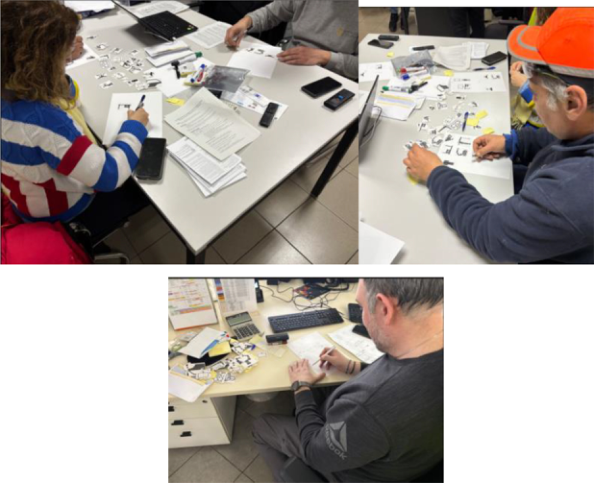
Figure 1: User engagement workshop - future process design.
Data Collection and Analysis The workshop was used to gather two aspects: the future process details and also attitudes on safety monitoring. The workshop started by explaining participants the procedure and aim of the data collection, participant rights, data handling and processing. Once operators consented to take part in the data collection, they were encouraged discuss the current process they work on; the challenges, the easy aspects and then to discuss and design the future vision of the process (Fig. 1). Operators were also presented with the future scenario the project envisage for the task, and asked feedback on what would work well and what needs further improvements. The second stand of work was conducted via semi-structured interviews on participants attitudes and acceptance towards human safety monitoring during the powder handling process. The interviews aimed to understand how operators perceive the use of monitoring technologies like cameras in their work environment. Participants were asked questions such as how they feel about having a system that monitors robotic activity, whether they believe it contributes to improved safety or performance, and whether they have any concerns about its implementation.
Thematic analysis was used to code and extract recurring themes. A scenario-based discussion format helped explore current challenges and gather feedback for future technology development.
RESULTS
Operator Engagement Workshops (Powder Lifting and Handling for Beer Brewing) Operator engagement workshops addressing powder lifting and handling in beer brewing identified several key operational challenges. Participants highlighted manual handling and labour intensity as significant concerns, specifically noting, “The hard part of the process is the physical, repetitive lifting of sacks and dealing with airborne dust.” The manual tasks involved in the process were also described as highly time-consuming, with operators stating, “The operator would pick it up, tie the sacks, and ensure only designated personnel handle it.” Additionally, there was an emphasized risk associated with potential material handling errors: “A potential error could involve using the wrong material.” While some procedures, notably the mixing ratios, were standardized (“The main focus is the water-to-powder ratio, which is not left to chance but standardized”) participants noted significant gaps in standardization elsewhere. Real-time monitoring was another prominent concern expressed, with operators stating, “We need a mechanism to monitor it in real time - sensors or cameras to track operations without physically being there.”
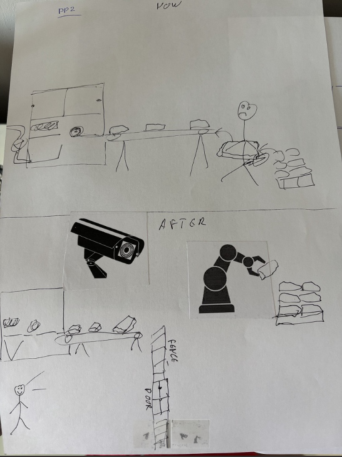
Suggestions for future technological enhancements included integrating robotic systems equipped with adaptive error detection capabilities to manage issues like sack jams (Fig. 2). Further recommendations were made to incorporate air quality sensors and cameras for continuous monitoring, and to develop robust safety mechanisms to facilitate safe co-existence
Multidisciplinary Perspectives on Ethical AI-Enabled Human-Robot Interaction 131
between robots, human operators, and forklifts. Lastly, operators suggested enhancing training programs to include not only basic operations but also comprehensive troubleshooting and regular updates.
Figure 2: Operator envisioned future cells.
Human Safety Monitoring Operator perspectives highlighted key safety challenges associated with robotic systems in manufacturing environments. Operators stressed significant concerns regarding proximity hazards, particularly emphasizing “the need to keep personnel out of robot operational zones.” Additionally, they voiced apprehensions about the adequacy of current safety training programs, explicitly citing “insufficient training related to robotic system operation and risk prevention.” Operators recommended several safety enhancements, including “fencing, cameras, and object detection sensors,” to ensure secure coexistence with mobile equipment such as forklifts.
Safety managers echoed these concerns, focusing particularly on risks inherent in human-robot interactions. They emphasized the potential for accidents in the absence of adequate operational protocols. Specific issues noted included the limitations and unreliability of current detection systems, described as having “sensor limitations and detection errors.” Managers also highlighted critical gaps in protocols and compliance, citing “a lack of SOPs and uncertainty about compliance with safety standards for isolated robotic arms.”
To address these concerns, several recommendations were proposed. Key among them were the implementation of fail-safe sensors, such as emergency stop buttons, and improvements in detection systems.
Furthermore, integrating standardized training protocols and clear SOPs was deemed essential. Conducting comprehensive risk assessments and ensuring rigorous safety validation processes were advised to align practices with industry safety standards. Lastly, fostering active operator involvement through regular feedback loops and investing in ongoing skill development were identified as crucial elements for sustainable safety and productivity improvements.
DISCUSSION
The multidisciplinary investigation into ethical AI-enabled HRC in manufacturing presented in this study underscores the significant transformative potential and complex challenges associated with integrating AI technologies in industrial settings. Findings from operator engagement workshops and interviews with safety managers have illuminated critical issues surrounding ergonomics, psychological well-being, user acceptance, ethical considerations, and the sustainability of workforce skills.
Ergonomic and psychological considerations emerged prominently, as operators expressed concerns about the physically intensive nature of manual tasks such as repetitive lifting and exposure to airborne dust. These physical demands underline the necessity for ergonomic interventions and advanced robotic solutions that minimize human strain. Echoing the insights provided by Haninger and Peternel (2025), our findings confirm the importance of embedding ergonomic principles into robotic systems to enhance employee well-being, reduce injury risks, and improve overall productivity. Psychological factors, including trust and cognitive workload, were equally significant, reinforcing Hopko et al.’s (2022) argument that effective human-robot collaboration depends heavily on managing these psychological dimensions. Operators advocated for technologies such as adaptive error detection systems and real-time monitoring sensors to alleviate cognitive strain and enhance feelings of safety and comfort, aligning with findings by Ling et al. (2020).
User acceptance emerged as another critical determinant for the successful integration of AI-driven technologies within manufacturing. Unlike broader societal contexts, manufacturing settings typically implement robotic systems through organizational mandates rather than individual choices, placing acceptance as a crucial factor beyond mere trust. While trust remains fundamental, without which technology adoption may falter, its role is contextually limited to operational scenarios. The findings support earlier studies, such as those by Gulati et al. (2019) and Alhaji et al. (2025), which emphasize the importance of context-specific trust formation to enhance acceptance. Recommendations from operators and safety managers, including standardized training, clearly defined standard operating procedures (SOPs), and comprehensive risk assessments, indicate that practical and transparent communication significantly fosters acceptance. These recommendations reinforce conclusions from Jiang et al. (2024), emphasizing transparent communication and user-centred designs as indispensable elements of successful human-robot collaboration.
Multidisciplinary Perspectives on Ethical AI-Enabled Human-Robot Interaction 133
Ethical considerations surrounding AI deployment also emerged strongly from the discussions, particularly regarding transparency, fairness, and privacy. The necessity for continuous monitoring and proactive ethical assessments throughout the entire lifecycle of robotic system implementation was evident. Operators and safety managers expressed the complexity of balancing effective surveillance and privacy concerns, especially with advanced adaptive systems, corroborating arguments presented by Martinetti et al. (2021) on the delicate balance required for ethically responsible surveillance technologies. Therefore, comprehensive ethical frameworks must be integrated early into the design phase, continuously reviewed and updated to adapt to technological advancements and evolving workplace norms.
Workforce sustainability emerged as another vital theme, particularly the necessity of adapting skills and roles within evolving manufacturing environments. As highlighted by Bughin et al. (2018) and the World Economic Forum (2020), the shift toward intelligent automation necessitates substantial reskilling and upskilling programs to prepare workers adequately. Our results emphasized the creation of new roles requiring hybrid competencies, blending technical skills with collaborative and cognitive abilities. Furthermore, existing positions were noted as shifting laterally rather than vertically, requiring different yet equally valuable skill sets. Addressing workforce sustainability, the integration of AI-enabled robotics could significantly reduce physically demanding tasks, potentially enhancing the sector’s attractiveness to younger workers and accommodating older employees’ physical constraints, as previously noted by Aydin (2023).
In conclusion, the transition to AI-enabled human-robot collaboration in manufacturing is multifaceted, requiring integrated approaches across ergonomics, user acceptance, ethics, and workforce development. This research underscores that successful AI integration is not solely technological but profoundly human-centred, necessitating comprehensive strategies that prioritize employee well-being, cultivate context-specific trust, uphold stringent ethical standards, and foster continuous skill enhancement. As manufacturing increasingly adopts AI solutions, ensuring an inclusive, ethical, and sustainable transition will be critical for long-term organizational resilience and success.
ACKNOWLEDGMENT
The work has been conducted on AI-PRISM and CONVERGING projects (101058589 and 101058521, respectively) and the authors would like to thank all consortium members for collaboration.
REFERENCES
Alhaji, B., Büttner, S., Sanjay Kumar, S., & Prilla, M. (2025). Trust dynamics in human interaction with an industrial robot. Behaviour & Information Technology, 44(2), 266–288. https://doi.org/10.1080/0144929X.2024.2316284
Aydin, A. (2023). Aging and Robotization: The Duality Between Generations and Robot Adoption. Review of Economic Analysis, 15(3–4), 229–245. https:// doi.org/10.15353/rea.v15i3-4.5581 Babamiri, M., Heidarimoghadam, R., Ghasemi, F., Tapak, L., & Mortezapour, A.
(2022). Insights into the relationship between usability and willingness to use a robot in the future workplaces: Studying the mediating role of trust and the moderating roles of age and STARA. PLOS ONE, 17(6), e0268942. https:// doi.org/10.1371/journal.pone.0268942 Bughin, J, Hazan, E, Lund, S, Dahlstrom, P, Wiesinger, A & Subramaniam, A 2018, Skill shift: Automation and the future of the workforce, McKinsey Global Institute, [San Francisco]. Chui, M., Manyika, J., Miremadi, M., Henke, N., Chung, R., Nel, P., & Malhotra, S.
(2018). Notes from the AI frontier: Insights from hundreds of use cases. McKinsey Global Institute, 2(267), 1–31. Etemad-Sajadi, R., Soussan, A., & Schöpfer, T. (2022). How Ethical Issues Raised by Human–Robot Interaction can Impact the Intention to use the Robot? International Journal of Social Robotics, 14(4), 1103–1115. https://doi.org/ 10.1007/s12369-021-00857-8 Gulati, S., Sousa, S., & Lamas, D. (2019). Design, development and evaluation
of a human-computer trust scale. Behaviour & Information Technology, 38(10), 1004–1015. https://doi.org/10.1080/0144929X.2019.1656779 Haninger, K., & Peternel, L. (2025). Planning Human-Robot Co-Manipulation With Human Motor Control Objectives and Multi-Component Reaching Strategies. IEEE Robotics and Automation Letters, 10(2), 1433–1440. https://doi.org/ 10.1109/LRA.2024.3522760 Hopko, S., Wang, J., & Mehta, R. (2022). Human Factors Considerations and
Metrics in Shared Space Human-Robot Collaboration: A Systematic Review. Frontiers in Robotics and AI, 9. https://doi.org/10.3389/frobt.2022.799522 Jiang, T., Sun, Z., Fu, S., & Lv, Y. (2024). Human-AI interaction research agenda: A user-centered perspective. Data and Information Management, 8(4), 100078. https://doi.org/10.1016/j.dim.2024.100078 Kopp, T. (2024). Facets of Trust and Distrust in Collaborative Robots at the
Workplace: Towards a Multidimensional and Relational Conceptualisation. International Journal of Social Robotics, 16(6), 1445–1462. https://doi.org/ 10.1007/s12369-023-01082-1 Liao, S., Lin, L., & Chen, Q. (2023). Research on the acceptance of collaborative robots for the industry 5.0 era—The mediating effect of perceived competence and the moderating effect of robot use self-efficacy. International Journal of Industrial Ergonomics, 95, 103455. https://doi.org/10.1016/j.ergon.2023.103455 Ling, H., Liu, G., & Tian, G. (2020). Motion Planning Combines Psychological
Safety and Motion Prediction for a Sense Motive Robot (arXiv:2010.11671). arXiv. https://doi.org/10.48550/arXiv.2010.11671 Martinetti, A., Chemweno, P. K., Nizamis, K., & Fosch-Villaronga, E. (2021).
Redefining Safety in Light of Human-Robot Interaction: A Critical Review of Current Standards and Regulations. Frontiers in Chemical Engineering, 3, 666237. https://doi.org/10.3389/fceng.2021.666237 Soffia, M., Skordis, J., Zhou, X., & Leiva-Granados, R. (2024). Impacts of Technology Exposure—A Report on Worker Wellbeing. https://doi.org/10.5281/ ZENODO.10470301 World Economic Forum. (2020). The future of jobs report 2020. World Economic
Forum.
LISTED IN THE AHFE DIGITAL BOOKSTORE CATALOGUE
Explore the complete digital volume
Human Factors in Robots, Drones and Unmanned Systems
Read this individual research paper free through the original publisher, or explore the full digital proceedings book.
ISBN 978-1-964867-55-7
Explore this ISBN in the AHFE Bookstore ↗Listed in the July 2026 bookstore catalogue; search by ISBN to confirm current availability · Digital book purchase optional