Huanhuan Li, Yuqian Wang, Yan Luximon (2025). Dynamic Facial Dimensions in Design of Respirator: A Pilot Study. In: Creativity, Innovation and Entrepreneurship. AHFE Open Access, vol. 166, pp. 67–74. https://doi.org/10.54941/ahfe1006112
1 School of Design, The Hong Kong Polytechnic University, Hong Kong SAR, China ↗
2 School of Design, The Hong Kong Polytechnic University, Hong Kong SAR, China; Laboratory for Artificial Intelligence in Design, Hong Kong Science Park Hong Kong SAR, China ↗
To involves dynamic facial movement into anthropometry, enhancing facial product design like respirator, this pilot study explored the dynamic dimensions and variations in facial dimensions under different movements in Chinses population. Using 3dMDface™ System, facial data were collected from 16 participants performing 9 movements that are required in respirator fitting test. This study manually selected 21 landmarks and calculated the Euclidean distances for 12 dimensions that related to the respirator design. Results revealed that longitudinal facial dimensions exhibited the largest variations, with facial length ranging from 116.0 mm to 192.4 mm (variation of 76.4 mm). In contrast, frontal dimensions showed smaller variations. Minimal variations were observed in inner upper face. Open mouth, grimacing and cough resulted in the greatest changes in facial dimensions. These findings highlight the importance of considering dynamic facial changes when designing masks or respirators, particularly by incorporating flexible features to accommodate facial elongation caused by jaw movements
Respirators are essential PPE (personal protective equipment) widely used in hazardous environments, where their effectiveness depends heavily on achieving a proper seal. Ensuring a good fit remains a significant challenge, particularly given the diversity of facial structures across different working condition (Carter et al., 2021; Chen et al., 2015; Kang & Kim, 2024). Neutral anthropometric facial data have been widely used to establish initial design parameters for respirators (Chen et al., 2015; and Nemeth et al., 2025), the static facial anthropometric data fail to account for dynamic facial movements, such as mouth opening, which can compromise the fit and seal during use (Griffin et al., 2023; Hack & McConville, 1978).
To address this issue, dynamic testing is often conducted post-design to evaluate respirator performance under real-world conditions. However, these evaluations are reactive rather than proactive, emphasizing the need for integrating dynamic data earlier in the design process (Kang & Kim, 2024). Recent advancements in dynamic 3D scanning technology, enable the
efficient capture of sequential facial geometric data, providing an opportunity to involve dynamic facial dimensions, which can provide the new insight for respirator design with dynamic dimensions.
In this study, we aim to explore the dynamic facial dimensions across a set of movements and investigate their changes for respirator design. Specifically, we calculate the statistics of dimensions and their changes to identify the most changed and stable facial dimensions under different movements and find the movements that make significant changes. By bridging the gap between static anthropometry and dynamic facial data, this research provides future design dynamic references for respirators and enhance their performance in real-world conditions.
PARTICIPANT Twenty participants (9 females, and 7 males) were recruited for this facial data collection experiment. The participants had an age range of 18 ∼30 years old (mean = 24.3, std = 2.4) without any facial injuries or conditions that might affect facial movements. Prior to the study, ethical approval was obtained from the Hong Kong Polytechnic University Institutional Review Board. All participants provided written informed consent before participating in the experiment.
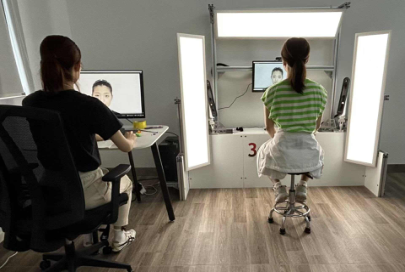
FACILITIES The data collection was conducted using a 3DMD scanner equipped with 3dMDface™System (www.3dmd.com). For each participant, 8 motion sequences were collected, which is the movement required in the fit testing of respirator (Lei et al., 2014). All motion sequences were recorded with a scanning precision of 0.2mm at a frame rate of 10 frames per second, enabling detailed capture of facial deformations during movements.
The scanning environment was maintained under standardized conditions to ensure consistent data quality across all participants. Each scanning session was conducted following a predetermined protocol to maintain uniformity in data collection. The high precision of the scanner (0.2mm) enabled accurate measurement of subtle changes in facial dimensions during different facial movements.
Figure 1: Scan settings & environment.
Dynamic Facial Dimensions in Design of Respirator: A Pilot Study 69
MOVEMENTS FOR RESPIRATOR TEST Respiratory Protective Equipment (RPE) fit testing standards specify a series of movements to evaluate respirator performance, focusing on potential failures such as air leakage and user discomfort caused by excessive compression (Lei et al., 2014). In this experiment, extreme movement was highlighted. This study uses maximum mouth opening as extreme movement. Grimacing was standardized as maximum lip-pursing combined with frowning to ensure consistency across participants. The final set of facial movement used in the experiment is shown in Table 1.
Table 1: Standardized respirator fit testing movements and descriptions.
Table available in the original PDF paper.
Movements Description Head Movement Left Moving the head side to left while breathing normally Head Movement Right Moving the head side to right while breathing normally Extreme Movement Maximum mouth opening Normal Breathing Breathing normally without talking or any other movement Deep Breathing Taking deep breaths without talking or any other movement Yawning Opening the mouth wide and taking a deep breath Coughing Coughing out loud Grimacing Performing exaggerated mouth and chin motions, such as
maximum mouth opening
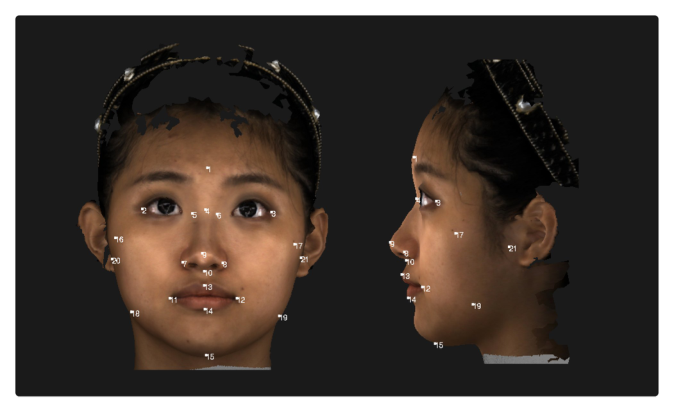
DIMENSIONS FOR RESPIRATOR Based on the 3D scans, 21 key anatomical landmarks were identified for analysis, These landmarks were selected due to their anatomical significance and relevance to measure critical facial dimensions for product design (Nemeth et al., 2025), detail definitions are showing in Figure 1 and Table 2. Using these landmarks, 12 key facial distances (Table 2) were caculated to represent essential geometric features of the 3D face, which are critical for assessing respirator fit.
Figure 2: The facial landmarks.Table 2: The definition of facial landmarks on Figure 2.
Table available in the original PDF paper.
Number Definition Description Number Definition Description 1 Glabella 11, 12 Cheilion right, left 2, 3 Outer canthus right, left 13 Labiale Superius 4 Sellion 14 Labiale Inferius 5, 6 Dacryon right, left 15 Menton 7, 8 Nasal ala right, left 16, 17 Zygion right, left 9 Pronasale 18, 19 Gonion right, left 10 Subnasale 20, 21 Tragion right, left
Table 3: The definition of the facial dimensions for respirator design.
DATA ANALYSIS Data Collection and Measurement: For each movement, the frame with maximum range was selected for picking up the landmarks, which were collected by manually selection. Then calculating the Euclidean distances (Table 3) between landmarks that effectively measure the three-dimensional distances without being influenced by baseline shifts caused by facial movement, providing a more accurate and comprehensive representation of geometric changes in the face. For each distance, Li,m
x represent, where i = 1,2,3, …16, is the participate ID; x is the dimensions that we need to measure (Table 3); m is the movement that participates are required to perform (Table 1).
Data Verification: To ensure the reliability and consistency of the dataset, data points exceeding 2 std from mean were first flagged as potential anomalies and then rechecked manually to ensure its correctness, consistent with established statistical practices. Then the researcher will check the candidates in the 3D face model to confirm their accuracy and redo the landmark if there is human error on the landmarking. Hence the true distribution of the participant sample is confirmed, which is critical for subsequent analyses.
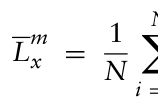
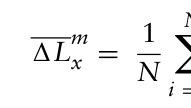
Statistics Calculation: The mean distances of each dimension under different movement among our participant sample (N = 16) are calculated
Dynamic Facial Dimensions in Design of Respirator: A Pilot Study 71
as follow:
N X L
Li,m
x (1)
Equation reproduced from the original PDF.
The standard deviation of each dimension corresponding to the mean distances are also calculated and reported in Table 4.
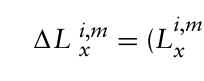
To investigate the effect of each movement, the distance difference between the certain movement (m) and neutral of participant (i) are calculated as follow:
Equation reproduced from the original PDF.
x ) (2)
i,m x −Li, neutral
The mean distance difference among the whole sample is calculated as:
N X
1L i,m x (3)
Equation reproduced from the original PDF.
Also, the standard deviation of distance difference is also calculated and reported with 1L
m x .
RESULTS
Table 4 shows the values of L
m x , where each column represents one dimension (x) and each row represents movements (m). Longitudinal dimensions exhibited the highest variability among different movements: L13,14 varied from 16.4 mm (grimacing) to 58.6 mm (open mouth), L1,15 ranged from 131.1 mm (grimacing) to 171.5 mm (open mouth), and L10,15 ranged from 67.8 mm (deep breathing) to 104.5 mm (open mouth), with change of 42.2 mm in L13,14, 40.4 mm in L1,15, 36.7 mm in L10,15. In contrast, frontal dimensions showed greater stability. L16,17 ranged narrowly between 135.7 mm and 139.4 mm, L2,3 from 101.5 mm to 105.2 mm, L5,6 from 14.8 mm to 18.4 mm, L7,8 from 31.0 mm to 34.6 mm, and, with changes of 3.7 mm in L16,17 and L2,3, 3.6 mm in L5,6 and L7,8. L18,19 displayed has the biggest variation in frontal dimensions of ranging from 101.0 mm (open mouth) to 112.3 mm (normal breathing), with change of 11.3 mm. L1,15 exhibited a substantial increase from 138.2 mm in the neutral position to 171.5 mm during the open mouth movement, corresponding to a change of 33.3 mm, or a 24.1% increase relative to neutral. L13,14 showed the most pronounced relative change, increasing from 20.9 mm in the neutral position to 58.6 mm during the open mouth movement, with a total variation of 37.7 mm, representing a 180.4% increase. Similarly, L10,15 demonstrated considerable variability, extending from 68.9 mm in the neutral position to 104.5 mm during the open mouth movement, resulting in a total variation of 35.6 mm (51.7% increase). Yawning also caused significant changes in these three dimensions. However, open mouth and yawning brought L18,19 to its lower limits, while grimacing reduced L1,15 and L13,14 to their lowest values.
Table 5 presents the statistical summary of these facial measurements. Among all dimensions, L1,15 and L10,15 showed the largest variations,
followed by L13,14. In contrast, L5,6 and L9,10 showed the smallest variations across participants and movements. The L20,18,15, L21,19,15, and L18,19 also showed relatively large variations, a little bigger than their variations on neutral face, which is L20,18,15 (SD = 10.0), L21,19,15 (SD = 10.5), and L18,19 (SD =11.8) among all movements compared with L20,18,15 (SD = 8.7), L21,19,15 (SD = 7.6), and L18,19 (SD =10.8) on neutral face.
Table 4: The mean and standard deviation of facial dimensions on peak frames of 9 different movement (mm).
Table available in the original PDF paper.
Yawning Coughing Grimacing
Dimension Neutral Turn Left
Turn Right
Open Mouth
Normal Breathing
Deep Breathing
L1,15 138.2 (8.4)
137.4 (9.2)
137.0 (8.5)
171.5 (12.5)
138.6 (9.5)
138.6 (9.8)
157.0 (12.2)
141.7 (11.2)
131.1 (10.0) L10,15 68.9 (7.3)
68.2 (7.2)
69.9 (7.2)
104.5 (10.8)
70.1 (8.1)
67.8 (7.8)
89.8 (12.0)
73.1 (10.1)
69.5 (8.9) L16,17 138.4 (5.9)
NA NA 139.3 (7.4)
137.4 (7.1)
138.4 (6.7)
136.5 (7.9)
139.4 (7.2)
135.7 (7.0) L11,12 46.5 (5.7)
46.3 (5.0)
45.2 (3.5)
52.6 (6.5)
46.1 (5.0)
45.6 (4.5)
45.7 (3.5)
46.6 (5.0)
46.6 (9.9) L13,14 20.9 (2.8)
20.3 (3.4)
20.6 (3.0)
58.6 (6.2)
20.9 (3.4)
21.2 (3.5)
39.9 (8.6)
25.1 (6.0)
16.4 (4.3) L7,8 32.3 (5.4)
34.2 (6.5)
34.6 (5.3)
33.5 (5.1)
33.7 (5.8)
32.1 (5.6)
33.5 (6.7)
31.5 (5.0)
31.0 (5.2) L5,6 17.0 (2.4)
18.7 (2.9)
18.4 (2.4)
17.2 (3.0)
17.5 (3.0)
18.1 (2.4)
17.3 (3.1)
17.2 (2.4)
14.8 (1.9) L9,10 14.8 (2.6)
15.3 (3.4)
14.2 (4.0)
16.0 (4.0)
14.6 (3.4)
16.5 (2.5)
14.9 (3.2)
16.8 (3.1)
15.5 (2.6) L18,19 108.7 (10.8)
NA NA 101.0 (13.9)
112.3 (10.4)
111.9 (10.3)
103.4 (13.1)
109.4 (11.5)
108.9 (10.0) L2,3 103.6 (6.3)
103.3 (6.0)
105.2 (7.4)
102.0 (6.5)
103.1 (6.7)
102.6 (5.2)
101.5 (6.8)
102.6 (6.1)
102.6 (5.1) L20,18,15 144.4 (7.6)
143.6 (9.0)
NA 147.2 (10.4)
142.5 (11.7)
142.4 (10.4)
144.1 (10.0)
144.1 (10.8)
142.5 (10.7) L21,19,15 142.6 (8.7)
NA 143.6 (9.2)
147.6 (12.5)
140.3 (11.5)
142.9 (10.0)
144.4 (11.5)
140.8 (10.9)
140.4 (12.5)
Note: the statistics in each table cell is mean (std). NA means ‘not applicable’.
Table 5: The minimum, maximum, mean and standard deviation of each dimension among all movements (mm).
Dynamic Facial Dimensions in Design of Respirator: A Pilot Study 73
DISCUSSIONS This pilot study quantified dynamic facial dimension changes. Results demonstrated that longitudinal face lengths, particularly in the lower face region, shows the most significant variations during jaw-related movements (open mouth, yawning, and grimacing). L1,15 ranged from 116.0 mm to 192.4 mm, and L10,15 ranged from 57.4 mm to 130.8 mm, with variation of 76.4 mm and 73.4 mm. In contrast, the frontal dimensions (L16,17, L18,19, L20,18,15 and L21,19,15) exhibited obviously less changes than longitudinal variations. L18,19 displayed has the biggest variation in frontal dimensions of ranging from 77.4 mm to 130.2 mm, and L16,17 ranged narrowly between 118.2 mm and 150.7 mm, with change of 52.8 mm and 32.5 mm. L2,3 and L5,6 showed minimal variation, suggesting a stable reference for fitting. This pilot study indicates integrating flexible features along the longitudinal axis of the face (e.g., foldable structures) can better accommodate facial elongation caused by jaw movements such as opening the mouth, chewing, or making facial expressions. Failing to account for these dynamic changes may compromise the fit and seal of respirators.
For most anthropometric studies for facial products, only static face dimensions are considered (Luximon et al., 2010; Nemeth et al., 2025; Zhuang & Bradtmiller, 2005). The study (Kang & Kim, 2024) demonstrates the facial length significant changing during jaw movement, such as pronunciation, and optimizing the design patterns of shield can improve their performance under dynamic facial conditions. Therefore, the dynamic facial movement has an impact on facial products like respirators. Hence, 3D-scanned data of dynamic movement should be involved to emphasize the importance of incorporating dynamic facial dimensions into facial product design. This research provides an anthropometric pilot study of dynamic facial movement among Chinese individuals and offers respirator designers a size range where the variation is considerable for considering dynamic movements, supporting further design improvements. For example, L1,15 (approximately facial length) has 76.4 mm variation that is 55.3% of L1,15 of neutral face (Table 4).
There are some limitations in this study. The sample size is limited, which may affect the statistical analysis. The study population was restricted to ages 18-30, potentially limiting generalizability. Data collection relied on manual point selection from 3D facial models which may affect the reliability. Future research should aim to address these limitations by incorporating more diverse demographic samples and examining a broader range of facial movements, to improve measurement accuracy and enhance the generalizability of the findings.
CONCLUSION
This study involves dynamic facial movement into anthropometry, enhancing facial product design like respirator. L1,15 is the biggest range variation in longitudinal dimensions ranged from 116.0 mm to 192.4 mm with variation of 76.4 mm. The frontal dimensions L18,19 exhibited less changes than longitudinal variations. L2,3 and L5,6 showed minimal variations, suggesting
a stable situation of upper face among most movements. Open mouth makes the L1,15 to their biggest distance, but L18,19 to their lowest value. Grimacing makes the L1,15 to the smallest distance. Respirator designers can refer these dimensions and variation ranges in their product design to ensure fit and usability of respirators in dynamic facial conditions.
ACKNOWLEDGMENT
The work described in this paper was fully supported by a grant from the Research Grants Council of the Hong Kong Special Administrative Region, China (Project No. GRF/PolyU 15616124).
REFERENCES
Carter, L. N., Reed, C. A., Morrell, A. P., Fong, A. K. H., Chowdhury, R., Miller, E., Alberini, F., Khambay, B., Anand, S., Grover, L. M., Coward, T., Addison, O., & Cox, S. C. (2021). A feasible route for the design and manufacture of customised respiratory protection through digital facial capture. Scientific Reports, 11(1), 21449. https://doi.org/10.1038/s41598-021-00341-3 Chen, Y., Wang, J., & Yang, Z. (2015). The human factors/ergonomics studies for
respirators: A review and future work. International Journal of Clothing Science and Technology, 27, 652–676. https://doi.org/10.1108/IJCST-06-2014-0077 Griffin, L., Yu, M., Sokolowski, S., Arnold, S., & Durfee, W. K. (2023).
Innovation in Respirator Design, Research, & Protection: A model of predictive fit for occupational safety and health. Proceedings of the Human Factors and Ergonomics Society Annual Meeting, 67(1), 821–821. https://doi.org/10.1177/ 21695067231192265 Hack, A. L., & McConville, J. T. (1978). Respirator protection factors: Part I — Development of an anthropometric test panel. American Industrial Hygiene Association Journal, 39(12), 970–975. https://doi.org/10.1080/ 0002889778507897 Kang, Y., & Kim, S. (2024). A method for designing face shields using dynamic
3D head data. International Journal of Clothing Science and Technology. https:// doi.org/10.1108/IJCST-06-2024-0130 Lei, Z., Ji, X., Li, N., Yang, J., Zhuang, Z., & Rottach, D. (2014). Simulated effects of head movement on contact pressures between headforms and N95 filtering facepiece respirators Part 2: Simulation. Annals of Occupational Hygiene, 58(9), 1186–1199. https://doi.org/10.1093/annhyg/meu064 Lin, Y.-C., & Chen, C.-P. (2017). Characterization of small-to-medium head-and-
face dimensions for developing respirator fit test panels and evaluating fit of filtering facepiece respirators with different faceseal design. PLoS ONE, 12, null. https://doi.org/10.1371/journal.pone.0188638 Luximon, Y., Ball, R., & Justice, L. (2010, April). The Chinese face: a 3D anthropometric analysis. In Proc TMCE (pp. 12–16). Nemeth, C., Hoskens, H., Wilson, G., Jones, M., DiPietrantonio, J., Salami, B.,
Harnish, D., Claes, P., Weinberg, S. M., Shriver, M. D., & Hallgrímsson, B. (2025). Quantitative analysis of facial shape in children to support respirator design. Applied Ergonomics, 122, 104375. https://doi.org/10.1016/ j.apergo.2024.104375 Zhuang, Z., & Bradtmiller, B. (2005). Head-and-Face Anthropometric Survey of U. S.
Respirator Users. Journal of Occupational and Environmental Hygiene, 2(11), 567–576. https://doi.org/10.1080/15459620500324727
LISTED IN THE AHFE DIGITAL BOOKSTORE CATALOGUE
Explore the complete digital volume
Creativity, Innovation and Entrepreneurship
Read this individual research paper free through the original publisher, or explore the full digital proceedings book.
ISBN 978-1-964867-42-7
Explore this ISBN in the AHFE Bookstore ↗Listed in the July 2026 bookstore catalogue; search by ISBN to confirm current availability · Digital book purchase optional