Natalia Kozik, Bartłomiej Kabaja, Dainora Gedvilaitė (2024). Information availability and accessibility regarding ecological products offered in online stores – a case of retail chains. In: Human Factors in Design, Engineering, and Computing. AHFE Open Access, vol. 159, pp. 1016–1026. https://doi.org/10.54941/ahfe1005668
The global impact of increasing environmental pollution and the impending climate crisis are now becoming central concerns of modern-day societies at large. More than ever before, enterprises that introduce products to the market find themselves under pressure to take ecological actions and provide eco-friendly solutions. A large role is also played by consumers, whose everyday decision-making when selecting or buying products strongly affects the processes occurring on the market. However, for members of society to be able to make informed choices of products, they must be able to gain sufficient knowledge and information about them.The aim of the study was to assess the availability of information concerning organic products on the websites of the largest retailers in Poland. The research method used was an elaborated questionnaire to assess the availability and accessibility of environmental information on store websites. In total, 10 selected e-shops were evaluated. The study was limited to examining only the offer of food products, so that the results could be comparable.The obtained results suggest that there is a very large difference in the approach to providing consumers with knowledge about the impact of sold products on the environment. What is more, the assessed e-shops lacked direct links to subpages with eco-friendly or organic products. Only in a few cases did retailers decide to use additional, larger eco-labels, such as the EU organic logo. In most cases, the only way to recognize an ecological product was to observe photos of the offered products, which were often characterized by low resolution and small size.The development of e-commerce means that an increasing number of products are sold through this channel. In the case of traditional trade, many solutions have already been developed that can substantially bridge the information gap, thus allowing consumers to make more informed decisions.The obtained research results refer to the situation on the Polish market. However, the overall conclusions are rather disturbing. The analysis of the conducted research prompts to take actions and measures to achieve significant improvement in the availability, accessibility, and ease of identifying eco-friendly and organic products in e-commerce.
Information Availability and Accessibility Regarding Ecological Products 1017
INTRODUCTION
Over the last decades, the natural environment has undergone significant and unfavorable changes due to human activity. These processes are observed on a global scale (Tilman and Lehman, 2001). The most current research indicates that Asia is the most vulnerable region, and the problem particularly concerns China and India, which are the leaders in the ranking (Nguyen et al., 2016). Research shows that the current rate of environmental degradation will require urgent solutions in the area of sustainable development (Chen et al., 2023). Understanding and counteracting these changes is crucial to safeguarding the environment in the long run (Nguyen and Liou, 2024).
Hazards such as air pollution (PM2,5, NO2, CO, SO2 and O3) have been identified as significant threats to public health (Bai et al., 2018). Some studies show that the risk of premature death from this reason is now 15 times greater than from infectious diseases (Landrigan et al., 2018).
The analysis of the current state of environmental degradation, as well as related forecasts and analyses, prompt us to take active steps to stop these unfavorable processes. Public policies are possibly an effective form of counteracting such worrying changes (He, 2017). Another direction is to build awareness and stimulate the power of consumers, who, thanks to their purchasing decisions, may rather be willing to choose eco-friendly products, i.e., those that have a reduced negative impact on the environment.
Research in this area suggests that consumers are generally aware of the threats resulting from environmental pollution, but they have problems with implementing sustainable behaviors daily (Vasiljevic-Shikaleska, Trpovski and Gjozinska, 2018). Proper understanding of consumer decision-making processes is very important because of the possibility of directing effective pro-environmental messages and content to them. In the era of development of e-commerce, it seems particularly important to pay attention to the presentation and promotion of eco-friendly products in this sales channel.
In view of the presented challenges related, on the one hand, to the growing environmental pollution, and on the other, to the development of e- commerce, the aim of this study was to evaluate the websites of online stores in terms of the availability and accessibility of information about eco-friendly and organic products. It seems that e-commerce channels are altogether a novel medium of obtaining environmental information and the methods of effective communication with consumers on the traditional market developed so far by science will not be applicable here.
DEVELOPING HUMAN SYSTEMS INTEGRATION TOOLS TO SUPPORT SYSTEMS DESIGN HSI experts contribute by ensuring that human capabilities and limitations are considered. It has become clear that treating the system as separate from the users results in poor performance and potential failure in the operational setting. Continued growth in technology has not delivered desired results. Systems engineers and others are beginning to understand the role humans play in technology systems. The core challenge is to balance successful hardware and software solutions with human friendly implementations. To
define the requirements of humans as a fundamental system component, it is essential to understand the inherent capacity of user populations and their typical operational environment (Booher, 2003). A description of a population’s capacity incorporates more than the basic anthropometrics or the cognitive capability of the average member of the user population (Chapanis, 1996).
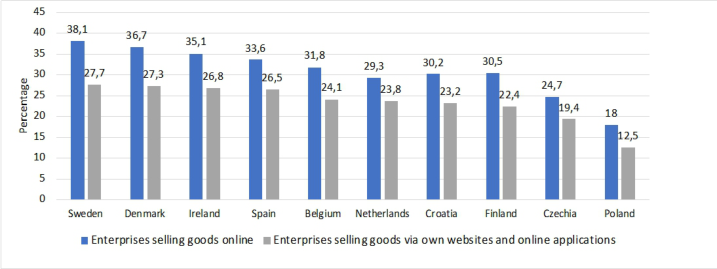
THE RISE OF E-COMMERCE Over the last few years, a dynamic development of communication technologies and the availability of mobile Internet has been observed (Kuang, 2016). The COVID-19 pandemic had a strong impact on the growth of the e-commerce industry. It also contributed to the rapid advancements in remote services. This was particularly observed in the following areas: increases in sales value in e-commerce, in cloud computing services, as well as the development and improvement of employee qualifications in the field of ICT personnel, e-commerce, customer relationship management (CRM) and secure transactions (Scutariu et al., 2021). The high availability of smartphones and portable computers in societies at large is now changing consumer shopping habits. These devices are very often used and have contributed significantly to the development of online shopping, which has become a new trend in trade (Fang, 2020). This is in line with the Eurostat data presented in Figure 1. The chart shows the percentage of companies with 10 or more employees (in selected European Union countries) that sell their products online and those that do it only using their own websites and applications.
Figure 1: The percentage of enterprises selling their products online. (Adapted from Eurostat, April 25, 2024).
As shown in Figure 1, in some countries, the percentage of companies selling products online is now even around 40%. The leaders in this area are companies from Sweden and Denmark. It is worth noting that such high percentage also concerns sales via own websites and online applications. With the general implementation of e-commerce in companies, this tool has become no less popular in small and medium-sized enterprises (SMEs).
Information Availability and Accessibility Regarding Ecological Products 1019
By increasing familiarity and sophistication of the e-commerce, companies offering their products through this channel are able to optimize their sales- figures and expand on the market (Wang and Hou, 2011). The opportunities resulting from selling and presenting products online make it possible to achieve a number of benefits, such as: improved product pricing strategies, targeted advertising, improved customer service, multi-channel integration and coordination; as well as enhanced global sourcing of materials from multiple business units and locations and increased business value (Akter and Wamba, 2016).
The actual demand has also had a significant impact on the development of the e-commerce market. If it were not for the consumers’ broad access to the Internet and mobile devices, the successful development of online trade would not be possible. Eurostat data confirms the high percentage. On average, more than 93% of households in the 27 EU countries have internet access. For countries such as Luxembourg and the Netherlands, the figure exceeds 98% (Eurostat, April 26, 2024). Such wide access to the Internet undoubtedly affects people’s lives and their purchasing habits, thus providing an opportunity to build and develop an eco-friendly and sustainable economy. However, the multitude of shopping sites and the wide range of products offered on the Internet may come across as a new and intricate environment for many buyers. Behavioral research on purchasing decisions indicates that making a choice in e-commerce stores is usually preceded by stages of searching for and evaluating product information. This of course includes comparing alternative products (Chen et al., 2024). Purchasing decisions are also greatly influenced by brand position, online reviews, and consumer experience. Due to information asymmetry, a significant number of consumers consider offers from several products at the same time before making the final decision (Chen et al., 2024).
What is more, some researchers describing the processes behind online purchasing use the Five-Stage Model of the Consumer Buying Process (Ahmad et al., 2020; Han, 2021). According to this model, the first stage of the process is recognizing the need. At this stage, apart from traditional stimuli, factors such as: product positioning in search engines, advertising in social media, information provided by virtual communities are all being considered. The second stage is searching for and collecting information. Here, the potential buyer considers the advantages and disadvantages of the product. The next stages include: the analysis of alternative products available, the actual purchase of the product and the post-purchase evaluation (Ahmad et al., 2020; Han, 2021).
Regardless of the theoretical assumptions, the information accompanying the offered products is very important in the decision-making process. According to Papatla (2011), the way information is presented in online commerce has a significant impact on product sales results. As ´Spiewak (2023) suggests, it is believed that if consumers have difficulty finding the product they are looking for and/or the information about it in an online store, they will certainly not buy such item, and the wide popularity of e- stores is currently a decisive factor in the survival of products on the market.
Moreover, the way information is presented should be adapted to consumers’ shopping styles (Papatla, 2011).
As stated in the document prepared under the Consumer Information Programme of the 10 Year Framework of Programmes on Sustainable Consumption and Production, the environmental information about the goods and services offered in online commerce should be of high quality and it should help consumers engage in sustainable consumption. To do so, it must meet 5 basic guidelines establishing these minimum requirements (Polanía Giese and Mützel, 2022):
reliability – e.g., stores should provide consumers with products marked with verified and third-party labels and should even go beyond labeling, providing the consumer with descriptive, substantiated information,
transparency – e.g., the consumer must be provided with all relevant information about products and their sustainability,
relevance – e.g., online stores must provide consumers with options to filter products in a way that makes it easier for them to find sustainable goods,
clarity – e.g., visual and graphic elements should be used to highlight and improve the visibility of sustainable products,
accessibility – environmental information must be easily accessible to consumers, e.g., by including it in the product preview and as part of the overall product information with just a single click. Additionally, thematic categories should be introduced for sustainable products in the store to prioritize such goods in search and inventory rankings.
Due to the importance and crucial role of environmental information concerning offered goods, based on the literature review, a methodology was proposed for examining selected websites of online stores in terms of the availability and accessibility of information regarding eco-friendly products.
MATERIALS AND METHODS
To meet the objectives of the study, a comparative method was used, which focused on the results of the analysis of 10 online stores (selected from among the most popular websites of this type on the retail market in Poland as of March 2024). These retailers were: Aldi, Auchan, Biedronka, Carrefour, E.Leclerc, Frisco, Lisek, Selgros, Spar, Stokrotka. Due to the lack of official consent of the store owners to publish their names when presenting the results, the stores were assigned codes from A to J.
For the purposes of the study, the content analysis on the websites was limited to the assessment of food products. As the assortment of stores was wide, narrowing down the tested products to one category made it possible to compare them. Especially since food in the EU has precise regulations regarding the process and conditions for obtaining certificates confirming ecological production.
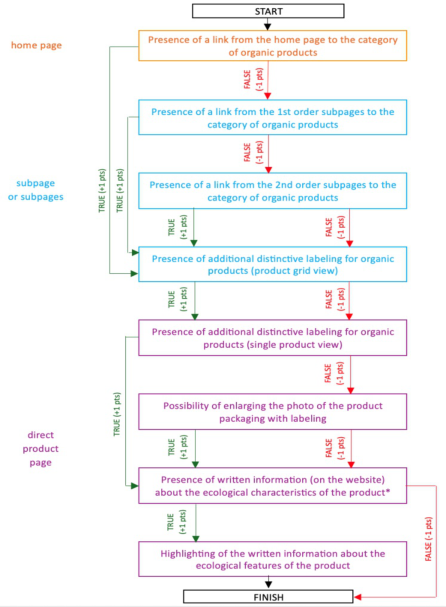
The study was conducted by three experts who are the authors of this paper, and who developed the evaluation sheet to be used in the assessment of the online stores. The evaluation sheet includes, among others, the following heuristics, i.e. aspects and good practices of presenting information about the reduced impact of a product on the environment: a direct link to
Information Availability and Accessibility Regarding Ecological Products 1021
ecological products from the home page, the presence of an enlarged ecolabel next to the product photo, the presence of written information about the ecological nature of the product and its highlighting. A total of 8 heuristics were used (which concerned the store’s home page, subpages, and direct presentation of a specific product) - some of them were used to evaluate the information available on the home page, some of them were used to evaluate the information available after selecting a category of eco-friendly and organic products, and some of them were used after selecting a specific product.
The preparation of the evaluation sheet was partly based on the Guidelines for Providing Product Sustainability Information in E-Commerce (Polanía Giese and Mützel, 2022).
For each of the tested heuristics, the analyzed objects received the following ratings: “true” (+1 point), “false” (–1 point), “not applicable” (0 points). The obtained numbers of points were used to determine the ranking of stores in terms of the accessibility of environmental information regarding foods. The highest possible score for the website was 5 points, and the lowest –7 points. The higher the point value, the better the accessibility of information about organic products in the online store. A graphic diagram of the adopted research process is presented in Figure 3.
Figure 2: Graphical presentation of the adopted research procedure.
RESULTS
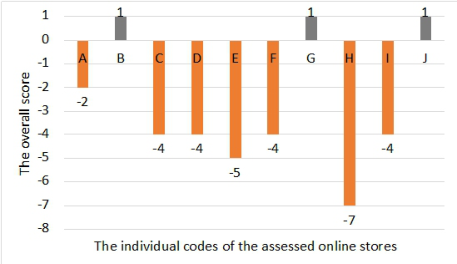
The analysis of 10 online store websites made it possible to assess and express in numerical form the degree of availability and accessibility of information about organic food products. The obtained results are presented in Figure 4. They indicate that the best ratings were obtained by the stores with the following codes: B, G, J. It is worth noting that these were the only assessments that had a positive value. Therefore, it should be concluded that the stores with codes B, G and J quite well present the organic products on their offer to consumers shopping online. It was easiest to find products with a reduced environmental impact on these three sites.
The store coded as A received a slightly lower rating. The obtained overall value was –2. It should be assumed that this is the online store which is the second best in terms of presenting eco-friendly products on offer to consumers. However, despite all this, the store’s overall score still took a value below zero. It is worth recalling that the maximum score was 5. Therefore, even the best-rated online stores left much to be desired in terms of the way they informed customers about the ecological features of the products they offered.
The biggest number of irregularities in the way of presenting the range of products with reduced environmental impact were observed in stores marked with the letters H and E. These values were –5 and –7, respectively. The case of the store with the code H deserves special attention here. What it actually did could easily come across as “hiding” organic products from their offer. This is of course a metaphor, but on this retailer’s website there were no categories or no information that would enable finding organic products. Even at the product level, its description did not include information that it was organic or eco-friendly. The graphic presentation also lacked eco-labels, and it was not possible to enlarge the product photo to read or at least see what ecological certificates it had on the label. Therefore, it must certainly be said that choosing and finding an ecological product in such an online store is very difficult.
Figure 3: Results of the evaluation of selected online stores.
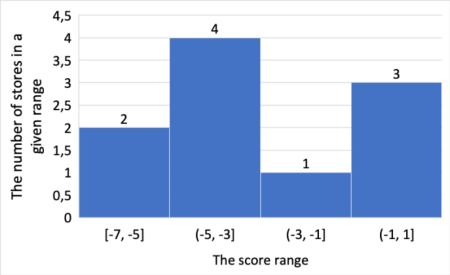
For a more thorough statistical analysis of the obtained results, a histogram was created and analyzed using descriptive statistics. The histogram is
Information Availability and Accessibility Regarding Ecological Products 1023
presented in Figure 5. It can be observed that most of the online stores analyzed were in the 2nd class range and obtained values ranging from –5 to –3. The arithmetic mean for the examined set (n = 10) was –2.7, with the deviations on average by +/– 2.6 from the mean. The median was –4, so half of the obtained values were higher than –4 and the other half were lower than –4.
Figure 4: The results of the evaluation of online stores – a histogram.
For a more detailed analysis, the results of individual evaluation criteria were thoroughly examined. It turns out that no store has a direct link to a group of organic products on its home page. Such a procedure would certainly make it easier to find and recognize these products and increase their sales, while contributing to reducing the negative impact on the environment. At best, such links redirecting to the group of ecological products appeared only on the first subpage. This was the case with four stores.
Another element limiting the accessibility of environmental information was the form of product presentation. In the vast majority of stores assessed, retailers limited themselves only to presenting product photos, which were often small and of low resolution, without additionally displaying eco-labels, which would undoubtedly have given the opportunity to attract the attention of potential buyers. Only three of the examined shops decided to use an additional ecological mark, such as the EU organic logo.
Moreover, in as many as 70% of the examined websites, offers of ecological products were not accompanied by any additional label or even a verbal description that would inform consumers about the ecological nature of a given product. In the above-mentioned cases, the consumer could only rely on the photo of the product and try to look for ecological certificates in it. In three stores there was not even a photo enlargement (zoom-in/zoom-out) function, which made recognizing an organic product extremely difficult.
CONCLUSIONS
The analysis of the availability and accessibility of information about ecological products turned out to be a very effective tool in the evaluation of online stores. The Internet as a medium offers the greatest communication
possibilities among other sales channels and therefore it should be largely used to promote and present the offer of products with a reduced impact on the environment. Especially at a time when the environment is progressively degrading. The results of the evaluation of the websites of stores on the Polish market showed a very gloomy picture of reality. It turns out that the largest retailers in Poland do not take action to facilitate the purchase of eco- friendly and organic products. The dominant direction of communication is promotional and advertising information, whereas the aspect of product ecology is hardly present or almost omitted, and it is difficult to find such information on the main websites of the examined online stores. In such conditions, trying to find and purchase organic products is very difficult for customers and may easily discourage them from doing so.
The proposed evaluation method seems to meet the original assumptions of the study. First of all, the great advantage is its simplicity. It does not require specialized knowledge or advanced equipment, such as eye trackers, and its results may be helpful in making the offer of ecological products more visible.
The result begins with a reflection on revising, updating, and reviewing the measures Nielsen (2010) developed for measuring usability. The guidelines developed some time ago do not seem widely used or appropriate for promoting organic products. The results of this study confirm this. A partial attempt to refine Nielsen’s methods is the work of Polanía Giese and Mützel (2022), where the model cited above is enriched with aspects such as Three Dimensions of Sustainability, Behaviour Change and Longer Term Impacts, Multi-Channel and Innovative Approach, Collaboration, Comparability. Undoubtedly, this area is a research gap and an exciting direction for future research.
The assumed scope of the study and its criteria were well suited to achieving the adopted aim of the research. However, the results obtained do not allow us to remain calm. They in fact clearly show that the e-commerce market needs regulations or other targeted actions that will increase the availability and accessibility of information about the eco characteristics of the products offered. Strengthening the promotion of eco-friendly products involves taking additional actions by retailers. This effort may not be in their direct interest, as it is basically observed in the research conducted. Therefore, it may turn out that the only way to improve the identified situation is to introduce legal regulations requiring a specific method of presentation and the level of availability of organic products in e-commerce. Such regulations could even take the form of an international standard in the future. Regardless of ideas on how to increase the availability and accessibility of eco-friendly and organic products in online stores, it should be noted that all possible forms and methods would be worth taking, because the overall goal should be of great importance to everyone.
ACKNOWLEDGMENT
The publication was written as part of an EU-funded internship, No. POWR.03.05.00-00-Z217/18.
Information Availability and Accessibility Regarding Ecological Products 1025
REFERENCES
Ahmad, A.H., Masri, R., Chong, Ch. V., Fauzi, R.U.A.and Idris, I.(2020) ‘Evolution Of Technology And Consumer Behavior: The Unavoidable Impacts’, Journal of Critical Reviews, 7(11). Akter, S. and Wamba, S. F. (2016) ‘Big data analytics in E-commerce: a systematic
review and agenda for future research’, Electronic Markets, 26(2), pp. 173–194. Bai, L., Wang, J., Ma, X. and Lu, H. (2018) “Air Pollution Forecasts: An Overview”, International Journal of Environmental Research and Public Health, 15(4), p. 780. Chen, S., Ngai, E. W. T., Xiao, F. and Xu, Z. (2024) “From comparison to purchasing:
Effects of online behavior toward associated co-visited products on consumer purchase”, Information & Management, p. 103938. Chen, Z., Song, Y., Li, Y. and Li, Z. (2023) “Assessing the contaminant reduction effects of COVID-19 pandemic in China”, Journal of Cleaner Production, 424, p. 138887. Desonie, D. (2007) Atmosphere: Air Pollution and Its Effects. New York: Infobase
Publishing. Eurostat. (April 25, 2024) E-commerce sales of enterprises by size class of enterprise.
Eurostat Data Browser: https://ec.europa.eu/eurostat/databrowser/view/ISOC_ EC_ESELS/default/table?lang=en&category=isoc.isoc_e.isoc_ec Eurostat. (April 26, 2024) Households - level of internet access. Eurostat Data Browser: https://ec.europa.eu/eurostat/databrowser/view/isoc_ci_in_h/default/ta ble?lang=en&category=isoc.isoc_i.isoc_ici Fang, F. (2020) “Research on mobile e-commerce marketing model based on smart
phones”, E-commerce, 49(4), pp. 63–64. Han, W. (2021) “Purchasing Decision-Making Process of Online Consumers Based on the Five-Stage Model of the Consumer Buying Process”, Advances in Social Science, Education and Humanities Research, 586, pp. 545–548. He, L., Wu, M., Wang, D. and Zhong, Z. (2017) “A study of the influence of
regional environmental expenditure on air quality in China: the effectiveness of environmental policy”, Environmental Science and Pollution Research, 25(8), pp. 7454–7468. Kamhawi, R. and Weaver, D. H. (2003) “Mass Communication Research Trends from 1980 to 1999”, Journalism & Mass Communication Quarterly, 80(1), pp. 7–27. Krippendorff, K. (2013) Content Analysis: An Introduction to Its Methodology.
Thousand Oaks: Sage Publications, Inc. Kuang, Y. C. (2016) “Research on mobile e-commerce business models based on smart terminals”, Chinese Market, 55(41), pp. 114–115. Kumari, P. and Toshniwal, D. (2020) “Impact of lockdown measures during COVID-
19 on air quality – A case study of India”, International Journal of Environmental Health Research, 32(3), pp. 503–510. Landrigan, P. J. et al. (2018) “The Lancet Commission on pollution and health”, The Lancet, 391(10119), pp. 462–512. Nguyen, A. K., Liou, Y.-A., Li, M.-H. and Tran, T. A. (2016) “Zoning eco-
environmental vulnerability for environmental management and protection”, Ecological Indicators, 69, pp. 100–117. Nguyen, K.-A. and Liou, Y.-A. (2024) “Rethinking our world: a perspective on a cleaner globe emerging from reduced anthropogenic activities”, Geoscience Letters, 11(1). Nielsen, J. (2010) “What Is Usability?”, in: User Experience Re-Mastered, Wilson,
C. (ed.), Morgan Kaufmann, pp. 3–22.
Papatla, P. (2011) “Do online shopping styles affect preferred site attributes? An empirical investigation and retailing implications”, Journal of Retailing and Consumer Services, 18(4), pp. 362–369. Polanía Giese, J. C. and Mützel, J. (2022) Guidelines for Providing Product
Sustainability Information in E-Commerce. One Planet Network and adelphi. Scutariu, A.-L., ¸Su¸su, ¸S., Huidumac-Petrescu, C.-E. and Gogonea, R.-M. (2021) “A Cluster Analysis Concerning the Behavior of Enterprises with E-Commerce Activity in the Context of the COVID-19 Pandemic”, Journal of Theoretical and Applied Electronic Commerce Research, 17(1), pp. 47–68. ´Spiewak, R. (2023) “Zastosowanie elementów audytu UX oraz narzedzi Google do
oceny stron sklepów internetowych”, Zeszyty Studenckie “Nasze Studia”, 13, pp. 241–249. Tilman, D. and Lehman, C. (2001) “Human-caused environmental change: impacts on plant diversity and evolution”, Proceedings of the National Academy of Sciences of the United States of America, 98(10), pp. 5433–5440. Vasiljevic-Shikaleska, A., Trpovski, G. and Gjozinska, B. (2018) “Environmental
Awareness and of Pro-environmental Consumer Behavior”, Journal of Sustainable Development, 8, pp. 4–17. Wang, H. and Hou, J. (2011) “Factors affecting Business-to-Business e-commerce adoption and implementation in Small- and Medium-Sized Enterprises”, Springer eBooks, pp. 1327–1332.
LISTED IN THE AHFE DIGITAL BOOKSTORE CATALOGUE
Explore the complete digital volume
Human Factors in Design, Engineering, and Computing
Read this individual research paper free through the original publisher, or explore the full digital proceedings book.
ISBN 978-1-964867-35-9
Explore this ISBN in the AHFE Bookstore ↗Listed in the July 2026 bookstore catalogue; search by ISBN to confirm current availability · Digital book purchase optional