Abhishek Srivastava, Sonal Atreya (2024). Comparing the pedagogical setup of contemporary chair-based sitting with traditional Indian (cross-legged) way of ground-based sitting: A Narrative review. In: Training, Education, and Learning Sciences. AHFE Open Access, vol. 155, pp. 223–233. https://doi.org/10.54941/ahfe1005407
Publisher statistics will load when you open Metrics.
AHFE OPEN ACCESS OPEN ACCESS CONFERENCE PROCEEDINGS PAPER
Comparing the pedagogical setup of contemporary chair-based sitting with traditional Indian (cross-legged) way of ground-based sitting: A Narrative review
Background: Chairs are a relatively newer concept as compared to the traditional Indian way of ground-based sitting. The traditional Indian gurukuls (residential schools), follows Vedic way of minimal living, and the learners primarily adopt ground-based sitting resembling specific asanas (body postures), which offer a wide range of physical and psychological benefits. Problem: Although there is ample study on the consequences of extended (chair-based) sitting and sedentary lifestyle, only a few studies have focused on the ground-based sitting practise adopted in eastern cultures. Furthermore, these limited studies exist in domain-specific silos, with insufficient comparative compilation. Methods: The paper aims to compare the impact of chair-based sitting with ground-based, on learner’s physical, mental, and additional dimensions through literature-based study. Results: The prolonged chair-based sitting impacts - Physical dimensions (like- musculoskeletal pain in body parts, swelling of ankles & legs, etc.), Mental dimensions (like- chronic stress, anxiety & depression, etc.), and additional dimensions (like- poor academic performance, social conduct issues, etc.). Meanwhile, the Indian way of ground (cross-legged) sitting appears to have positive effects on these dimensions. Under the physical dimension, cross-legged sitting betters- blood circulation, back stability, and body's flexibility. This sitting improves the mental dimension through enhanced concentration, inducing a calming effect, etc. Moreover, it aids in additional dimensions, such as balancing the bodily energy systems and imparting longevity benefits. Conclusion: This review highlights the numerous advantages of ground-based (cross-legged) sitting over chair-based, and highlights an excellent opportunity to investigate the ancient knowledge of asana using scientific approaches in educational context.
Humans were not created to sit, but to walk, run, stand, sleep, etc. This claim by T. M. Grimsrud, ex-president and CEO of the prestigious furniture company Hag A.S.A, may sound a bit surprising to many (Grimsrud, 1990).
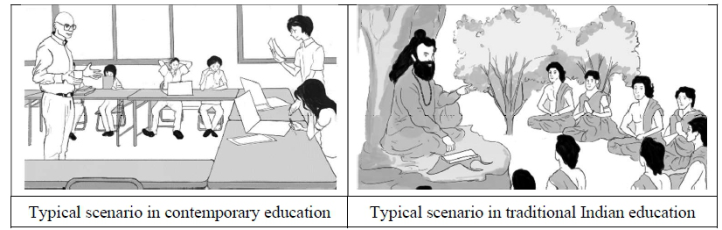
However, with evolutionary changes, we began sitting, which gradually stretched from brief periods to long hours. It would not be an exaggera- tion to state that most of our wake time is spent sitting. And now that sitting has become an essential part of our lives, it is necessary to do it correctly, especially for students who spend 8 to 10 hours sitting each day for various activities. Numerous studies have demonstrated the impact of improper or poor posture and prolonged sitting on student’s physical, behavioural, cog- nitive, and psychological symptoms (Boudrifa et al., 2019; Murphy et al., 2004). Finding solutions to the issues we face in the current period is just one of many reasons to study the past as well as traditional practices. In our case, ancient India has a rich and extensive traditional knowledge system that contains takeaways for variety of fields, namely- architecture, health, science, etc. including education. Even though many researchers have writ- ten on India’s transition from its indigenous to modern educational systems (Gupta, 2022), the aspect of change in sitting posture hasn’t received enough attention which has dramatically transformed from ground-based sitting to chair-based sitting. This paper analyses the contemporary education scenario and the traditional Indian education scenarios (which incorporated asanas) from the perspective of sitting (Figure 1).
Figure 1: Contemporary and traditional methods of sitting in the educational context.
METHODOLOGY
A literature-based study is used to analyse chair-based and ground-based edu- cational seating configurations. The study on the chair-based sitting is mostly based on the published research and experimental studies. Meanwhile, the findings of ground-based sitting postures are based on a review of ancient Indian scriptures and their translations, books, and published research arti- cles. The paper also presents relevant studies on comparative experiments in the two setups. Various keywords, such as ‘asanas’, ‘yogasanas’, ‘ground sitting’, ‘cross-legged sitting’, ‘chair-based sitting’, ‘classroom furniture’, ‘sit- ting postures’, ‘gurukul-based education’, ‘seating’, ‘comparing yogasana and chair-based sitting’, etc., were used to identify relevant research articles from search databases including Google Scholar, Science Direct, and PubMed. The literature meeting the following criteria were included: (a) assisting in under- standing of chair-based sitting and ground-based sitting, and (b) benefits
Comparing the Pedagogical Setup of Contemporary Chair-Based Sitting 225
and/or impact of these two sitting postures, as well as comparative stud- ies. Constraints like year of publication, age, gender, or literature type, were not imposed due to the limited number of publications that met these cri- teria; besides criteria of search database was further relaxed. In addition to hand searches of book and yoga specific journal, websites belonging to yoga institutions were also examined.
Meanwhile, finding literature on the Indian way of ‘cross-legged’ sitting presented a unique challenge because the posture can apply to both the Indian style of ground sitting, which involves folding one’s knees, as well as sitting on a chair with knee over knee. This was addressed by screening through the search results in order of abstract, methodology, conclusion, and in certain cases after reading the whole article. It is also crucial to note that the terms ‘Yogasana’ and ‘Asana’ are sometimes used interchangeably; however yogic texts like ‘Gheran.d.a sam. hit¯a’ by Swami N. Saraswati (Saraswati, 1992), list ‘Yogasana’ as one of the thirty-two asanas. Hence, to avoid any ambiguity, the study shall use the term ‘asana’ in the subsequent sections.
CHAIR-BASED EDUCATIONAL ENVIRONMENT Broadly four types of classification can be seen in the contemporary class- room environment around seating (Khanam et al., 2006). These include- i) Sled desk combo, ii) Chair with Tablet arm, iii) Table with chair, iv) Table with bench. One thing common in all these seating is the ‘elevated form’ of seating. Whether one is using a single seating i.e., a chair or grouped seating in the form of a bench, the conventional and expected usage is to sit on a chair with both feet on the ground.
Chair-Based Sitting and Its Long-Term Effect While chairs make it easier to sit down and stand up more quickly and with less effort, its frequent use may be detrimental to one’s health. Dr. James Levine, a Mayo Clinic professor of medicine and author of the book ‘Get Up’, coined the phrase “Sitting is the new smoking” to highlight the dangers of prolonged sitting. The statement aims to emphasise the serious health risks involved in extended sitting durations. The impact of prolonged sitting is further assessed on dimensions like- physical, mental, and additional aspects, of chair-based sitting.
Physical Health Medical researchers studying the impact of extended sitting regard ‘too much sitting’ as a unique health hazard that can affect the cardiovascular and metabolic systems (Hamilton et al., 2008). The research team led by Car- omano (FA et al., 2015) evaluated the impact of prolonged sitting among students and determined that the bodily areas with the most complaints of pain are the head, neck, shoulders, and lumbosacral region, and the pain increases in proportion to the time spent sitting. These results concur with Musa (Musaa et al., 2011), who also included wrists, hands, and elbows, as body areas experiencing musculoskeletal pain. Long periods of sitting can also promote atrophy and withering of the leg and gluteal muscles. These
226 Srivastava and Atreya
muscles are essential for walking and stability; if they are weak, one is vul- nerable to injury from falls and strains (VSG, 2022). Besides these, research studies have also associated extended sitting with obesity and overweight among students (Mussi et al., 2017). Foot placement is another significant aspect while sitting. It is recommended that the feet should rest flat on the floor when seated (DIR, 2022) to aid the stability of the spine. However, due to variations in body forms and heights, many students have their feet dan- gling or stretched. As a result, one is more likely to develop varicose veins and swelling of the ankles and legs (Higgins, 2021). Looking at the available furniture in the educational domain, most of them do not have adjustable and customizable options. The seating offered are mostly fixed ones and do not allow for seat height adjustments; and even in the cases where it is pro- vided, one rarely uses the adjustable features of their chairs because they’re not aware of them (McCormick & Sanders, 1982). Also, the furniture indus- try has seen sudden inclination towards the ergonomic furniture but that too has been questioned. Dr. Turner Osler, a renowned academic trauma sur- geon at the University of Vermont Medical Centre and founder of QOR360, disputes this by questioning why, despite decades of ergonomics improve- ments, 80% of Americans still experience back pain. He continues by saying that multi-support ergonomic furniture actually alters one’s naturally good posture rather than helping (Osler, 2021).
Mental Health Long-term chair usage effects the mental dimension just like it does on physical health. Research studies have established that those who sit more (including occupational and leisure sitting) are at a higher risk of both anxiety and depression (Teychenne et al., 2015). The memory too gets impacted due to extended sitting. In a study published in Plus one, the hippocampus, which plays a vital role in memory among other tasks, was found thinner in individ- uals with sedentary lifestyles (Siddarth et al., 2018). A sedentary lifestyle has also been linked to mental health issues such as chronic stress, in addition to anxiety and depression. Students usually sit for long hours attending sessions or working on assignments. Increased discomfort and drowsiness among stu- dents are linked to prolonged and uninterrupted sitting (Hosteng et al., 2019) thus reducing a student’s attention and engagement in the class. Meanwhile, chair comfort too, has a considerable impact on student attentiveness. Study by Michael and team (Meeks et al., 2013) suggested that students seated in more comfortable chairs are prone to let their minds wander or, in some circumstances, fall asleep.
Additional Impact The extended period of sitting and sedentary behaviour is closely and mutu- ally associated. With the relationship between extended sitting and men- tal health established, Sarah’s study (Mcalpine, 2021) acquires relevance, demonstrating that mental health had a detrimental impact on academic performance for 83% of 33,000 college students in US. Another study led by Kirsten Corder (Corder et al., 2015) on British adolescents, concluded the association of sedentary behaviour with poor points. The findings are in
Comparing the Pedagogical Setup of Contemporary Chair-Based Sitting 227
alignment with Tremblay’s research (Tremblay et al., 2011) which also links problems with academic performance and social behaviour to the sedentary behaviour of school-aged children and youth.
GROUND-BASED TRADITIONAL INDIAN EDUCATIONAL ENVIRONMENT The education centres in ancient India were gurukuls following the tradi- tion of guru-´sis.ya param. par¯a (teacher-student tradition) where the students would stay with their teachers, throughout the education period. There are approx. 4500 active gurukuls in India, as per Vediconcepts (an educational research company); of which, few still employ the ancient pedagogical setup of ground-based sitting, while others have modernized with changing times.
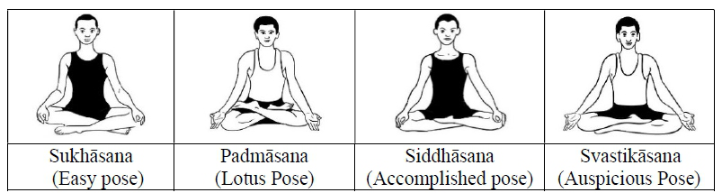
Asanas or Postures Asanas (postures) are one of the eight limbs in Patanjali’s as.t.¯am. ga yoga. The Sadhanapad section of Patanjali’s Yoga Sutras define asanas as ‘sthi- rasukham¯asanam’ meaning a posture in which the body is stable (sthiram) and comfortable (sukham). Many ancient texts differ on the classification of asanas, however most of them broadly acknowledge the three types- Med- itative (sitting postures, like sukh¯asana, etc.), Conditioning (which involves stretching, like ´s¯ırs.¯asana, etc.) and Relaxation (meant for resting of the body and mind, like- ´sav¯asana, etc.) (Gharote, 2022). Since the students in gurukuls primarily sit on the ground for attending sessions and studying, hence we will focus on those specific asanas or sitting postures. These were the medita- tive asanas (Figure 2) as studying too required focus and concentration like meditation.
Figure 2: Prominent cross-legged asanas for ground sitting.
While Yoga is about mind-body practise (Yamuna et al., 2023), the hatha yogis emphasised on the aspect of having a stable body for a stable mind. Asanas aided in the process of gaining control over the body and thereby controlling the mind, and hence they take precedence in the hatha yoga (Muktibodhananda, 2006; Gharote, 2022).
Physical Health The aforementioned asanas require one to be seated in a specific cross-legged posture on the ground with the back (spine) erect. Sitting cross-legged is a
228 Srivastava and Atreya
scientifically established healthier method to sit than sitting on a chair (Kohli et al., 2019) and has numerous health benefits. It aids in stretching the mus- cles and improving body posture. The cross-legged sitting position allows natural curvature in both the upper and lower back, thereby stabilizing the lower back and pelvic area (Chockalingam & Healy, 2020). The stability of the back is also attributed to cross-legged sitting on the ground, which shifts the body’s centre of gravity to the base as compared to chair-based sitting (Dutta & Dhara, 2012). When we sit in a chair, more blood goes to our legs since they are lower in the body than the heart. The heart, in conse- quence, must work harder to maintain consistent blood flow, whereas sitting cross-legged allows for better blood circulation, which helps strengthen the heart (Patel, 2018). As per Hatha Yoga Pradipika, practising Padm¯asana helps eliminate many diseases. Padm¯asana on a regular basis tones the sacral and coccygeal nerves with increased blood flow (Muktibodhananda, 2006), thereby aiding in improved motor and sensory function. Svastik¯asana is believed to help those who suffer from varicose veins (Saraswati, 1996) and strengthens hip, knee, and thigh muscles. Siddh¯asana modulates blood circu- lation throughout the body, from the abdomen to the spine (Saraswati, 1996). Sukh¯asana lubricates the joint, increasing the body’s flexibility which makes the body more pliable and less prone to traumas and degenerative disorders such as osteoporosis and arthritis (Patel, 2018).
Mental Health Ground sitting in cross-legged based asanas help maintain a healthy mind as well. As one sits in a cross-legged posture, the blood flow to the legs is reduced and directed to the abdomen. This is benefits individuals with emo- tional and nervous disorders (Muktibodhananda, 2006), as well as activating the digestive process (Saraswati, 1992). Asanas like Siddh¯asana provides a general calming effect, eliminating mental exhaustion and stress (Saraswati, 1996) while, Padm¯asana improves concentration and memory (NCERT, 2022). The process of receiving in and responding to sensory information is subdued while in Padm¯asana, indicating a state of tranquilly and less stimulation from a physiological perspective (Saraswati, 1992). Additionally, making decisions and maintaining relationships can both benefit from the mental clarity and emotional stability that comes from practicing Padm¯asana (Naragatti & S, 2023). Sukh¯asana stimulates the parasympathetic ner- vous system and harmonizes the central nervous system (Sivasubramaniam, 2019) thus, helping one to be calm and relaxed (V & P, 2005). Practising Svastik¯asana with slow breathing reduces stress and enhances blood flow to the entire body, therefore it is highly recommended for individuals who suffer from stress (Sorathiya, 2022).
Additional Benefits The benefits of ground-based sitting are way more and go beyond the physical and mental dimensions. Asanas not only help in ensuring a healthier body but also nourishes the mind and further helps in balancing of chakras. Chakras are the energy systems in the subtle body (Ghosh et al., 2019) through which
Comparing the Pedagogical Setup of Contemporary Chair-Based Sitting 229
the life force energy flows. Besides Yoga, numerous ancient traditions, includ- ing Reiki, Tai Chi and QiGong, too place an emphasis on the appropriate functioning of the energy system to attain health and well-being. Ghosh and team’s (Ghosh et al., 2019) study regarding acupuncture meridian energy (responsible for overall well-being) indicated that doing Padm¯asana for at least 20 minutes enhanced subtle energy levels. Meanwhile, in order to sit on ground comfortably, one needs to get away with the shoes. A team led by Prof. S. Heppell from University of Bournemouth, noted the benefits of shoeless learning and presented significant advantages including- better behaviour, quieter classrooms, increased willingness to sit on floor, cleaner floor spaces, and less furniture aided in more space for collaboration, better performance, and so on (Heppell, 2011). Besides, frequent sitting and rising are also asso- ciated with a marker of longevity. According to research published in the European Journal of Preventive Cardiology, individuals who could stand up from a floor position without assistance had a greater likelihood of living longer than people who couldn’t (Brito et al., 2012). Additionally, sitting on the ground is among the grounding techniques that offer physiological ben- efits and general well-being (Chevalier et al., 2012). Hence, even if one does not believe in the spiritual side of these asanas, the physical, mental, and physiological advantages cannot be ignored.
COMPARATIVE STUDIES Although there has been limited research comparing (Table 1) chair-based versus ground-based sitting, but one of the significant findings is presented by the research team led by Rai (Rai et al., 1994) on various cardio-ventilatory responses comparing Siddh¯asana, chair-based seating and horizontal supine. Sitting in Siddh¯asana was found to have more minute ventilation, higher oxy- gen intake, larger CO2 elimination, etc. than the other two postures. These results indicated that, while Siddh¯asana is a static posture, it is a mild kind of exercise on its own (Rai et al., 1994). The finding has enormous promise, particularly when the other elevated forms of sitting are considered sedentary.
The study by Ghosh, Hankey and Srinivasan (K, et al., 2017) on the effect of Padm¯asana (lotus position) on acupuncture meridian energies indi- cated that Padm¯asana steadily increases subtle energy level, but sitting in chair tends to reduce the same, influencing an individual’s general well-being accordingly. Their study employed AcuGraph (electro-acupuncture equip- ment) to assess meridian energy (associated to 12 primary meridians) in 50 male patients separated into two groups (Padm¯asana and chair-based sitting) at intervals of 10, 20, and 30-mins on consecutive days.
Meanwhile, a study on the effect of individual asanas on blood pressure (systolic and diastolic) conducted by Malhotra and Tandon (V & P, 2005) on 25 medical students (MBBS first year) indicated that the pressure was lowest in Sukh¯asana when compared to sitting posture and other asanas like Vajr¯asana and Dhanur¯asana, and thus this asana may be adopted for calming the overworked heart. The study’s findings are notable because the subjects are not frequent yoga practitioners.
230 Srivastava and Atreya
Another research on primary student’s sitting posture by Dutta and Dhara (Dutta & Dhara, 2012) revealed that sitting cross-legged on the floor caused less muscular stress and more stability than, sitting on the bench, and sitting on the floor with legs stretched. This was concluded based on the study of 106 primary school children and their readings of EMG (Electromyography), body joint angles, body’s centre of gravity, and base contact area.
Table 1. Summary of comparative studies, sorted in alphabetical order (author’s last name).
Table available in the original PDF paper.
Parameter studied Measurement method
Study Sample User Group; Sample Size; Age (Gender) Dutta and Dhara (2012)
Muscular stress EMG (back and shoulder muscles)
Primary school students; 106; 6–10 years (M)
Acupuncture meridian energies
AcuGraph (electro-puncture instrument)
Ghosh, Hankey, and Srinivasan (2016)
University students (Yoga practitioners); 50; 20–26 years (M)
Malhotra and Tandon (2005)
Cardio-ventilatory responses
Mijnhardt Oxycon through facemask
Medical students; 25; 16–19 years (-) Blood pressure Mercury Sphygmo- manometer Rai et al. (1994) Yoga proficient teachers; 10; 25–37 years (M)
CONCLUSION
The purpose of this narrative review is to provide an overview of the impact of sitting on a chair and ground (cross-legged). Readers should be mindful of the study limitations when interpreting the paper’s findings, such as the fewer number of relevant papers in the field, smaller sample sizes, comparative stud- ies involving yoga practitioners, studies specific to one gender, etc. The paper while advocating ground-based cross-legged postures, also recognizes the sig- nificance of the elevated form of seating for desktop and practical-based work. The conclusions should be seen from the perspective of reintroducing the traditional yet scientific way of ground sitting in specific scenarios like lec- tures, discussions, etc. especially in the floor sitting cultures. It is also worth noting that only a few studies relating to the scientific and comparative assess- ment of yogasana practice in educational contexts were found in the review. However, this lack of research also offers an excellent opportunity to study this ancient knowledge of asana using scientific methods. The study also high- lights the need of having furniture that allows students to acquire traditional postures like cross-legged on chair, while also being able to sit in conven- tional ways i.e., with feet on floor. This way one can derive the benefits of sitting in asanas, as well as facilitate the need of conventional sitting for varied activities. The benefits of ground-based sitting are enormous as evident from
Comparing the Pedagogical Setup of Contemporary Chair-Based Sitting 231
the study. However, due to the long-habituated practice of elevated sitting, the immediate introduction of ground-based (cross-legged) sitting in educa- tion may not be effective or may even cause harm. This requires a guided and gradual approach of introduction and practise. Yoga experts and train- ers may be looped in to guide and assist students in performing the asanas correctly.
ACKNOWLEDGMENT
The authors would like to thank Anushka Tyagi for her help with the illus- trations (Figure 1, 2). This study has been supported by the Prime Minister’s Research Fellows (PMRF) Scheme by the Ministry of Education, Government of India.
REFERENCES
Boudrifa, H., Slimani, S., Oubrahem, O. & Ghachi, M., 2019. The Effect of Prolonged Sitting on Students. Occupational and Environmental Safety and Health, pp. 249–255. Brito, L., Ricardo, D. R., Ramos, P. & Araujo, C. G., 2012. Ability to sit and rise
from the floor as a predictor of all-cause mortality. European Journal of Preventive Cardiology, pp. 1–7. Chevalier, G. et al., 2012. Earthing: Health Implications of Reconnecting the Human Body to the Earth’s Surface Electrons. Journal of Environmental and Public Health, pp. 1–8. Chockalingam, N. & Healy, A., 2020. Sitting on the floor vs sitting on a chair – which
is better for you?. [Online] Available at: https://theconversation.com/sitting-on- the-floor-vs-sitting-on-a-chair-which-is-better-for-you-141164 [Accessed 15 Nov. 2022]. Corder, K. et al., 2015. Revising on the run or studying on the sofa: prospective associations between physical activity, sedentary behaviour, and exam results in British adolescents. International Journal of Behavioral Nutrition and Physical Activity, 12(106), pp. 1–8. DIR, 2022. Easy Ergonomics for Desktop Computer User. California: Division of
Occupational Safety and Health Publications Unit. Dutta, S. & Dhara, P. C., 2012. Evaluation of Different Sitting Postures of Rural Primary School Boys in the Classroom. Journal of Ergonomics, 2(3). FA, C. et al., 2015. Prolonged sitting and physical discomfort in university students.
Acta Fisiatr, pp. 176–180. Gharote, M. L., 2022. Encyclopaedia of Traditional Asanas. Pune: The Lonavla Yoga Institute. Ghosh, K., Hankey, A. & Srinivasan, T., 2019. Subtle energy system of human body
based on energy model of Yoga and Traditional Chinese Medicine. Journal of Research in Traditional Medicine, 5(3), pp. 51–57. Grimsrud, T. M., 1990. Humans were not created to sit- and why you have to refurnish your life. Ergonomics, 33(3), pp. 291–295. Gupta, V., 2022. Parimala V. Rao, Beyond Macaulay: Education in India, 1780–
1860. Contemporary Education Dialogue, pp. 165–171. Hamilton, M. T. et al., 2008. Too Little Exercise and Too Much Sitting: Inactivity Physiology and the Need for New Recommendations on Sedentary Behavior. Current Cardiovascular Risk Reports, 2(4), pp. 292–298.
232 Srivastava and Atreya
Heppell, S., 2011. shoeless learning spaces. [Online] Available at: https://rubble.heppell.net/places/shoeless/default.html. Higgins, D., 2021. Should Your Feet Touch the Ground When Sitting in a Chair?. [Online] Available at: https://athletedesk.com/chairs/feet-touch-ground- when-sitting/ [Accessed 11 Oct 2022]. Hosteng, K. R., Reichter, A. P., Simmering, J. E. & Carr, L. J., 2019. Uninterrupted
Classroom Sitting is Associated with Increased Discomfort and Sleepiness Among College Students. International Journal of Environmental Research and Public Health, 16(14), pp. 1–10. K, G., A, H. & TM, S., 2017. Effect of lotus posture on acupuncture meridian energies: A controlled trial. International Journal of Yoga, 10(2), pp. 88–94. Khanam, C. N., Reddy, M. V. & Mrunalini, A., 2006. Designing Student’s Seat-
ing Furniture for Classroom Environment. Journal of Human Ecology, 20(4), pp. 241–248. Kohli, P. et al., 2019. The value of cross legged sitting: Virtue or vice for health..
International Journal of Orthopaedics Sciences, pp. 607–610. Mcalpine, K. J., 2021. The Brink_Pioneering research from Boston University. [Online] Available at: https://www.bu.edu/articles/2021/depression-anxiety- loneliness-are-peaking-in-college-students/ [Accessed 6 Sep 2022]. McCormick, E. J. & Sanders, M. S., 1982. Human factors in engineering and design.
s.l.: McGraw-Hill Companies. Michael D. Meeks, T. L. K. et al., 2013. The Impact of Seating Location and Seating Type on Student Performance. Education Sciences, pp. 375–386. Muktibodhananda, S., 2006. Hath yoga Pradipika. Munger: Yoga Publications
Trust. Murphy, S., Buckle, P. & Stubbs, D., 2004. Classroom posture and self-reported back and neck pain in schoolchildren. Applied Ergonomics, 35(2), pp. 113–120. Musaa, A. I., Ismailab, S. O., Adejuyigbeb, S. B. & Akinyemic, O., 2011. Ergo-effects
of designed school furniture and sitting positions on students’ behaviour and musculo-skeletal disorder in Nigerian tertiary institutions. Management Science Letters, pp. 331–334. Mussi, F. C., Pitanga, F. J. G. & Pires, C. G. d. S., 2017. Cumulative sitting time as discriminator of overweight, obesity, abdominal obesity and lipid disorders in nursing university. Rev Bras Cineantropom Hum, 19(1), pp. 40–49. Naragatti, S. & S, V. H., 2023. The Profound influence of Padmasana (Lotus pose) on
an individuals’s life. International Journal of Novel Research and Development, 8(9), pp. 115–123. NCERT, 2022. Yoga and its Relevance in the Modern Times. In: Health and Physical Education. New Delhi: Regional Production-cum-Distribution Centre Publication Department, p. 227. Osler, T., 2021. Sit Better: A Doctor Explains How “Ergonomic” Chairs Undermine
Posture and Health, Causing Back Pain and Shortened Lives. s.l.: BookBaby. Patel, R., 2018. A yogi in a Michelin-starred restaurant. [Online] Available at: https://www.artofliving.org/in-en/lifestyle/well-being/sukhasana-an-indian-way- of-eating [Accessed 8 Sep 2022]. Rai, L. et al., 1994. Energy expenditure and ventilatory responses during Siddhasana-
a yogic seated posture. Indian J Physiol Pharmacol, 38(1), pp. 29–33. Saraswati, S. N., 1992. Gheranda Samhita_Commentary on the Yoga Teachings.
Comparing the Pedagogical Setup of Contemporary Chair-Based Sitting 233
Siddarth, P. et al., 2018. Sedentary behavior associated with reduced medial temporal lobe thickness in middle-aged and older adults. Plos One, 13(4), pp. 1–13. Sivasubramaniam, T., 2019. Sukhasana (Easy Pose) Meaning, Steps, and Benefits. [Online] Available at: https://www.classicyoga.co.in/2019/08/sukhasana/#Sukhasana_Benefits [Accessed 8 Sep. 2022]. Sorathiya, K., 2022. Swastikasana (Auspicious Pose). [Online] Available at: https://mobilephysiotherapyclinic.in/swastikasana-auspicious- pose-yoga/#What_are_the_Health_Benefits_of_Swastikasana_Auspicious_Pose [Accessed 8 Sep. 2022]. Teychenne, M., Costigan, S. A. & Parker, K., 2015. The association between seden-
tary behaviour and risk of anxiety: a systematic review. BMC Public Health, Volume 15, pp. 1–8. Tremblay, M. S. et al., 2011. Systematic review of sedentary behaviour and health indicators in school-aged children and youth. International Journal of Behavioral Nutrition and Physical Activity, 8(98). V, M. & P, T. O., 2005. A study of the effect of individual Asanas on blood pressure.
Indian Journal of Traditional Knowledge, 4(4), pp. 367–372. VSG, 2022. The dangers of sitting: why sitting is the new smoking. [Online] Available at: https://www.betterhealth.vic.gov.au/health/healthyliving/the- dangers-of-sitting [Accessed 5 Sep. 2022]. Yamuna, U., Madle, K., Majumdar, V. & Saoji, A. A., 2023. Designing and validation
of Yoga module for workers with prolonged standing. Journal of Ayurveda and Integrative Medicine, Volume 14, pp. 1–5.
LISTED IN THE AHFE DIGITAL BOOKSTORE CATALOGUE
Explore the complete digital volume
Training, Education, and Learning Sciences
Read this individual research paper free through the original publisher, or explore the full digital proceedings book.
ISBN 978-1-964867-31-1
Explore this ISBN in the AHFE Bookstore ↗Listed in the July 2026 bookstore catalogue; search by ISBN to confirm current availability · Digital book purchase optional