Artur Kruszewski, Ilia Cherkashin, Marek Kruszewski, Elena Cherkashina, Liu Siliang (2024). Interpretation of Chinese hand-to-hand fighting systems and therapeutic exercises from the perspective of the INNOAGON methodology. In: Human Factors in Sports, Performance and Wellness. AHFE Open Access, vol. 150, pp. 74–83. https://doi.org/10.54941/ahfe1005292
The traditional Chinese aerobic fitness exercise tai chi, is a form of low to moderate intensity physical activity. Tai chi is a good example of both therapeutic exercise and a form of preparation for gentle hand-to-hand combat (especially as safe self-defence, also from the perspective of a potential aggressor) . In Chinese society, these forms of exercise are the primary means of preventive health, active lifestyle and, in a sense, conventional physiotherapy or even rehabilitation. Many schools of tai chi based on the same theoretical principles of exercise are still emerging in China. There are currently six main schools of tai chi and the mainstream is based on the styles; Chen, Yang, Sun, Hao, Wu and He. As a result of evolutionary, practice-based changes linked to traditional oriental medicine, the ai chi method has been popularised. Its core element is part of rehabilitation in water as a 'physical-mental' treatment. Combining the advantages of tai chi and hydropathy, ai tai chi has complementary advantages in terms of sensory stimulation (such as the ability to maintain balance, sense of movement, development of strength, proprioception etc.) and mental development resulting from the valuable practice of eastern hand-to-hand combat, which is generally recognised as kung fu (alternatively wu shu).Similar modifications of these systems of hand-to-hand combat and healing exercises are part of the methodological concept of INNOAGON (an acronym for innovative agonology). Its basic method is a complementary approach, with the main aim of strengthening all dimensions of health and survival from the micro to the macro scale. For many decades tai chi has been gaining popularity around the world, but has moved significantly away from its roots. Today, tai chi exercises seem to have lost the sense of martial training and are rather seen as three strands parallel to each other: sport, health and spiritual (i.e. related to mental health). It is precisely the philosophy of health characteristic of Chinese culture combined with the various styles of traditional kung-fu hand-to-hand combat that is a very important alternative to the pathologies of neo-gladiatorism. It comes close to fulfilling the social mission of INNOAGON, as does Japanese budo. These systems, in a sense, refer to the Greek philosophy of kalos kagatos. The methodological potential of INNOAGON makes intercultural dialogue over time (from the past, through the present towards the future), supported by a repeatedly verified practice with great health and personal security values, an important way of balancing the negative effects of the increasingly strong human coupling with the attractions of modern digital technology.
Interpretation of Chinese Hand-to-Hand Fighting Systems and Therapeutic Exercises 75
INNOAGON INNOAGON (acronym for ‘innovative agonology’) – is an applied science that focuses on the promotion, prevention and treatment of all dimensions of health and the optimisation of activities that enhance survival (from micro to macro) (Kalina, Kruszewski, 2023).
From this broad spectrum of influence of INNOAGON theory, the issue of teaching and applying hand-to-hand combat in modern society in accor- dance with the convention of the human right to necessary defence - hence the proposal by experts of this new science of honourable self-defence - comes to the fore (Harasymowicz, 2007). By means of such a modern approach (as opposed to the media promotion of neo gladiatorism camouflaged with the name of mixed martial arts), hand-to-hand combat training shapes not only the motor skills of self-defence, but also mental resistance, ethics and aesthetics, and the key criterion is the acquisition of respect for one’s own corporeality and that of the opponent the one in the training room and, paradoxically, the virtual aggressor [propaedeutics of combat sports]. This is a still ignored, although accessible, way (provided a competent teacher) of raising self-esteem and self-confidence and generally influencing a change in life attitudes (Kalina, Kruszewski, 2023).
The definition of the acronym INNOAGON, emphasises the openness (but not overlooking the standards of science) to continuous improvement of one’s own creation. It is a combination of words ‘innovation’ and ‘agon’ (which in ancient Greece meant, among other things, ‘struggle’). The suffix ‘logy’ (traditionally used to mean ‘science of a particular subject’) is instead part of the full name of this science - innovative agonology.
INNOAGON theory encompasses the coverage of all combat theories. In turn, these theories provide premises and assumptions for hypotheses, which are then verified through experiments and diagnostic studies. All research activities undertaken are directed towards the interpretation of observational data and justifications leading to the formulation of meaningful implementa- tions in the areas of practice concerning education, health or survival in the broadest possible sense.
A certain surprise, not only to INNOAGON experts, is the fact that the term ‘self-defence’ has been used in the field of science (since 1900) in a much broader sense than just in terms of defensive combat in general (Kruszewski, Walczak, 2023). After all, the object of exploration of the individual dis- ciplines and sub-disciplines of science is not the phenomenon of struggle understood in a general sense (as is the case in the field of praxeology) (Kotarbi´nski, 1938) or in a concrete sense - for example, precisely the phe- nomenon of ‘self-defence’ as a concrete case of the theory of defensive struggle (Kalina, 1991).
INNOAGON’s mission is to supplement knowledge and recommend con- clusions leading to changes in the perception of physical activity in its broadest sense, from the micro to the macro scale, with particular emphasis on the criterion of identification with the hypothesis stating the supreme val- ues of global civilisation – survival of humans and nature in a non-degenerate form and responsibility for coming generations (Piepiora, Kalina, 2023). In
other words, the aim of the action taken is the development of the individual in every possible aspect, and the primary means is continuous, appropriate and sustainable education.
The distinguishing element of INNOAGON’s theory of practising physical activity is the teaching of hand-to-hand combat systems, also associated with self-defence, in a much broader sense than just mastering specific technical actions or action systems related to the physical side. The prerequisite for this is the even development of both the physical and mental spheres of the individual.
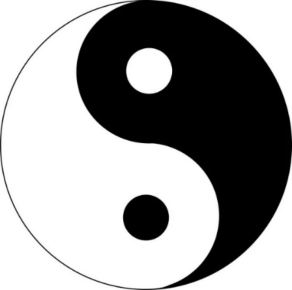
Chinese Hand-to-Hand Combat Systems In Far Eastern culture, the symbol of the complex interaction between body and mind is the Yin Yang symbol (Figue 1). This sign is a recognised symbol of Taoism, and represents a philosophical rather than a religious meaning. It derives from the text of the Tao Te Ching, which translates as ‘the way of honesty’. The title can mean ‘The Book of the Way and its Virtue’. In eighty verses it contains a treatise on how to live in the world with goodness and honesty. The text is attributed to Lao Tzu (or Laozi, which literally means ‘old master’), a chronicler of the Zhou dynasty in the sixth century BC, and is a fundamental text of philosophical Taoism (Lau, Tao, 1989). It is somewhat of a curiosity that during the domination of communist rule in Poland, this sign was the official identifier of The Polish Society for Mental Health and featured on almost all of the Society’s monographs.
Figure 1: Yin Yang symbol (https://www.kungfuliving.com/48-yin-yang-and-the- symbolism).
Yin is the feminine element and implies the qualities of slow, soft, non- substantial, diffuse, cold, wet and calm, and is associated with water, earth, birth and birthing. Yang is the masculine principle and implies the quali- ties of fast, hard, solid, dry, focused, hot and aggressive, and is associated with things like fire and sun. When someone is calm, relaxed and accepting of everything around them, they are in a yin state. When someone is tense like a coiled spring and completely focused on one thing, they are in a yang state. Neither of these is good or bad and both are appropriate in their place.
Interpretation of Chinese Hand-to-Hand Fighting Systems and Therapeutic Exercises 77
These distinctions do not imply any observed or prescribed gender attitude behaviour, but are philosophical or linguistic distinctions.
These opposites revolving around each other create momentum and the harmony resulting from balancing them is essential. They have their practical applications, of course; the transition through yin and yang in movements is evident in offensive and defensive balance, but also in the development of a calm mind that can think clearly even during violent actions. This learned transition is a skill that eventually becomes so intuitive that the principle permeates all areas of life. The balance of yin and yang forms the basis of traditional Chinese medicine such as Tai Chi and numerous martial schools (Lau, Tao, 1989).
The Hand-to-Hand Combat of Wushu Wushu - translated from Chinese means ‘technique or martial art’. It is made up of two hieroglyphs: wu (‘u’) - ‘military, combat’ and shu (‘shu’) - ‘art, technology’. The first archaic forms of martial arts to appear in ancient China were developed during the Xia, Shang and Zhou eras. With the advent of bronze weapons, these forms evolved into martial arts techniques and began to be used to train soldiers.
The thoughtful system of Chinese wushu schools has ensured that the tradition of harmoniously combining the spiritual with the physical is main- tained. The main difference between wushu and ordinary hand-to-hand combat (the name ‘martial arts’ is commonly used, but scholars identifying with INNOAGON avoid this term so as not to promote neo-Gladism camou- flaged with the name ‘mixed martial arts’ in the field of science) (Kruszewski, 2023) lies precisely in the fact that not only specific techniques (in the sense of motor actions) but, most importantly, spiritual and moral principles were transmitted. This is why, over the centuries, a school of wushu has taken shape, creating its own deeply considered methods of training and educating students (Xie, 2011).
This is why great importance is attached to internal work in all wushu schools. The harmonious combination of internal and external directions is a prerequisite for the success of any wushu school (Liu, Li, 2011).
The main function of wushu is to hone the practitioner’s individual skills and align them with the distinctive values of China’s three main philo- sophical schools: Taoism, Buddhism and Confucianism. It was during this period that such fundamental theoretical treatises of wushu as ‘Quan Yi Shu Zhen’, ‘Baguaquan Xue’, ‘Taijiquan Xue’, ‘Xingyiquan Xue’ by Sun Fuquan, ‘Chenshi Taijiquan Tuishou’ by Chen Xin, ‘Taijiquan Jing’ by Wang Zongyue and others appeared (Bai, 2011).
Some twenty new complexes with and without weapons have been created based on ancient styles, including “simplified taijiquan in 24 forms”, “initial long fist complex”, etc.
The Modern Classification of Wushu Is Divided Into Five Categories I. Fist fighting arts - includes styles and complexes performed without the use of weapons, such as shaolinquan, chaquan, taijiquan, baguazhang,
II. Weapons exercise Short weapons – straight and curved swords, knives and needles. Long weapons – spear, polearm. Double weapons – double swords, double hooks, double spears. Stick and – nine-gauge chain, three-gauge chain.
III. Pair exercises – involve demonstration fights between two or more people according to specific rules and are divided into:
Exercise in pairs of unarmed partners.
Fight between two armed partners.
Fight between an armed partner and an unarmed partner.
IV. Group demonstration exercises – consist of demonstrations involving six or more people, unarmed or with weapons, sometimes performed to the accompaniment of music and in ancient costume.
V. Combat fighting–currently includes fighting in sanda protective gear or tui shou “pushing hands” from taijiquan style (Cheng, 1995).
Zhang Sanfeng is responsible for developing the entire methodology of ‘internal’ development, from which he developed the style of wushu - tai chi (‘fist of the great limit’) - Chinese gymnastics, which is the style, component, basic technique of wushu (‘martial art’), a type of traditional physical cul- ture. It includes wrestling, fist fighting, sword fencing, spades, archery, etc. Modern tai chi is divided into several styles. The main style is the Chen style. According to the Chinese government and the Chen family, the founder of this style of taijiquan is Chen Wangting. He was a soldier in the imperial guard, but left the military soon after the Manchurian Qing Dynasty came to power in 1644. Being an accomplished Wushu master, he decided to system- atise the information he had acquired in the army. This gymnastics is widely practised not only in China, but all over the world. Since 1999, on the ini- tiative of a number of American organisations, World Tai Chi Day has been celebrated annually in more than 60 countries around the world. Material on tai chi is posted on the official websites of the World Health Organisation and the United Nations, as well as in numerous literature sources in Web of Science, Scopus databases, etc. (Peng, 2016).
The traditional Chinese aerobic fitness exercise tai chi, is a form of low to moderate intensity physical activity. Tai chi is a good example of both ther- apeutic exercise and a form of preparation for gentle hand-to-hand combat. In Chinese society, this form of exercise is a primary means of preven- tion, lifestyle in a sense conventional physiotherapy or rehabilitation. Many schools of tai chi based on the same principles of exercise theory have been developed in China. At present, we can distinguish six main schools of tai chi: with the Chen, Yang, Sun, Hao, Wu and He styles being the mainstream (Li et al., 2012; Pan et al., 2017).
Interpretation of Chinese Hand-to-Hand Fighting Systems and Therapeutic Exercises 79
Philosophically, tai chi encompasses a wide range of landmark works and philosophical and religious positions: Taoism, Confucianism, Buddhist doctrine, and Chinese medicine. In terms of systematics, tai chi includes: organised basic movement patterns; forms of individual exercise (similar to Japanese kata); forms of paired exercise; and forms of weapon exercise and combat/self-defence training. Whereby self-defence training empha- sises slow meditative movements rather than strict replication of a combat confrontation (Ciaccioni et al., 2024).
On the other hand, the holistic impact resulting from an awareness of ener- getic and kinaesthetic processes integrates movement, posture, meditation and breathing with philosophical assumptions in which practitioners strive for unity (Zhang et al., 2021).
This argumentation, in our opinion, is convincing enough that health is paramount in the practice of tai chi exercises. “Inner-external connectivity” is a basic principle that Chinese practitioners of the internal arts of wushu particularly adhere to. Inner-external connectivity emphasises the unification of the practitioners’ inner consciousness and outer attitudes, and the grad- ual merging with the environment, partner and even opponent (Fong et al., 2014). Through the practice of self-defence exercises with a partner, as a result of repeated stepping and turning with appropriate body positioning, body bal- ance control is formed. This is of particular importance not so much in the sense of acquiring the ability to fight when confronted with an aggressor, but in the sense of using the acquired coordinated movement of the whole body in many everyday situations, such as avoiding undesirable consequences of injury (e.g. due to collision with a vertical obstacle or moving object) while maintaining balance. The social interaction and mutual respect resulting from group training play an important role in the mental health and cognitive func- tions of people participating in tai chi exercises. Reductions in depression and anxiety have been observed in older people, as well as improvements in cognitive function (Nnodim et al., 2006; Winser et al., 2022).
The inclusion of etiquette and philosophy education has many positive effects on children and young people. After training in these traditional forms of Chinese hand-to-hand combat, increased self-efficacy, social-emotional competence, communication skills and reduced aggressive behaviour were observed in children on the autism spectrum (Lang et al., 2010; Tse et al., 2018; Morales et al., 2021; Tabeshian et al., 2022). The importance of incorporating both philosophy and physical training was highlighted in a randomised controlled trial conducted by Fung and Lee (Fung, 2018).
After 10 sessions of training, children who had learnt both the skills rec- ommended by traditional Chinese hand-to-hand combat form training and philosophy showed significantly reduced aggressive behaviour, delinquent behaviour, anxiety/depression and attention problems, and these changes persisted 6 months after training (Bahrami et al., 2012).
As a result of the constant changes associated with traditional oriental medicine, the ai tai chi method has been popularised. It was developed by
Jun Konno in Japan in 1996, based on tai chi and qi qong exercises (Pazos, González, 2002; Unalan et al., 2008).
Its core element is part of rehabilitation in water as a ‘physical-mental’ treatment. Combining the benefits of tai chi and hydropathy, ai tai chi has complementary benefits in terms of sensory stimuli such as balance abil- ity, sense of movement, strength development, proprioception and mental development based on Eastern martial arts values.
This method has been used with great success in the treatment of people with Parkinson’s disease. One of the main symptoms in this case is a high incidence of falls due to loss of both static and dynamic balance. Various exercise strategies are introduced leading to an improvement in quality of life in motor, social and also psychological dimensions (Lima et al., 2013).
The qualities provided by the specificity of exercising in water are a great advantage for people with Parkinson’s disease who participate in this type of programme. The buoyancy of the water helps to relieve movement and increases both range of motion and muscle activity. Also, exercise in warm water (27
–29
) provides patients with a state of relaxation, relief from joint pain and a reduction in muscle tension. In this sense, the effectiveness of interaction through ai tai chi programmes in gait rehabilitation and fall pre- vention for people with Parkinson’s disease has been confirmed in studies (Pérez-de la Cruz et al., 2016; Pérez-de la Cruz, 2018; Kurt et al., 2018).
Nowadays, Chinese hand-to-hand combat systems are increasingly linked to competitive sport, especially among mainland Chinese youth. As such, it is part of the dualistic and goal-oriented concerns of contemporary sport. The influence of Western sport often results in a significantly instrumentalised approach to exercise only in selected aspects of the sport. Increasingly, peo- ple’s interest, both in Western culture and Far Eastern culture, in engaging in physical activity is focused solely or mainly for health or sporting reasons, thus ignoring the wisdom of Chinese tradition. The underlying essence of wushu is its harmonious conformity (Xu, 2013).
In a bid to popularise Chinese hand-to-hand combat systems, China has included them in the list of events at the Beijing Olympics. This clearly high- lights the physical nature of martial arts and also points to a new direction for martial arts in China. In addition, a number of martial arts competitions are taking place in many locations. Although the development of martial arts’ sporting attributes may increase its popularity and enhance its commercial appeal. They focus blindly on sports, commerce and popularity development, it can easily lead to the phenomenon of “cultural empty nest”. “Cultural empty nest” mainly refers to the phenomenon of the lack of cultural think- ing and cultural concepts in material content, which is only perpetuated by traditional culture. Under the influence of modern civilisation, many tradi- tional ideas have disappeared over time, and the phenomenon of the “cultural empty nest” of Chinese hand-to-hand combat systems is becoming more and more prominent. If we do not pay attention to the development of the cul- ture of hand-to-hand combat systems they will eventually turn into gymnastic competitions (Wang, 2016).
Often during demonstration performances at All-China Wushu competi- tions or Wushu festivals, 80-year-old elderly people appear on the podium,
Interpretation of Chinese Hand-to-Hand Fighting Systems and Therapeutic Exercises 81
easily performing twine or breaking stones into small pieces in their hands. And although today wushu is the most popular form of physical culture in China, the secrets of wushu are still being revealed to few. It is no coincidence that there are two categories of practitioners in China - ‘wushu athletes’ and ‘wushuists’ (wushujia). The latter include true masters who run entire schools or styles and have truly learned all the secrets of the ancient art of wushu, which is inextricably linked to China’s original culture (Peng, Shu, 2016).
CONCLUSION
The philosophy of health characteristic of Chinese culture combined with various kung-fu fighting styles is a very important offer for fulfilling the social mission of INNOAGON. The parallelism of most Chinese forms of hand- to-hand combat to the Japanese concept of budo and the reference to the Greek philosophy of kalos kagatos makes it possible to identify these forms of activity as fulfilling the fundamental appeal of INNOAGON leading to the permanent development of the human being.
The essential convergence of virtually all Chinese forms of physical activity fulfilling the main purpose of the INNOAGON teachings is their desire to do good and develop wisdom. These activities through the practice of physical exercise leading to the creation of unique methods and tools applicable to prevention, diagnosis and therapy leads to the health preservation.
REFERENCES
Bahrami F, Movahedi A, Marandi SM, (2012). Kata techniques training consistently decreases stereotypy in children with autism spectrum disorder. Res. Dev. Disabil.; 33(4):1183–93. Bai T. (2011). An Experimental Study of the Fitness Value of Tai Chi for General
Female College Students. Wrestling: Martial Arts Science, 08(8): 43–45. Cheng D. (1995). Chinese martial arts, history and culture. Chengdu; Sichuan University Press: 357. 20. Ciaccioni S, Castro O, Bahrami F, et al. (2024). Martial arts, combat sports, and
mental health in adults: A systematic review. Psychology of Sport and Exercise; 70, https://doi.org/10.1016/j.psychsport.2023.102556. Fong SSM, Ng SSM, Liu KPY, et al. (2014). Musculoskeletal strength, balance performance, and self-efficacy in elderly Ving Tsun Chinese martial art practi- tioners: implications for fall prevention. Evid. Based Complement. Alternat. Med.; 2014:402314. Fung ALC, Lee TKH. (2018). Effectiveness of Chinese martial arts and philosophy to
reduce reactive and proactive aggression in schoolchildren. J. Dev. Behav. Pediatr.; 39(5):404–14. Harasymowicz J. (2007). Competences of combat sports and martial arts educators in light of the holistic fair self-defence model of training. Archives of Budo; 3: 7–14. Kalina RM, Kruszewski A. (2023). INNOAGON is an acronym for ‘innovative
agonology’, but is not synonymous with ‘science of martial arts’. Archives of Budo; 19, 193–204. Kalina RM. (1991). Przeciwdziałanie agresji: wykorzystanie sportu do zmniejszania agresywno´sci. Warszawa: Polskie Towarzystwo Higieny Psychicznej; [in Polish].
Kotarbi´nski T. (1938). Z zagadnie´n ogólnej teorii walki. Warszawa: Sekcja Psychologiczna Towarzystwa Wiedzy Wojskowe; [in Polish]. Kruszewski A, Ga˛sienica Walczak B. (2023). Although “self-defence”is an individual
case of human defensive struggle and the object of research of the specific sciences dedicated to struggle, it also is a term borrowed by other categories of sciences classified by WoS. Archives of Budo; 19: 61–75. Kruszewski A. (2023). From ancient patterns of hand-to-hand combat to a unique therapy of the future. Int. J. Environ. Res. Public Health.; Vol. 20 (Iss. 4), s. 1–14. Kurt EE, Büyükturan B, Büyükturan Ö, et al. (2018). Effects of Ai Chi on balance, quality of life, functional mobility, and motor impairment in patients with Parkinson’s diseas. Disabil Rehabil.; 40(7): 791–797. doi: 10.1080/09638288.2016.1276972. Lang R, Koegel LK, Ashbaugh K, et al. (2010). Physical exercise and individuals
with autism spectrum disorders: A systematic review. Res. Autism Spectr. Disord.; 4:565–76. Lau, D. C., Tao Te Ching (1989). Hong Kong: Chinese University Press. Li F, Harmer P, Fitzgerald K, Eckstrom E, Stock R, Galver J, et al. (2012). Tai chi and postural stability in patients with Parkinson’s disease. N. Engl. J. Med; 366(6):511–9. Lima LO, Scianni A, Rodrigues-de-Paula F. (2013). Progressive resistance exercise
improves strength and physical performance in people with mild to moderate Parkinson’s disease: A systematic review, Journal of Physiotherapy, 59, 1, 7–13, https://doi.org/10.1016/S1836-9553(13)70141-3. Liu X, Li Y. (2011). Fitness Value of Twenty-Four Simplified Tai Chi Exercises.
Intelligence, (24): 194. Morales J, Fukuda DH, Garcia V, et al. (2021). Behavioural improvements in children with autism spectrum disorder after participation in an adapted judo programme followed by deleterious effects during the COVID-19 lockdown. Int. J. Environ. Res. Public Health.; 18(16):8515. Nnodim JO, Strasburg D, Nabozny M, et al. (2006). Dynamic balance and stepping
versus tai chi training to improve balance and stepping in at-risk older adults. J. Am. Geriatr. Soc.; 54(12):1825–31. Pan S, Kairy D, Corriveau H, Tousignant M. (2017). Adapting Tai Chi for upper limb rehabilitation post stroke: A feasibility study. Medicines (Basel); 4(4):72. Pazos M, González A. (2002). Técnicas de hidroterapia. Hidrocinesiterapia. Fisioter-
apia.; 24: 34—42. Peng G, Shu S. (2016). Research on the development trends of Chinese sports. Journal of Physical Education, (2): 12–17. Peng G. (2016). Features of the US National Health Strategy and its implications for
a healthy China. Sports Science, (9). Pérez-de la Cruz S, García Luengo AV, Lambeck J. (2016). Effects of an Ai Chi fall prevention programme for patients with Parkinson’s disease. Neurologia.; 31(3): 176–82. English, Spanish. doi: 10.1016/j.nrl.2015.05.009. Pérez-de la Cruz S. (2018). A bicentric controlled study on the effects of aquatic Ai Chi in Parkinson disease. Complement Ther Med.; 36: 147–153. doi: 10.1016/j.ctim.2017.12.001. Piepiora, P., Kalina, R. (2023). Hypothesis on the supreme value criteria of the
global civilization. In: Jay Kalra and Nancy Lightner (eds) Healthcare and Medical Devices. AHFE (2023) International Conference. AHFE Open Access; 79. AHFE International, USA. http://doi.org/10.54941/ahfe1003498
Interpretation of Chinese Hand-to-Hand Fighting Systems and Therapeutic Exercises 83
Tabeshian R, Nezakat-Alhosseini M, Movahedi A, et al. (2022). The effect of Tai Chi Chuan training on stereotypic behavior of children with autism spectrum disorder. J. Autism Dev. Disord.; 52(5):2180–6. Tse CYA, Pang CL, Lee PH. (2018). Choosing an appropriate physical exercise
to reduce stereotypic behavior in children with autism spectrum disorders: A non-randomized crossover study. J. Autism Dev. Disord.; 48(5):1666–72. Unalan D, Soyuer F, Ozturk A, etal. (2008). Comparison of SF-36 and WHOQOL- 100 in patients with stroke. Neurol India.; 56: 426–32. Wang S. (2016). The development of physical education is the foundation of building
a healthy China. Guangming Daily, 1–31, 006th edition. [in China]. Winser SJ, Pang M, Tsang WWN, Whitney SL (2022). Tai Chi for dynamic balance training among individuals with cerebellar ataxia: an assessor-blinded randomized-controlled trial. J. Integr. Complement. Med.; 28(2):146–57. Xie Q. (2011). A Study on the Feasibility and Status of Martial Arts Aerobic Classes
in Primary and Secondary Schools. Wrestling: Martial Arts Science, 08(6): 45–47. Xu D. (2013). Changes in the value of modern martial arts. Central China Normal University, :13. 18 [in China]. Zhang, X, Liu Y, Zhang W. et al. (2021). The effect of Chinese traditional exercise on
cognitive function improvement in the elderly – meta analysis. Archives of Budo; 17: 307–318.
LISTED IN THE AHFE DIGITAL BOOKSTORE CATALOGUE
Explore the complete digital volume
Human Factors in Sports, Performance and Wellness
Read this individual research paper free through the original publisher, or explore the full digital proceedings book.
ISBN 978-1-964867-26-7
Explore this ISBN in the AHFE Bookstore ↗Listed in the July 2026 bookstore catalogue; search by ISBN to confirm current availability · Digital book purchase optional