Atef Ghaleb, Karim Qawasmi, Sultan Alowedi (2024). Optimal Calorie Intake for Undergraduate Students During University Hours. In: Human Factors in Sports, Performance and Wellness. AHFE Open Access, vol. 150, pp. 31–37. https://doi.org/10.54941/ahfe1005287
The transition to university marks a significant phase for many young adults, characterised by academic pursuits, physical growth, and independence in decision-making. However, this period also introduces new challenges due to the nature of the phase like stress-related eating habits, irregular dietary habits, limited physical activity, and reliance on processed food due to time constraints. The aim of this study is to estimate the recommended calorie intake for a Junior undergraduate student (17 Credit Hours) in a small-sized university (36.7 acres) during university hours using the calculated energy expenditure of on-campus activities. A 5 week-day schedule was used to record the average duration of activities. In addition, surveyed demographical data (age, weight, height, and sleep duration) was used to calculate the energy expenditure using the Harris-Benedict (H-B) formula, published literature, and our data recordings. The findings show the recommended calorie intake for optimal nutrition during university hours for a junior Industrial Engineering student in a small campus to be 1224.73 ± 314.41 kcal.
Optimal nutrition is essential to a subject’s academic performance, physi- cal health, and mental sharpness. This linkage is particularly magnified for freshmen students due to the challenging nature of the transition and adjust- ment (Salama et al., 2021). Several studies have reflected the severity and prevalence of dietary related issues among university students across differ- ent academic years (Park and Kim, 2013) (Al-awwad et al., 2021). Similarly, numerous studies have established a correlation between eating behaviour and academic performance amongst university students (Valladares et al., 2016). More importantly, it has also been established that a major reason for obesity could be an imbalance of energy intake and expenditure (Salama et al., 2021) (Löffler et al., 2021).
In academic settings, Park and Kim investigated the daily basal metabolic rate and energy expenditure of Korean female university students based on their one-day activity diaries, the Basal Metabolic Rate was calculated using
the Harris-Benedict (H–B) formula (Park and Kim, 2013). Similarly, Sun Hyo Kim measured the daily basal metabolic rate of both female and male Korean students based on a 3-day (2 weekdays & 1 weekend) 24-hour activ- ity record (Kim, 2013). Research regarding energy expenditure has also been conducted in corporate settings, Coopoo et al. (2008) measured the total energy expenditure and daily MET levels (metabolic equivalents expressed as kcal/kg/hour) of employees with high risk factor for chronic disease, record- ings of participants were measured using a wearable ‘metabolic armband’ for 6 days. Researchers has also explored the difference of occupational energy costs between different occupations which provided detailed estimates of energy costs in tasks related to five industries: Agriculture, construction, man- ufacturing, tourism, and transportation, results showed differences between average energy cost of industries as much as 2.7 kcal/min (Poulianiti et al., 2019). Although many studies have been carried out in the field of energy expenditure in different settings, breakdowns of the activity record in the aforementioned academic setting-based studies shows authors focused holis- tically on daily activities with little consideration to a detailed breakdown of university schedule and on campus activity. The objective of this study is to calculate the theoretical metabolic expenditure of on-campus activities to then estimate the recommended calorie intake of an undergraduate student (17 hours) in a small-sized university (36.7 acres).
METHODOLOGY
The study aims to estimate the optimal calorie intake for undergraduate stu- dents during university hours, focusing on a case study in Saudi Arabia. In this research, a case study used a 5-weekday plan to record and measure the aver- age duration of activities, particularly during university hours. Before that the demographical data, including age, weight, height, and sleep duration were collected, to calculate the basal metabolic rate using the Harris-Benedict (H–B) formula. Energy expenditure was then calculated using the duration of activities, published literature, and the BMR formula.
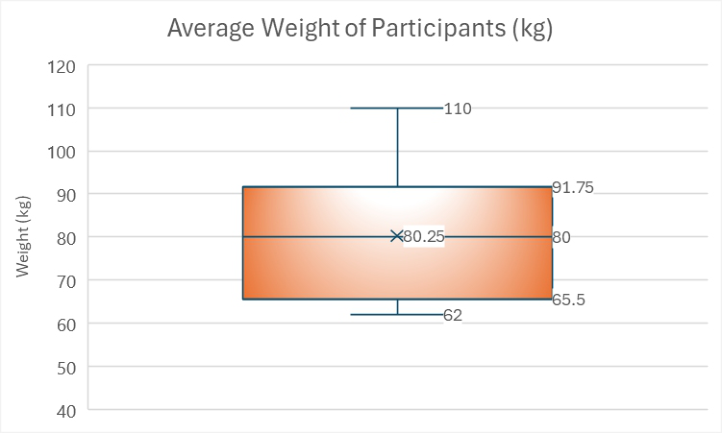
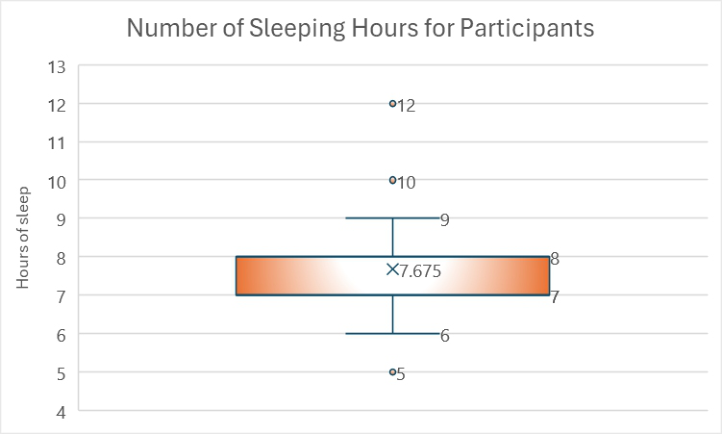
The study participants were 20 male Saudi Arabian Third Year under- graduate Industrial Engineering students with 17 registered semester credit hours (mean age, 20.7 years). Mean weight and average hours of sleep were (80.25 [13.81]) kg, (7.675 [1.506]) hrs, respectively. Participants’ consent was acquired beforehand. Participants were also fully informed about the purpose of the study and the anonymity of their responses.
An online survey was designed to collect demographic data from the partic- ipants. Participants were instructed to record the duration of their on-campus activities for 5 consecutive weekdays in accordance with the designated uni- versity schedule for a Third Year Industrial Engineering student with 17 credit hours. A stopwatch was provided to the participants to accurately measure the durations of activities.
Optimal Calorie Intake for Undergraduate Students During University Hours 33
FINDINGS Weight and Sleeping Hours of Participants
Figures 1 and 2 show the average weights and sleeping hours of the study participants. The data was used for the calculation of the basal metabolic rate and energy expenditure during sleep. The results showed a mean weight of 80.25 kg with a standard deviation of 13.81 kg, and a mean number of sleeping hours of 7.675 hrs with a standard deviation of 1.506 hrs.
Figure 1: Average weight of participants.Figure 2: Average sleeping hours for participants.
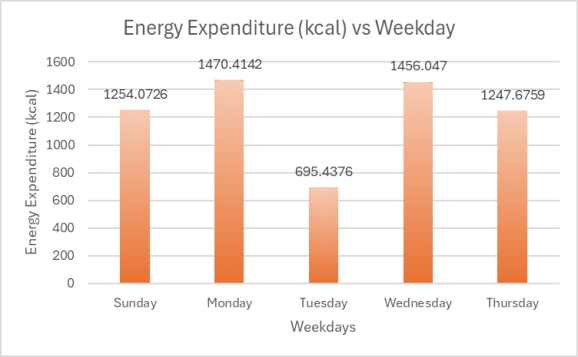
Total Metabolic Rate The results in Table 1 show the calculation for the Total Metabolic Rate for Monday. Figure 3 shows the variance in energy expenditure in-between weekdays. The results show a mean of (1224.729 kcal) and a standard devia- tion of (314.407 kcal), with the maximum TMR being on Monday (1470.414 kcal), and the minimum on Tuesday (695.438 kcal).
Table 1. Monday TMR calculation.
Table available in the original PDF paper.
Total Energy
Activity Time (Minutes)
Weight Factor (176.92lbs/160lbs) (kcal)
ER (kcal /min)
Sleeping 460.5 0.86 396.03 Getting Prepared 20 2.2 1.10575 48.653 Driving car 20 2.8 1.10575 61.922 Walking from car to Stairs 0.93 4 1.10575 4.11339 Climbing Stairs 0.58 13.7 1.10575 8.7862895 Walking from Stairs to Class
0.6 4 1.10575 2.6538
B1-55 Attending Class 90 1.5 1.10575 149.27625 Walking from Class B1-55 to
0.4 4 1.10575 1.7692
B1-58 Attending Class 90 1.5 1.10575 149.27625 Walking from B1-58 to stairs 3.61 4 1.10575 15.96703 Descending stairs 0.29 2.9 1.10575 0.92993575 Walking from stairs to mosque 0.37 4 1.10575 1.63651 Making Ablution 1 2.5 1.10575 2.764375 Walking from Ablution Area to
0.51 4 1.10575 2.25573
the Prayer Area Performing Prayer 10 3 1.10575 33.1725 Walking from Mosque to Food
3.83 4 1.10575 16.94009
Court Standing in queue to order food 2 2.2 1.10575 4.8653 Walking from Food Court to
1.91 4 1.10575 8.44793
Cafeteria Sitting in Cafeteria 37 1.5 1.10575 61.369125 Walking from Cafeteria to Stairs 0.4 4 1.10575 1.7692 Climbing Stairs 0.41 13.7 1.10575 6.21099775 Walking from Stairs to B1-55 2.36 4 1.10575 10.43828 Attending Class 90 1.5 1.10575 149.27625 Walking from B1-55 to Male
2.86 4 1.10575 12.64978
Library Climbing Library Stairs 0.86 13.7 1.10575 13.0279465 Walking from stairs to English
0.5 13.7 1.10575 7.5743875
Class Attending Class 90 1.5 1.10575 149.27625 Walking from class to stairs 0.55 4 1.10575 2.43265 Descending stairs 2.12 2.9 1.10575 6.798151 Walking from stairs to car 1.46 4 1.10575 6.45758
Equation reproduced from the original PDF.
BMRd + AMRd
Equation reproduced from the original PDF.
Optimal Calorie Intake for Undergraduate Students During University Hours 35
Figure 3: Comparison of energy expenditure in-between weekdays.
DISCUSSION
Optimal calorie intake should differ for each university and major due to campus size, class timings, credit hour requirements, and anthropometric data. The findings account for approximately 16 hours (pre-campus activities and on-campus activities to ensure ideal nutrition during university hours) of the undergraduate student’s day.
Published research in this area has had a holistic approach measuring the total energy expenditure of the 24 hours of the undergraduate student’s day. It is believed that this research is the first to focus on the ideal calorie intake during university hours. In one study, findings showed the daily energy expenditure in a day for a male and female medical undergraduate student to be 2706 kcals and 2373, respectively (Li and Yan, 1991). However, in another study, findings showed a significant difference between the energy expenditure of Singaporean medical students and figures published in west- ern subjects. It found the daily energy intake and expenditure to be 2,138 +/−217 kcal (9.0 +/−0.9 MJ) and 1,894 +/−168 kcal (8.0 +/−0.7 MJ), respectively (Saha et al., 1985).
Figures 1 and 2 show a box and whiskers plot for the anthropometric data of the participants. Table 1 shows a detailed breakdown of on-campus activities, their durations, and their respective contribution to the total energy expenditure during university hours for Monday.
In Figure 3, a comparison of the energy expenditure between weekdays shows an average energy expenditure of 1224.729 kcal and a standard devia- tion of 314.407 kcals. Comparing the expenditure rate of Monday (1470.41 kcal), the longest day of classes, with the shortest day of classes Tuesday (695.44 kcal), shows the imbalance of activities due to the inconsistency of the schedule, this may add additional stress to students trying to focus on their academics, by forcing students to re-adjust eating habits on a daily basis.
CONCLUSION
This study aimed to approximate the recommended calorie intake based on the theoretical energy expenditure throughout university hours to ensure optimal nutrition. The methodology involved manual time tracking of activ- ities, surveying students, and calculations using established formulas and energy expenditure rates from published literature (Passmore and Durnin, 1955) (Basset et al., 1997). The findings revealed the recommended calorie intake during university hours for a Junior Saudi Arabian Industrial Engi- neering student in a small-sized campus to be 1224.73 ± 314.41 kcal. It is also interesting to explore how the actual calorie intake of our participants compares to the theoretical optimal calorie intake.
One limitation of this study was the fact that it did not account for additional energy expenditure from socialising, personal activities (such as bathroom breaks), and other specific pre-university hours physical activity. Instead, this study measured the fundamental expected activities of a junior industrial engineering student according to his designated schedule.
ACKNOWLEDGMENT
The authors are grateful to all the associated personnel in any reference that contributed in/for the purpose of this research. Further, the research holds no conflict of interest and is self-funded. This work is supported by Alfaisal University, Riyadh, Saudi Arabia.
REFERENCES
Al-Awwad, N. J., Al-Sayyed, H. F., Zeinah, Z. A., & Tayyem, R. F. (2021). Dietary and lifestyle habits among university students at different academic years. Clinical Nutrition ESPEN, 44, 236–242. Bassett, D. R., Vachon, J. A., Kirkland, A. O., Howley, E. T., Duncan, G. E., &
Johnson, K. R. (1997). Energy cost of stair climbing and descending on the col- lege alumnus questionnaire. Medicine and science in sports and exercise, 29(9), 1250–1254. Bridger, R. S. (1995). Introduction to Ergonomics. McGraw-Hill. New York, USA. Coopoo, Y., Constantinou, D., & Rothberg, A. D. (2008). Energy expenditure in office workers with identified health risks. South African Journal of Sports Medicine, 20(2), 40–43. Kim, S. H. (2013). A survey on daily physical activity level, energy expenditure
and dietary energy intake by university students in Chungnam province in Korea. Journal of Nutrition and Health, 46(4), 346–356. Li, J., & Yan, W. Y. (1991). The energy expenditure and nutritional status of college students. I. The energy cost and the total energy expenditure per day. Biomedical and Environmental Sciences: BES, 4(3), 295–303. Löffler, M. C., Betz, M. J., Blondin, D. P., Augustin, R., Sharma, A. K., Tseng, Y. H.,...
& Neubauer, H. (2021). Challenges in tackling energy expenditure as obesity ther- apy: From preclinical models to clinical application. Molecular metabolism, 51, 101237. McCormick, E. J. (1976). Human factors in engineering and design.
Optimal Calorie Intake for Undergraduate Students During University Hours 37
Park, Y., & Kim, J. H. (2013). Assessment of physical activity pattern, activity coefficient, basal metabolic rate and daily energy expenditure in female university students. Korean Journal of Community Nutrition, 18(1), 45–54. Passmore, R., & Durnin, J. V. (1955). Human energy expenditure. Physiological
reviews, 35(4), 801–840. Poulianiti, K. P., Havenith, G., & Flouris, A. D. (2019). Metabolic energy cost of workers in agriculture, construction, manufacturing, tourism, and transportation industries. Industrial health, 57(3), 283–305. Saha, N., Tan, P. Y., & Banerjee, B. (1985). Energy balance study in Singapore medical
students. Annals of nutrition and metabolism, 29(4), 216–222. Salama, A. A., Ismael, N. M., & Helaly, N. A. (2021). Double Burden of Malnutrition among Freshman University Students: Determinants and Correlates. Egyptian Journal of Community Medicine, 39(1). Valladares, M., Durán, E., Matheus, A., Durán-Agüero, S., Obregón, A. M., &
Ramírez-Tagle, R. (2016). Association between eating behavior and academic per- formance in university students. Journal of the American College of Nutrition, 35(8), 699–703.
LISTED IN THE AHFE DIGITAL BOOKSTORE CATALOGUE
Explore the complete digital volume
Human Factors in Sports, Performance and Wellness
Read this individual research paper free through the original publisher, or explore the full digital proceedings book.
ISBN 978-1-964867-26-7
Explore this ISBN in the AHFE Bookstore ↗Listed in the July 2026 bookstore catalogue; search by ISBN to confirm current availability · Digital book purchase optional