Yi Ming Quek, Nho An Dinh, Kenneth Y T Lim, Duc Minh Anh Nguyen, Nguyen Thien Minh Tuan (2024). Investigating the relationship between microclimate factors and human exercise performance from the perspective of citizen science. In: Human Factors in Sports, Performance and Wellness. AHFE Open Access, vol. 150, pp. 38–48. https://doi.org/10.54941/ahfe1005288
The United Nations has long upheld the value of sports and exercise in building healthy individuals, promoting societal values, and nurturing crucial life skills. There exists a significant body of work already conducted on how environmental factors affect elite sporting athletes. However, much remains to be discovered about the effect of environmental conditions on exercise performance particularly as it might relate to more localised microclimates. This paper reports an independent research project conducted by a pair of high school students between April 2023 and March 2024, under the mentorship of a senior research scientist at the National Institute of Education in Singapore. The study aimed to investigate the relationships between microclimate factors and human exercise performance, and is situated under the aegis of a broader trajectory of work in which investigations of microclimate are approached from maker-centric perspectives. The particular exercise of interest was running due to its wide applicability and versatility. From personal experience, when the environment is hot and humid, the authors have found it particularly challenging to carry out an exercise routine at high intensities; exhaustion sets in rather quickly. To investigate this relationship, a Do-It-Yourself (DIY) environmental unit was built using Internet of Things (IoT) environmental sensors, which measured microclimate readings such as humidity, carbon dioxide concentration, ambient temperature, and wind speed. To capture exercise performance, biometric wristbands were built from component parts, using electrodermal activity sensors, an accelerometer and a gyroscope. This biometric device recorded raw electrical signals in the skin, as well as relevant physiological data from dynamic movements during exercise. The device – similar in function to a smartwatch - better suited the present investigation as it outputs raw electrical data. Both devices were secured with arm band straps. Prior to a session, participants were asked to fill out a form to self-report their current state of well-being, as well as present level of fitness. After a 15-minute warm-up, they were then asked to follow a pattern of activity adapted from the Loughborough Intermittent Shuttle Test (LIST), over a marked 20-m distance, in a specified location chosen by convenience, while wearing both the environmental device and biometric wristbands. Throughout the session, after warmup and after every set of activities, qualitative assessments were conducted on participants using Borg’s Rating of Perceived Exertion scale. This afforded a preliminary evaluation of the runner’s level of exertion during the exercise, and subsequent analysis with real-time environmental data would uncover underlying relationships between performance perception and microclimate. The data was preprocessed, then analysed using machine learning algorithms to uncover underlying correlations between environmental data and level of exertion during an exercise as measured by electrodermal activity (EDA). The latter has shown to be greatly influenced by ambient temperature and air humidity, displaying high correlation metrics. This agrees well with the existing body of work, thus further proving the potential of low–cost DIY sensors in investigating complex relationships involving human factors. Our findings could provide useful inferences for designing activity spaces to maximise athletes’ exercise performance.
Investigating the Relationship Between Microclimate Factors 39
INTRODUCTION
The United Nations has long upheld the value of sports and exercise in build- ing healthy individuals, promoting societal values, and nurturing crucial life skills (United Nations, no date). There exists a significant body of work already conducted on how environmental factors affect elite sporting ath- letes (Ho, 2021). However, much remains to be discovered about the effect of environmental conditions on exercise performance particularly as it might relate to more localised microclimates, such as during daily exercise routines or in an educational setting. The focus of this research paper is to explore and potentially contribute to ongoing research on this area.
Given our situation and perspective, this study aimed to explore the rela- tionships between local environmental factors and exercise performance from the perspective of citizen science. It is hoped that with this approach, the potential contributions of our work can be a demonstration of the utility and viability of low-cost, self-designed, wearable units for measuring micro- climate, EDA and PPG. The relatively low cost of these wearables has positive implications for the affordance of the scalability and— consequently— on crowd-sourced citizen science in this investigation of the relationships between microclimate and physiological exertion in general, with a view to the optimization of exercise environments.
LITERATURE REVIEW
Microclimate and Its Impact on Human Activities Microclimate refers to the set of immediate climatic conditions localised within a fixed area, such as an urban living environment where humans inhabit (Chen et al., 1999). It includes environmental variables directly impacting humans’ well-being and comfort, such as ambient temperature, light intensity, wind speed, humidity, carbon dioxide concentration and dust concentration. The importance of microclimate lies in the growth rate of bio- logical species vital to human vitality, as well as distributions of life around the Earth (Dahlberg, 2016).
The authors’ work is focused on how particular microclimate conditions around individuals, such as temperature and humidity, can have an impact on daily human activities, specifically in more localised scenarios. Previous research has found strong connections between environmental factors and sleep quality (Akiyama et al., 2020), teaching and learning (Dangara and Geraldine, 2019), and daily life activities in general (Samuelsson et al., 2018). In addition to the current global warming crisis, the recent rise of industrial- ization and urbanisation has introduced air pollution as another alarming issue globally, adversely affecting various assets of human life (Rundell, 2012). Since daily exercise has proven physiological and mental benefits (Abou Elmagd, 2016), recent and ongoing research has been interested in how the environment can impact human exercise performance. Among other microclimate factors, temperature has widely been shown to negatively affect athletic performance through impaired heat regulation (Siegel and Laursen,
2011). Temperature also strongly influences the volume of moderate-to-high intensity exercise that humans can undertake; for example, a 15% reduction in power output was seen in prolonged cycling time trials in the heat (Junge et al., 2016). This shows how humans’ aerobic capacity can be affected by raised ambient temperatures. The recent global warming crisis also highlights global temperatures as an alarming concern to humans’ physiological and mental well-being.
Most of previous research has been done on a wider scale, involving mod- ern technologies and investigating elite athletes in various fields. The authors aim to direct their research towards a more localised and personalised con- text, such as for students in their daily run or exercise routine, while using and proving the potential of low-cost bespoke environmental and biometric devices.
Quantifying Athletic Performance With Human Biometric Data The preceding discussion has outlined how certain changes in microclimate factors can adversely influence humans’ exercise performance. In practice, human biometric readings can be used to quantify this effect on the individ- ual. Electrodermal activity (EDA) is an electrical property of the human skin dependent on changes in the sympathetic part of a human autonomic ner- vous system, and varies as a result of changes in human psychological state (Geršak, 2020). EDA is increasingly being used to analyse humans’ psycho- logical well-being during moderate intensity activities, owing to its ability to measure skin conductance and thus reflect sweating rate (Posada-Quintero et al., 2018). This is made possible through the various biometric features that can be extracted for further analysis. EDA has proven to strongly cor- relate with physical exertion and movement, showing potential for research in daily exercise and athletic performance in general (Ji et al., 2019). With that in mind, the authors have applied EDA data in their analysis as a way to quantify exercise performance and exertion.
Photoplethysmography (PPG) is a commonly used method for heart-rate monitoring, especially during exercise (Ahmadi et al., 2015). Heart rate changes are crucial in determining the aerobic and anaerobic capacities of an athlete, as well as the level of exertion during exercise. Heart rate remains a useful measure to capture the intensity of a particular exercise session (Almeida et al., 2019).
METHODOLOGY
Experimental Design From August 2023 to December 2023, a total of five adolescents were chosen at the authors’ convenience to carry out a weekly, 20 minute to 30 minute run- ning session, at a stadium track of their choice. Ethics clearance was given by the Institutional Review Board (IRB) of the National Institute of Education. Participants’ consent were given, with prepared and approved consent forms. During each session, they were asked to wear our DIY environmental and
Investigating the Relationship Between Microclimate Factors 41
biometric units, which will capture data in real-time as the participants are carrying out their exercise routine.
Biometric and environmental units were designed, worn and secured onto the participant’s body, using readily available household items. The devices will be turned on beforehand to assess relevant resting biometric readings. Participants needed to hold one phone where the data is being collected, and strap another phone with a phone holder to their right arm. Participants were advised to wear light and breathable sports clothing. Participants were asked to run within the defined boundaries of the track. Participants were also requested to run at a moderate pace that they can sustain throughout the session, near their anaerobic threshold, to int and maintain a form of inten- sity and stress during each session which will be captured with the biometric readings.
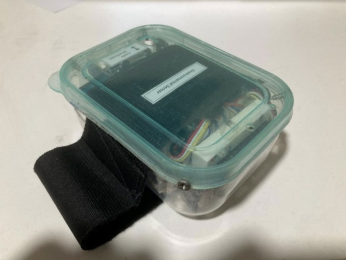
Collecting Microclimate Data In order to accurately measure and collect the microclimate data around the participants as they are undergoing the procedure, a small, portable human wearable device (Figure 1) capable of measuring the following environmental factors was designed: noise level, infrared radiation through light inten- sity, dust concentration, carbon dioxide concentration, temperature, relative humidity, air pressure.
Figure 1: DIY environmental unit.
Other than collecting the above microclimate data, this multipurpose device would ping the nearest publicly accessible weather station, provided by the Singapore Meteorological Station, for wind direction and wind speed prevailing at that time. It is programmed such that the device would automat- ically log its measurements onto a designated cloud-based spreadsheet every five minutes.
Collecting Biometric Data DIY EDA and PPG (biometric) sensors were designed and built from a cit- izen science approach. The circuit was designed based on the hardware description as detailed in Zangróniz et al., (2017), and inspired by similar approaches in this domain (Thien et al., 2023). The input voltage is 3.3V
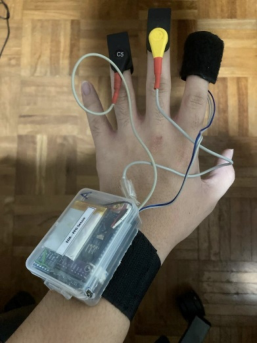
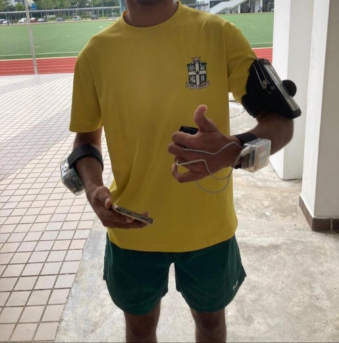
from Arduino Nano which is the microcontroller used for the circuit. The sampling rate of the device is 10 Hz, and can go up to 25 Hz, depending on the experimental requirements. The DIY biometric device was designed to be worn on the wrist of the user, has a battery which lasts around ten hours and a bluetooth module allowing data to be transferred to computers or mobile devices. For operational amplifiers, the LM324 unit with low noise of 35 nV/rtHz was used instead of AD8603. An external analog-to-digital converter ADS1115 with 16 bits resolution was also used. The electronic components were housed in a plastic container measuring 6.5 cm by 5 cm by 2.5 cm, as depicted in Figure 2. Figure 3 shows a sample of a full setup for each participant.
Figure 2: DIY biometric sensors.Figure 3: Full participant setup.
Two ends of the plastic box (Figure 2) were connected to two strips of velcro, allowing the user to fasten the device on their wrist. Reusable ECG electrodes (Ag/AgCl coated with KCl gel) were used as electrodes for the
Investigating the Relationship Between Microclimate Factors 43
unit, and were positioned such that they made contact with the bottom left of the users’ wrist. Both devices were optimized and designed, using com- monly available household items, for maximum comfort during an activity session.
Data Processing Pipeline Standard Python libraries, such as Numpy and Pandas, were used to pro- cess raw environmental and biometric data, both stored in comma-separated values (csv) files. A preprocessing pipeline was designed to extract relevant features from raw EDA time-series data before using them in subsequent machine learning models.
Open-source Python libraries for processing EDA data, such as pyEDA, EDA Explorer and PyEEG, were used to extract relevant tonic and phasic features from the raw EDA signals. EDA data of the DIY sensor was first resampled to a 4 Hz sampling rate. Each set of sampled data was then passed through a 32nd order Butterworth low-pass filter with a cutoff frequency of 1.5 Hz to remove artefacts, and subsequently normalised and smoothed with a moving average. For the time domain, the nonspecific skin conductance responses (NS.SCR) - the number of spontaneous rapid increases in skin con- ductance that surpass a threshold between 0.01 and 0.05 µS - was calculated. These metrics were calculated using methods of convex optimization for EDA (cvxEDA).
Six EDA features were extracted from the original EDA signals, among which include distinct features of EDA signals such as the derivative of phasic component of EDA (“dPhEDA”), time-varying index of sympathetic activity (“tvsymp”), its modified version (“mtvsymp”) - time-series features which display higher sensitivity during physical stress and exertion (Kong, Posada-Quintero and Chon, 2021). Time-invariant frequency domain anal- ysis of EDA (EDASymp), was also extracted due to its use in examining physical stress. As noted above, the nonspecific skin conductance responses (“NSwindow”) were also extracted as a feature. These features were found in prior research to be highly sensitive to physical stress and thus would be useful for further analysis in this context.
For the PPG signals, a total of 86 features were extracted, among which include the high frequency (0.15 Hz to 0.4 Hz) components of heart rate vari- ability (“hrv_hf”), and the low frequency (0.04 Hz to 0.15 Hz) components of heart rate variability (“hrv_lf”), indicators of the sympathetic function (Posada-Quintero et al., 2019).
To discover the underlying relationships between environmental fac- tors and exercise performance as quantified by the biometric features, the data collected was analyzed by drawing correlations between each environmental factor measured and the extracted biometric features using the Spearman rank correlation. Features that displayed distinct corre- lation relationships were further analysed and trained with a Random Forest regression model, which could capture and uncover more com- plex non-linear relationships between environmental factors and biometric features.
RESULTS AND DISCUSSION
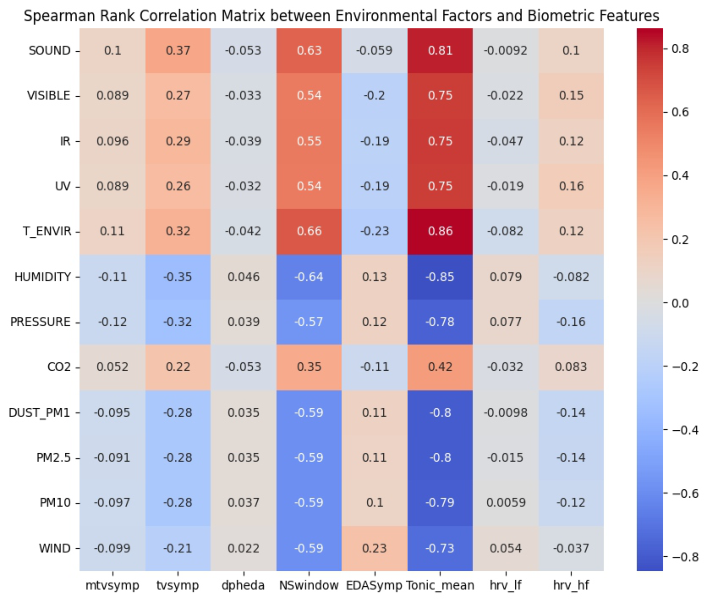
Based on the environmental data and extracted biometric features, the fol- lowing correlation matrix was obtained using the Spearman rank correlation (Figure 4).
Figure 4: Correlation matrix.
Based on the correlation matrix, it can be deduced that the two EDA features – “Tonic_mean” and “NSwindow” – are most affected by microcli- mate factors, compared to other extracted features. Both of these features represent the skin conductance levels (SCL) and nonspecific skin conduc- tance responses (NS.SCR) respectively, which are time-domain measures of EDA, utilized as markers of sympathetic arousal in response to tonic stim- uli (Posada-Quintero et al., 2018). The significant effect of environmental factors on these two tonic measures during exercise aligns well with previous research done on this area, which also concluded that “SCL and NS.SCRs sig- nificantly increased with the increase of exercise intensity” (Posada-Quintero et al., 2018), implying that environmental factors have significant effects on exercise intensity and performance.
Investigating the Relationship Between Microclimate Factors 45
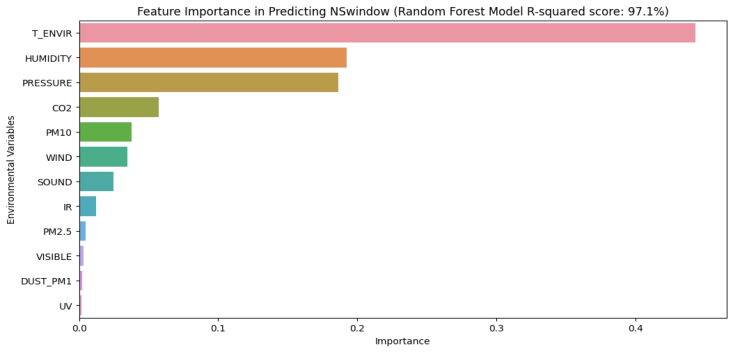
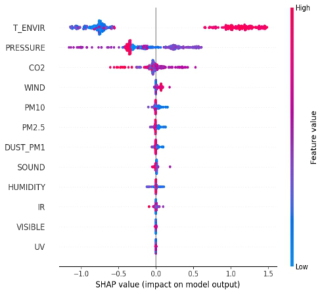
Figure 5: Feature importance of environmental variables on “Tonic_mean” (above) and “NSwindow” feature (below).Figure 6: Shapley summary plots of “Tonic_mean” (left) and “NSwindow” features (right).
From Figure 5, the environmental factor “T_ENVIR” – referring to envi- ronmental ambient temperature - appears to most strongly impact both SCL
and NS.SCR features during exercise, with importance scores of 0.798 and 0.443 respectively. This is in alignment with existing literature, which also states that ambient temperature has a strong effect on athletic performance.
The Shapley summary plots in Figure imply that as ambient temperature increases, both SCL and NS.SCR features increase. This can be explained as when temperature increases, skin activity becomes more stimulated as sweating rate also increases, particularly during moderate intensity phys- ical exertion. This would lead to both skin tonic measures rising due to physical arousal. The implication of this is that since SCL and NS.SCR fea- tures increase, the perceived exercise intensity to the individual also increases (Posada-Quintero et al., 2018), which may lead to higher physical stress and a drop in overall exercise performance. Overall, rise in ambient temperatures may lead to drops in exercise performance, which is well-supported by past research (Ho, 2021).
Another interesting microclimate factor that has a relatively comparable impact on both tonic measures is air pressure – importance scores of 0.139 on SCL and 0.186 on NS.SCR respectively. The Shapley summary plots imply that as air pressure decreases, both SCL and NS.SCR features increase in value.
Despite the relatively well-supported findings of this study, certain lim- itations are present. The methodology could have benefited from utilising more controlled environments and variables, where environmental factors are altered systematically, and participants were of similar physical fitness level, as genetic and fitness factors could also affect exercise performance. The amount of data collected could have been larger by conducting many trials throughout the year to confirm and reinforce some of the relationships discovered in this paper. The experiment could have also been carried out in ‘windows’, where each window corresponds to a different set of environ- mental factors that vary as the participant carries out a continuous series of exercises. Doing so would also allow the time-series characteristic of EDA sig- nals to be utilised during model training, as certain changes in EDA features can be distinctly captured when there is an abrupt change in environmental settings.
These are possible improvements for further research to allow for a more robust data processing and analysis pipeline. Considering the low-cost nature of the investigation described in this paper, the alignment of the results with past literature shows promising potential for future research into the intersec- tion between environmental factors and athletic performance using bespoke wearables, especially in more localised contexts.
CONCLUSION
The study reported in this paper, set in the context of rising industrialization and urbanization, aims to investigate the underlying relationships between microclimate factors and human exercise performance. DIY environmental and biometric human wearable devices were designed and prototyped from a citizen science perspective, using low-cost Internet of Things (IoT) sensors.
Investigating the Relationship Between Microclimate Factors 47
The study found strong relationships between common microclimate fac- tors, such as ambient temperature and air pressure, on human exercise performance and physiological stress in general – implied by their importance in the machine learning regression model. These findings are congruent with preceding studies on the domain of physical stress.
It is through this study that the authors hope to bring further attention to the intersection between the environment and exercise performance, or physi- cal activity in general, promoting future research on this domain. The authors hope to contribute to future studies and research exploring athletic perfor- mance and the environment, especially in affordable ways that would relate more to a localised context. Such studies can be built on findings in this paper by exploring more complex physiological relationships, such as biomechan- ics or body posture during exercise, or exploring more nuanced relationships prompted by this paper’s findings. The outcome of such research could poten- tially contribute to the designing of optimal spaces for comfortable physical activity in local neighbourhoods and in schools, and raise higher awareness on the importance of the environment on daily life.
REFERENCES
Abou Elmagd, M. (2016) ‘Benefits, need and importance of daily exercise’, International Journal of Physical Education, Sports and Health, 22, pp. 22–27. Ahmadi, A. K. et al. (2015) ‘Heart Rate monitoring during physical exercise using
wrist-type photoplethysmographic (PPG) signals’, Annual International Confer- ence of the IEEE Engineering in Medicine and Biology Society. IEEE Engineer- ing in Medicine and Biology Society. Annual International Conference, 2015, pp. 6166–6169. Available at: https://doi.org/10.1109/EMBC.2015.7319800. Akiyama, Y. et al. (2020) ‘Effect of thermal environment on sleep quality in actual bedroom in summer by sleep stages analysis’, Japan Architectural Review, 4. Available at: https://doi.org/10.1002/2475-8876.12187. Almeida, M. et al. (2019) ‘Measuring Heart Rate During Exercise: From Artery Pal-
pation to Monitors and Apps’, International Journal of Cardiovascular Sciences [Preprint]. Available at: https://doi.org/10.5935/2359-4802.20190061. Chen, J. et al. (1999) ‘Microclimate in Forest Ecosystem and Landscape Ecology’, Bioscience, 49. Available at: https://doi.org/10.2307/1313612. Dahlberg, C. J. (2016) The role of microclimate for the performance and distribution
of forest plants. Dangara, Y. and Geraldine, C. (2019) ‘Evaluation of the Effect of Learning Environment on Student’s Academic Performance in Nigeria.’ Geršak, G. (2020) ‘Electrodermal activity - a beginner’s guide’, Elektrotehniski
Vestnik/Electrotechnical Review, 87, pp. 175–182. Ji, X. et al. (2019) ‘Research on the Electrodermal Activity during Walk- ing and Running’, in 2019 4th International Conference on Control and Robotics Engineering (ICCRE). 2019 4th International Conference on Control and Robotics Engineering (ICCRE), pp. 179–183. Available at: https://doi.org/10.1109/ICCRE.2019.8724244. Junge, N. et al. (2016) ‘Prolonged self-paced exercise in the heat – environmental factors affecting performance’, Temperature, 3(4), pp. 539–548. Available at: https://doi.org/10.1080/23328940.2016.1216257.
Kong, Y., Posada-Quintero, H. and Chon, K. (2021) ‘Real-Time High-Level Acute Pain Detection Using a Smartphone and a Wrist-Worn Electrodermal Activity Sensor’, Sensors, 21, p. 3956. Available at: https://doi.org/10.3390/s21123956. Kuok Ho, D. T. (2021) ‘A Review of the Association between Environmental Factors
and Athletic Performance’, Sport Science, 1, pp. 21–30. M. T. N. Thien, M. A. N. Duc, and K. Y. T. Lim,“Designing for the investigation of microclimate stressors and physiological and neurological responses from the perspective of maker culture” in Human Interaction & Emerging Technologies (IHIET 2023): Artificial Intelligence & Future Applications, AHFE Open Acces, 2023. doi: 10.54941/ahfe1004042. Posada-Quintero, H. et al. (2018) ‘Time-varying analysis of electrodermal activity during exercise’, PLOS ONE, 13, p. e0198328. Available at: https://doi.org/10.1371/journal.pone.0198328. Posada-Quintero, H. F. et al. (2019) ‘Analysis of Reproducibility of Noninvasive
Measures of Sympathetic Autonomic Control Based on Electrodermal Activity and Heart Rate Variability’, IEEE Access, 7, pp. 22523–22531. Available at: https://doi.org/10.1109/ACCESS.2019.2899485. Rundell, K. (2012) ‘Effect of air pollution on athlete health and perfor- mance’, British journal of sports medicine, 46, pp. 407–12. Available at: https://doi.org/10.1136/bjsports-2011-090823. Samuelsson, K. et al. (2018) ‘Impact of environment on people’s everyday experiences in Stockholm’, Landscape and Urban Planning, 171, pp. 7–17. Available at: https://doi.org/10.1016/j.landurbplan.2017.11.009. Siegel, R. and Laursen, P. (2011) ‘Keeping Your Cool Possible Mechanisms for
Enhanced Exercise Performance in the Heat with Internal Cooling Methods’, Sports medicine (Auckland, N. Z.), 42, pp. 89–98. United Nations (no date) The Role of Sport in Achieving the Sustainable Development Goals, United Nations. United Nations. Available at: https://www.un.org/en/ chronicle/article/role-sport-achieving-sustainable-development-goals (Accessed: 11 September 2023).
LISTED IN THE AHFE DIGITAL BOOKSTORE CATALOGUE
Explore the complete digital volume
Human Factors in Sports, Performance and Wellness
Read this individual research paper free through the original publisher, or explore the full digital proceedings book.
ISBN 978-1-964867-26-7
Explore this ISBN in the AHFE Bookstore ↗Listed in the July 2026 bookstore catalogue; search by ISBN to confirm current availability · Digital book purchase optional