Jinjin Chen, Joanne Yip, Yiu Hong Wong, Mei-chun Cheung (2024). Development and Evaluation of a Body Mapping Tank-Top for Early Stage Scoliosis Treatment in Adolescents. In: Ergonomics In Design. AHFE Open Access, vol. 129, pp. 221–229. https://doi.org/10.54941/ahfe1004827
1 School of Fashion and Textiles, The Hong Kong Polytechnic University, Hong Kong SAR; Laboratory for Artificial Intelligence in Design, Hong Kong SAR ↗
2 School of Fashion and Textiles, The Hong Kong Polytechnic University, Hong Kong SAR ↗
3 Department of Social Work, The Chinese University of Hong Kong, Hong Kong SAR ↗
Scoliosis is an abnormal curvature of the spine, usually characterized by an S or C-shaped curvature in the normal coronal plane (viewed from the back). This lateral curvature may cause rotation and twisting of the spine, resulting in an asymmetrical back and potentially leading to many related physical problems. Idiopathic scoliosis, which accounts for about 80% of scoliosis cases, is the most common type. It may be associated with the interaction of polygenic inheritance, family aggregation, and environmental factors. Teenagers with spinal curvature between 10-20 degrees are considered to be in the early stages of scoliosis. It is recommended that hard braces be used for treatment in teenagers with a spinal curvature between 21 and 40 degrees. However, hard braces are often criticized for their uncomfortable fit and unsightly appearance, which can somewhat affect the treatment outcome. Nowadays, as teenagers increasingly use electronic products and develop poor standing and sitting habits, more environmental factors are triggering the onset of scoliosis. To prevent the disease from worsening, early diagnosis and effective treatment have become particularly important. Therefore, our team has developed an innovative body mapping tank top for adolescents with early-stage scoliosis. Equipped with 3-axis accelerometer sensors synchronized with surface electromyography (sEMG) signals, and combined with home-based posture training programme developed by our team, it can improve patient’s daily posture and prevent curve progression for teens with early scoliosis.
The number of scoliosis cases is increasing daily, impacting everyday life and mood, making it crucial to treat it promptly and prevent further deteriora- tion. Currently, treatment through braces is the most recognized method. The principle behind this is to provide corrective force through the pres- sure of wearing the braces. However, the discomfort and long-term use of
braces can easily cause resistance among teenagers, affecting the therapeu- tic outcome. Therefore, different auxiliary treatment methods are also used, especially for teenagers in the early stages of scoliosis. These include physical therapy, chiropractic, biofeedback training, and electrical stimulation. The use of biofeedback in the treatment of scoliosis has been proven through con- tinuous experiments and scientific demonstrations to be effective in helping patients both physically and psychologically (Lehrer et al., 2000; Nestoriuc et al., 2008; Ahmed et al., 2011). Our team previously developed an innova- tive body mapping vest equipped with a biofeedback system for adolescents with early-stage scoliosis. This vest is equipped with a three-axis acceleration sensor synchronized with surface electromyography (sEMG) signals, com- bined with home-based posture training program developed by our team. We are continually improving this tank-top. While enhancing comfort, it can provide maximum help and treatment for teenagers in the early stage of scoliosis, enabling patients to cooperate with the biofeedback system inde- pendently at home. We hope that through the combination of these methods, we can gradually provide posture training for scoliosis patients to restore the balance of muscle activity and reduce the displacement on both sides of the spine, thereby achieving a preventive effect.
BIOFEEDBACK POSTURE TRAINING Biofeedback is a training method in which a person learns to control other involuntary body functions with the help of electronic devices (Bray, 1998). It is a non-medical process that involves measuring specific, quantifiable Body functions such as brain wave activity, blood pressure, heart rate, skin temper- ature, sweat gland activity, and muscle tone, thereby conveying information to the patient in real-time. According to a review of the surface electromyo- graphy (sEMG) studies on upper limb dysfunction in people with physical disabilities (Lyons et al., 2003) concluded that sEMG is a valuable method of increasing upper limb muscle activity and is most effective when used in conjunction with physiotherapy.
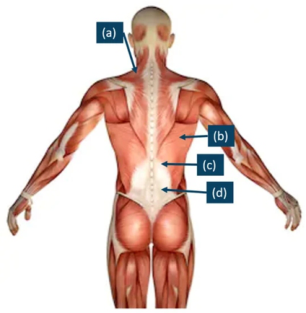
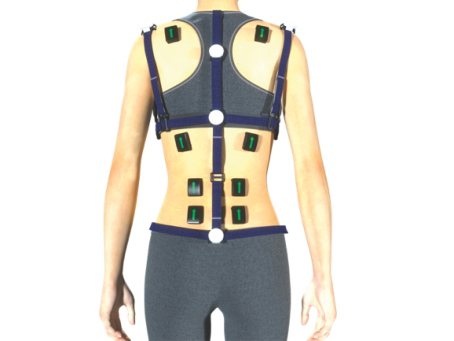
In this context, our team’s biofeedback muscle training system came into being. During our biofeedback postural training, sEMG will be used to monitor the subject’s spinal muscles. Electrodes were placed on the sub- ject’s trapezius (a), latissimus dorsi (b), thoracic erector spinae (c), and lumbar erector spinae (d). Electrode locations for sEMG are shown below (Figure 1). The subject sat in front of a monitor showing a video while an operator used a monitor to closely monitor the subject’s muscle map signals. Training begins after the operator assigns a threshold value to each EMG channel (corresponding to a different spinal muscle). If any of the channels exceeds a specified threshold, the video will stop playing and the operator will instruct the subject to correct their posture to maintain muscle balance (Figure 2).
Development and Evaluation of a Body Mapping Tank-Top for Early Stage 223
Figure 1: Electrode placement. Upper trapezius (TRAP) (a), latissimus dorsi (b), erector spinae—thoracic (c), and erector spi-nae—lumbar (d).Figure 2: Rendering pictures – The electrode locations for sEMG.
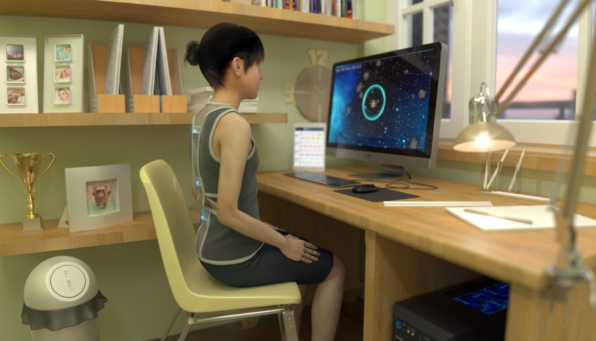
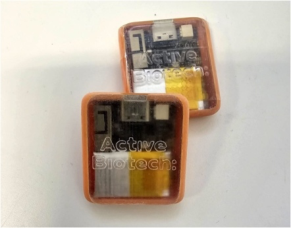
HOMED BASED POSTURE TRAINING To maximize the effect of posture training, in addition to the biofeedback training system, our team also developed Home-based posture training. (As shown in Figure 3). The IMU sensor (Figure 4) uses has gone through many iterations, and various problems have been solved. Through iterative improvements, the latest version of the sensor now supports up to 8 hours of continuous use and more than 20 days of power on a full charge. This enhancement ensures long-term, reliable use for participants participating in home posture training.
We currently have four participants in the biofeedback postural training program, all of whom are using the home training system. These participants were required to attend at least five sessions per week, with each session lasting no less than half an hour.
Figure 3: Rendering pictures – subject uses the homed base system at home.Figure 4: The IMU sensor.
DESIGN OF BODY MAPPING TANK-TOP To cooperate with the posture training system, our team developed the Body Mapping Tank top. After continuous experimental updates, the tank-top has been used only with the biofeedback system, and now it can be used by sub- jects independently at home with the home based system. This paper mainly introduces the latest Body Mapping Tank-Top of the team.
Method Before beginning the design process, it is necessary to clarify the design logic. Firstly, the tank top is targeted at adolescent patients with mild scoliosis. Its function needs to be combined with a biofeedback monitoring system to display the patient’s physical condition while also achieving the effect of posture training. This necessitates embedding the posture training system sensor into the tank top and then testing the finished product. This design process required consideration of comfort and durability, as well as technical requirements for mounting posture monitoring sensors on the tank top. The materials and contours of the vest were selected based on their ability to meet these requirements.
Fabric Nylon is the main fabric of the vest. It is strong and wear-resistant, with some stretchability and the ability to return to its original shape
Development and Evaluation of a Body Mapping Tank-Top for Early Stage 225
(Rastogi, 2009). These properties are superior to those of another synthetic fiber, polyester. Nylon fibers are also commonly found in underwear, shirts, and athletic apparel due to their easy-care properties (McIntyre, 2005). Additionally, nylon fibers absorb water better than other synthetic fibers, which means they have better wicking capabilities. These features ensure the comfort and durability of the vest.
Furthermore, fabric type is also an important factor affecting the function- ality of clothing. Common fabric types include knitted and woven fabrics. Knitted fabrics are stretchy and easily adapt to body movements. They also provide good wrinkle restoration results. Due to the fabric structure, they have better breathability than woven fabrics. Knitted fabrics can be further divided into weft-knitted and warp-knitted fabrics. Warp knits are consid- ered to be more stable fabrics than weft knits and will not unravel at the top or bottom, hence the choice of warp-knitted fabric for the vest. Two tricot fabrics were chosen for specific areas of the vest. The vest is made of warp- knitted fabric because it has a soft feel, good elasticity, a smooth surface, and good crack resistance. Warp knitted fabrics are comfortable and durable (Au, 1979). Additionally, there is a pocket lining to hold foam coasters. Therefore, powernet was chosen because it is a warp-knitted fabric with one-way stretch.
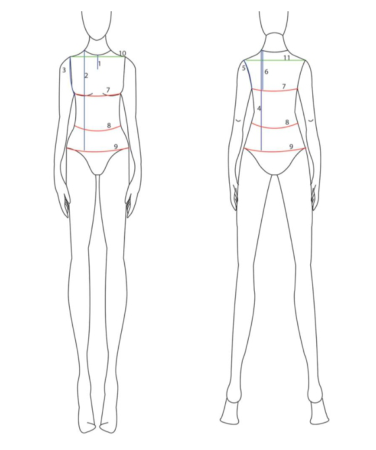
Body Measurements To create a well-fitting vest for the subject, precise body measurements are required. Eleven body measurement items were iden- tified, including length, circumference, and width (as shown in Figure 5 and Table 1).
Table 1. List of key measurements.
Table available in the original PDF paper.
Type No. Measurement Item Remarks Length 1 Neckline to Chest Measure from center front neckline to chest 2 Center front length Measure from center front high point shoulder to hip 3 Front armhole Measure from center front high point shoulder to armpit 4 Center back length Measure from center back high point shoulder to hip 5 Back armhole Measure from center back high point shoulder to armpit 6 Back shoulder to scapula Measure from center back high point shoulder to lower scapula Girth 7 Overbust Measure the circumference of overbust across apex 8 Waist girth Measure the circumference of waist 9 Hip girth Measure the circumference of hip Width 10 Front shoulder to shoulder Measure high point shoulder to high
point shoulder 11 Back shoulder to shoulder Measure high point shoulder to high point shoulder
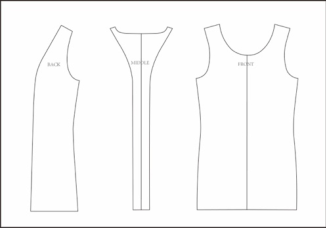
Pattern Making The pattern of the original tank top is divided into six parts: the front body, the back body, the front neckline straps, the back
Figure 5: Measurements taken for the tank-top making.
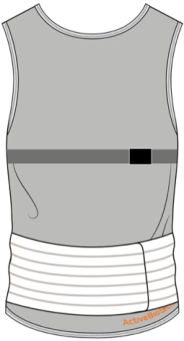
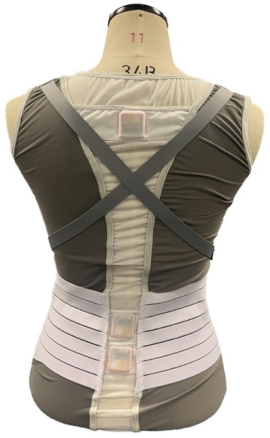
shoulder straps, and the padded lining on the front and back of the foam cup. Later, the design of the back and waist was improved to enhance the func- tionality of the vest (i.e., its posture-correcting effect on the patient). The belt is primarily made of fabrics with high strength, high recovery, high breatha- bility, and a good feel, which can support the waist. An adjustable elastic band is added to the back and adopts a cross-design. The combination of the waist and back design serves as a posture reminder for patients, making it more effective to use with the biofeedback posture training system at home (as shown in Figures 5 and 6).
Figure 6: From left to right: The pattern of back, middle, and front, girdles.
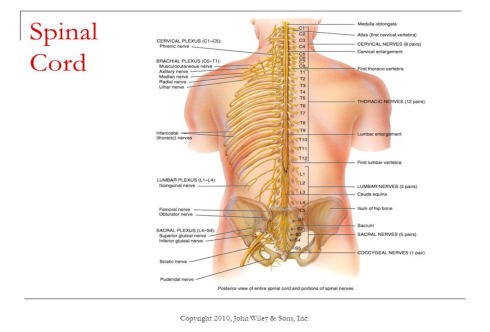
Positioning of Posture Monitoring Sensors The position of the sensor may be different for different subjects. Typically, sensors are placed along the spinal cord at T3, T12, and L4-L5 to monitor the wearer’s posture (as shown
Development and Evaluation of a Body Mapping Tank-Top for Early Stage 227
Figure 7: The technical drawing of the tank top (Front and back).
in Figure 7). The sensor located at T3 is designed to monitor chest-torso pos- ture (Wong, 2009). Patients who tend to move their thoracic spine forward (which may result in kyphosis) will be detected by the sensor located at T3 and corrected. The sensor located at T12 is used to monitor the lumbar spine position as it has been shown in the literature that devices such as electro- magnetic trackers are placed at T12 utilizing 3 orthogonal axes to measure the lumbar spine position and strapped to the pelvis over the sacrum, thorax and T12 (McGill & Karpowicz, 2009). L4-L5 is the location typically used to measure anatomical compressive forces, and the sensor was placed because this location has been calculated as the sum of the forces of all muscle fasci- cles along the compression and shear axes (McGill et al., 2009). Sensors will be placed at these three locations to monitor the wearers.
Figure 8: Spinal cord (John Wiley & Sons, Inc., 2011).Figure 9: The IMU sensor embed in the Tank-Top.
CONCLUSION
This article introduces the biofeedback posture training system and home based posture training system, thereby emphasizing that maintaining a cor- rect posture can prevent further deterioration of scoliosis. On this basis, our team further developed a posture training vest named Body Mapping Tank Top for those teenagers with early scoliosis. Based on multiple studies and tests, nylon and powernet among warp-knitted fabrics are selected as the main fabrics of the vest, which can maximize comfort, durability, and fit. The location of the posture monitoring sensors was also determined based on previous work by other researchers. Three sensors are placed at the T3, T12, and L4-L5 joints to monitor the user’s posture. Nowadays, the design is continuously improved, and the design of the back and waist is added, so that it can better assist patients to use the biofeedback system to adjust standing and sitting postures. This study is currently in a pilot phase, and the effectiveness of our biofeedback postural training, as well as the vest, is dependent on the subjects’ self-compliance. So, this requires us to guide the subjects to actively use this system and vest, otherwise the negative attitude of the subjects will greatly limit their progress in improvement.
ACKNOWLEDGMENT
This research is funded by research grants from the Laboratory for Arti- ficial Intelligence in Design (Project Code: RP1-4, J.Y.) under the InnoHK Research Clusters, Hong Kong Special Administrative Region Government, Lee Hysan Foundation to The Hong Kong Polytechnic University, grant num- ber R-ZH3Y (J. Y.) and the Research Grant Council of the Hong Kong Special
Development and Evaluation of a Body Mapping Tank-Top for Early Stage 229
Administrative Region, China, to The Chinese University of Hong Kong, grant number: CUHK 14607519 (M.C. Cheung).
REFERENCES
Ahmed, M. U., Begum, S., Funk, P., Xiong, N., & von Scheele, B. (2011). A multimodule case-based biofeedback system for stress treatment. Artificial Intelligence in Medicine, 51(2), 107–115. Bazzarelli, M., Durdle, N., Lou, E. & Raso, J. (2001). A low-power portable
electromagnetic posture monitoring system. Proceedings of the 18th IEEE Instru- mentation and Measurement Technology Conference, 1 619–623. Cheung, M. C., Yip, J., & Lai, J. S. (2022). Biofeedback posture training for adolescents with mild scoliosis. BioMed Research International, 2022. LeBlanc, R., Labelle, H., Rivard, C. H., Poitras, B., & Kratzenberg, J. (1997). Threed-
imensional (3D) postural evaluation of normal human subjects. Studies in Health Technology and Informatics, 293–296. Raine, S. & Twomey, L. (1994). Attributes and qualities of human posture and their relationship to dysfunction or musculoskeletal pain. Critical Reviews in Physical and Rehabilitation Medicine, 6, 409–409. Wong, M. S., Cheng, C. Y., Lam, T. P., Ng, K. W., Sin, S. W., Lee-Shum, L. F., Chow,
H. K. & Tam, Y. P. (2008). The Effect of Rigid Versus Flexible Spinal Orthosis on the Clinical Efficacy and Acceptance of Patients With Adolescent Idiopathic Scoliosis. SPINE, 33 (12), 1360–1365. Wong, W. Y., & Wong, M. S. (2008). Smart garment for trunk posture monitoring: A preliminary study. Scoliosis, 3(7), 1–9. Yip, J., & Kwok, G. (2020). An innovative tank top equipped with a biofeedback
system for adolescents with early scoliosis. In Latest Material and Technological Developments for Activewear (pp. 193–223). Woodhead Publishing.
LISTED IN THE AHFE DIGITAL BOOKSTORE CATALOGUE
Explore the complete digital volume
Ergonomics In Design
Read this individual research paper free through the original publisher, or explore the full digital proceedings book.
ISBN 978-1-964867-05-2
Explore this ISBN in the AHFE Bookstore ↗Listed in the July 2026 bookstore catalogue; search by ISBN to confirm current availability · Digital book purchase optional