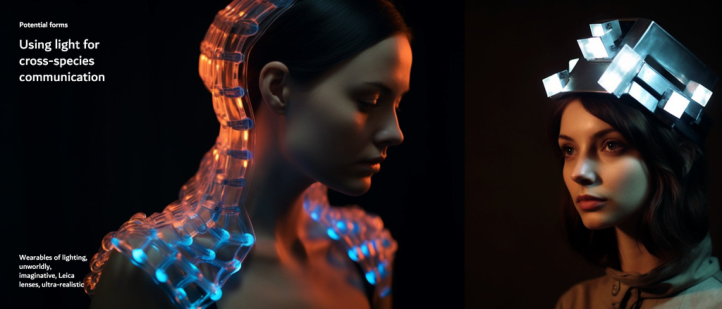
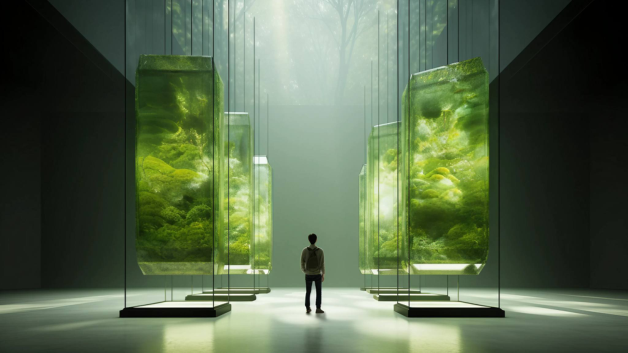
Ivan Parati, Mariia Zolotova (2024). Using Future Thinking as a steering tool for Generative AI creative output: a case study aiming at rethink lighting in the next future. In: Human Interaction and Emerging Technologies (IHIET-AI 2024): Artificial Intelligence and Future Applications. AHFE Open Access, vol. 120, pp. 417–428. https://doi.org/10.54941/ahfe1004593
Contemporary business sustainability relies on its flexibility and adaptability to unforeseen changes in societal and environmental challenges. In that sense, Speculative Design and Future Thinking offer a unique methodology for businesses to plan for the unpredictable. While those theories have been tested by decades of artistic and business applications, the recent introduction of generative AI tools widened the complexity and likelihood of answers that can be thoroughly investigated. At the same time, this enhanced capability to peek into our futures raises several concerns: How can we retain control of generative AI creative output using future thinking as a steering tool? Would that allow designers to proceed beyond strategic choices, addressing specific product development?This paper shares a case study of how future thinking was applied to provide a lighting manufacturer with design visualisations related to the lighting industry's future. HE institution offered this service (hidden for peer review) through an interdepartmental collaboration (Industrial Design and Architecture). Futures Thinking and Speculative Design apply as a methodology for consulting firms on strategic and communication choices (Mc Kinsey & Company, report, 2021). This case study explores the impact of such methodologies on choices related to product, interior, and systems design. Generative AI tools were prompted to visually interpret the forecasted scenarios through narrative discourse and creative works. the questions addressed were: What is the future of the light industry in the context of human emotions, enhanced user experience, well-being, or energy and resources?MethodsA workshop involving undergraduate and postgraduate students of the respective departments was organised in two phases: the first phase was about describing a scenario ten years in the future and conceptualising the design vision; the second phase was addressing the materialisation of light and its execution in a product or service proposal. After selecting the context, students followed methodological steps to envision future products, spaces and interactions following the four identified possible scenarios (Slaughter, 2013). In both phases, students used generative AI tools to visualise scenarios and solutions, Midjourney for the conceptual narrative, and Vizcom was used to generate illustrations of the interior/product lighting ecosystem. The latest tool does not rely solely on prompting but requires the designer to submit a sketch or a draft rendering of the proposed solution.ResultsThe design team of the participating lighting company attended each phase presentation involving products unfolding the relationship with the light in the future. The feedback received from the company appreciates the depth of the research and acknowledges the competitiveness of the identified research directions. The results achieved in the second phase of the workshop will be showcased at the IDI Shanghai yearly exhibition 2023.The format proposed could be easily adapted and implemented in a range of specific design domains, such as transportation and automotive, fashion and accessories, consumer electronics and household appliances, to name a few.
Speculative design is an interdisciplinary approach that challenges the sta- tus quo and explores possible futures through design, critical thinking, and imagination. The late 20th century saw the rise in popularity of Speculative Design thanks to the works of designers like Bruce Sterling, Fiona Raby, and Anthony Dunne.
From a modernist perspective, design is primarily seen as a problem- solving practice, and the designers work on the problems identified by others. The goal of design is closely related to industry demands or, more broadly, the improvement of living standards and serving customer needs (Mitrovic, 2016). On the other hand, Speculative Design is a practice-based
research methodology that promotes objects and narratives as tools for crit- ical reflection. In that sense, it is not aimed at problem-solving but rather at problem-finding.
Speculative design draws inspiration from science fiction, futurism, futur- ology, and critical theory (Antonio, 1983). It refers to the Italian radical architecture, such as the works of Superstudio, and also artistic movements, such as Situationist International and the ideas of Guy Debord, who looked into the disruption and reimagining of the systems which govern everyday life. The three theoretical foundations of the current Speculative Design prac- tice include concepts of “Critical Design” as introduced by Dunne and Raby in 1999 as a way to challenge conventional beliefs and encourage critical thinking through the creation of “thought-provoking artefacts and narra- tives”; “Design Fiction” as described by Sterling in 2005 who popularised the term, emphasising its use in storytelling and narrative building to imag- ine alternative futures; and “Speculative Everything” written by Dunne and Raby in 2013 when the term “Speculative Design” was proposed to include a broader range of design practices that explore possible futures and their socio-cultural impacts. Thus, Speculative Design seeks to present alternative narratives and possibilities in the future by observing changes in the past and challenging current ideologies, structures, sociocultural norms, and technolo- gies. Wong and Khovanskaya (2018) contribute to the discussion that using emerging design genres to communicate the problems and concerns identi- fied through the methods of Speculative Design would allow a broader public engagement with those ideas. The questions addressed by Speculative Design include the aesthetics and ethics of the new technologies, strategic choices for the companies and political organisations (Pólvora & Nascimento, 2021), and more.
Speculative Design in Organizations Speculative Design can serve organisations as a strategic tool to help them adapt to increasingly turbulent environments (Buehring & Bishop, 2020). Caixas and Oliveira (2023) suggest that most strategies and innovation methods focus on meeting the market needs, and there still needs to be more understanding in organisations on how to deal with unpredictable events and drivers. Therefore, stakeholders should work together to achieve more sustainable innovations suitable for the complexity of today’s socio- technological systems. Speculative design as an approach to exploring alter- native futures can provide such a framework for organisations. Unlike other disciplines, Speculative design, just like different design approaches such as Human-Centered Design, uses both a thinking methodology aimed at stimulating creativity and visualisation techniques to facilitate empathy and immersion. Despite that, recently, the design practice oriented towards style has been seen as immature (Whicher et al., 2015), and instead, the ability to generate strategic visions was considered more mature. Despite that, the role of style and visuals in future production is getting its importance again (Brassett & O’Reilly, 2015). Designers can help decision-makers envision opportunities using various visualisation tools (Buehring & Bishop, 2020),
Using Future Thinking as a Steering Tool for Generative AI Creative Output 419
both traditional concept visualisation techniques, such as sketching and rendering and AI-powered tools. In this context, designers could act as facil- itators of the approach and communicate ideas in a way everybody can understand (Kiialainen, 2022). While Speculative Design is getting popular in the business environment, yet, there are only a few examples of aca- demic research on the application of future thinking in business and industry. The only explicit reference is a Master’s thesis produced at the Aalto Uni- versity, called “Value of Speculative Design in Organizations” (Kiialainen, 2022). Other examples include Buehringand Bishop (2020) published in she ji journal, exploring the applications of foresight in decision-making; Hara, Kuroda, Nomaguchi (2023), who analyse the effects of adopting Imaginary Future Generations on R&D strategy in a water engineering company; Barker and Jewitt (2022), who explore the role of a comparative-competitive frame in sustaining a splintering of the imaginary towards utopic and dystopic extremes in the industry of tactile robots; and Marshall, Wilkins, and Ben- nett (2023), who explore how skills and knowledge from the field of science fiction and fantasy creative writing can be applied in technology foresight, especially for workshops with transdisciplinary research teams. We can observe that all these publications are from the years 2020 and 2023, which shows the novelty yet actuality of the subject.
Workshop Methodology Speculative design has also found its place in design education, encouraging students to think critically, use their imagination, and engage in speculative reasoning. It pushes them to investigate different perspectives, challenge pre- sumptions, and think through the bigger-picture effects of the design choices they make. The XXXX (hidden for peer review) Department of Industrial Design, together with the Department of Architecture and in collaboration with two industrial partners, iGuzzini, a pioneering player of the lighting industry and Italian Design Icons, an event planning practice in Shanghai, have organised a workshop aimed at generating the company visions on the future of light. There were Undergraduate and Postgraduate students attending the workshop under the supervision of five tutors, XXXX.
The workshop included two intensive phases of one week, each aimed at exploring the future of light: “design vision” and “design materialisation”. In the first phase, students followed the “Futures” methodology (Balagtas, 2021) to produce visions – visual concepts of future products, spaces and interactions exploring different scenarios concerning the future of light. The questions addressed were: what is the future of the lighting industry in the context of Human Emotions, Enhanced User Experience, Well-being, Energy and Resources.
Students worked in groups of two under the supervision of five tutors. Each day was dedicated to a specific step of the “Futures” methodology. Thus, at the beginning of the day, students would receive instructions about the spe- cific step to be accomplished, and they would present their results to the tutors by the end of the day to get feedback. Additionally, students would
420 Parati and Zolotova
receive lectures supporting them with the theories and design practice exam- ples in the field of lighting design. Also, they visited the iGuzzini factory in Shanghai, where they could observe the manufacturing process and the innovative results achieved by the company.
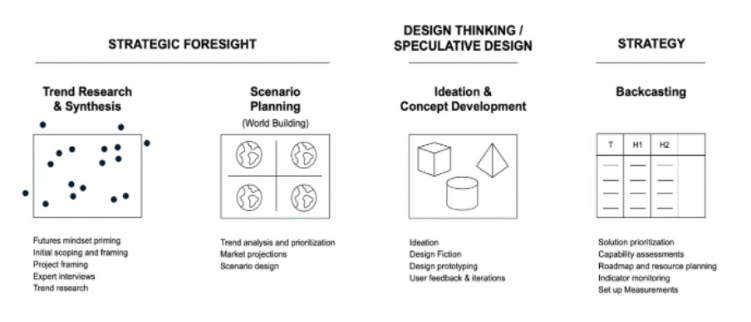
According to the methodology followed in this workshop, “futures” work can be divided into 3 to 4 steps, including initial stages of research which inform scenarios (future worlds), speculative artefacts or visions, and finally, a strategy which can include developing methods of measurement and multi- stage roadmaps toward a “North Star” (Fig. 1). Thus, the first step is about trends research and synthesis – it utilises different means of research to iden- tify the emerging trends in technologies, economies, markets, behaviours, and frame the project. The second step analyses the trends in relation to their like- lihood of becoming ubiquitous and their impact on the market and society at large to prioritise them and develop scenarios of how these trends might unfold. The third step is about ideation and concept development – using design fiction to visualise future products, services, environments, and inter- actions based on the scenario descriptions developed in step 2. The final step aims at prioritisation of the solution and development of a roadmap towards its realisation.
Figure 1: “Futures” methodology steps. Balagtas, P. (2021). Speculative design masterclass _ workshop _ XJTLU _ Fall 2021.
Therefore, the first phase of the workshop, “design vision”, followed the methodology described above. The “backcasting” step was skipped since the purpose of the workshop was to introduce to the company plural concepts evolved from the research and worldbuilding exercises.
The focal issue is the subject matter of the eventual scenarios, or it could be a sentence that indicates what futures will be explored. According to the methodology followed, the “focal issue” can be formulated in two ways: a “Futures of X” statement or a “HOW” question. An example of a state- ment would be: “The futures of the lighting industry", which means that the upcoming scenarios will explore different futures of the lighting indus- try. An example of a question would be: “How will users experience light?”
Using Future Thinking as a Steering Tool for Generative AI Creative Output 421
which means that the upcoming scenarios will explore the different manners in which users of the future will engage with lighting technologies and per- ceive light. The advantage of framing the focal issue in these ways is that both “Futures of X”statements and HOW questions invite open-ended rather than binary responses, thus representing the essence of futures: scenarios that are not predictions.
Students had to select from one of the mentioned focal issues and start their desk research explorations online. Trends are not necessarily the only source of inspiration but they are a good source of data to help them inform the investigation. Students were looking for emerging themes and technologies, behavioural patterns, technological, social and economic drivers of change both within and outside the focal issue. To obtain a comprehensive data set, students screened multiple resources, such as academic databases, business articles, and social media. At the end of the first phase of the workshop, design experts from iGuzzini company provided feedback on the identified trends and eventual concepts presented by the students.
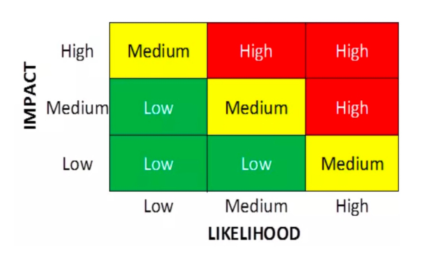
Identified trends were prioritized according to the matrix shown in Figure 2. The horizontal axis represents the likelihood of a trend to become ubiquitous. The vertical axis shows the extent to which a trend is impactful. Students had to allocated the trends they found into this matrix and provide a rationale for their choices.
Figure 2: A matrix for trend prioritisation (Balagtas, 2021).
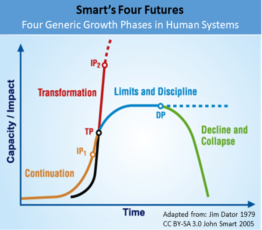
After that, students could proceed to the next step of worldbuilding. Stu- dents had to select a trend from the matrix, and the typical suggestion would be to select the trend positioned in the “high” zone of the matrix. Next, they had to describe how the trend might evolve in different scenarios. Scenarios allow designers to see different versions of the world they are building. It can help define the “situation” within which the world is operating. Accord- ing to the methodology, students had to describe the scenarios as they could evolve in a range of eventualities: “Continued growth”, “Transformation”, “Collapse”, and “Discipline” (Fig. 3).
422 Parati and Zolotova
Figure 3: Smart’s four futures, adapted from Jim Dator 1979.
“Continued growth” is a future of continuation and enhancement of the current trajectory and current problems – it is a development of the present. “Transformation” is a breakthrough of the present that leads towards estab- lishing new standards and triggers new events. “Collapse” is a future where the system reaches its limit and collapses, and a domino effect occurs where a failure of one system triggers failures in the others. Dystopia and chaos are a theme. “Discipline” is a future of equilibrium, where a certain degree of sustainability is achieved but has limitations, and the growth does not bring transformational evolution.
Eventually, students had to compile together a description of a world of the future with various characteristics from the “Scenarios” exercise. Based on that, they could start with Speculative Design brainstorming to develop visions of future products, spaces, and interactions concerning the selected “Focal Issue”. The two exercises, “Trends Research” and “Scenar- ios”, prepared students to start envisioning future possibilities grounded in the synthesis of research, data analysis, and imagination. Figure 4 shows the events from the present project into the future in the form of alternative pos- sibilities that could be described as “what is likely to happen”, “what could happen”, and “what might happen”. Ideally, the goal of the Speculative Design exercise was to propose a vision of a “preferred” future – a strate- gic vision that the company could eventually adopt. However, students were also encouraged to propose provocative ideas that may lay beyond what is preferable but what could be rather scary or threatening. Such provocations could provide the company with an idea of not only the potential “threats”as described in a SWOT analysis tool but also visions of potential new solutions or dominating technologies.
The outcomes of this exercise were visualised using AI-powered design applications used for image generation and design processes, such as Mid- Journey and Vizcom. Due to the nature of Speculative Design, whose primary purpose is to entice attention to the critical questions and explore innova- tions and novel scenarios rather than provide solutions, the evaluation of the speculation outcomes was conducted via discussions with the industrial partner (iGuzzini) in the formats of students’ presentations and the expert feedback.
Using Future Thinking as a Steering Tool for Generative AI Creative Output 423
Generative AI Tools Used to Visualise Scenarios and Solutions Future thinking and Speculative Design methodologies benefit from AI from many perspectives: While the linguistic discourse at the base of any design initial investigation occurs within the abstract domain of words, the design process quickly develops toward prototyping and visualisation. Forecasting credible scenarios can make use of an AI-powered Large Language Model (LLM) to gather evidence about future scenarios using a multitude of sources on statistics, politics, and scientific and creative data. Briefs, keywords, con- ceptual sentences, and technical and abstract notions can be easily augmented and investigated using LLM as ChatGPT and the like. Once an entire narra- tive is generated as a script, such as the incipit of a Sci-Fi novel, it can be structured very quickly as prompts to feed one of the many “visual gener- ators”, for example, Midjourney, which is a generative artificial intelligence program and service created and hosted by San Francisco–based independent research lab Midjourney, Inc. and distinguish itself for the extreme realism and the cinematic expressivity of its images. This tool, at the moment of writ- ing, requires a prompt and, additionally, a reference picture. The prompt is a short paragraph of sentences in various forms, generally, a question or a brief description of the problem, submitted by the user to the Large Lan- guage model to obtain either a written, multimedia or operational response (Oppenlaender, Linder & Silvennoinen, 2023). Therefore, during this ini- tial conceptual phase, similarly to the conventional explorative and defining phase of a design thinking process (Buchanan, 1992), the entire process could be quickly addressed without tracing a single line. The designer could gather evidence and case studies supporting a specific intent he/she has in mind formulating abstractions that inform not only the functional specifi- cation of a solution but even aesthetic qualities and emotional and semiotic processes.
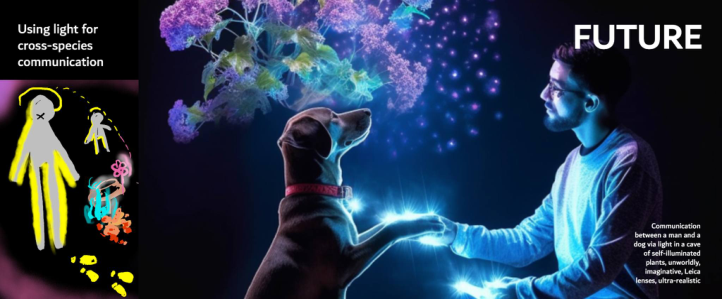
Figure 4: Visualised “scenarios” of possible futures (Calista Narta & Xiaohe Wang, 2023).
424 Parati and Zolotova
Figure 5: Visualised “applications” of possible futures (Calista Narta & Xiaohe Wang, 2023).
The use of AI poses certain advantages during these initial steps but also challenges and clear disadvantages. The positive aspects are related to pro- ficiency and the capability to process a large amount of information in a shorter time with fewer chances of missing relevant cases. During the primary and secondary research tasks, the designer’s cognitive process on a topic is augmented, giving the option to grasp even subtitles opportunities worth fur- ther exploring. The challenges related to the freshness of information and the possibility of plagiarism are just a few of the many worrying signals (Cao Y et al., 2023). On another end, the opposing sides of AI application in a design context could determine intellectual laziness and incapability to express and explore our creativity, but it could also contribute to relying on a biased con- ception of representation performed by the system trained with a specific quality of data.
Nevertheless, the designer still has an active role in discriminating and selecting relevant narratives and translating them into credible scenarios. The scenario generation could be easily supported by mid-journey and other visual AI tools based solely on prompts. The final result of this phase could differ from a conventional process as a comprehensive composition of well- blended pictures could vary from a rough collage of approximated intents. By processing the collage through a range of traditional visual tools, its content could become more engaging, more realistic, more abstract, more explana- tory, in a few words, and iteratively refined. The generative solution can perform this very well and almost instantly (Fig. 5 & Fig. 6).
During the ideation and prototyping stage, Midjourney and similar tools such as DallE or Stable Diffusion are less effective since relying solely on promoting and reference images rather than jump-starting the creative stage often limits and constrains its development. If you feed Midjourney with var- ious sketches, you’ll have a new but sometimes stereotyped version of the same drawing. The iteration towards a more realistic and credible solution can not be favoured starting from conventional creative low fidelity prototyp- ing techniques as the sketch, but again it needs a solid and tested prompting to achieve a forecasted result.
Using Future Thinking as a Steering Tool for Generative AI Creative Output 425
Given the rapidity and urgency that pushes the development of such tools every other week, you can expect changes in the way you interact or per- form a specific task or the way the model responds to a similar request. While this is common to any Generative content artificial Intelligence, what is peculiar about Vizcom.Ai is that despite the constant updates, it focuses on leveraging sketches to a rendered photorealistic picture that, while avoid- ing technical challenges and necessary sophistication can generate fresh and credible results.
Vizcom is an AI tool that transforms sketches into concept drawings in seconds. It uses deep learning algorithms to generate realistic images from hand-drawn sketches, offering a seamless and efficient workflow while pro- viding a range of customisation options, allowing users to experiment with various artistic choices and iterate on their designs until they achieve the desired outcome. Vizcom is also known for its robust security measures and commitment to data protection. It offers a personalised model exclusive to your organisation, designed to understand and embody your unique brand identity and history.
Figure 6: Visualised “solution” of possible lighting products (Xiaohe Wang, 2023).
In summary, while both Midjourney and Vizcom utilise AI to assist in the design process, they do so in different ways. Midjourney generates images from text prompts, while Vizcom transforms sketches into detailed concept drawings. Both tools have their strengths and can be used in other contexts depending on the specific needs of the user. Since both are part of this new trend of generative AI, are evolving over a short period. Midjourney, at the moment of writing, can generate visual content using DALL.E 3 but still has limited capabilities. Vizcom specialises itself as a tool to enhance sketches to a rendering, and while it is mainly addressed to and widely adopted by the automotive industry, it is a versatile tool that can visualise a range of industrial design products, including electronics, industrial and leisure equip- ment, fashion and accessories, sports gears, interiors, architectures and more.
426 Parati and Zolotova
Its learning curve is steeper than other prompt Generative AI. It includes a canvas-style image editor with limited tools and options but enough to generate colour masses needed as input for further generation. It implies a progressive refinement process where the user, after generating the over- all image, keeps adding details manually and generates them into rendered parts. Some parts need several iterations and refinement of the prompt before getting the expected result, but it is enough to observe a few fundamental principles to obtain reasonably good results with discrete control of the out- comes. The process carries along similar dynamics of conventional sketching techniques, and while the AI generates the rendered picture, the user retains a certain degree of control over the post-processing and detailing of the image.
The impact of the methodologies on choices related to product, interior, and systems design.
The lighting design domain is exceptionally diversified and demands a range of competencies beyond other Industrial design specific domains. It includes notions of physics (optics), electrical engineering, interior design, landscape, ergonomy, psychology and expressivity. In the case of a scenario projected into the future, the complexity gets exponential, considering sys- tem design, material integration, and multiuser interaction. In some cases, it could push the reality so far that integrating biological systems into synthetic or even virtual ones could open an entirely new unexplored territory. Inflect- ing the results according to conventional product design practice would limit the creative process. The scene could avoid depicting the products but rather its results in terms of environmental perception. In this regard, mid-journey and other prompt-based applications meet the designer’s needs. Indeed a mixed process could give the best outcomes. While the overall scene is constructed with mid-journey, the small details addressing the visible illu- minating apparatus could be added with Vizcom as a sketch over a previous image.
Figure 7: Visualised “solution” of possible lighting futures, the effect (Xiaohe Wang, 2023).
Using Future Thinking as a Steering Tool for Generative AI Creative Output 427
Figure 8: Visualised “solution” of possible lighting futures, the product (Xiaohe Wang, 2023).
The pictures in Figures 7 & 8 are generated through Midjourney, and while depicting an impressive scenario, they could hardly be connected to a specific product design solution but instead to the effect of a range of interventions and an emotional interpretation of a fictional narrative. That might foster strategic choices, but it is hardly influencing and inspiring specific products in the company’s pipeline. The outcome depicted in Figure 9, generated through a sketch uploaded on Vizcom, helps to rescale the solution into a more tangi- ble manifestation, the packaging, including the product and how it is initially proposed to the customer.
Using Speculative Design in Combination with AI leaves the designer total control over the solution proposed and tends to generate slightly more detailed and, therefore, credible solutions. Having better control over some of the tools helps the designer to inflect their proposal in a range of possibilities that comprises not only the strategic narrative domain but a more tangible product design.
REFERENCES
Antonio, R.J.(1983).The Origin, Development, and Contemporary Status of Critical Theory. The Sociological Quarterly, Vol. 24, No. 3 (Summer, 1983), pp. 325–351. Bühring, J. and Liedtka, J. (2018) Embracing systematic futures thinking at the
intersection of Strategic Planning, Foresight and Design. Journal of Innovation Management, 6(3), 134–152. Balagtas, P. (2021). Speculative Design Masterclass _ Workshop _ XJTLU _ Fall 2021. Barker, N. & Jewitt, C. (2022). Future touch in industry: Exploring sociotechnical imaginaries of tactile (tele) robots, Futures, Volume 136, ISSN 0016-3287, https: //doi.org/10.1016/j.futures.2021.102885. Baudrillard, Jean (1981). Simulacres et simulation. Paris: Galilée. ISBN 2-7186-
0210-4. OCLC 7773126. Brassett, J. & O’Reilly, J. (2015). Styling the future. A philosophical approach to design and scenarios, Futures, Volume 74, pp. 37–48, ISSN 0016-3287, https: //doi.org/10.1016/j.futures.2015.07.001. Buchanan, R. (1992). Wicked Problems in Design Thinking. Design Issues, 8(2),
5–21. https://doi.org/10.2307/1511637 Buehring, J. and Bishop. P. C. (2020) Foresight and Design - New Support for Strategic Decision Making. She ji – The Journal of Design, Economics, and Innovation 6(3).
428 Parati and Zolotova
Cao Y et al. (2023) Comprehensive Survey of AI-Generated Content (AIGC): A History of Generative AI from GAN to ChatGPT. Dunne, A., & Raby, F. (2013). Speculative Everything. MIT Press. Evans, M. & Sommerville, S. 2007. A Design For Life: Futures Thinking in the Design
Curriculum. Futures Research Quarterly, 5–19. Gamito Caixas, M., Matias Sanches Oliveira, F. (2023). Speculative for Strategic Design. In: Martins, N., Raposo, D. (eds) Communication Design and Branding. Springer Series in Design and Innovation, vol. 32. Springer, Cham. https://doi.or g/10.1007/978-3-031-35385-7_17 Hancock, T & Bezold, C 1994, ‘Possible futures, preferable futures’, Healthcare
Forum Journal, vol. 37, no. 2, pp. 23–29. Hara, K., Kuroda, M. & Nomaguchi, Y. (2023). How does research and development (R&D) strategy shift by adopting imaginary future generations? – Insights from future design practice in a water engineering company, Futures, Volume 152, ISSN 0016-3287, https://doi.org/10.1016/j.futures.2023.103221. Kiialainen, E. (2022). Value Of Speculative Design In Organizations. And How To
Apply The Approach. Mater Thesis. Aalto University School of Arts, Design and Architecture (ARTS), Department of Design. Marshall, H., Wilkins, K. & Bennett, L. (2023). Story thinking for technology foresight, Futures, Volume 146, ISSN 0016-3287, https://doi.org/10.1016/j.futures. 2023.103098. Master’s Degree Programme in International Design Business Management. Mitrovic, I. (2016). Speculative – Post-Design Practice or New Utopia? The XXI
International Exhibition of the Triennale di Milano, The 21st Century. Design After Design, presentation of the Republic of Croatia. National Museum of Sci- ence and Technology Leonardo da Vinci / Cavallerizze. https://speculative.hr/en/ introduction-to-speculative-design-practice/ Retreived 8 november 2023. Oppenlaender J, Linder R, Silvennoinen J (2023) Prompting ai art: An investigation into the creative skill of prompt engineering, arXiv preprint arXiv:2303.13534, 2023.arxiv.org. Pólvora, A. & Nascimento, S. (2021). Foresight and design fictions meet at a
policy lab: An experimentation approach in public sector innovation, Futures, Volume 128, ISSN 0016-3287, https://doi.org/10.1016/j.futures.2021.102709. Whicher, A., Swiatek, P. & Cawood, G. (2015). Design policy monitor 2015.
reviewing innovation and design policies across Europe, Cardiff, UK. Wong, Y. R. & Khovanskaya, V. (2018). Speculative Design in HCI: From Corporate Imaginations to Critical Orientations. In: Filimowicz, M., Tzankova, V. (eds) New Directions in Third Wave Human-Computer Interac- tion: Volume 2 - Methodologies. Human–Computer Interaction Series. Springer, Cham. https://doi.org/10.1007/978-3-319-73374-6_10
LISTED IN THE AHFE DIGITAL BOOKSTORE CATALOGUE
Explore the complete digital volume
Human Interaction and Emerging Technologies (IHIET-AI 2024): Artificial Intelligence and Future Applications
Read this individual research paper free through the original publisher, or explore the full digital proceedings book.
ISBN 978-1-958651-96-4
Explore this ISBN in the AHFE Bookstore ↗Listed in the July 2026 bookstore catalogue; search by ISBN to confirm current availability · Digital book purchase optional