Lusha Huang, Yuxiang Wang (2023). From Engagement to Immersion: A Self-Determination Theory and Approach to Gamified Cultural Tourism. In: Emerging Technologies and Future of Work. AHFE Open Access, vol. 117, pp. 277–288. https://doi.org/10.54941/ahfe1004428
In a rapidly growing economy, contemporary tourists are increasingly drawn to unique cultural encounters; this highlights the significance of innovative approaches in promoting cultural tourism. This paper, which relies on self-determination theory, adopts a mixedmethods approach, amalgamating text mining with quantitative and qualitative methodologies, to dissect the interplay of gamification in enhancing engagement within immersive cultural tourism, with a concentrated lens on the “Wizarding World of Harry Potter”. Immersive experiences, intricately crafted from profound narratives, engender deep-seated connections between participants and the embedded tales. Concurrently, the strategic deployment of gamification, while leveraging game mechanics, acts as a potent catalyst in bolstering engagement levels, serving as a conduit to heightened immersion. Rooted in motivational psychology, the tenets of self-determination theory emerge as indispensable when applied to game mechanics, fostering a richer, more holistic engagement and experience.This harmonious confluence of immersive narratives, gamification techniques, and self-determination principles not only augments engagement but, as underscored in this study, propels it toward deeper immersion, satisfying the intricate psychological cravings of tourists. This research provides an illustrative case study that contributes to the ongoing academic and industry discourse through a detailed analysis of selected immersive cultural tourism exemplars. In doing so, the paper paves the way for a more synchronized trajectory in cultural tourism, emphasizing the transition "From Engagement to Immersion" and underscoring the pivotal role of self-determination theory in gamified cultural tourism endeavours.
Cultural tourism programs primarily aim to craft enriching tourism experi- ences. In the era of the “experience economy,” there is a discernible shift in participants’ demands. Where participants no longer seek mere staged enter- tainment but yearn for more profound, immersive experiences co-created by participants and the programs themselves (AU & TSANG, 2022). This shift underscores the need for cultural tourism industry to invigorate tourists’ participation, and ensure their psychological fulfilment during visits, and heighten their immersive experiences.
Immersive cultural tourism, characterized by its distinct features, has rapidly gained traction among tourists, showcasing significant market poten- tial. This form of tourism employs intricate narratives, establishing unique interactions that enable tourists to delve deeper into the storylines and the associated cultural nuances. The goal is to immerse tourists in the destina- tion’s culture, history, and heritage, facilitating genuine interactions with local traditions (Richards, 2007). At the heart of this lies the “immersive experience”; which is a concept proven to intensify user immersion, and fortify the bond between the user and the narrative, therefore enhancing the recall value of the destination (Little et al., 2018; Neuhofer et al., 2014). Policy inclinations across several nations further attest to immer- sive cultural tourism’s emerging prominence in shaping the future of the industry.
Given this trend, integrating gamification techniques in cultural tourism projects holds the potential to significantly amplify immersive experiences. Gamification, the act of infusing game elements into non-game contexts, borrows from game design principles to transform routine activities, pre- senting a novel avenue to address societal challenges (Kapp, 2012; Deterding et al., 2011). It aims to embed game-inspired elements to foster user engage- ment, guide behaviors, and thereby elevate the overall experience (Werbach, 2014; Marczewski, 2013; Schobel et al., 2020). Recognizing the inherent appeal of games in delivering satisfaction and immersion, gamification strate- gically blends these attributes with non-gaming activities (Huotari & Hamari, 2017), making it a tool of choice across varied sectors to enhance user experiences.
Furthermore, the self-determination theory, which is a cornerstone in the study of human motivation and increasingly influential in game design, strives to comprehend the intrinsic and extrinsic motivations of users. It offers insights into promoting user well-being by discerning their driving forces. Central to this theory is the design philosophy rooted in understanding user motivations, enabling them to achieve value outcomes and meet their fun- damental psychological needs. Empirical evidence indicates that catering to these basic psychological needs augments user engagement and satisfaction, subsequently enriching their immersive experiences (Ryan & Deci, 2000; Tyack & Mekler, 2020; Deci & Ryan, 2020; Buzinde, 2020).
This paper initially underscores the significance of gamification design strategies, highlighting their transformative influence on enhancing tourist experiences. Central to this exploration is the self-determination theory, which serves as a foundational compass guiding the understanding of how experiential sensations and participant satisfaction can be amplified. Sec- ond, in pursuit of a tangible context that bridges theoretical postulates with real-world applications, the Wizarding World of Harry Potter is selected as an illustrative case study. Within this realm, the Octalysis gamification framework is meticulously employed, ensuring its tenets are seamlessly inte- grated with the principles of self-determination theory. Last, building upon the theoretical groundwork and practical exploration, attention is redirected towards the digital realm, specifically, online tourist feedback. Employing a network text analysis approach, these online reviews are methodically parsed,
From Engagement to Immersion: A Self-Determination Theory 279
offering s deeper layer of insights that resonate with, and validate, the study’s foundational perspectives.
Gamification: Unlocking Engaging Design Potential Gamification, as an evolving design methodology, holds a promising poten- tial, evident across diverse sectors like education, healthcare, and business (Koivisto & Hamari, 2019). Its foray into the cultural tourism sector, both theoretically and practically, has been marked by significant strides (Swacha & Ittermann, 2017; Huang & Lau, 2020). As gamification elements perme- ate cultural tourism, they not only expand its appeal, but are also anticipated to shape the industry’s future trajectory. Such integration has been found to fortify aspects like brand visibility, visitor experience, and engagement (Xu et al., 2017). By fostering a symbiotic relationship between cultural tourism initiatives and visitors, gamification fosters knowledge transfer, heightens cul- tural awareness, and augments user experience rooted in satisfaction and engagement (Widarti & Emanuel, 2020; Ryan et al., 2006; Pace & Dipace, 2015). Yet, to harness the full potential of gamification, understanding and stim- ulating tourist motivation remains crucial side. Motivation in gamification operates on dual sides: intrinsic and extrinsic. While extrinsic motivation is shaped by gamification elements and mechanisms in non-game settings, intrinsic motivation is spurred by the confluence of game environments and motivational design (Ryan & Deci, 2020). This distinction makes it imperative to delve deeper into motivational psychology theories, with the self-determination theory emerging as a fitting framework to discern how gamification influences motivation by catering to tourists’ psychological needs.
Self-Determination Theory: Catering to Psychological Fulfilment Three foundational psychological needs are central to the self-determination theory: autonomy, competence, and relatedness (Ryan & Deci, 2020). Auton- omy underscores user-driven decisions, demanding designs that resonate with users’ values and aspirations (Dehaan et al., 2016). Competence pivots around individual feelings that was accomplished in challenging scenarios, making the reward mechanism within activities crucial to reflect and elevate user competence (Przybylski et al., 2010; Sedikides et al., 2019). Related- ness, on the other hand, focuses on fostering meaningful connections among users, amplifying their sense of belonging during participation (Niemiec & Ryan, 2009). Addressing these three tenets can stoke intrinsic motivation, enhancing user satisfaction in engagements (Tyack & Mekler, 2020).
The synergy between the self-determination theory and gamification is evi- dent, given the theory’s widespread application in game design. As individuals seek more profound experiences, the theory address applications in diverse hierarchical domains, including education, tourism, and gaming (Hagger et al., 2003). In the experience economy’s backdrop, tourists’ intrinsic emo- tions during cultural engagements gain prominence. Consequently, academic endeavours are integrating tourism projects with self-determination theory
280 Huang and Wang
to satiate these advanced psychological needs (Pearce & Packer, 2013). For instance, Buzinde (2020) merged the theory with spiritual tourism, empha- sizing autonomy, competence, and relatedness to enrich user experiences. Recognizing the multifaceted ways people perceive the world, this study aims to intertwine the gamification design framework with self-determination theory to offer deeper insights.
CASE STUDY Octalysis and Self-Determination Theory
In order to better understand the intrinsic connection between self- determination theory and gamification elements, the existing gamified immersive cultural tourism projects should be analysed, categorise the gam- ification elements embodied in them, summarise the features of gamifica- tion presented in the cases, and test them against the three elements of self-determination theory.
The forms of cultural tourism projects, which can be roughly classified into the following categories according to their forms: 1. Cultural Ecotourism 2. Indigenous Cultural Tourism 3. Eco-Cultural Tourism 4. Socio-Cultural Tourism (Petroman et al., 2013). When conducting research in the field of cultural tourism, it is crucial to select appropriate cases. The Wizarding World of Harry Potter, a themed area in Universal Studios, is regarded as an ideal research subject due to its rich story background, cross-cultural appeal, inno- vative gamification elements, interactivity with tourists, and its successful business model. In the park, all the elements come from the Harry Potter book series, including themed rides, themed shops, and themed interactive shows. “Rides”which include Hagrid’s Magical Creatures Motorbike Adventure, an immersive roller coaster, and Honeydukes, a candy shop in the park, The park also features a Honeydukes candy shop, themed shops selling magical gear such as Dervish and Banges, and attendees can watch the Frog Choir and the Triwizard Spirit Rally themed events. There are also a number of interactive wand experience points where participants can cast spells with their wands and watch the magic work in the area.
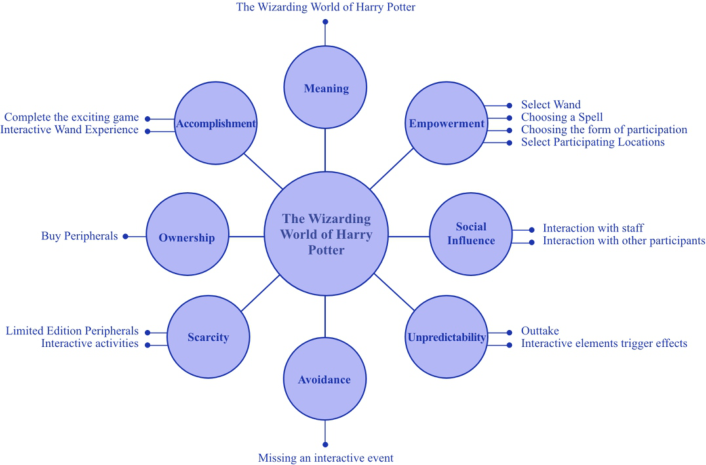
The Gamification Octagonal Behavioural Framework was employed to identify the design elements in the case study (Teixes, 2017). This framework delineates core gamification drivers into eight categories: Accomplishment, Ownership, Scarcity, Avoidance, Unpredictability, Social Influence, Empow- erment, and Meaning. Each of these drivers was observed in the case study (see Figure 1). Specifically, the backstory of Harry Potter serves as the essence of the entire case and falls under the MEANING category. Choice mecha- nisms, such as selecting wands and spells, relate to Empowerment, enhancing visitors’ sense of agency. Staff interactions and other participants come under Social Influence, establishing a connection between visitors and the attrac- tion. Elements of surprise, such as triggered interactive effects, align with Unpredictability. Limited edition merchandise embodies Scarcity, as visitors often value rare items more. Ownership is felt by tourists when purchasing park products. Engaging in park entertainment and completing interac- tive activities resonate with accomplishment, intensifying visitor satisfaction.
From Engagement to Immersion: A Self-Determination Theory 281
Time-limited park performances pertain to Avoidance; missing these can result in visitors valuing the experiences they do attend even more.
Furthermore, motivation can be categorized by its nature. Intrinsic moti- vation pertains to activities pursued for their inherent interest or enjoyment, while extrinsic motivation relates to activities aimed at achieving separate outcomes (Ryan & Deci, 2000). The program in the study strategically uti- lized both intrinsic and extrinsic motivations to engage participants. Overall, the primary drivers emphasized by the project predominantly lean towards intrinsic motivation, suggesting a primary focus on this form of engagement.
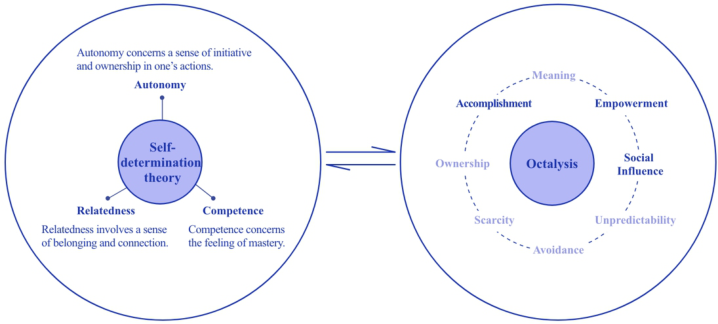
Figure 1: Gamification analysis of “The Wizarding World of Harry Potter”.Figure 2: A comparative analysis of intrinsic motivation in Octalysis and self- determination theory.
282 Huang and Wang
Figure 2 demonstrate that the Wizarding World of Harry Potter has given more thoughts and settings to the three core gamification drives of Empow- erment, Social Influence, and Accomplishment, and it is not difficult to find out that these three core gamification drives can correspond to the three elements of self-determination theory. Empowerment and self-determination theory’s intrinsic motivation of autonomy are highly similar in logic; Accom- plishment and self-determination theory’s need for competence both attract participants by fulfilling their intrinsic sense of achievement; and Social Influ- ence and Relevance both attract participants by setting up some social activity elements. setting up some social activity elements to internalise the moti- vation to participate and enhance the participants’ sense of belonging to the project. It can be argued that the gamification strategy is to promote intrinsic motivation as the main segment to enhance the sense of immer- sion experience. Self-determination theory suggests that satisfying the three basic psychological needs of autonomy, sense of competence, and relatedness can promote intrinsic motivation and enhance satisfaction and engagement. Thus, the commonality between self-determination theory and gamification design strategies is to promote intrinsic motivation in a way that enhances visitors’ satisfaction and engagement.
METHOD
This study adopts a comprehensive research methodology that combines text mining techniques with a mix of quantitative and qualitative analysis meth- ods, aiming to explore how gamification elements and self-determination theories contribute to visitors’ immersive experiences in the Wizarding World of Harry Potter.
As a first step and in order to obtain primary data, a large number of online reviews about the Wizarding World of Harry Potter were collected from Qunar (https://www.qunar.com), one of the world’s leading Chinese- language online travel agencies. These data were extracted using a Python crawler program written specifically for this purpose. Given that the Qunar platform provides public access to reviews, this ensured the acquisition of a rich and authentic dataset. Subsequently, text mining techniques were applied to meticulously analyze the content of the comments, identifying the most common words and phrases in them and exploring the correlations between them. In an effort to uncover the central themes and ideas expressed within the comments, a co-occurrence matrix was employed for quantita- tive analysis. This method offered a systematic and unbiased way to pinpoint significant word pairs throughout the reviews. To further investigate these themes and ideas, network relationship diagrams, alongside VOSviewer’s net- work and clustering visualization tools, were harnessed. Such tools not only facilitated the visualization of key terms and concepts but also highlighted their intricate interrelationships, supplying a lucid analytical framework for the investigation. Building on this quantitative foundation, a subsequent qualitative analysis delved into the key terms and concepts, aiming to unearth their ties with gamification elements and self-determination theory. The land- scape of contemporary cultural tourism is witnessing a transformative phase.
From Engagement to Immersion: A Self-Determination Theory 283
As technological advancements meet the evolving demands of tourists, mere observation falls short of meeting their aspirations. Today’s tourists yearn for experiences that are richer, more interactive, and deeply immersive. The Wiz- arding World of Harry Potter exemplifies this transformation. To grasp its intricacies, three analytical tools — the co-occurrence matrix table, network relationship diagram, and VOSviewer’s Network and clusters visualization — were employed to dissect and interpret visitors’ feedback and remarks.
RESULTS
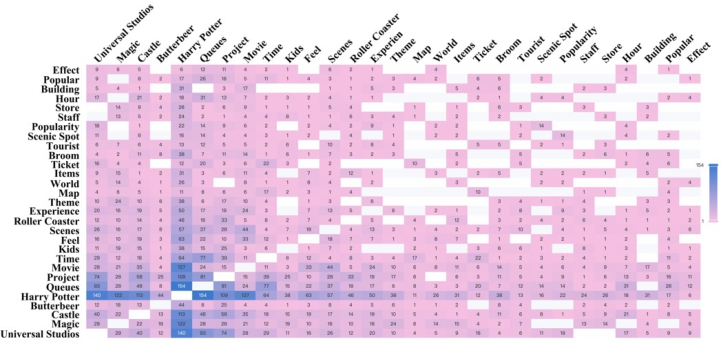
First, the co-occurrence matrix gives us a clear view of which themes or key- words are frequently mentioned together (see Figure 3). For example, words such as “queue”, “program”, and “time” were frequently linked together, which conveyed a clear message that visitors to the Wizarding World of Harry Potter experience were concerned about wait times and the relation- ship between them and visitors to the Wizarding World of Harry Potter. This sends a clear message that visitors to the Wizarding World of Harry Potter experience are very concerned about wait times and their relevance to par- ticular programs. Long waits can diminish the immersion of visitors and pull them back from the wizarding world. Therefore, designers might consider using technology and gamification elements to address this issue. For exam- ple, providing visitors with an interactive queuing experience allows them to immerse themselves in the world of magic even while waiting. With aug- mented reality, visitors can use their cell phones or other devices to interact with their surroundings, unlock hidden magical stories, or play interactive games with other visitors.
Figure 3: Matrix diagram.
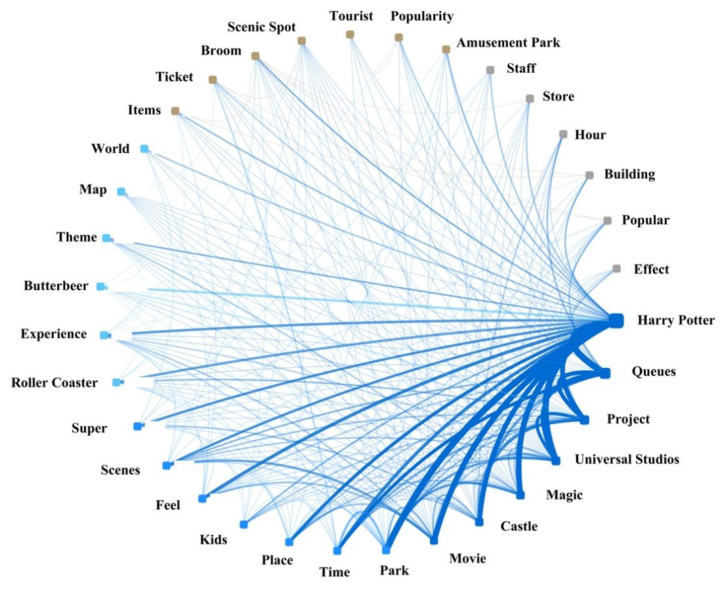
Second, from the network relationship map, the structure and relation- ship of the whole network, as well as the importance and centrality of each theme in the network (see Figure 4). This provides us with a macroscopic view of the themes that matter most to tourists. For example, the high
284 Huang and Wang
strength of the connection between “movie” and “scene” further confirms that visitors have high expectations for movie content to be reproduced in the park. This provides a clear direction for the designers: the park should be designed to reproduce scenes and stories from the movie as much as possible. The solutions might lie in virtual reality and augmented reality technologies. These technologies can provide visitors with a realistic and immersive expe- rience, allowing them to truly enter the world of the movie. In addition to recreating scenes from the movie, designers can create entirely new stories and quests for visitors, encouraging them to explore and interact with the park.
Figure 4: Network relationship diagram.
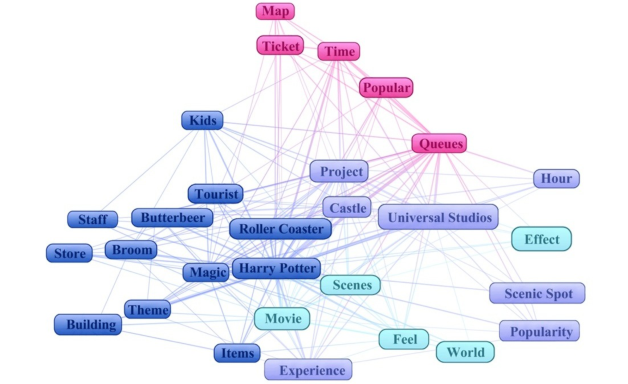
Last but not least, network and cluster visualization shows us the structure and characteristics of the entire network (see Figure 5). From this visualiza- tion, the different clusters and themes become evident. This offers designers a macro view of visitors’ interests and expectations. For example, Cluster 1 focuses on themes related to specific items, such as magic and roller coasters. This means that tourists have high expectations for these items. To meet these expectations, designers can consider introducing more interactive and gami- fied elements. Through virtual and augmented reality, visitors can participate in magical duels or treasure hunt quests, interact with characters in the park, and unlock hidden stories and rewards.
From Engagement to Immersion: A Self-Determination Theory 285
Combined with self-determination theory, it can be posited that visitors’ immersive experiences are driven by their intrinsic needs and motivations. To fulfil these needs, the design of the park should provide sufficient autonomy, a sense of competence, and a sense of belonging. Through gamification ele- ments such as quest systems, point systems, and social interactions, visitors can find goals and objectives in the park and connect with other visitors for a deeper and more rewarding immersive experience.
In conclusion, through the in-depth analysis of these three tools, an insight was gained behind the immersive experience of visitors to the Wizarding World of Harry Potter. This provides designers with valuable feedback and suggestions to help them create better, more interesting, and immersive visitor experiences.
Figure 5: Network and clusters visualization.
CONCLUSION
To summarize, this study employed a multi-dimensional methodology, weav- ing together text mining, case study analysis, co-occurrence matrices, net- work relationship visuals, and qualitative techniques. The aim was to offer an exhaustive and comprehensive understanding of the interplay between gamification strategies and the principles of self-determination theory in amplifying the immersive experiences of visitors, with the Wizarding World of Harry Potter as the focal point.
The comprehensive analysis of visitor reviews of this magical world illu- minated the undeniable significance of gamification and self-determination theory in curating enriching visitor experiences. It was discerned that specific gamification techniques like interactive queues, virtual quests, and charac- ter interactions significantly uplift visitor engagement. Moreover, catering to visitors’ intrinsic needs, such as autonomy, competency, and relational connections, holds the potential to immerse them profoundly, making the fictional world come alive.
286 Huang and Wang
However, it is paramount to recognize that the Wizarding World of Harry Potter, while a rich source of insights, represents just a fragment of the vast cultural tourism landscape. To generalize and deepen our understand- ing, future research must branch out in multiple directions. Diverse cultural tourism ventures, ranging from historical sites, natural vistas, theme parks, to museums, warrant exploration. Each offers distinct visitor experiences, with historical sites emphasizing educational narratives and theme parks pri- oritizing entertainment. Delving into these varied environments can shed light on the adaptability of gamification strategies. Moreover, geograph- ical contexts infuse unique cultural flavours, presenting both challenges and prospects for gamification. A mountainous region might emphasize exploration-themed tasks, while an urban museum might focus on interac- tive historical narratives. Cross-cultural studies can further elucidate how regional nuances influence visitor receptions to gamification. The gamifi- cation gradient, from minimalistic implementations to intricate ones, also demands attention. It’s essential to discern the impact of varied gamifica- tion intensities on visitor satisfaction and explore if over-gamification risks diluting authentic experiences. Also, demographic factors, such as age, gen- der, and cultural backgrounds, can influence gamification reception. Younger cohorts might gravitate towards tech-augmented experiences, while older demographics might resonate more with narrative-driven ones. Additionally, the economic spectrum of cultural tourism projects, from luxury to budget experiences, can cater to different economic demographics, each with its own set of expectations. Lastly, the scale of projects, whether expansive interna- tional ventures or localized endeavours, determines the depth of gamification implementation, with larger projects potentially leveraging more intricate strategies.
In summary, while this study has charted significant territories in under- standing the symbiosis between gamification and immersive experiences in cultural tourism, vast expanses remain uncharted. A holistic exploration across the multifaceted dimensions of cultural tourism promises to equip the industry with robust strategies, ensuring more immersive and gratifying visitor experiences.
ACKNOWLEDGMENT
This study was supported by the grant of “Exploring Flow Theory-Informed Gamification Strategies in Designing Immersive Cultural Tourism Experi- ences” (project number:2023GZGJ318) from the Guangzhou Philosophy and Social Science Development “14th Five-Year Plan”2023 Co-construction Projects, the grant of “Group Intelligence and Co-Creation: A New Path for the concept of ecological civilization to Cultivate High-Quality Design Talents” (project number: 2023GXJK346) from the 2023 Guangdong Edu- cation Science Planning Project (Higher Education Special), and the grant of “Teaching Research and Practice of Art and Science Integration in the New Liberal Arts Context: Taking Arduino Creative Programming as an Exam- ple” (project number: 6040323138) from the 2022 Guangzhou Academy of Fine Arts’ Higher Education Teaching Reform Project.
From Engagement to Immersion: A Self-Determination Theory 287
REFERENCES
AU, W. C. W., & TSANG, N. K. F. (2022). Smart Travel Experiences: A Bibliometric Analysis of Knowledge Domains and Research Areas. Journal of Hospitality & Tourism Research (Washington, D. C.), 109634802211309–. https://doi.org/10. 1177/10963480221130998 Australiasian computer science week multiconference, Victoria, Australia 31 January- 3 February. Buzinde, C. N. (2020). Theoretical linkages between well-being and tourism: The
case of self-determination theory and spiritual tourism. Annals of Tourism Research, 83, 102920. Chou, Y. K. (2019). Actionable gamification: Beyond points, badges, and leaderboards. Packt Publishing Ltd. DeHaan, C. R., Hirai, T., & Ryan, R. M. (2016). Nussbaum’s capabilities and self-
determination theory’s basic psychological needs: Relating some fundamentals of human wellness. Journal of Happiness Studies, 17(5), 2037–2049. Deterding, S., Dixon, D., Khaled, R., & Nacke, L. (2011). From game design elements to gamefulness: defining “gamification.” Proceedings of the 15th International Academic MindTrek Conference: Envisioning Future Media Environments, USA, 15, 9–15. Dufner, M., Gebauer, J. E., Sedikides, C., & Denissen, J. J. (2019). Self-enhancement
and psychological adjustment: A meta-analytic review. Personality and Social Psychology Review, 23(1), 48–72. Hagger, M. S., Chatzisarantis, N. L. D., Culverhouse, T., & Biddle, S. J. H. (2003).
The process by which perceived autonomy support in physical education promotes leisure-time physical activity intentions and behavior: A trans-contextual model. Journal of Educational Psychology, 95, 784–795. Huang, L. & Lau, N. (2020) Enhancing the Smart Tourism Experience for People with Visual Impairments by Gamified Application Approach through Needs Analysis in Hong Kong. Sustainability (Basel, Switzerland). [Online] 12 (15), 6213–. Huotari, K., & Hamari, J. (2017). A definition for gamification: anchoring gamifi-
cation in the service marketing literature. Electronic markets, 27(1), 21–31. Kapp, K. M. (2012). The gamification oflearning and instruction: game-based methods and strategies for training and education. San Francisco: Pfeiffer. Koivisto, J., & Hamari, J. (2019). The rise of motivational information sys-
tems: A review of gamification research. International journal of information management, 45, 191–210. Little, C., Patterson, D., Moyle, B., & Bec, A. (2018). Every footprint tells a story: 3D scanning of heritage artifacts as an interactive experience. Paper presented at the Marczewski, A. (2013). Gamification: a simple introduction. Andrzej Marczewski. Neuhofer, B., Buhalis, D., & Ladkin, A. (2014). A typology of technology-enhanced
tourism experiences. International Journal of Tourism Research, 16(4), 340–350. Niemiec, C. P., & Ryan, R. M. (2009). Autonomy, competence, and relatedness in the classroom: Applying self-determination theory to educational practice. Theory and research in Education, 7(2), 133–144. Pablo-Romero, M. D. P., & Molina, J. A. (2013). Tourism and economic growth: A
review of empirical literature. Tourism Management Perspectives, 8, 28–41. Pace, R., & Dipace, A. (2015). Game-based learning and lifelong learning for tourist operators. In Cultural tourism in a digital era (pp. 185–199). Springer, Cham.
288 Huang and Wang
Pearce, P. L., & Packer, J. (2013). Minds on the move: New links from psychology to tourism. Annals of tourism research, 40, 386–411. Petroman, I., Cornelia, P., Diana, M., Ramona, C., Loredana, V., & Ioana, P. (2013).
Types of cultural tourism. Scientific Papers: Animal Science and Biotechnologies, 46(1), 385–388. Przybylski, A. K., Rigby, C. S., & Ryan, R. M. (2010). A motivational model of video game engagement. Review of general psychology, 14(2), 154–166. Richards, G. (Ed.). (2007). Cultural tourism: Global and local perspectives. Psychol-
ogy Press. Ryan, R. M., & Deci, E. L. (2020). Intrinsic and extrinsic motivation from a self-determination theory perspective: Definitions, theory, practices, and future directions. Contemporary educational psychology, 61, 101860. Ryan, R. M., Rigby, C. S., & Przybylski, A. (2006). The motivational pull of
video games: A self-determination theory approach. Motivation and emotion, 30, 344–360. Schobel, S. M., Janson, A., & Sollner, M. (2020). Capturing the complexity of gamification elements: A holistic approach for analysing existing and deriving novel gamification designs. European Journal of Information Systems, 29(6), 641–668. Swacha, J., & Ittermann, R. (2017). Enhancing the tourist attraction visiting pro-
cess with gamification: Key concepts. Engineering Management in Production and Services, 9(4). Teixes, F. (2017) Yu-Kai Chou (2016). Actionable Gamification: beyond points, badges and leaderboards. Octalysis Media: Fremont. CA. RIO : revista interna- cional de organizaciones. [Online] (18), 137–144. Tussyadiah, I. P. (2014). Toward a theoretical foundation for experience design in
tourism. Journal of travel research, 53(5), 543–564. Tyack, A., & Mekler, E. D. (2020, April). Self-determination theory in HCI games research: Current uses and open questions. In Proceedings of the 2020 CHI conference on human factors in computing systems (pp. 1–22). Werbach, K. (2014). (Re) defining gamification: A process approach. In Persuasive
Technology: 9th International Conference, PERSUASIVE 2014, Padua, Italy, May 21-23, 2014. Proceedings 9 (pp. 266–272). Springer International Publishing. Xu, F., Buhalis, D., & Weber, J. (2017). Serious games and the gamification of tourism. Tourism Management, 60, 244–256.
LISTED IN THE AHFE DIGITAL BOOKSTORE CATALOGUE
Explore the complete digital volume
Emerging Technologies and Future of Work
Read this individual research paper free through the original publisher, or explore the full digital proceedings book.
ISBN 978-1-958651-93-3
Explore this ISBN in the AHFE Bookstore ↗Listed in the July 2026 bookstore catalogue; search by ISBN to confirm current availability · Digital book purchase optional